
PATHOPHYSIOLOGY Overview Pathophysiological Classification of Pain Central sensitization







- Slides: 30
PATHOPHYSIOLOGY
Overview
Pathophysiological Classification of Pain Central sensitization/ dysfunctional pain Nociceptive pain - Somatic - Visceral Multiple pain mechanisms may coexist (mixed pain) Neuropathic pain - Peripheral - Central Freynhagen R, Baron R. Curr Pain Headache Rep 2009; 13(3): 185 -90; Jensen TS et al. Pain 2011; 152(10): 2204 -5; Julius D et al. In: Mc. Mahon SB, Koltzenburg M (eds). Wall and Melzack’s Textbook of Pain. 5 th ed. Elsevier; London, UK: 2006; Ross E. Expert Opin Pharmacother 2001; 2(1): 1529 -30; Webster LR. Am J Manag Care 2008; 14(5 Suppl 1): S 116 -22; Woolf CJ. Pain 2011; 152(3 Suppl): S 2 -15.
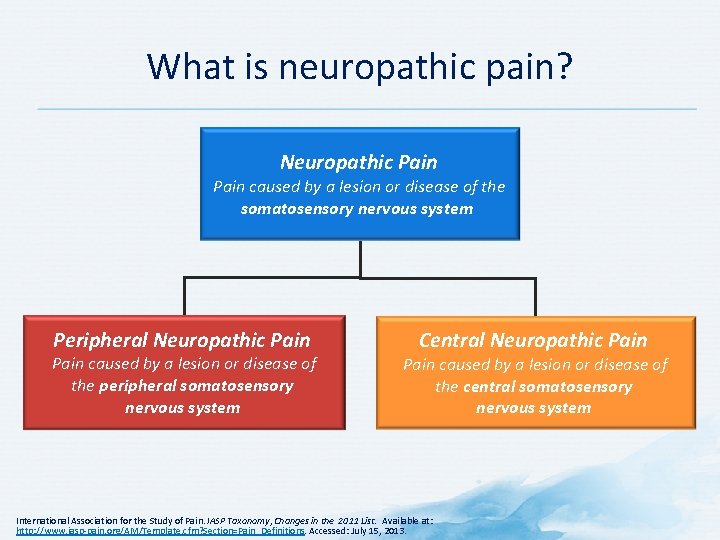
What is neuropathic pain? Neuropathic Pain caused by a lesion or disease of the somatosensory nervous system Peripheral Neuropathic Pain caused by a lesion or disease of the peripheral somatosensory nervous system Central Neuropathic Pain caused by a lesion or disease of the central somatosensory nervous system International Association for the Study of Pain. IASP Taxonomy, Changes in the 2011 List. Available at: http: //www. iasp-pain. org/AM/Template. cfm? Section=Pain_Definitions. Accessed: July 15, 2013.
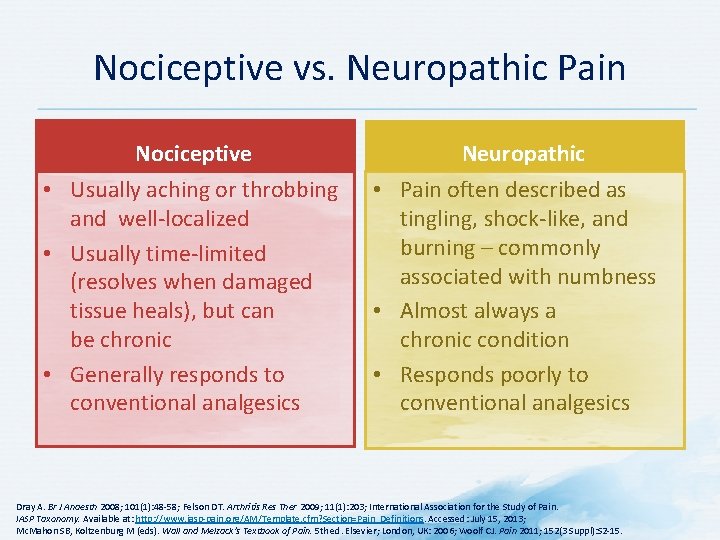
Nociceptive vs. Neuropathic Pain Nociceptive • Usually aching or throbbing and well-localized • Usually time-limited (resolves when damaged tissue heals), but can be chronic • Generally responds to conventional analgesics Neuropathic • Pain often described as tingling, shock-like, and burning – commonly associated with numbness • Almost always a chronic condition • Responds poorly to conventional analgesics Dray A. Br J Anaesth 2008; 101(1): 48 -58; Felson DT. Arthritis Res Ther 2009; 11(1): 203; International Association for the Study of Pain. IASP Taxonomy. Available at: http: //www. iasp-pain. org/AM/Template. cfm? Section=Pain_Definitions. Accessed: July 15, 2013; Mc. Mahon SB, Koltzenburg M (eds). Wall and Melzack’s Textbook of Pain. 5 th ed. Elsevier; London, UK: 2006; Woolf CJ. Pain 2011; 152(3 Suppl): S 2 -15.
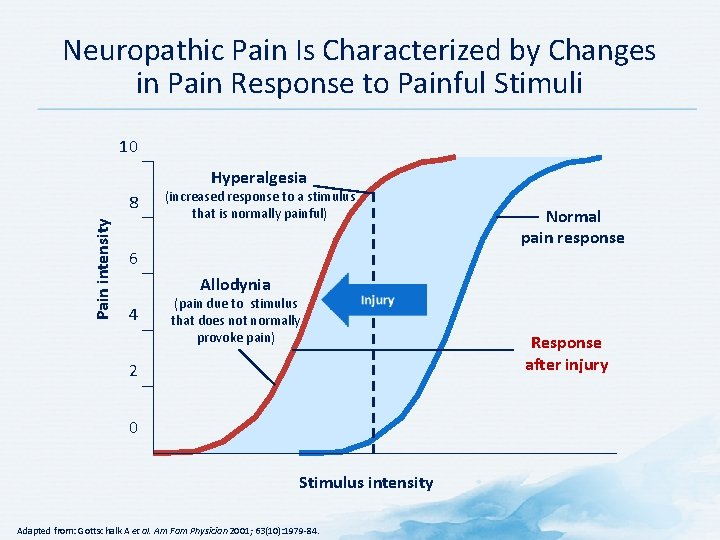
Neuropathic Pain Is Characterized by Changes in Pain Response to Painful Stimuli 10 Hyperalgesia Pain intensity 8 (increased response to a stimulus that is normally painful) 6 Normal pain response Allodynia 4 (pain due to stimulus that does not normally provoke pain) 2 0 Stimulus intensity Adapted from: Gottschalk A et al. Am Fam Physician 2001; 63(10): 1979 -84. Response after injury
Etiology
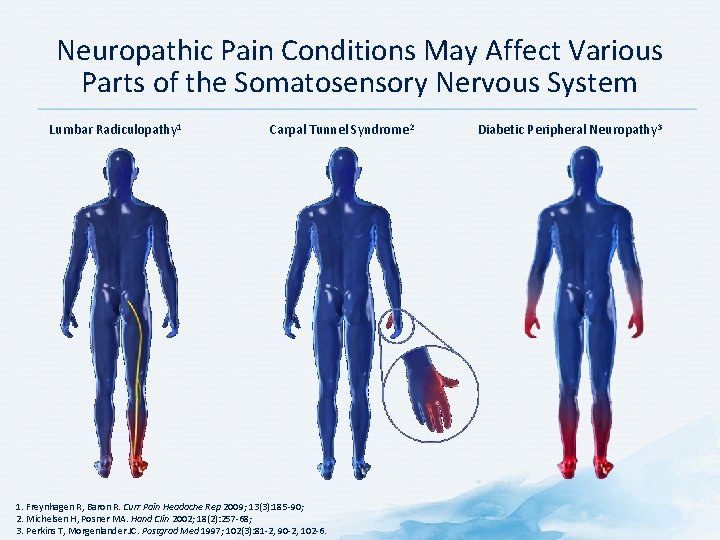
Neuropathic Pain Conditions May Affect Various Parts of the Somatosensory Nervous System Lumbar Radiculopathy 1 Carpal Tunnel Syndrome 2 1. Freynhagen R, Baron R. Curr Pain Headache Rep 2009; 13(3): 185 -90; 2. Michelsen H, Posner MA. Hand Clin 2002; 18(2): 257 -68; 3. Perkins T, Morgenlander JC. Postgrad Med 1997; 102(3): 81 -2, 90 -2, 102 -6. Diabetic Peripheral Neuropathy 3
Neuropathic Pain Has a Wide Variety of Etiologies Shingles Diabetic neuropathy Nerve trauma Surgery Baron R et al. Lancet Neurol 2010; 9(8): 807 -19; Mc. Mahon SB, Koltzenburg M. Wall and Melzack’s Textbook of Pain. 5 th ed. Elsevier; London, UK: 2006. Radiculopathy
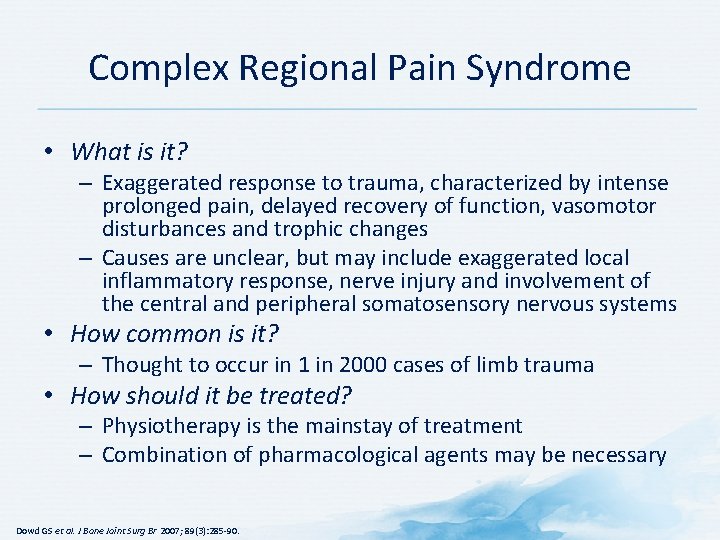
Complex Regional Pain Syndrome • What is it? – Exaggerated response to trauma, characterized by intense prolonged pain, delayed recovery of function, vasomotor disturbances and trophic changes – Causes are unclear, but may include exaggerated local inflammatory response, nerve injury and involvement of the central and peripheral somatosensory nervous systems • How common is it? – Thought to occur in 1 in 2000 cases of limb trauma • How should it be treated? – Physiotherapy is the mainstay of treatment – Combination of pharmacological agents may be necessary Dowd GS et al. J Bone Joint Surg Br 2007; 89(3): 285 -90.
Pathophysiology
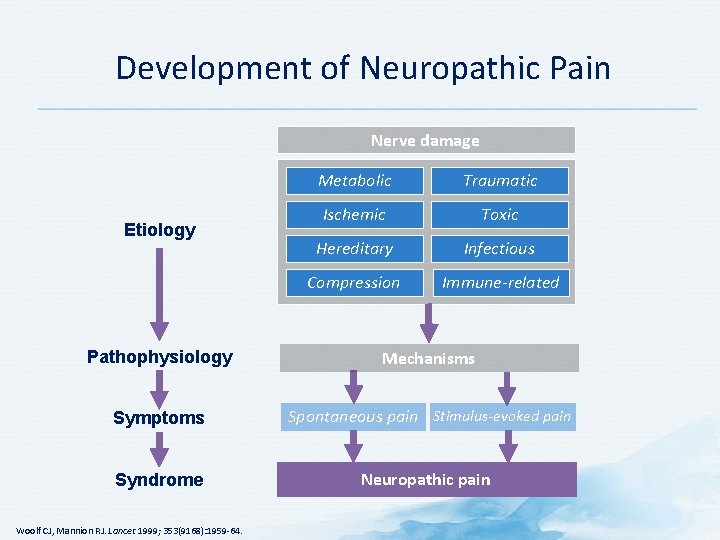
Development of Neuropathic Pain Nerve damage Etiology Metabolic Traumatic Ischemic Toxic Hereditary Infectious Compression Immune-related Pathophysiology Mechanisms Symptoms Spontaneous pain Stimulus-evoked pain Syndrome Neuropathic pain Woolf CJ, Mannion RJ. Lancet 1999; 353(9168): 1959 -64.
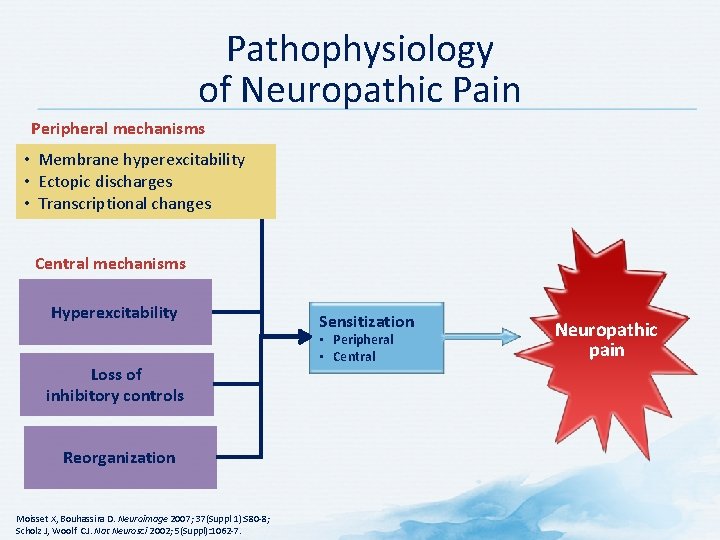
Pathophysiology of Neuropathic Pain Peripheral mechanisms • Membrane hyperexcitability • Ectopic discharges • Transcriptional changes Central mechanisms Hyperexcitability Loss of inhibitory controls Reorganization Moisset X, Bouhassira D. Neuroimage 2007; 37(Suppl 1): S 80 -8; Scholz J, Woolf CJ. Nat Neurosci 2002; 5(Suppl): 1062 -7. Sensitization • Peripheral • Central Neuropathic pain
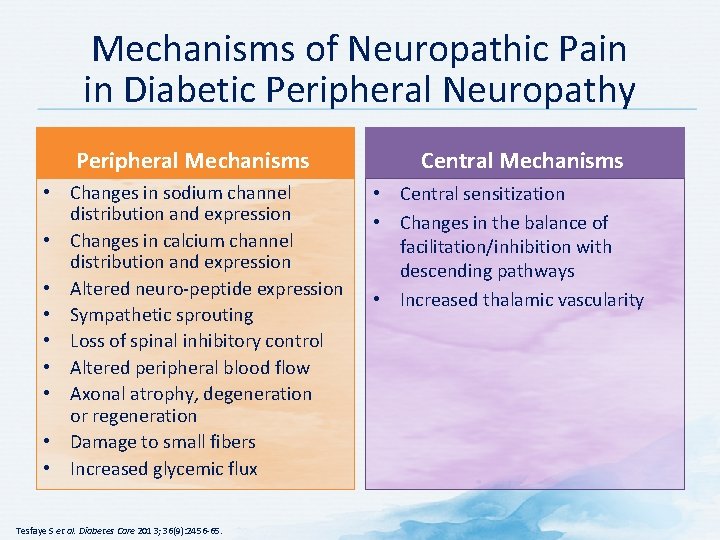
Mechanisms of Neuropathic Pain in Diabetic Peripheral Neuropathy Peripheral Mechanisms • Changes in sodium channel distribution and expression • Changes in calcium channel distribution and expression • Altered neuro-peptide expression • Sympathetic sprouting • Loss of spinal inhibitory control • Altered peripheral blood flow • Axonal atrophy, degeneration or regeneration • Damage to small fibers • Increased glycemic flux Tesfaye S et al. Diabetes Care 2013; 36(9): 2456 -65. Central Mechanisms • Central sensitization • Changes in the balance of facilitation/inhibition with descending pathways • Increased thalamic vascularity
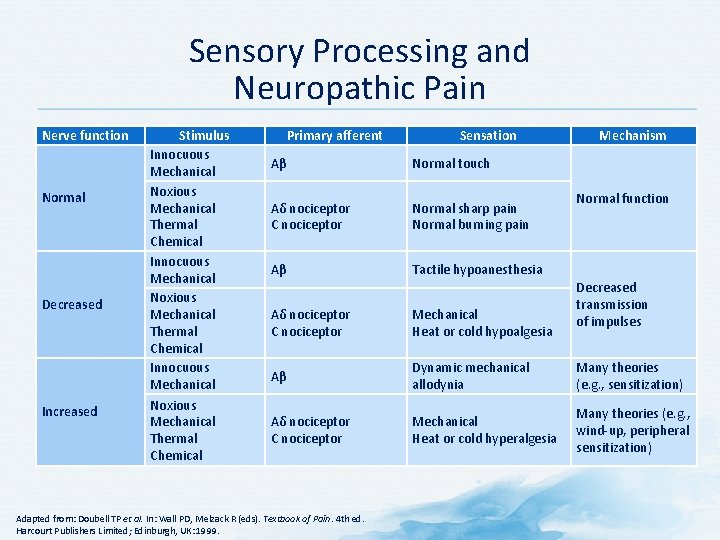
Sensory Processing and Neuropathic Pain Nerve function Normal Decreased Increased Stimulus Innocuous Mechanical Noxious Mechanical Thermal Chemical Primary afferent Sensation Aβ Normal touch Aδ nociceptor C nociceptor Normal sharp pain Normal burning pain Aβ Tactile hypoanesthesia Mechanism Normal function Decreased transmission of impulses Aδ nociceptor C nociceptor Mechanical Heat or cold hypoalgesia Aβ Dynamic mechanical allodynia Many theories (e. g. , sensitization) Aδ nociceptor C nociceptor Mechanical Heat or cold hyperalgesia Many theories (e. g. , wind-up, peripheral sensitization) Adapted from: Doubell TP et al. In: Wall PD, Melzack R (eds). Textbook of Pain. 4 th ed. Harcourt Publishers Limited; Edinburgh, UK: 1999.
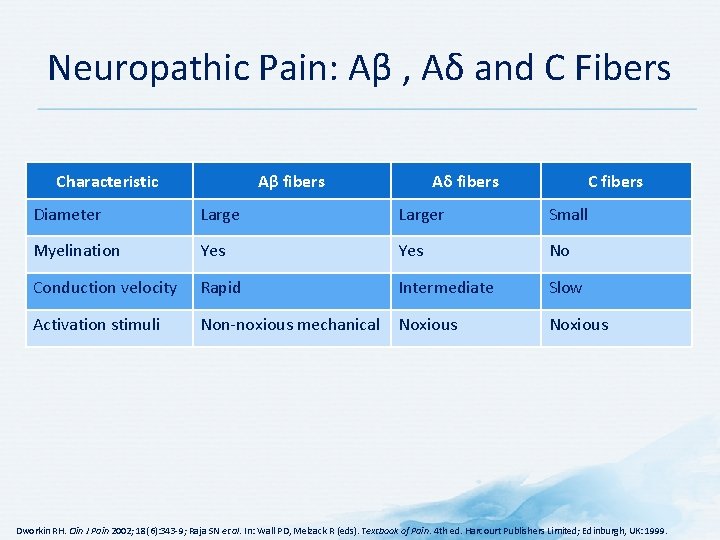
Neuropathic Pain: Aβ , Aδ and C Fibers Characteristic Aβ fibers Aδ fibers C fibers Diameter Larger Small Myelination Yes No Conduction velocity Rapid Intermediate Slow Activation stimuli Non-noxious mechanical Noxious Dworkin RH. Clin J Pain 2002; 18(6): 343 -9; Raja SN et al. In: Wall PD, Melzack R (eds). Textbook of Pain. 4 th ed. Harcourt Publishers Limited; Edinburgh, UK: 1999.
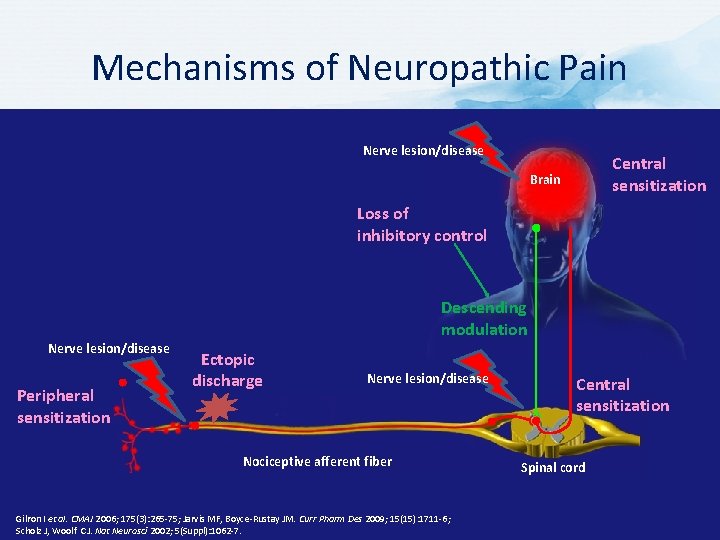
Mechanisms of Neuropathic Pain Nerve lesion/disease Central sensitization Brain Loss of inhibitory control Descending modulation Nerve lesion/disease Peripheral sensitization Ectopic discharge Nerve lesion/disease Nociceptive afferent fiber Gilron I et al. CMAJ 2006; 175(3): 265 -75; Jarvis MF, Boyce-Rustay JM. Curr Pharm Des 2009; 15(15): 1711 -6; Scholz J, Woolf CJ. Nat Neurosci 2002; 5(Suppl): 1062 -7. Central sensitization Spinal cord
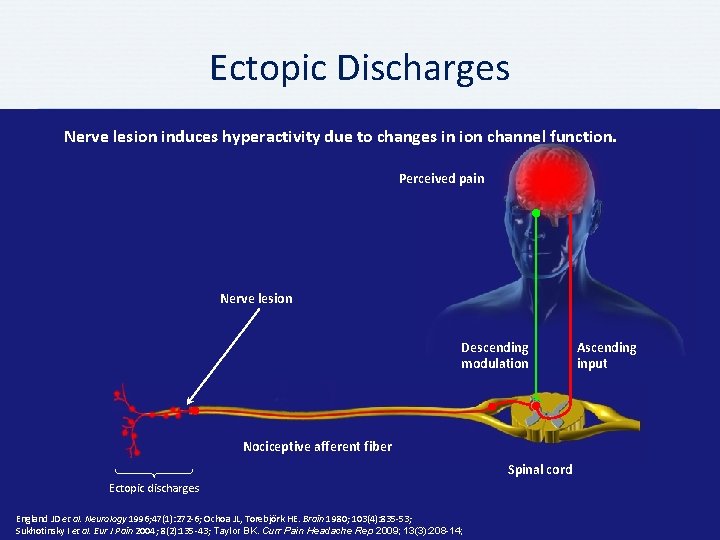
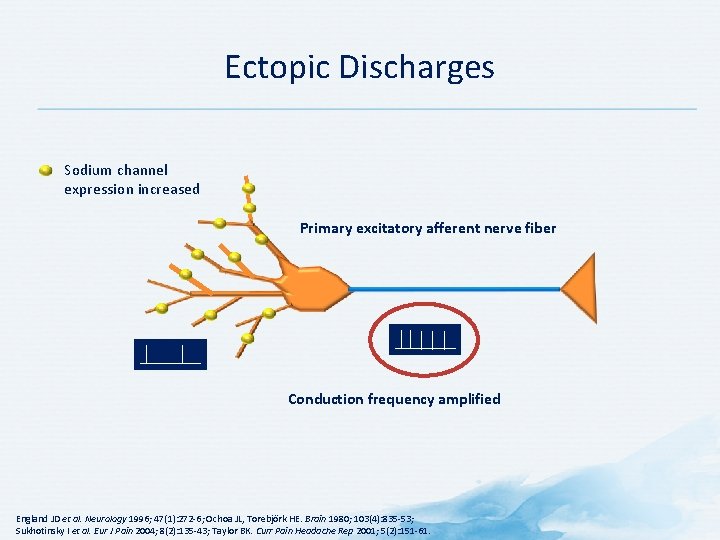
Ectopic Discharges Nerve lesion induces hyperactivity due to changes in ion channel function. Perceived pain Nerve lesion Descending modulation Nociceptive afferent fiber Spinal cord Ectopic discharges England JD et al. Neurology 1996; 47(1): 272 -6; Ochoa JL, Torebjörk HE. Brain 1980; 103(4): 835 -53; Sukhotinsky I et al. Eur J Pain 2004; 8(2): 135 -43; Taylor BK. Curr Pain Headache Rep 2009; 13(3): 208 -14; Ascending input
Ectopic Discharges Sodium channel expression increased Primary excitatory afferent nerve fiber Conduction frequency amplified England JD et al. Neurology 1996; 47(1): 272 -6; Ochoa JL, Torebjörk HE. Brain 1980; 103(4): 835 -53; Sukhotinsky I et al. Eur J Pain 2004; 8(2): 135 -43; Taylor BK. Curr Pain Headache Rep 2001; 5(2): 151 -61.
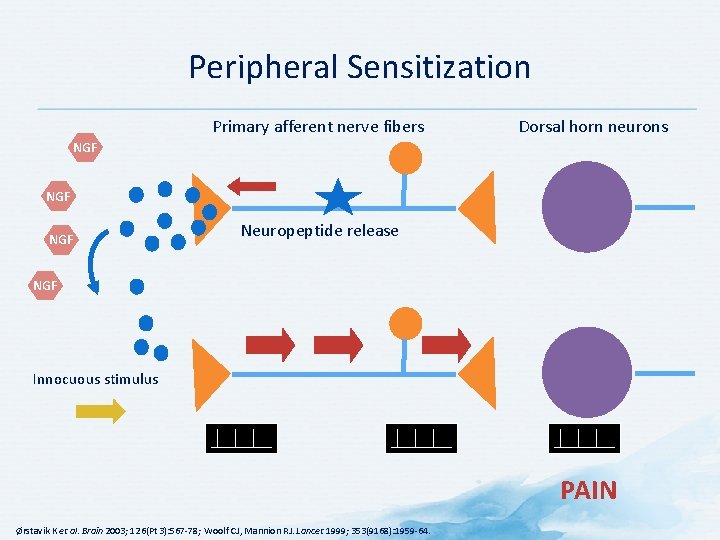
Peripheral Sensitization Primary afferent nerve fibers Dorsal horn neurons NGF NGF Neuropeptide release NGF Innocuous stimulus PAIN Ørstavik K et al. Brain 2003; 126(Pt 3): 567 -78; Woolf CJ, Mannion RJ. Lancet 1999; 353(9168): 1959 -64.
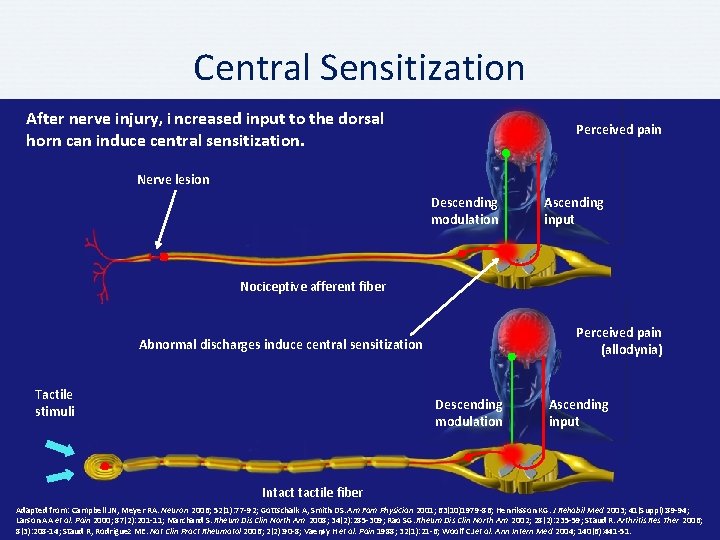
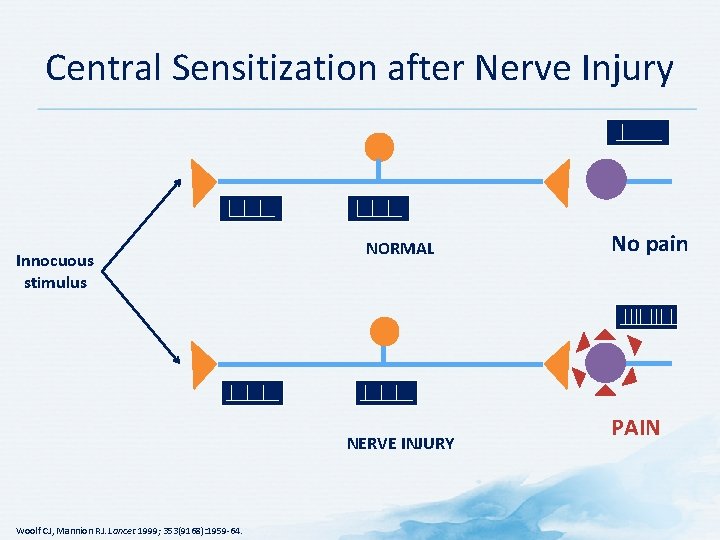
Central Sensitization After nerve injury, i ncreased input to the dorsal horn can induce central sensitization. Perceived pain Nerve lesion Descending modulation Ascending input Nociceptive afferent fiber Perceived pain (allodynia) Abnormal discharges induce central sensitization Tactile stimuli Descending modulation Ascending input Intactile fiber Adapted from: Campbell JN, Meyer RA. Neuron 2006; 52(1): 77 -92; Gottschalk A, Smith DS. Am Fam Physician 2001; 63(10)1979 -86; Henriksson KG. J Rehabil Med 2003; 41(Suppl): 89 -94; Larson AA et al. Pain 2000; 87(2): 201 -11; Marchand S. Rheum Dis Clin North Am 2008; 34(2): 285 -309; Rao SG. Rheum Dis Clin North Am 2002; 28(2): 235 -59; Staud R. Arthritis Res Ther 2006; 8(3): 208 -14; Staud R, Rodriguez ME. Nat Clin Pract Rheumatol 2006; 2(2): 90 -8; Vaerøy H et al. Pain 1988; 32(1): 21 -6; Woolf CJ et al. Ann Intern Med 2004; 140(6): 441 -51.
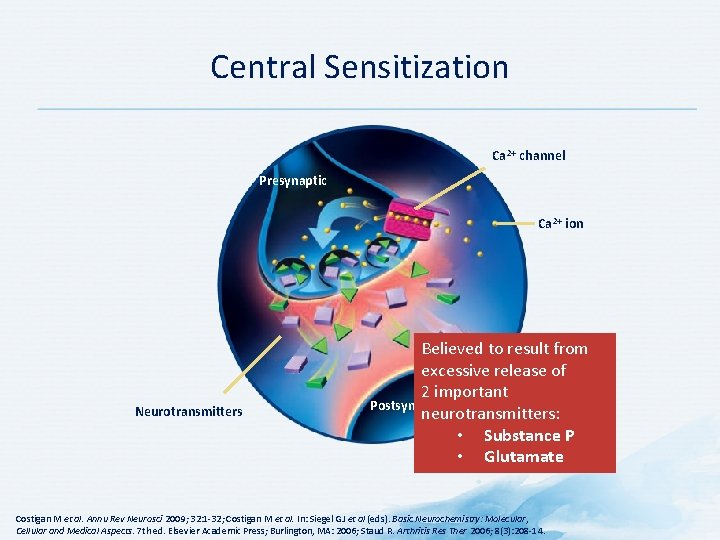
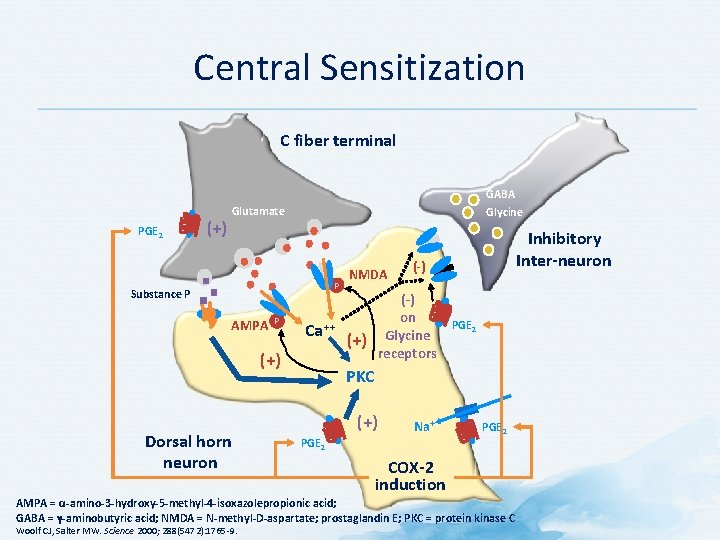
Central Sensitization Ca 2+ channel Presynaptic Ca 2+ ion Neurotransmitters Believed to result from excessive release of 2 important Postsynaptic neurotransmitters: • Substance P • Glutamate Costigan M et al. Annu Rev Neurosci 2009; 32: 1 -32; Costigan M et al. In: Siegel GJ et al (eds). Basic Neurochemistry: Molecular, Cellular and Medical Aspects. 7 th ed. Elsevier Academic Press; Burlington, MA: 2006; Staud R. Arthritis Res Ther 2006; 8(3): 208 -14.
Central Sensitization after Nerve Injury Innocuous stimulus NORMAL NERVE INJURY Woolf CJ, Mannion RJ. Lancet 1999; 353(9168): 1959 -64. No pain PAIN
Central Sensitization C fiber terminal PGE 2 (+) GABA Glycine Glutamate P Substance P AMPA P Ca ++ (+) Dorsal horn neuron NMDA (-) on Glycine receptors (+) Inhibitory Inter-neuron PGE 2 PKC (+) Na+ PGE 2 COX-2 induction AMPA = α-amino-3 -hydroxy-5 -methyl-4 -isoxazolepropionic acid; GABA = γ-aminobutyric acid; NMDA = N-methyl-D-aspartate; prostaglandin E; PKC = protein kinase C Woolf CJ, Salter MW. Science 2000; 288(5472): 1765 -9.
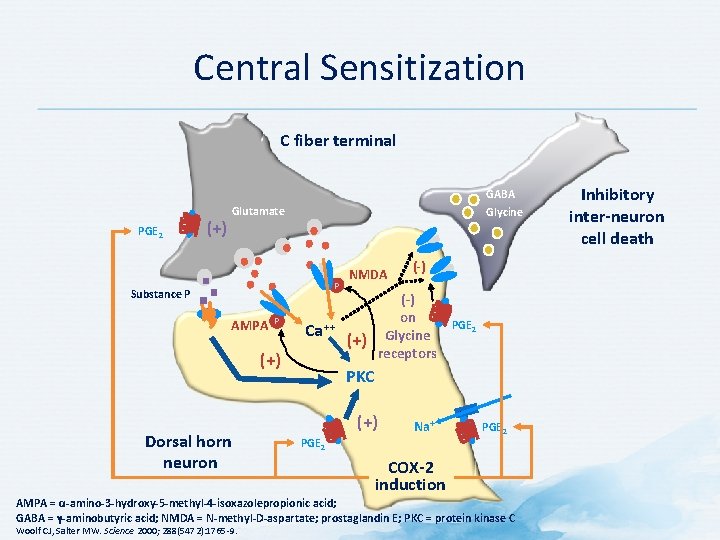
Central Sensitization C fiber terminal PGE 2 (+) GABA Glycine Glutamate P Substance P AMPA P Ca ++ (+) Dorsal horn neuron NMDA (-) on Glycine receptors (+) PGE 2 PKC (+) Na+ PGE 2 COX-2 induction AMPA = α-amino-3 -hydroxy-5 -methyl-4 -isoxazolepropionic acid; GABA = γ-aminobutyric acid; NMDA = N-methyl-D-aspartate; prostaglandin E; PKC = protein kinase C Woolf CJ, Salter MW. Science 2000; 288(5472): 1765 -9. Inhibitory inter-neuron cell death
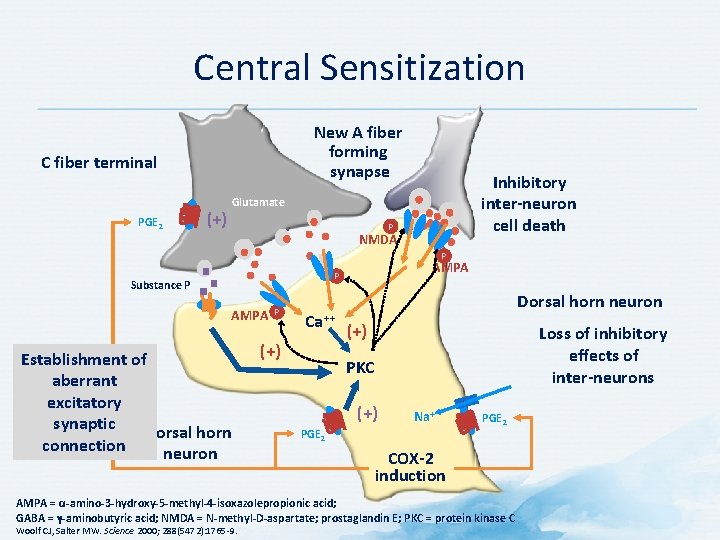
Central Sensitization New A fiber forming synapse C fiber terminal PGE 2 (+) Inhibitory inter-neuron cell death Glutamate P NMDA P AMPA P Substance P AMPA Establishment of aberrant excitatory synaptic Dorsal horn connection neuron P Ca ++ (+) Dorsal horn neuron (+) Loss of inhibitory effects of inter-neurons PKC (+) Na+ PGE 2 COX-2 induction AMPA = α-amino-3 -hydroxy-5 -methyl-4 -isoxazolepropionic acid; GABA = γ-aminobutyric acid; NMDA = N-methyl-D-aspartate; prostaglandin E; PKC = protein kinase C Woolf CJ, Salter MW. Science 2000; 288(5472): 1765 -9.
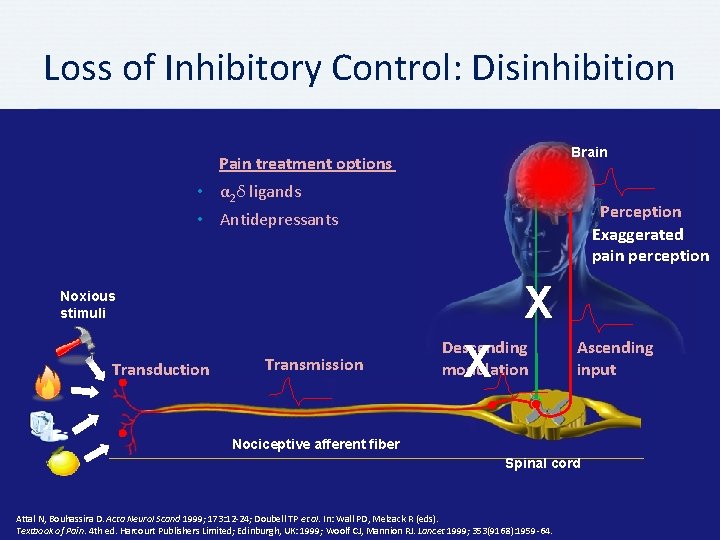
Loss of Inhibitory Control: Disinhibition Brain Pain treatment options • α 2δ ligands Perception Exaggerated pain perception • Antidepressants X Noxious stimuli Transduction Transmission Descending modulation X Ascending input Nociceptive afferent fiber Spinal cord Attal N, Bouhassira D. Acta Neurol Scand 1999; 173: 12 -24; Doubell TP et al. In: Wall PD, Melzack R (eds). Textbook of Pain. 4 th ed. Harcourt Publishers Limited; Edinburgh, UK: 1999; Woolf CJ, Mannion RJ. Lancet 1999; 353(9168): 1959 -64.
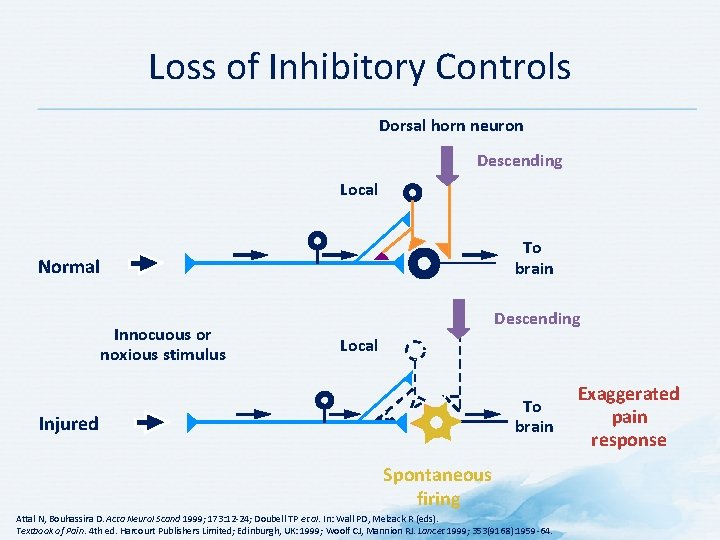
Loss of Inhibitory Controls Dorsal horn neuron Descending Local To brain Normal Innocuous or noxious stimulus Descending Local To brain Injured Spontaneous firing Attal N, Bouhassira D. Acta Neurol Scand 1999; 173: 12 -24; Doubell TP et al. In: Wall PD, Melzack R (eds). Textbook of Pain. 4 th ed. Harcourt Publishers Limited; Edinburgh, UK: 1999; Woolf CJ, Mannion RJ. Lancet 1999; 353(9168): 1959 -64. Exaggerated pain response
Summary
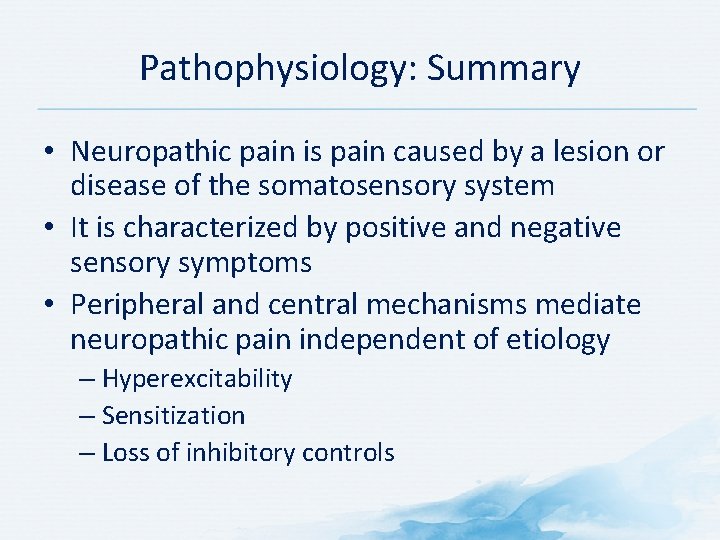
Pathophysiology: Summary • Neuropathic pain is pain caused by a lesion or disease of the somatosensory system • It is characterized by positive and negative sensory symptoms • Peripheral and central mechanisms mediate neuropathic pain independent of etiology – Hyperexcitability – Sensitization – Loss of inhibitory controls