
Pathophysiology of Type 1 Diabetes 1 Type 1
Pathophysiology of Type 1 Diabetes 1
Type 1 Diabetes Mellitus • Characterized by absolute insulin deficiency • Pathophysiology and etiology – Result of pancreatic beta cell destruction • Prone to ketosis – Total deficit of circulating insulin – Autoimmune – Idiopathic 2
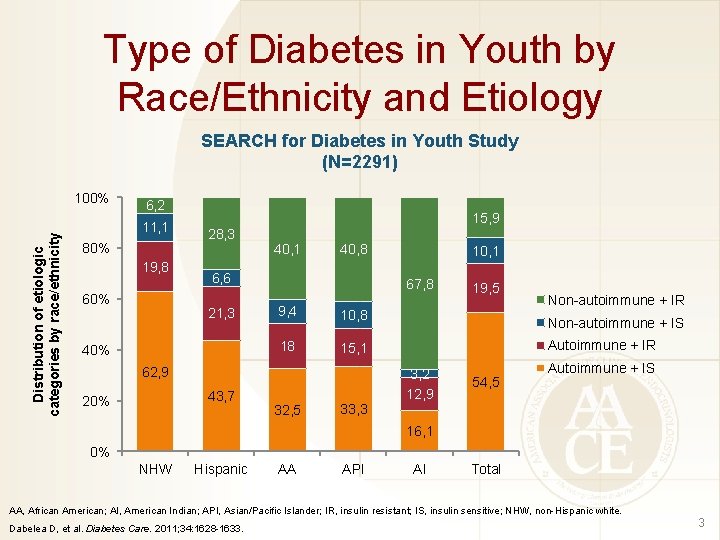
Type of Diabetes in Youth by Race/Ethnicity and Etiology SEARCH for Diabetes in Youth Study (N=2291) Distribution of etiologic categories by race/ethnicity 100% 6, 2 11, 1 80% 19, 8 60% 15, 9 28, 3 40, 1 40, 8 6, 6 21, 3 40% 67, 8 9, 4 10, 8 18 15, 1 62, 9 43, 7 20% 10, 1 32, 5 33, 3 19, 5 Non-autoimmune + IR Non-autoimmune + IS Autoimmune + IR 3, 2 12, 9 54, 5 Autoimmune + IS 16, 1 0% NHW Hispanic AA API AI Total AA, African American; AI, American Indian; API, Asian/Pacific Islander; IR, insulin resistant; IS, insulin sensitive; NHW, non-Hispanic white. Dabelea D, et al. Diabetes Care. 2011; 34: 1628 -1633. 3
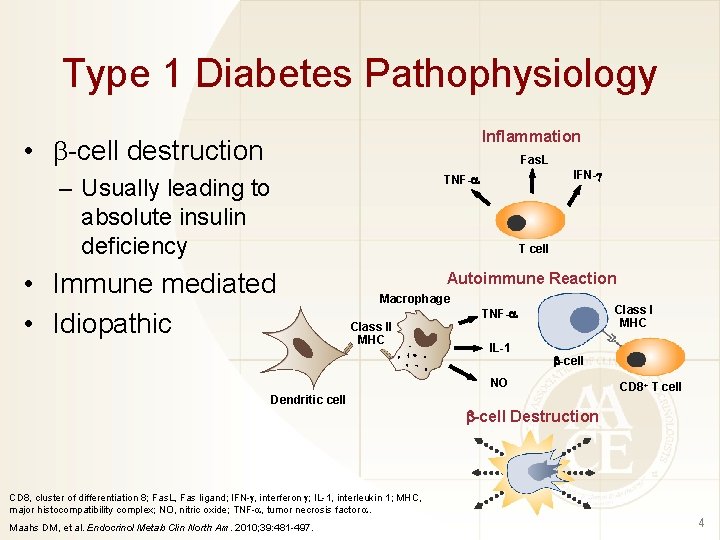
Type 1 Diabetes Pathophysiology Inflammation • -cell destruction Fas. L IFN-g TNF-a – Usually leading to absolute insulin deficiency T cell • Immune mediated • Idiopathic Autoimmune Reaction Macrophage Class II MHC Class I MHC TNF-a IL-1 -cell NO Dendritic cell CD 8+ T cell -cell Destruction CD 8, cluster of differentiation 8; Fas. L, Fas ligand; IFN- , interferon ; IL-1, interleukin 1; MHC, major histocompatibility complex; NO, nitric oxide; TNF- , tumor necrosis factor . Maahs DM, et al. Endocrinol Metab Clin North Am. 2010; 39: 481 -497. 4
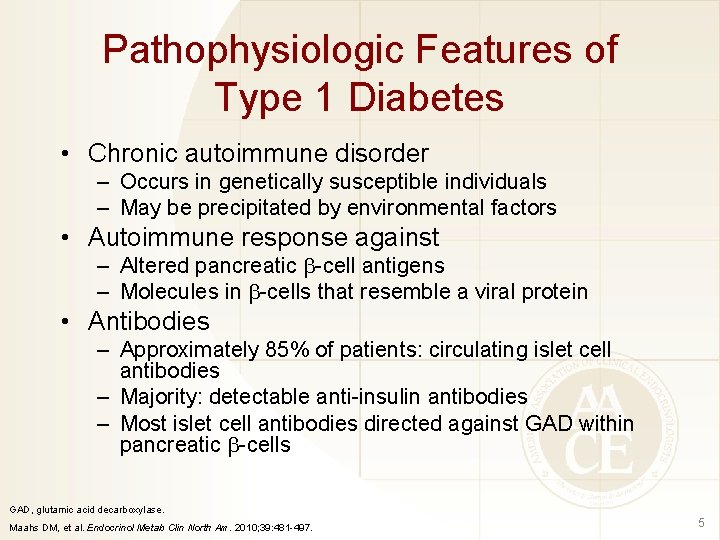
Pathophysiologic Features of Type 1 Diabetes • Chronic autoimmune disorder – Occurs in genetically susceptible individuals – May be precipitated by environmental factors • Autoimmune response against – Altered pancreatic -cell antigens – Molecules in -cells that resemble a viral protein • Antibodies – Approximately 85% of patients: circulating islet cell antibodies – Majority: detectable anti-insulin antibodies – Most islet cell antibodies directed against GAD within pancreatic -cells GAD, glutamic acid decarboxylase. Maahs DM, et al. Endocrinol Metab Clin North Am. 2010; 39: 481 -497. 5
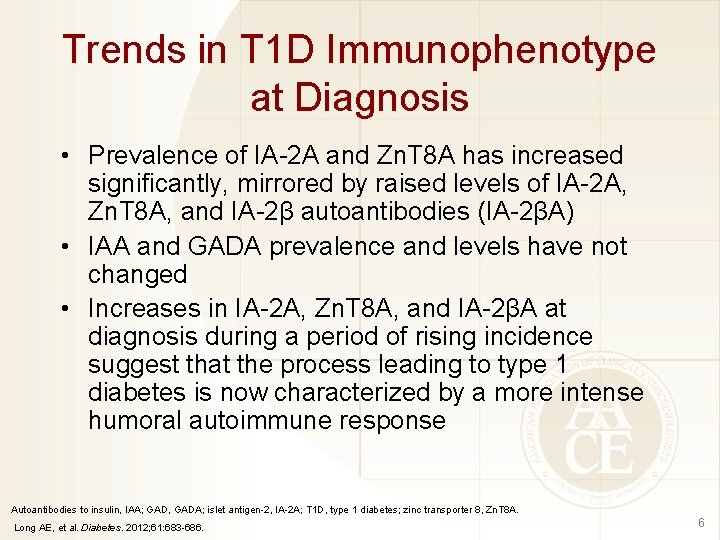
Trends in T 1 D Immunophenotype at Diagnosis • Prevalence of IA-2 A and Zn. T 8 A has increased significantly, mirrored by raised levels of IA-2 A, Zn. T 8 A, and IA-2β autoantibodies (IA-2βA) • IAA and GADA prevalence and levels have not changed • Increases in IA-2 A, Zn. T 8 A, and IA-2βA at diagnosis during a period of rising incidence suggest that the process leading to type 1 diabetes is now characterized by a more intense humoral autoimmune response Autoantibodies to insulin, IAA; GAD, GADA; islet antigen-2, IA-2 A; T 1 D, type 1 diabetes; zinc transporter 8, Zn. T 8 A. Long AE, et al. Diabetes. 2012; 61: 683 -686. 6
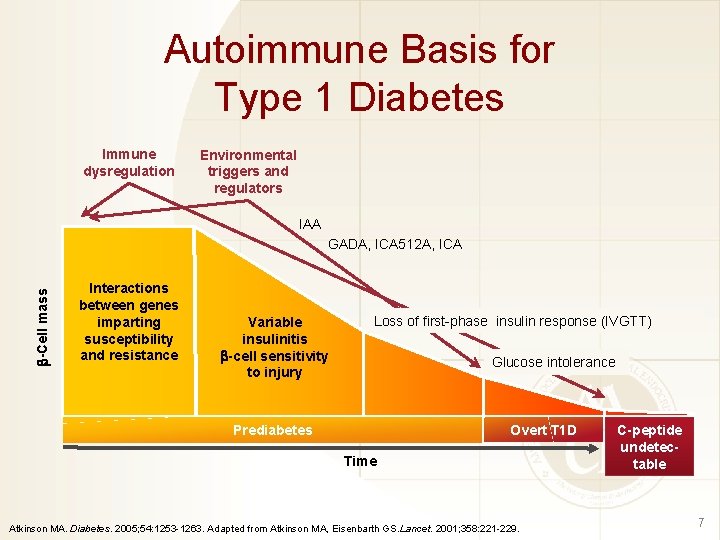
Autoimmune Basis for Type 1 Diabetes Immune dysregulation Environmental triggers and regulators IAA -Cell mass GADA, ICA 512 A, ICA Interactions between genes imparting susceptibility and resistance Variable insulinitis -cell sensitivity to injury Loss of first-phase insulin response (IVGTT) Glucose intolerance Overt T 1 D Prediabetes Time Atkinson MA. Diabetes. 2005; 54: 1253 -1263. Adapted from Atkinson MA, Eisenbarth GS. Lancet. 2001; 358: 221 -229. C-peptide undetectable 7
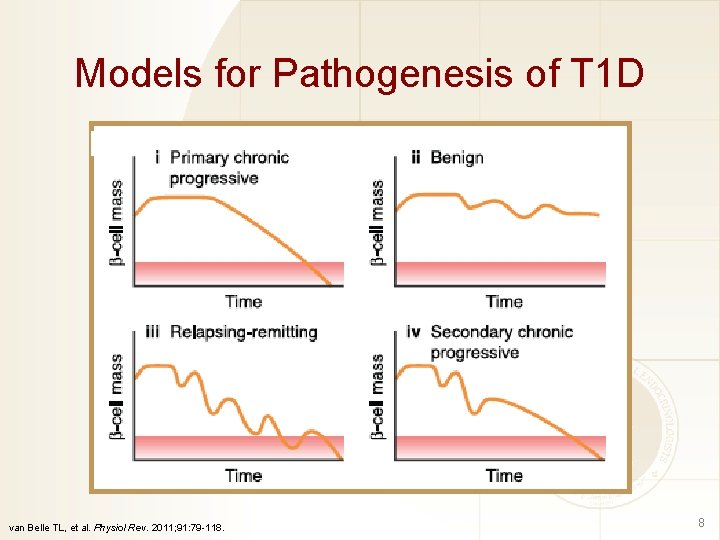
Models for Pathogenesis of T 1 D van Belle TL, et al. Physiol Rev. 2011; 91: 79 -118. 8
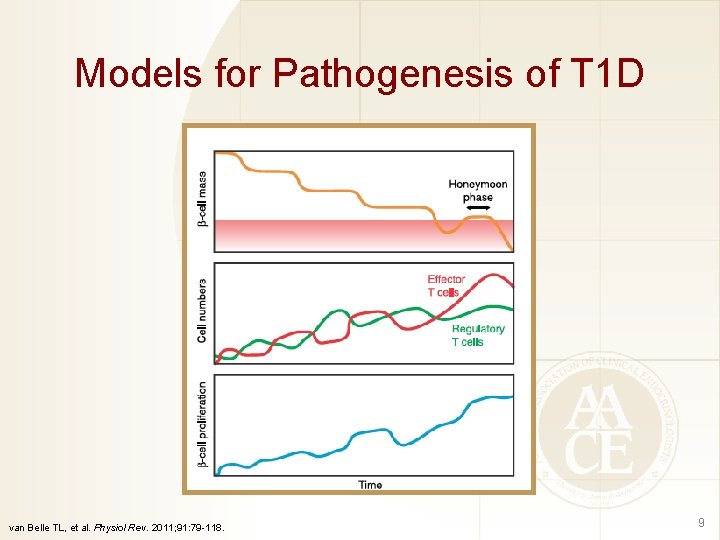
Models for Pathogenesis of T 1 D van Belle TL, et al. Physiol Rev. 2011; 91: 79 -118. 9
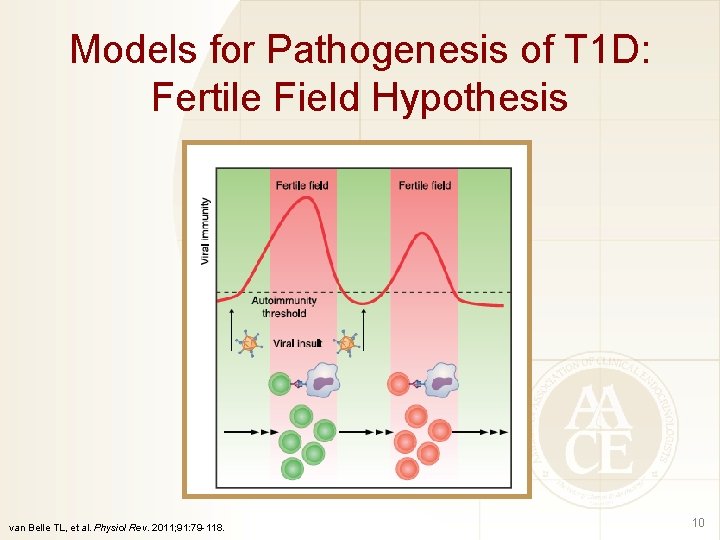
Models for Pathogenesis of T 1 D: Fertile Field Hypothesis van Belle TL, et al. Physiol Rev. 2011; 91: 79 -118. 10
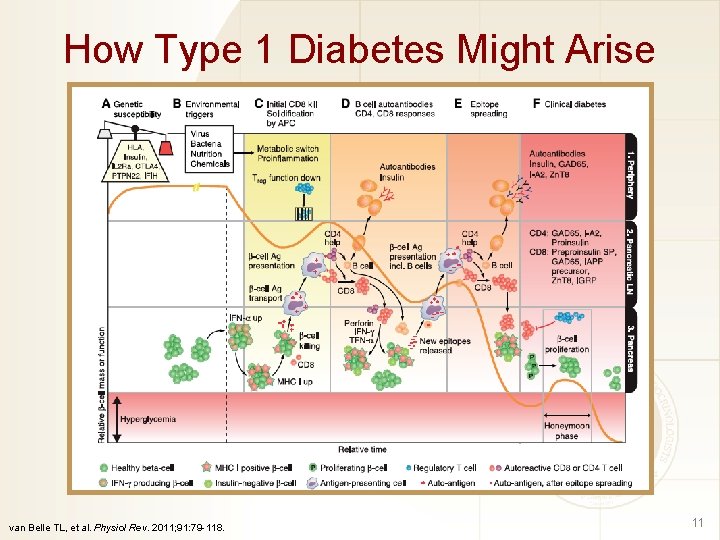
How Type 1 Diabetes Might Arise van Belle TL, et al. Physiol Rev. 2011; 91: 79 -118. 11
Insulin and Glucose Metabolism Major Metabolic Effects of Insulin • Stimulates glucose uptake into muscle and adipose cells • Inhibits hepatic glucose production Consequences of Insulin Deficiency • Hyperglycemia osmotic diuresis and dehydration 12
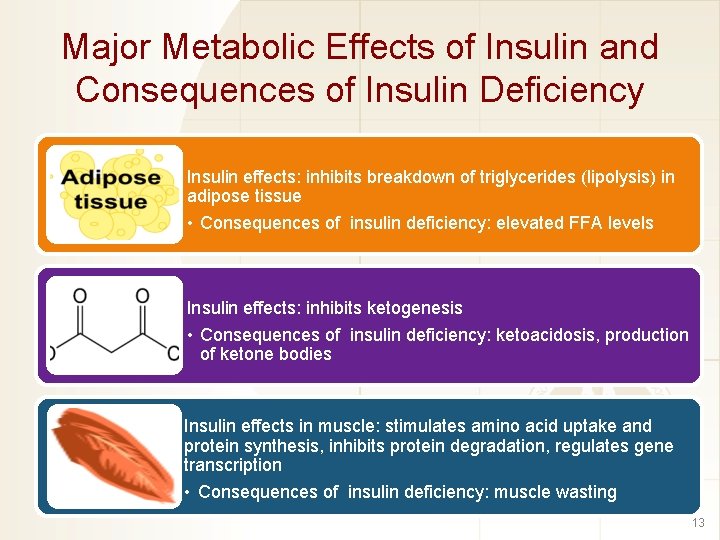
Major Metabolic Effects of Insulin and Consequences of Insulin Deficiency Insulin effects: inhibits breakdown of triglycerides (lipolysis) in adipose tissue • Consequences of insulin deficiency: elevated FFA levels Insulin effects: inhibits ketogenesis • Consequences of insulin deficiency: ketoacidosis, production of ketone bodies Insulin effects in muscle: stimulates amino acid uptake and protein synthesis, inhibits protein degradation, regulates gene transcription • Consequences of insulin deficiency: muscle wasting 13
- Slides: 13