
PATHOPHYSIOLOGY Dr Wasfi Dhahir Abid Ali Department of
PATHOPHYSIOLOGY Dr. Wasfi Dhahir Abid Ali Department of medical sciences –College of Nursing – University of Basrah

HEMODYNAMICS DISORDERS SHOCK
Definitions of shock 1 - It is a state characterized by systemic hypotension , it can occur due to diminished cardiac out put or due to reduce effective circulating blood volume. It results in impaired perfusion of tissue and cellular hypoxia 2 -Acute medical condition associated with a fall in blood pressure, caused by such events as loss of blood, severe burns, allergic reaction, or sudden emotional stress, and marked by cold, pallid skin, irregular breathing, rapid pulse, and dilated pupils.
Types of shock 1. Cardiogenic shock 2. Hypovolemic shock 3. Shock associated with systemic inflammation • Less common a. Neurogenic shock b. Anaphylactic shock
Cardiogenic – low cardiac out put a. Intrinsic causes 1 -Myocardial infarction 2 -Cardiac arrhythmias 3 -Cardiac myopathy 4 -Rupture of the heart b-Extrinsic compression 1 -Cardiac tamponed from haemopericardium 2 -Obstruction to the outflow 3 - pulmonary embolism c-Obstruction to the outflow 1 - pulmonary embolism 2 - Ball valve thrombus 3 -Tension pneumothorax
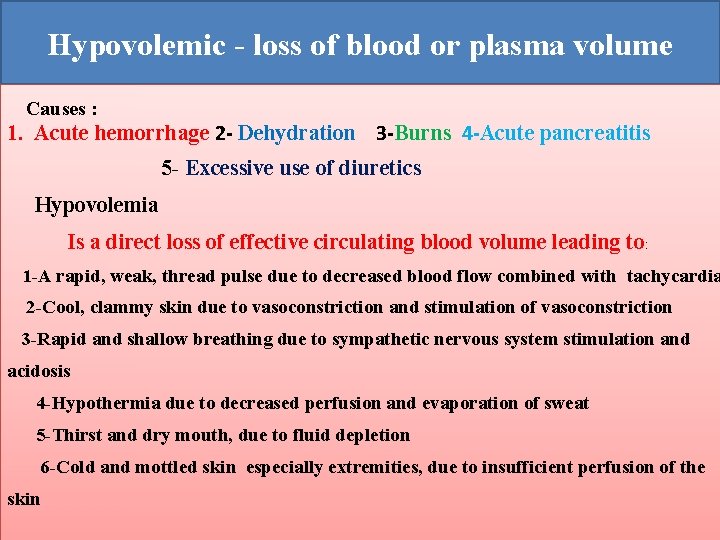
Hypovolemic - loss of blood or plasma volume Causes : 1. Acute hemorrhage 2 - Dehydration 3 -Burns 4 -Acute pancreatitis 5 - Excessive use of diuretics Hypovolemia Is a direct loss of effective circulating blood volume leading to: 1 -A rapid, weak, thread pulse due to decreased blood flow combined with tachycardia 2 -Cool, clammy skin due to vasoconstriction and stimulation of vasoconstriction 3 -Rapid and shallow breathing due to sympathetic nervous system stimulation and acidosis 4 -Hypothermia due to decreased perfusion and evaporation of sweat 5 -Thirst and dry mouth, due to fluid depletion 6 -Cold and mottled skin especially extremities, due to insufficient perfusion of the skin
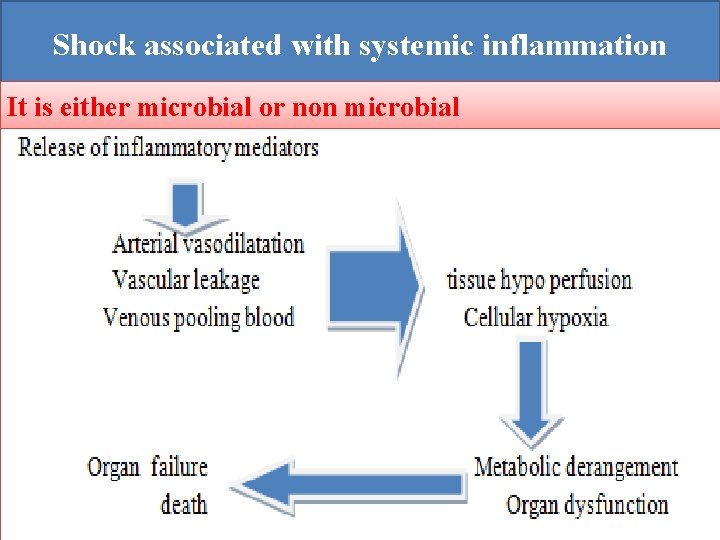
Shock associated with systemic inflammation It is either microbial or non microbial
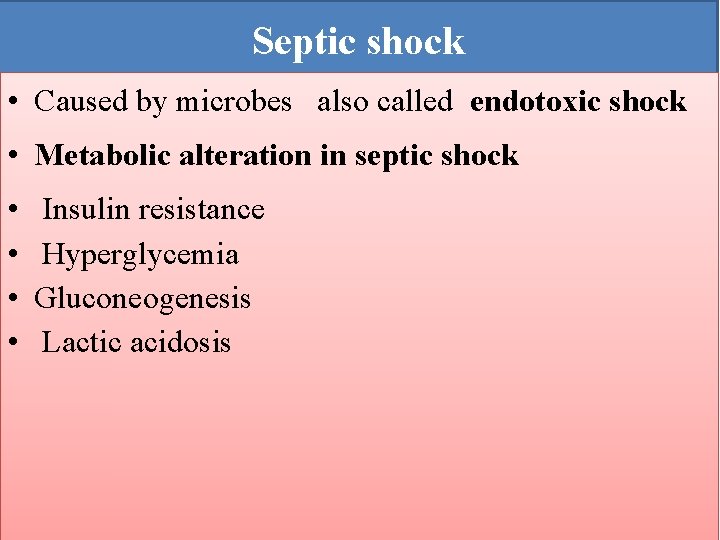
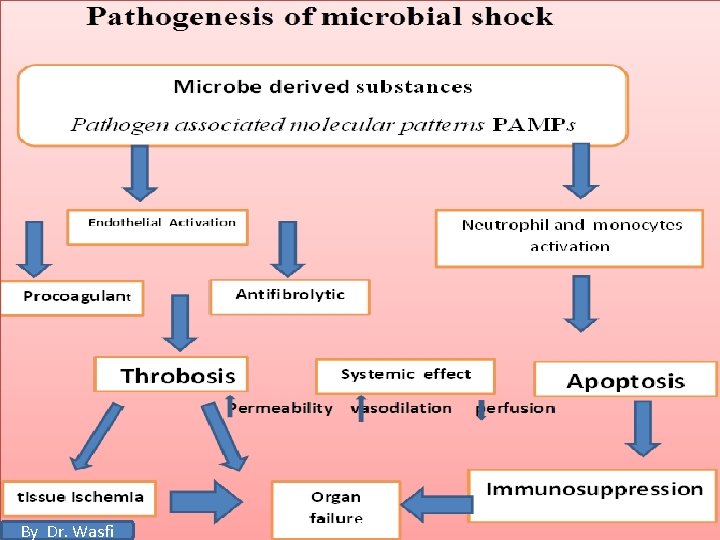
Septic shock • Caused by microbes also called endotoxic shock • Metabolic alteration in septic shock • • Insulin resistance Hyperglycemia Gluconeogenesis Lactic acidosis
By Dr. Wasfi
Stages of shock • Initial stage Tissues are low perfused, decreased cardiac out put CO , Hypoxia lead to increased anaerobic metabolism, lactic acid formation. • Compensatory: Reversible. SNS activated by low CO, attempting to compensate for the decrease tissue perfusion( Activation mechanism of (ADH, Rennin angiotensin aldosterone system , conservation of fluids) • Progressive - Failing compensatory mechanisms: profound vasoconstriction from the SNS lead to ISCHEMIA Lactic acid production is high lead to metabolic acidosis. • Irreversible - Cellular necrosis and Multiple Organ Dysfunction Syndrome may occur Death
Systemic Shock out come 1 - Systemic lactic acidosis 2 -Decreased myocardial contractility 3 - Decreased vascular tone 4 -Decrease blood pressure, preload, and cardiac output
- Slides: 11