
Pathomechanisms of the most important renal symptoms and
- Slides: 20
Pathomechanisms of the most important renal symptoms and signs M. Tatár Ústav patologickej fyziológie JLF UK
The most frequent symptoms and signs of renal diseases • hematuria, lumbar pain, !proteinuria! • polyuria and polydipsia, oliguria and anuria, dysuria • edema, renal encephalopathy
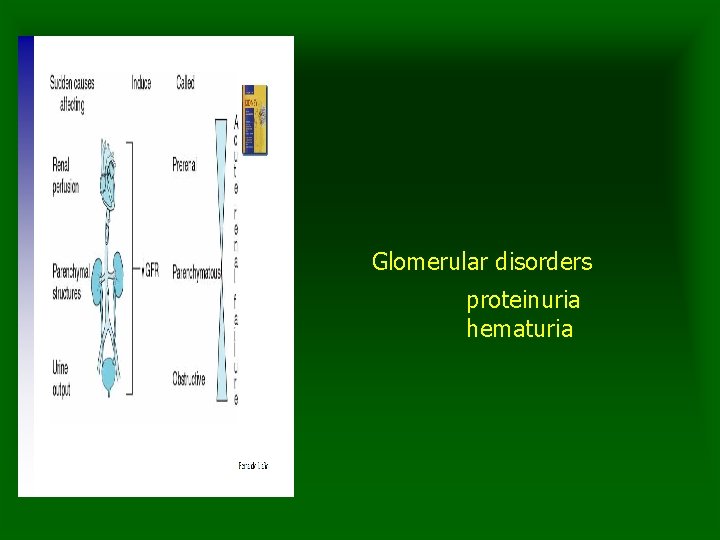
Glomerular disorders proteinuria hematuria
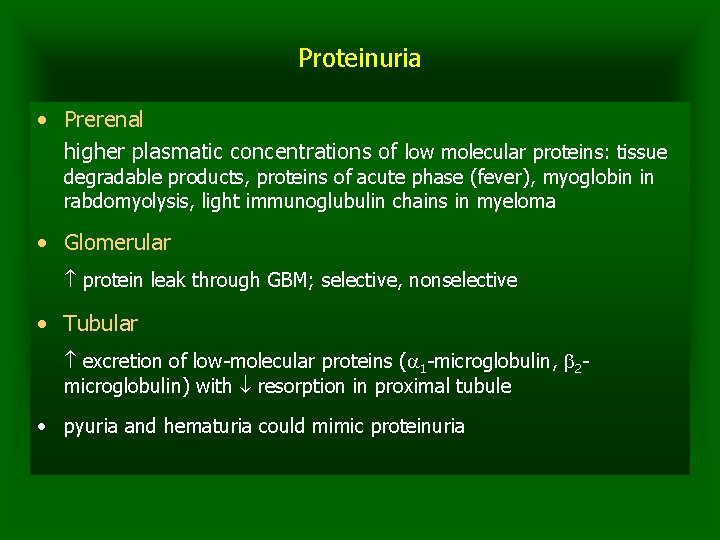
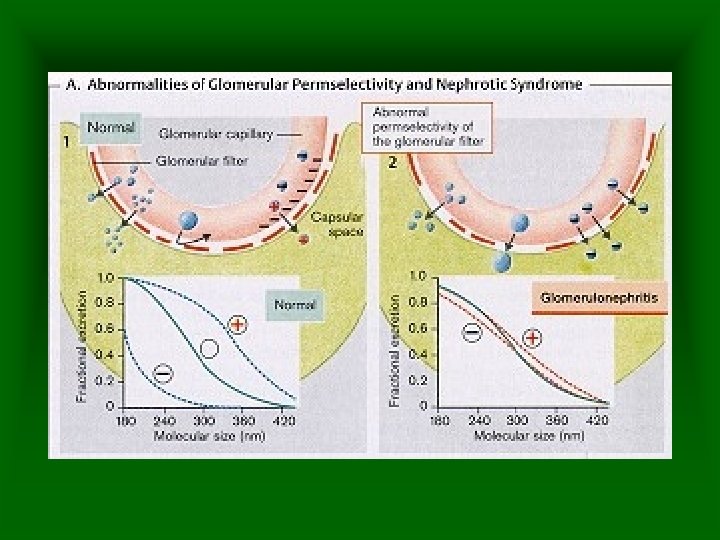
Proteinuria • Prerenal higher plasmatic concentrations of low molecular proteins: tissue degradable products, proteins of acute phase (fever), myoglobin in rabdomyolysis, light immunoglubulin chains in myeloma • Glomerular protein leak through GBM; selective, nonselective • Tubular excretion of low-molecular proteins ( 1 -microglobulin, 2 microglobulin) with resorption in proximal tubule • pyuria and hematuria could mimic proteinuria
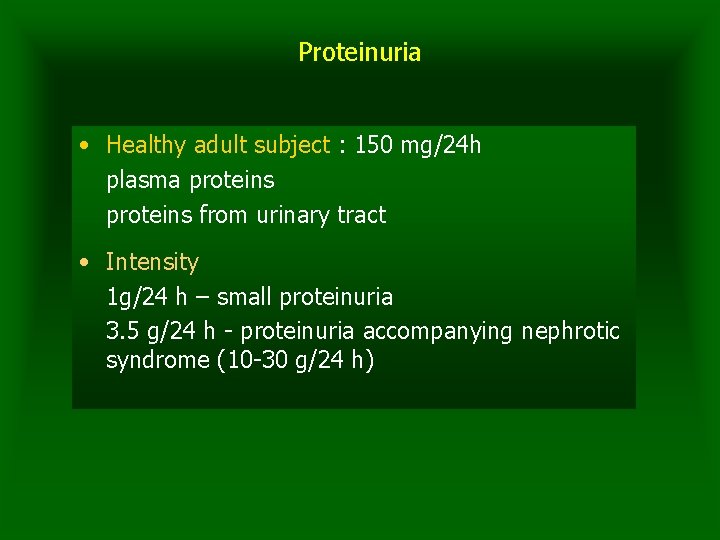
Proteinuria • Healthy adult subject : 150 mg/24 h plasma proteins from urinary tract • Intensity 1 g/24 h – small proteinuria 3. 5 g/24 h - proteinuria accompanying nephrotic syndrome (10 -30 g/24 h)
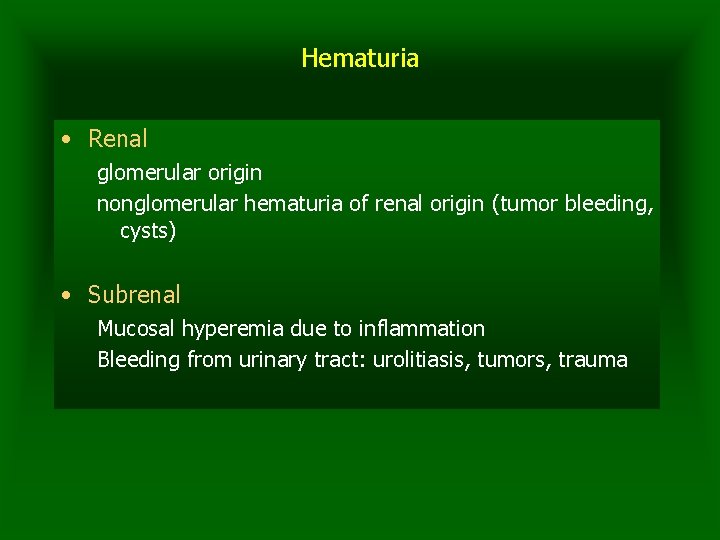
Hematuria • Renal glomerular origin nonglomerular hematuria of renal origin (tumor bleeding, cysts) • Subrenal Mucosal hyperemia due to inflammation Bleeding from urinary tract: urolitiasis, tumors, trauma
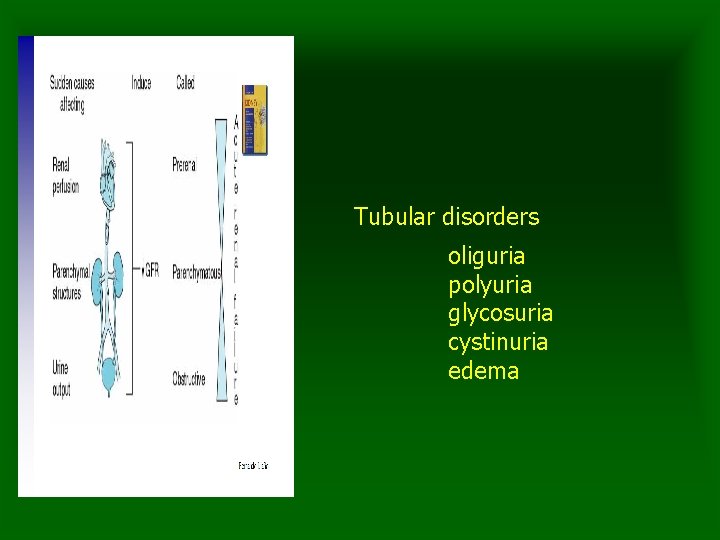
Tubular disorders oliguria polyuria glycosuria cystinuria edema
Oliguria ( 500 ml/day) • Renal hypoperfusion in low blood pressure hydrostatic pressure in glomerulus - GFR Prerenal ARF • Desquamation of necrotic tubular epithelial cells Na resorption – activation of TG mechanism tubular block leak of tubular fluid into the interstitium Intrarenal ARF (ischemic or toxic) • Block in urinary tract with hydronephrosis Postrenal ARF • Uremia: vomiting, apathy, somnolence, foetor azotaemicus, acidotic breathing; later bleeding, pericarditis, coma • Complications: hyperkalemia, lung and brain edema
Polyuria with polydipsia • High liquid intake Hypervolemia: natriuresis; low ADH production • Osmotic diuresis proximal tubule disorders: low resorption of Na a glucose hyperglycemia: tubular maximum chronic renal insufficiency: residual nephrons (increased GFR in nephron, insufficient Na resorption, decreased medullar osmolality) • Diabetes insipidus Hypoosmolal urine ( 100 m. Osm/1 kg); risk of dehydration) • Late diuretic phase of ARF epithelial regeneration; risk of dehydration and hypokalemie
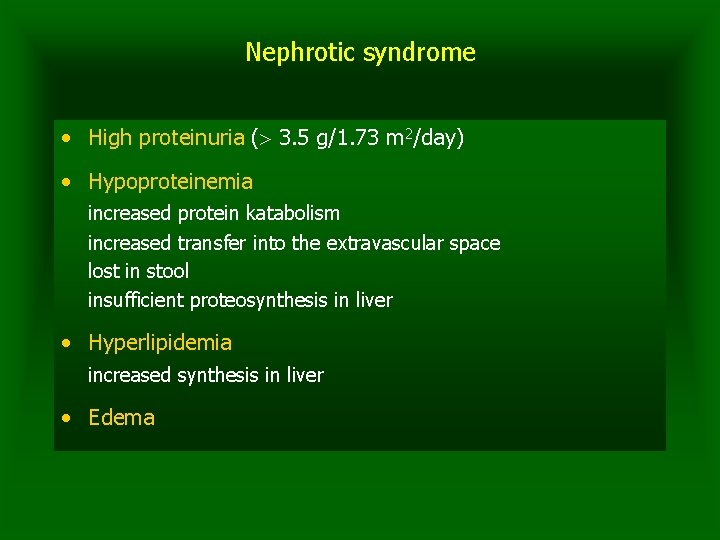
Nephrotic syndrome • High proteinuria ( 3. 5 g/1. 73 m 2/day) • Hypoproteinemia increased protein katabolism increased transfer into the extravascular space lost in stool insufficient proteosynthesis in liver • Hyperlipidemia increased synthesis in liver • Edema
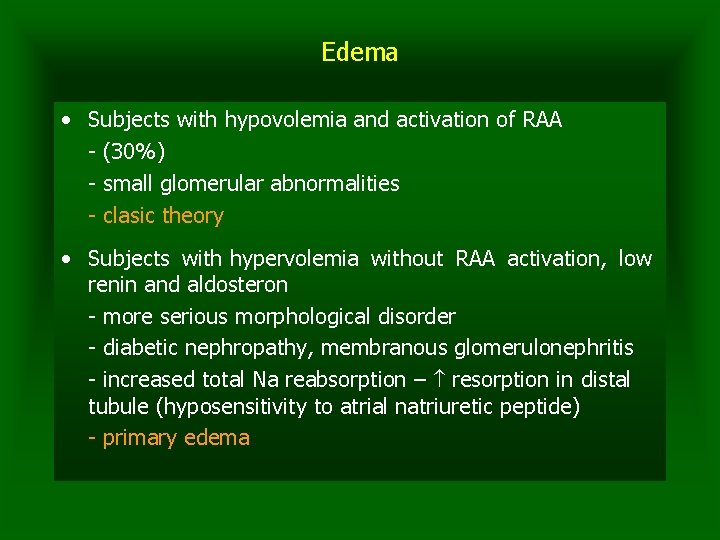
Edema • Subjects with hypovolemia and activation of RAA - (30%) - small glomerular abnormalities - clasic theory • Subjects with hypervolemia without RAA activation, low renin and aldosteron - more serious morphological disorder - diabetic nephropathy, membranous glomerulonephritis - increased total Na reabsorption – resorption in distal tubule (hyposensitivity to atrial natriuretic peptide) - primary edema
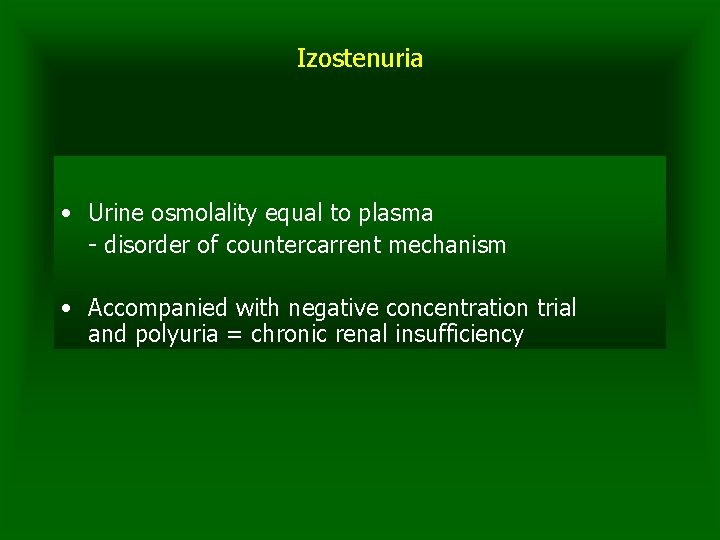
Izostenuria • Urine osmolality equal to plasma - disorder of countercarrent mechanism • Accompanied with negative concentration trial and polyuria = chronic renal insufficiency
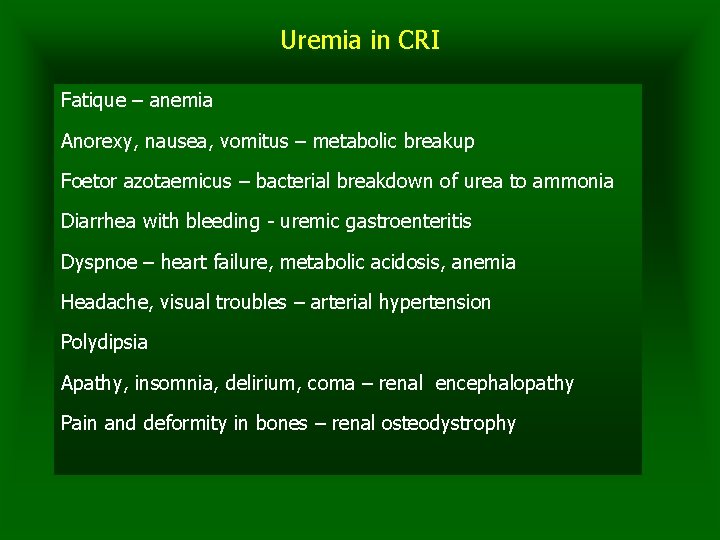
Uremia in CRI Fatique – anemia Anorexy, nausea, vomitus – metabolic breakup Foetor azotaemicus – bacterial breakdown of urea to ammonia Diarrhea with bleeding - uremic gastroenteritis Dyspnoe – heart failure, metabolic acidosis, anemia Headache, visual troubles – arterial hypertension Polydipsia Apathy, insomnia, delirium, coma – renal encephalopathy Pain and deformity in bones – renal osteodystrophy
Uremic toxicity urea creatinin methylguanidine uric acide indol, fenol acetoin, buthylenglycol …
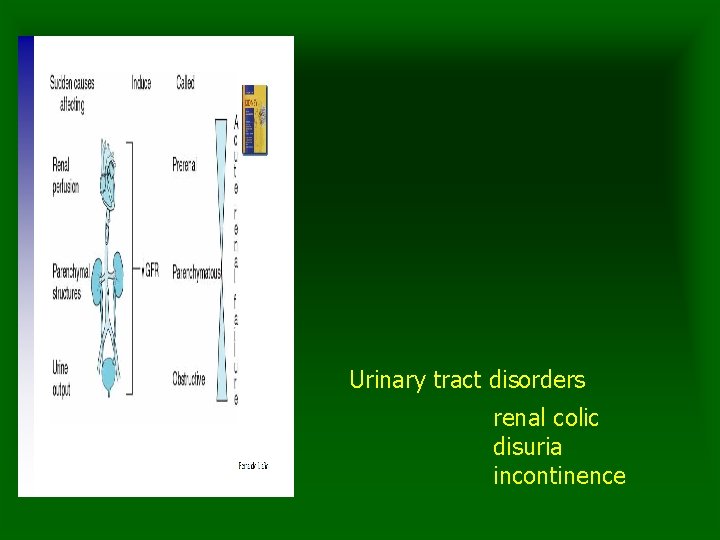
Urinary tract disorders renal colic disuria incontinence
Pain • Retroperitoneal in lumbar region hydronephrosis, cystic kidneys infarction pyelonephritis • Renal colic with hematuria ureter block with stone (increased peristalsis and dilatation) symptoms of acute abdomen with peritoneal irritation • Pain durin micturition (dysuria) cystitis, uretritis
Acute nephritic syndrome face edema macroscopic hematuria oliguria hypertension