
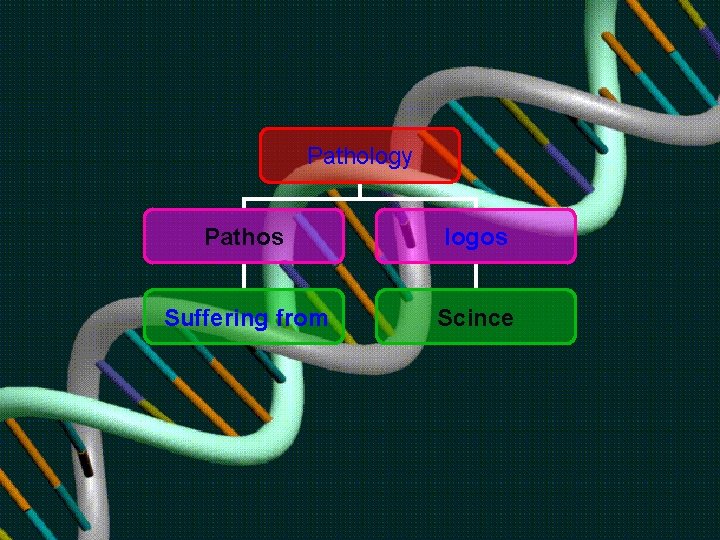
Pathology Pathos logos Suffering from Scince What is




- Slides: 15
Pathology Pathos logos Suffering from Scince
What is the cause of the suffering of the plant There are plants in their natural environment surrounded by lots of interrelated factors which can be divided into: . These factors twice each Optimum values where the relationship between the factor and plant twice a balanced relationship and where the plant helthy in terms of shape and anatomical structure and. Physiological performance Healthy Factors surrounding the plant Physical factors Chemical factors The occurrence of any imbalance in these factors lead to the suffering of the plant, which appear in the form of symptoms or signs of illness Biological factors
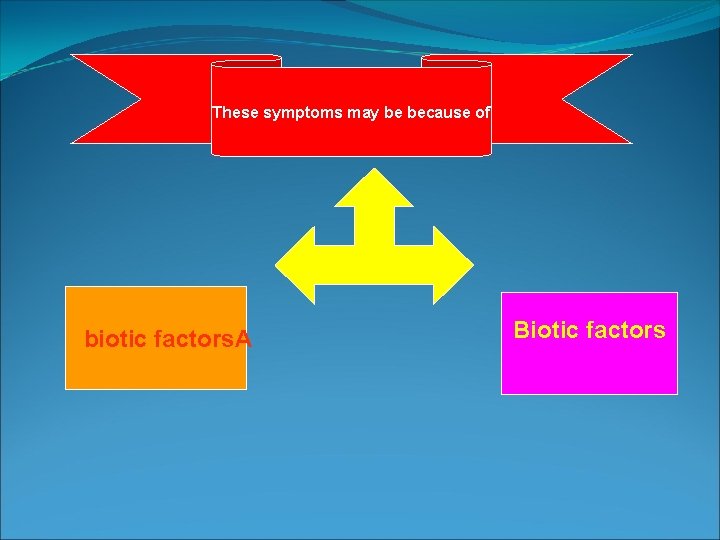
These symptoms may be because of biotic factors. A Biotic factors
These symptoms may be diagnostic or nondiagnostic Non Diagnostic Papaya ringspo virus mosaic
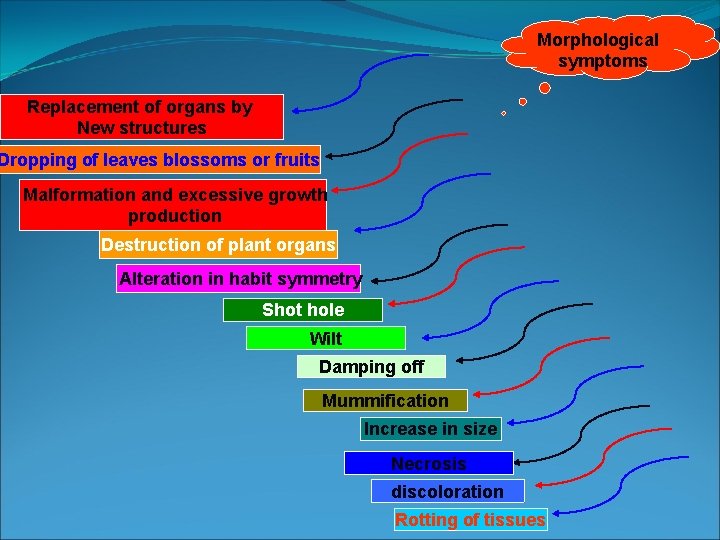
Morphological symptoms Replacement of organs by New structures Dropping of leaves blossoms or fruits Malformation and excessive growth production Destruction of plant organs Alteration in habit symmetry Shot hole Wilt Damping off Mummification Increase in size Necrosis discoloration Rotting of tissues
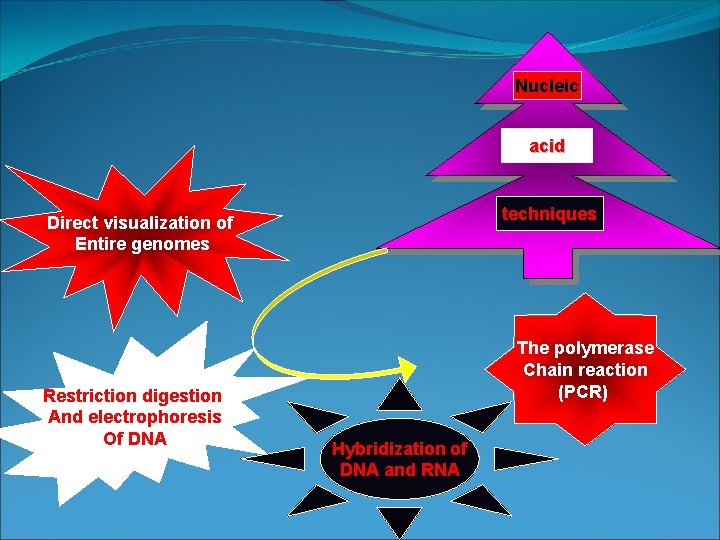
Nucleic acid techniques Direct visualization of Entire genomes Restriction digestion And electrophoresis Of DNA The polymerase Chain reaction (PCR) Hybridization of DNA and RNA
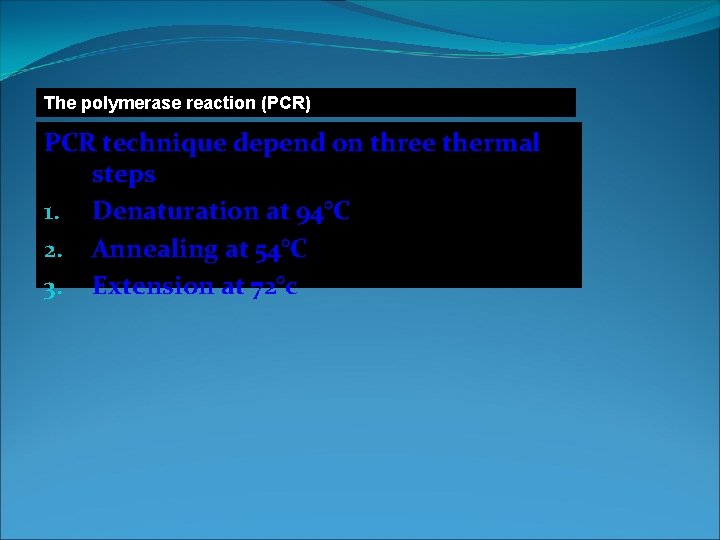
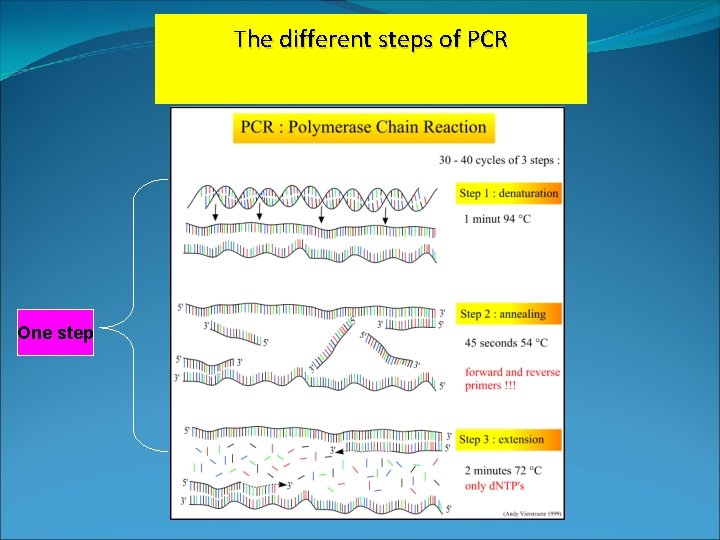
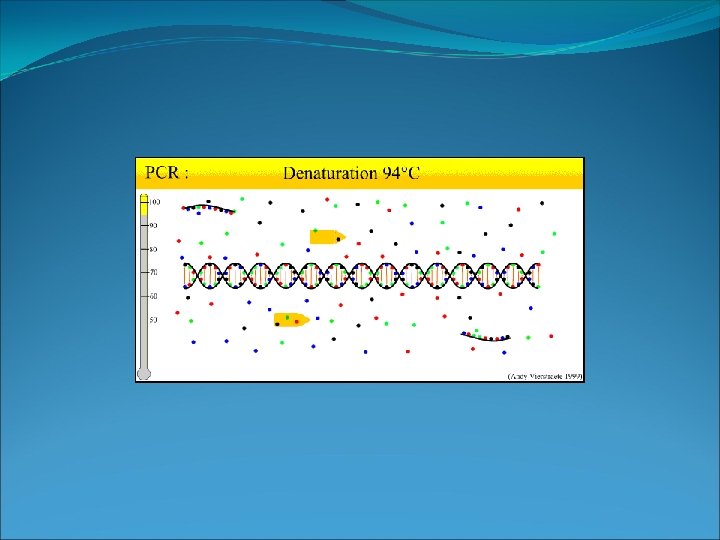
The polymerase reaction (PCR) PCR technique depend on three thermal steps 1. Denaturation at 94°C 2. Annealing at 54°C 3. Extension at 72°c
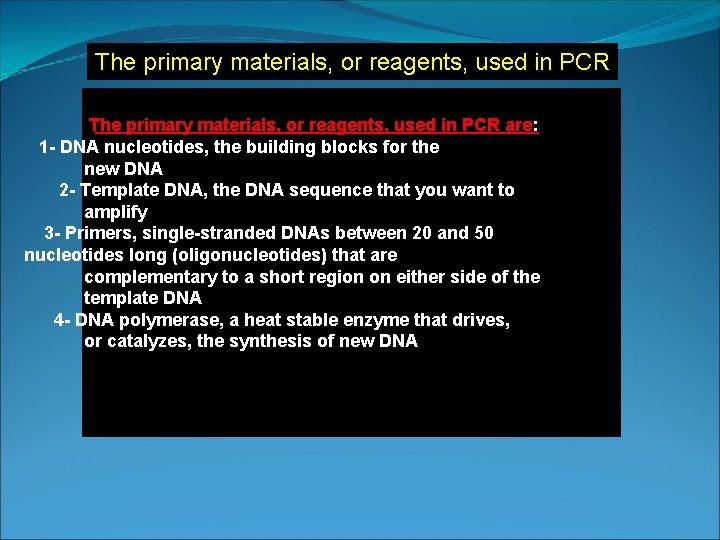
The primary materials, or reagents, used in PCR are: 1 - DNA nucleotides, the building blocks for the new DNA 2 - Template DNA, the DNA sequence that you want to amplify 3 - Primers, single-stranded DNAs between 20 and 50 nucleotides long (oligonucleotides) that are complementary to a short region on either side of the template DNA 4 - DNA polymerase, a heat stable enzyme that drives, or catalyzes, the synthesis of new DNA
The different steps of PCR One step
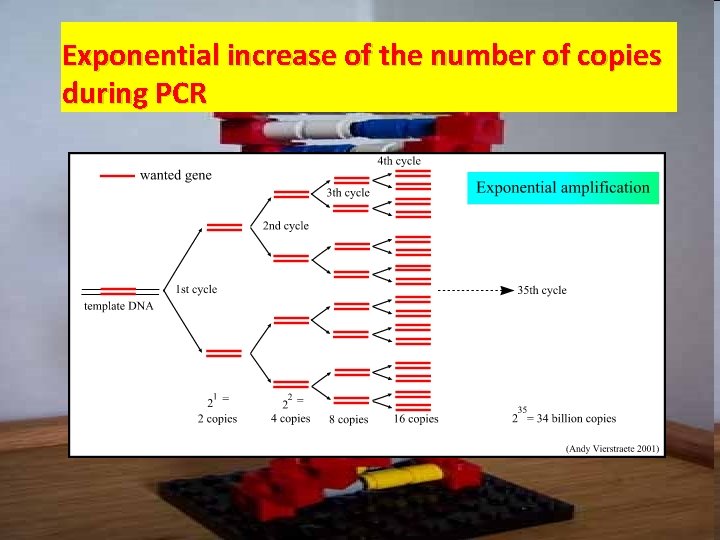
Exponential increase of the number of copies during PCR
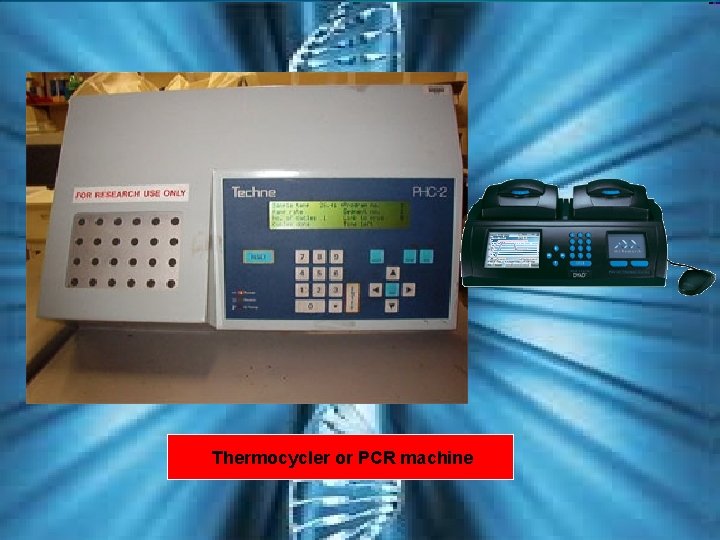
Thermocycler or PCR machine