
Pathology of the Oral Cavity Diseases of the
- Slides: 47
Pathology of the Oral Cavity
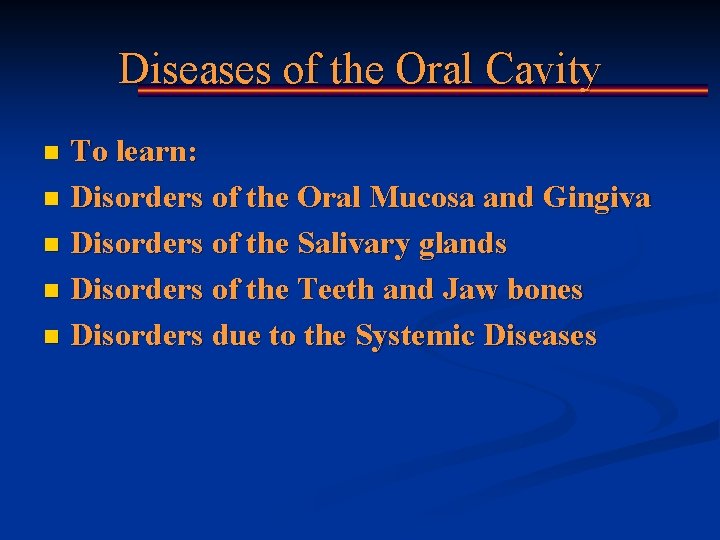
Diseases of the Oral Cavity To learn: n Disorders of the Oral Mucosa and Gingiva n Disorders of the Salivary glands n Disorders of the Teeth and Jaw bones n Disorders due to the Systemic Diseases n
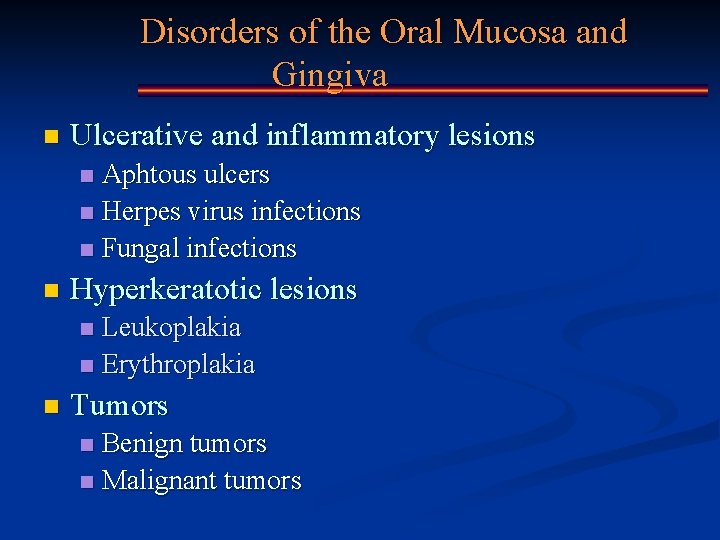
Disorders of the Oral Mucosa and Gingiva n Ulcerative and inflammatory lesions Aphtous ulcers n Herpes virus infections n Fungal infections n n Hyperkeratotic lesions Leukoplakia n Erythroplakia n n Tumors Benign tumors n Malignant tumors n
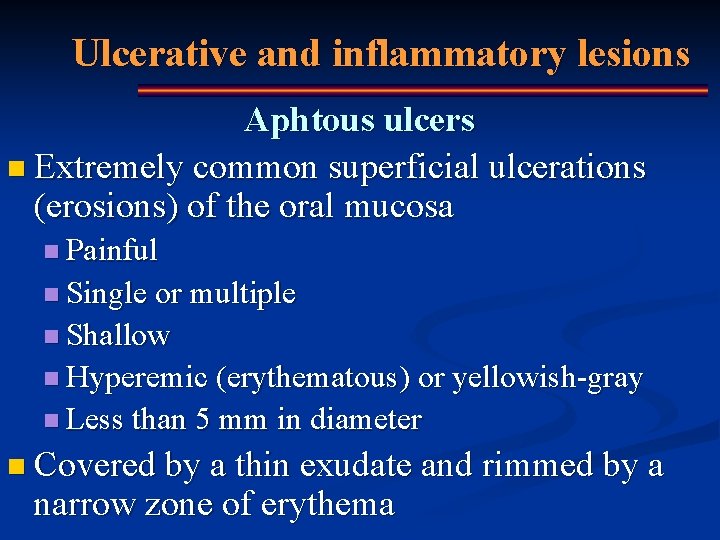
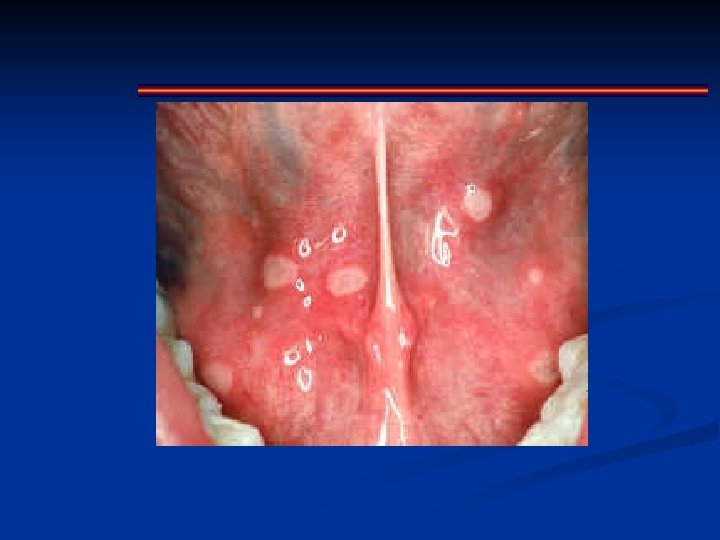
Ulcerative and inflammatory lesions Aphtous ulcers n Extremely common superficial ulcerations (erosions) of the oral mucosa n Painful n Single or multiple n Shallow n Hyperemic (erythematous) or yellowish-gray n Less than 5 mm in diameter n Covered by a thin exudate and rimmed by a narrow zone of erythema
n Location: n n Soft palate Buccolabial mucosa Floor of the mouth Lateral borders of the tongue
n Triggers or Etiology: n Inflammatory bowel diseases n Behçet’s disease n Hypersensitivity reactions n Emotional stress n Endocrine influences (pregnancy, menstruation) n Autoimmune reactions (involving both cellular and humoral mechanisms) n Infectious diseases
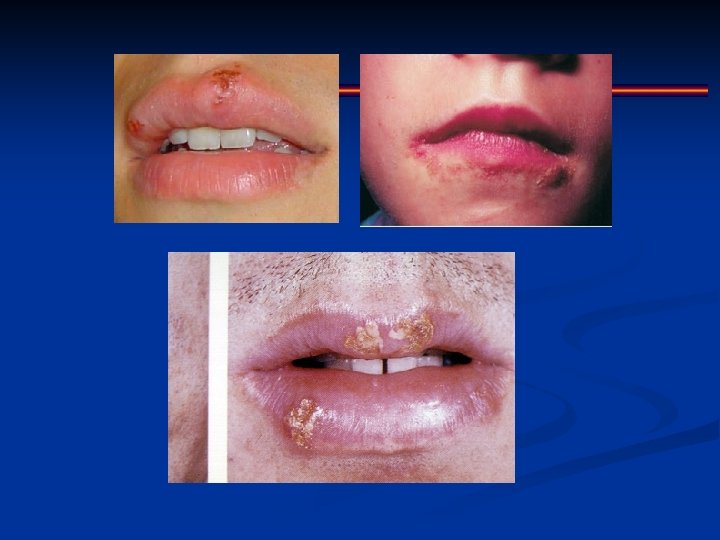
Herpes virus infections Orofacial herpetic infections are caused by HSV type 1 (HHV-1) n HHV-2 most often involves the genital tract n n n Most primary oral infections with HSV-1 are trivial “cold sores” Adults harbor latent HHV-1: n n n upper respiratory tract infections excessive exposure to cold, wind, or sunlight allergic reactions
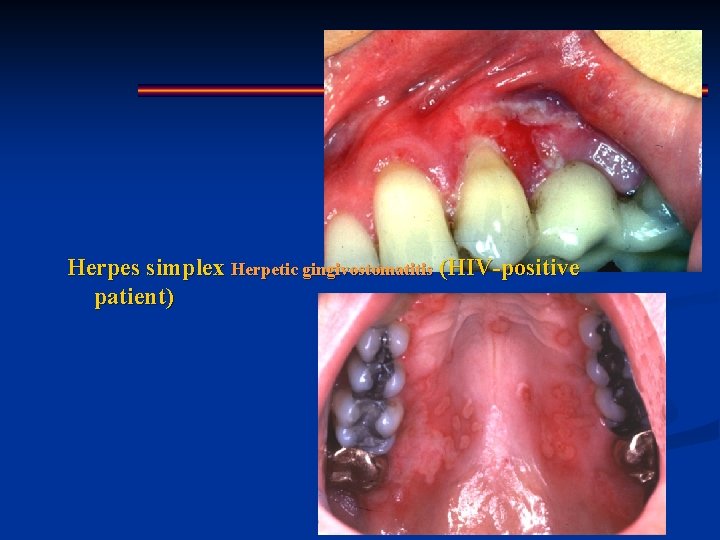
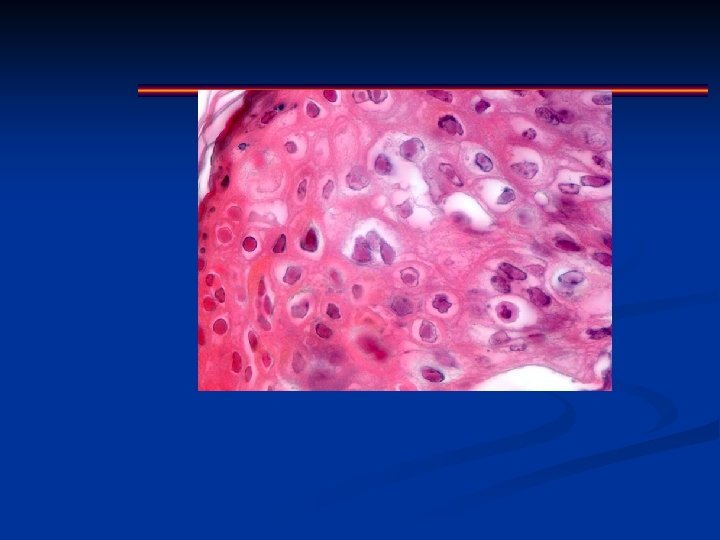
Herpetic gingivostomatitis n n n Generally acute Common in AIDS patients In severe cases n n n keratoconjunctivitis encephalitis Lesions: 1. 2. 3. the oral and pharyngeal mucosa the tongue the gingivae
Herpes simplex Herpetic gingivostomatitis (HIV-positive patient)
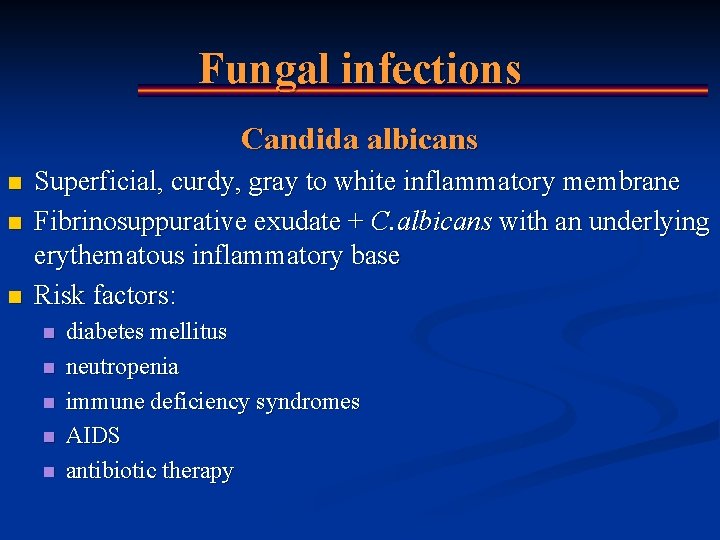
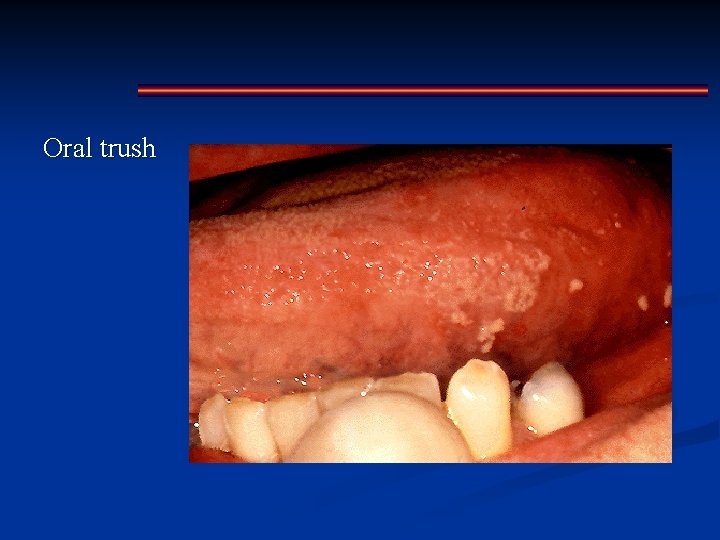
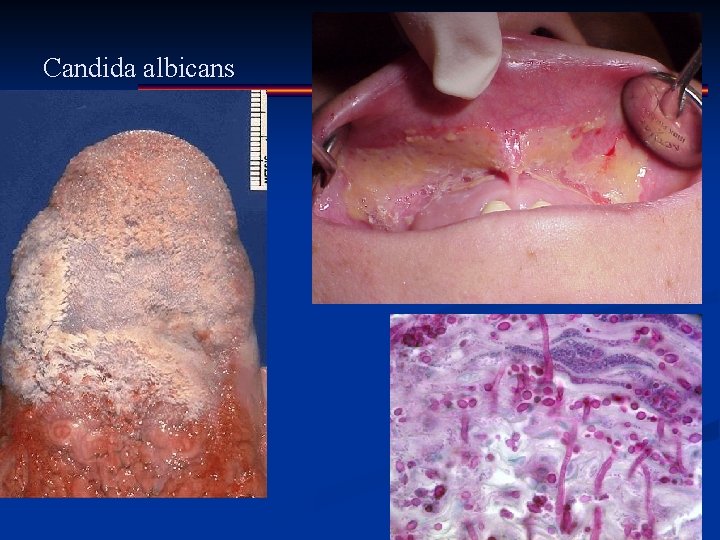
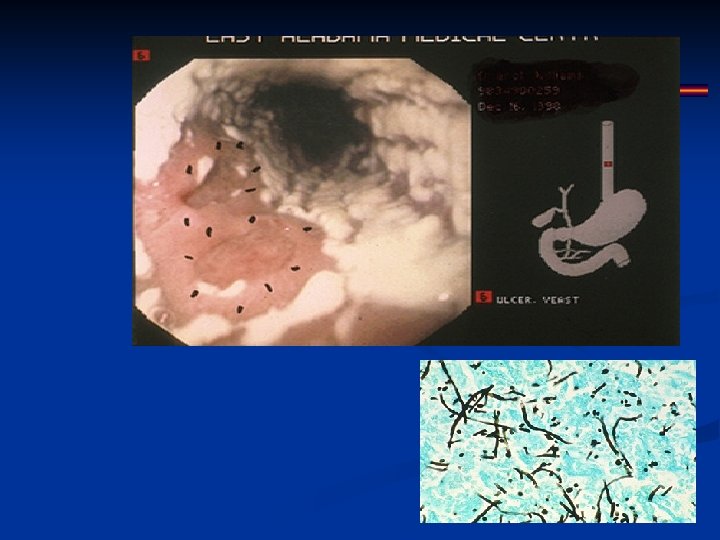
Fungal infections Candida albicans n n n Superficial, curdy, gray to white inflammatory membrane Fibrinosuppurative exudate + C. albicans with an underlying erythematous inflammatory base Risk factors: n n n diabetes mellitus neutropenia immune deficiency syndromes AIDS antibiotic therapy
Oral trush
Candida albicans
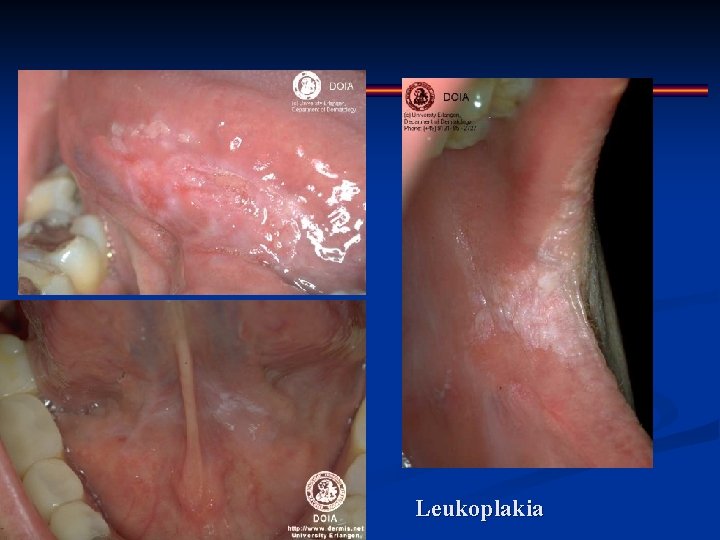
Hyperkeratotic lesions Leukoplakia (white plaque) n n White plaque on the oral mucous membranes that cannot be removed by scraping Precancerous lesion Range from completely benign epithelial thickenings to highly atypical lesions with dysplastic changes that merge with carcinoma in situ (CIS) Etiology: n Tobacco n n smoking (cigar, cigarette, pipe) Chewing tobaco Alcohol Chronic irritations (i. e. cheek bite)
Leukoplakia
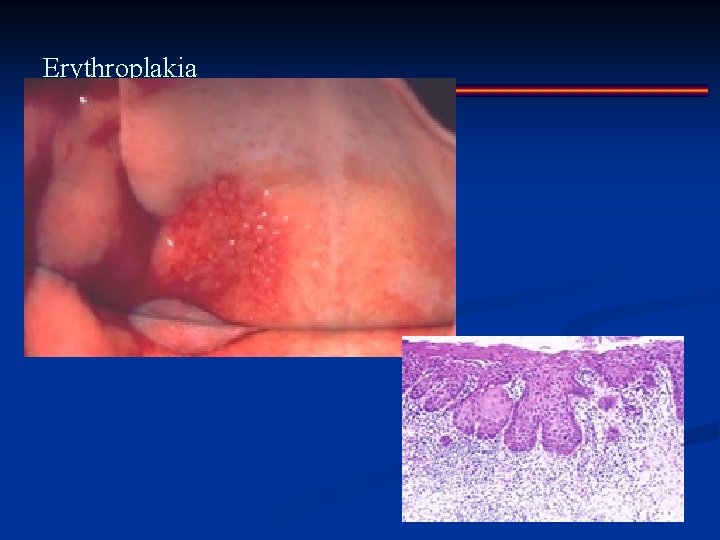
Erythroplakia (dysplastic leukoplakia) n Red, velvety, possibly eroded area n Higher risk of malignant transformation n n more than 50% Etiology: Tobacco (cigarettes, pipes, cigars, and particularly chewing tobacco ) n alcohol n Chronic exposure to persistent irritants n n ill-fitting dentures n hot meals n HPV
Erythroplakia
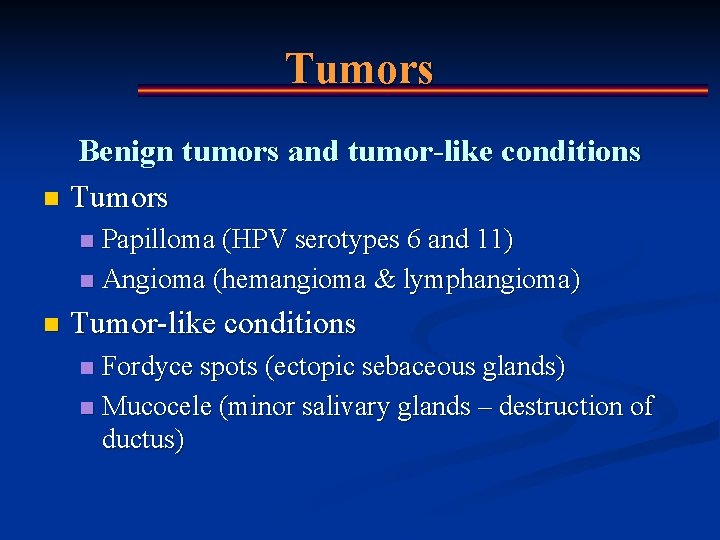
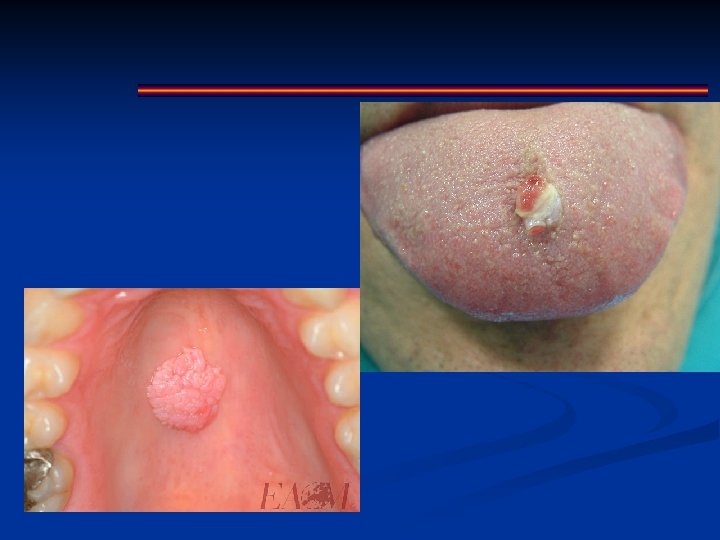
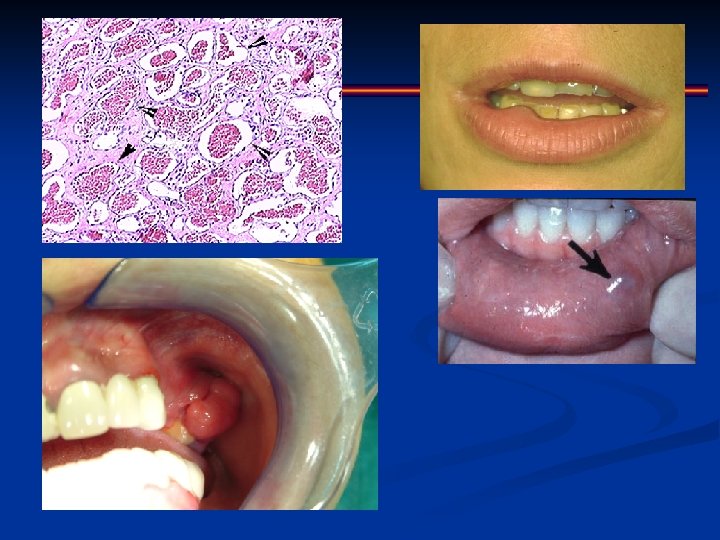
Tumors Benign tumors and tumor-like conditions n Tumors Papilloma (HPV serotypes 6 and 11) n Angioma (hemangioma & lymphangioma) n n Tumor-like conditions Fordyce spots (ectopic sebaceous glands) n Mucocele (minor salivary glands – destruction of ductus) n
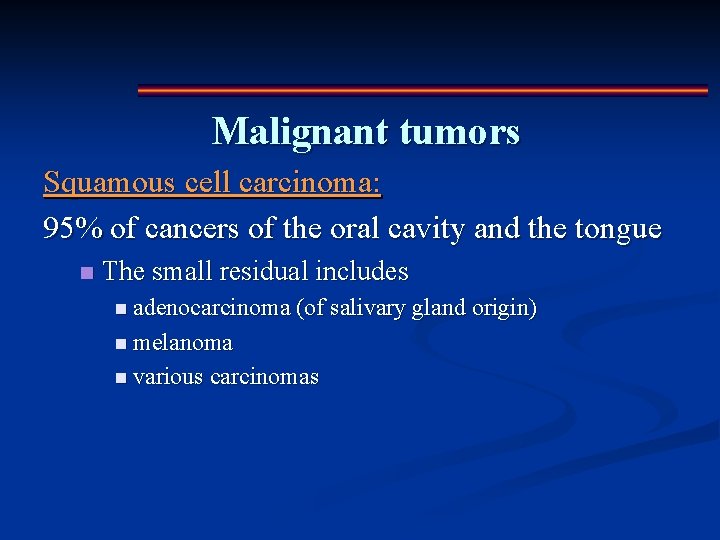
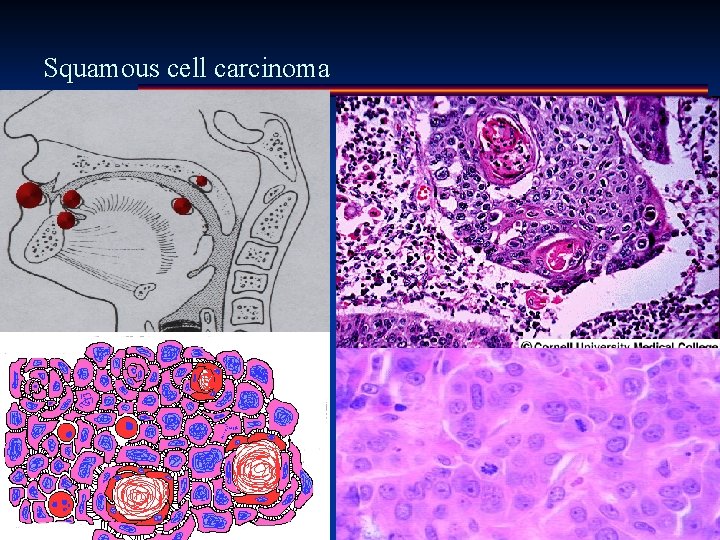
Malignant tumors Squamous cell carcinoma: 95% of cancers of the oral cavity and the tongue n The small residual includes n adenocarcinoma (of salivary gland origin) n melanoma n various carcinomas
Squamous cell carcinoma (Epidermoid carcinoma) n Location (most predicted): n n Lower lip Floor of the mouth Tongue (lateral borders) Etiology: n n n n Leukoplakia and erythroplakia Tobacco : alcohol&smoking, tobacco chewing Ill-fitting dentures Jagged teeth HPV Sunlight (lower lip) Chronic infections
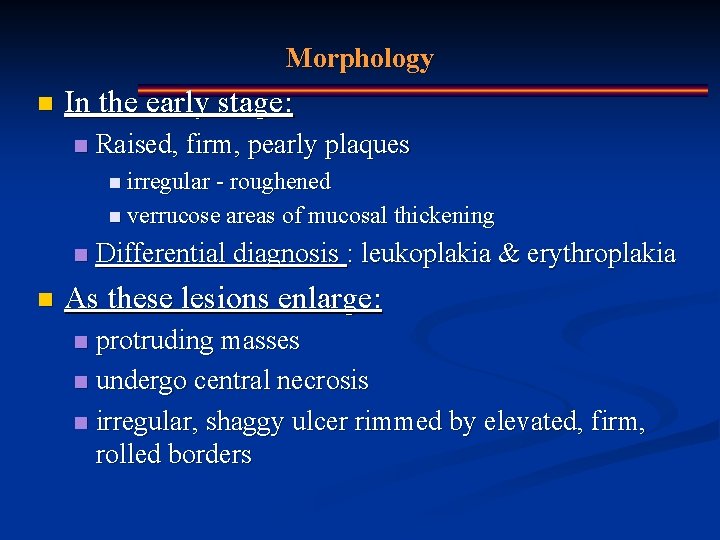
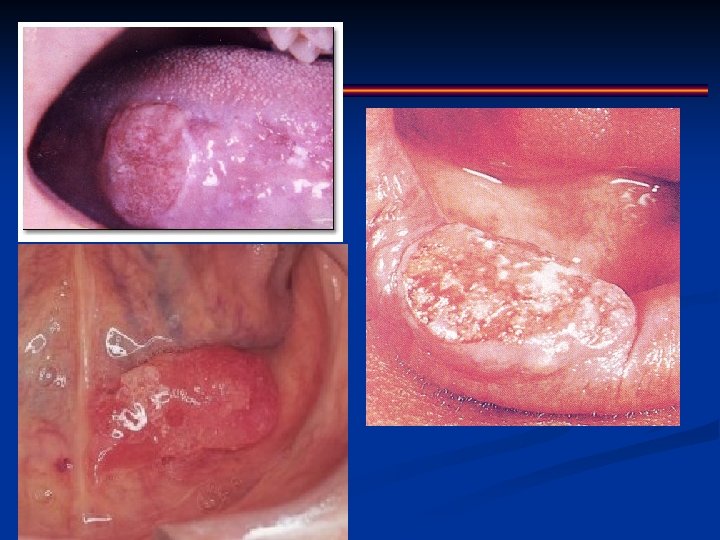
Morphology n In the early stage: n Raised, firm, pearly plaques n irregular - roughened n verrucose areas of mucosal thickening n n Differential diagnosis : leukoplakia & erythroplakia As these lesions enlarge: protruding masses n undergo central necrosis n irregular, shaggy ulcer rimmed by elevated, firm, rolled borders n
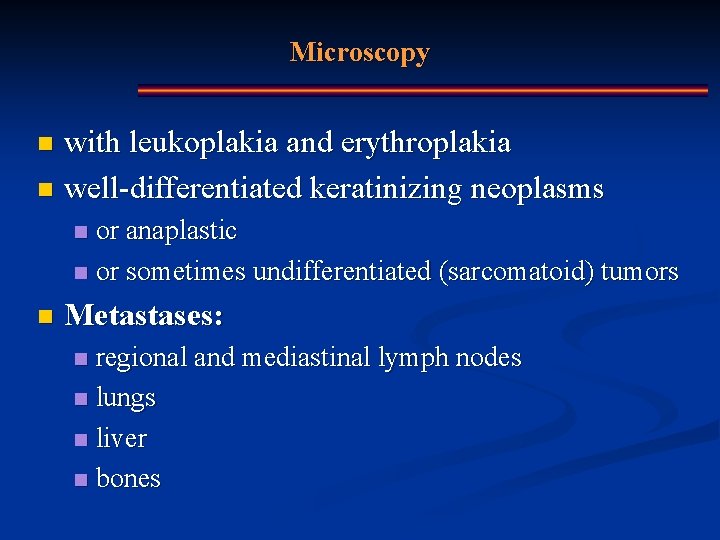
Microscopy with leukoplakia and erythroplakia n well-differentiated keratinizing neoplasms n or anaplastic n or sometimes undifferentiated (sarcomatoid) tumors n n Metastases: regional and mediastinal lymph nodes n lungs n liver n bones n
Squamous cell carcinoma
Disorders of the Salivary glands Inflammatory disorders n n Tumors Benign tumors n n n Sialadenitis Sjögren syndrome Mikulicz syndrome Plemorphic adenoma Warthin tumor Malignant tumors n n Mucoepidermoid carcinoma Adenoid cystic carcinoma
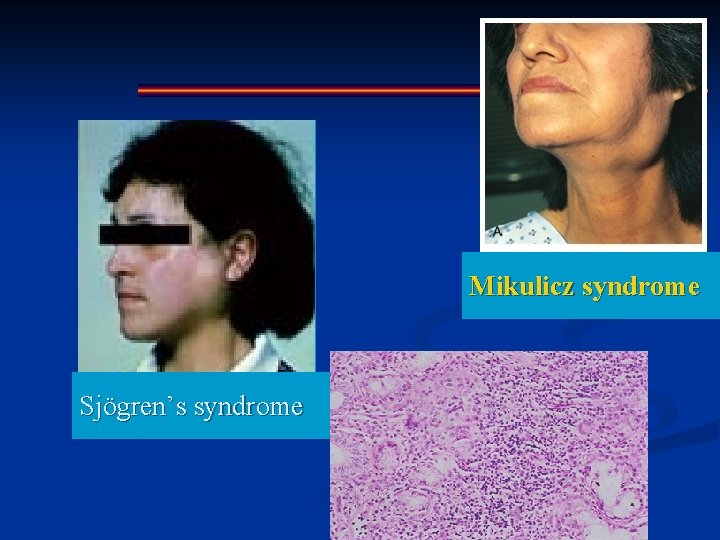
Inflammatory Disorders of the Salivary glands Viral (mumps) n Bacterial (complication of sialolithiasis) n Autoimmune origin n n Sjögren’s syndrome: xerostomia (dry mouth) n involvement lacrimal glands keratoconjunctivitis sicca (dry eyes) n involvement of the salivary glands n Sarcoidosis : bilateral sarcoidosis of the parotid, submaxillary, and sublingual glands n uvea involvement n
Mikulicz syndrome Sjögren’s syndrome
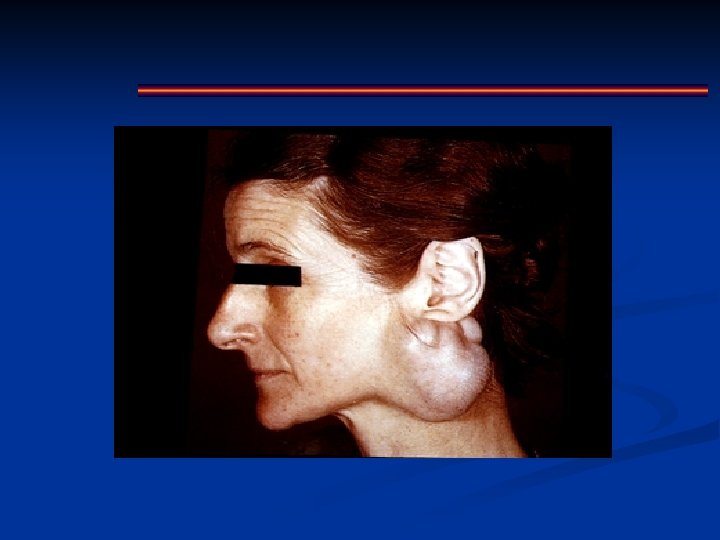
Tumors of the Salivary glands Benign tumors Plemorphic adenoma Mostly parotid gland n Painless swelling at the angle of the jaw n Excision; may recur (10%) n
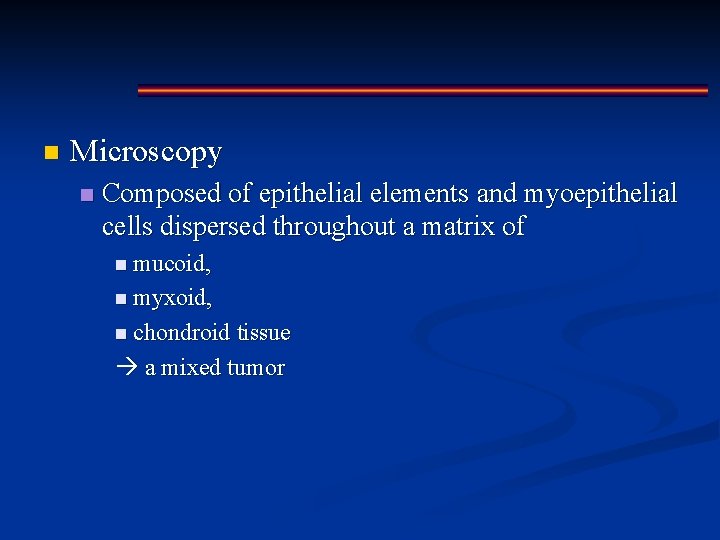
n Microscopy n Composed of epithelial elements and myoepithelial cells dispersed throughout a matrix of n mucoid, n myxoid, n chondroid tissue a mixed tumor
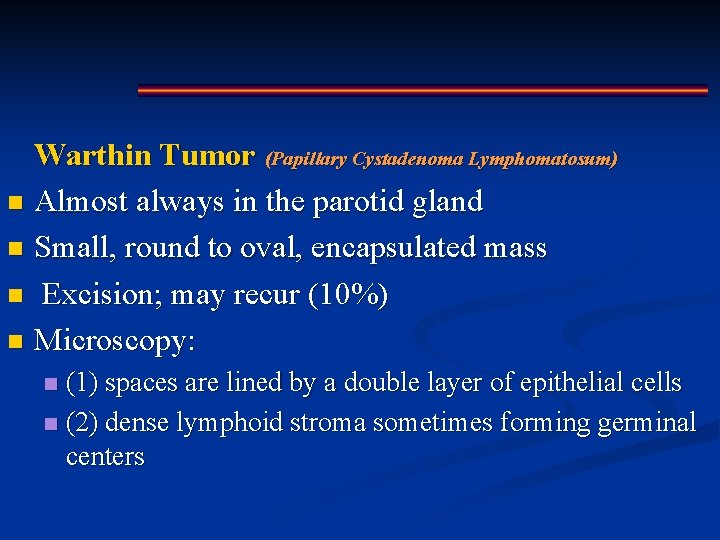
Warthin Tumor (Papillary Cystadenoma Lymphomatosum) n Almost always in the parotid gland n Small, round to oval, encapsulated mass n Excision; may recur (10%) n Microscopy: (1) spaces are lined by a double layer of epithelial cells n (2) dense lymphoid stroma sometimes forming germinal centers n
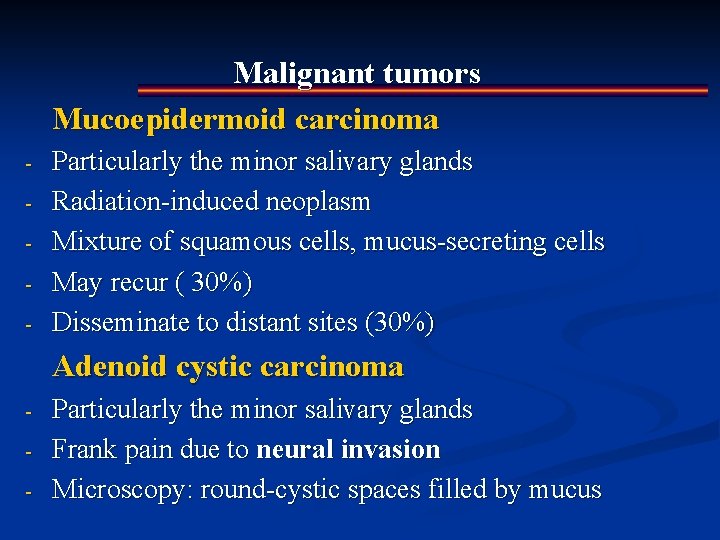
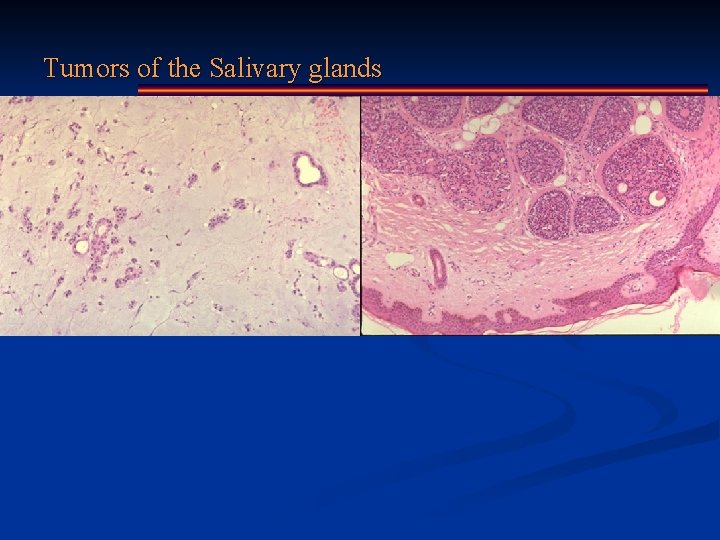
Malignant tumors Mucoepidermoid carcinoma - Particularly the minor salivary glands Radiation-induced neoplasm Mixture of squamous cells, mucus-secreting cells May recur ( 30%) Disseminate to distant sites (30%) Adenoid cystic carcinoma - Particularly the minor salivary glands Frank pain due to neural invasion Microscopy: round-cystic spaces filled by mucus
Tumors of the Salivary glands
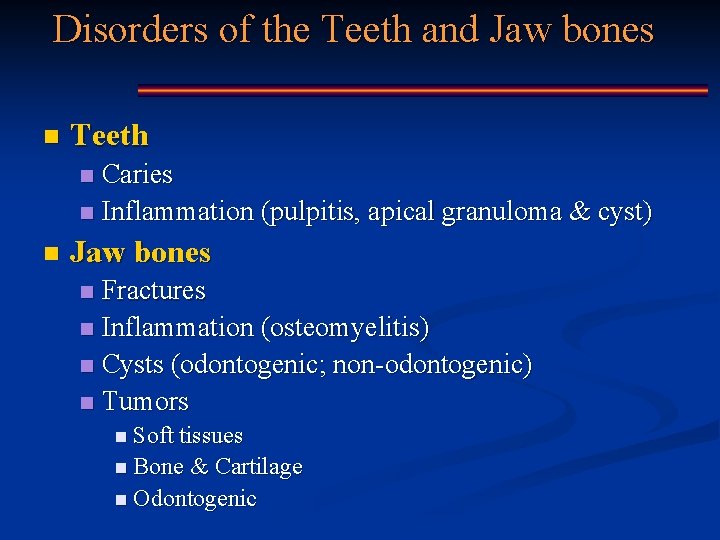
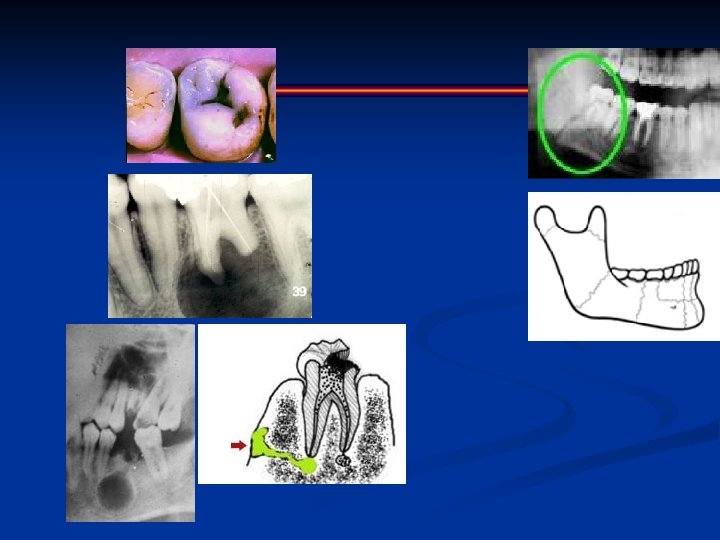
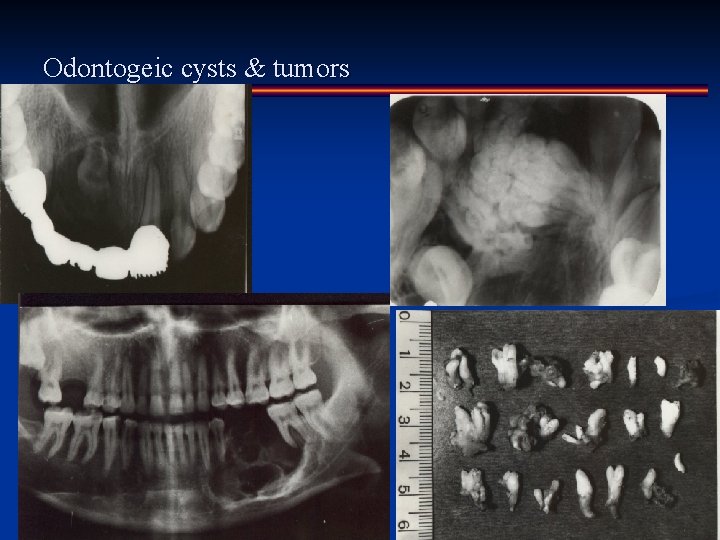
Disorders of the Teeth and Jaw bones n Teeth Caries n Inflammation (pulpitis, apical granuloma & cyst) n n Jaw bones Fractures n Inflammation (osteomyelitis) n Cysts (odontogenic; non-odontogenic) n Tumors n n Soft tissues n Bone & Cartilage n Odontogenic
Odontogeic cysts & tumors
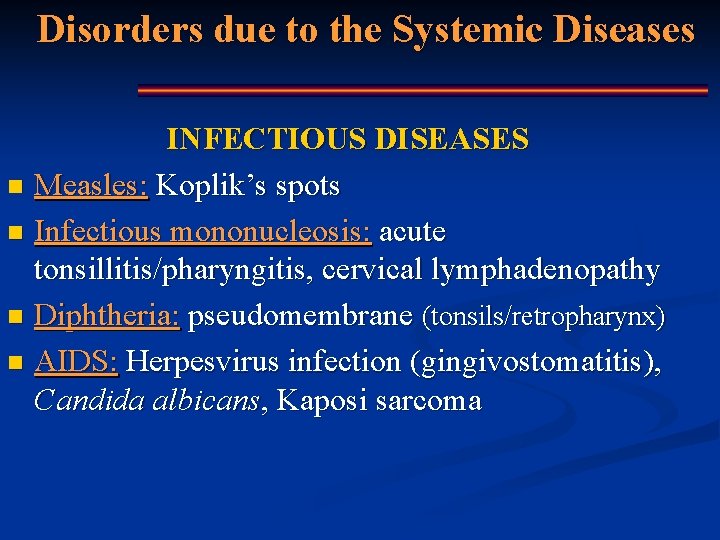
Disorders due to the Systemic Diseases INFECTIOUS DISEASES n Measles: Koplik’s spots n Infectious mononucleosis: acute tonsillitis/pharyngitis, cervical lymphadenopathy n Diphtheria: pseudomembrane (tonsils/retropharynx) n AIDS: Herpesvirus infection (gingivostomatitis), Candida albicans, Kaposi sarcoma
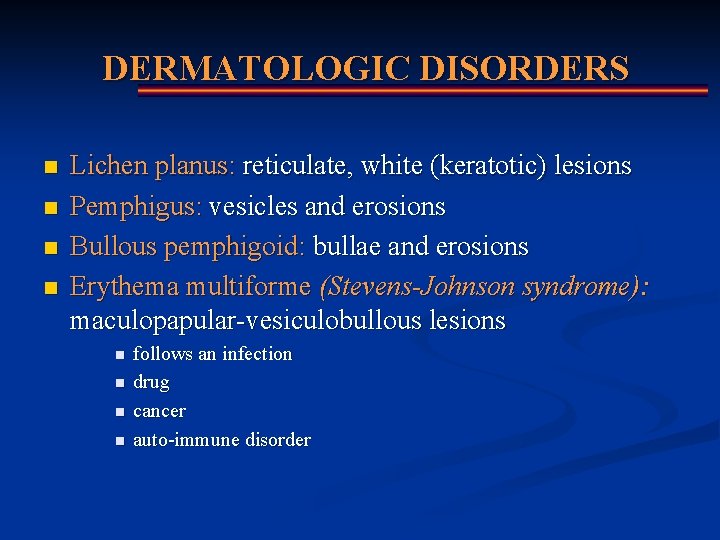
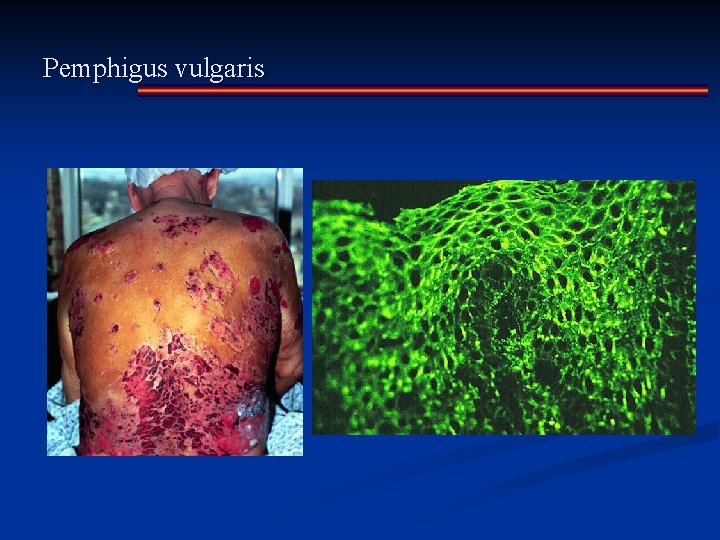
DERMATOLOGIC DISORDERS n n Lichen planus: reticulate, white (keratotic) lesions Pemphigus: vesicles and erosions Bullous pemphigoid: bullae and erosions Erythema multiforme (Stevens-Johnson syndrome): maculopapular-vesiculobullous lesions n n follows an infection drug cancer auto-immune disorder
Pemphigus vulgaris
HEMATOLOGIC DISORDERS n Pancytopenia and/or Leukemia n gingivitis n pharyngitis n tonsillitis n neck cellulitis (Ludwig’s angina) n Monocytic leukemia n gingival infiltration
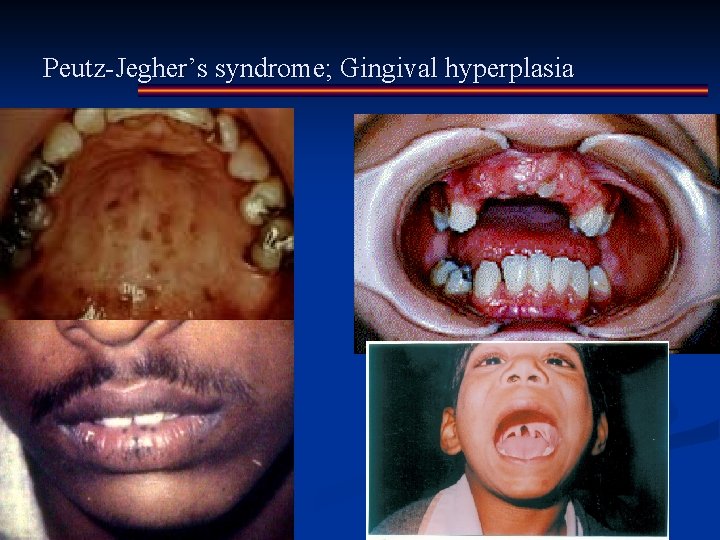
MISCELLANEOUS n Melanotic pigmentation: n n n Albright’s syndrome Peutz-Jegher’s syndrome Dilantin (phenytoin): gingival hyperplasia Pregnancy: granuloma gravidarum Other Syndromes: oral manifestations can be found in the hereditary or acquired syndromes n n Teeth anomalies Macroglossia Bifid palate/tongue/lip Hemangiomas, ect.
Peutz-Jegher’s syndrome; Gingival hyperplasia