
Pathology of Prostatic Enlargement Introduction l l l


- Slides: 103
Pathology of Prostatic Enlargement
Introduction l l l l l Anatomy – 5 lobes. Simplified: 3 lobes ; right, left, middle 3 zones : base, middle, apex Median/Posterior – (BPH/Cancer) Function ? Hormone response – Estrogen like Enlargement – Inflammation / growth Neoplastic / Non neoplastic growth. BPH / Cancer.
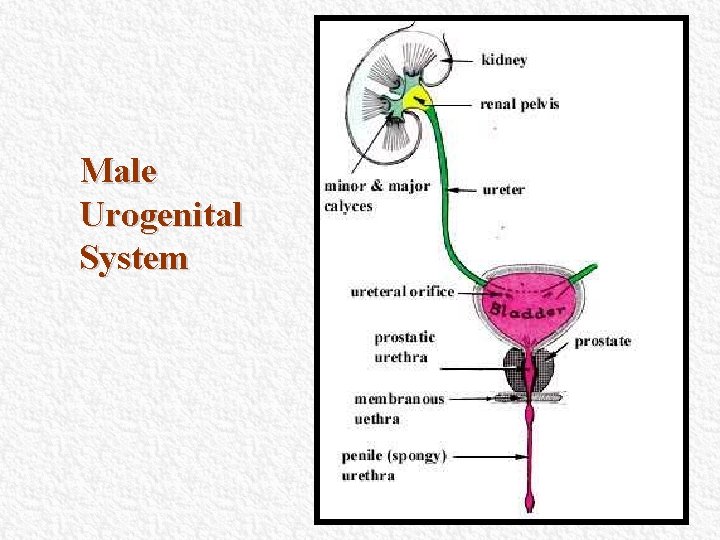
Male Urogenital System
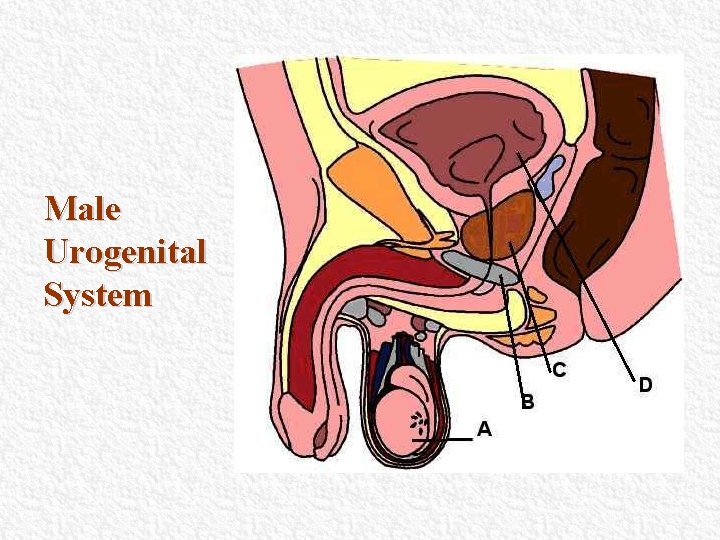
Male Urogenital System
Enlargement of Prostate: l BPH – Benign Prostatic Hyperplasia l Inflammations – infections l Neoplasms – Carcinoma.
Introduction l Common l Involves non-neoplastic lesion. peri urethral zone. l BPH is common as men age. l 75% among men aged 70 -80 years l Over 90% in people aged over 90 y l Rare before the age of 40 y. l? Physiological …
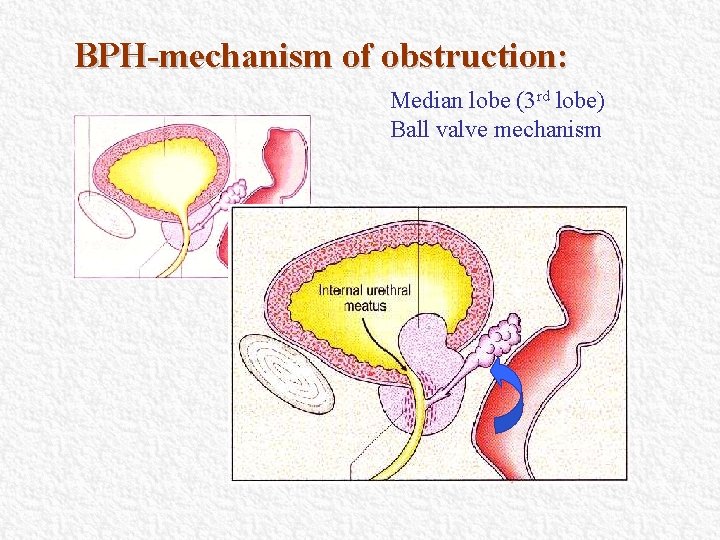
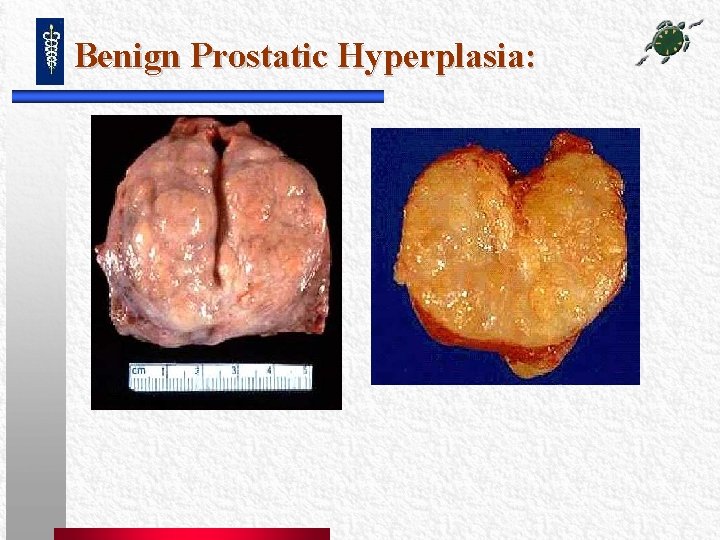
BPH-Pathophysiology: l Excess hormones – estrogen like. l Nodular hyperplasia of glands & stroma. l From normal 20 to 30 50 to 100 gm. l Press upon the prostatic urethra. l Obstruction - difficulty on urination l Dysuria, retention, dribbling, nocturia l Infections, hydronephrosis, renal failure. l Not a premalignant condition*
BPH - Mechanism l Hormonal l Estrogen imbalance with ageing. sensitive peri-urethral glands. l Accumulation of dihydrotestosterone in the prostate and its growth-promoting androgenic effect l Some Drugs (Finasteride) inhibit dihydrotestosterone and diminishes prostatic enlargement.
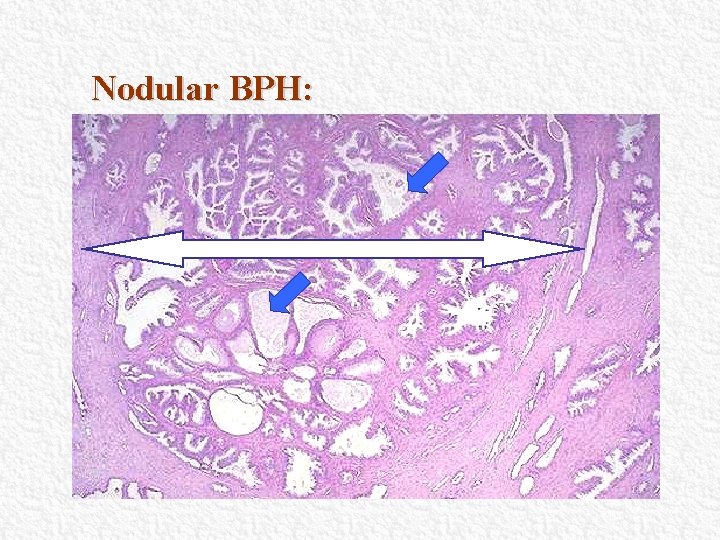
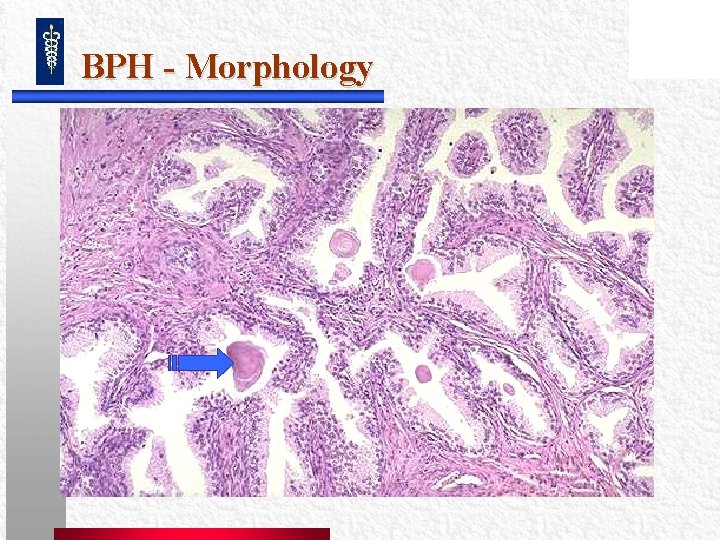
BPH-Morphology l Microscopically, nodular prostatic hyperplasia consists of nodules of glands and intervening stroma. (Mostly glands) l The glands variably sized, with larger glands have more prominent papillary infoldings. l Nodular hyperplasia is NOT a precursor to carcinoma.
BPH-mechanism of obstruction: Median lobe (3 rd lobe) Ball valve mechanism
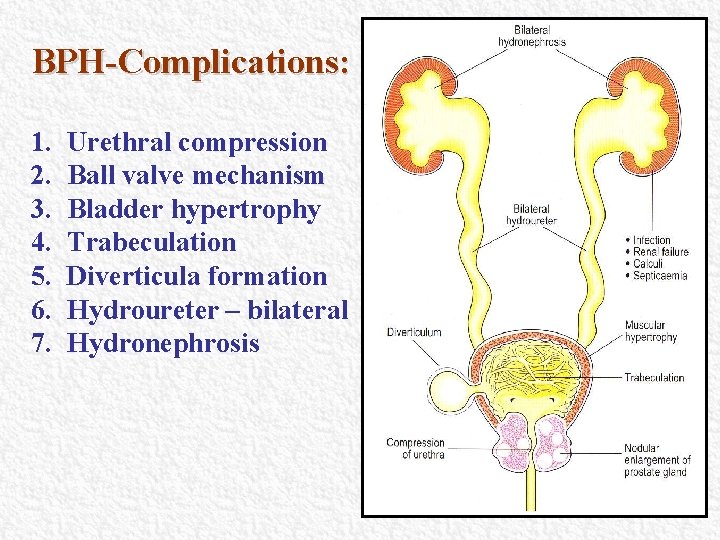
BPH-Complications: 1. 2. 3. 4. 5. 6. 7. Urethral compression Ball valve mechanism Bladder hypertrophy Trabeculation Diverticula formation Hydroureter – bilateral Hydronephrosis
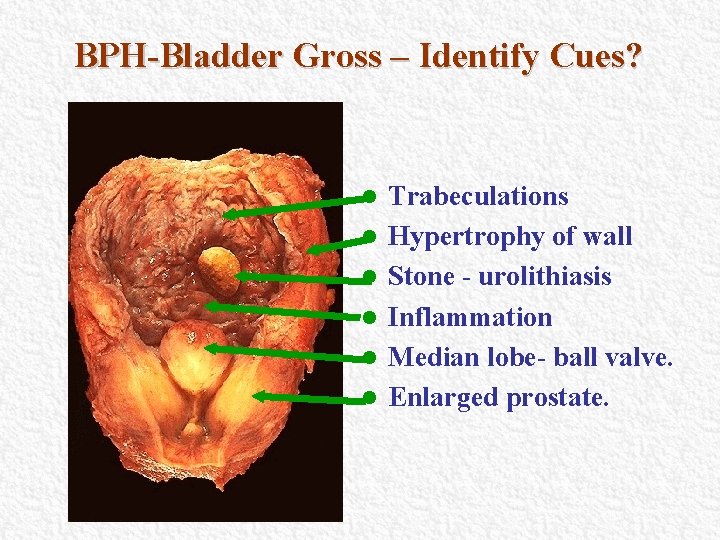
BPH-Bladder Gross – Identify Cues? l l l Trabeculations Hypertrophy of wall Stone - urolithiasis Inflammation Median lobe- ball valve. Enlarged prostate.
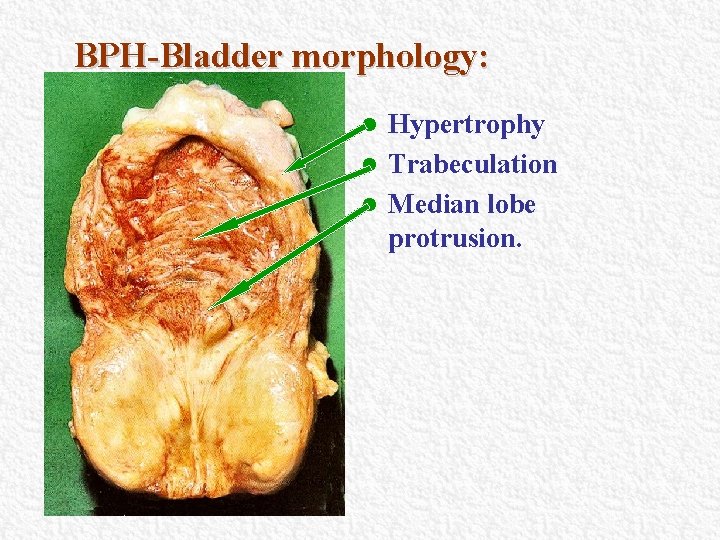
BPH-Bladder morphology: Hypertrophy l Trabeculation l Median lobe protrusion. l
Benign Prostatic Hyperplasia:
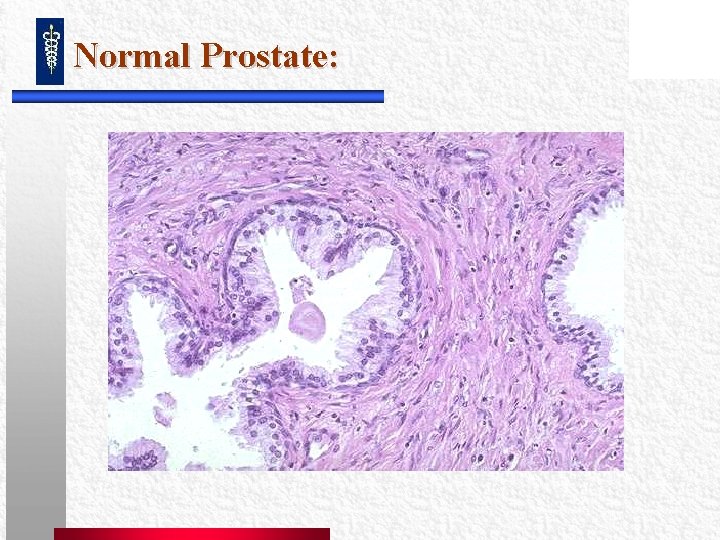
Normal Prostate:
Nodular BPH:
BPH - Morphology
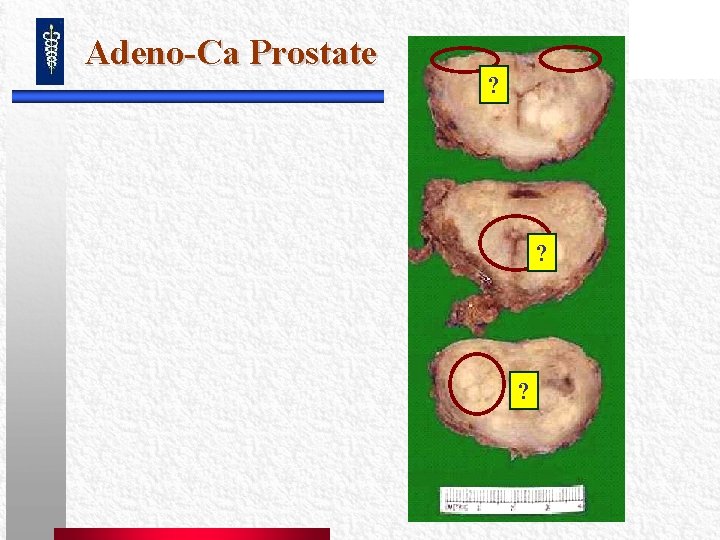
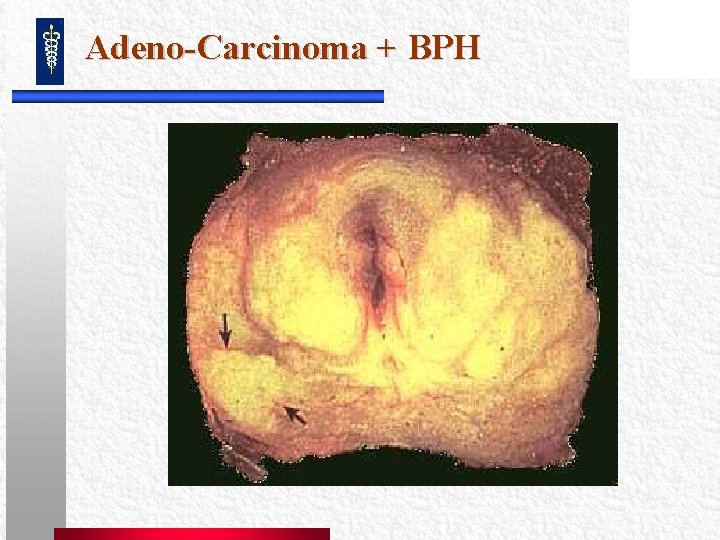
Adenocarcinoma Prostate: l Adenocarcinoma of the prostate is common in elderly men. l It is rare before the age of 50, but seen in over half of men 80 years old. l Many of these carcinomas are small and clinically insignificant. l Is second only to lung carcinoma as a cause for tumor-related deaths among males.
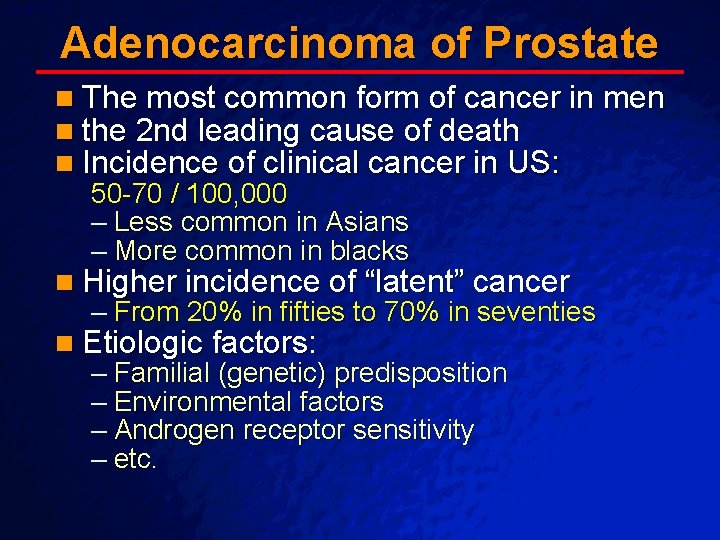
Slide 19 © 2003 By Default! Adenocarcinoma of Prostate n The most common form of cancer in men n the 2 nd leading cause of death n Incidence of clinical cancer in US: 50 -70 / 100, 000 – Less common in Asians – More common in blacks n Higher incidence of “latent” cancer – From 20% in fifties to 70% in seventies n Etiologic factors: – Familial (genetic) predisposition – Environmental factors – Androgen receptor sensitivity – etc. A Free sample background from www. powerpointbackgrounds. com
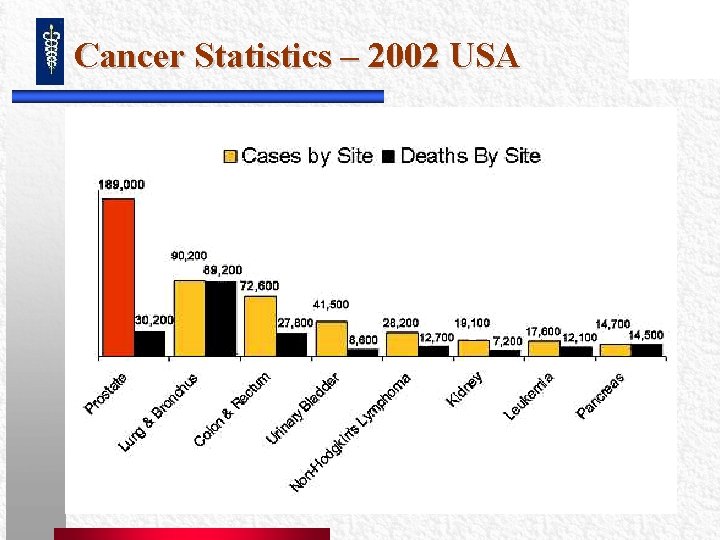
Cancer Statistics – 2002 USA
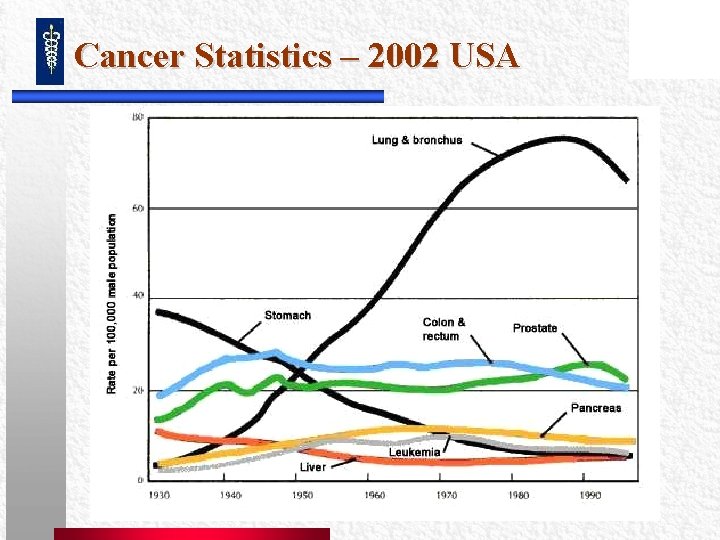
Cancer Statistics – 2002 USA
Adeno-Ca Prostate ? ? ?
Adeno-Carcinoma + BPH
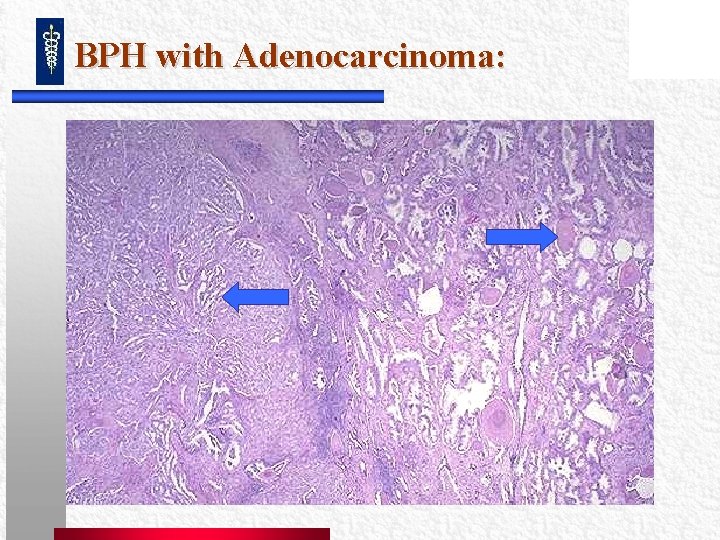
BPH with Adenocarcinoma:
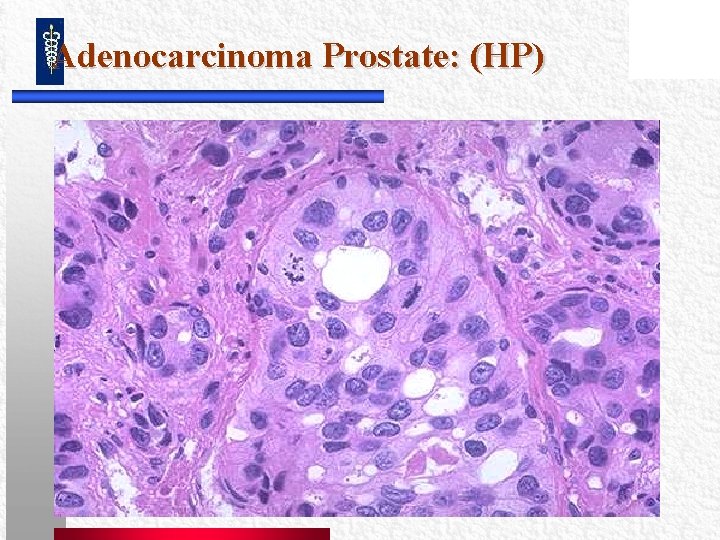
Adenocarcinoma Prostate: (HP)
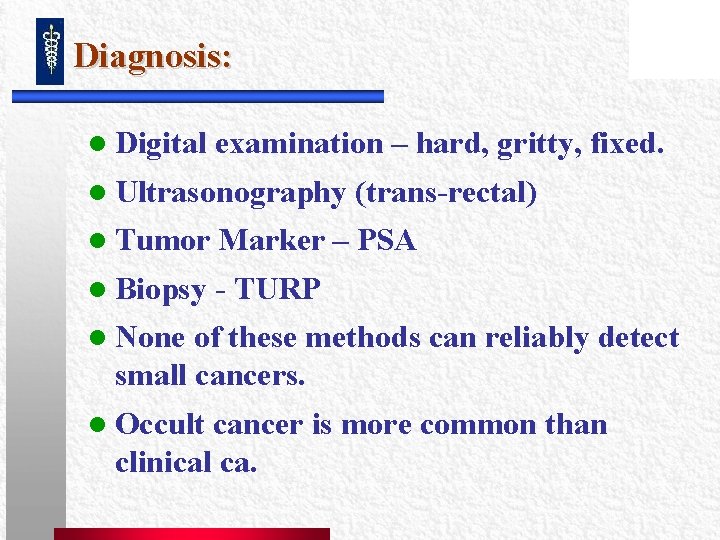
Diagnosis: l Digital examination – hard, gritty, fixed. l Ultrasonography (trans-rectal) l Tumor Marker – PSA l Biopsy - TURP l None of these methods can reliably detect small cancers. l Occult cancer is more common than clinical ca.
Prognosis of Adenocarcinoma: l Grade & Stage Prognosis. l Urinary obstruction, metastasize to lymph nodes and bones. l Bladder, kidney damage. l Hematuria. l Spread to Lungs or liver – rare.
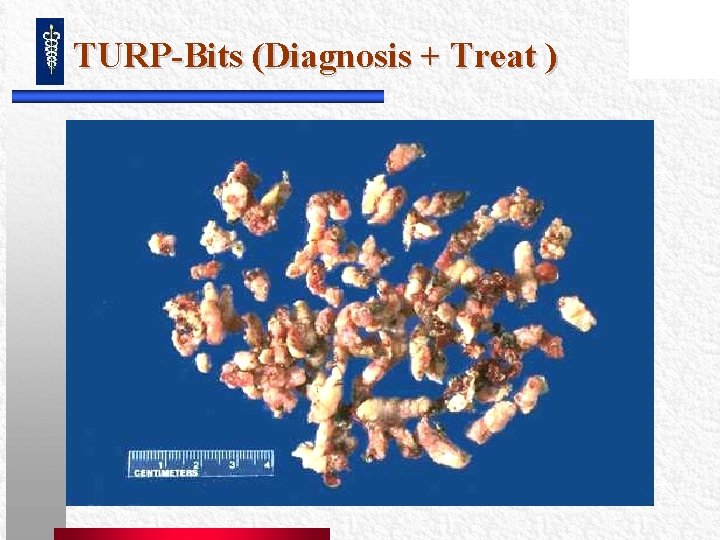
TURP-Bits (Diagnosis + Treat )
Slide 29 © 2003 By Default! Main Diagnostic Tools n Digital Rectal Examination (DRE) n Serum PSA n Trans-Rectal Ultra-sonography (TRUS) A Free sample background from www. powerpointbackgrounds. com
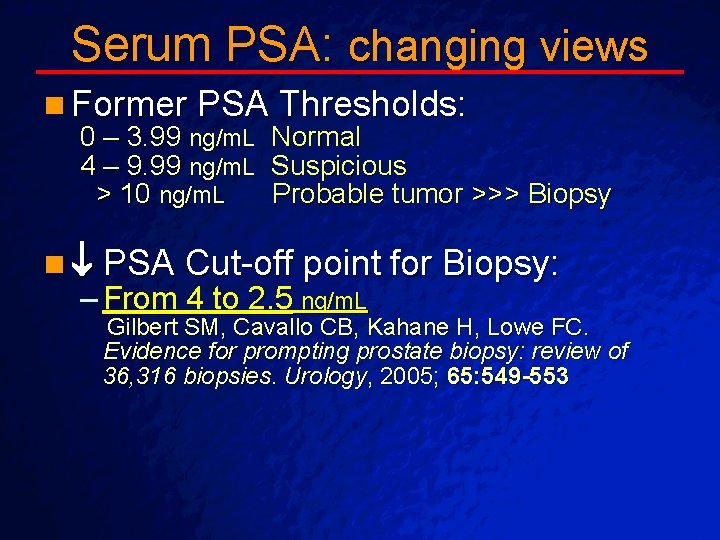
Slide 30 © 2003 By Default! Serum PSA: changing views n Former PSA Thresholds: 0 – 3. 99 ng/m. L Normal 4 – 9. 99 ng/m. L Suspicious > 10 ng/m. L Probable tumor >>> Biopsy n PSA Cut-off point for Biopsy: – From 4 to 2. 5 ng/m. L Gilbert SM, Cavallo CB, Kahane H, Lowe FC. Evidence for prompting prostate biopsy: review of 36, 316 biopsies. Urology, 2005; 65: 549 -553 A Free sample background from www. powerpointbackgrounds. com
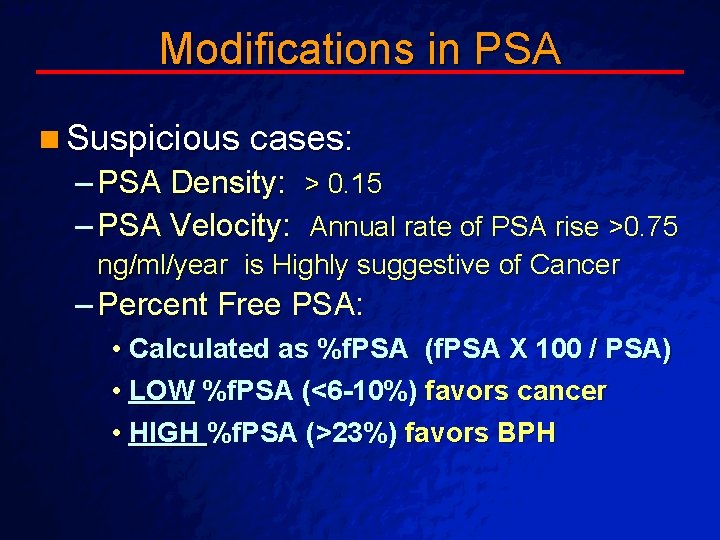
Slide 31 © 2003 By Default! Modifications in PSA n Suspicious cases: – PSA Density: > 0. 15 – PSA Velocity: Annual rate of PSA rise >0. 75 ng/ml/year is Highly suggestive of Cancer – Percent Free PSA: • Calculated as %f. PSA (f. PSA X 100 / PSA) • LOW %f. PSA (<6 -10%) favors cancer • HIGH %f. PSA (>23%) favors BPH A Free sample background from www. powerpointbackgrounds. com
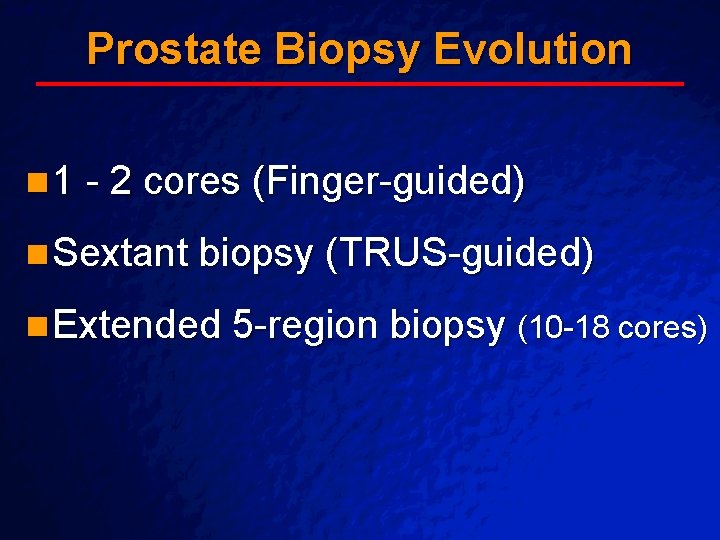
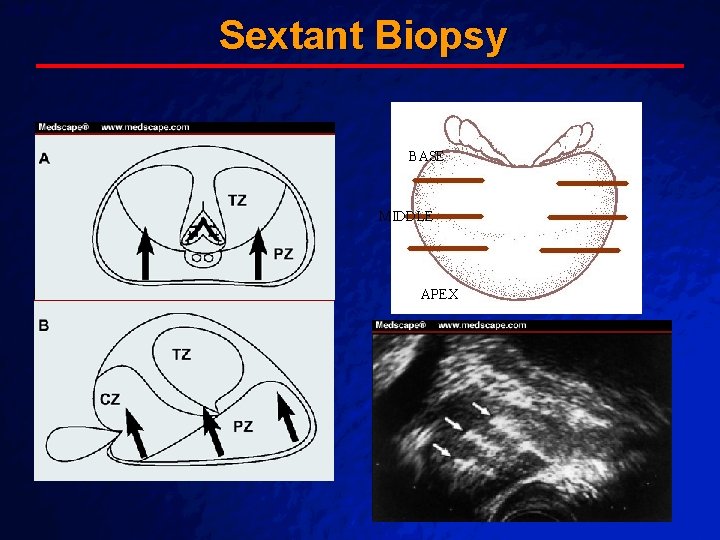
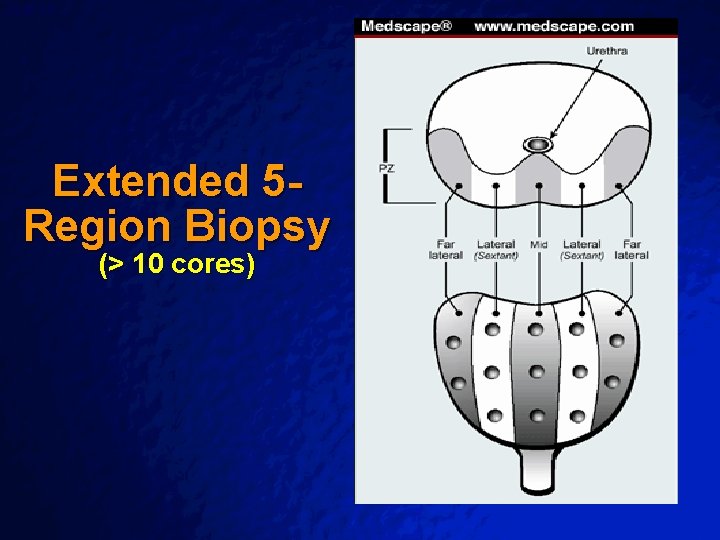
Slide 32 © 2003 By Default! Prostate Biopsy Evolution n 1 - 2 cores (Finger-guided) n Sextant biopsy (TRUS-guided) n Extended 5 -region biopsy (10 -18 cores) A Free sample background from www. powerpointbackgrounds. com
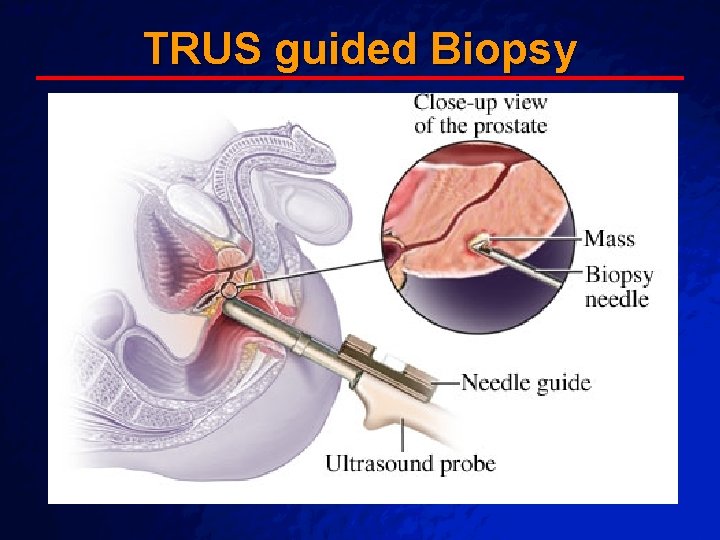
Slide 33 © 2003 By Default! TRUS guided Biopsy A Free sample background from www. powerpointbackgrounds. com
Slide 34 Sextant Biopsy BASE MIDDLE APEX A Free sample background from www. powerpointbackgrounds. com © 2003 By Default!
Slide 35 © 2003 By Default! Extended 5 Region Biopsy (> 10 cores) A Free sample background from www. powerpointbackgrounds. com
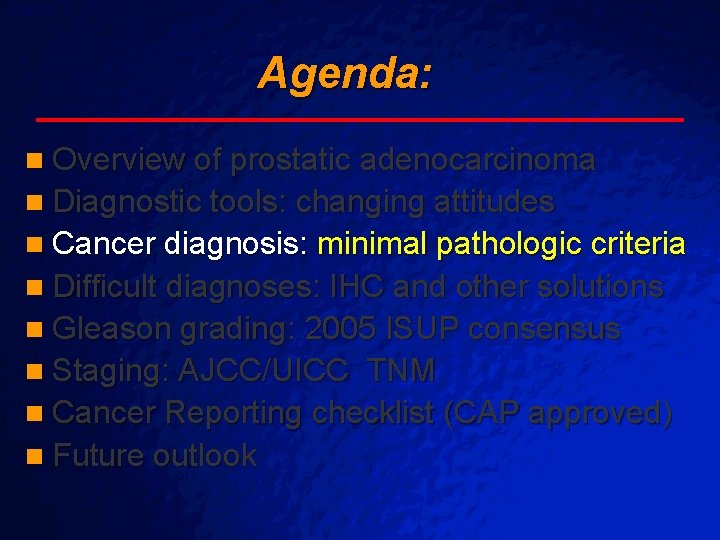
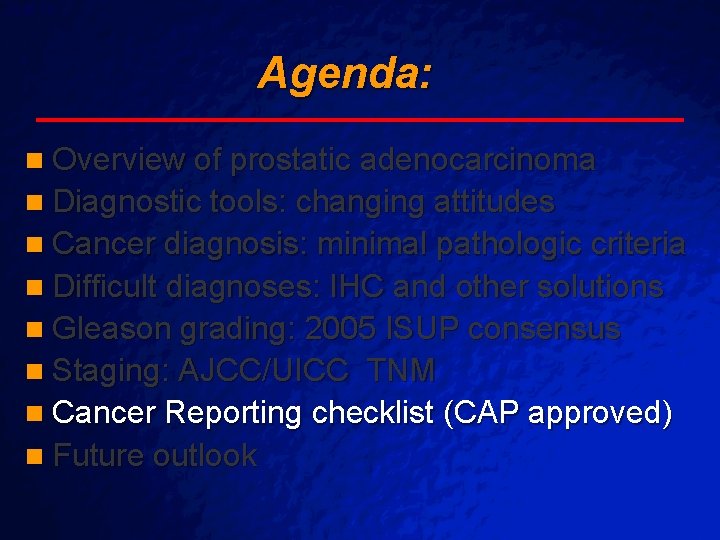
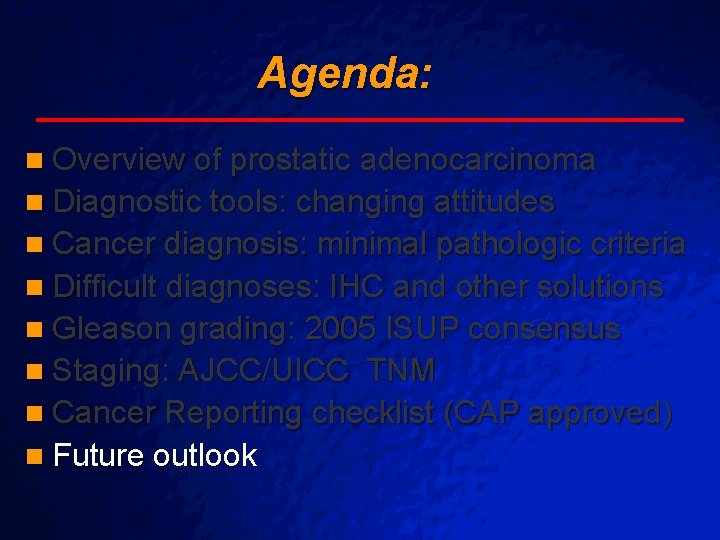
Slide 36 © 2003 By Default! Agenda: n Overview of prostatic adenocarcinoma n Diagnostic tools: changing attitudes n Cancer diagnosis: minimal pathologic criteria n Difficult diagnoses: IHC and other solutions n Gleason grading: 2005 ISUP consensus n Staging: AJCC/UICC TNM n Cancer Reporting checklist (CAP approved) n Future outlook A Free sample background from www. powerpointbackgrounds. com
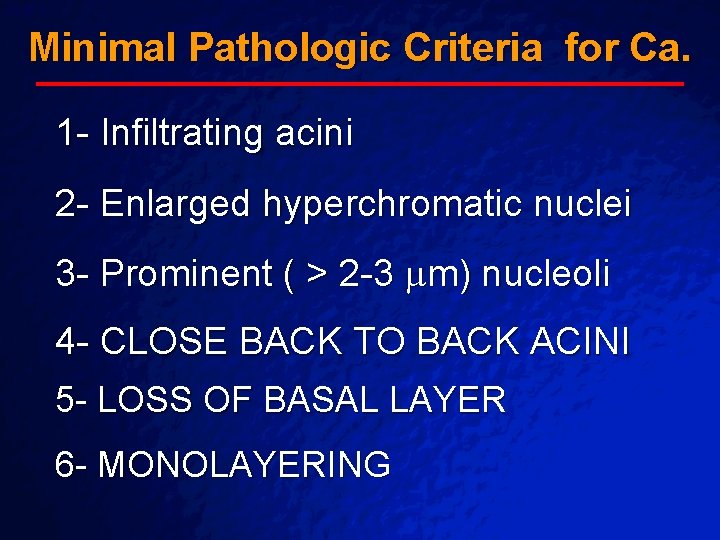
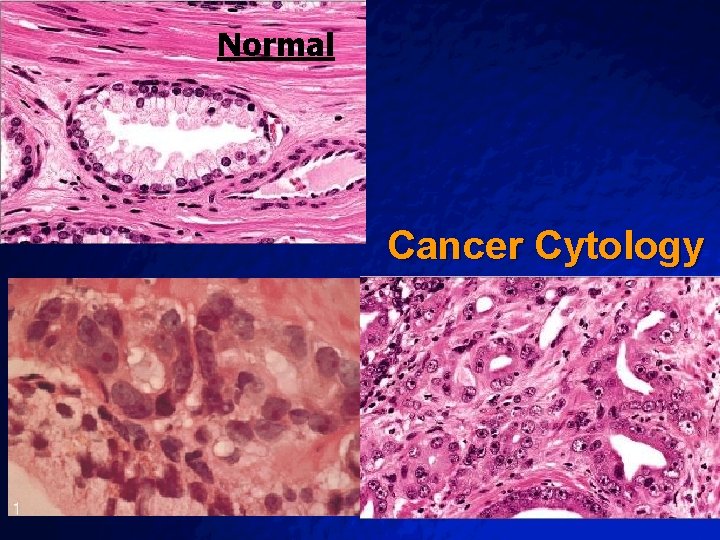
Slide 37 © 2003 By Default! Minimal Pathologic Criteria for Ca. 1 - Infiltrating acini 2 - Enlarged hyperchromatic nuclei 3 - Prominent ( > 2 -3 m) nucleoli 4 - CLOSE BACK TO BACK ACINI 5 - LOSS OF BASAL LAYER 6 - MONOLAYERING A Free sample background from www. powerpointbackgrounds. com
Slide 38 © 2003 By Default! Normal Cancer Cytology A Free sample background from www. powerpointbackgrounds. com
Slide 39 © 2003 By Default! Agenda: n Overview of prostatic adenocarcinoma n Diagnostic tools: changing attitudes n Cancer diagnosis: minimal pathologic criteria n Difficult diagnoses: IHC and other solutions n Gleason grading: 2005 ISUP consensus n Staging: AJCC/UICC TNM n Cancer Reporting checklist (CAP approved) n Future outlook A Free sample background from www. powerpointbackgrounds. com
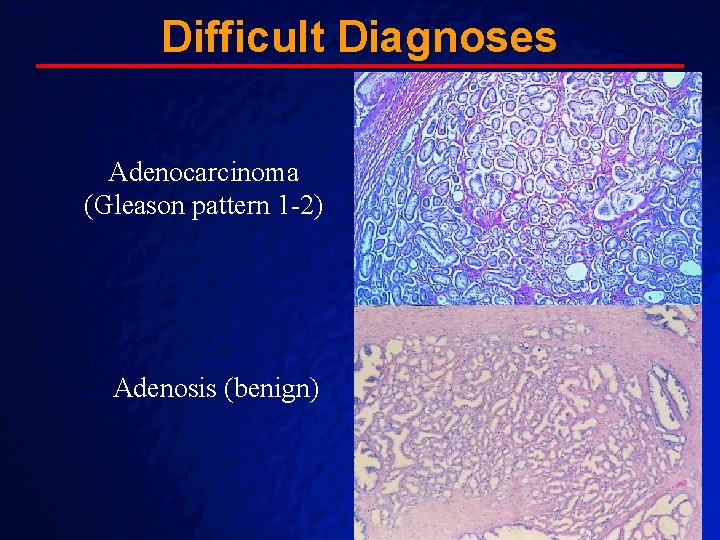
Slide 40 Difficult Diagnoses Adenocarcinoma (Gleason pattern 1 -2) Adenosis (benign) A Free sample background from www. powerpointbackgrounds. com © 2003 By Default!
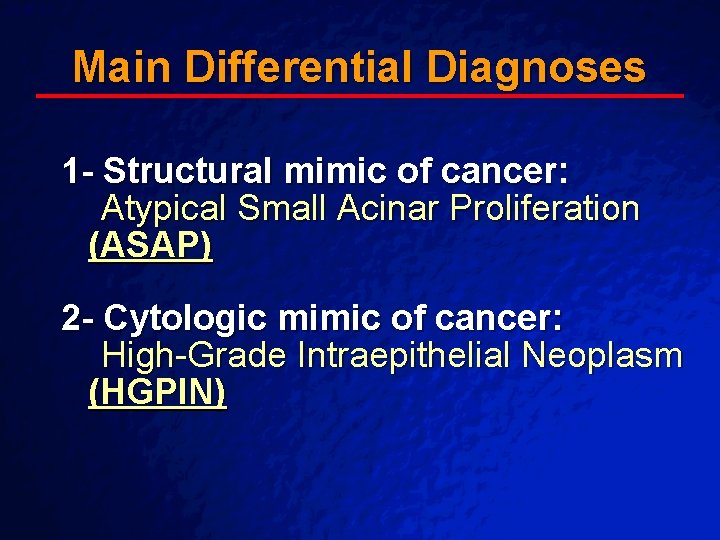
Slide 41 © 2003 By Default! Main Differential Diagnoses 1 - Structural mimic of cancer: Atypical Small Acinar Proliferation (ASAP) 2 - Cytologic mimic of cancer: High-Grade Intraepithelial Neoplasm (HGPIN) A Free sample background from www. powerpointbackgrounds. com
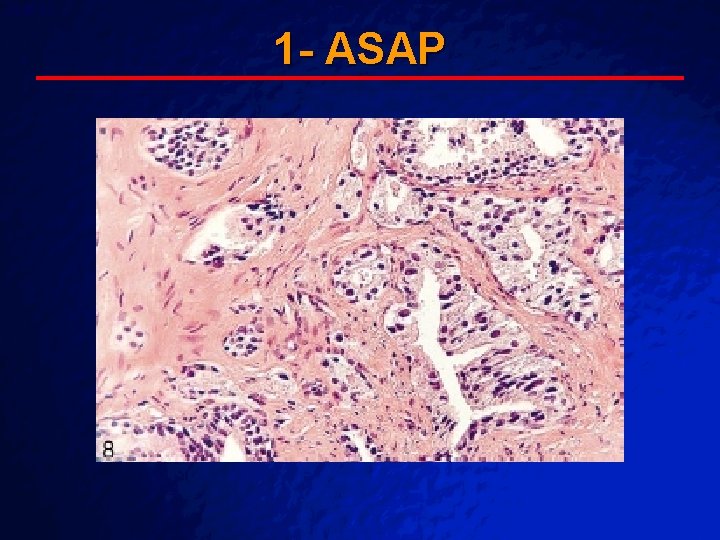
Slide 42 © 2003 By Default! 1 - ASAP A Free sample background from www. powerpointbackgrounds. com
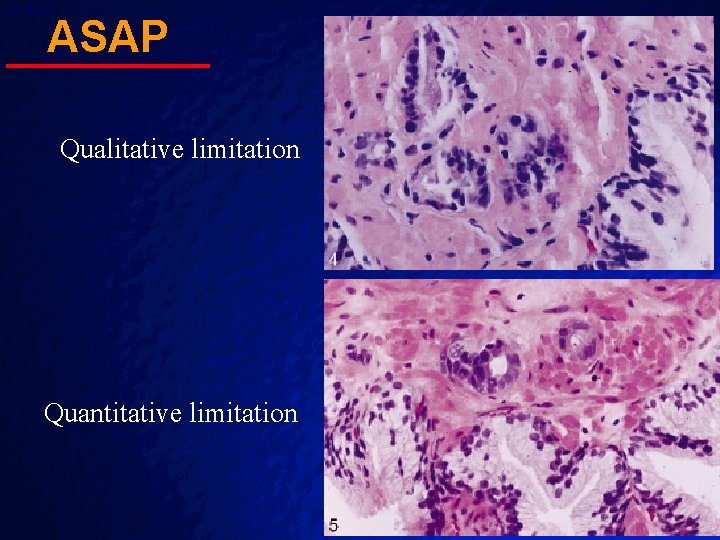
Slide 43 ASAP Qualitative limitation Quantitative limitation A Free sample background from www. powerpointbackgrounds. com © 2003 By Default!
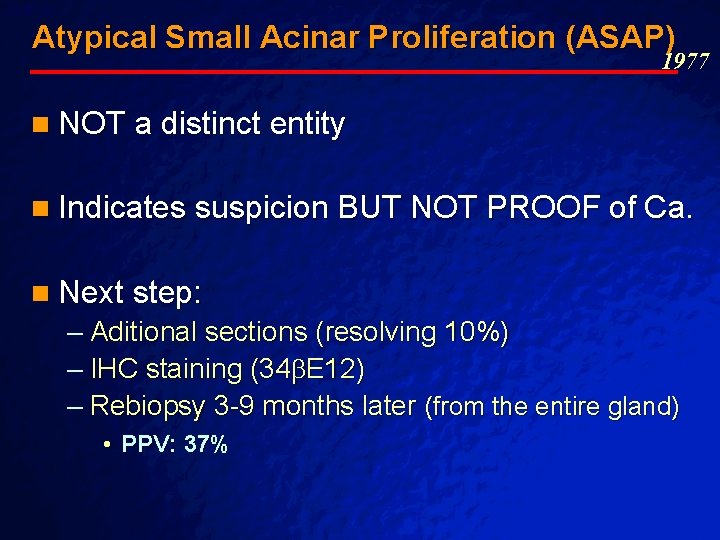
Slide 44 © 2003 By Default! Atypical Small Acinar Proliferation (ASAP) 1977 n NOT a distinct entity n Indicates suspicion BUT NOT PROOF of Ca. n Next step: – Aditional sections (resolving 10%) – IHC staining (34 E 12) – Rebiopsy 3 -9 months later (from the entire gland) • PPV: 37% A Free sample background from www. powerpointbackgrounds. com
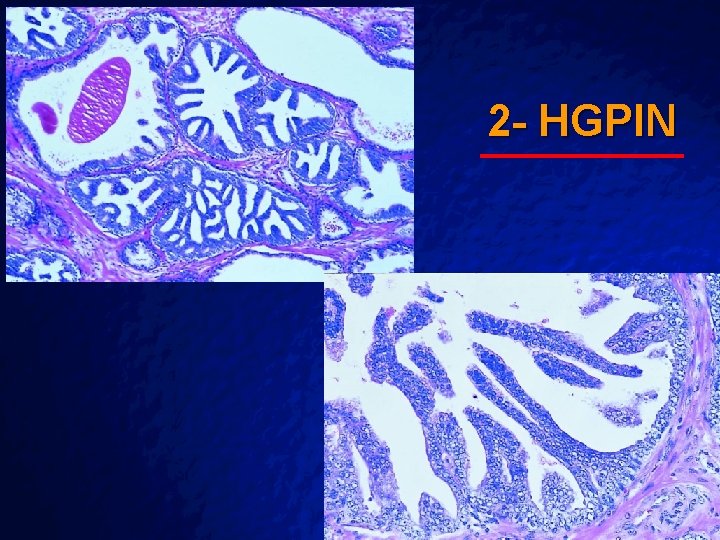
Slide 45 © 2003 By Default! 2 - HGPIN A Free sample background from www. powerpointbackgrounds. com
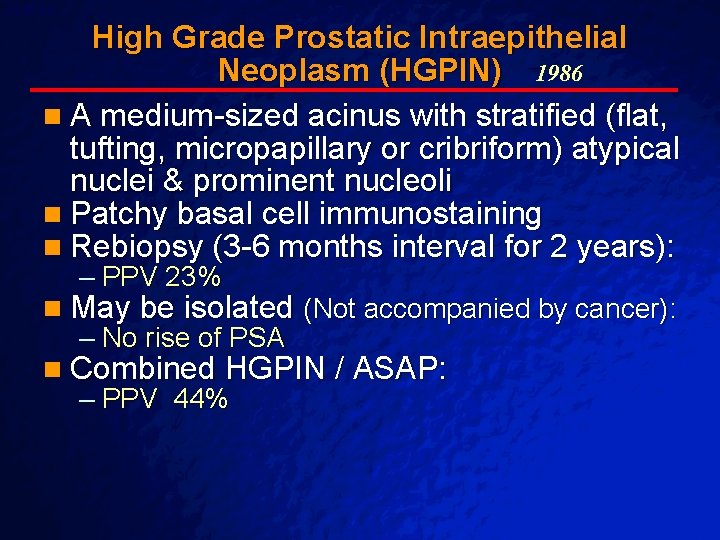
Slide 46 © 2003 By Default! High Grade Prostatic Intraepithelial Neoplasm (HGPIN) 1986 n A medium-sized acinus with stratified (flat, tufting, micropapillary or cribriform) atypical nuclei & prominent nucleoli n Patchy basal cell immunostaining n Rebiopsy (3 -6 months interval for 2 years): – PPV 23% n May be isolated (Not accompanied by cancer): – No rise of PSA n Combined HGPIN / ASAP: – PPV 44% A Free sample background from www. powerpointbackgrounds. com
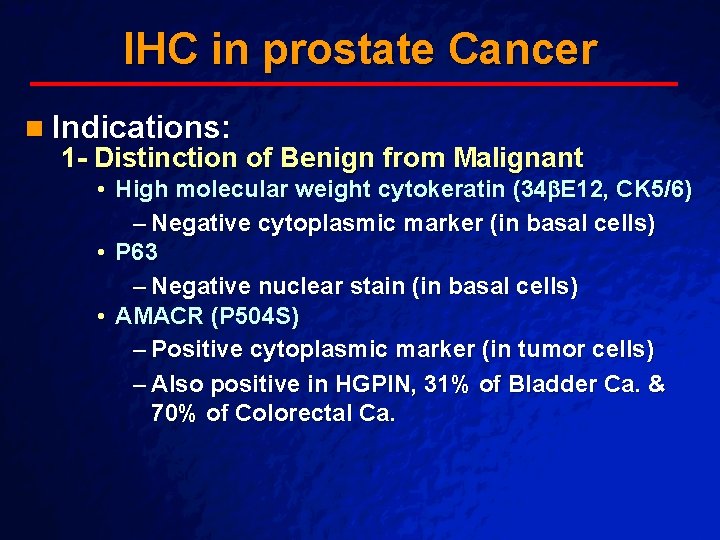
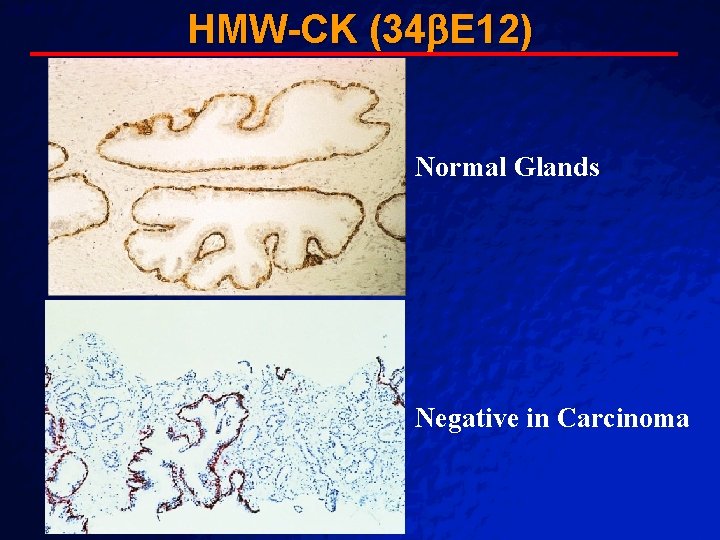
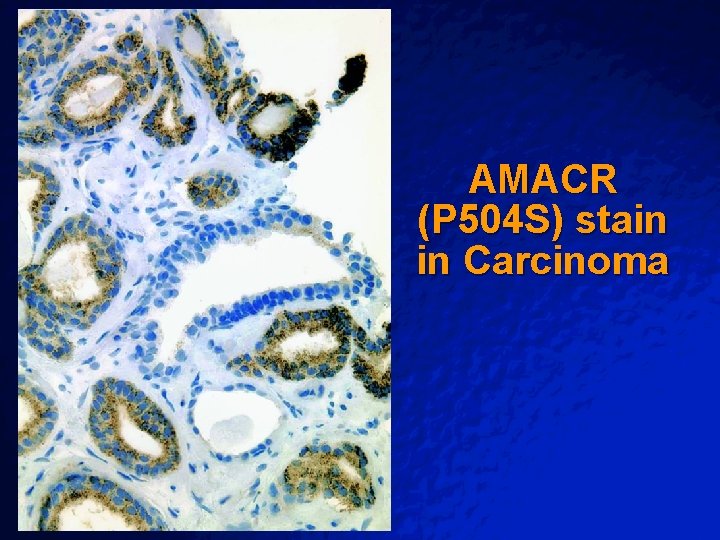
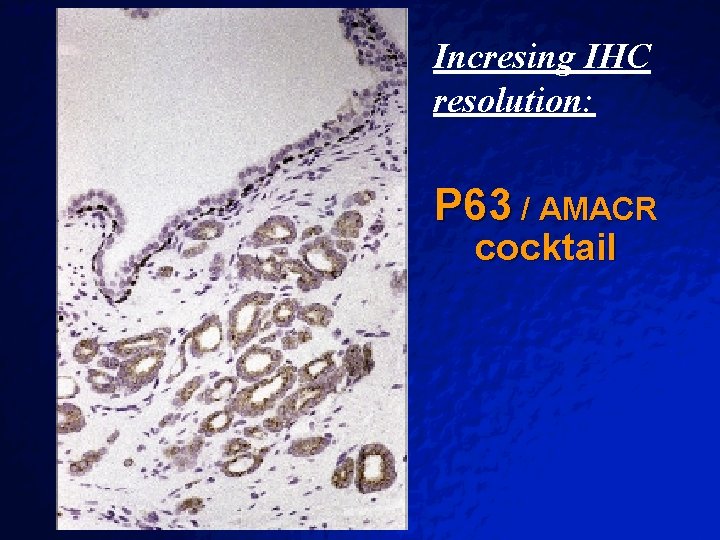
Slide 47 © 2003 By Default! IHC in prostate Cancer n Indications: 1 - Distinction of Benign from Malignant • High molecular weight cytokeratin (34 E 12, CK 5/6) – Negative cytoplasmic marker (in basal cells) • P 63 – Negative nuclear stain (in basal cells) • AMACR (P 504 S) – Positive cytoplasmic marker (in tumor cells) – Also positive in HGPIN, 31% of Bladder Ca. & 70% of Colorectal Ca. A Free sample background from www. powerpointbackgrounds. com
Slide 48 HMW-CK (34 E 12) © 2003 By Default! Normal Glands Negative in Carcinoma A Free sample background from www. powerpointbackgrounds. com
Slide 49 © 2003 By Default! AMACR (P 504 S) stain in Carcinoma A Free sample background from www. powerpointbackgrounds. com
Slide 50 © 2003 By Default! Incresing IHC resolution: P 63 / AMACR cocktail A Free sample background from www. powerpointbackgrounds. com
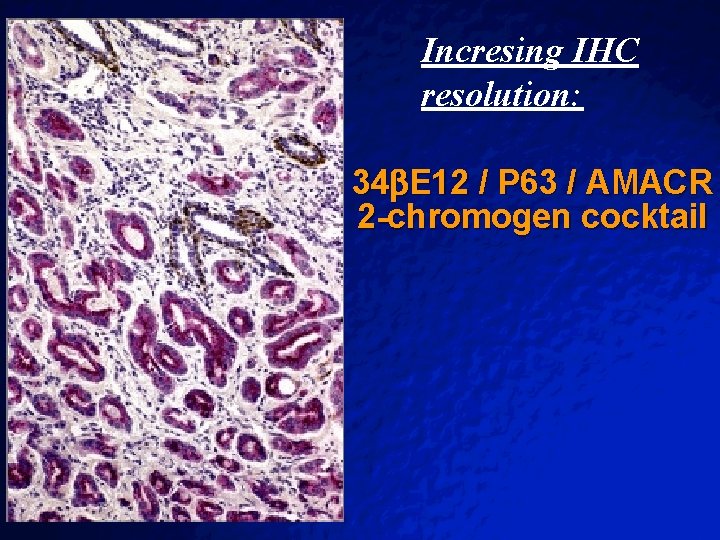
Slide 51 © 2003 By Default! Incresing IHC resolution: 34 E 12 / P 63 / AMACR 2 -chromogen cocktail A Free sample background from www. powerpointbackgrounds. com
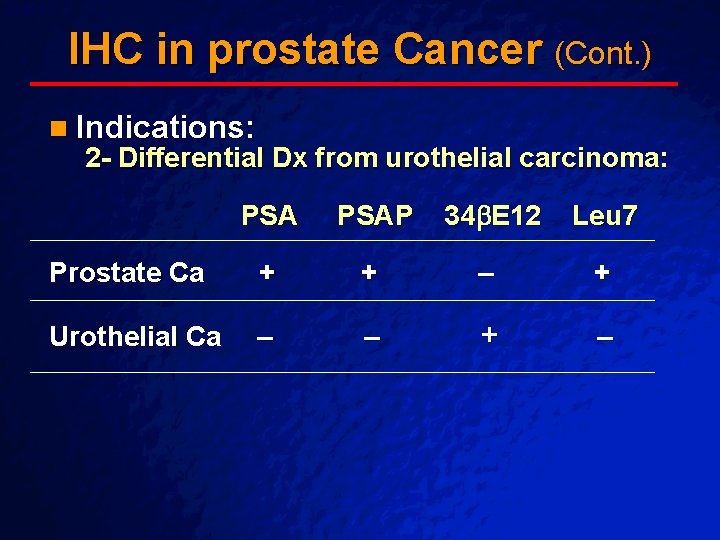
Slide 52 © 2003 By Default! IHC in prostate Cancer (Cont. ) n Indications: 2 - Differential Dx from urothelial carcinoma: PSA Prostate Ca + PSAP 34 E 12 Leu 7 + – + Urothelial Ca – – + – A Free sample background from www. powerpointbackgrounds. com
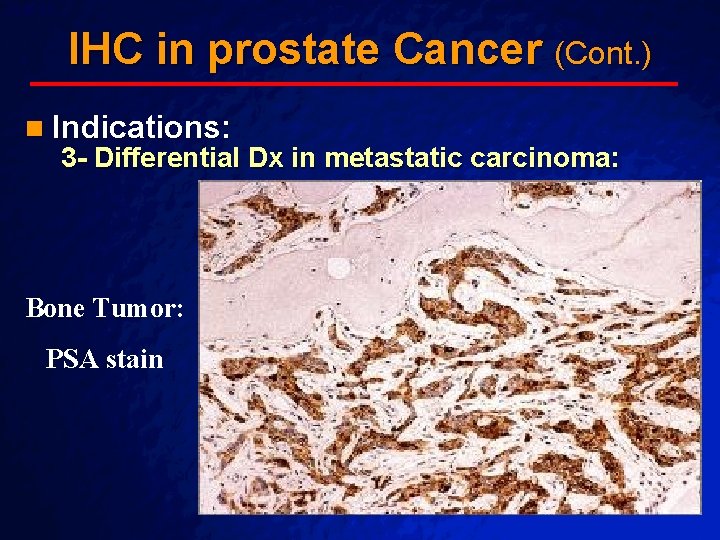
Slide 53 © 2003 By Default! IHC in prostate Cancer (Cont. ) n Indications: 3 - Differential Dx in metastatic carcinoma: Bone Tumor: PSA stain A Free sample background from www. powerpointbackgrounds. com
Slide 54 © 2003 By Default! Agenda: n Overview of prostatic adenocarcinoma n Diagnostic tools: changing attitudes n Cancer diagnosis: minimal pathologic criteria n Difficult diagnoses: IHC and other solutions n Gleason grading: 2005 ISUP consensus n Staging: AJCC/UICC TNM n Cancer Reporting checklist (CAP approved) n Future outlook A Free sample background from www. powerpointbackgrounds. com
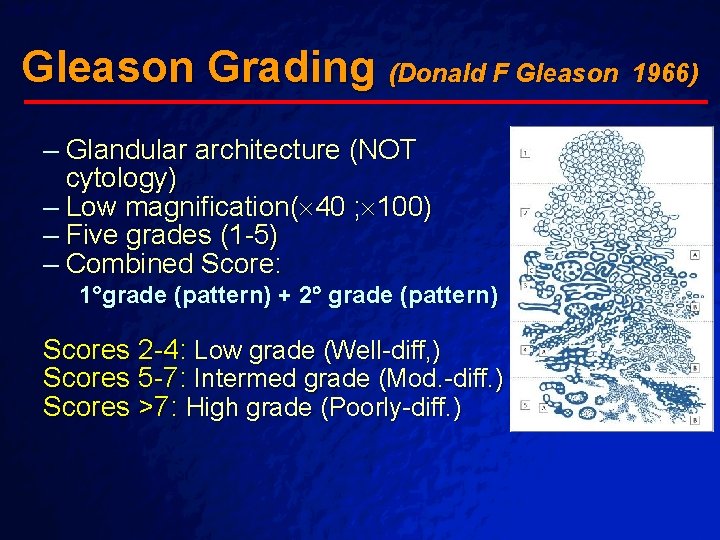
Slide 55 © 2003 By Default! Gleason Grading (Donald F Gleason – Glandular architecture (NOT cytology) – Low magnification( 40 ; 100) – Five grades (1 -5) – Combined Score: 1 grade (pattern) + 2 grade (pattern) Scores 2 -4: Low grade (Well-diff, ) Scores 5 -7: Intermed grade (Mod. -diff. ) Scores >7: High grade (Poorly-diff. ) A Free sample background from www. powerpointbackgrounds. com 1966)
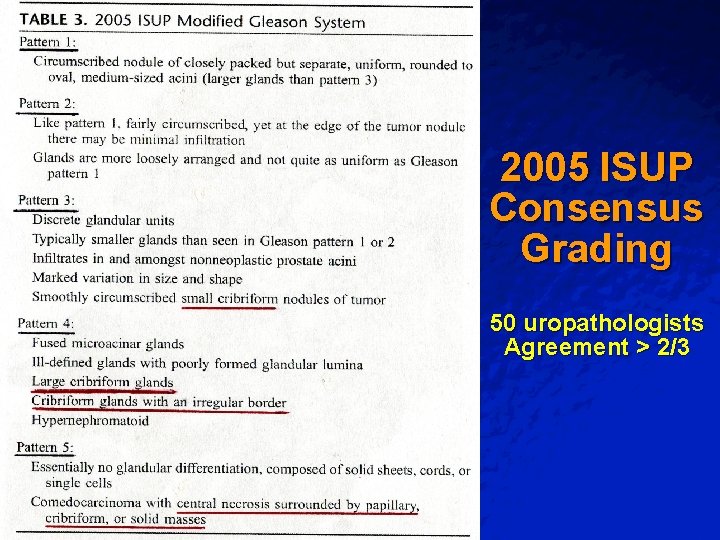
Slide 56 © 2003 By Default! 2005 ISUP Consensus Grading 50 uropathologists Agreement > 2/3 A Free sample background from www. powerpointbackgrounds. com
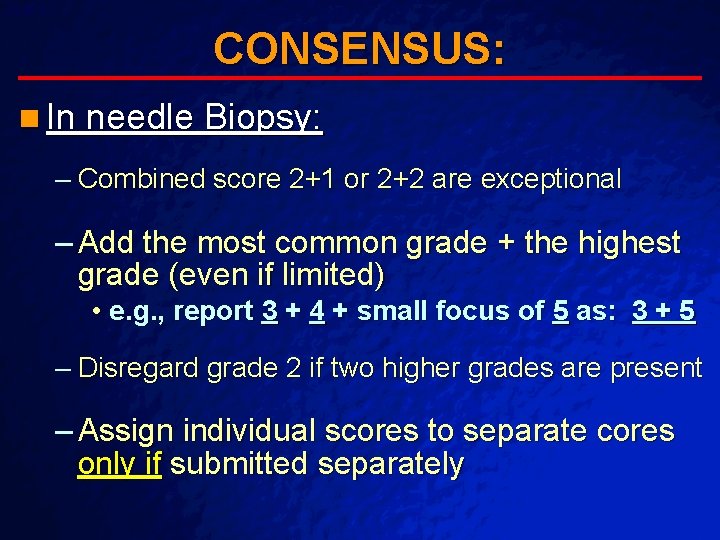
Slide 57 © 2003 By Default! CONSENSUS: n In needle Biopsy: – Combined score 2+1 or 2+2 are exceptional – Add the most common grade + the highest grade (even if limited) • e. g. , report 3 + 4 + small focus of 5 as: 3 + 5 – Disregard grade 2 if two higher grades are present – Assign individual scores to separate cores only if submitted separately A Free sample background from www. powerpointbackgrounds. com
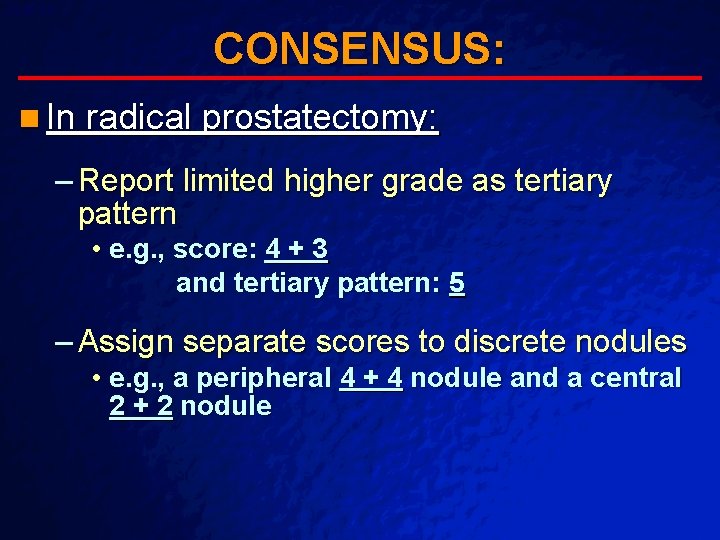
Slide 58 © 2003 By Default! CONSENSUS: n In radical prostatectomy: – Report limited higher grade as tertiary pattern • e. g. , score: 4 + 3 and tertiary pattern: 5 – Assign separate scores to discrete nodules • e. g. , a peripheral 4 + 4 nodule and a central 2 + 2 nodule A Free sample background from www. powerpointbackgrounds. com
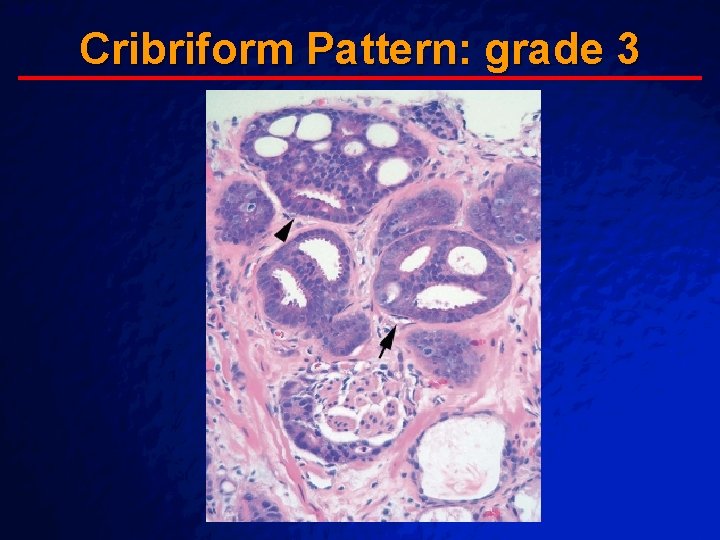
Slide 59 © 2003 By Default! Cribriform Pattern: grade 3 A Free sample background from www. powerpointbackgrounds. com
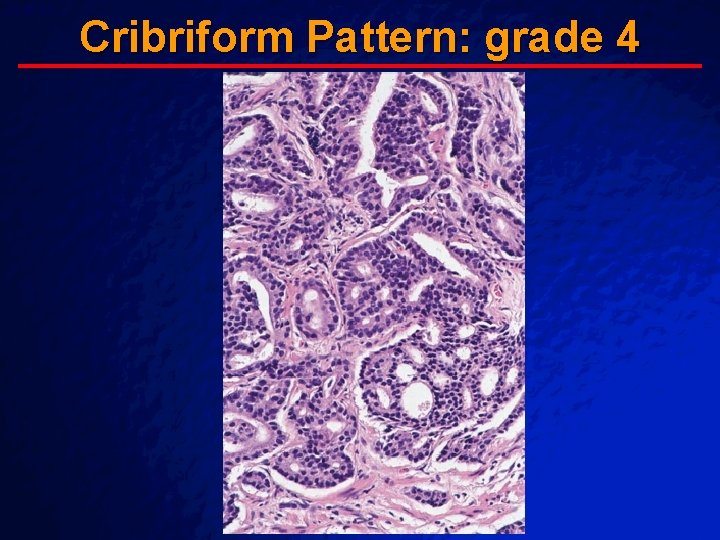
Slide 60 © 2003 By Default! Cribriform Pattern: grade 4 A Free sample background from www. powerpointbackgrounds. com
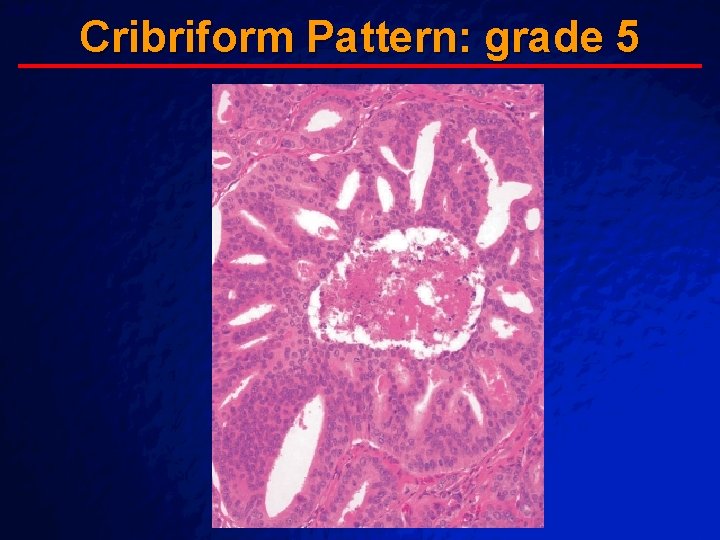
Slide 61 © 2003 By Default! Cribriform Pattern: grade 5 A Free sample background from www. powerpointbackgrounds. com
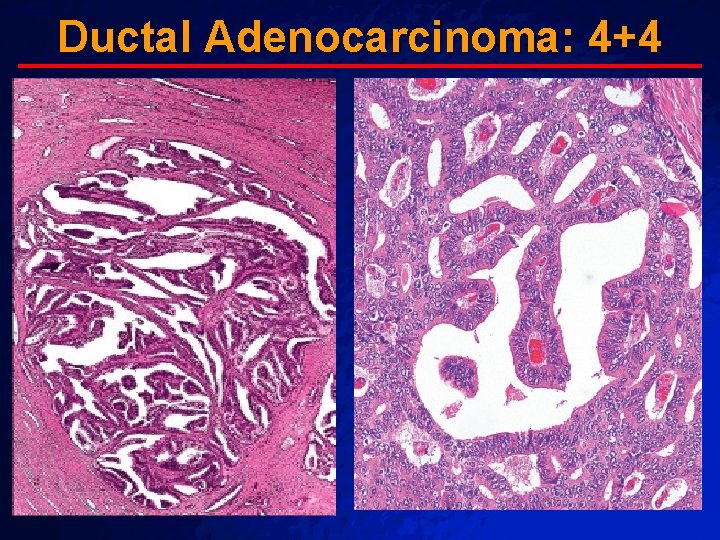
Slide 62 © 2003 By Default! Ductal Adenocarcinoma: 4+4 A Free sample background from www. powerpointbackgrounds. com
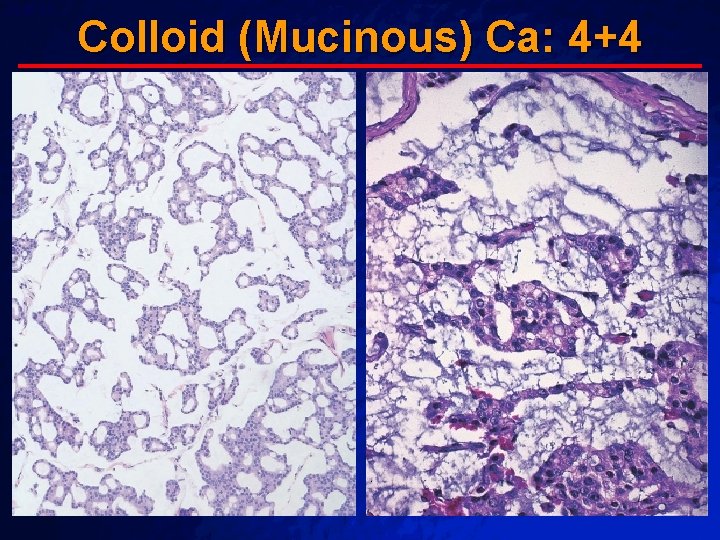
Slide 63 © 2003 By Default! Colloid (Mucinous) Ca: 4+4 A Free sample background from www. powerpointbackgrounds. com
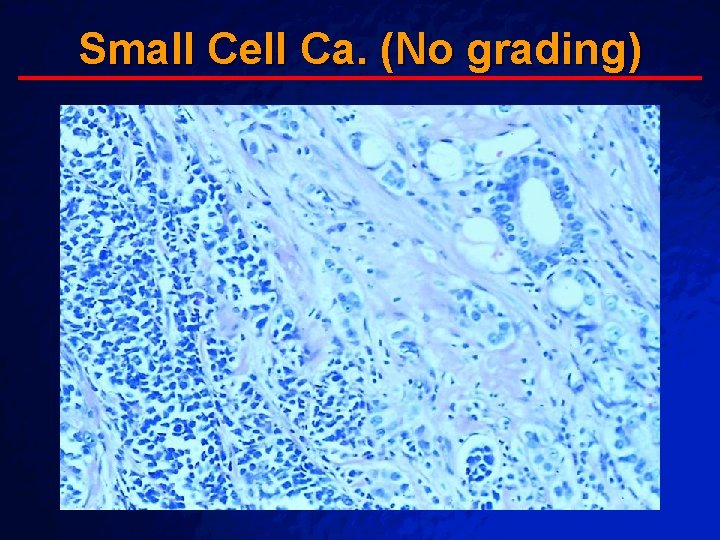
Slide 64 © 2003 By Default! Small Cell Ca. (No grading) A Free sample background from www. powerpointbackgrounds. com
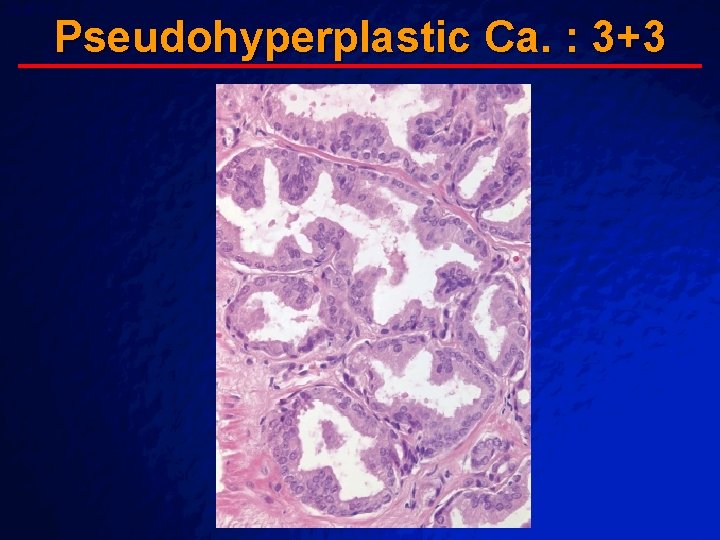
Slide 65 © 2003 By Default! Pseudohyperplastic Ca. : 3+3 A Free sample background from www. powerpointbackgrounds. com
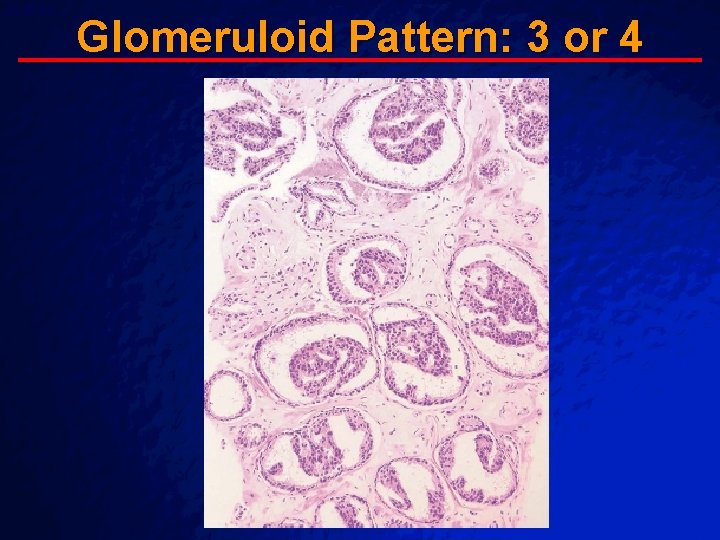
Slide 66 © 2003 By Default! Glomeruloid Pattern: 3 or 4 A Free sample background from www. powerpointbackgrounds. com
Slide 67 © 2003 By Default! Agenda: n Overview of prostatic adenocarcinoma n Diagnostic tools: changing attitudes n Cancer diagnosis: minimal pathologic criteria n Difficult diagnoses: IHC and other solutions n Gleason grading: 2005 ISUP consensus n Staging: AJCC/UICC TNM n Cancer Reporting checklist (CAP approved) n Future outlook A Free sample background from www. powerpointbackgrounds. com
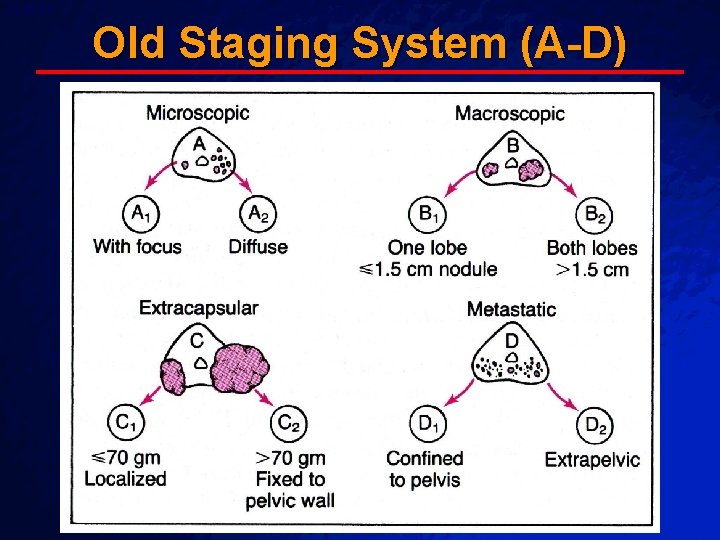
Slide 68 © 2003 By Default! Old Staging System (A-D) A Free sample background from www. powerpointbackgrounds. com
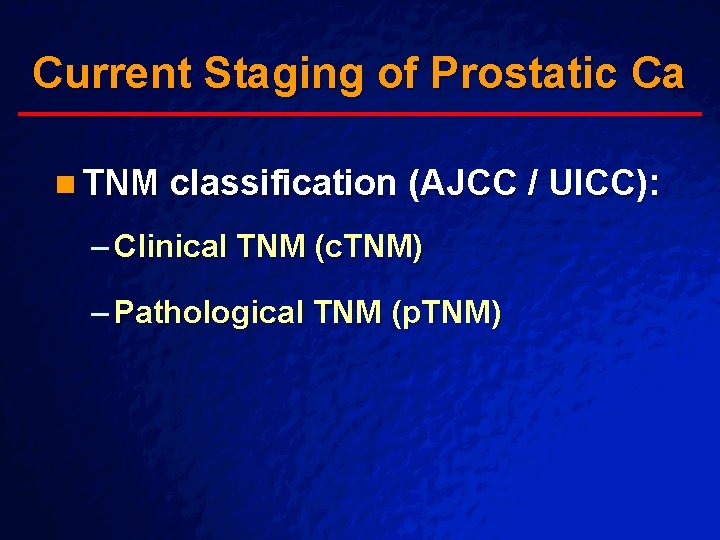
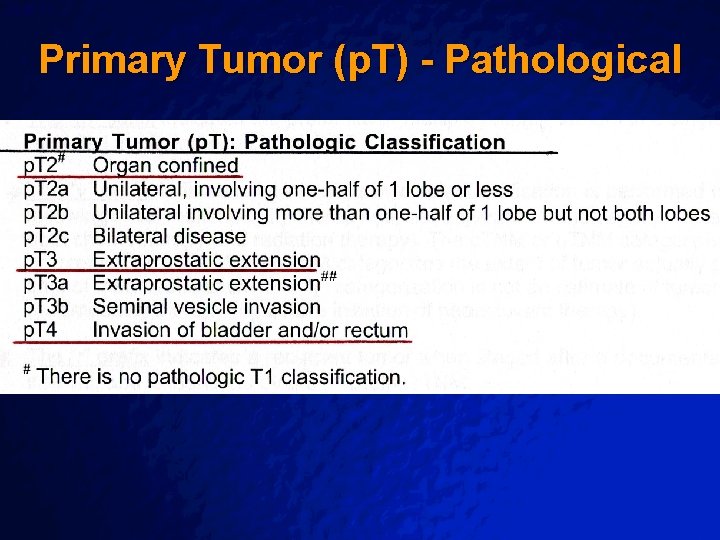
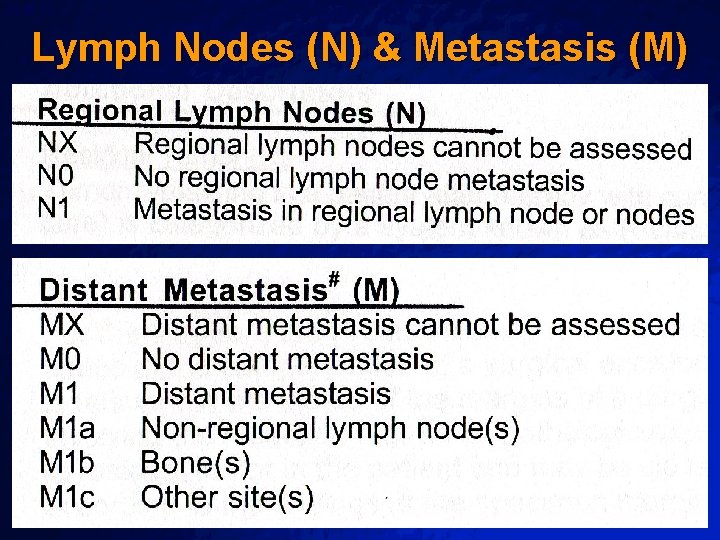
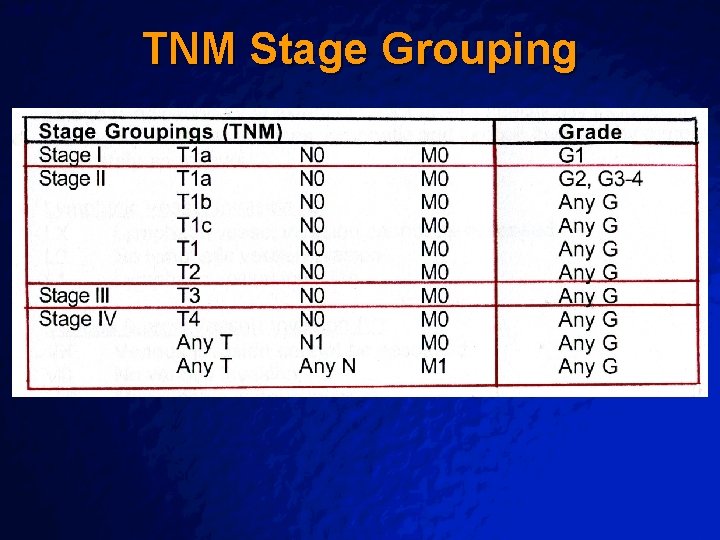
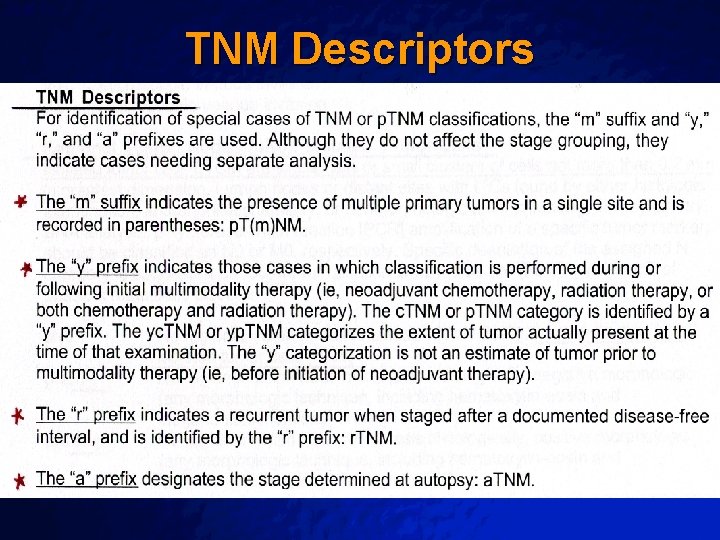
Slide 69 © 2003 By Default! Current Staging of Prostatic Ca n TNM classification (AJCC / UICC): – Clinical TNM (c. TNM) – Pathological TNM (p. TNM) A Free sample background from www. powerpointbackgrounds. com
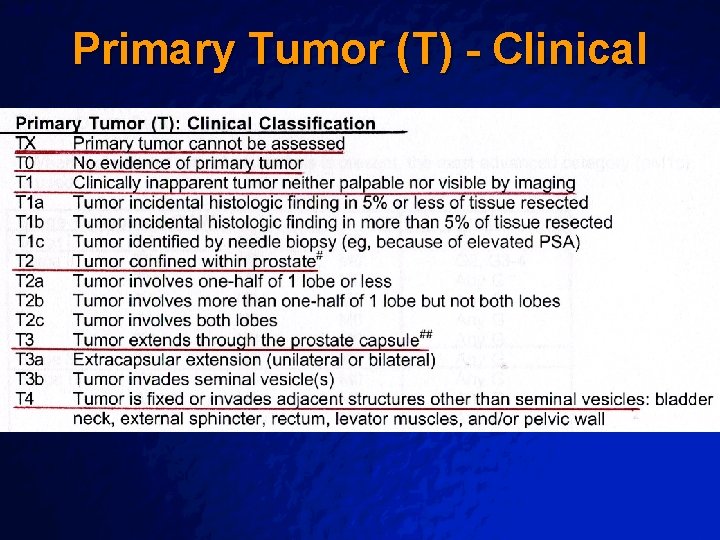
Slide 70 © 2003 By Default! Primary Tumor (T) - Clinical A Free sample background from www. powerpointbackgrounds. com
Slide 71 © 2003 By Default! Primary Tumor (p. T) - Pathological A Free sample background from www. powerpointbackgrounds. com
Slide 72 © 2003 By Default! Lymph Nodes (N) & Metastasis (M) A Free sample background from www. powerpointbackgrounds. com
Slide 73 © 2003 By Default! TNM Stage Grouping A Free sample background from www. powerpointbackgrounds. com
Slide 74 © 2003 By Default! TNM Descriptors A Free sample background from www. powerpointbackgrounds. com
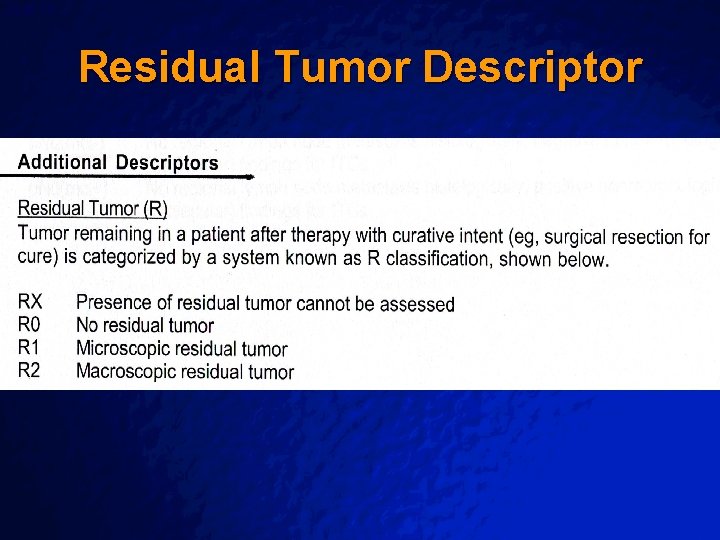
Slide 75 © 2003 By Default! Residual Tumor Descriptor A Free sample background from www. powerpointbackgrounds. com
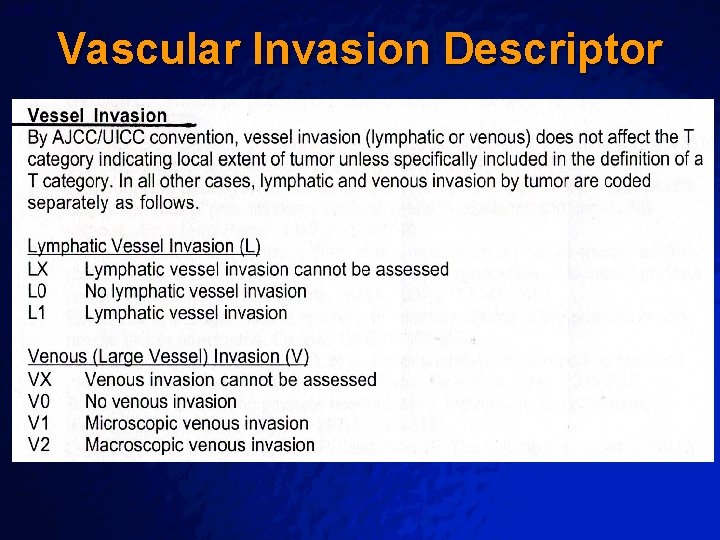
Slide 76 © 2003 By Default! Vascular Invasion Descriptor A Free sample background from www. powerpointbackgrounds. com
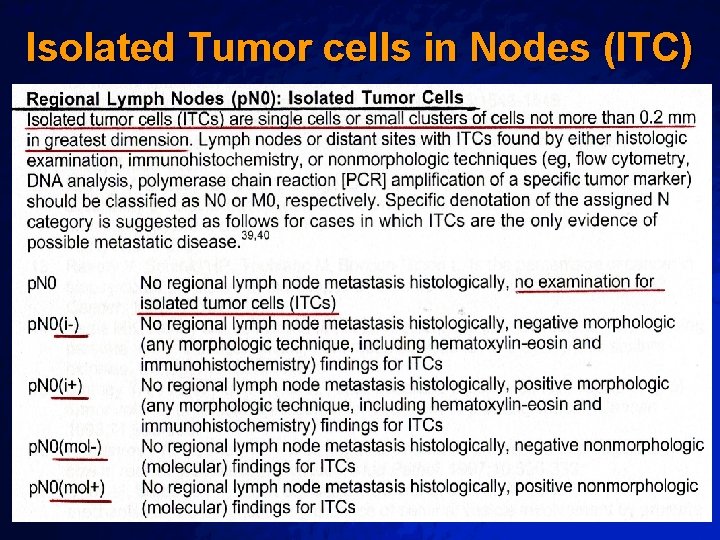
Slide 77 © 2003 By Default! Isolated Tumor cells in Nodes (ITC) A Free sample background from www. powerpointbackgrounds. com
Slide 78 © 2003 By Default! Agenda: n Overview of prostatic adenocarcinoma n Diagnostic tools: changing attitudes n Cancer diagnosis: minimal pathologic criteria n Difficult diagnoses: IHC and other solutions n Gleason grading: 2005 ISUP consensus n Staging: AJCC/UICC TNM n Cancer Reporting checklist (CAP approved) n Future outlook A Free sample background from www. powerpointbackgrounds. com
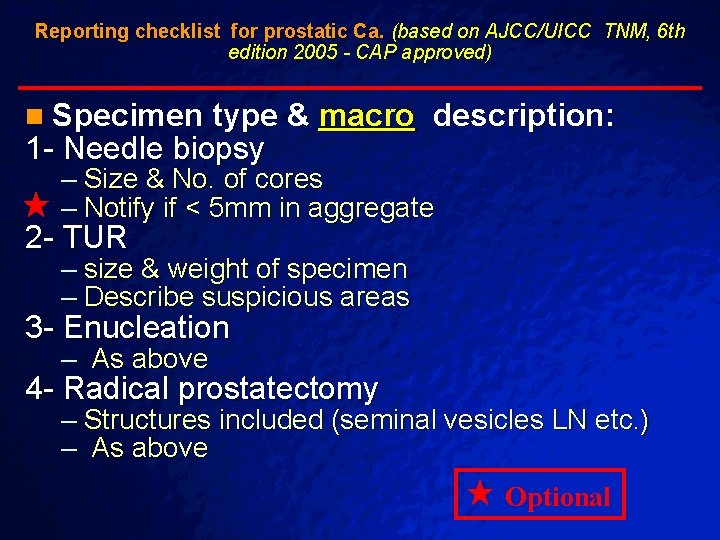
Slide 79 © 2003 By Default! Reporting checklist for prostatic Ca. (based on AJCC/UICC TNM, 6 th edition 2005 - CAP approved) n Specimen type & macro 1 - Needle biopsy description: – Size & No. of cores – Notify if < 5 mm in aggregate 2 - TUR – size & weight of specimen – Describe suspicious areas 3 - Enucleation – As above 4 - Radical prostatectomy – Structures included (seminal vesicles LN etc. ) – As above Optional A Free sample background from www. powerpointbackgrounds. com
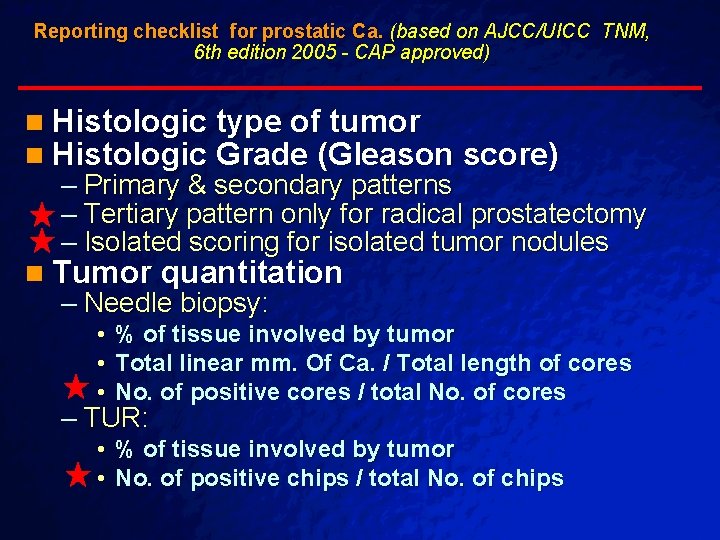
Slide 80 © 2003 By Default! Reporting checklist for prostatic Ca. (based on AJCC/UICC TNM, 6 th edition 2005 - CAP approved) n Histologic type of tumor n Histologic Grade (Gleason score) – Primary & secondary patterns – Tertiary pattern only for radical prostatectomy – Isolated scoring for isolated tumor nodules n Tumor quantitation – Needle biopsy: • • • % of tissue involved by tumor Total linear mm. Of Ca. / Total length of cores No. of positive cores / total No. of cores – TUR: • % of tissue involved by tumor • No. of positive chips / total No. of chips A Free sample background from www. powerpointbackgrounds. com
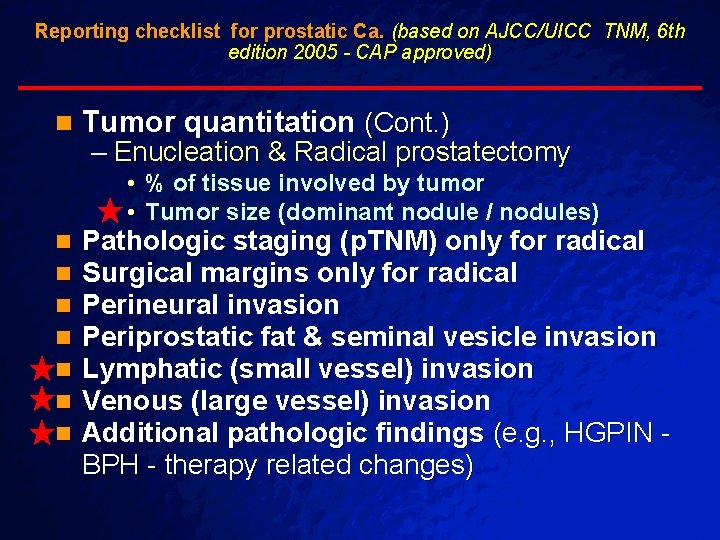
Slide 81 © 2003 By Default! Reporting checklist for prostatic Ca. (based on AJCC/UICC TNM, 6 th edition 2005 - CAP approved) n Tumor quantitation (Cont. ) – Enucleation & Radical prostatectomy • % of tissue involved by tumor • Tumor size (dominant nodule / nodules) n n n n Pathologic staging (p. TNM) only for radical Surgical margins only for radical Perineural invasion Periprostatic fat & seminal vesicle invasion Lymphatic (small vessel) invasion Venous (large vessel) invasion Additional pathologic findings (e. g. , HGPIN - BPH - therapy related changes) A Free sample background from www. powerpointbackgrounds. com
Slide 82 © 2003 By Default! Agenda: n Overview of prostatic adenocarcinoma n Diagnostic tools: changing attitudes n Cancer diagnosis: minimal pathologic criteria n Difficult diagnoses: IHC and other solutions n Gleason grading: 2005 ISUP consensus n Staging: AJCC/UICC TNM n Cancer Reporting checklist (CAP approved) n Future outlook A Free sample background from www. powerpointbackgrounds. com
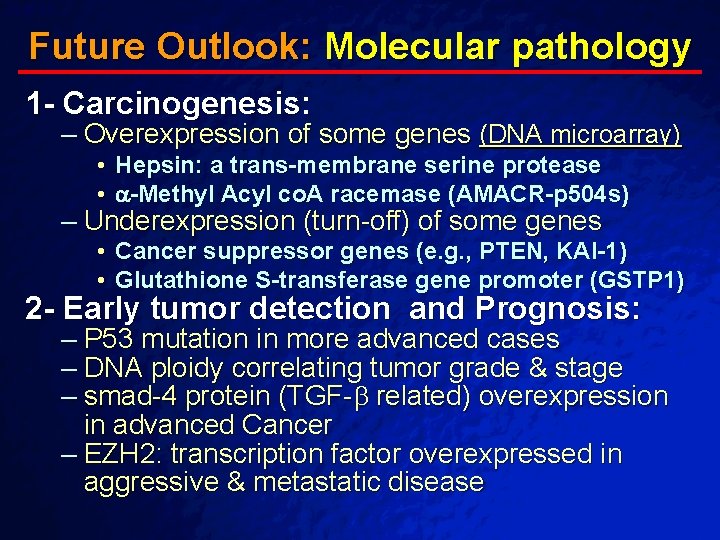
Slide 83 © 2003 By Default! Future Outlook: Molecular pathology 1 - Carcinogenesis: – Overexpression of some genes (DNA microarray) • Hepsin: a trans-membrane serine protease • -Methyl Acyl co. A racemase (AMACR-p 504 s) – Underexpression (turn-off) of some genes • • Cancer suppressor genes (e. g. , PTEN, KAI-1) Glutathione S-transferase gene promoter (GSTP 1) 2 - Early tumor detection and Prognosis: – P 53 mutation in more advanced cases – DNA ploidy correlating tumor grade & stage – smad-4 protein (TGF- related) overexpression in advanced Cancer – EZH 2: transcription factor overexpressed in aggressive & metastatic disease A Free sample background from www. powerpointbackgrounds. com
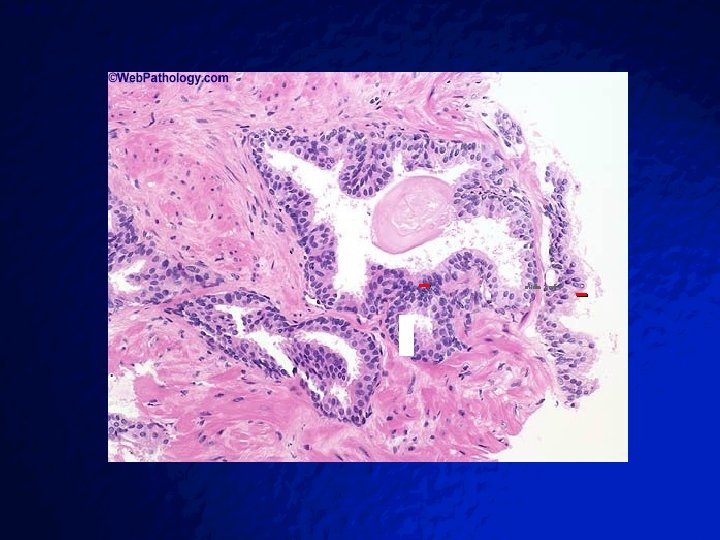
Slide 84 © 2003 By Default! A Free sample background from www. powerpointbackgrounds. com slide 2 of 9
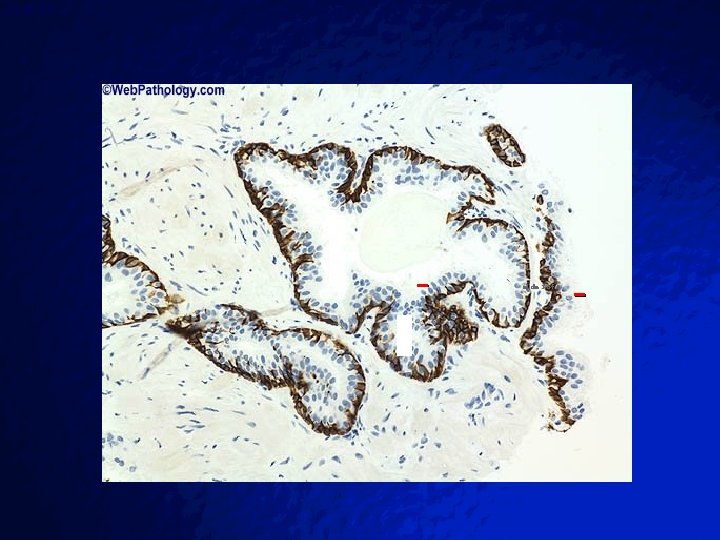
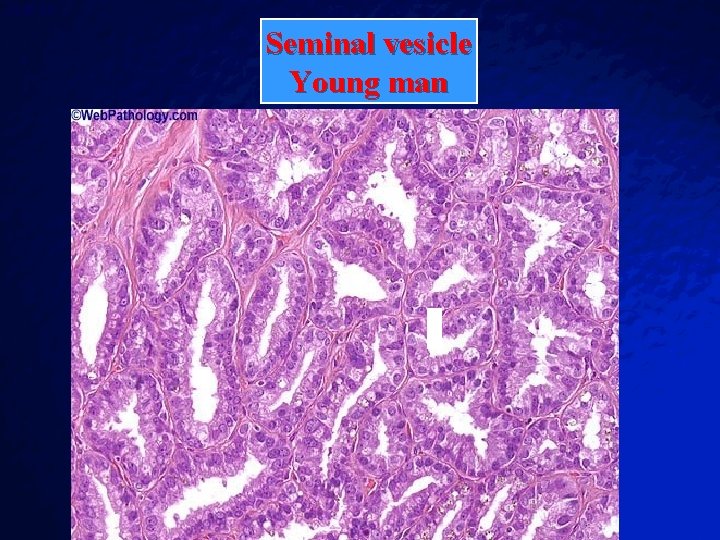
Slide 85 © 2003 By Default! A Free sample background from www. powerpointbackgrounds. com slide 3 of 9
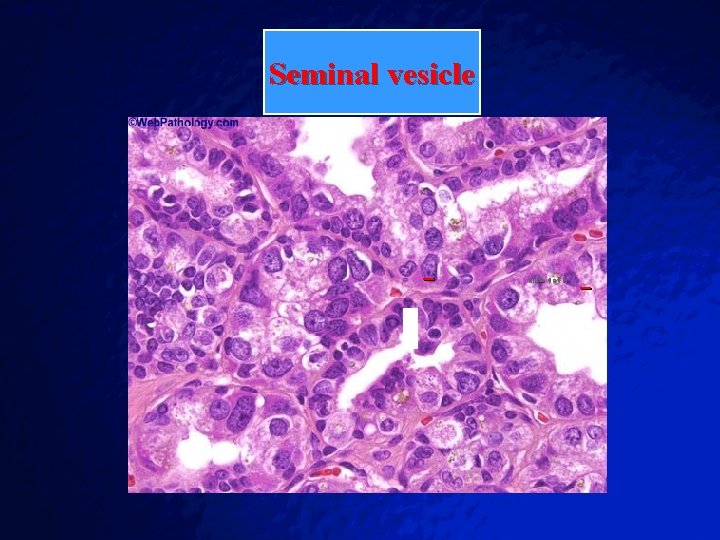
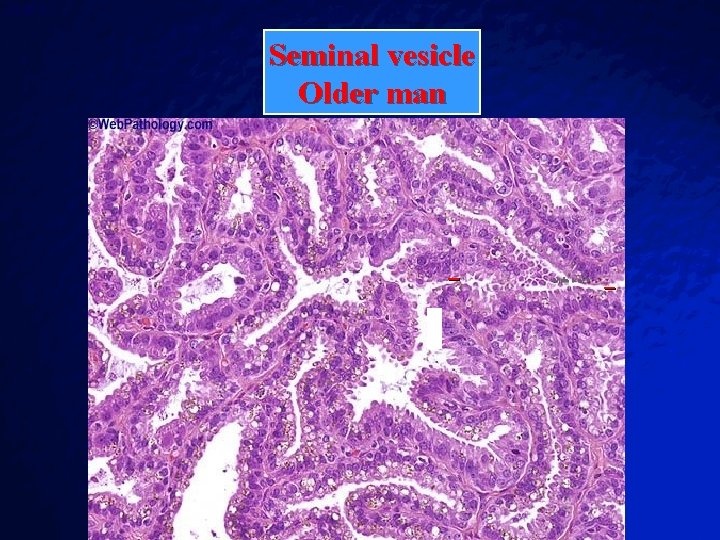
Slide 86 © 2003 By Default! Seminal vesicle A Free sample background from www. powerpointbackgrounds. com slide 4 of 9
Slide 87 © 2003 By Default! Seminal vesicle Older man A Free sample background from www. powerpointbackgrounds. com slide 5 of 9
Slide 88 © 2003 By Default! Seminal vesicle Young man A Free sample background from www. powerpointbackgrounds. com
Presenting sympton Ø A 74 year old man presented with a three month history of weakness and tiredness Ø For the past month he was also seen to have haematuria. Ø He was admitted to a district hospital and after two weeks was found to be in urinary retention Ø He was treated with a catheter, but transferred when his urinary output fell and he became increasingly breathless.
Past history. Ø 2 prostate operations in the past ? For what reason
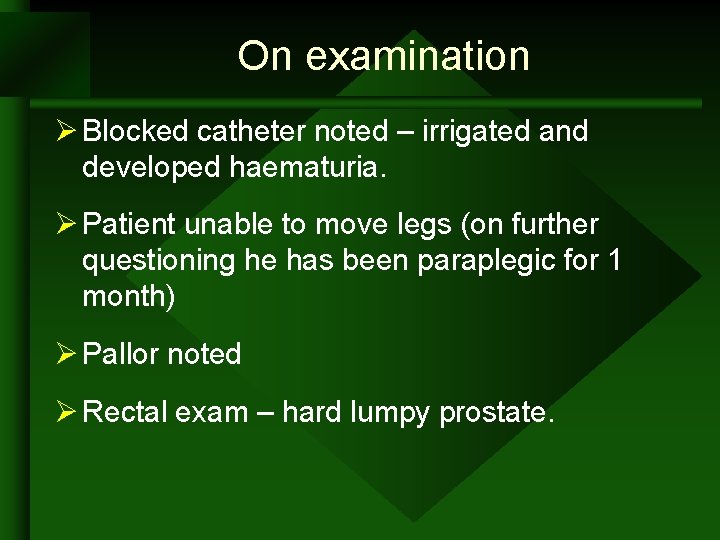
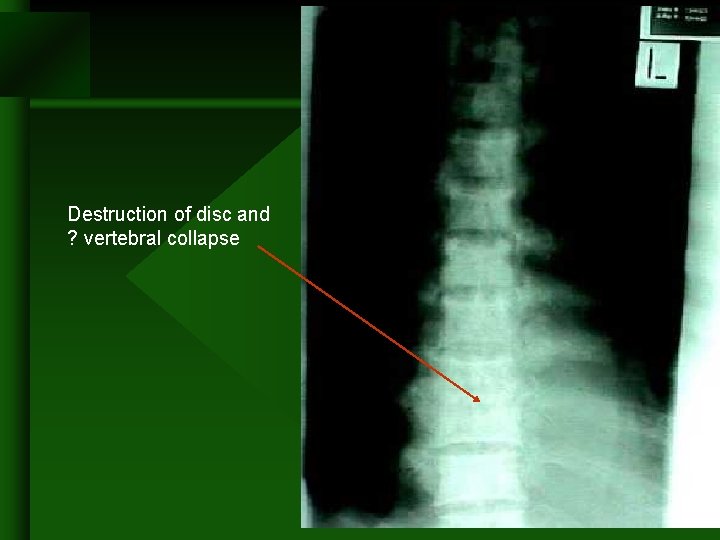
On examination Ø Blocked catheter noted – irrigated and developed haematuria. Ø Patient unable to move legs (on further questioning he has been paraplegic for 1 month) Ø Pallor noted Ø Rectal exam – hard lumpy prostate.
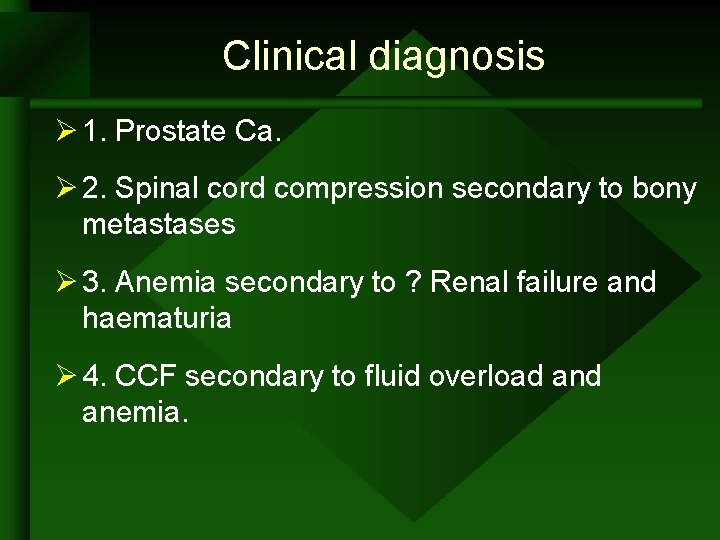
Clinical diagnosis Ø 1. Prostate Ca. Ø 2. Spinal cord compression secondary to bony metastases Ø 3. Anemia secondary to ? Renal failure and haematuria Ø 4. CCF secondary to fluid overload anemia.
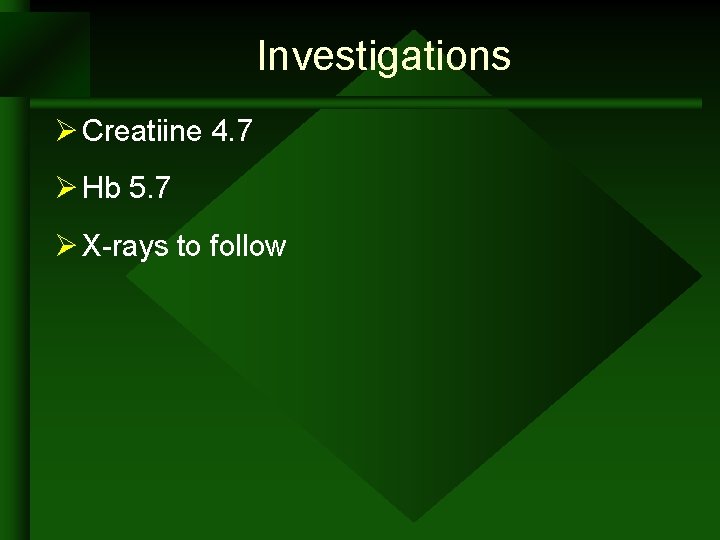
Investigations Ø Creatiine 4. 7 Ø Hb 5. 7 Ø X-rays to follow
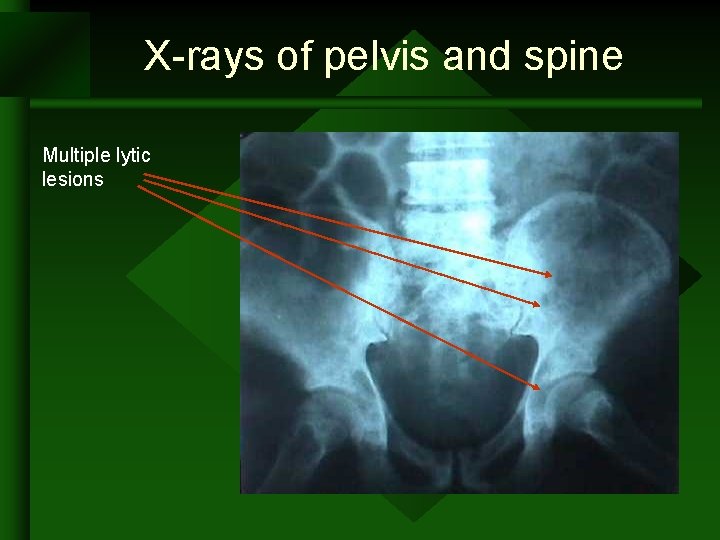
X-rays of pelvis and spine Multiple lytic lesions
Destruction of disc and ? vertebral collapse
Treatment Ø He was booked for trans-urethral resection of the prostate and bilateral orchidectomy. Ø Samples of prostatic tissue and testicular tissue were sent for pathology
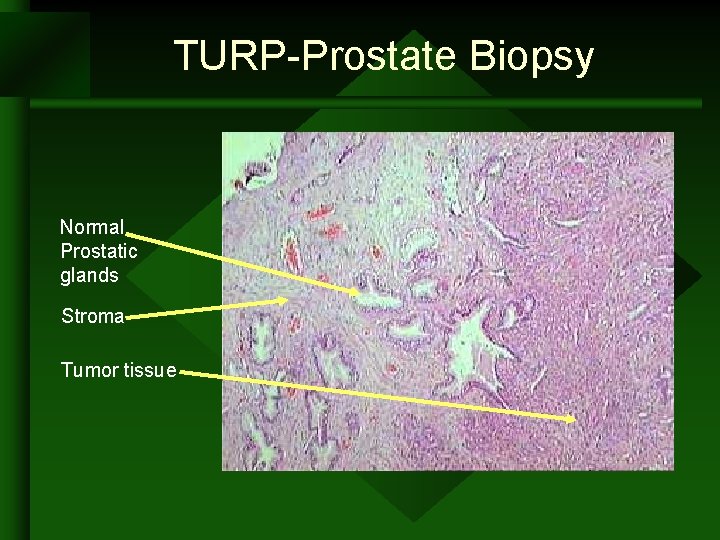
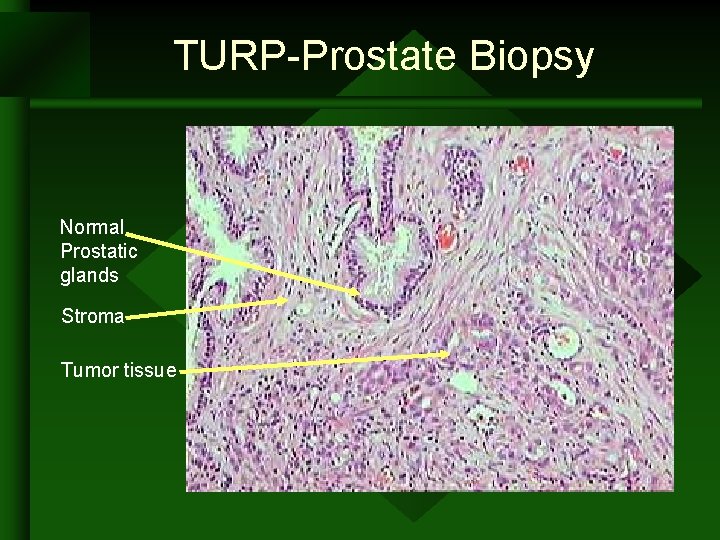
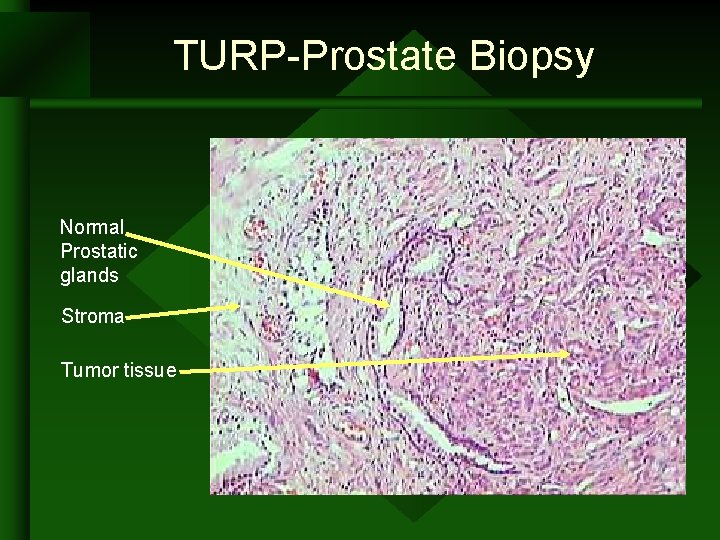
TURP-Prostate Biopsy Normal Prostatic glands Stroma Tumor tissue
TURP-Prostate Biopsy Normal Prostatic glands Stroma Tumor tissue
TURP-Prostate Biopsy Normal Prostatic glands Stroma Tumor tissue
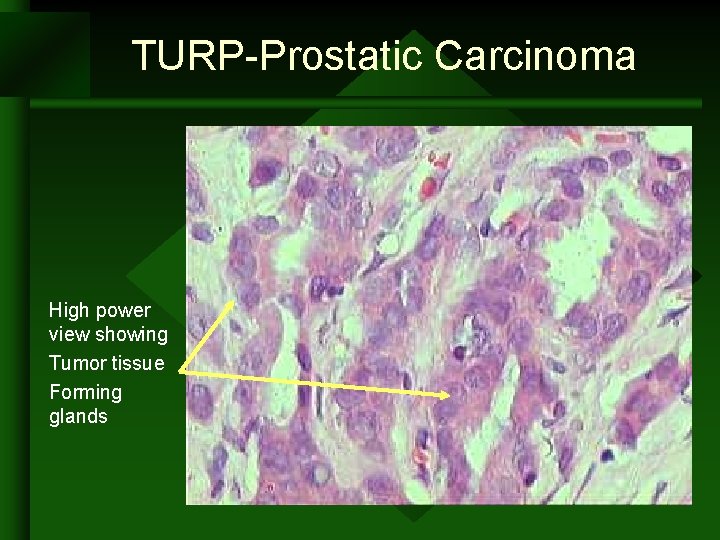
TURP-Prostatic Carcinoma High power view showing Tumor tissue Forming glands
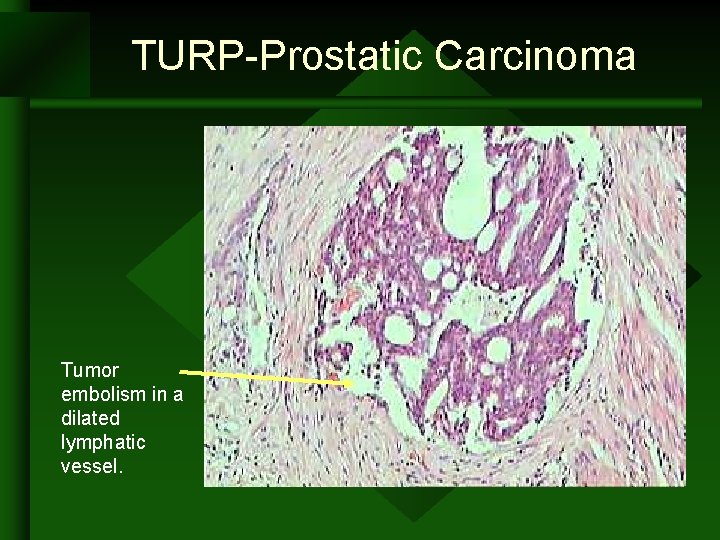
TURP-Prostatic Carcinoma Tumor embolism in a dilated lymphatic vessel.
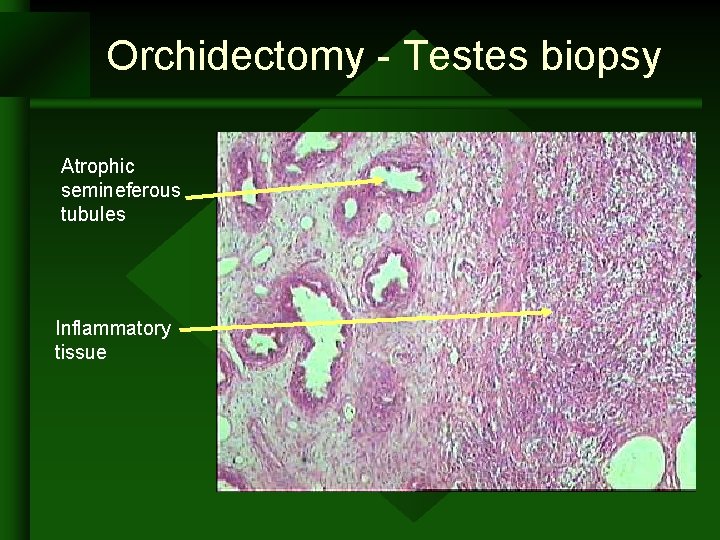
Orchidectomy - Testes biopsy Atrophic semineferous tubules Inflammatory tissue
Slide 103 A Free sample background from www. powerpointbackgrounds. com © 2003 By Default!