
Pathology of inflammation LEC 2 Cells of acute

- Slides: 15
Pathology of inflammation LEC 2
Cells of acute inflammation: 1. Neutrophils: Most prominent cells in acute inflammation during first 6 hrs -24 hrs. 2. monocytes----macrophages: These cells replaced neutrophils in area of acute inflammation after 2 -3 days. 3. Eosinophils: These cells are prominent in acute inflammatory allergic diseases & parasitic infestation. 4. Mast cells & basophils: they are the main source of histamine in acute inflammation. 5. Lymphocytes: These cells are the most important cells of chronic inflammation, but also increased in acute inflammation due to viral diseases like influenza, mumps.
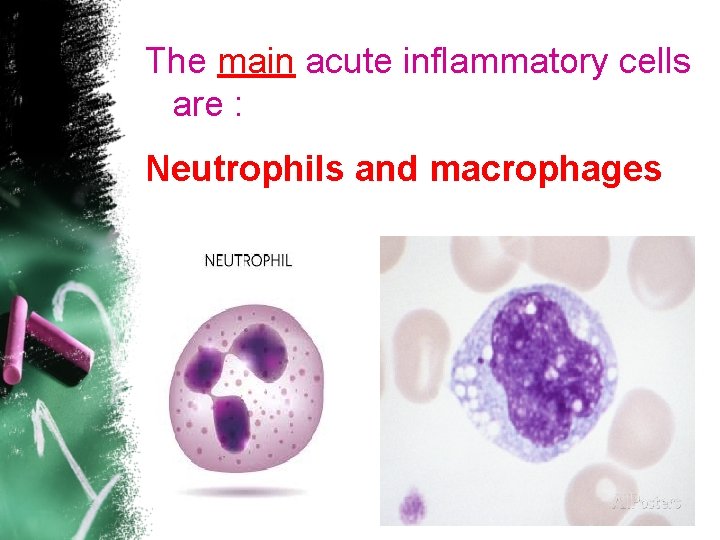
The main acute inflammatory cells are : Neutrophils and macrophages
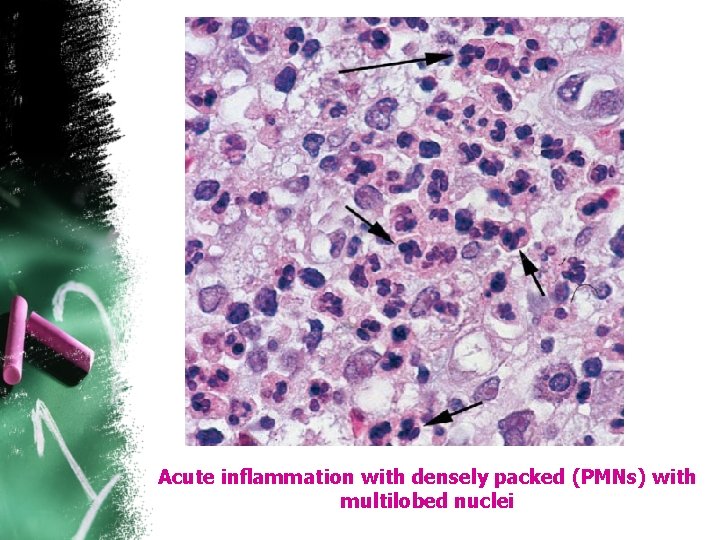
Acute inflammation with densely packed (PMNs) with multilobed nuclei
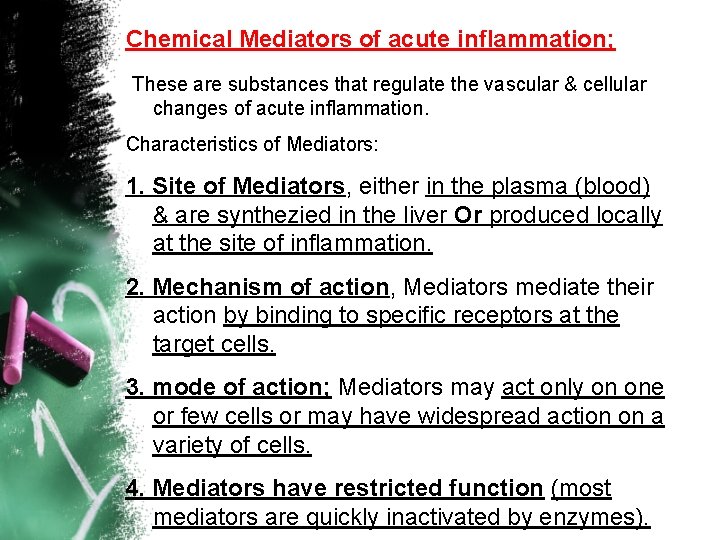
Chemical Mediators of acute inflammation; These are substances that regulate the vascular & cellular changes of acute inflammation. Characteristics of Mediators: 1. Site of Mediators, either in the plasma (blood) & are synthezied in the liver Or produced locally at the site of inflammation. 2. Mechanism of action, Mediators mediate their action by binding to specific receptors at the target cells. 3. mode of action; Mediators may act only on one or few cells or may have widespread action on a variety of cells. 4. Mediators have restricted function (most mediators are quickly inactivated by enzymes).
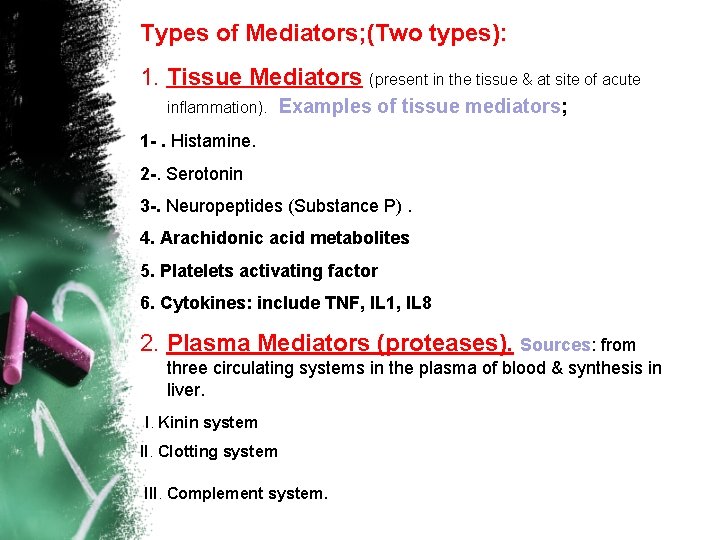
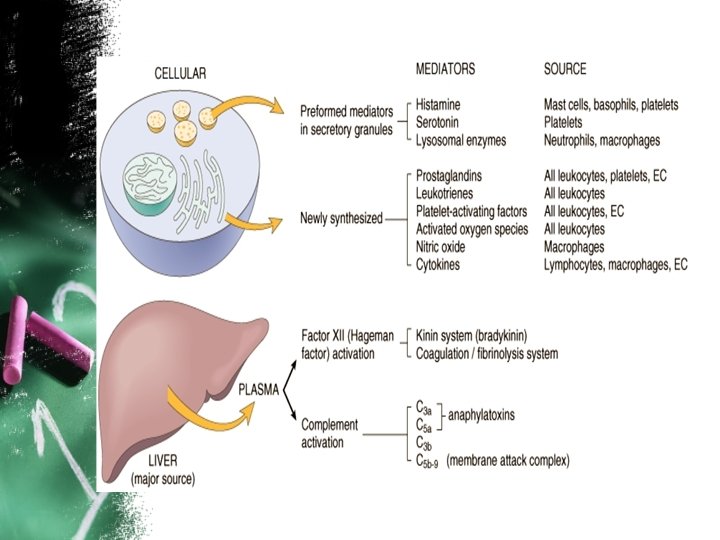
Types of Mediators; (Two types): 1. Tissue Mediators (present in the tissue & at site of acute inflammation). Examples of tissue mediators; 1 -. Histamine. 2 -. Serotonin 3 -. Neuropeptides (Substance P). 4. Arachidonic acid metabolites 5. Platelets activating factor 6. Cytokines: include TNF, IL 1, IL 8 2. Plasma Mediators (proteases). Sources: from three circulating systems in the plasma of blood & synthesis in liver. I. Kinin system II. Clotting system III. Complement system.
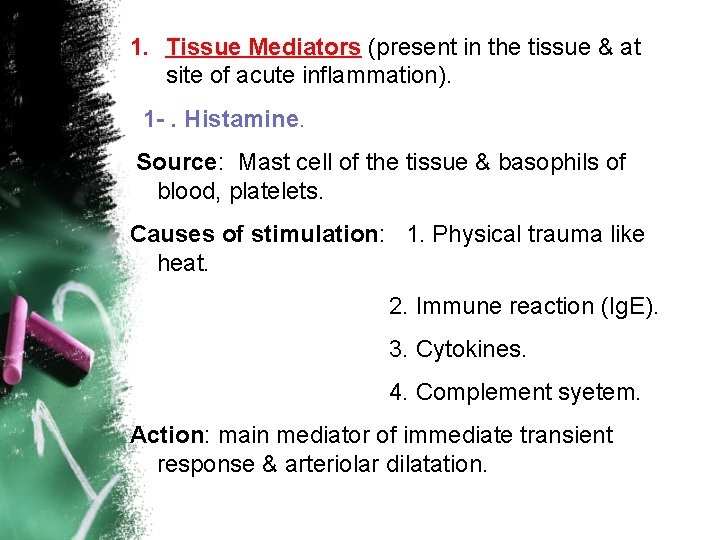
1. Tissue Mediators (present in the tissue & at site of acute inflammation). 1 -. Histamine. Source: Mast cell of the tissue & basophils of blood, platelets. Causes of stimulation: 1. Physical trauma like heat. 2. Immune reaction (Ig. E). 3. Cytokines. 4. Complement syetem. Action: main mediator of immediate transient response & arteriolar dilatation.
2 -. Serotonin. Source: Platelets. Causes of stimulation & Action are similar to Histamine. 3 -. Neuropeptides (Substance P). Source: Nerve fibers of lung & gastrointestinal system. Action: transmit pain signal.
4. Arachidonic acid metabolites: There are two pathways of arachidonic acid metabolites synthesis: I. Cyclooxygenase (COX): This result in formation of prostaglandins G 2, H 2, Prostacyclin (PGI 2) *Prostacyclin: cause increased vascular dilatation & inhibit platelets aggregation. *These prostaglandins are also responsible initiation of pain & fever (PG 2). *Thromboxane A 2 cause vasoconstriction & induce platelets aggregation. II. Lipooxygenase (LOX): This pathway results in formation of many leukotrines (LTB 4, LTC 4, LTD 4, & LTE 4), which cause vasoconstriction & bronchconstriction, & increase vascular permeability.
5. Platelets activating factor: cause *Platelets aggregation. * Vasodilatation & increased vascular permeability. * Chemotaxis & leukocytes adhesion. * Bronchconstriction. 6. Cytokines: include TNF, IL 1, IL 8…. . ect. IL 8 is important chemotactic factor. TNF & IL 1 promote adhesion between WBC & endothelial cells.
2. Plasma Mediators (proteases). Sources: from three circulating systems in the plasma of blood & synthesis in liver. These systems are, I. Kinin system. Activation of this system will result in formation of Bradykinin, which is protein has the same action of histamine, in addition it causes pain. This system is inactivated by Kinase.
II. Clotting system. There are many proteases within this system are act as Mediator of inflammation include 1. XIIa causes activation of thrombin, which in turn stimulate fibrin clot formation. …. Thrombin stimulate leukocytes adhesion during inflammation 2. Xa causes increase vascular permeability & leukocytes emigration. 3. Fibrinopeptides, which are synthesized by the action of thrombin. …. Fibrinopeptides cause vascular permeability & Chemotaxis of leukocytes. 4. Fibrin degradation products. They are formed by fibrinolysis (lyses of fibrin), these products cause increase vascular permeability &vasodilatation.
III. Complement system. This system consists of cascade of plasma proteins that play an important role in both immunity & inflammation (C 1 - - - C 9). C 3 a, C 5 a are important in acute inflammation (chemotaxis, Opsonization, phagocytosis & microbial killing).
Thank you