
PATHOLOGY of Cardiovascular System ISCHEMIC HEART DISEASE Angina
- Slides: 41
PATHOLOGY of Cardiovascular System ISCHEMIC HEART DISEASE, Angina & MYOCARDIAL INFARCTION Sufia Husain Associate Professor Pathology Department College of Medicine KSU, Riyadh March 2020 Reference: Robbins & Cotran Pathology and Rubin’s Pathology
Objectives for Atherosclerosis, ischemic heart diseases (angina and myocardial infarction) § Understand the pathogenesis and clinical consequences of atherosclerosis. § Be able to discuss pathology and complications of ischemic heart diseases with special emphasis on myocardial infarction. § Know how lifestyle modifications can reduce the risk of ischemic heart diseases. § Key principles to be discussed: § Risk factors of atherosclerosis. § Pathogenesis of the fibro lipid atherosclerotic plaque. § Clinical complications of atherosclerosis. § Commonest sites for the clinically significant coronary atherosclerosis. § Macroscopic and microscopic changes in myocardial infarction. § Biochemical markers of myocardial infarction. § Complications of myocardial infarction: immediate and late.
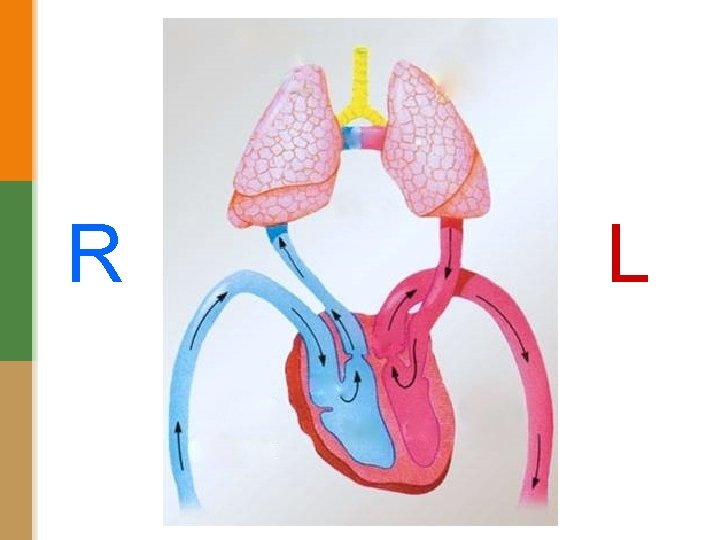
R L
Ischemic Heart Disease/IHD (Coronary Heart Disease) • • IHD = A group of closely related conditions/syndromes caused by an imbalance between the myocardial oxygen demand blood supply. Usually caused by decreased coronary artery blood flow (“coronary artery disease”) Four syndromes: üAngina pectoris (chest pain). üAcute myocardial infarction. üSudden cardiac death. üChronic ischemic heart disease with congestive heart failure. The most common cause if IHD is coronary artery atherosclerosis Less commonly it is due to vasospasm and vasculitis
Epidemiology o. F Ischemic Heart Disease (IHD): �Peak incidence: 60 y for males and 70 y for females. �Men are more affected than women. �Contributing factors are same as that of atherosclerosis e. g. ◦ Hypertension. ◦ Diabetes mellitus. ◦ Smoking. ◦ High levels of LDL. ◦ Genetic factors (direct or indirect). ◦ Lack of exercise.
Pathogenesis of IHD 1. 2. 3. 4. 5. Role of Critical stenosis or obstruction Role of Acute Plaque Change Role of Coronary Thrombus Role of Vasoconstriction Role of Inflammation
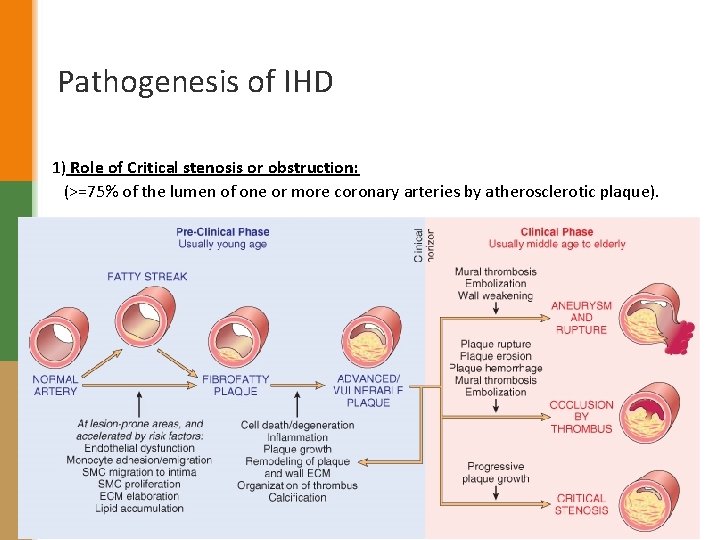
Pathogenesis of IHD 1) Role of Critical stenosis or obstruction: (>=75% of the lumen of one or more coronary arteries by atherosclerotic plaque).
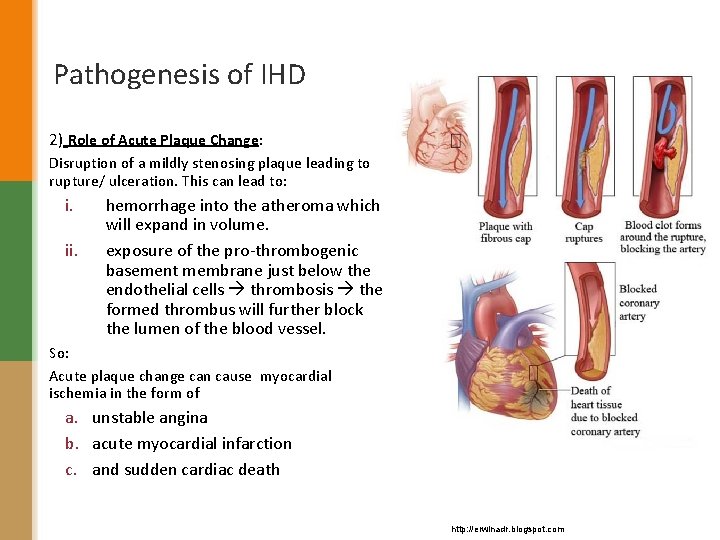
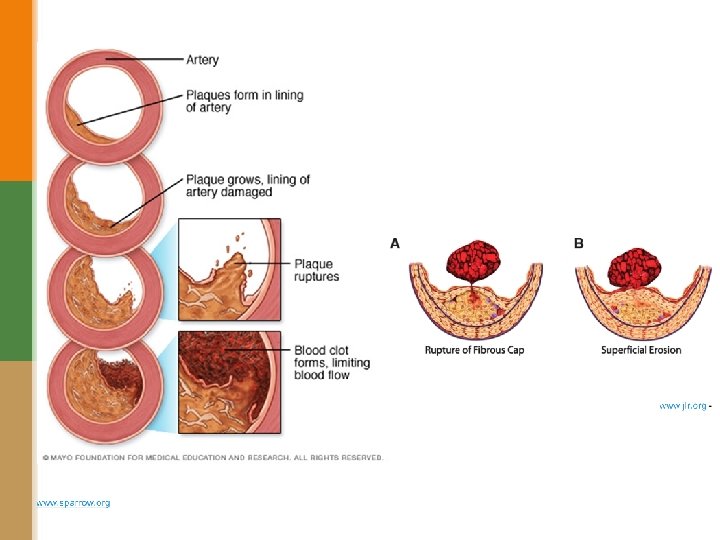
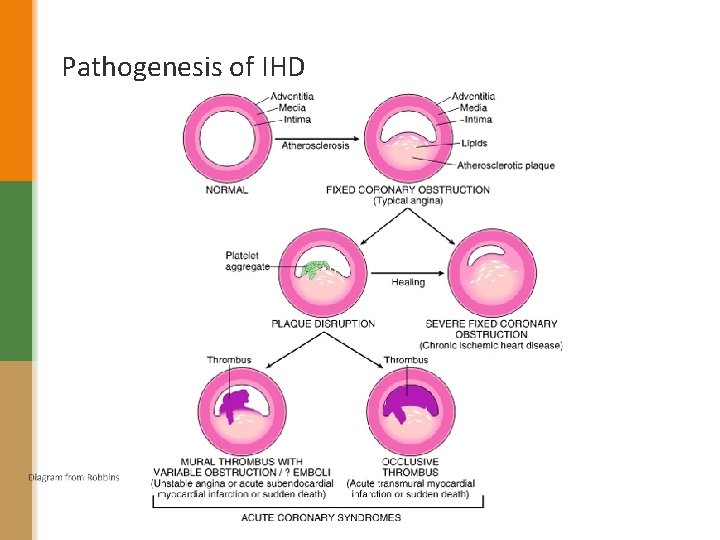
Pathogenesis of IHD 2) Role of Acute Plaque Change: Disruption of a mildly stenosing plaque leading to rupture/ ulceration. This can lead to: i. ii. hemorrhage into the atheroma which will expand in volume. exposure of the pro-thrombogenic basement membrane just below the endothelial cells thrombosis the formed thrombus will further block the lumen of the blood vessel. So: Acute plaque change can cause myocardial ischemia in the form of a. unstable angina b. acute myocardial infarction c. and sudden cardiac death http: //erwinadr. blogspot. com
Pathogenesis of IHD
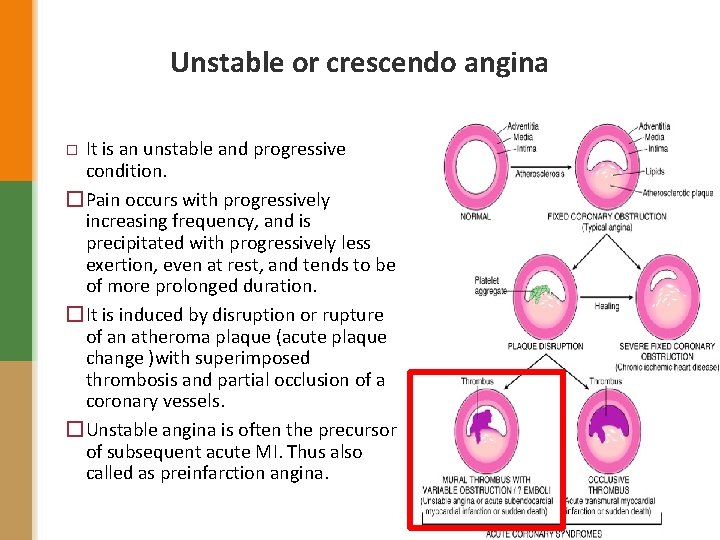
Pathogenesis of IHD 3) Role of Coronary Thrombus: �thrombus superimposed on a disrupted partially occluding plaque can convert the plaque to either i. A total occlusion leading to acute transmural MI or sudden death. ii. Or a partial/incomplete/subtotal occlusion leading to unstable angina, acute subendocardial infarction, or sudden death. �Thrombus in coronary artery can also embolize. 4) Role of Vasoconstriction: § Vasoconstriction reduces lumen size and can therefore potentiate plaque disruption. 5) Role of Inflammation: § Inflammatory processes play important roles at all stages of atherosclerosis.
Pathogenesis of IHD
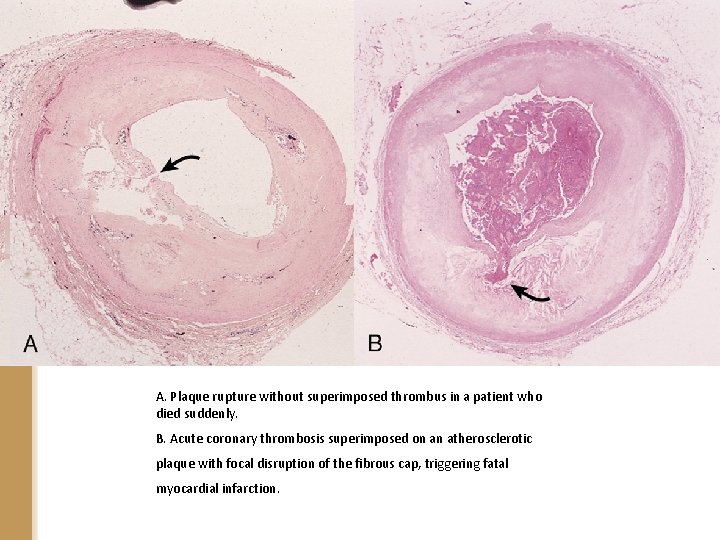
A. Plaque rupture without superimposed thrombus in a patient who died suddenly. B. Acute coronary thrombosis superimposed on an atherosclerotic plaque with focal disruption of the fibrous cap, triggering fatal myocardial infarction.
Ischemic Heart Disease Four closely related conditions/syndromes that come under IHD are: 1. Angina pectoris (chest pain). 2. Acute myocardial infarction (MI). 3. Sudden cardiac death. 4. Chronic ischemic heart disease with congestive heart failure.
Angina pectoris
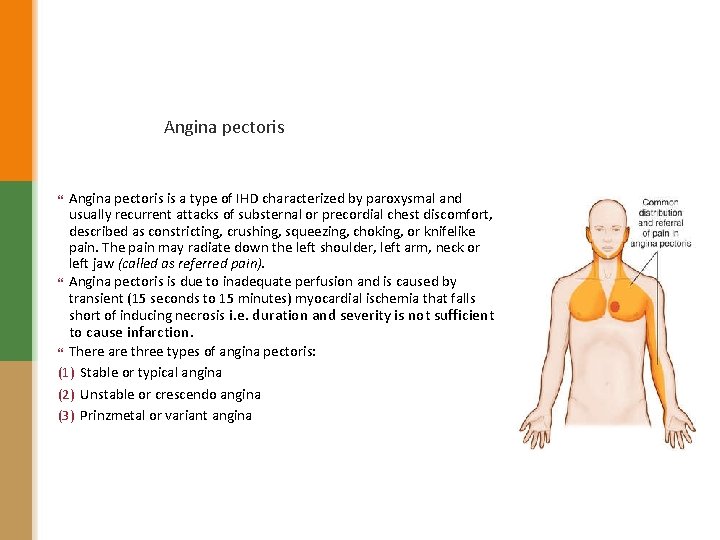
Angina pectoris is a type of IHD characterized by paroxysmal and usually recurrent attacks of substernal or precordial chest discomfort, described as constricting, crushing, squeezing, choking, or knifelike pain. The pain may radiate down the left shoulder, left arm, neck or left jaw (called as referred pain). Angina pectoris is due to inadequate perfusion and is caused by transient (15 seconds to 15 minutes) myocardial ischemia that falls short of inducing necrosis i. e. duration and severity is not sufficient to cause infarction. There are three types of angina pectoris: (1) Stable or typical angina (2) Unstable or crescendo angina (3) Prinzmetal or variant angina
Stable angina/ typical angina Is the most common form of angina § Is due to a fixed stenosis. § The chest pain is episodic. § Is caused by atherosclerotic disease with usually ≥ 70% narrowing of lumen (i. e. fixed stable critical stenosis). § This reduction (due to ≥ 70% stenosis) of blood flow in coronary vessels makes the heart vulnerable, so whenever there is increased demand e. g. physical activity, emotional excitement, or any other cause of increased cardiac workload, there is angina pain. § Relieved by rest (i. e. decreasing demand) or with vasodilators like sublingual nitroglycerin. §
Unstable or crescendo angina It is an unstable and progressive condition. �Pain occurs with progressively increasing frequency, and is precipitated with progressively less exertion, even at rest, and tends to be of more prolonged duration. �It is induced by disruption or rupture of an atheroma plaque (acute plaque change )with superimposed thrombosis and partial occlusion of a coronary vessels. �Unstable angina is often the precursor of subsequent acute MI. Thus also called as preinfarction angina. �
Prinzmetal variant angina: Øis an uncommon pattern of episodic angina that occurs at rest and is due to coronary artery spasm. ØPrinzmetal angina generally responds promptly to vasodilators, such as nitroglycerin and calcium channel blockers. ØNot related to atherosclerotic disease ØThe etiology is not clear.
Angina Pectoris. summary § § Intermittent chest pain caused by transient, reversible ischemia Typical (stable) angina • pain on exertion • fixed narrowing of coronary artery Unstable (pre-infarction) angina • increasing pain with less exertion • plaque disruption and thrombosis Prinzmetal (variant) angina • pain at rest • coronary artery spasm of unknown etiology
Myocardial Infarction (MI)
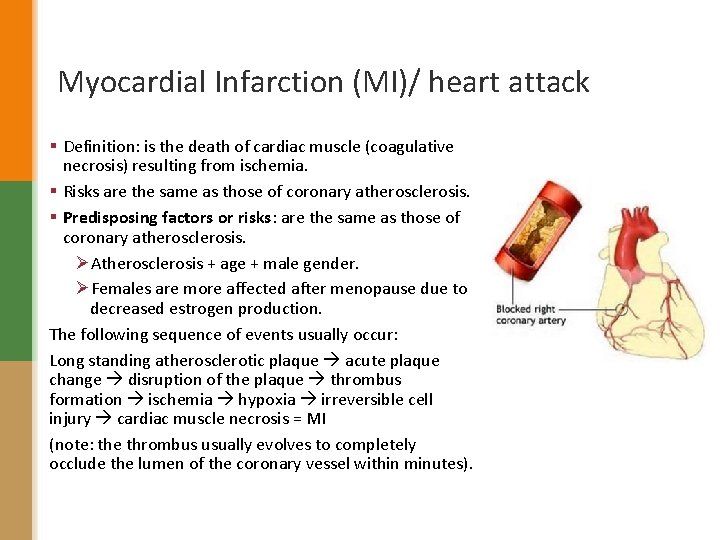
Myocardial Infarction (MI)/ heart attack § Definition: is the death of cardiac muscle (coagulative necrosis) resulting from ischemia. § Risks are the same as those of coronary atherosclerosis. § Predisposing factors or risks: are the same as those of coronary atherosclerosis. ØAtherosclerosis + age + male gender. ØFemales are more affected after menopause due to decreased estrogen production. The following sequence of events usually occur: Long standing atherosclerotic plaque acute plaque change disruption of the plaque thrombus formation ischemia hypoxia irreversible cell injury cardiac muscle necrosis = MI (note: the thrombus usually evolves to completely occlude the lumen of the coronary vessel within minutes).
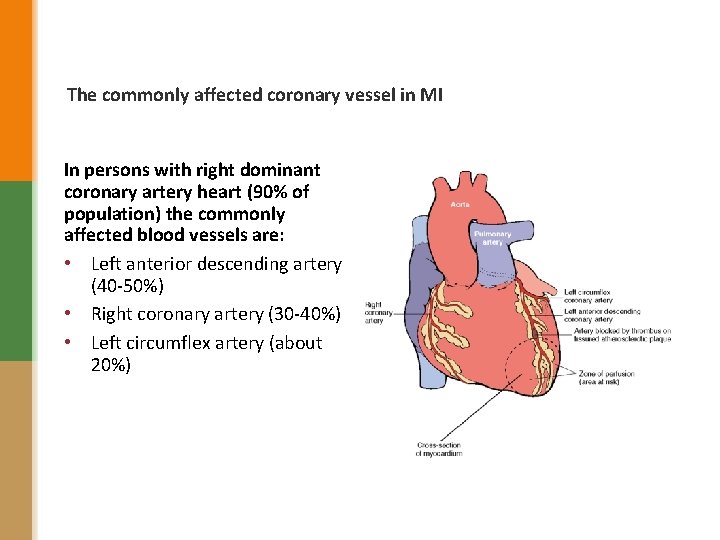
The commonly affected coronary vessel in MI In persons with right dominant coronary artery heart (90% of population) the commonly affected blood vessels are: • Left anterior descending artery (40 -50%) • Right coronary artery (30 -40%) • Left circumflex artery (about 20%)
Pathogenesis of MI Most common cause is thrombosis on a preexisting disrupted atherosclerotic plaque. In the typical case of MI, the following sequence of events usually occur: 1. Acute plaque change (sudden change in the structure of an atheromatous plaque e. g. disruption, ulceration, rupture or intraplaque hemorrhage). 2. Exposure of the thrombogenic subendothelial basement membrane resulting in thrombus formation. 3. Frequently within minutes, the thrombus evolves to completely occlude the lumen of the coronary vessel.
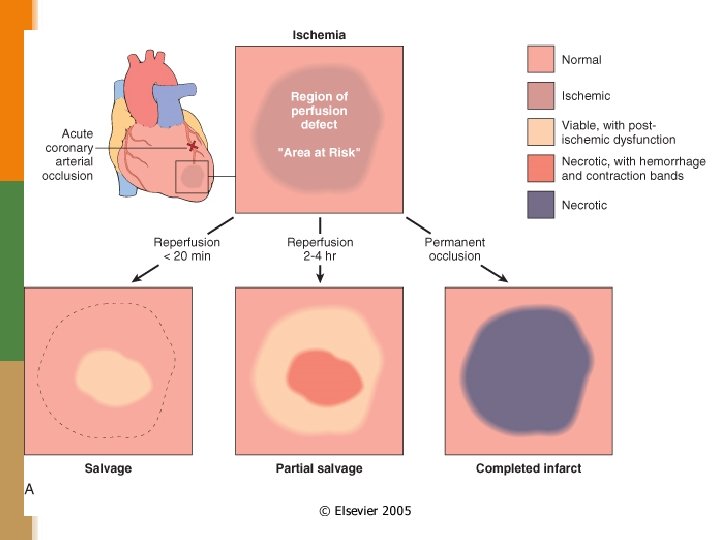
Pathogenesis of MI § Severe ischemia lasting at least 20 to 40 minutes causes irreversible injury and myocardial necrosis on the ultrastructural level (on electron microscopy). § Myocardial necrosis mostly starts in the sub-endocardial region (because it is less perfused and has high intramural pressure). § The full size of the infarct is usually determined within 3 -6 hours of the onset of severe myocardial ischemia. During this period, lysis of the thrombus by treatment with streptokinase or tissue plasminogen activator, may limit the size of the infarct. So any intervention in this time frame can potentially limit the final extent of necrosis.
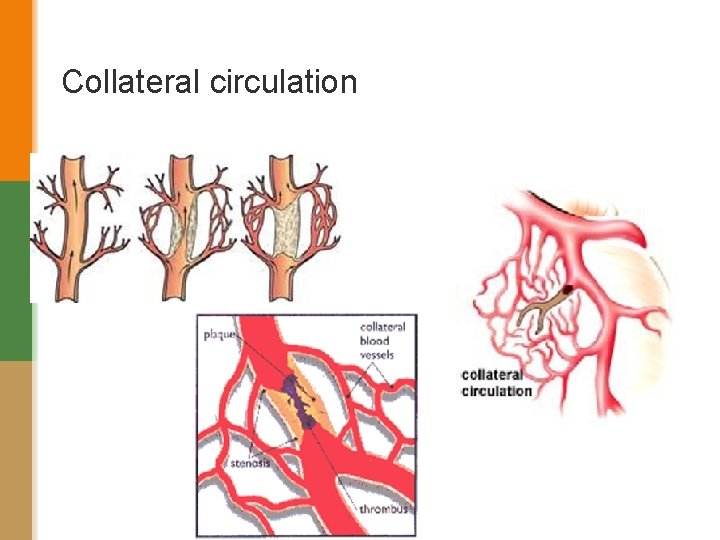
Pathogenesis of MI The precise location, size, and specific morphologic features of an acute myocardial infarct depend on: 1. The location, severity, and rate of development of coronary atherosclerotic obstructions 2. The size of the area supplied by the obstructed vessels 3. The duration of the occlusion 4. The oxygen needs of the myocardium at risk 5. The extent of collateral blood vessels 6. Other factors, such as blood vessel spasm, alterations in blood pressure, heart rate, and cardiac rhythm. 7. In addition reperfusion may limit the size of the infarct.
Collateral circulation
Ischemic Heart Disease MI types and morphology § TYPES: § Transmural: Full thickness (>50% of the wall) § Subendocardial: Inner 1/3 of myocardium § MORPHOLOGY: § Begins with coagulative necrosis and inflammation (initially mainly neutrophils and later macrophages). § Followed by formation of granulation tissue. § Heals by formation of a fibrous scar.
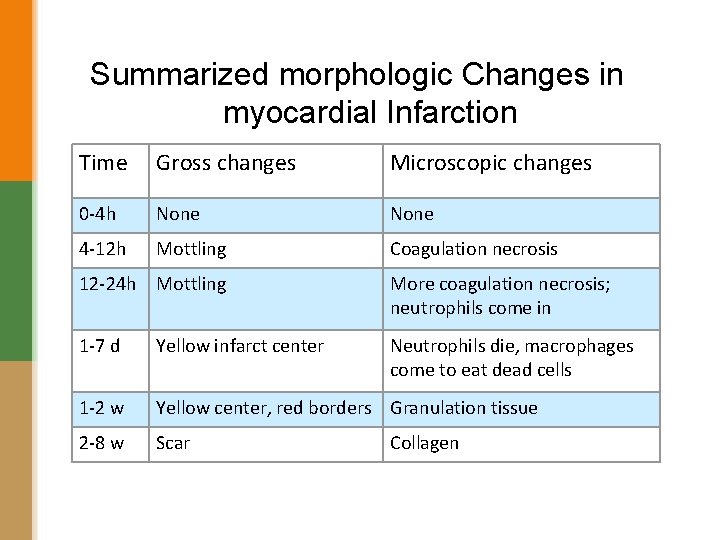
Summarized morphologic Changes in myocardial Infarction Time Gross changes Microscopic changes 0 -4 h None 4 -12 h Mottling Coagulation necrosis 12 -24 h Mottling More coagulation necrosis; neutrophils come in 1 -7 d Yellow infarct center Neutrophils die, macrophages come to eat dead cells 1 -2 w Yellow center, red borders Granulation tissue 2 -8 w Scar Collagen
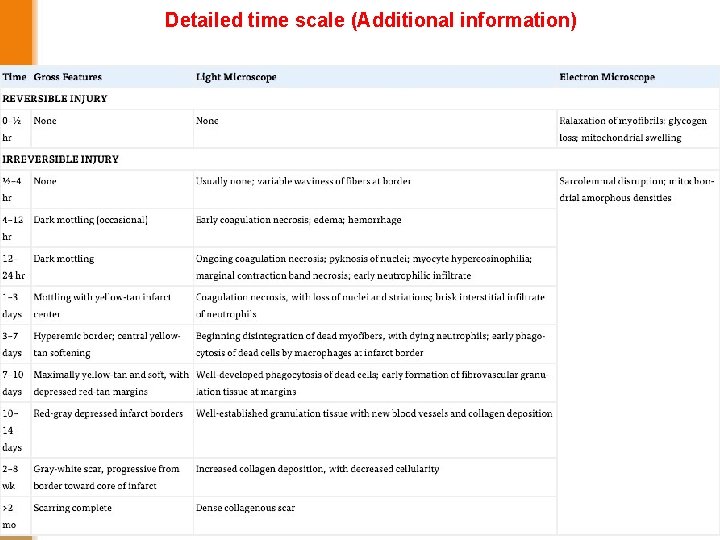
Detailed time scale (Additional information)
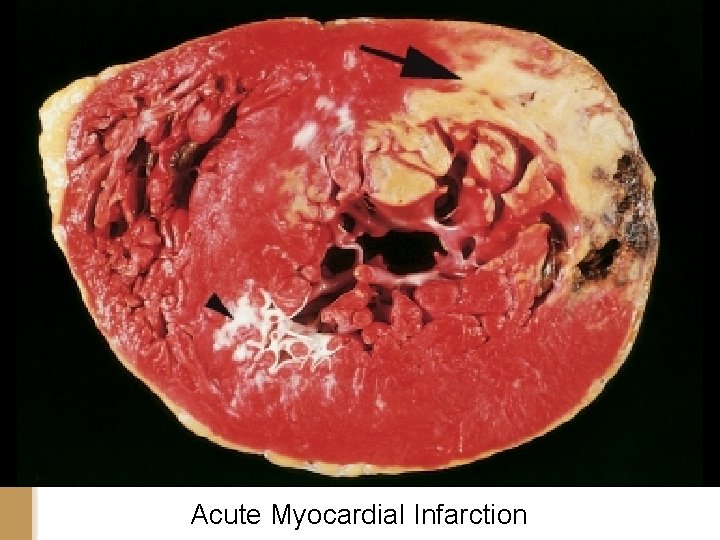
Acute Myocardial Infarction
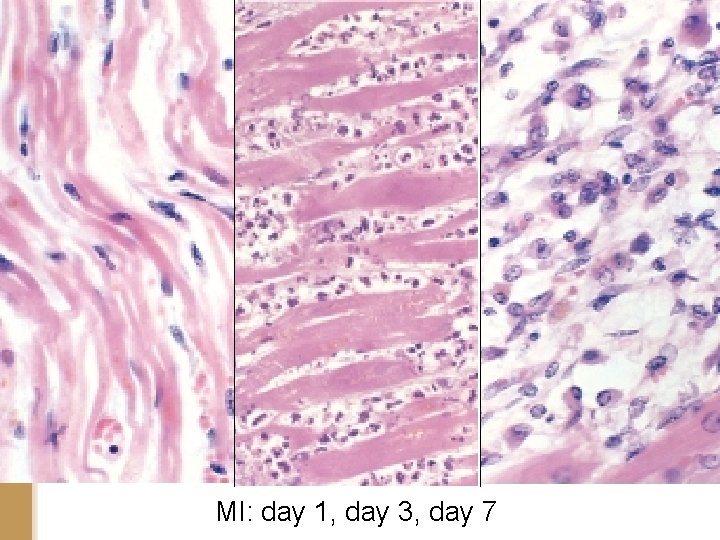
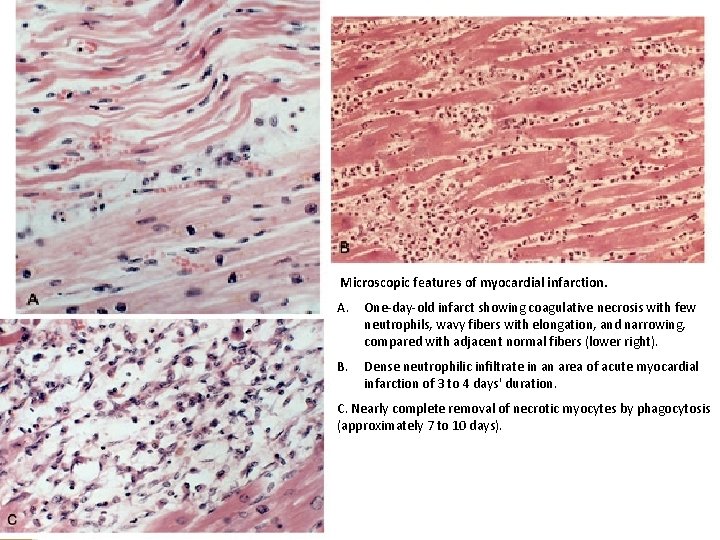
MI: day 1, day 3, day 7
Microscopic features of myocardial infarction. A. One-day-old infarct showing coagulative necrosis with few neutrophils, wavy fibers with elongation, and narrowing, compared with adjacent normal fibers (lower right). B. Dense neutrophilic infiltrate in an area of acute myocardial infarction of 3 to 4 days' duration. C. Nearly complete removal of necrotic myocytes by phagocytosis (approximately 7 to 10 days).
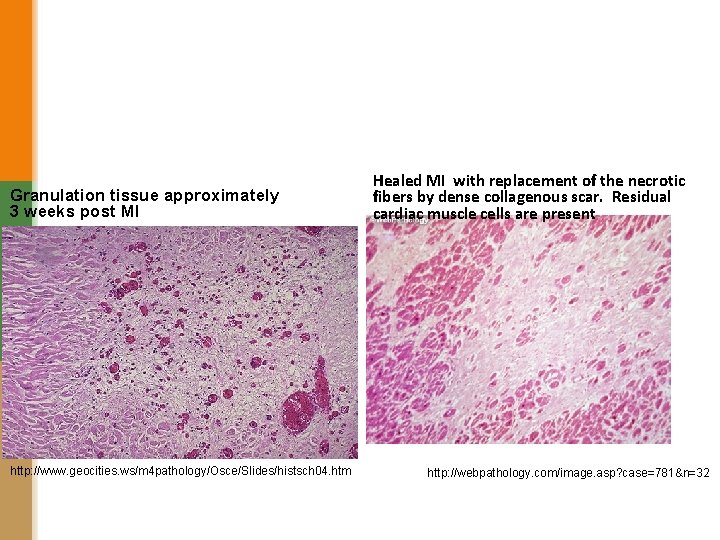
Granulation tissue approximately 3 weeks post MI http: //www. geocities. ws/m 4 pathology/Osce/Slides/histsch 04. htm Healed MI with replacement of the necrotic fibers by dense collagenous scar. Residual cardiac muscle cells are present http: //webpathology. com/image. asp? case=781&n=32
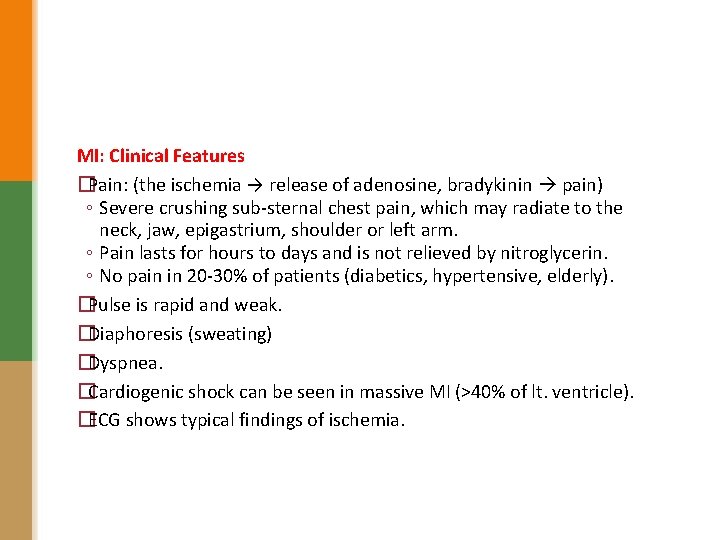
MI: Clinical Features �Pain: (the ischemia → release of adenosine, bradykinin pain) ◦ Severe crushing sub-sternal chest pain, which may radiate to the neck, jaw, epigastrium, shoulder or left arm. ◦ Pain lasts for hours to days and is not relieved by nitroglycerin. ◦ No pain in 20 -30% of patients (diabetics, hypertensive, elderly). �Pulse is rapid and weak. �Diaphoresis (sweating) �Dyspnea. �Cardiogenic shock can be seen in massive MI (>40% of lt. ventricle). �ECG shows typical findings of ischemia.
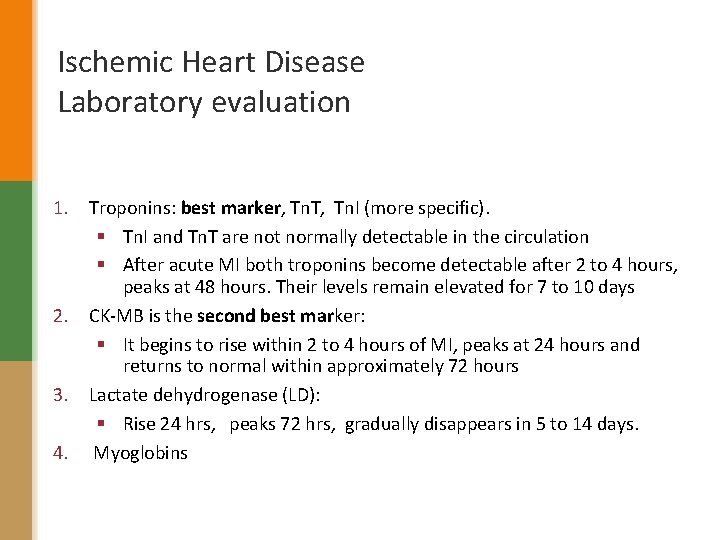
Ischemic Heart Disease Laboratory evaluation 1. Troponins: best marker, Tn. T, Tn. I (more specific). § Tn. I and Tn. T are not normally detectable in the circulation § After acute MI both troponins become detectable after 2 to 4 hours, peaks at 48 hours. Their levels remain elevated for 7 to 10 days 2. CK-MB is the second best marker: § It begins to rise within 2 to 4 hours of MI, peaks at 24 hours and returns to normal within approximately 72 hours 3. Lactate dehydrogenase (LD): § Rise 24 hrs, peaks 72 hrs, gradually disappears in 5 to 14 days. 4. Myoglobins
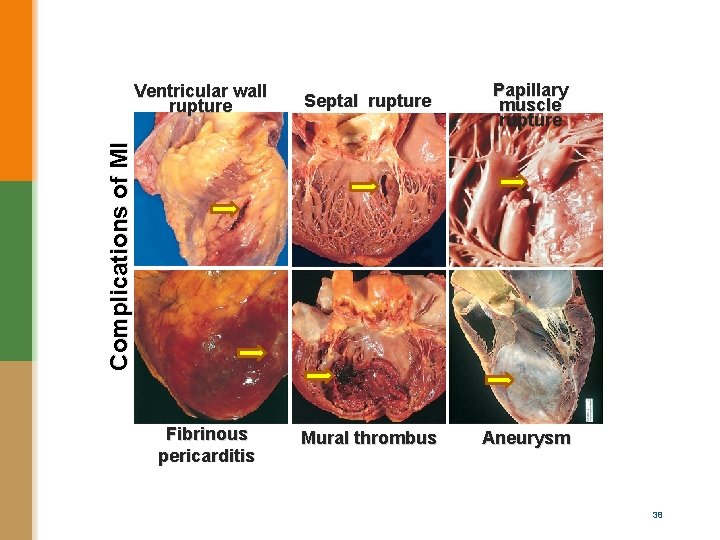
Myocardial Infarction (MI) § Complications • No complications in 10 -20%. • 80 -90% experience one or more of the following complications: ü Myocardial infarction lead to sudden death in some cases, even before reaching the hospital. ü Cardiac arrhythmia (75 -90%): patients have conduction disturbances sudden death esp. in ventricular arrhythmia. ü Left ventricular failure with pulmonary edema (60%). ü Cardiogenic shock (10%). ü Myocardial rupture: rupture of free wall, septum, papillary muscle. ü Thromboembolism (15 -49%): the combination of myocardial abnormality in contractility (causing stasis) and endocardial damage (due to exposure of underlying thrombogenic basement membrane) can lead to cardiac thrombosis and embolism ü Pericarditis ü Infarct extension and expansion ü External rupture of the infarct with associated bleeding into the pericardial space (hemopericardium). ü Ventricular aneurysm (ventricle is dilated and the wall is thinned out). ü Progressive late heart failure in the form of chronic IHD.
Septal rupture Papillary muscle rupture Mural thrombus Aneurysm Complications of MI Ventricular wall rupture Fibrinous pericarditis 38
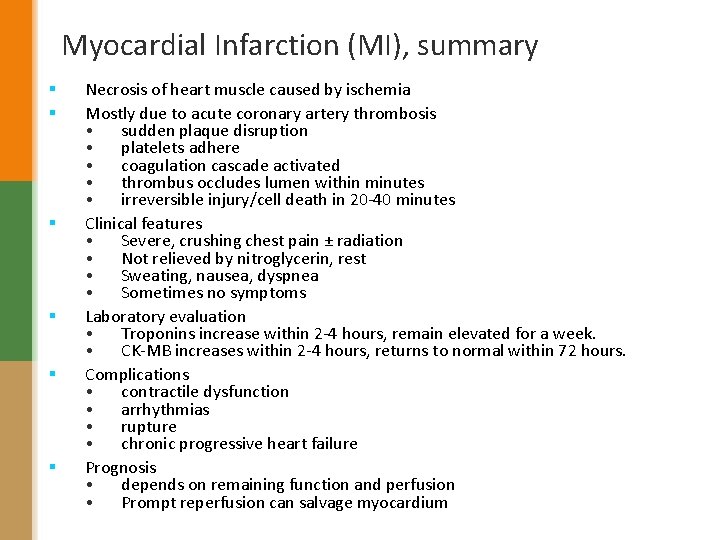
Myocardial Infarction (MI), summary § § § Necrosis of heart muscle caused by ischemia Mostly due to acute coronary artery thrombosis • sudden plaque disruption • platelets adhere • coagulation cascade activated • thrombus occludes lumen within minutes • irreversible injury/cell death in 20 -40 minutes Clinical features • Severe, crushing chest pain ± radiation • Not relieved by nitroglycerin, rest • Sweating, nausea, dyspnea • Sometimes no symptoms Laboratory evaluation • Troponins increase within 2 -4 hours, remain elevated for a week. • CK-MB increases within 2 -4 hours, returns to normal within 72 hours. Complications • contractile dysfunction • arrhythmias • rupture • chronic progressive heart failure Prognosis • depends on remaining function and perfusion • Prompt reperfusion can salvage myocardium
Chronic ischemic heart disease & Sudden cardiac death
Chronic ischemic heart disease & Sudden cardiac death Chronic ischemic heart disease ØProgressive heart failure due to ischemic injury, either from: § prior infarction(s) (most common) § or chronic low-grade ischemia Sudden cardiac death ØDefinition: Unexpected death from cardiac causes either without symptoms or within 1 to 24 hours of symptom onset ØResults from a fatal arrhythmia, most commonly in patients with severe coronary artery disease