
Pathology 3 rd Year MBBS MC Mirpur AK
Pathology 3 rd Year MBBS MC Mirpur (AK)
Introduction to Mycology (I) Dr Muhammad Kaleem Asst. Prof of Pathology MBBS MC Mirpur (AJK).
Mycology 1 - Introduction 2 - Forms Of Fungi 3 - Important Cell Structures 4 - Reproduction 5 - Spores 6 - Diseases 7 - Laboratory Diagnosis
Mycology 2 words Myco + Logy Fungus Study Mycology Scientific discipline dealing with fungi
Mycology Mycologists Scientists who study fungi. Mycoses Diseases caused in animals & human beings by fungi.
Introduction 1 - Eukaryotic organisms. 2 - Non-motile. 3 - Rigid cell wall. 4 - Unlike plants, fungi are Non-photosynthetic
Introduction (Contd) 5 - Approximately 80, 000 species of fungi 6 - 400 are medically important 7 - < 50 species cause more than 90% of the fungal infections of humans and other animals.
Introduction 8 - Most species of fungi are beneficial to humankind. 9 - Reside in nature 10 - Essential in breaking down and recycling organic matter.

Introduction 11 - Enhance our quality of life 12 - Production of food and spirits, including cheese, bread, and beer.
Introduction 13 - Served medicine 14 - Providing useful bioactive secondary metabolites such as antibiotics (e. g, penicillin) and immunosuppressive drugs (e. g, cyclosporine).
Introduction 15 - Greatest economic impact as phytopathogens; i-e The agricultural industry sustains huge crop losses every year as a result of fungal diseases of rice, corn, grains, and other plants.
Forms Of Fungi grow in two basic forms 1 - yeasts. 2 - Molds.
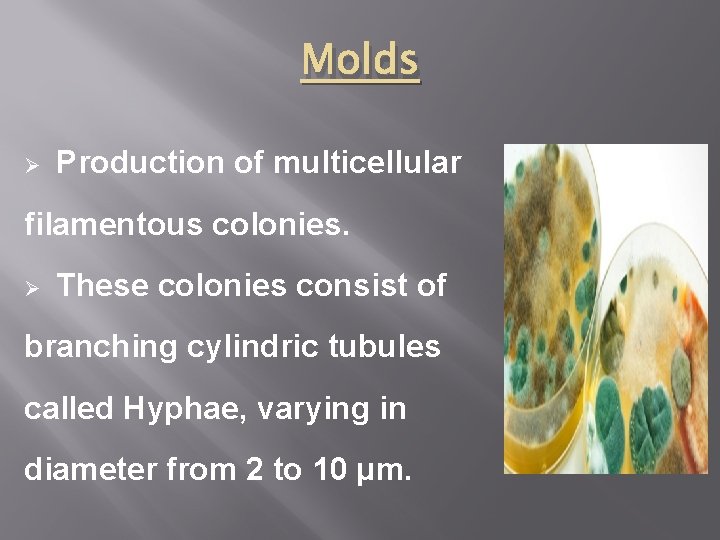
Molds Ø Production of multicellular filamentous colonies. Ø These colonies consist of branching cylindric tubules called Hyphae, varying in diameter from 2 to 10 μm.
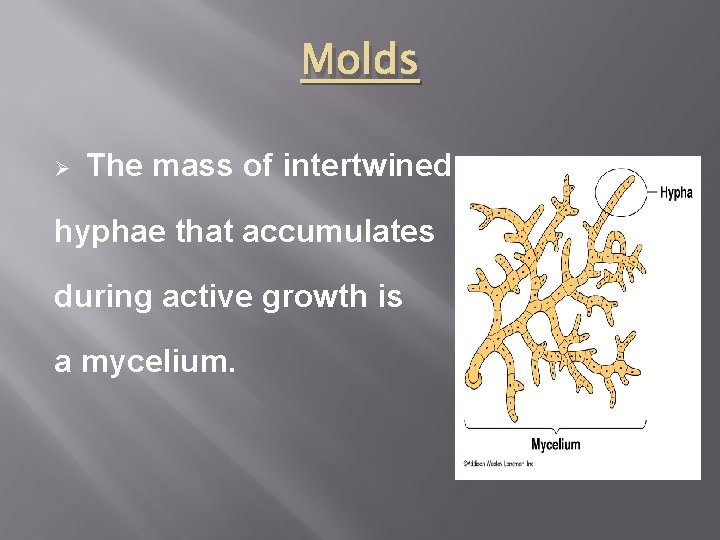
Molds Ø The mass of intertwined hyphae that accumulates during active growth is a mycelium.
Molds Examples 1 - Dermatophytes. 2 - Aspergillus Spp. 3 - Mucor. 4 - Rhizopus. 5 - Pseudallescheria boydii. 6 - Fusarium solani.

Hyphae are divided into cells by cross-walls or septa, which typically form at regular intervals during hyphal growth. Members of the Order Mucorales produce hyphae that are rarely septated.
Advantages Of Hyphae 1 - Penetrate the supporting medium. 2 - Anchor the colony. 3 - Absorb nutrients.
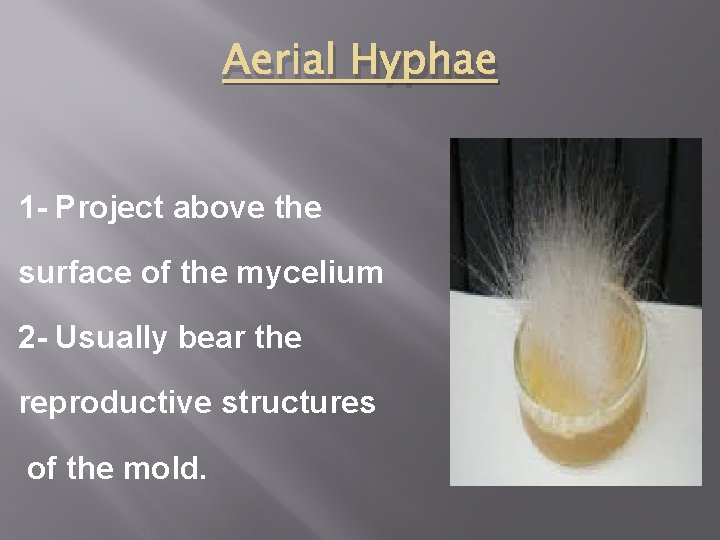
Aerial Hyphae 1 - Project above the surface of the mycelium 2 - Usually bear the reproductive structures of the mold.
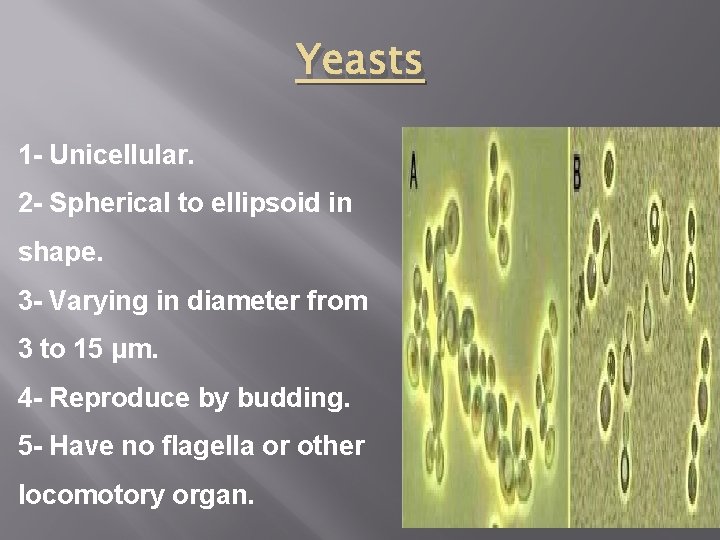
Yeasts 1 - Unicellular. 2 - Spherical to ellipsoid in shape. 3 - Varying in diameter from 3 to 15 μm. 4 - Reproduce by budding. 5 - Have no flagella or other locomotory organ.
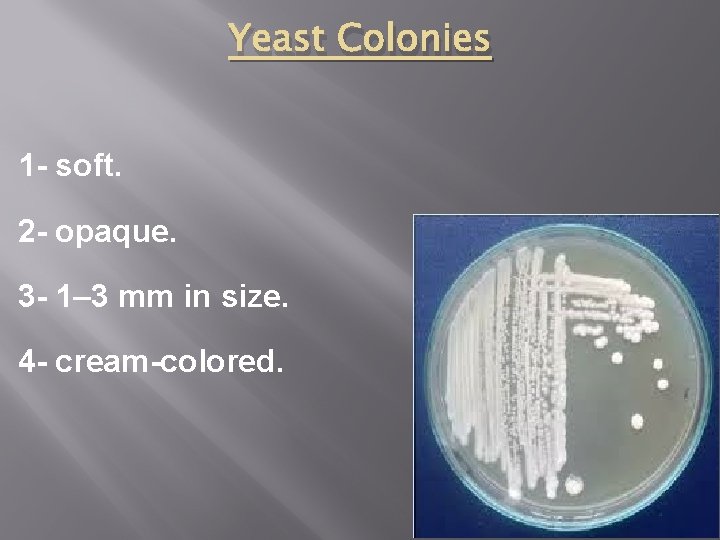
Yeast Colonies 1 - soft. 2 - opaque. 3 - 1– 3 mm in size. 4 - cream-colored.
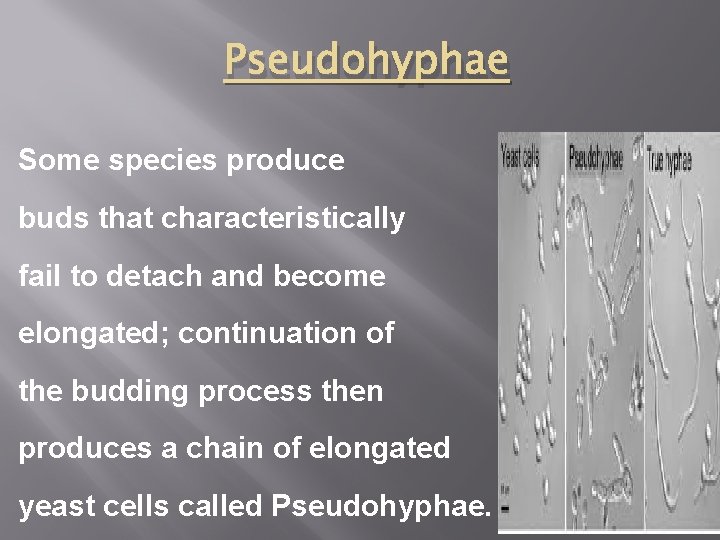
Pseudohyphae Some species produce buds that characteristically fail to detach and become elongated; continuation of the budding process then produces a chain of elongated yeast cells called Pseudohyphae.
Yeasts Examples 1 - Candida Spp. 2 - Cryptococcus Spp. 3 - Pneuomocystis jiroveci.
Dimorphic Fungi 1 - Some species of fungi are dimorphic. 2 - Capable of growth as a yeast or mold depending on environmental conditions.
Dimorphic Fungi 3 - Dimorphism in pathogenic fungi typically depends on temperature: 37 o. C: Yeast form. 25 o. C: Mold form. 4 - Dimorphism in nonpathogenic fungi may depend on other factors: Carbon dioxide concentration.
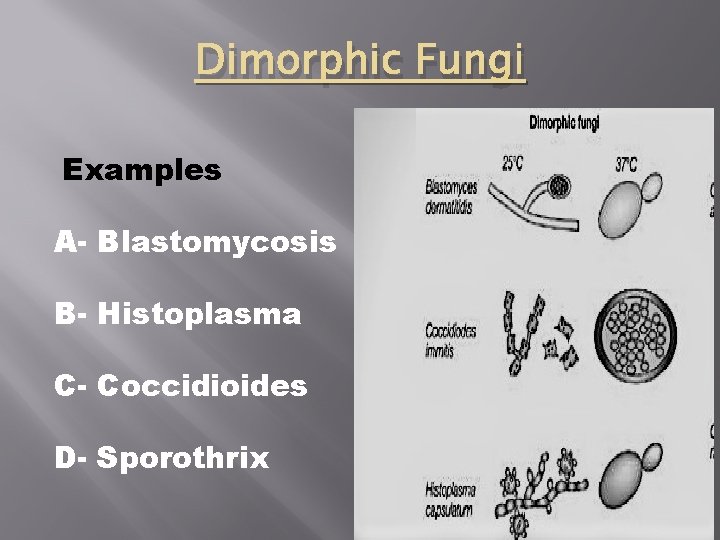
Dimorphic Fungi Examples A- Blastomycosis B- Histoplasma C- Coccidioides D- Sporothrix
Dematiaceous Fungi 1 - Some yeasts and molds have melanized cell walls. 2 - Melanin impart a brown or black pigment to the fungal colony. 3 - Such fungi are Dematiaceous. 4 - Melanin protects these fungi from host defenses and is associated with virulence.
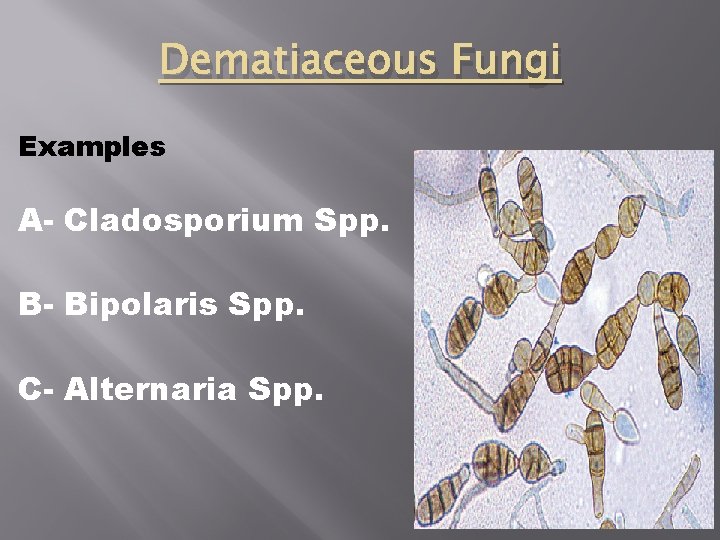
Dematiaceous Fungi Examples A- Cladosporium Spp. B- Bipolaris Spp. C- Alternaria Spp.
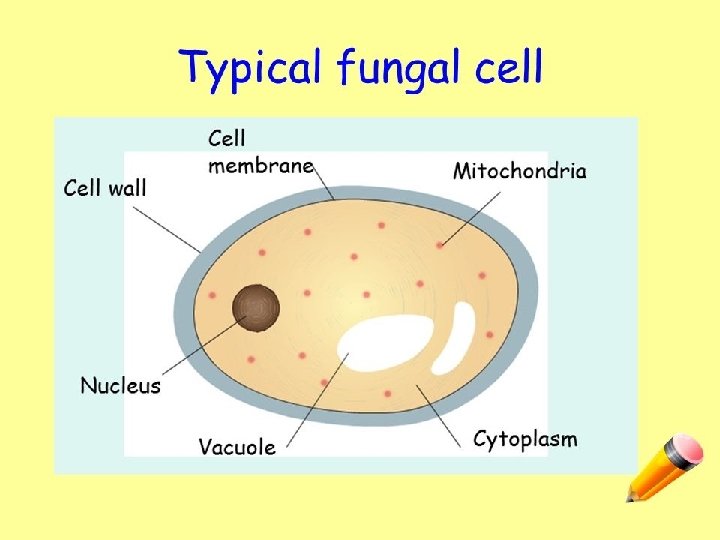
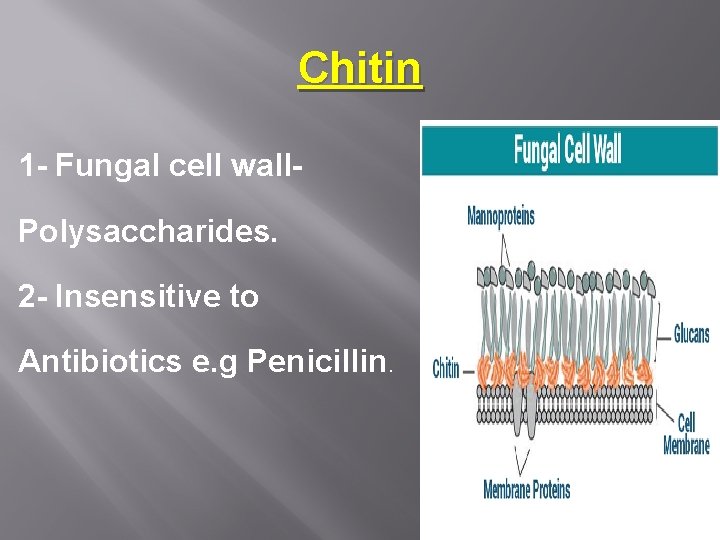
Chitin 1 - Fungal cell wall. Polysaccharides. 2 - Insensitive to Antibiotics e. g Penicillin.
Cell Wall Composition 1 - Carbohydrate layers 2 - Long chains of polysaccharides 3 - Glycoprotein 4 - Lipids.
Functions Of Chitin 1 - Rigid cell wall 2 - Determines their shape 3 - Protects them from osmotic and environmental stress.
Fungal Cell Wall 1 - During infection, fungal cell walls exert important pathobiologic properties. 2 - The surface components of the cell wall mediate attachment of the fungus to host cells.
Functions Of Cell wall glucans and other polysaccharides 1 - Activate the complement cascade. 2 - Provoke an inflammatory reaction. 3 - Most of these polysaccharides are poorly degraded by the host. 4 - can be detected with special histologic stains.
Fungal Cell Membrane Ergosterol Fungal cell membrane. Human cell membrane has cholesterol. Function Selective action of antifungals based on differences in sterol

- Slides: 35