
Pathogens Disease Do now activity 1 What is
- Slides: 12
Pathogens & Disease Do now activity: 1. What is a ‘communicable’ disease, can you give an example? 2. What are some risk factors that may increase the likelihood of you contracting a communicable diseases? 3. Are all bacteria harmful? Explain your answer Keywords Pathogen Bacteria Virus Fungi Communicable
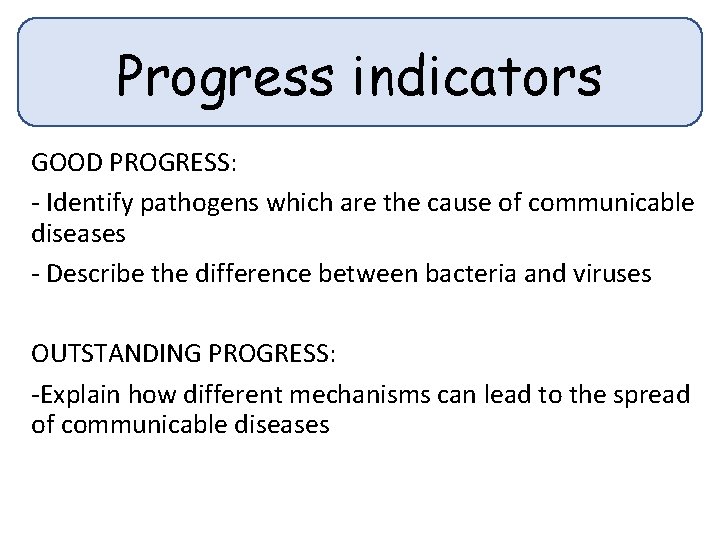
Progress indicators GOOD PROGRESS: - Identify pathogens which are the cause of communicable diseases - Describe the difference between bacteria and viruses OUTSTANDING PROGRESS: -Explain how different mechanisms can lead to the spread of communicable diseases
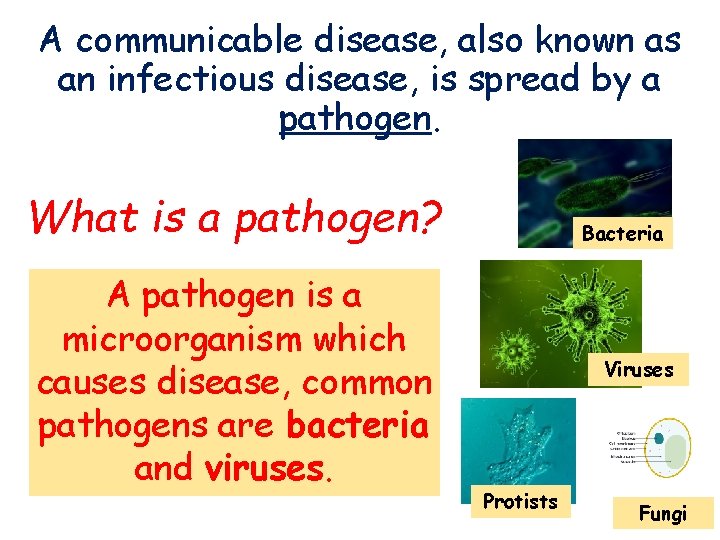
A communicable disease, also known as an infectious disease, is spread by a pathogen. What is a pathogen? A pathogen is a microorganism which causes disease, common pathogens are bacteria and viruses. Bacteria Viruses Protists Fungi
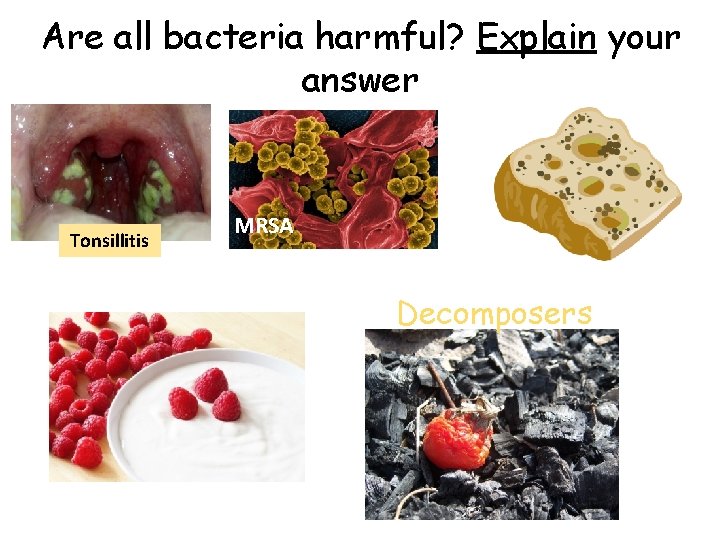
Are all bacteria harmful? Explain your answer Tonsillitis MRSA Decomposers
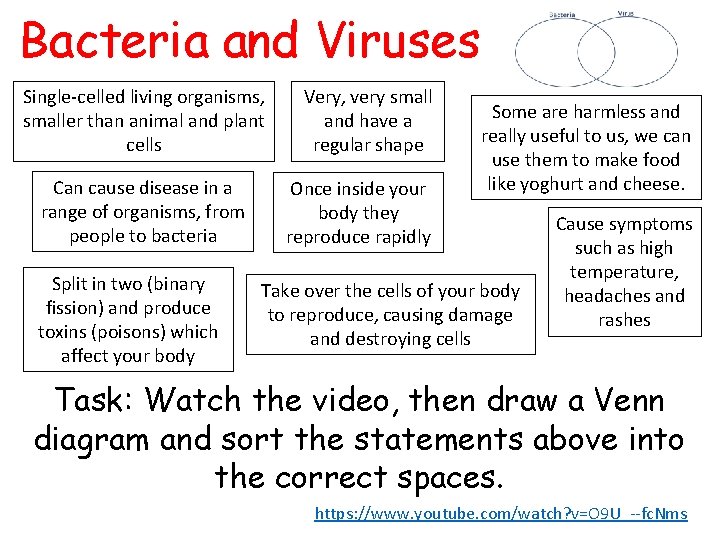
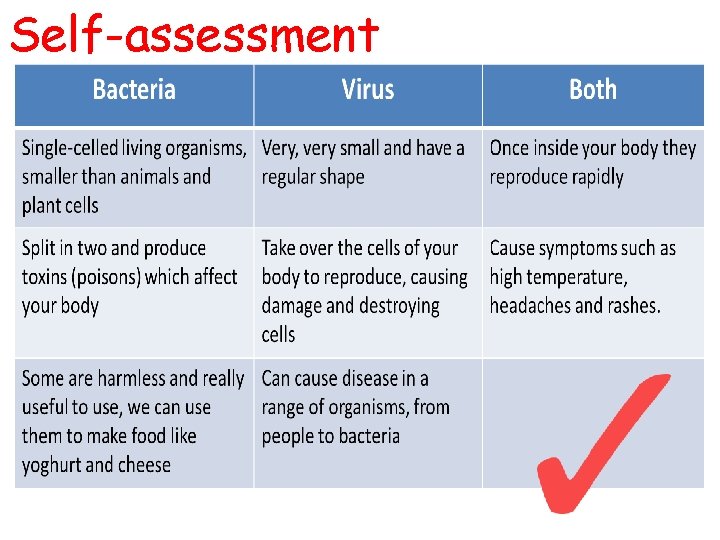
Bacteria and Viruses Single-celled living organisms, smaller than animal and plant cells Can cause disease in a range of organisms, from people to bacteria Split in two (binary fission) and produce toxins (poisons) which affect your body Very, very small and have a regular shape Once inside your body they reproduce rapidly Some are harmless and really useful to us, we can use them to make food like yoghurt and cheese. Take over the cells of your body to reproduce, causing damage and destroying cells Cause symptoms such as high temperature, headaches and rashes Task: Watch the video, then draw a Venn diagram and sort the statements above into the correct spaces. https: //www. youtube. com/watch? v=O 9 U_--fc. Nms
Self-assessment
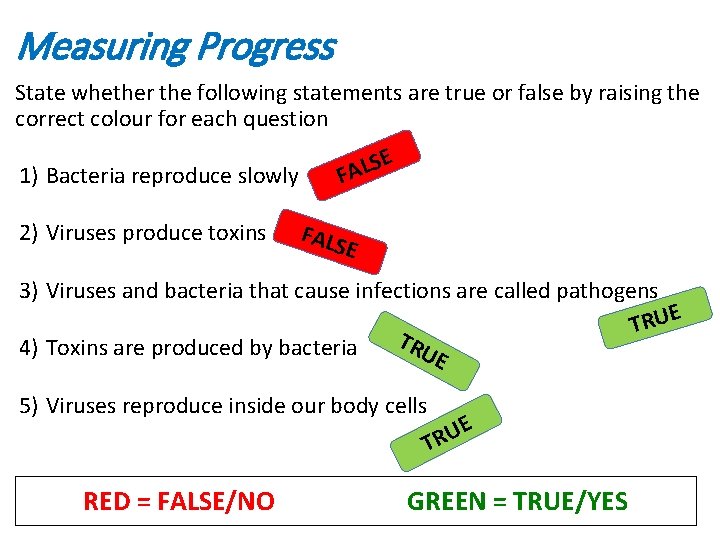
Measuring Progress State whether the following statements are true or false by raising the correct colour for each question 1) Bacteria reproduce slowly 2) Viruses produce toxins E S L FA FALS E 3) Viruses and bacteria that cause infections are called pathogens TRUE TR 4) Toxins are produced by bacteria UE 5) Viruses reproduce inside our body cells E TRU RED = FALSE/NO GREEN = TRUE/YES
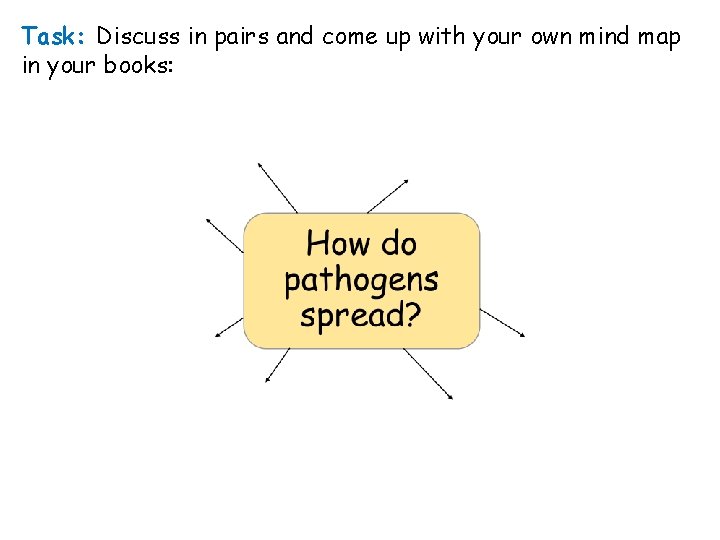
Task: Discuss in pairs and come up with your own mind map in your books:
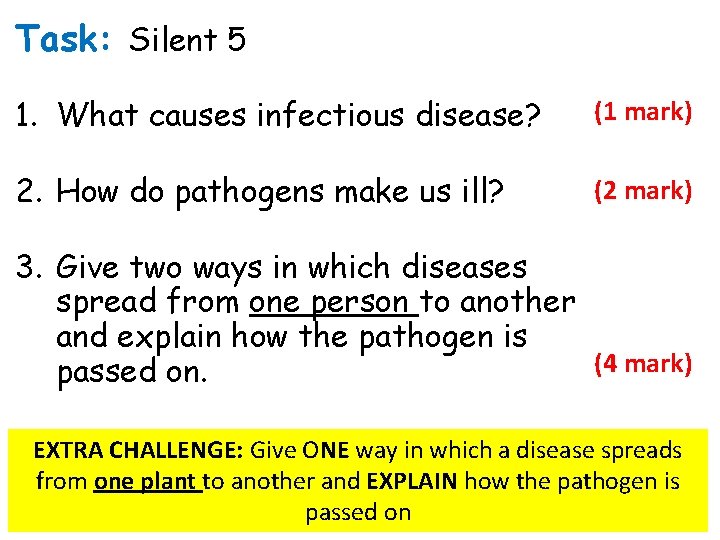
Task: Silent 5 1. What causes infectious disease? (1 mark) 2. How do pathogens make us ill? (2 mark) 3. Give two ways in which diseases spread from one person to another and explain how the pathogen is (4 mark) passed on. EXTRA CHALLENGE: Give ONE way in which a disease spreads from one plant to another and EXPLAIN how the pathogen is passed on
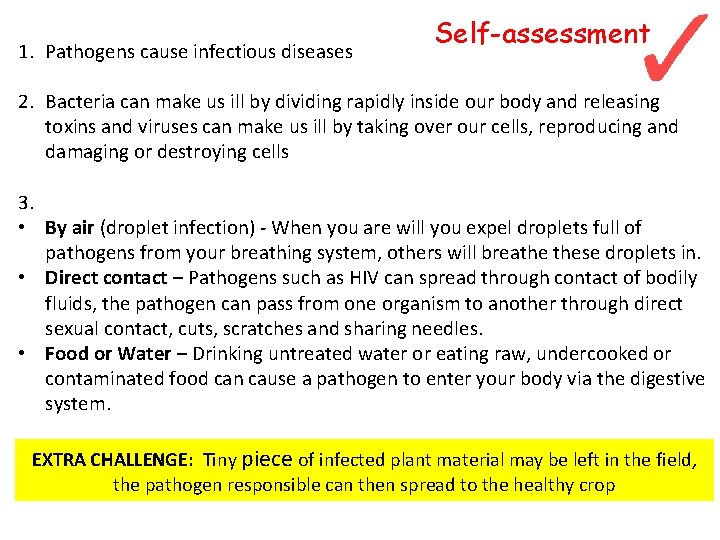
1. Pathogens cause infectious diseases Self-assessment 2. Bacteria can make us ill by dividing rapidly inside our body and releasing toxins and viruses can make us ill by taking over our cells, reproducing and damaging or destroying cells 3. • By air (droplet infection) - When you are will you expel droplets full of pathogens from your breathing system, others will breathe these droplets in. • Direct contact – Pathogens such as HIV can spread through contact of bodily fluids, the pathogen can pass from one organism to another through direct sexual contact, cuts, scratches and sharing needles. • Food or Water – Drinking untreated water or eating raw, undercooked or contaminated food can cause a pathogen to enter your body via the digestive system. EXTRA CHALLENGE: Tiny piece of infected plant material may be left in the field, the pathogen responsible can then spread to the healthy crop
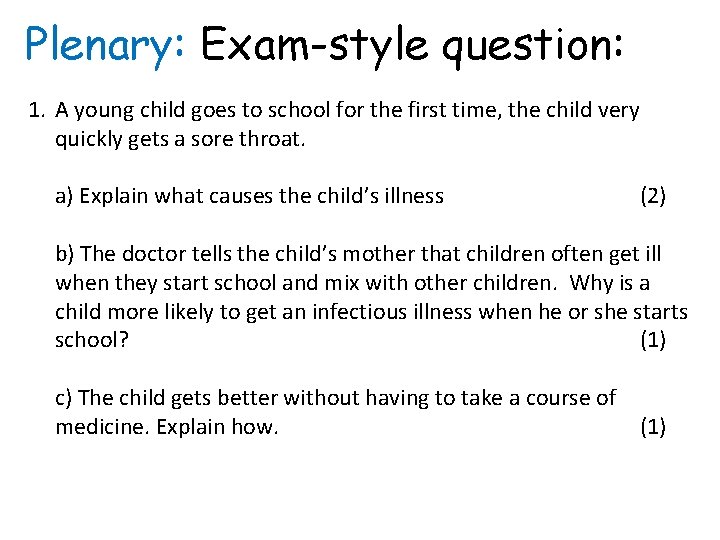
Plenary: Exam-style question: 1. A young child goes to school for the first time, the child very quickly gets a sore throat. a) Explain what causes the child’s illness (2) b) The doctor tells the child’s mother that children often get ill when they start school and mix with other children. Why is a child more likely to get an infectious illness when he or she starts school? (1) c) The child gets better without having to take a course of medicine. Explain how. (1)
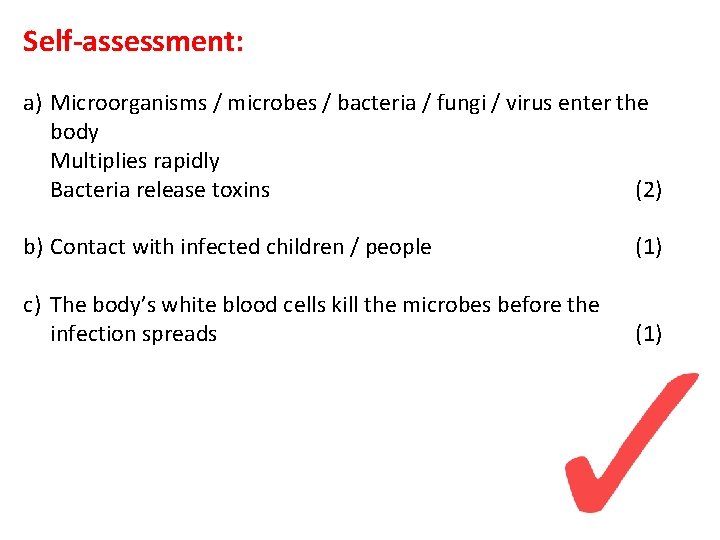
Self-assessment: a) Microorganisms / microbes / bacteria / fungi / virus enter the body Multiplies rapidly Bacteria release toxins (2) b) Contact with infected children / people (1) c) The body’s white blood cells kill the microbes before the infection spreads (1)