
Pat Branigan Stuart Allardyce Devolution and Harmful Sexual
Pat Branigan & Stuart Allardyce
Devolution and Harmful Sexual Behaviour Work 2
HSB Work in Scotland – a Timeline • Kilbrandon Report (1964) • Establishment of Children’s Hearing System (1971) • NCH Report (1992) • Establishment of HALT project in Glasgow (1994) • Scotland’s Action Programme to Reduce Youth Crime was introduced in response to Audit Scotland’s review of Scotland’s Youth Justice System: ‘Dealing with Offending by Young People’. (2002) • CHIPS Group at CYCJ (2004) • GIRFEC (2004) • Management of Offenders etc. (Scotland) Act (2005) 3
2005 – Colyn Evans
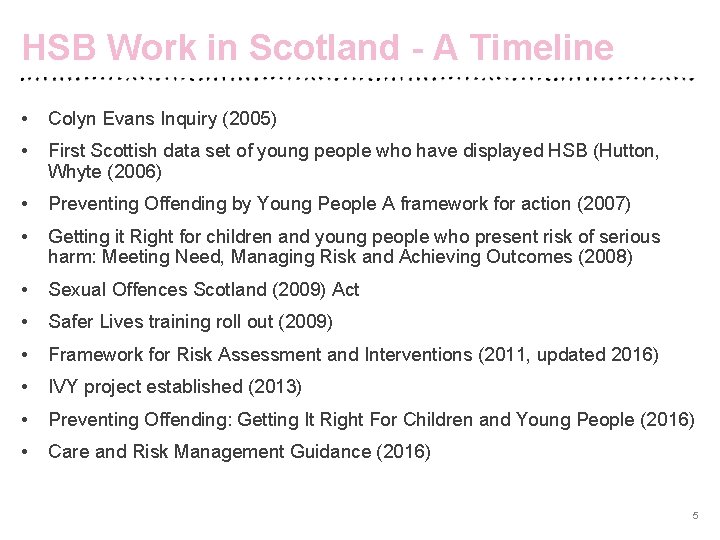
HSB Work in Scotland - A Timeline • Colyn Evans Inquiry (2005) • First Scottish data set of young people who have displayed HSB (Hutton, Whyte (2006) • Preventing Offending by Young People A framework for action (2007) • Getting it Right for children and young people who present risk of serious harm: Meeting Need, Managing Risk and Achieving Outcomes (2008) • Sexual Offences Scotland (2009) Act • Safer Lives training roll out (2009) • Framework for Risk Assessment and Interventions (2011, updated 2016) • IVY project established (2013) • Preventing Offending: Getting It Right For Children and Young People (2016) • Care and Risk Management Guidance (2016) 5
Learning From Other Jurisdictions 6
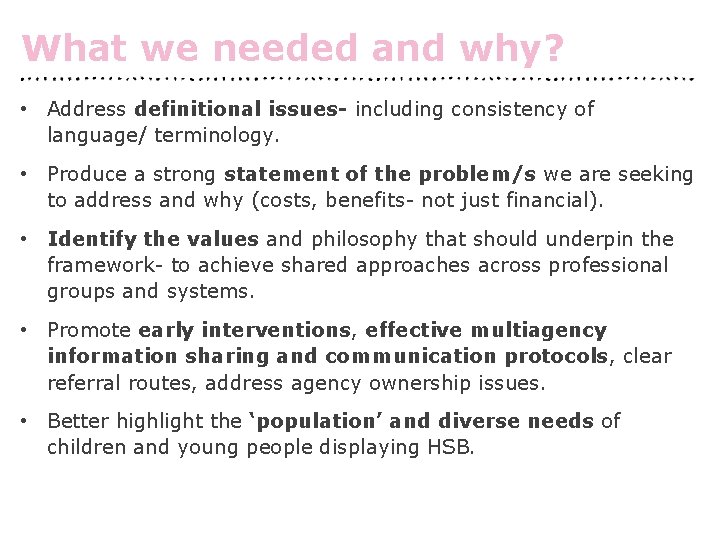
What we needed and why? • Address definitional issues- including consistency of language/ terminology. • Produce a strong statement of the problem/s we are seeking to address and why (costs, benefits- not just financial). • Identify the values and philosophy that should underpin the framework- to achieve shared approaches across professional groups and systems. • Promote early interventions, effective multiagency information sharing and communication protocols, clear referral routes, address agency ownership issues. • Better highlight the ‘population’ and diverse needs of children and young people displaying HSB.
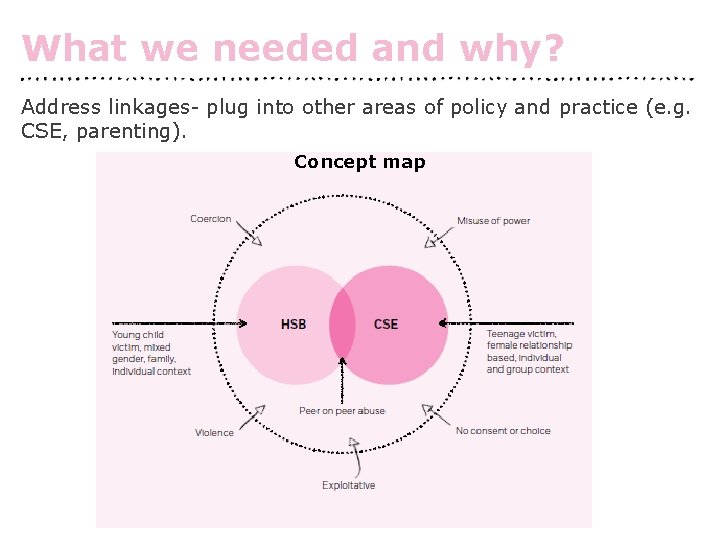
What we needed and why? Address linkages- plug into other areas of policy and practice (e. g. CSE, parenting). Concept map
What we needed and why? • Assessment and Intervention models: tiered approaches, coordination, promotion of good practice models and approaches, evaluation and monitoring. • Family interventions and approaches. • Training- knowledge and role clarity, address patchiness of professional knowledge, think qualifying curricula not just short course post qualifying training. • Research and improving the evidence base. • Public awareness and education, prevention, tiered policy responses (to accompany practice model), political leverage.
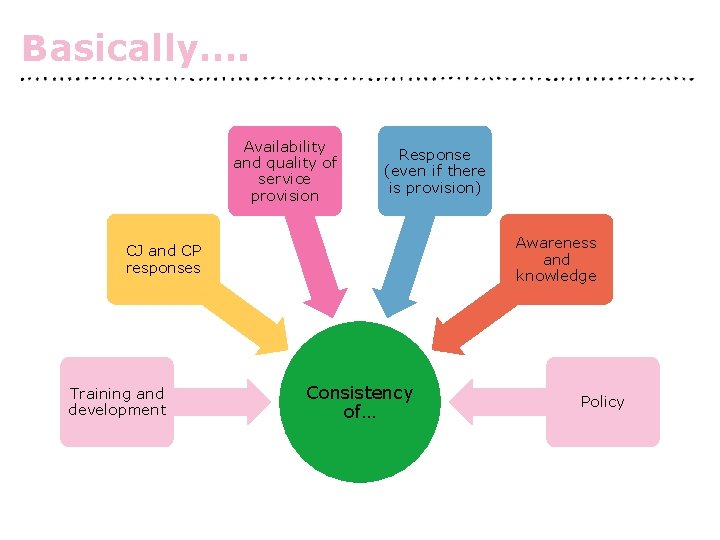
Basically…. Availability and quality of service provision Response (even if there is provision) Awareness and knowledge CJ and CP responses Training and development Consistency of… Policy
Developing an operational framework for HSB 11
Current issues Responding to Harmful Sexualised Behaviours – feedback from our practice working group Lack of appropriate training and support for staff across the lead agencies regarding harmful sexualised behaviours in children and young people Inconsistent responses to allegations regarding harmful sexualised behaviours in children and young people Poor clarity around communication and sharing of information following an allegation or incident of harmful sexualised behaviour Service delivery – need for joined up thinking across all of the lead agencies not only for assessment but also intervention and support 12
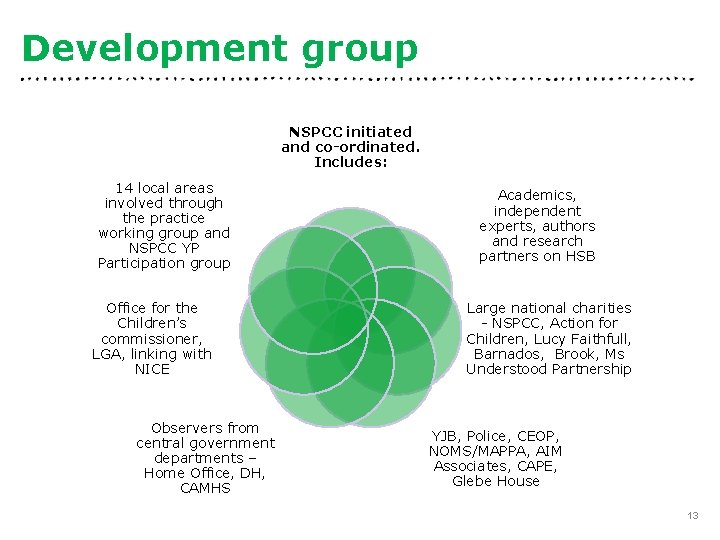
Development group NSPCC initiated and co-ordinated. Includes: 14 local areas involved through the practice working group and NSPCC YP Participation group Office for the Children’s commissioner, LGA, linking with NICE Observers from central government departments – Home Office, DH, CAMHS Academics, independent experts, authors and research partners on HSB Large national charities - NSPCC, Action for Children, Lucy Faithfull, Barnados, Brook, Ms Understood Partnership YJB, Police, CEOP, NOMS/MAPPA, AIM Associates, CAPE, Glebe House 13
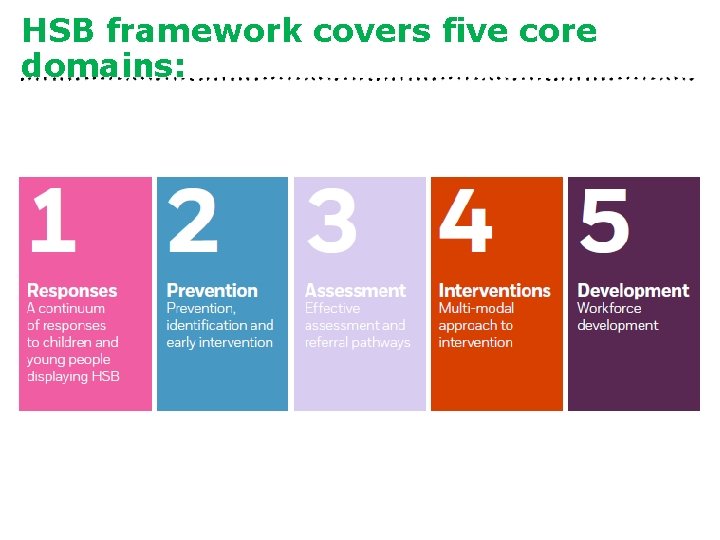
HSB framework covers five core domains:
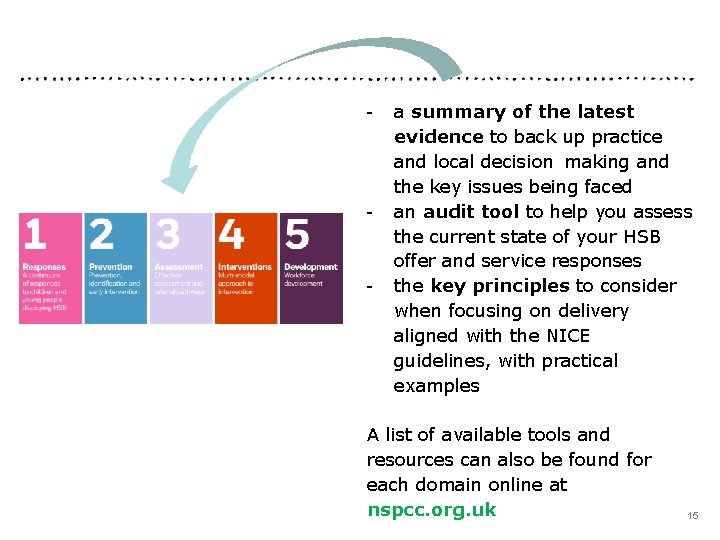
- - - a summary of the latest evidence to back up practice and local decision making and the key issues being faced an audit tool to help you assess the current state of your HSB offer and service responses the key principles to consider when focusing on delivery aligned with the NICE guidelines, with practical examples A list of available tools and resources can also be found for each domain online at nspcc. org. uk 15
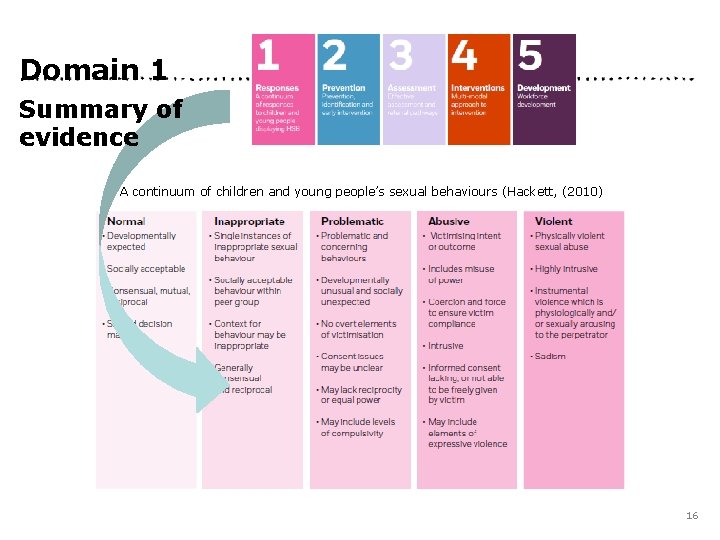
Domain 1 Summary of evidence A continuum of children and young people’s sexual behaviours (Hackett, (2010) 16
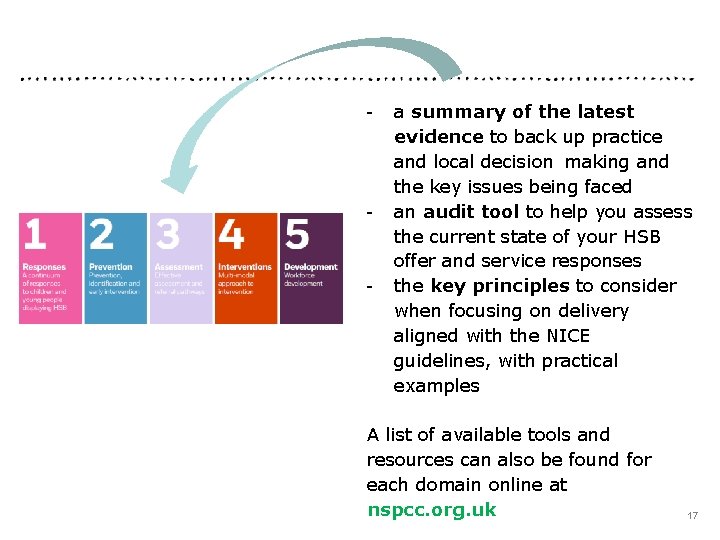
- - - a summary of the latest evidence to back up practice and local decision making and the key issues being faced an audit tool to help you assess the current state of your HSB offer and service responses the key principles to consider when focusing on delivery aligned with the NICE guidelines, with practical examples A list of available tools and resources can also be found for each domain online at nspcc. org. uk 17
18
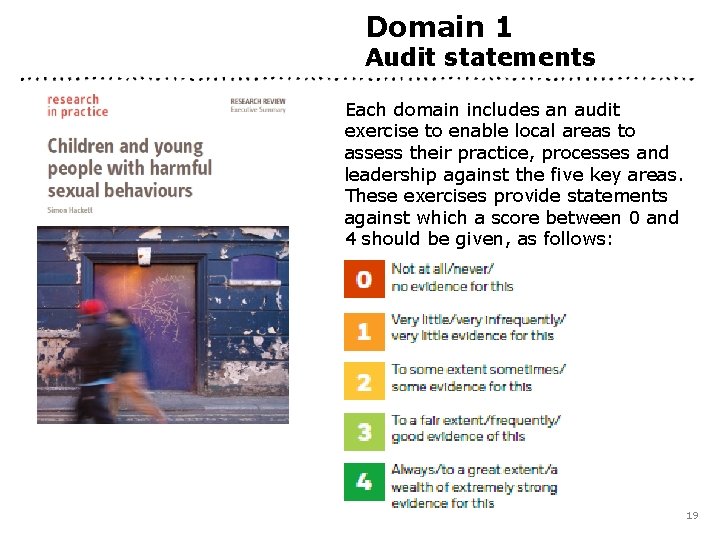
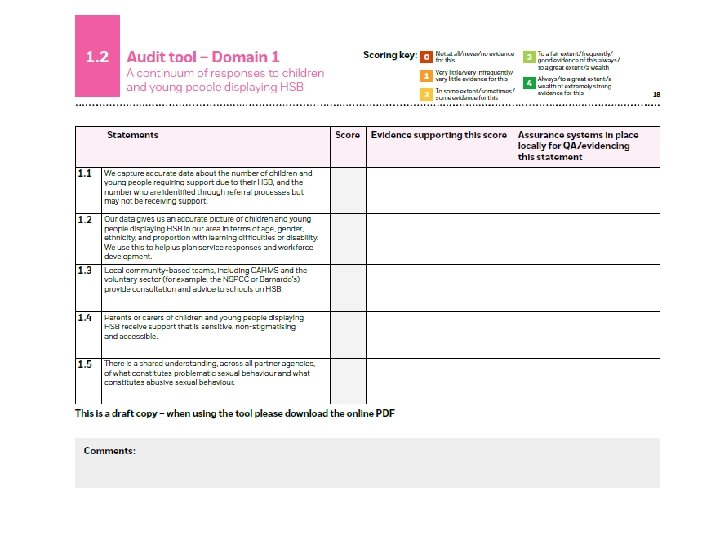
Domain 1 Audit statements Each domain includes an audit exercise to enable local areas to assess their practice, processes and leadership against the five key areas. These exercises provide statements against which a score between 0 and 4 should be given, as follows: 19
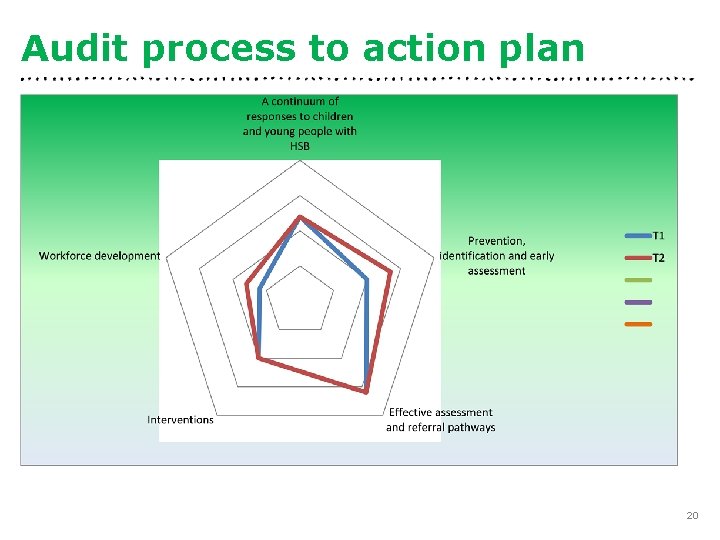
Audit process to action plan 20
Testing and further development 21
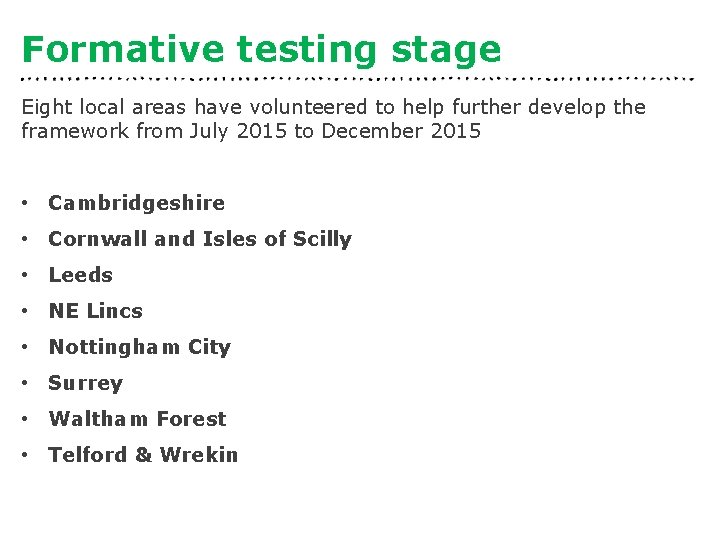
Formative testing stage Eight local areas have volunteered to help further develop the framework from July 2015 to December 2015 • Cambridgeshire • Cornwall and Isles of Scilly • Leeds • NE Lincs • Nottingham City • Surrey • Waltham Forest • Telford & Wrekin
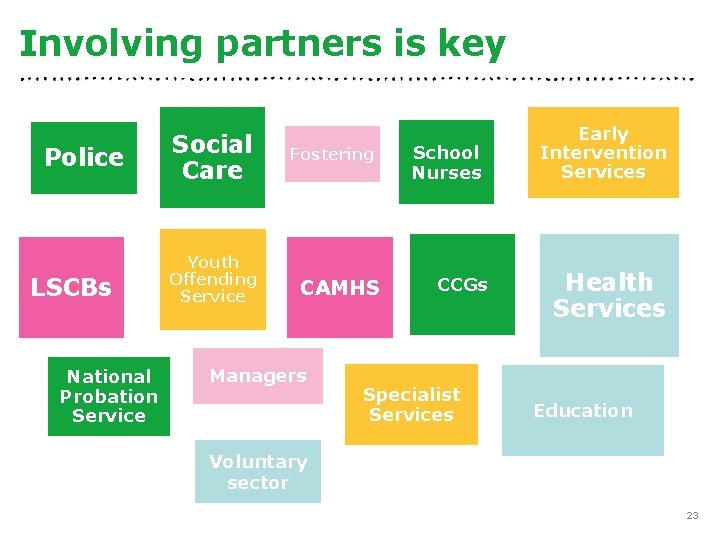
Involving partners is key Police Head of LSCBs Services National Probation Service Social Care Youth Offending Service Fostering CAMHS Managers School Nurses CCGs Specialist Services Early Intervention Services Health Services Education Voluntary sector 23
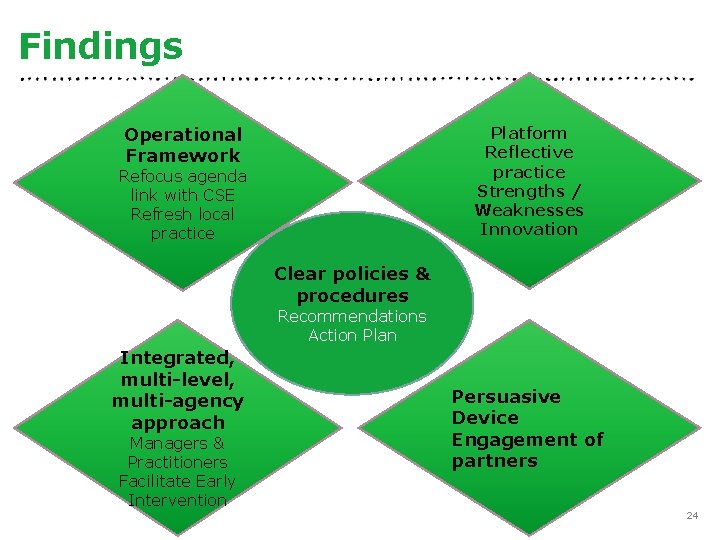
Findings Operational Framework Platform Reflective practice Strengths / Weaknesses Innovation Refocus agenda link with CSE Refresh local practice Clear policies & procedures Recommendations Action Plan Integrated, multi-level, multi-agency approach Managers & Practitioners Facilitate Early Intervention Persuasive Device Engagement of partners 24
What progress has been made? • Finally on the agenda with CSE (risk and vulnerability) • Widening scope: HSB, peer on peer, Teen DV and gangs/group sexual violence • Local HSB strategy based on needs assessment • Action plan based on priorities • Training package commissioned by LSCB
“HSB audit has been pivotal in decisions about whether the Gweres Kernow team stays and the news on that score is positive. Furthermore we are now incorporated within the redrafted CSE strategy. ” 26
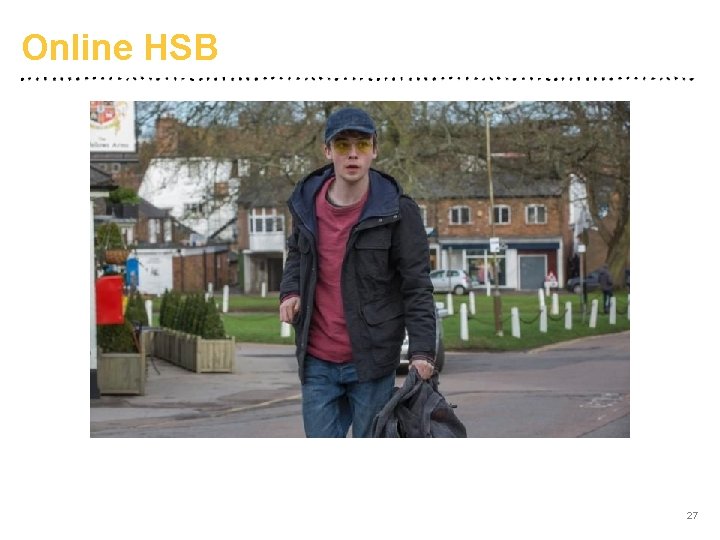
Online HSB 27
For more information or to download the HSB framework visit nspcc. org. uk/hsbframework pat. branigan@nspcc. org. uk
- Slides: 28