
Pastoral Nomadism Bedouin Shepherd Somali Nomad and Tent
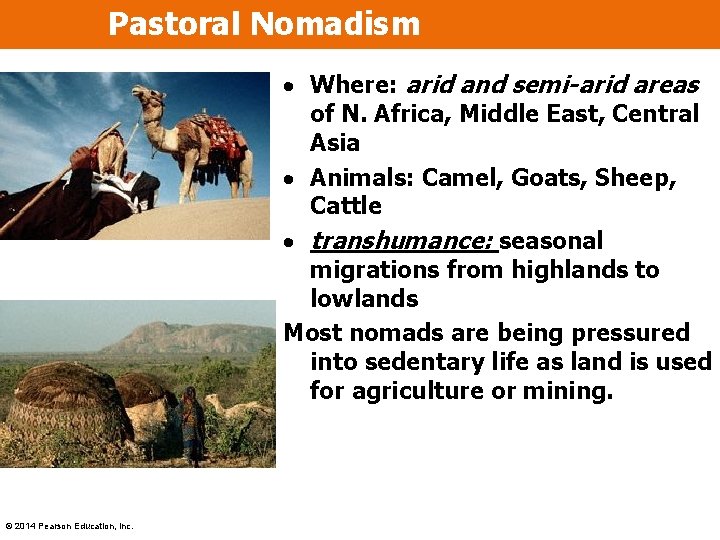
Pastoral Nomadism Bedouin Shepherd Somali Nomad and Tent © 2014 Pearson Education, Inc. · Where: arid and semi-arid areas of N. Africa, Middle East, Central Asia · Animals: Camel, Goats, Sheep, Cattle · transhumance: seasonal migrations from highlands to lowlands Most nomads are being pressured into sedentary life as land is used for agriculture or mining.
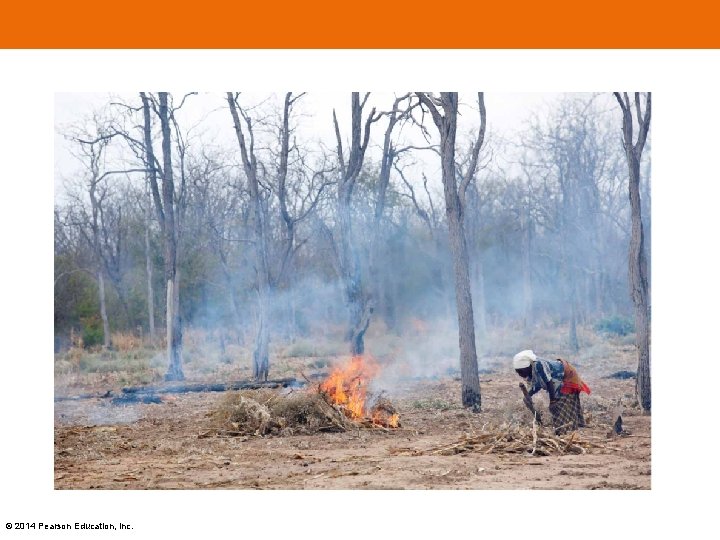
Where is Agriculture Distributed? • Agriculture in Developing Regions – Shifting Cultivation • Shifting cultivation is characterized by two distinctive features: 1. Farmers clear land for planting by slashing vegetation and burning the debris. 2. Farmers grow crops on a cleared field for only a few years, until soil nutrients are depleted, and then leave it fallow for many years so the soil can recover. » Farmers return to a fallow site as few as 6 years later or as many as 20 years later. • Land Ownership – Traditionally, land collectively owned by village. – Today, private individuals now own land, especially in Latin America. © 2014 Pearson Education, Inc.
© 2014 Pearson Education, Inc.
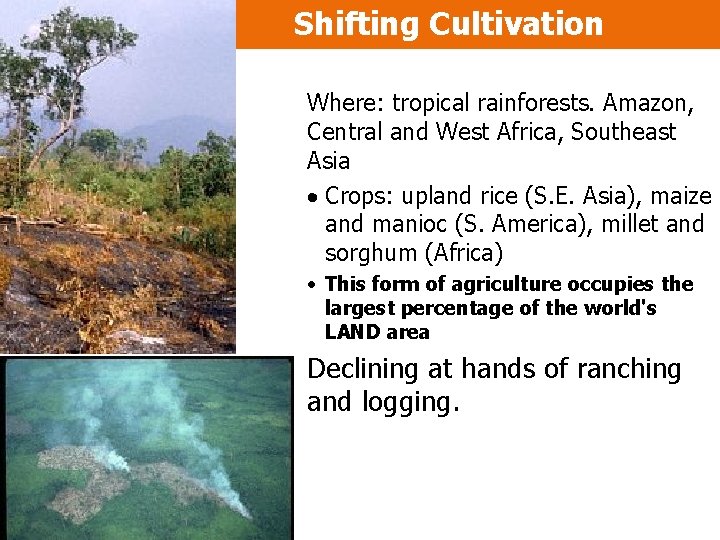
Shifting Cultivation Where: tropical rainforests. Amazon, Central and West Africa, Southeast Asia · Crops: upland rice (S. E. Asia), maize and manioc (S. America), millet and sorghum (Africa) · This form of agriculture occupies the largest percentage of the world's LAND area Declining at hands of ranching and logging. © 2014 Pearson Education, Inc.
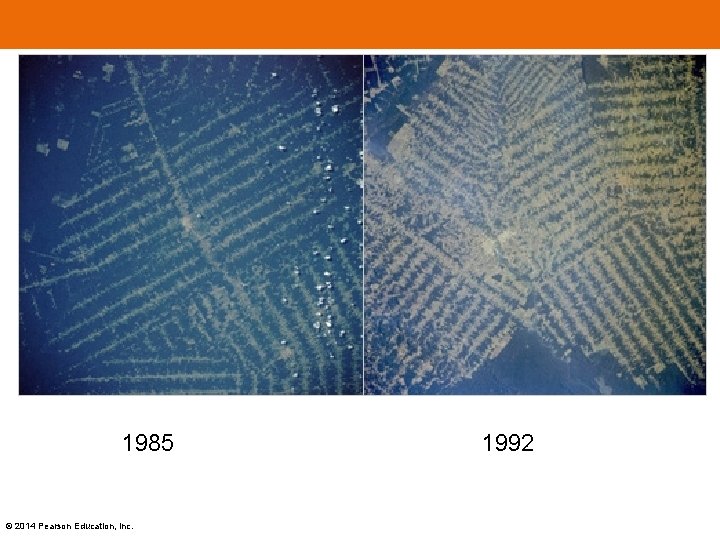
1985 © 2014 Pearson Education, Inc. 1992
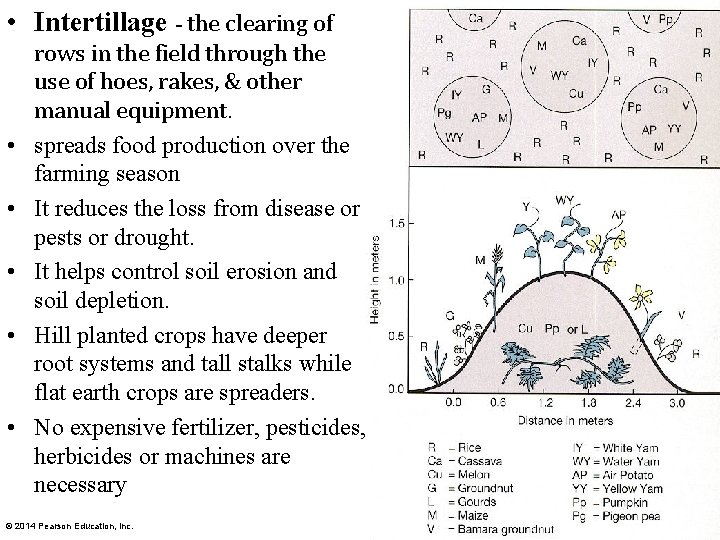
• Intertillage - the clearing of • • • rows in the field through the use of hoes, rakes, & other manual equipment. spreads food production over the farming season It reduces the loss from disease or pests or drought. It helps control soil erosion and soil depletion. Hill planted crops have deeper root systems and tall stalks while flat earth crops are spreaders. No expensive fertilizer, pesticides, herbicides or machines are necessary © 2014 Pearson Education, Inc.
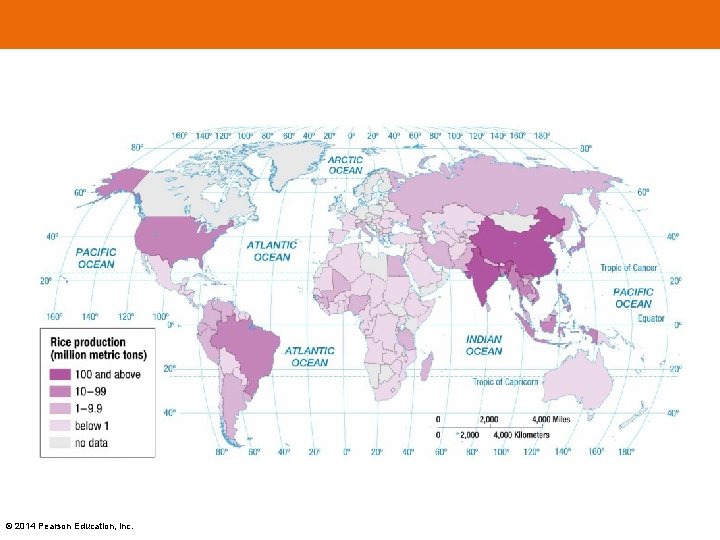
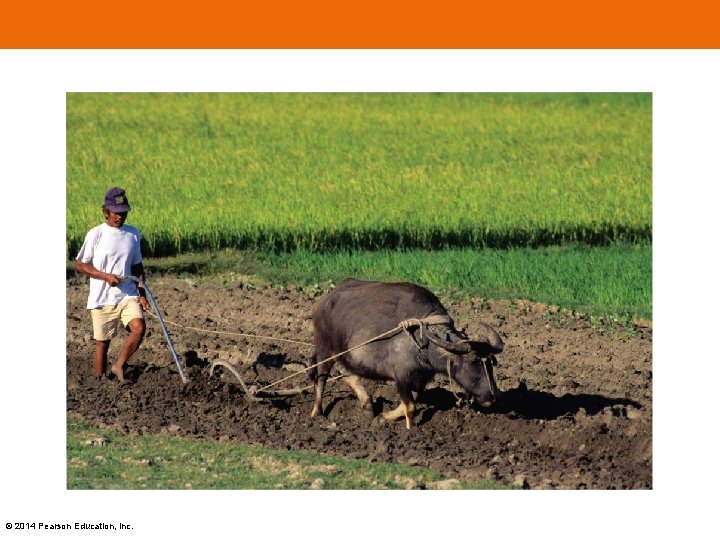
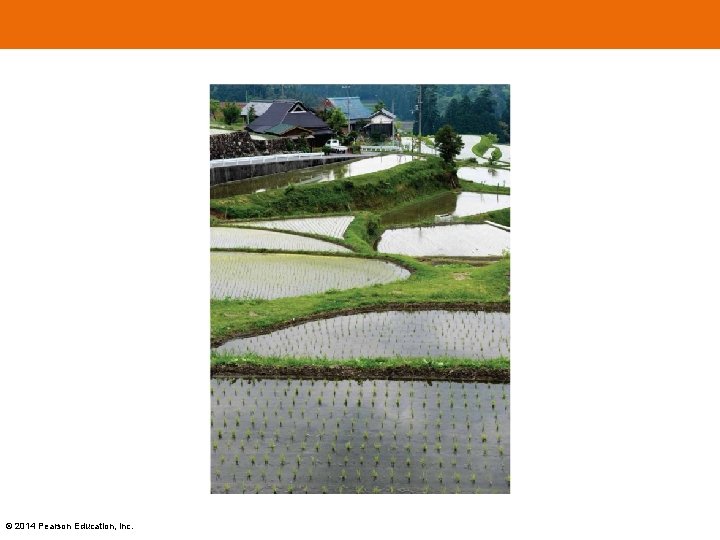
Where is Agriculture Distributed? • Agriculture in Developing Regions – Intensive Subsistence Farming • Feeds most of the ¾ of the world’s people who live in developing countries. • Farmers work intensively to subsist on a parcel of land. – Most of the work is done by hand or with animals rather than machines. – Virtually all available land is used for production. – Parcels of land are much smaller than elsewhere in world. • Example – Wet rice: the process where rice is planted on dryland in a nursery and then moved as seedlings to a flooded field to promote growth. © 2014 Pearson Education, Inc.

Intensive Subsistence Agriculture • Wet Rice Dominant The Fields of Bali Thai Rice Farmers © 2014 Pearson Education, Inc. · where: S. E. Asia, E. India, S. E. China · very labor intensive production of rice, including transfer to sawah, or paddies · most important source of food in Asia · This form of agriculture is practiced by the largest percentage of the world's PEOPLE · grown on flat, or terraced land · Double cropping is used in warm winter areas of S. China and Taiwan
© 2014 Pearson Education, Inc.
© 2014 Pearson Education, Inc.
© 2014 Pearson Education, Inc.
Where is Agriculture Distributed? • Agriculture in Developed Regions – Commercial agriculture in developed countries can be divided up into six main types: • • • Mixed Crop and Livestock Farming Dairy Farming Commercial Gardening and Fruit Farming Grain Farming Mediterranean Agriculture Livestock Ranching – Agribusiness is commonly used to refer to these types of farming listed, because the family farm is not an isolated activity but is integrated into a large foodproduction industry. © 2014 Pearson Education, Inc.
Agribusiness: The industrialization of agriculture · Modern commercial farming is very dependent on inputs of chemical fertilizer, pesticides, herbicides. · Oil is required to make fertilizer and pesticides. · It takes 10 calories of energy to create 1 calorie of food in modern agriculture. · Small farmer can’t buy needed equipment and supplies. · Fewer than 2% of U. S. population works in agriculture · Land is harder to come by due to urban sprawl. © 2014 Pearson Education, Inc.
Where is Agriculture Distributed? • Agriculture in Developed Regions – Mixed Crop and Livestock Farming • Most distinctive characteristic is the integration of crops and livestock. – Most of the crops are fed to animals instead of humans. • Typical example devotes nearly all land area to growing crops but derives more than ¾ of its income from the sale of animal products. e. g. beef and eggs • Permits farmers to distribute the workload more evenly through the year, because crops require less attention, aside from planting and harvesting them. • Typically involves crop rotation, practice of rotating use of different fields from crop to crop each year to avoid exhausting the soil. © 2014 Pearson Education, Inc.
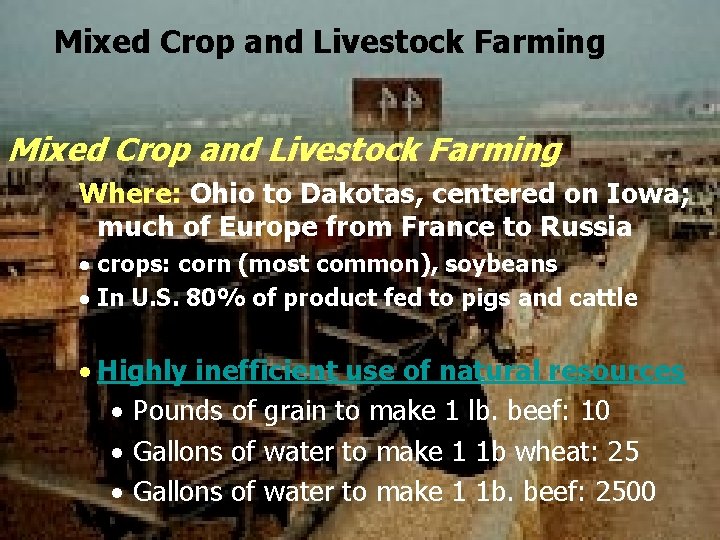
Mixed Crop and Livestock Farming Where: Ohio to Dakotas, centered on Iowa; much of Europe from France to Russia · crops: corn (most common), soybeans · In U. S. 80% of product fed to pigs and cattle · Highly inefficient use of natural resources · Pounds of grain to make 1 lb. beef: 10 · Gallons of water to make 1 1 b wheat: 25 · Gallons of water to make 1 1 b. beef: 2500 © 2014 Pearson Education, Inc.
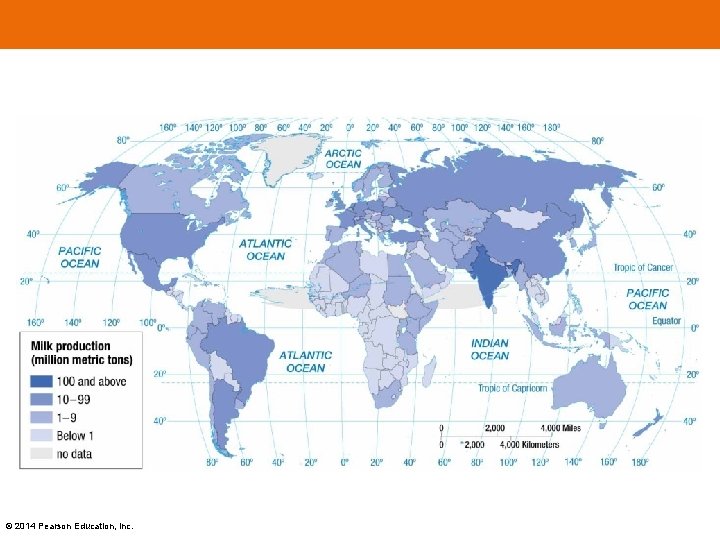
Where is Agriculture Distributed? • Agriculture in Developed Regions – Dairy Farming • Most important type of commercial agriculture in the first ring outside the large cities because of transportation factors. • Ring surrounding a city from which milk can be supplied is known as the milkshed. – Advancements in modes of transportation have increased the radius of milksheds to 500 km. (300 mi. ) • Where: NE US, SE Canada, NW Europe • Process – Dairy farmers typically sell their milk to wholesalers who later distribute it to retailers. – Retailers then sell it to consumers in shops or at home. © 2014 Pearson Education, Inc.
© 2014 Pearson Education, Inc.
Where is Agriculture Distributed? • Agriculture in Developed Regions – Commercial Gardening and Fruit Farming • Predominant type of farming in southeastern U. S. • Commonly referred to as truck farming from the Middle English word, truck, meaning “bartering” or “exchange of commodities. ” • Grow many of the following fruits and vegetables that consumers in developed countries demand: – – – © 2014 Pearson Education, Inc. Apples Asparagus Cherries Lettuce Mushrooms Potatoes
Where is Agriculture Distributed? • Agriculture in Developed Regions – Commercial Gardening and Fruit Farming • Some of the fruits and vegetables are sold fresh to consumers, but most are sold to large processors for canning or freezing. • Truck farms are highly efficient large-scale operations that take full advantage of machines at all stages of the growing process. • Labor costs are kept down by hiring migrant farm workers. • Specialization in a few crops is common. © 2014 Pearson Education, Inc.
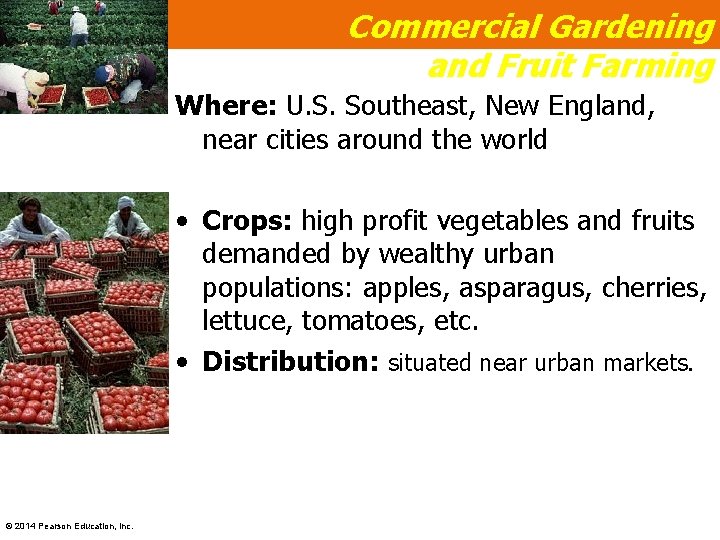
Commercial Gardening and Fruit Farming Where: U. S. Southeast, New England, near cities around the world • Crops: high profit vegetables and fruits demanded by wealthy urban populations: apples, asparagus, cherries, lettuce, tomatoes, etc. • Distribution: situated near urban markets. © 2014 Pearson Education, Inc.
Where is Agriculture Distributed? • Agriculture in Developed Regions – Grain Farming • Distinguished from mixed crop and livestock farming, because crops are grown primarily for human consumption. • Farms sell their output to manufacturers of food products, such as breakfast cereals and bread. • Characteristics of a Typical Grain Farm – Heavily mechanized – Farms large in areal extent – Oriented to consumer preferences © 2014 Pearson Education, Inc.
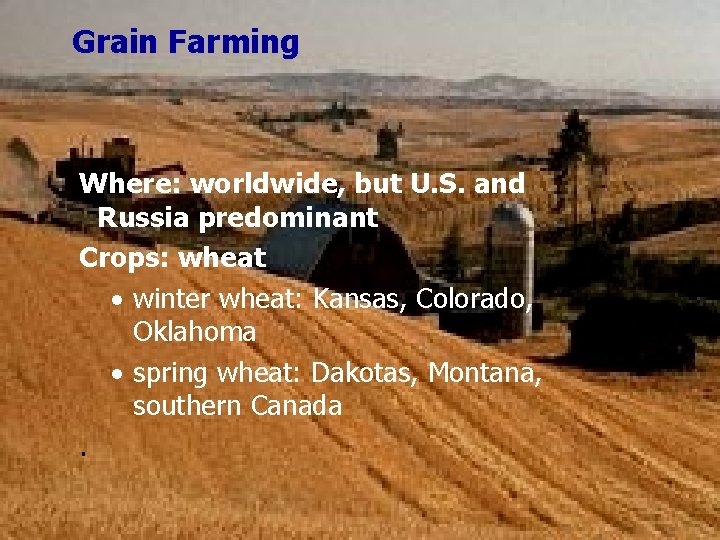
Grain Farming Where: worldwide, but U. S. and Russia predominant Crops: wheat · winter wheat: Kansas, Colorado, Oklahoma · spring wheat: Dakotas, Montana, southern Canada. © 2014 Pearson Education, Inc.
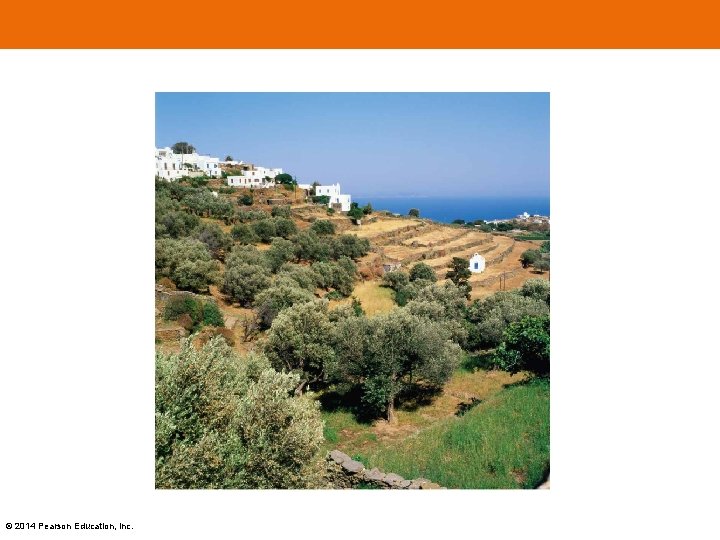
Where is Agriculture Distributed? • Agriculture in Developed Regions – Mediterranean Agriculture • Every site practicing this form of agriculture borders a sea, and most are on west coasts of continents. – Prevailing sea winds provide moisture and moderate the winter temperatures. • Farmers derive a smaller percentage of income from animal products. • Most crops are grown for human consumption. – Horticulture, which is the growing of fruits, vegetables, and flowers, and tree crops form the commercial base. • Along the Mediterranean Sea, olives and grapes are two most important cash crops. – Approximately half of the land here is used to grow cereals. © 2014 Pearson Education, Inc.
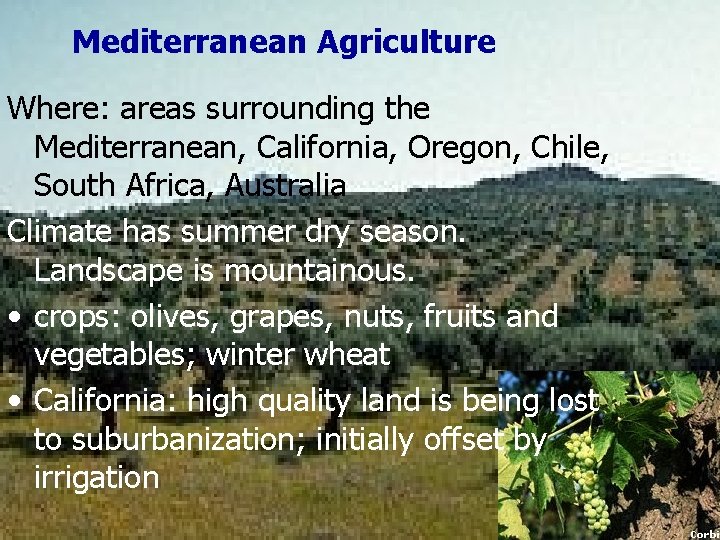
Mediterranean Agriculture Where: areas surrounding the Mediterranean, California, Oregon, Chile, South Africa, Australia Climate has summer dry season. Landscape is mountainous. • crops: olives, grapes, nuts, fruits and vegetables; winter wheat • California: high quality land is being lost to suburbanization; initially offset by irrigation © 2014 Pearson Education, Inc.
© 2014 Pearson Education, Inc.
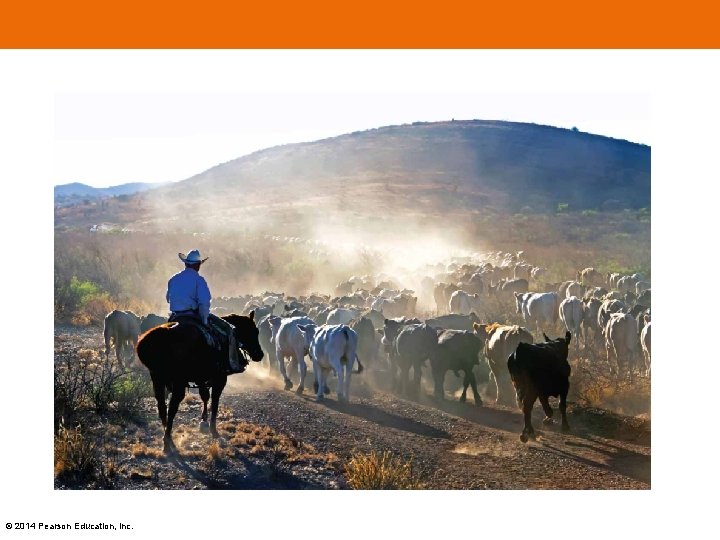
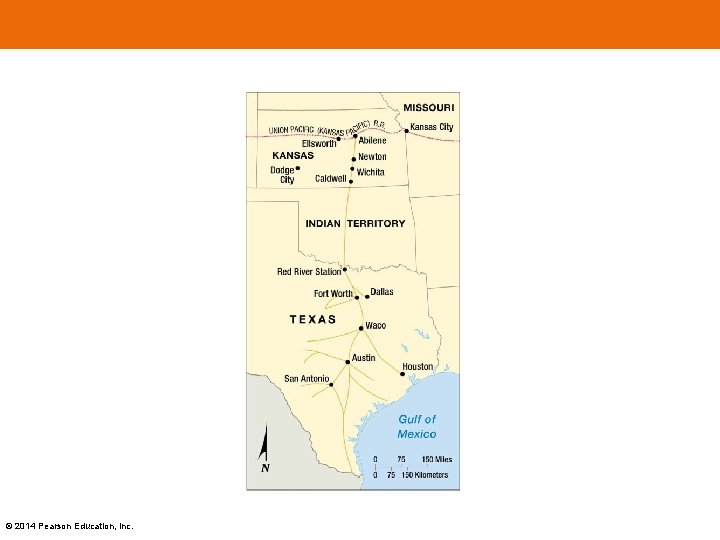
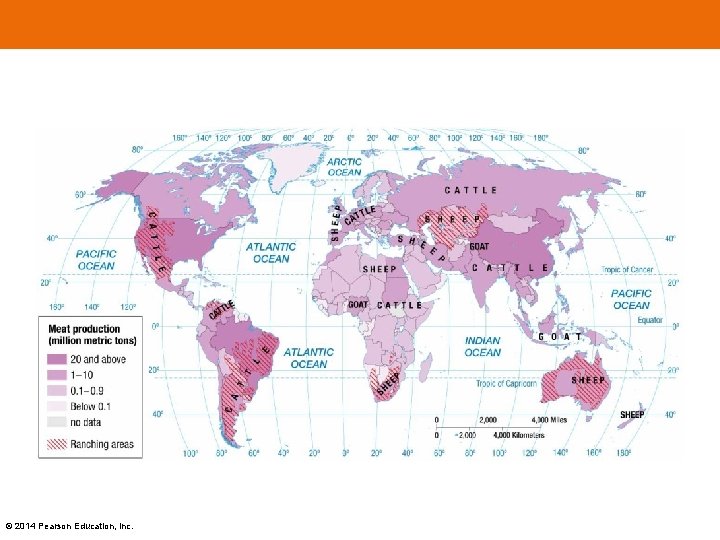
Where is Agriculture Distributed? • Agriculture in Developed Regions – Livestock Ranching • Ranching is the commercial grazing of livestock over an extensive area. • Well suited for semiarid or arid land • Practiced in developed countries where vegetation is too sparse and soil too poor to support crops. • Historically, ranchers sought to move their cattle from Texas to Chicago, because the cattle were worth more money farther north. • Today, ranching has become part of the meat-processing industry where new methods of breeding and sources of water and feed are embraced. © 2014 Pearson Education, Inc.
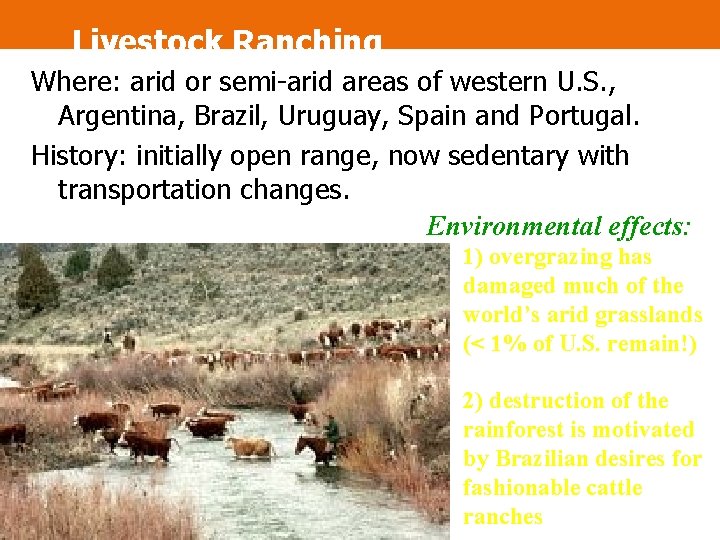
Livestock Ranching Where: arid or semi-arid areas of western U. S. , Argentina, Brazil, Uruguay, Spain and Portugal. History: initially open range, now sedentary with transportation changes. Environmental effects: 1) overgrazing has damaged much of the world’s arid grasslands (< 1% of U. S. remain!) © 2014 Pearson Education, Inc. 2) destruction of the rainforest is motivated by Brazilian desires for fashionable cattle ranches
© 2014 Pearson Education, Inc.
© 2014 Pearson Education, Inc.
© 2014 Pearson Education, Inc.
- Slides: 30