
PASTA Dont cut long pasta with a knife



- Slides: 17
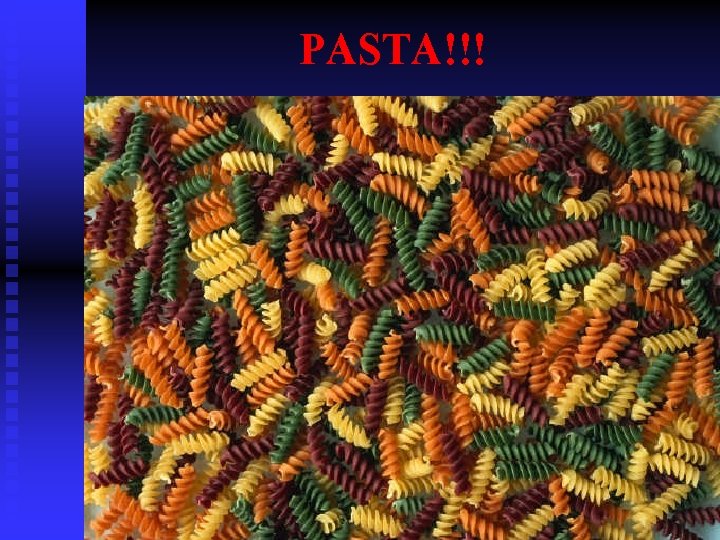
PASTA!!!
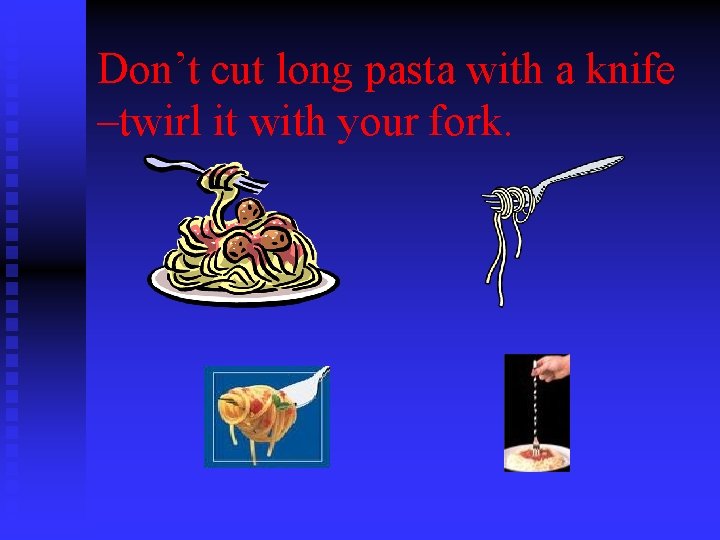
Don’t cut long pasta with a knife –twirl it with your fork.
Types of Pasta n n Dried Frozen Short Shaped n n n Fresh Long Sheet
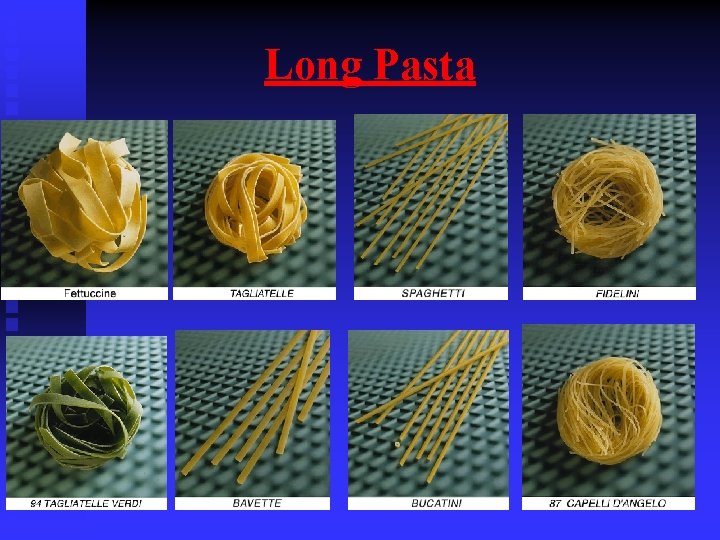
Long Pasta
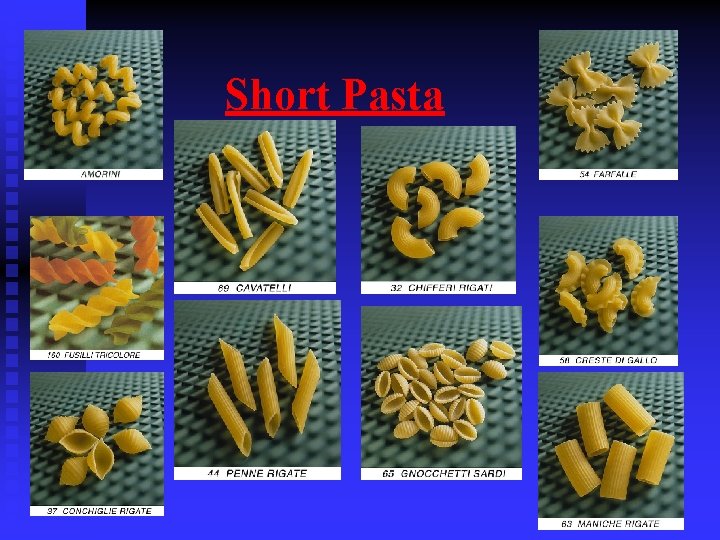
Short Pasta
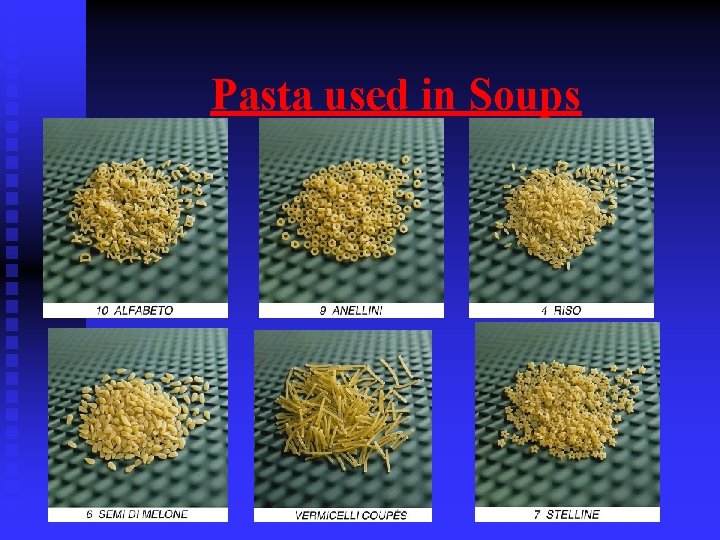
Pasta used in Soups
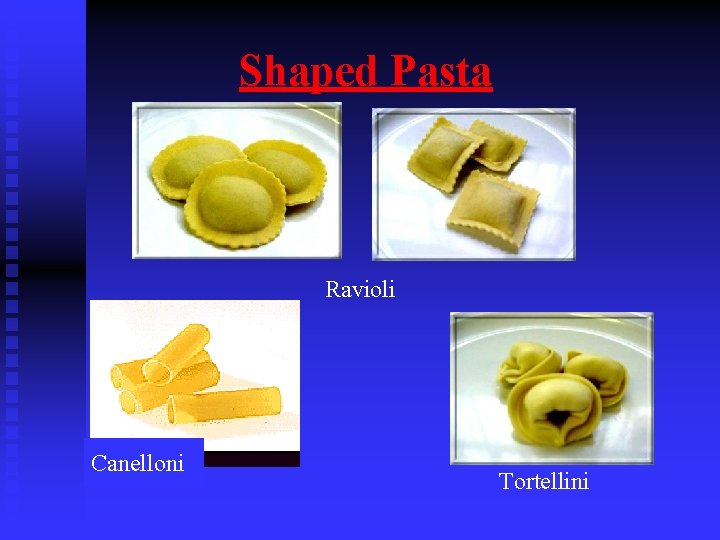
Shaped Pasta Ravioli Canelloni Tortellini
Uses of Pasta n n n Mainstream cooking u Complement to main dish u Alternative to potato u Quick and easy to cook; can be stored easily Vegetarian Cooking u Blends well with vegetables and sauce u Can be served plain Cooking for people with special food needs u Very adaptable products u Can be served plain
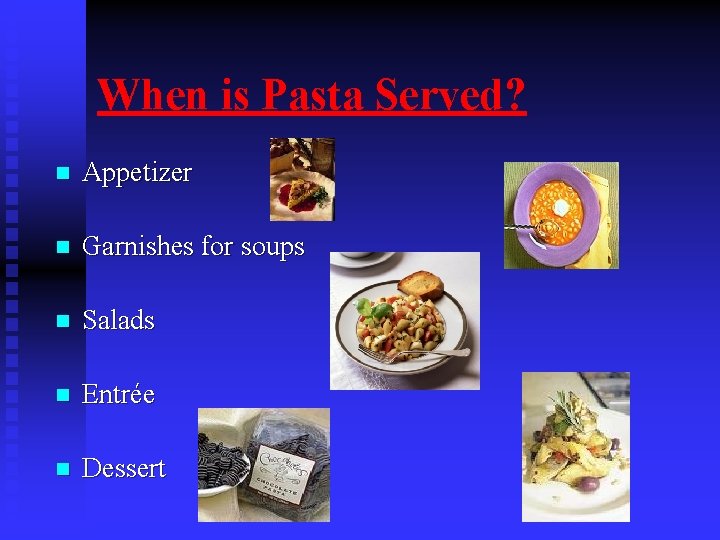
When is Pasta Served? n Appetizer n Garnishes for soups n Salads n Entrée n Dessert
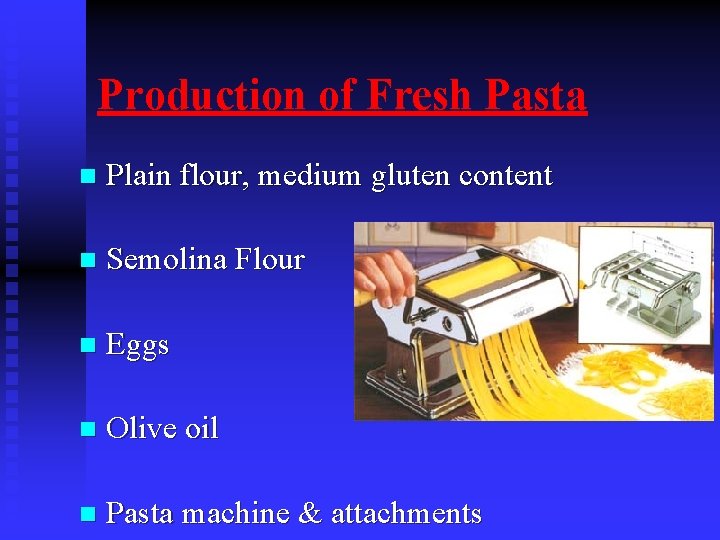
Production of Fresh Pasta n Plain flour, medium gluten content n Semolina Flour n Eggs n Olive oil n Pasta machine & attachments
Methods of Cooking Pasta: 1 quart water : 3 oz. pasta & 1 Tbsp. salt n Gently simmer , cooking time determined by size and thickness of pasta n Freshly cooked and served immediately n Cooked “al Dente” n Fresh pasta usually requires shorter cooking time n
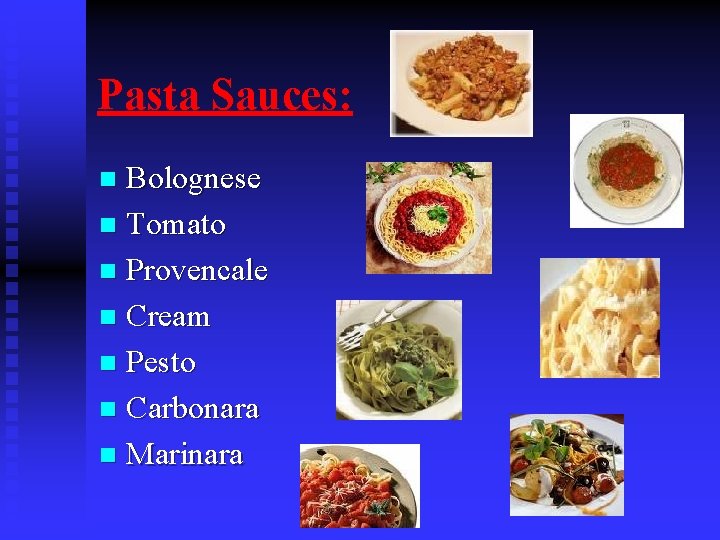
Pasta Sauces: Bolognese n Tomato n Provencale n Cream n Pesto n Carbonara n Marinara n
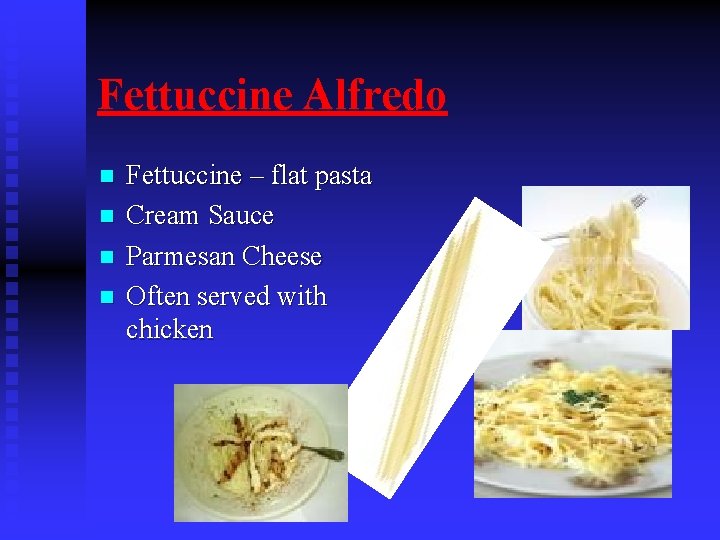
Fettuccine Alfredo n n Fettuccine – flat pasta Cream Sauce Parmesan Cheese Often served with chicken
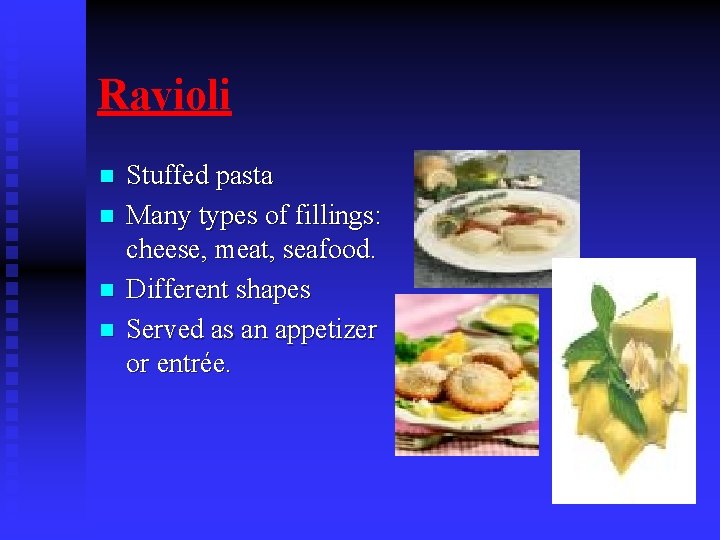
Ravioli n n Stuffed pasta Many types of fillings: cheese, meat, seafood. Different shapes Served as an appetizer or entrée.
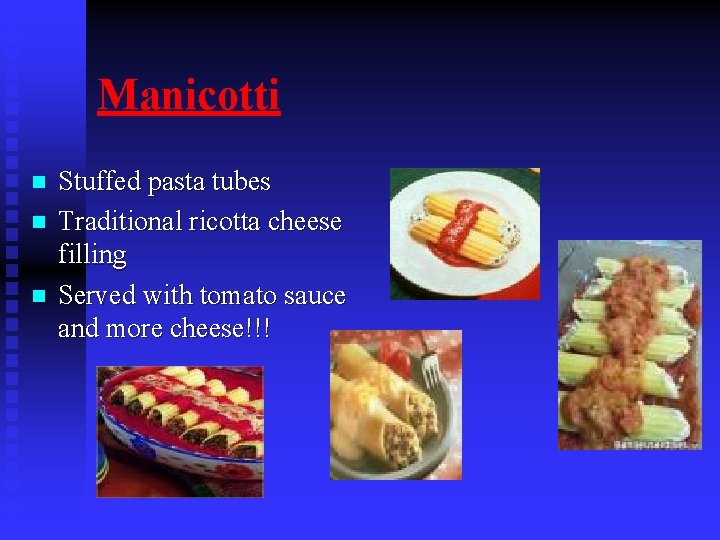
Manicotti n n n Stuffed pasta tubes Traditional ricotta cheese filling Served with tomato sauce and more cheese!!!
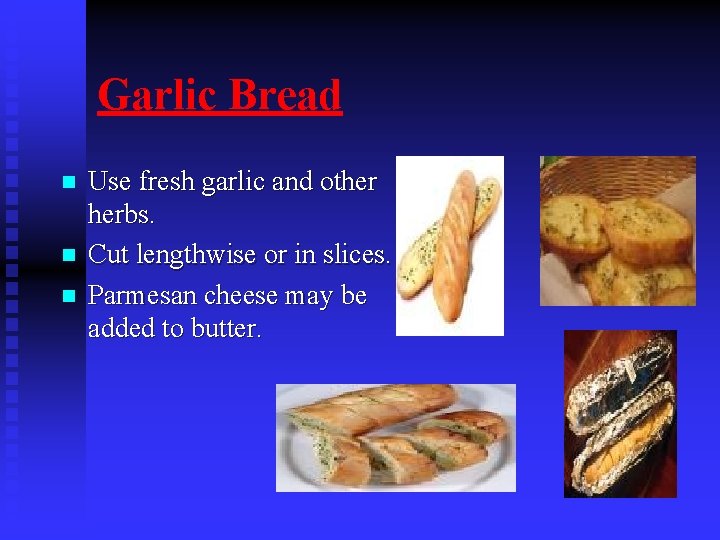
Garlic Bread n n n Use fresh garlic and other herbs. Cut lengthwise or in slices. Parmesan cheese may be added to butter.