
Past Simple Tensegraenje Affirmative sentencesPotvrdne reenice Regular verbsADD
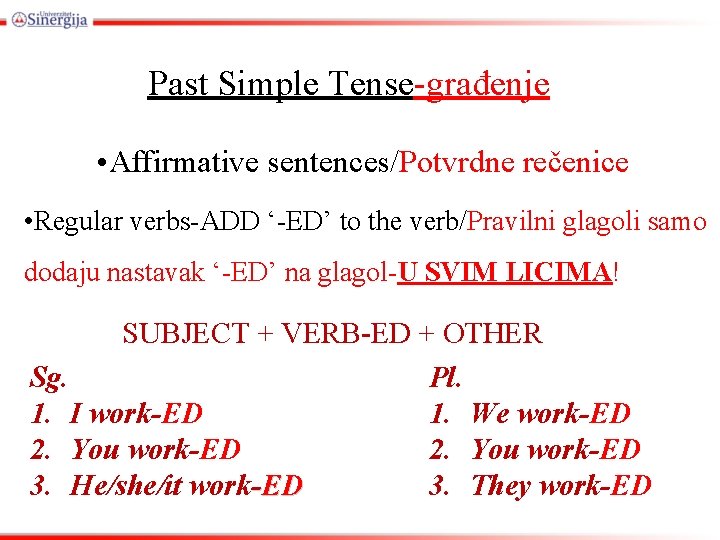
Past Simple Tense-građenje • Affirmative sentences/Potvrdne rečenice • Regular verbs-ADD ‘-ED’ to the verb/Pravilni glagoli samo dodaju nastavak ‘-ED’ na glagol-U SVIM LICIMA! SUBJECT + VERB-ED + OTHER Sg. Pl. 1. I work-ED 1. We work-ED 2. You work-ED 3. He/she/it work-ED 3. They work-ED
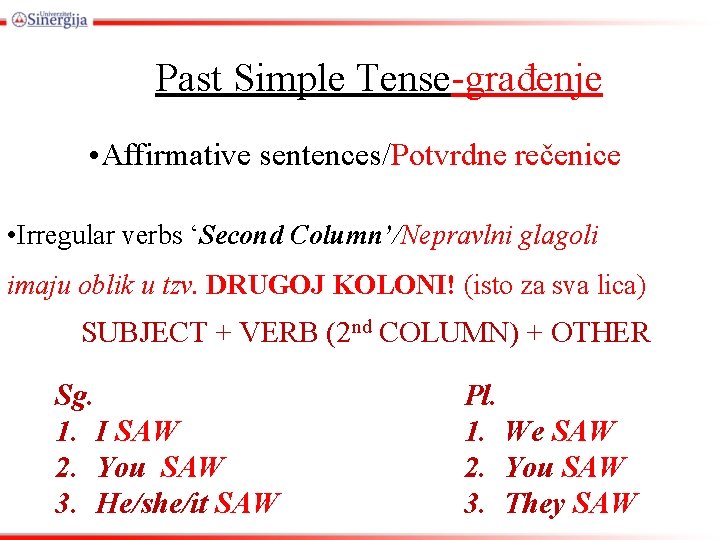
Past Simple Tense-građenje • Affirmative sentences/Potvrdne rečenice • Irregular verbs ‘Second Column’/Nepravlni glagoli imaju oblik u tzv. DRUGOJ KOLONI! (isto za sva lica) SUBJECT + VERB (2 nd COLUMN) + OTHER Sg. 1. I SAW 2. You SAW 3. He/she/it SAW Pl. 1. We SAW 2. You SAW 3. They SAW
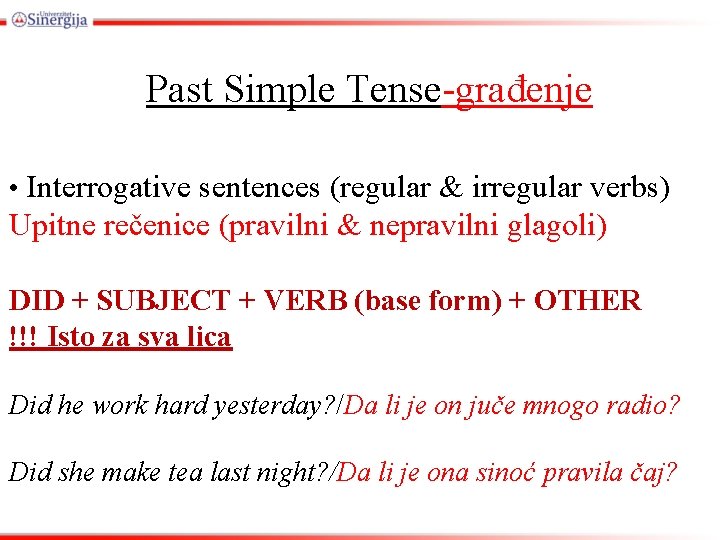
Past Simple Tense-građenje • Interrogative sentences (regular & irregular verbs) Upitne rečenice (pravilni & nepravilni glagoli) DID + SUBJECT + VERB (base form) + OTHER !!! Isto za sva lica Did he work hard yesterday? /Da li je on juče mnogo radio? Did she make tea last night? /Da li je ona sinoć pravila čaj?
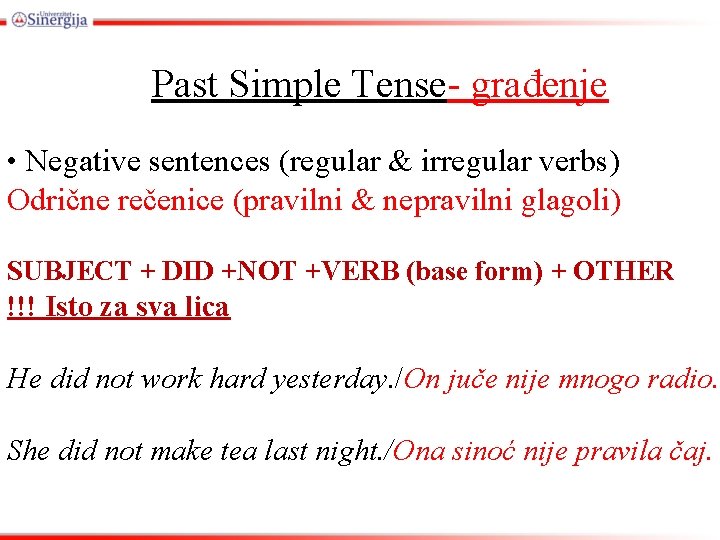
Past Simple Tense- građenje • Negative sentences (regular & irregular verbs) Odrične rečenice (pravilni & nepravilni glagoli) SUBJECT + DID +NOT +VERB (base form) + OTHER !!! Isto za sva lica He did not work hard yesterday. /On juče nije mnogo radio. She did not make tea last night. /Ona sinoć nije pravila čaj.
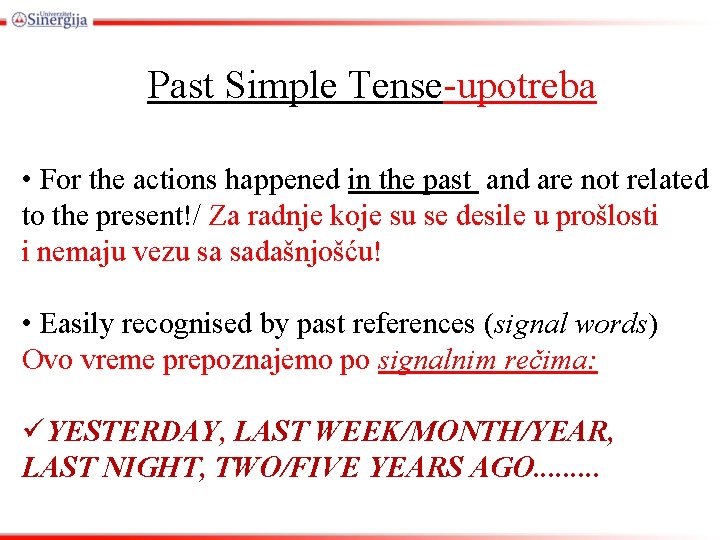
Past Simple Tense-upotreba • For the actions happened in the past and are not related to the present!/ Za radnje koje su se desile u prošlosti i nemaju vezu sa sadašnjošću! • Easily recognised by past references (signal words) Ovo vreme prepoznajemo po signalnim rečima: üYESTERDAY, LAST WEEK/MONTH/YEAR, LAST NIGHT, TWO/FIVE YEARS AGO. .
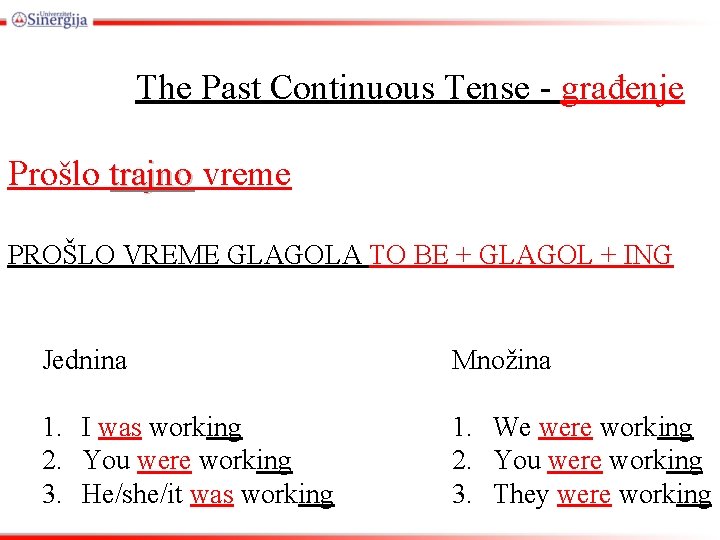
The Past Continuous Tense - građenje Prošlo trajno vreme PROŠLO VREME GLAGOLA TO BE + GLAGOL + ING Jednina Množina 1. I was working 2. You were working 3. He/she/it was working 1. We were working 2. You were working 3. They were working
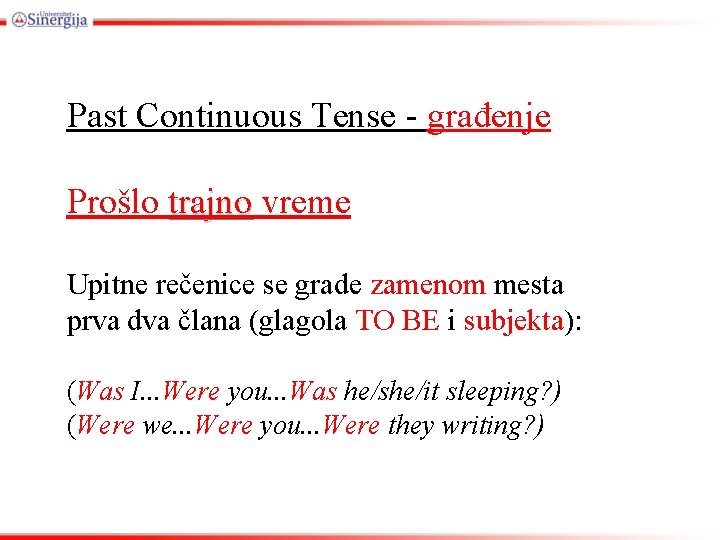
Past Continuous Tense - građenje Prošlo trajno vreme Upitne rečenice se grade zamenom mesta prva dva člana (glagola TO BE i subjekta): (Was I. . . Were you. . . Was he/she/it sleeping? ) (Were we. . . Were you. . . Were they writing? )
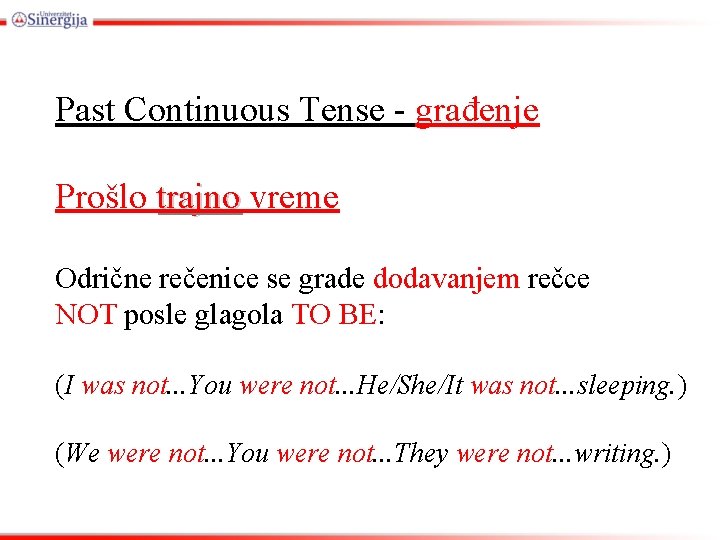
Past Continuous Tense - građenje Prošlo trajno vreme Odrične rečenice se grade dodavanjem rečce NOT posle glagola TO BE: (I was not. . . You were not. . . He/She/It was not. . . sleeping. ) (We were not. . . You were not. . . They were not. . . writing. )
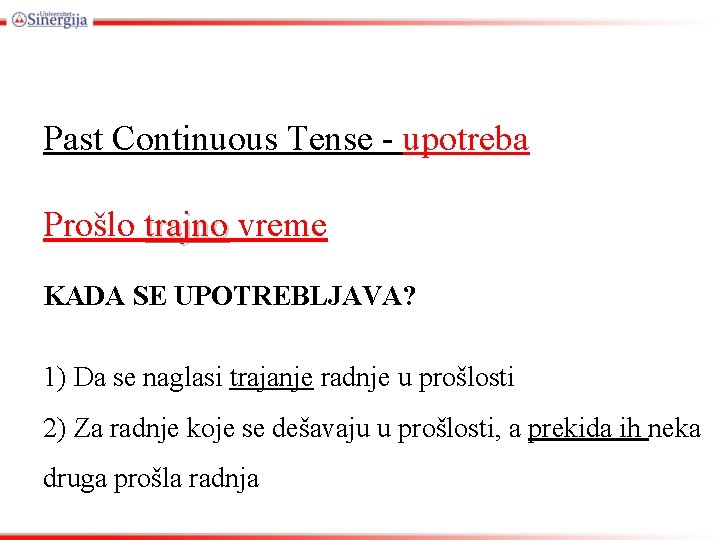
Past Continuous Tense - upotreba Prošlo trajno vreme KADA SE UPOTREBLJAVA? 1) Da se naglasi trajanje radnje u prošlosti 2) Za radnje koje se dešavaju u prošlosti, a prekida ih neka druga prošla radnja
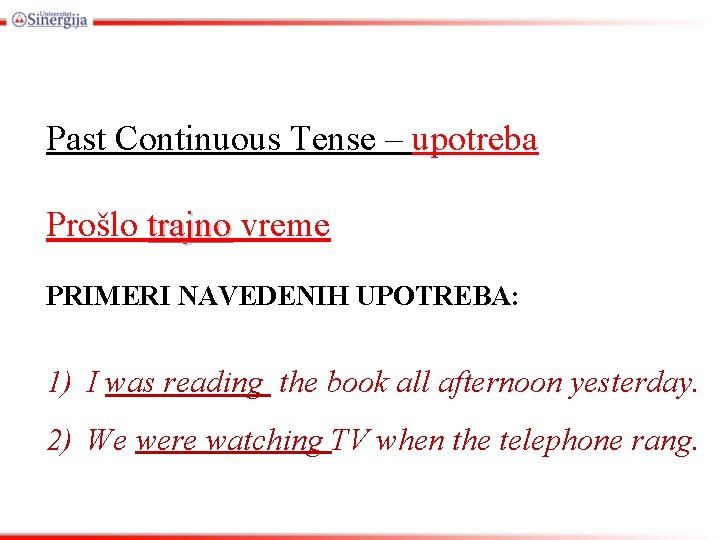
Past Continuous Tense – upotreba Prošlo trajno vreme PRIMERI NAVEDENIH UPOTREBA: 1) I was reading the book all afternoon yesterday. 2) We were watching TV when the telephone rang.
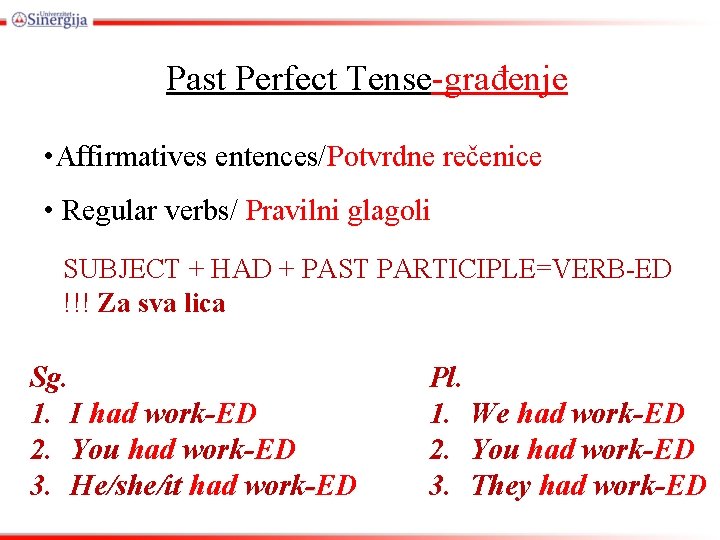
Past Perfect Tense-građenje • Affirmatives entences/Potvrdne rečenice • Regular verbs/ Pravilni glagoli SUBJECT + HAD + PAST PARTICIPLE=VERB-ED !!! Za sva lica Sg. 1. I had work-ED 2. You had work-ED 3. He/she/it had work-ED Pl. 1. We had work-ED 2. You had work-ED 3. They had work-ED
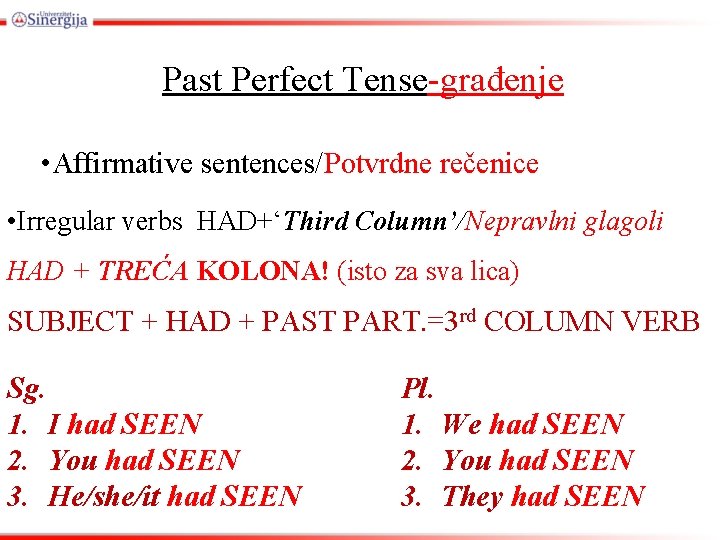
Past Perfect Tense-građenje • Affirmative sentences/Potvrdne rečenice • Irregular verbs HAD+‘Third Column’/Nepravlni glagoli HAD + TREĆA KOLONA! (isto za sva lica) SUBJECT + HAD + PAST PART. =3 rd COLUMN VERB Sg. 1. I had SEEN 2. You had SEEN 3. He/she/it had SEEN Pl. 1. We had SEEN 2. You had SEEN 3. They had SEEN
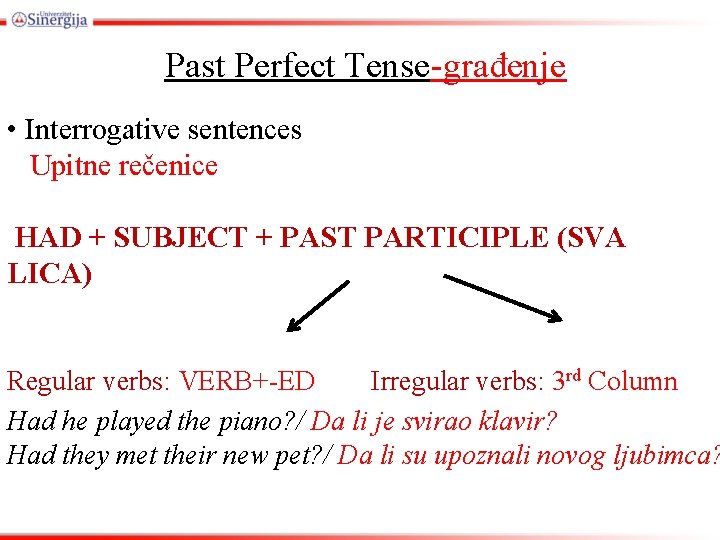
Past Perfect Tense-građenje • Interrogative sentences Upitne rečenice HAD + SUBJECT + PAST PARTICIPLE (SVA LICA) Regular verbs: VERB+-ED Irregular verbs: 3 rd Column Had he played the piano? / Da li je svirao klavir? Had they met their new pet? / Da li su upoznali novog ljubimca?
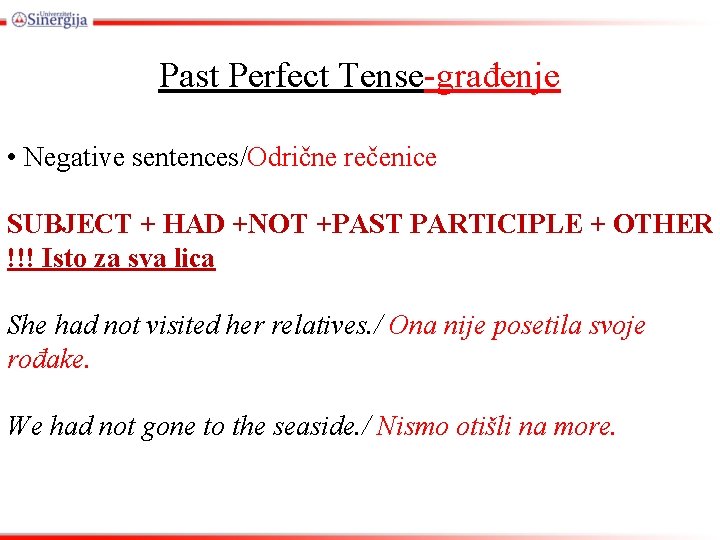
Past Perfect Tense-građenje • Negative sentences/Odrične rečenice SUBJECT + HAD +NOT +PAST PARTICIPLE + OTHER !!! Isto za sva lica She had not visited her relatives. / Ona nije posetila svoje rođake. We had not gone to the seaside. / Nismo otišli na more.
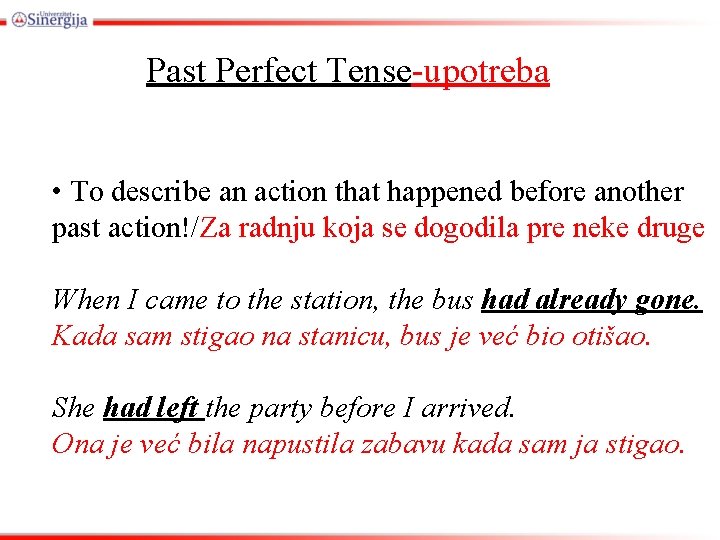
Past Perfect Tense-upotreba • To describe an action that happened before another past action!/Za radnju koja se dogodila pre neke druge When I came to the station, the bus had already gone. Kada sam stigao na stanicu, bus je već bio otišao. She had left the party before I arrived. Ona je već bila napustila zabavu kada sam ja stigao.
- Slides: 15