
Past Participles Present Perfect What is a past
- Slides: 17
Past Participles Present Perfect
What is a past participle? • A past participle may be – An adjective • a closed door – Part of a verb phrase • we have closed • she has written
What is a past participle? • In English, some end in –ed –opened, painted, talked • others are irregular –driven, eaten, run, seen, written
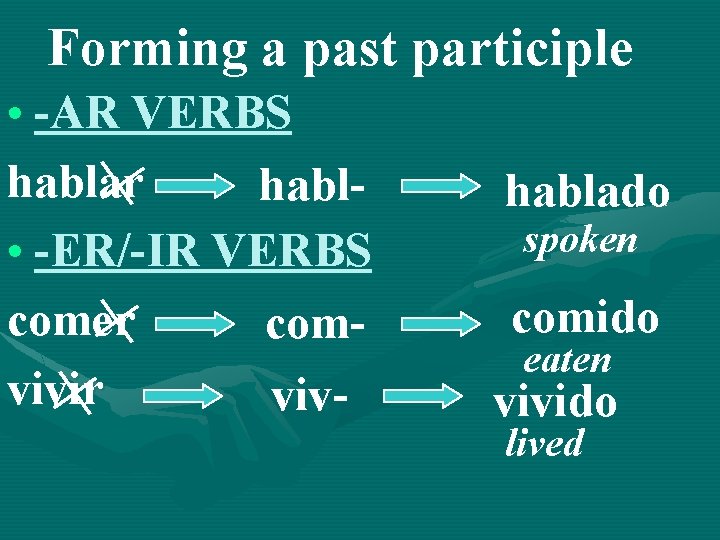
Forming a past participle • -AR VERBS –drop the –ar ending –add “–ado” to the stem • -ER/-IR VERBS –drop the –er/-ir ending –add “–ido” to the stem.
Forming a past participle • -AR VERBS hablar habl • -ER/-IR VERBS comer comvivir viv- hablado spoken comido eaten vivido lived
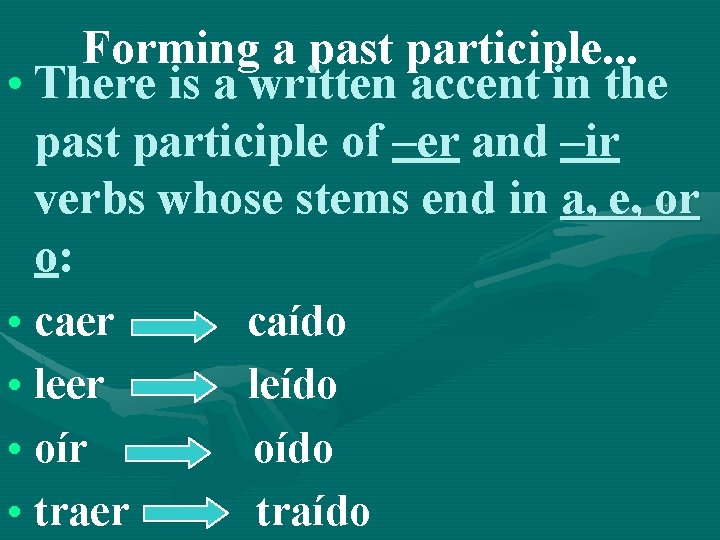
Forming a past participle. . . • There is a written accent in the past participle of –er and –ir verbs whose stems end in a, e, or o: • caer • leer • oír • traer caído leído oído traído
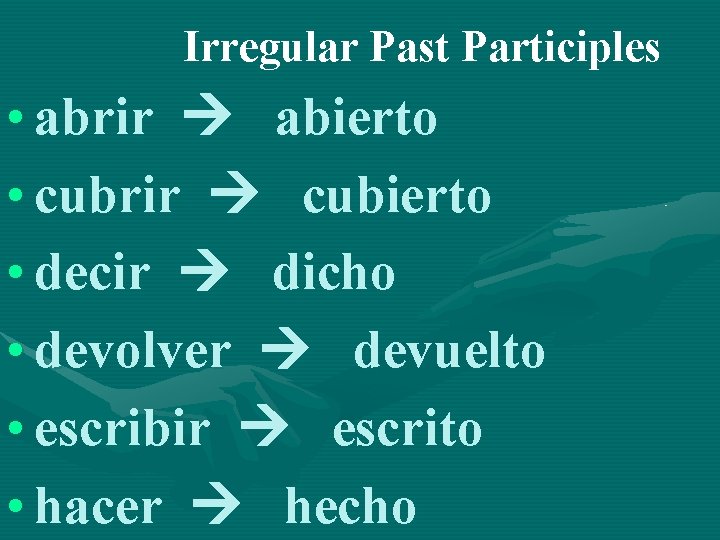
Irregular Past Participles • abrir abierto • cubrir cubierto • decir dicho • devolver devuelto • escribir escrito • hacer hecho
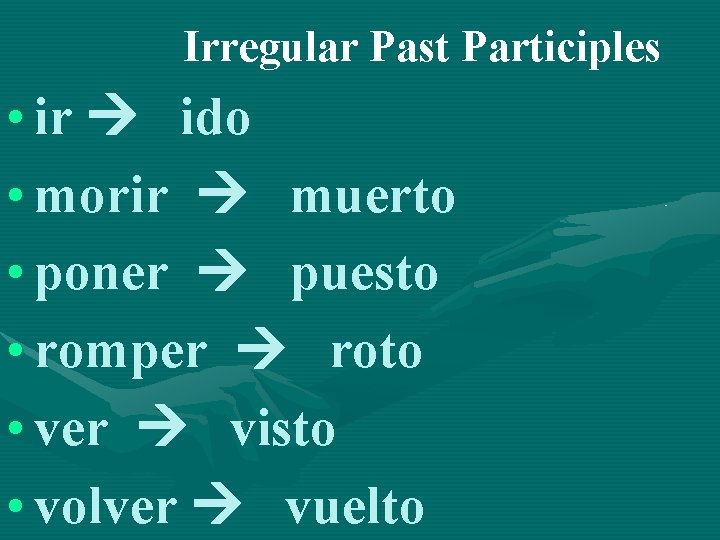
Irregular Past Participles • ir ido • morir muerto • poner puesto • romper roto • ver visto • volver vuelto
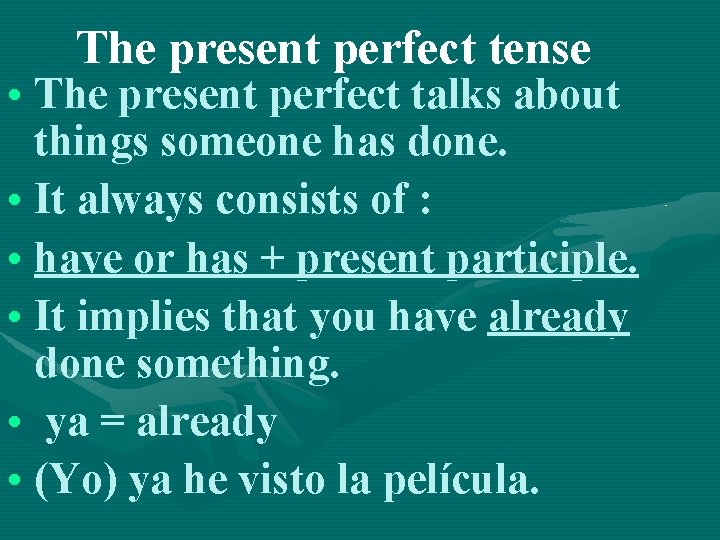
The present perfect tense • The present perfect talks about things someone has done. • It always consists of : • have or has + present participle. • It implies that you have already done something. • ya = already • (Yo) ya he visto la película.
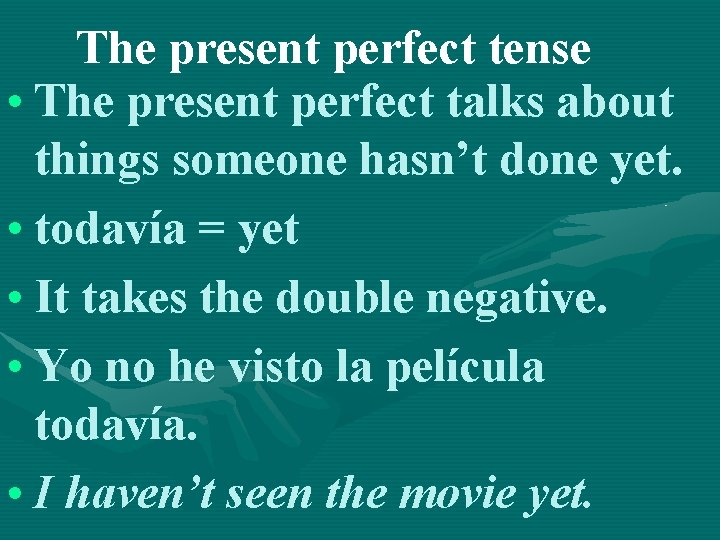
The present perfect tense • The present perfect talks about things someone hasn’t done yet. • todavía = yet • It takes the double negative. • Yo no he visto la película todavía. • I haven’t seen the movie yet.
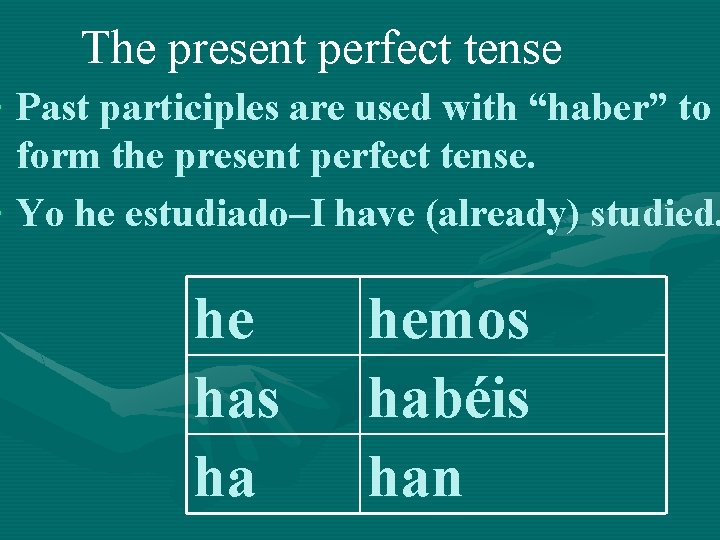
The present perfect tense • Past participles are used with “haber” to form the present perfect tense. • Yo he estudiado–I have (already) studied. he has ha hemos habéis han
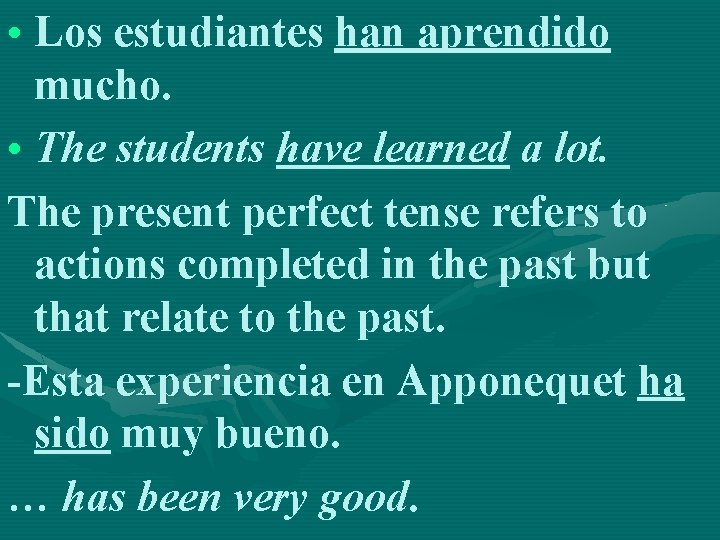
• Los estudiantes han aprendido mucho. • The students have learned a lot. The present perfect tense refers to actions completed in the past but that relate to the past. -Esta experiencia en Apponequet ha sido muy bueno. … has been very good.
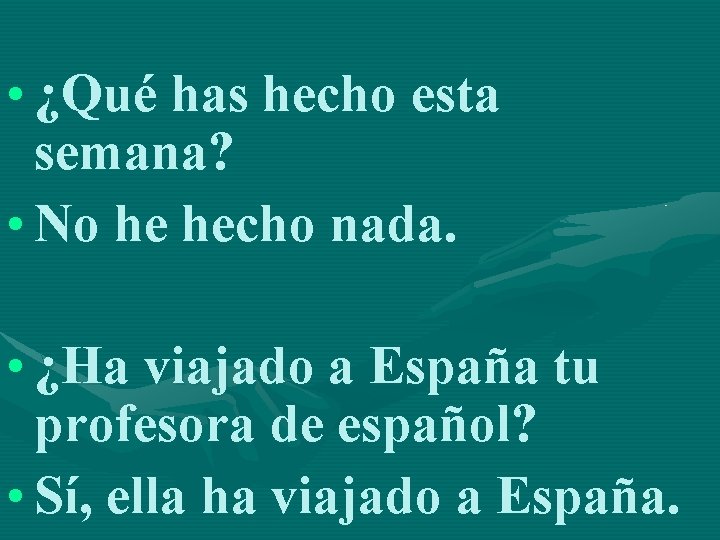
• ¿Qué has hecho esta semana? • No he hecho nada. • ¿Ha viajado a España tu profesora de español? • Sí, ella ha viajado a España.
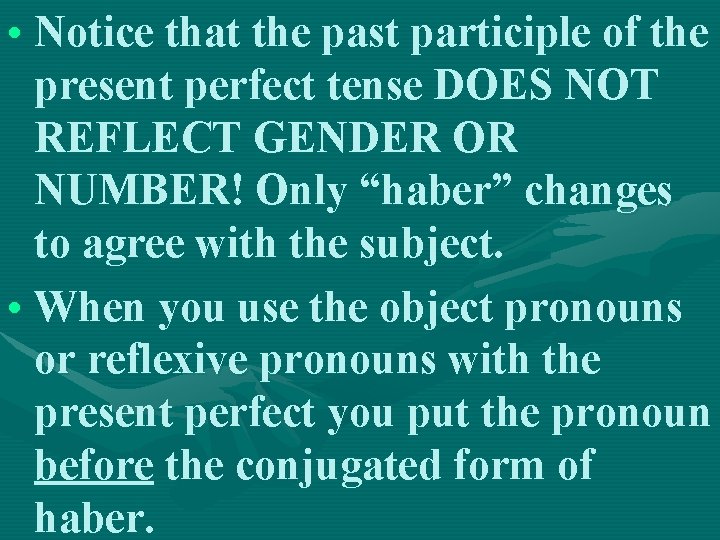
• Notice that the past participle of the present perfect tense DOES NOT REFLECT GENDER OR NUMBER! Only “haber” changes to agree with the subject. • When you use the object pronouns or reflexive pronouns with the present perfect you put the pronoun before the conjugated form of haber.
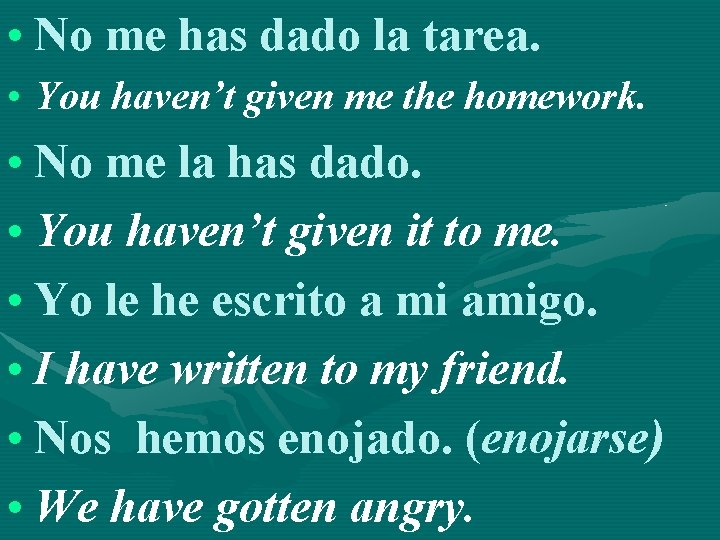
• No me has dado la tarea. • You haven’t given me the homework. • No me la has dado. • You haven’t given it to me. • Yo le he escrito a mi amigo. • I have written to my friend. • Nos hemos enojado. (enojarse) • We have gotten angry.
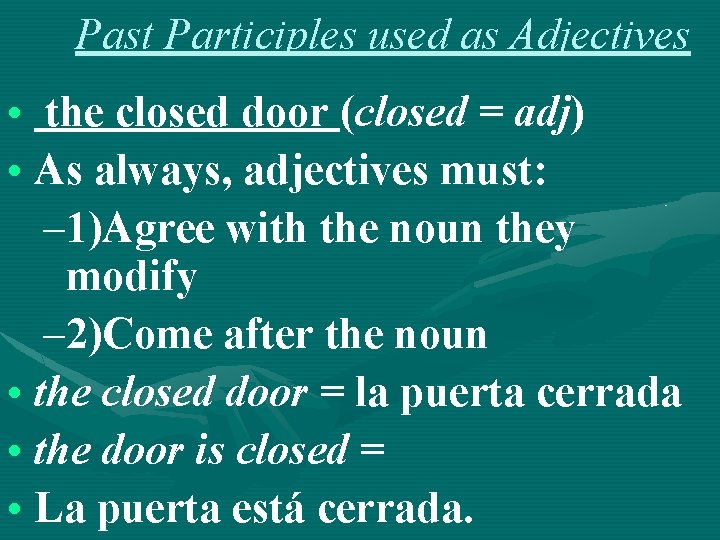
Past Participles used as Adjectives • the closed door (closed = adj) • As always, adjectives must: – 1)Agree with the noun they modify – 2)Come after the noun • the closed door = la puerta cerrada • the door is closed = • La puerta está cerrada.
Past Participles used as Adjectives • Where have we used past participles before? • ¿Estás cansado? –Sí, estoy cansado. • ¿Están aburridos los estudiantes? –No, los estudiantes no están aburridos. –La clase está muy divertida.