
Passive Voice Teacher Anayansi Santamara Usage Passive voice
- Slides: 10
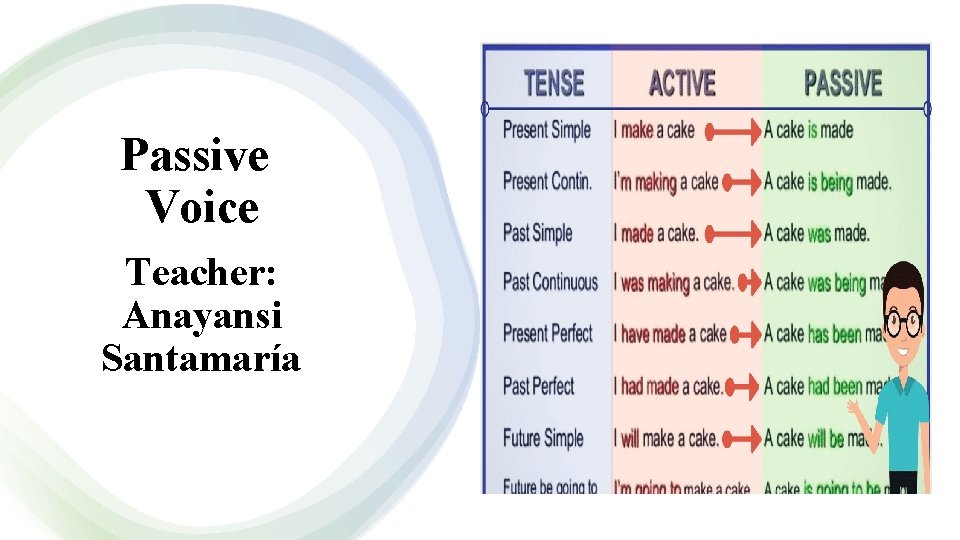
Passive Voice Teacher: Anayansi Santamaría
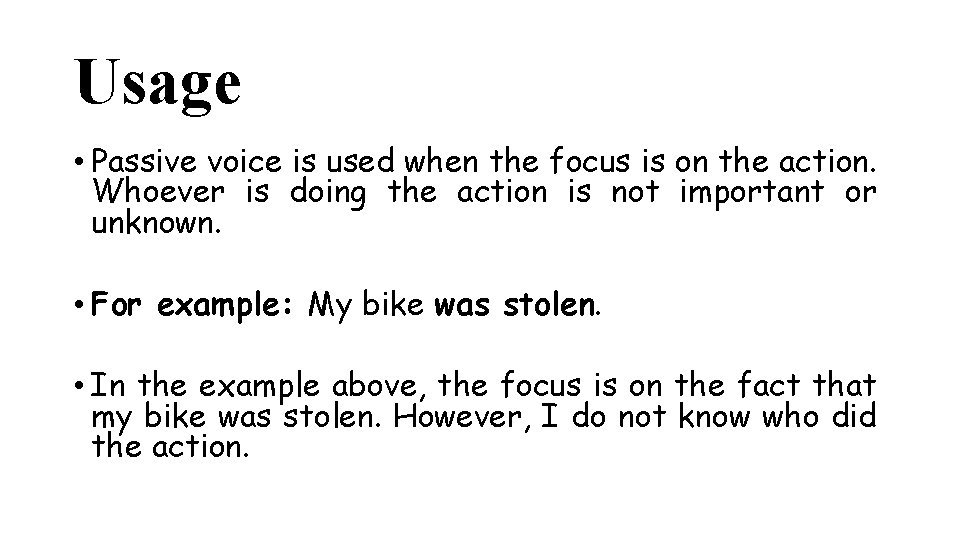
Usage • Passive voice is used when the focus is on the action. Whoever is doing the action is not important or unknown. • For example: My bike was stolen. • In the example above, the focus is on the fact that my bike was stolen. However, I do not know who did the action.
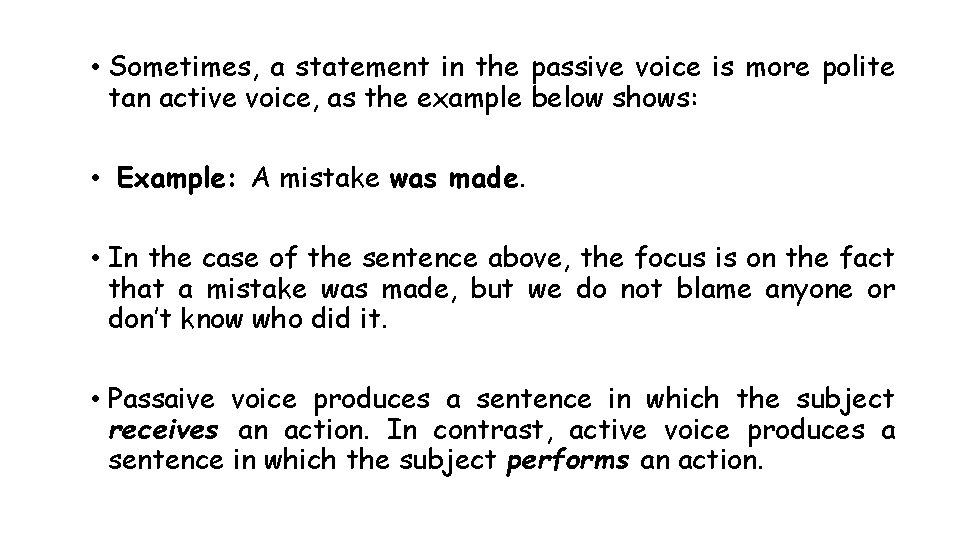
• Sometimes, a statement in the passive voice is more polite tan active voice, as the example below shows: • Example: A mistake was made. • In the case of the sentence above, the focus is on the fact that a mistake was made, but we do not blame anyone or don’t know who did it. • Passaive voice produces a sentence in which the subject receives an action. In contrast, active voice produces a sentence in which the subject performs an action.
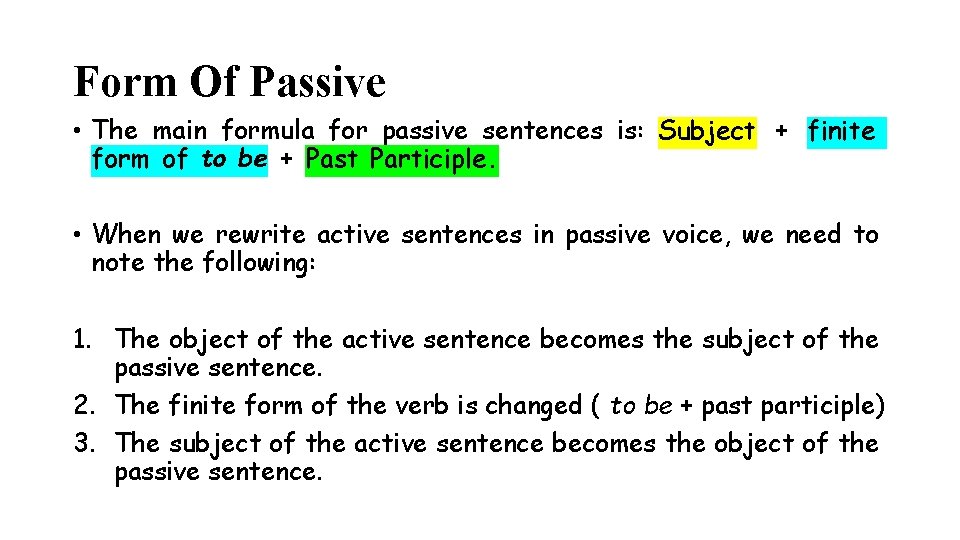
Form Of Passive • The main formula for passive sentences is: Subject + finite form of to be + Past Participle. • When we rewrite active sentences in passive voice, we need to note the following: 1. The object of the active sentence becomes the subject of the passive sentence. 2. The finite form of the verb is changed ( to be + past participle) 3. The subject of the active sentence becomes the object of the passive sentence.
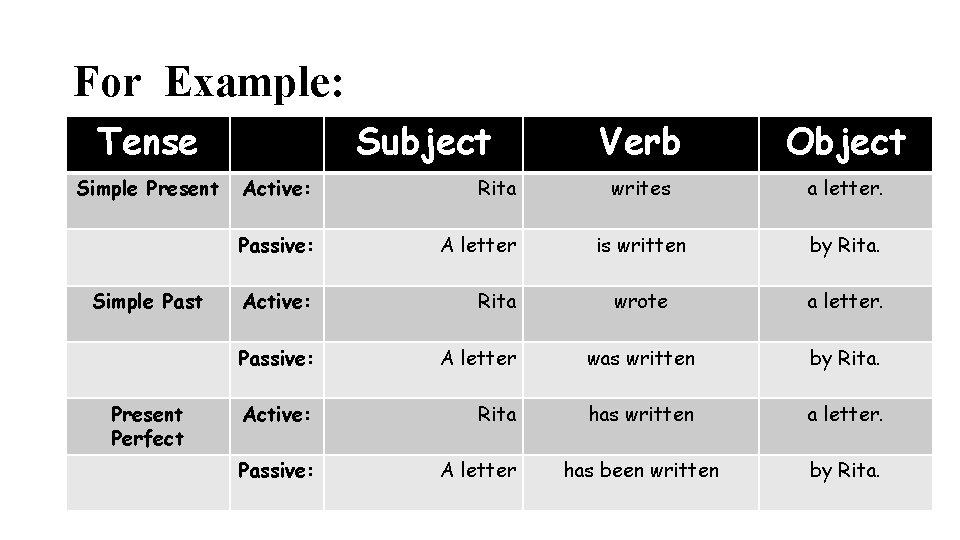
For Example: Tense Simple Present Simple Past Present Perfect Subject Verb Object writes a letter. is written by Rita. wrote a letter. Active: Rita Passive: A letter was written by Rita. Active: Rita has written a letter. Passive: A letter has been written by Rita.
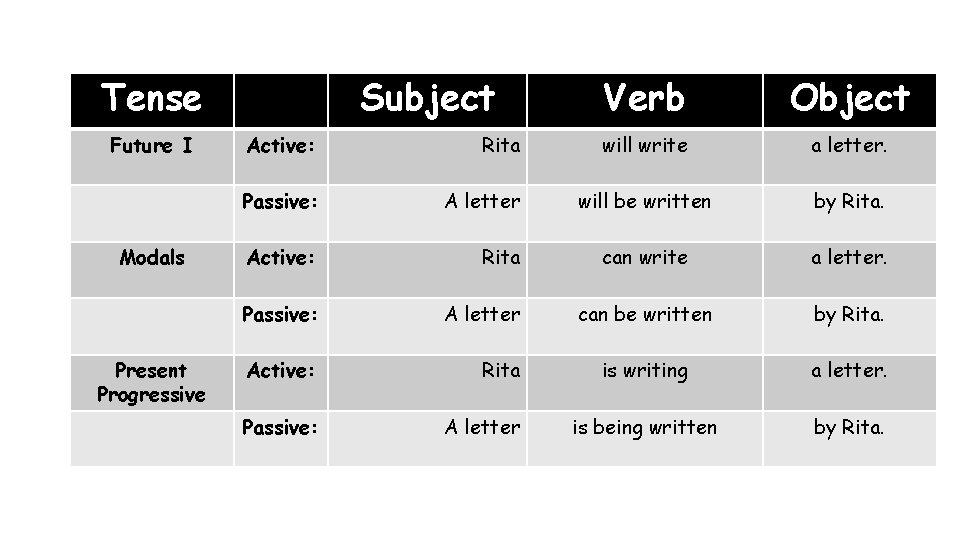
Tense Future I Modals Present Progressive Subject Active: Rita Passive: A letter Verb Object will write a letter. will be written by Rita. can write a letter. can be written by Rita. is writing a letter. is being written by Rita.
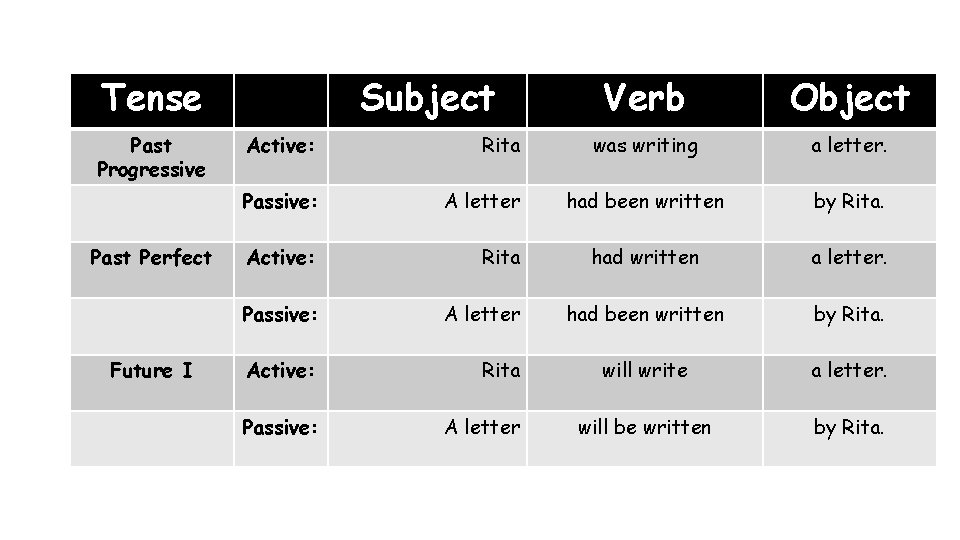
Tense Past Progressive Past Perfect Future I Subject Active: Rita Passive: A letter Verb Object was writing a letter. had been written by Rita. had written a letter. had been written by Rita. will write a letter. will be written by Rita.
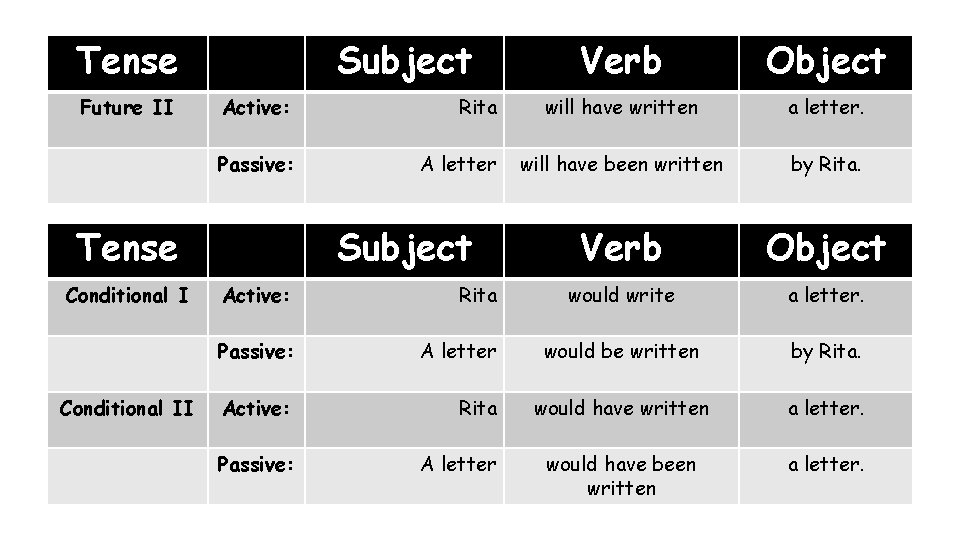
Tense Future II Subject Active: Rita Passive: A letter Tense Conditional II Subject Active: Rita Passive: A letter Verb Object will have written a letter. will have been written by Rita. Verb Object would write a letter. would be written by Rita. would have written a letter. would have been written a letter.
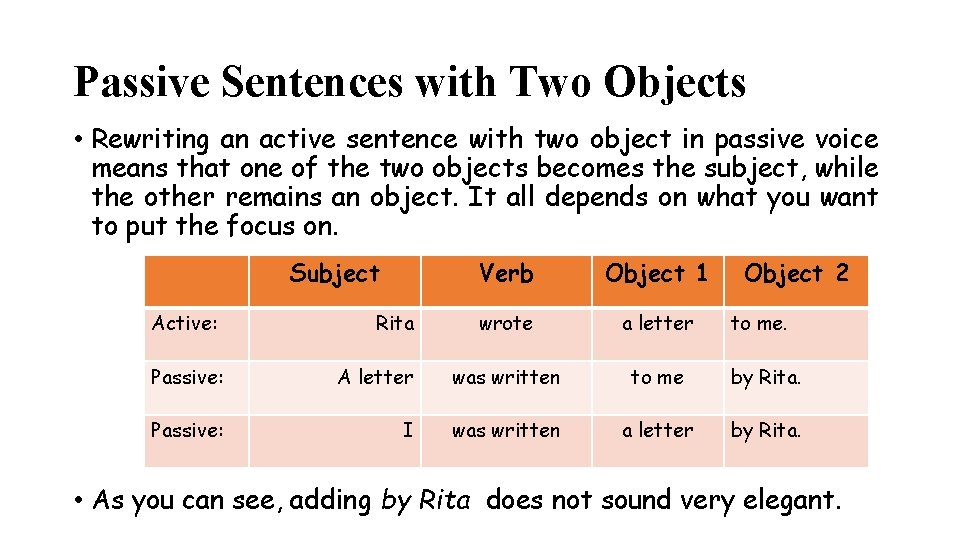
Passive Sentences with Two Objects • Rewriting an active sentence with two object in passive voice means that one of the two objects becomes the subject, while the other remains an object. It all depends on what you want to put the focus on. Subject Verb Object 1 wrote a letter Object 2 Active: Rita to me. Passive: A letter was written to me by Rita. Passive: I was written a letter by Rita. • As you can see, adding by Rita does not sound very elegant.
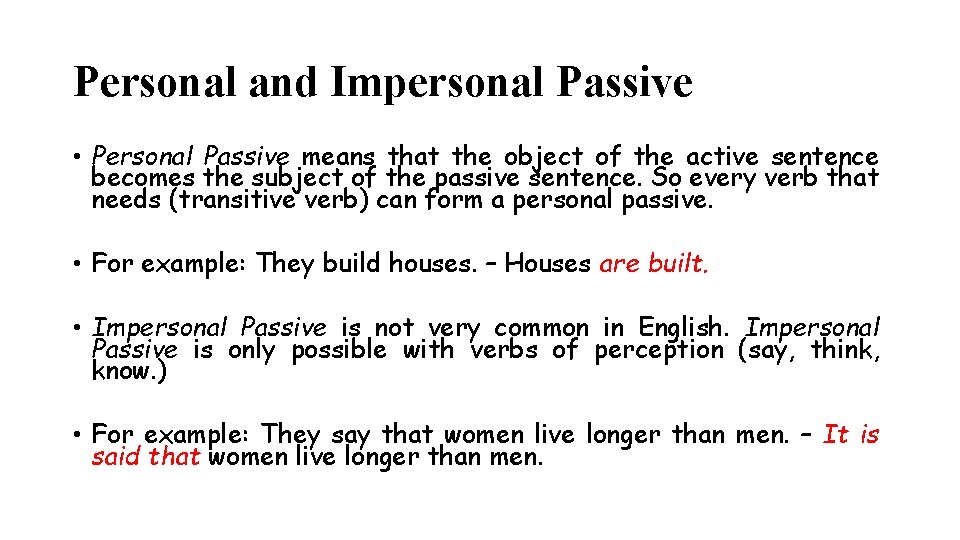
Personal and Impersonal Passive • Personal Passive means that the object of the active sentence becomes the subject of the passive sentence. So every verb that needs (transitive verb) can form a personal passive. • For example: They build houses. – Houses are built. • Impersonal Passive is not very common in English. Impersonal Passive is only possible with verbs of perception (say, think, know. ) • For example: They say that women live longer than men. – It is said that women live longer than men.