
PASSIVE VOICE IMPERSONAL CONSTRUCTIONS STEP BY STEP When
PASSIVE VOICE IMPERSONAL CONSTRUCTIONS STEP BY STEP
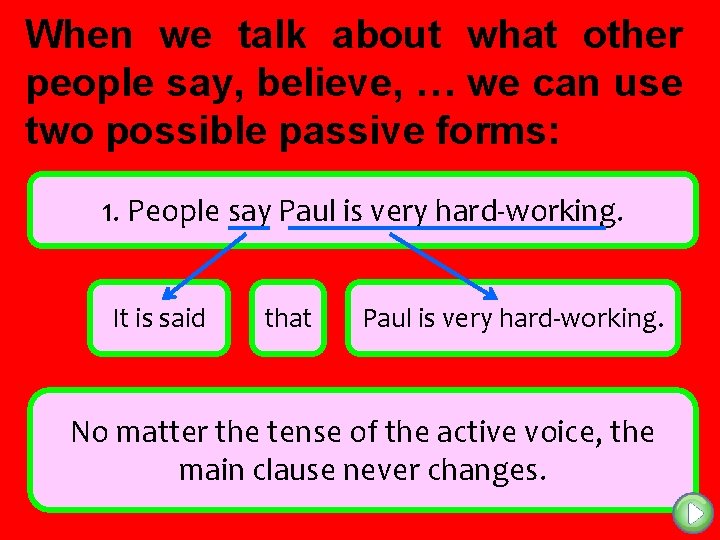
When we talk about what other people say, believe, … we can use two possible passive forms: 1. People say Paul is very hard-working. It is said that Paul is very hard-working. We often use this is passive form in more formal So this the word order: We “That” No use matter “it” is followed the + passive tense byof (be the +main past active clause participle) voice, of the of we add contexts and. Then with verbs of“that”. perception such as: the. Itverb active main of perception clause without never any – inchanges. this case “say” + passive + that-clause believe, claim, consider, understand, think, etc.

Now let’s see what happens if we start with a different subject. 2. People say Paul is very hard-working. Paul is said to be very hard-working. This Nowtime we add the Then the subject the to –passive of infinitive the main of and the clause the rest of the main clause active perception voice without is verb placed any follows. further first. changes.
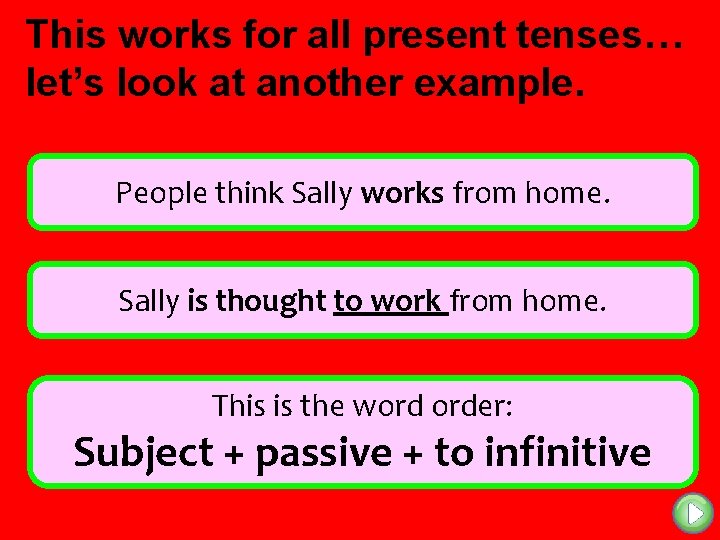
This works for all present tenses… let’s look at another example. People think Sally works from home. Sally is thought to work from home. This is the word order: Subject + passive + to infinitive
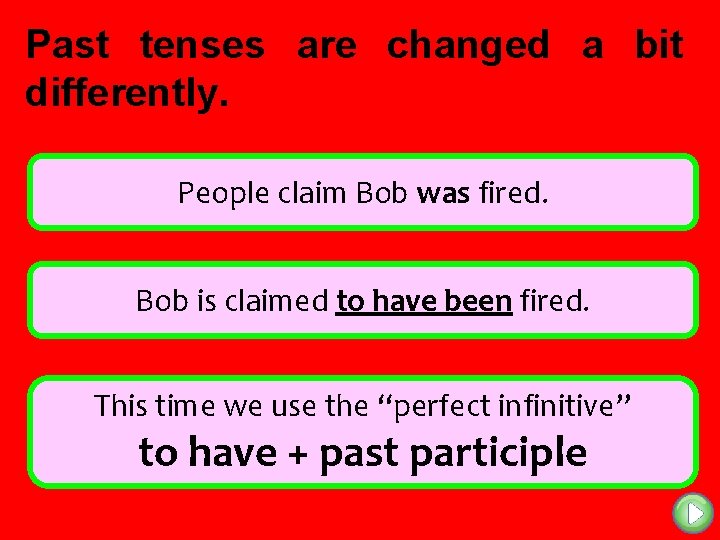
Past tenses are changed a bit differently. People claim Bob was fired. Bob is claimed to have been fired. This time we use the “perfect infinitive” to have + past participle
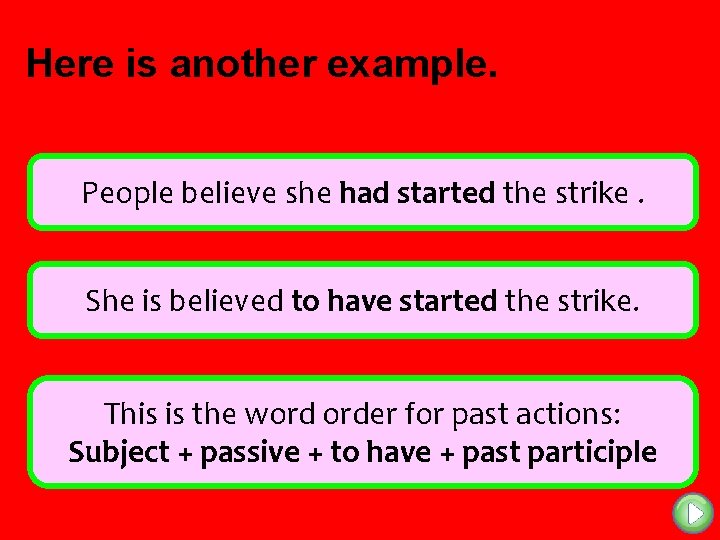
Here is another example. People believe she had started the strike. She is believed to have started the strike. This is the word order for past actions: Subject + passive + to have + past participle

Usually modal verbs are not used. People say he will get a promotion. He is said to get a promotion. So in this case “will” is replaced by the to infinitive.
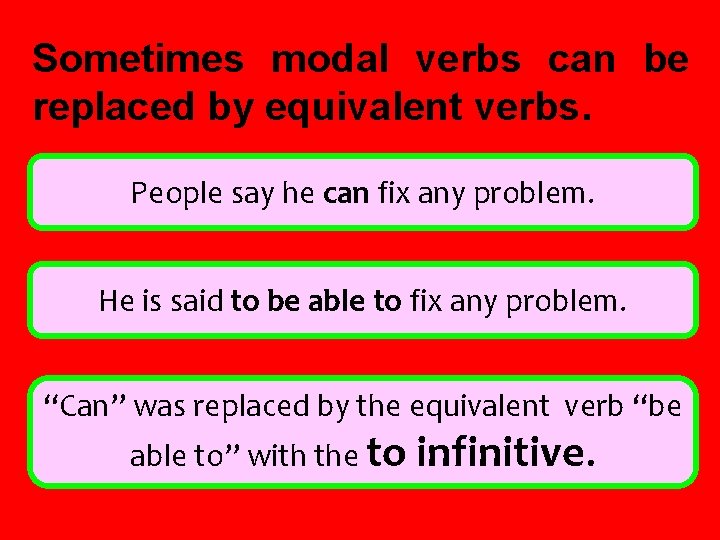
Sometimes modal verbs can be replaced by equivalent verbs. People say he can fix any problem. He is said to be able to fix any problem. “Can” was replaced by the equivalent verb “be able to” with the to infinitive.
- Slides: 8