
Passive Transport The Cell Membrane There are 2
Passive Transport
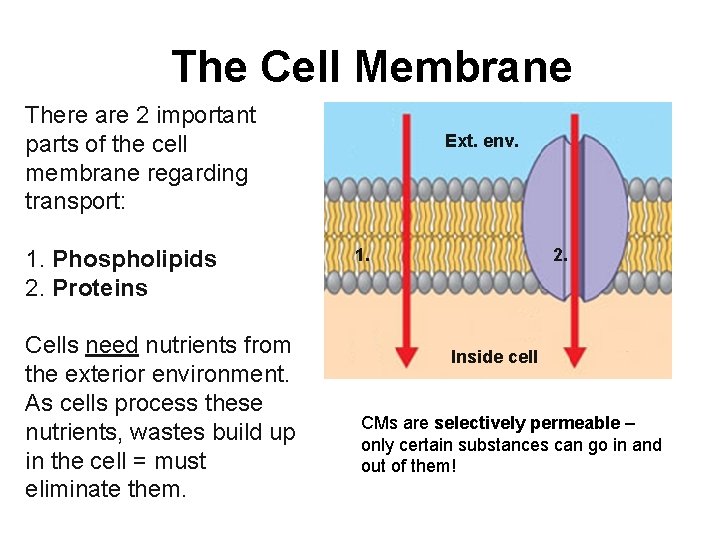
The Cell Membrane There are 2 important parts of the cell membrane regarding transport: 1. Phospholipids 2. Proteins Cells need nutrients from the exterior environment. As cells process these nutrients, wastes build up in the cell = must eliminate them. Ext. env. 1. 2. Inside cell CMs are selectively permeable – only certain substances can go in and out of them!
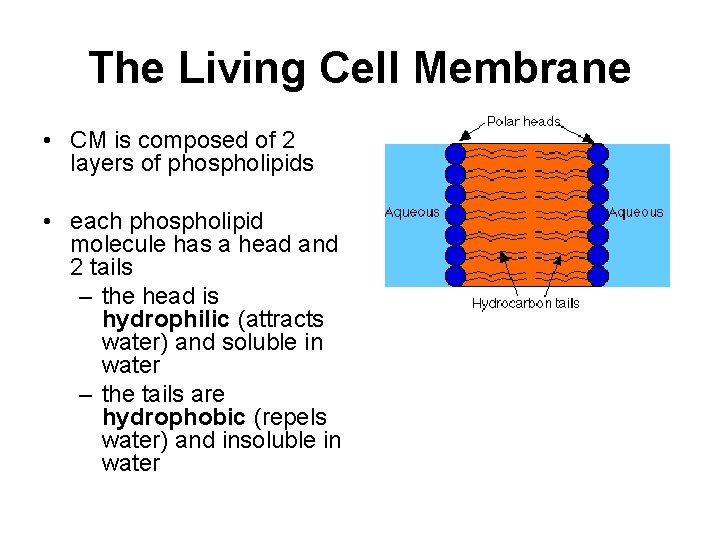
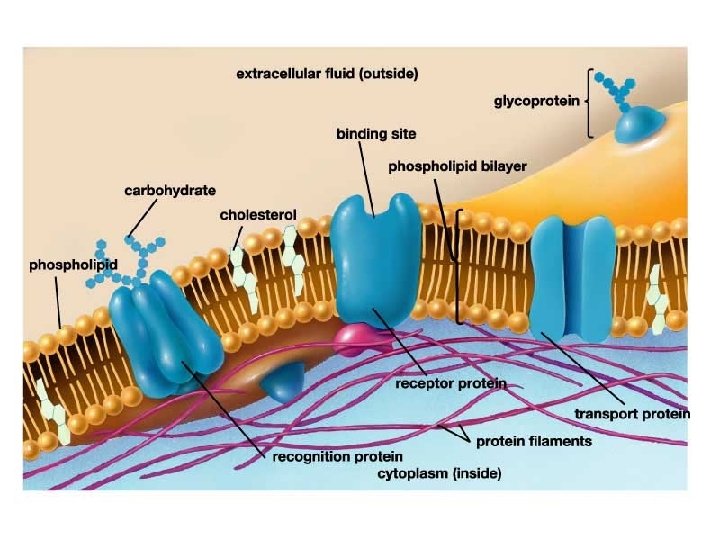
The Living Cell Membrane • CM is composed of 2 layers of phospholipids • each phospholipid molecule has a head and 2 tails – the head is hydrophilic (attracts water) and soluble in water – the tails are hydrophobic (repels water) and insoluble in water
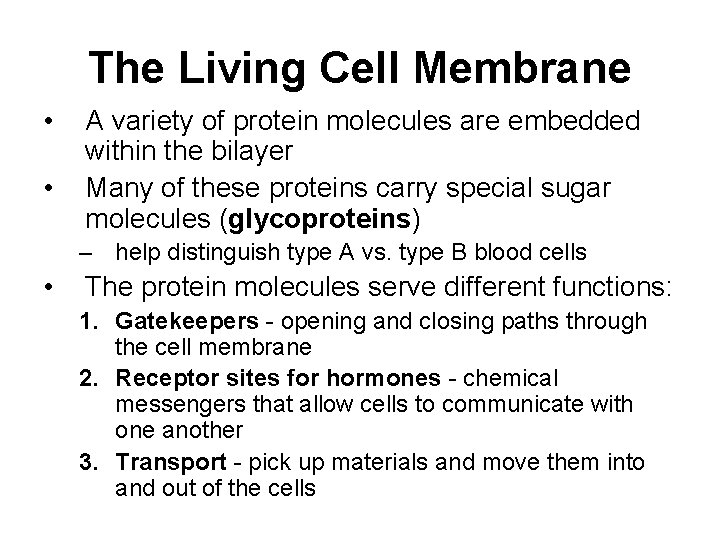
The Living Cell Membrane • • A variety of protein molecules are embedded within the bilayer Many of these proteins carry special sugar molecules (glycoproteins) – help distinguish type A vs. type B blood cells • The protein molecules serve different functions: 1. Gatekeepers - opening and closing paths through the cell membrane 2. Receptor sites for hormones - chemical messengers that allow cells to communicate with one another 3. Transport - pick up materials and move them into and out of the cells
Types of Passive Transport • Transport of materials across CM without using energy. There are 3 types: • Simple Diffusion • Osmosis • Facilitated Diffusion
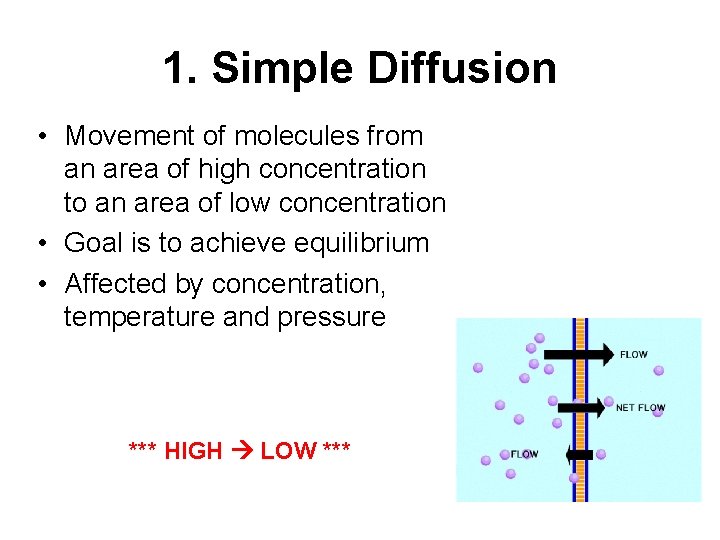
1. Simple Diffusion • Movement of molecules from an area of high concentration to an area of low concentration • Goal is to achieve equilibrium • Affected by concentration, temperature and pressure *** HIGH LOW ***
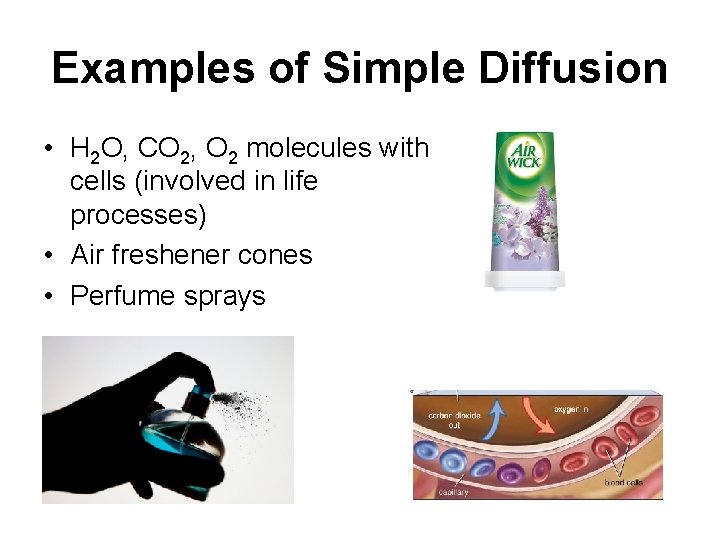
Examples of Simple Diffusion • H 2 O, CO 2, O 2 molecules with cells (involved in life processes) • Air freshener cones • Perfume sprays

2. Osmosis • Diffusion of water molecules across a selectively permeable membrane • Cells are ideally bathed in isotonic solutions (where conc. inside cell equals conc. outside cell) • H 2 O molecules move from a side with low conc. to a side with high conc. across a selectively permeable membrane to obtain equilibrium – SP membrane allows water to go through, but not other molecules
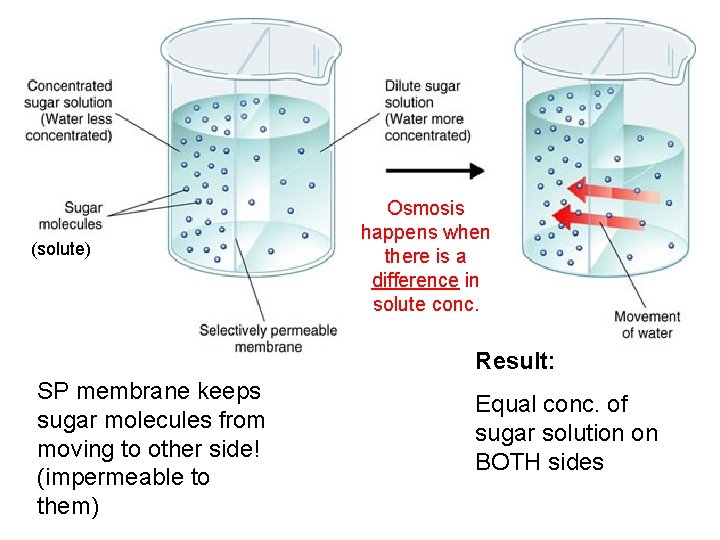
(solute) Osmosis happens when there is a difference in solute conc. Result: SP membrane keeps sugar molecules from moving to other side! (impermeable to them) Equal conc. of sugar solution on BOTH sides
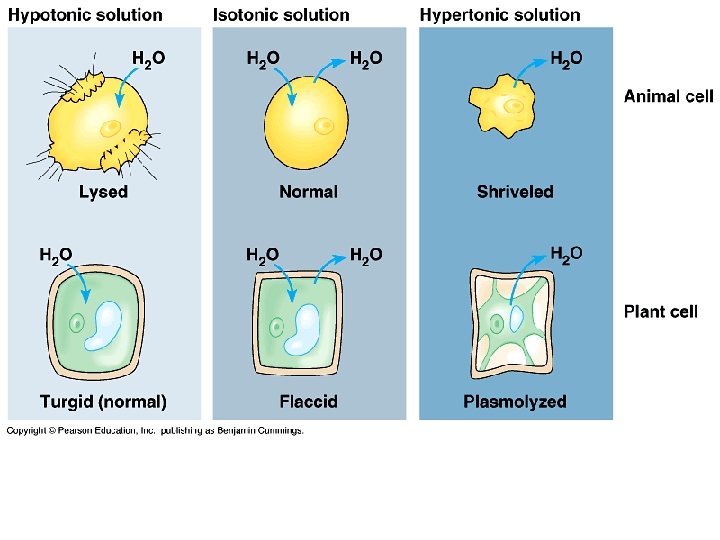
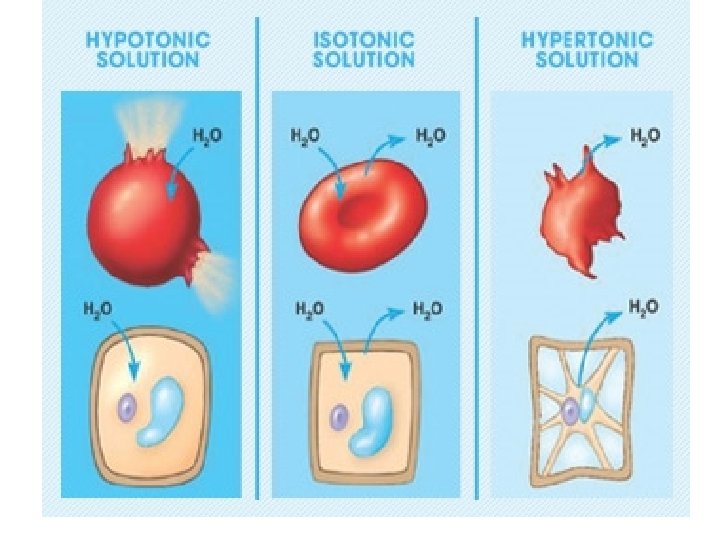
Types of Solutions • Recall: A solution is a uniform mixture made up of a solvent (the bigger part) and a solute (the smaller part) 3 Types: 1. Isotonic – conc. of solute inside cell EQUALS conc. of solute outside the cell 2. Hypertonic – conc. of solute inside cell is HIGHER than conc. of solute outside the cell 3. Hypotonic – conc. of solute inside cell is LOWER than conc. of solute outside cell Now… if you have red blood cells in a beaker full of water and you add salt to the beaker… what would be the hypothetical situation for each of these solutions?
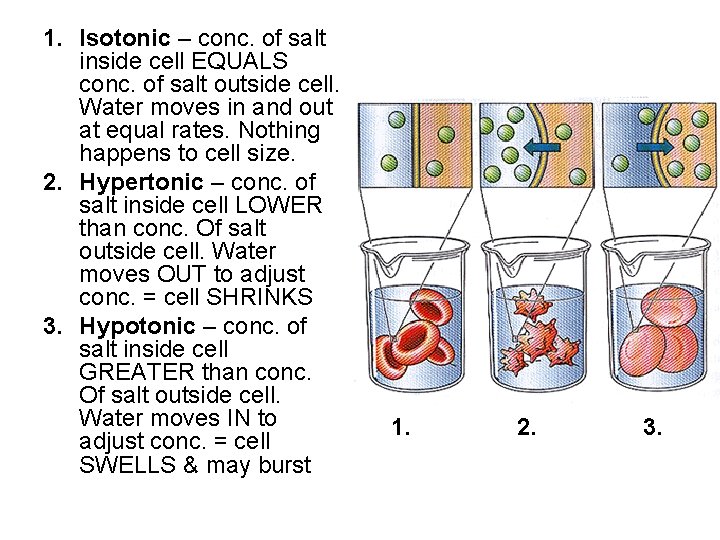
1. Isotonic – conc. of salt inside cell EQUALS conc. of salt outside cell. Water moves in and out at equal rates. Nothing happens to cell size. 2. Hypertonic – conc. of salt inside cell LOWER than conc. Of salt outside cell. Water moves OUT to adjust conc. = cell SHRINKS 3. Hypotonic – conc. of salt inside cell GREATER than conc. Of salt outside cell. Water moves IN to adjust conc. = cell SWELLS & may burst 1. 2. 3.
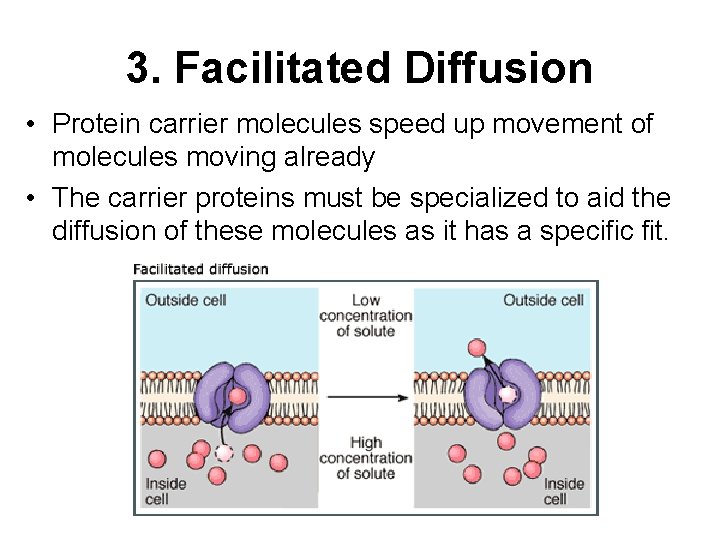
3. Facilitated Diffusion • Protein carrier molecules speed up movement of molecules moving already • The carrier proteins must be specialized to aid the diffusion of these molecules as it has a specific fit.
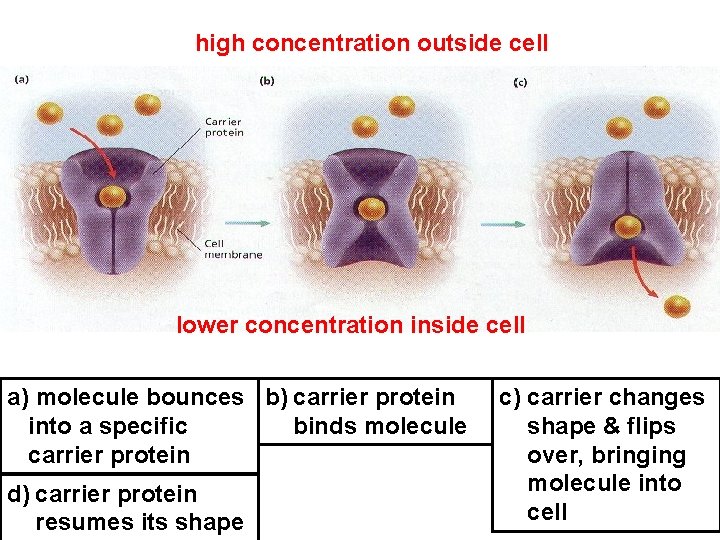
high concentration outside cell lower concentration inside cell a) molecule bounces b) carrier protein into a specific binds molecule carrier protein d) carrier protein resumes its shape c) carrier changes shape & flips over, bringing molecule into cell
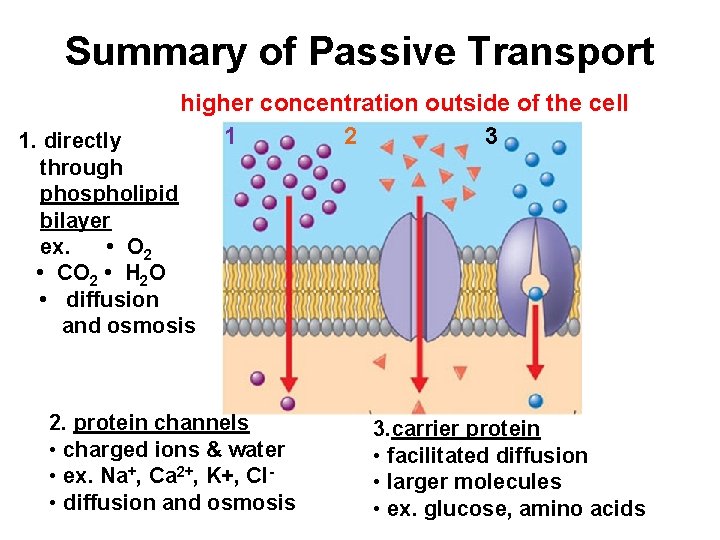
Summary of Passive Transport higher concentration outside of the cell 1 2 3 1. directly through phospholipid bilayer ex. • O 2 • CO 2 • H 2 O • diffusion and osmosis 2. protein channels • charged ions & water • ex. Na+, Ca 2+, K+, Cl • diffusion and osmosis 3. carrier protein • facilitated diffusion • larger molecules • ex. glucose, amino acids
- Slides: 17