
Passive Solar Design Some Pointers for your assignment

- Slides: 47
Passive Solar Design Some Pointers for your assignment.
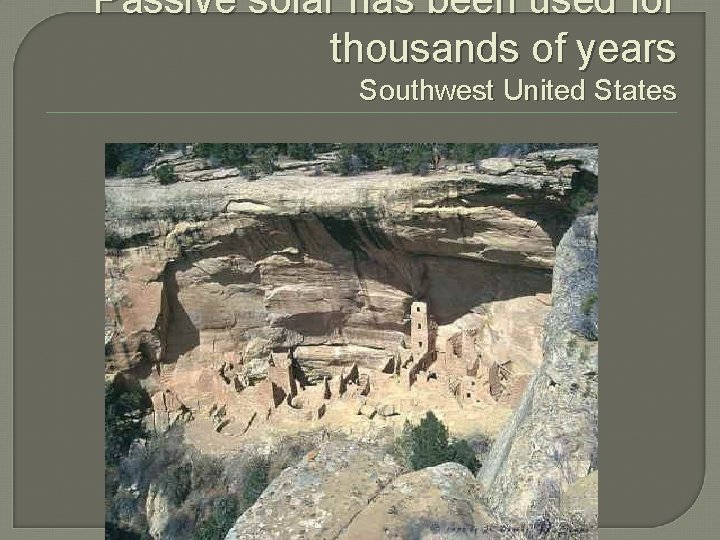
Passive solar has been used for thousands of years Southwest United States
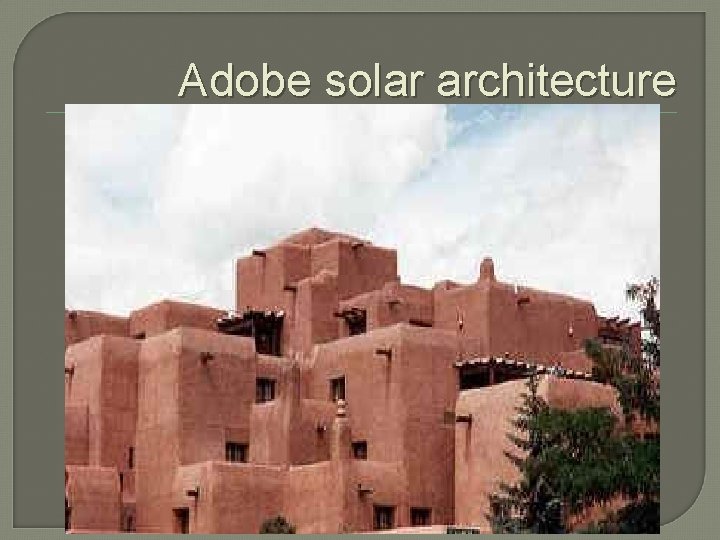
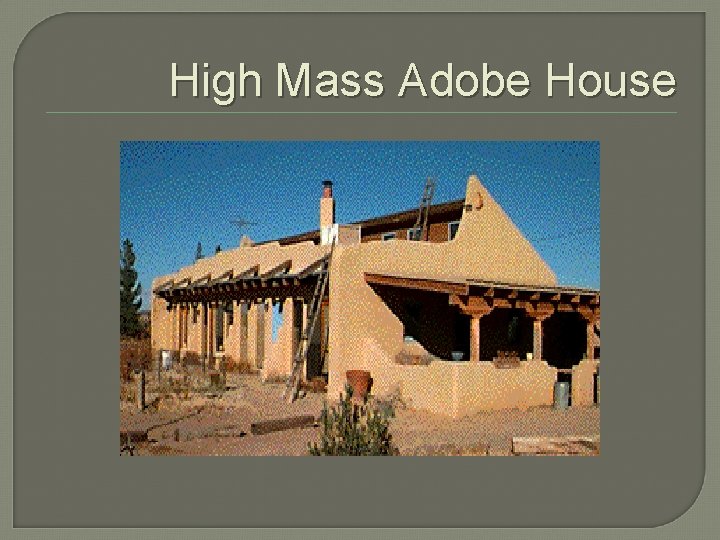
Adobe solar architecture
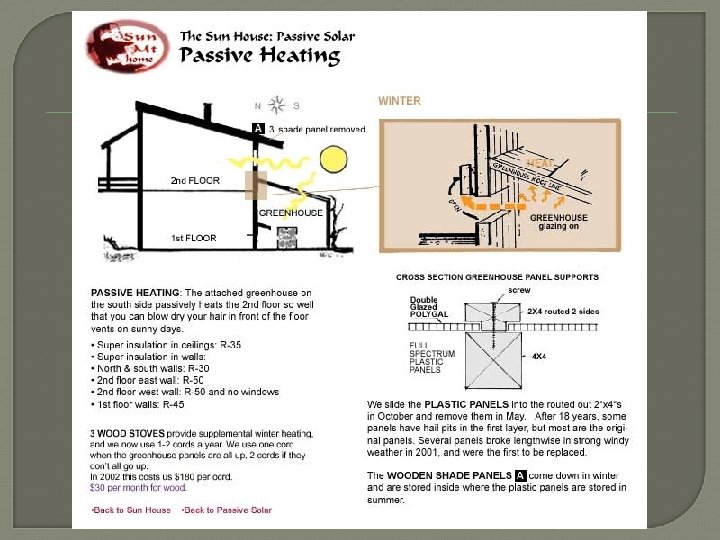
Passive Solar Design � Passive solar heating is defined as using solar energy incident on windows, skylights, greenhouses, clerestories, mass walls, and thermo syphoning collectors in order to provide heating for a house. � Generally such solar collection occurs passively, without the extensive use of pumps or fans typically used in active solar collector systems. However, the distribution of the energy collected sometimes uses small fans to redistribute the energy throughout the house.
�Heating is needed only over the colder part of the year, passive solar design must also eliminate unwanted solar heat gains during the summer. �The use of techniques to eliminate solar gains and to cool a house with the use of active systems is often referred to as passive cooling
Types of Passive Systems �Direct Gain �Trombe Wall or Mass Wall �Sunspace or Greenhouse �Thermosyphoning �Roof Systems
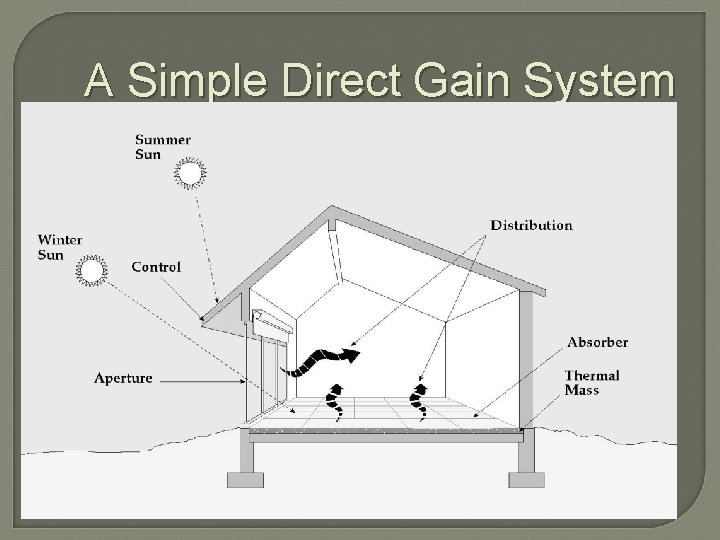
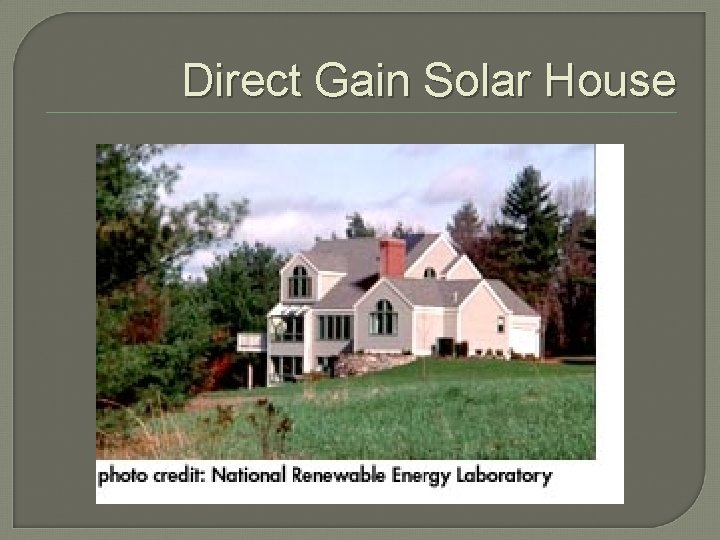
Direct Gain Systems �Sunlight incident on transparent surfaces allows the energy to enter the living space directly and is called Direct Gain. North facing windows thus form the basis for the simplest type of solar heating system. With some simple guidelines, this design is the cheapest and best way to incorporate solar into a house.
Direct Gain Passive Solar Design Surfaces should be generally facing North (to within 20 degrees) Overhangs should prevent unwanted summer gains Window area should be 8 -12% of the house floor area if no extra thermal mass is added This amount of passive solar gain should provide no more than 40 -50% of the yearly heating load More area may be possible if additional thermal mass is added. PRECAUTIONS Excess window area can result in a loss of privacy, too much glare, underheating and overheating Movable insulation should be designed to be easy to install and use
A Simple Direct Gain System
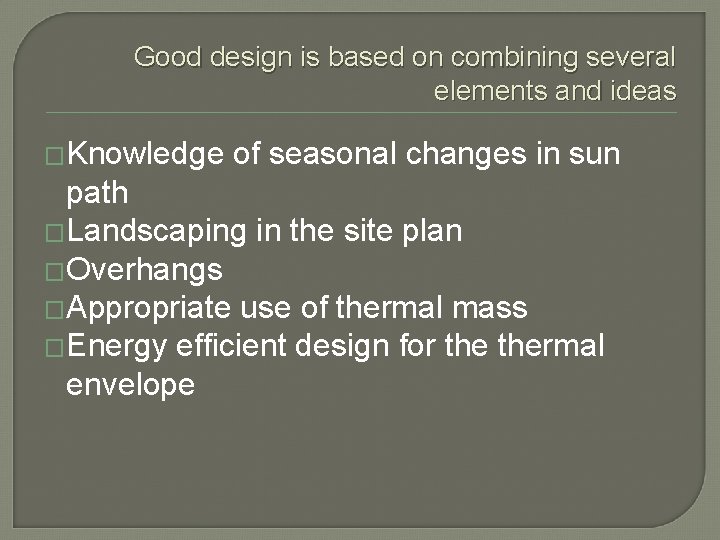
Good design is based on combining several elements and ideas �Knowledge of seasonal changes in sun path �Landscaping in the site plan �Overhangs �Appropriate use of thermal mass �Energy efficient design for thermal envelope
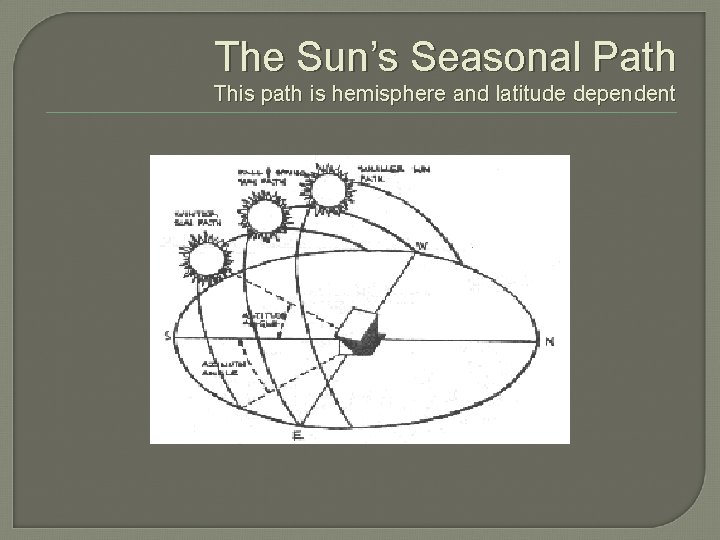
The Sun’s Seasonal Path This path is hemisphere and latitude dependent
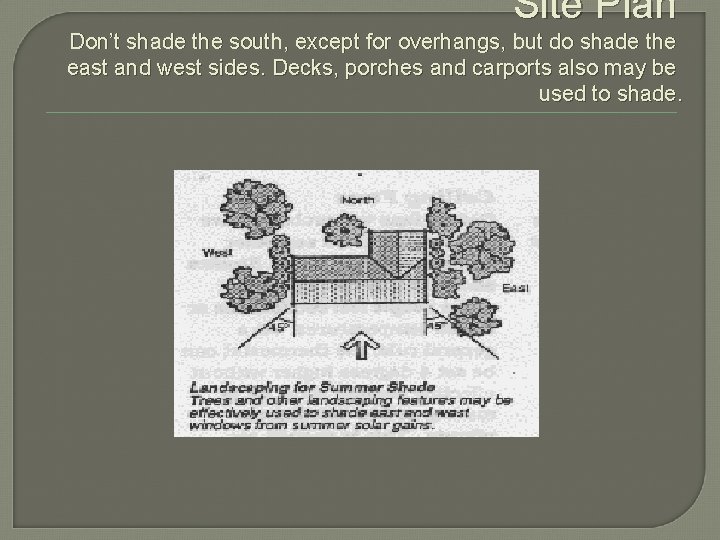
Site Plan Don’t shade the south, except for overhangs, but do shade the east and west sides. Decks, porches and carports also may be used to shade.
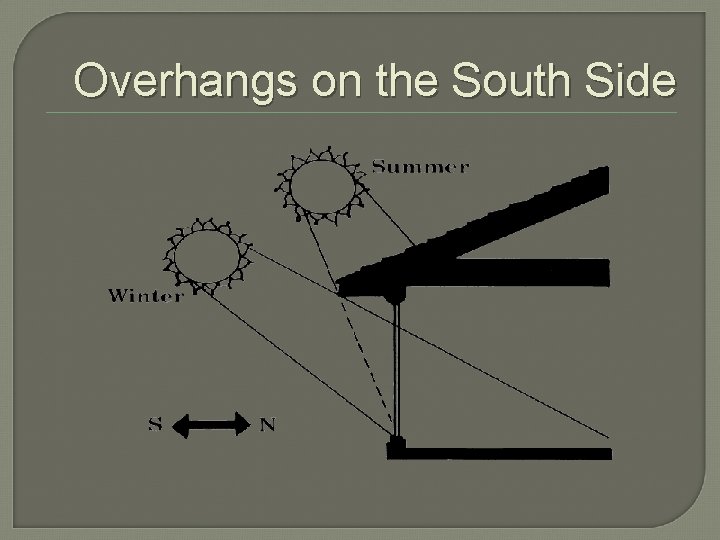
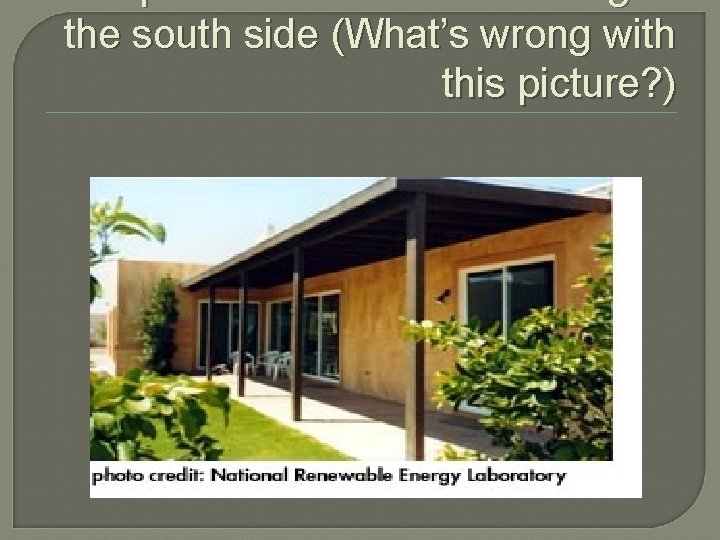
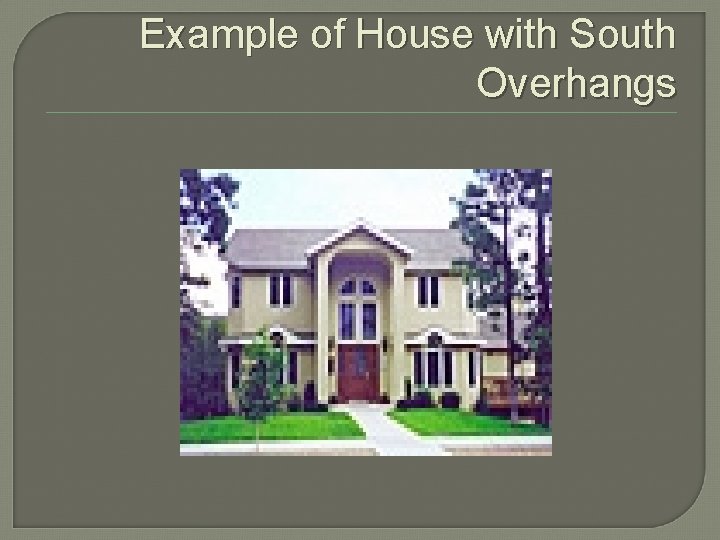
Overhangs on the South Side
Simple Patio Provides Shading to the south side (What’s wrong with this picture? )
Example of House with South Overhangs
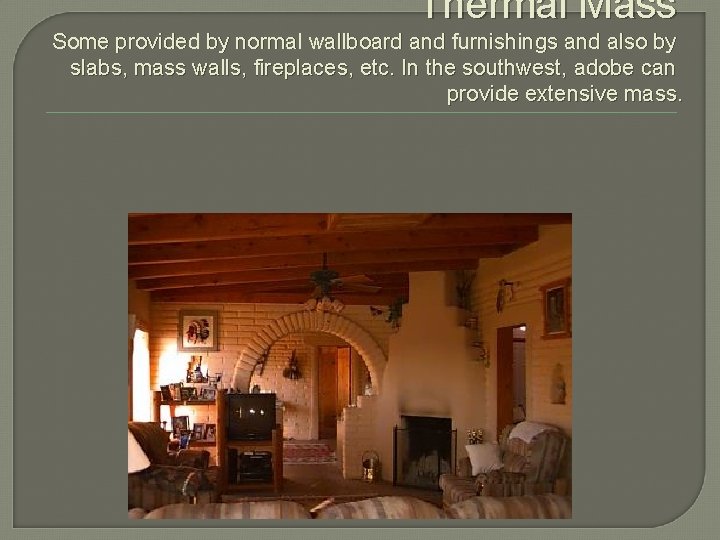
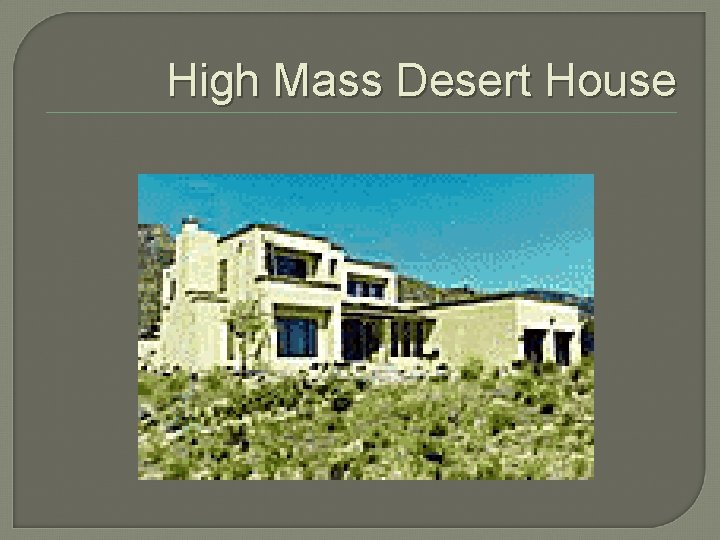
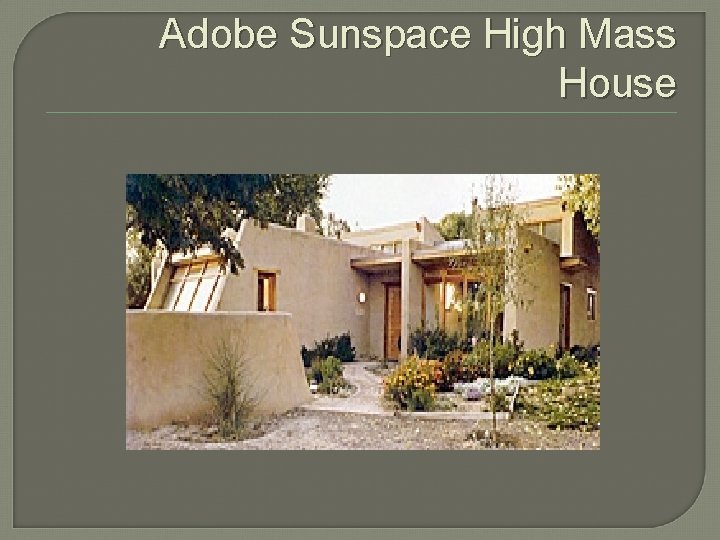
Thermal Mass Some provided by normal wallboard and furnishings and also by slabs, mass walls, fireplaces, etc. In the southwest, adobe can provide extensive mass.
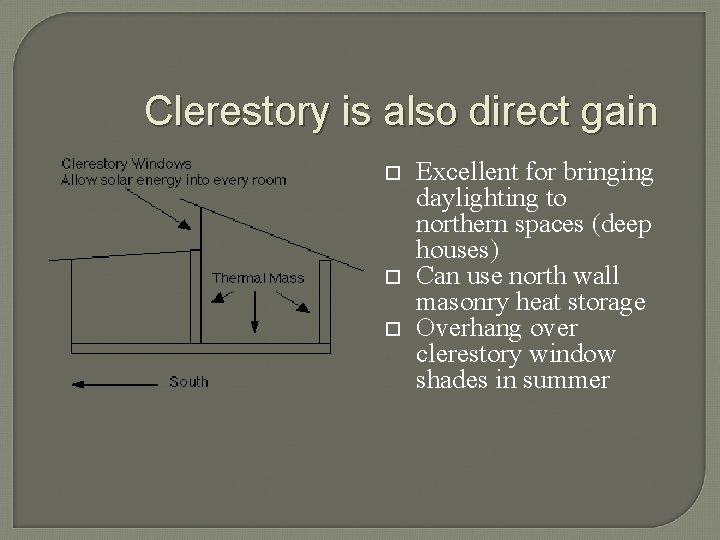
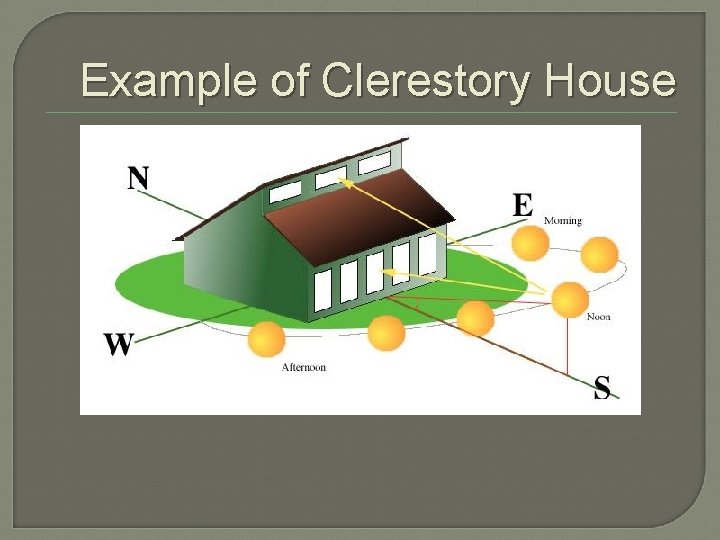
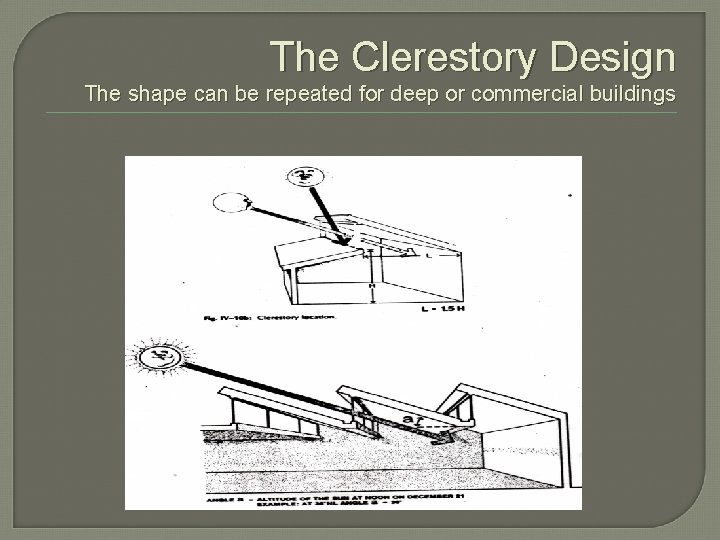
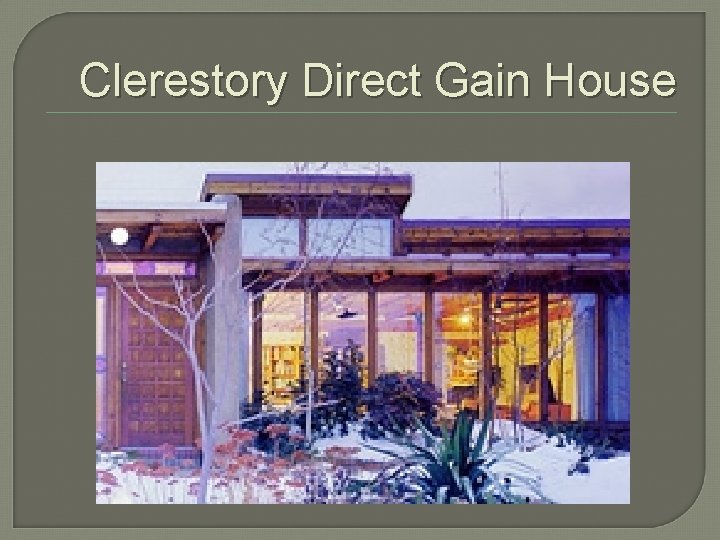
Clerestory is also direct gain Excellent for bringing daylighting to northern spaces (deep houses) Can use north wall masonry heat storage Overhang over clerestory window shades in summer
Example of Clerestory House
The Clerestory Design The shape can be repeated for deep or commercial buildings
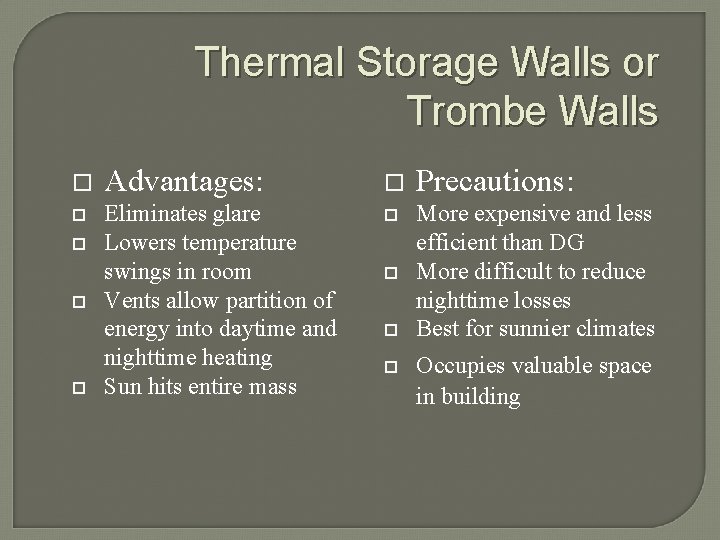
Thermal Storage Walls or Trombe Walls Advantages: Precautions: Eliminates glare Lowers temperature swings in room Vents allow partition of energy into daytime and nighttime heating Sun hits entire mass More expensive and less efficient than DG More difficult to reduce nighttime losses Best for sunnier climates Occupies valuable space in building
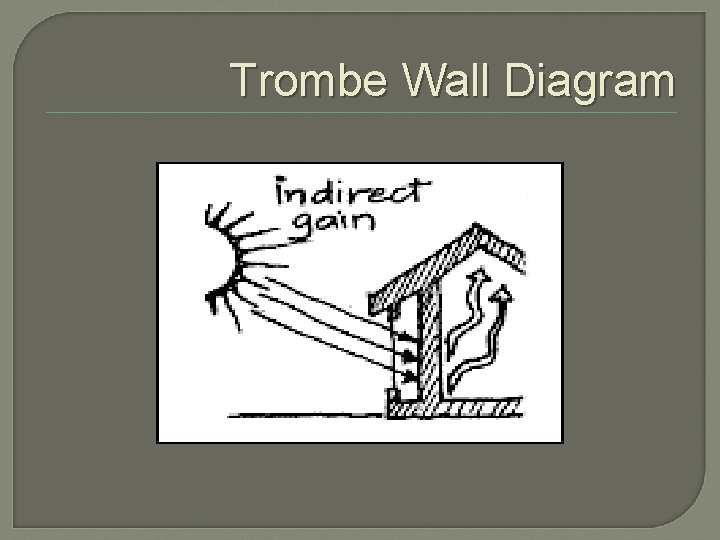
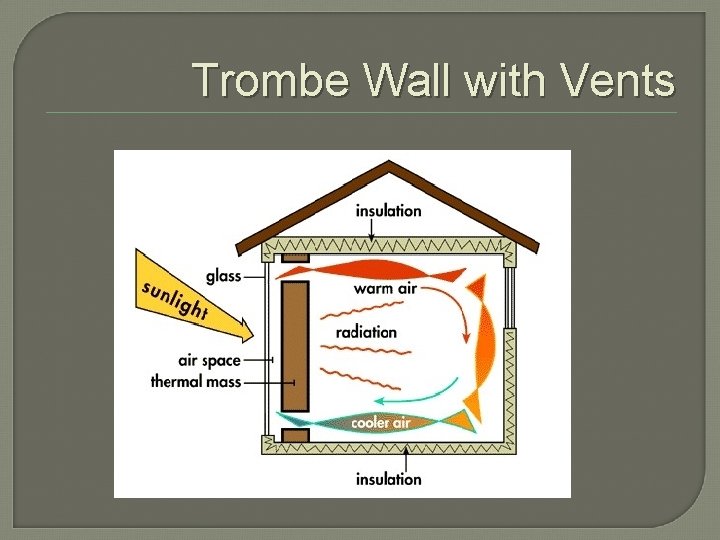
Trombe Wall Diagram
Trombe Wall with Vents
Operation of Trombe Wall � Sunlight hits the darkened mass wall and absorbed heat moves slowly across the wall � The inside surface temperature peaks 6 -8 hours after the midday outside surface peak � Operational vents allow optional controlled air circulation into the space during the day � Overhang reduces wall sun exposure during the warmer months
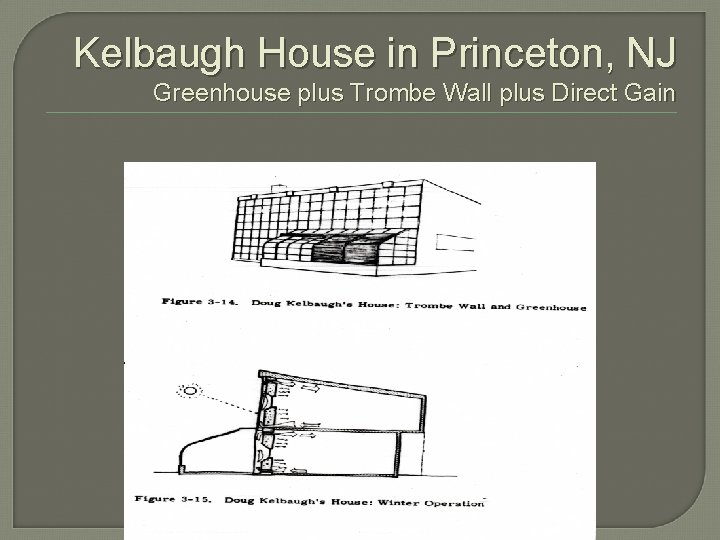
Kelbaugh House in Princeton, NJ Greenhouse plus Trombe Wall plus Direct Gain
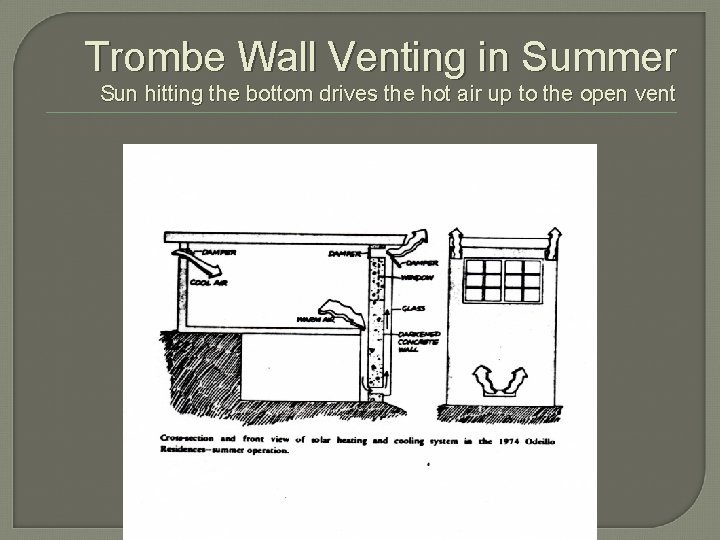
Trombe Wall – added features Vent added to outside at the top can drive warm air out in the summer and bring cooler air from a north vent Trombe wall can be used as part of a south-facing greenhouse Trombe wall concept may be retrofitted to existing houses with brick or stone construction
Trombe Wall Venting in Summer Sun hitting the bottom drives the hot air up to the open vent
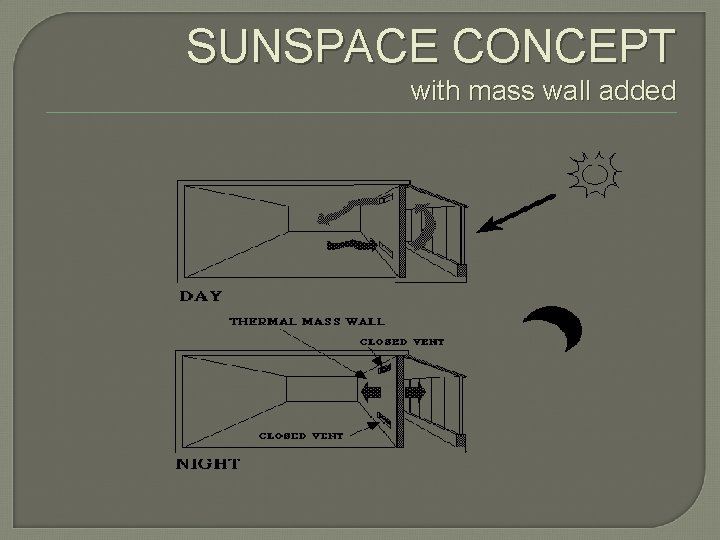
SUNSPACE CONCEPT with mass wall added
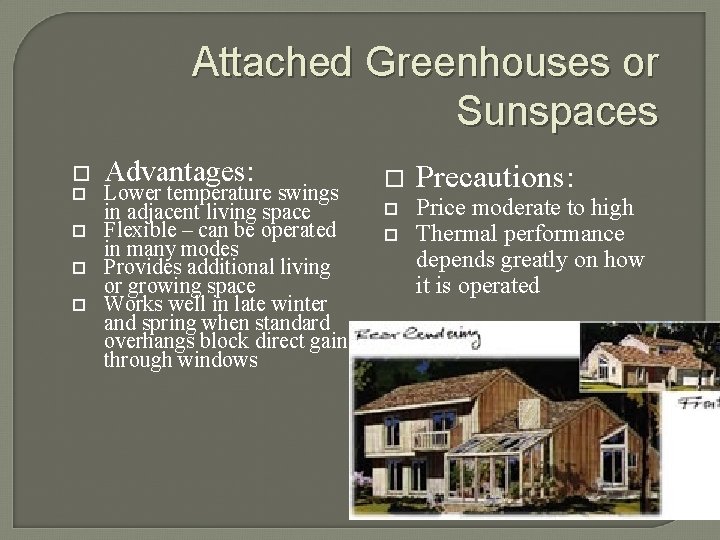
Attached Greenhouses or Sunspaces Advantages: Lower temperature swings in adjacent living space Flexible – can be operated in many modes Provides additional living or growing space Works well in late winter and spring when standard overhangs block direct gain through windows Precautions: Price moderate to high Thermal performance depends greatly on how it is operated
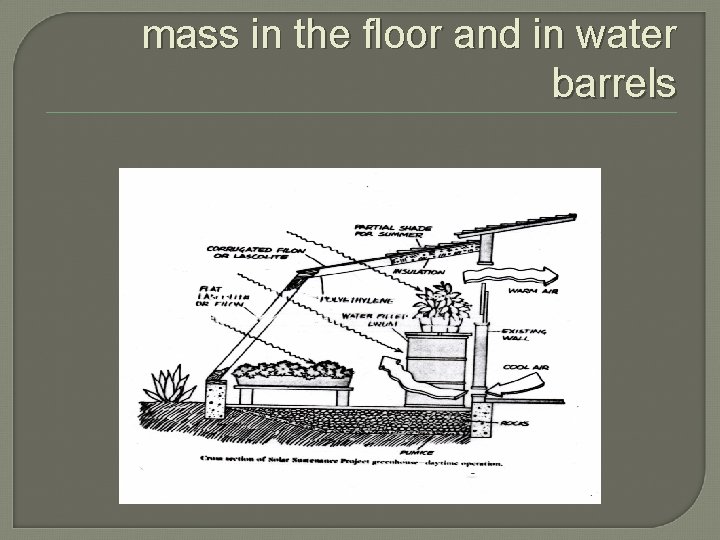
Solar Greenhouse with thermal mass in the floor and in water barrels
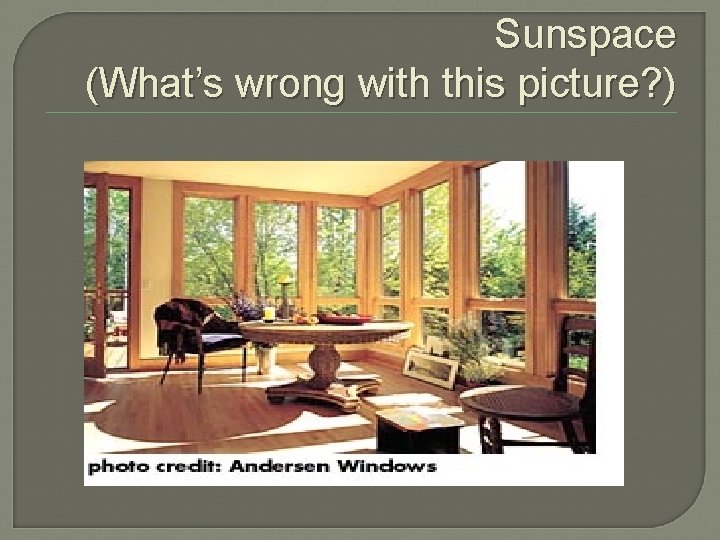
Sunspace (What’s wrong with this picture? )
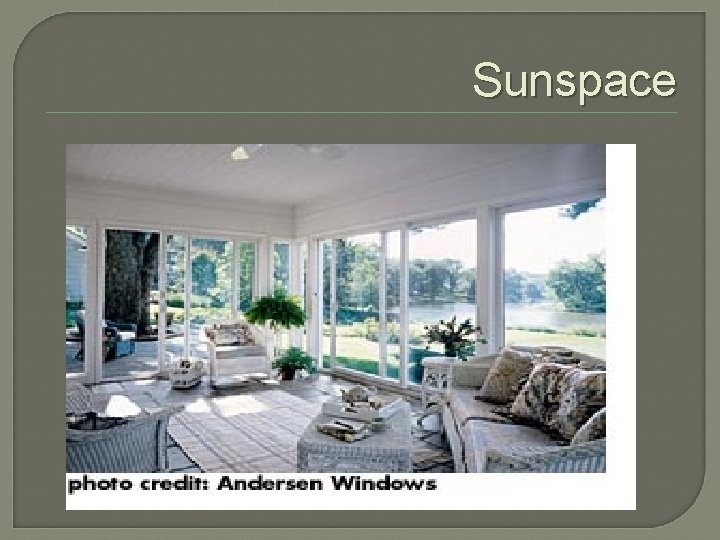
Sunspace
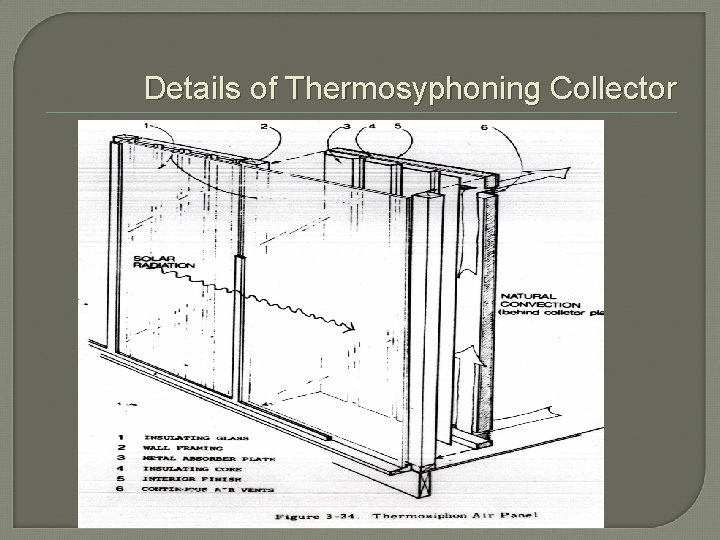
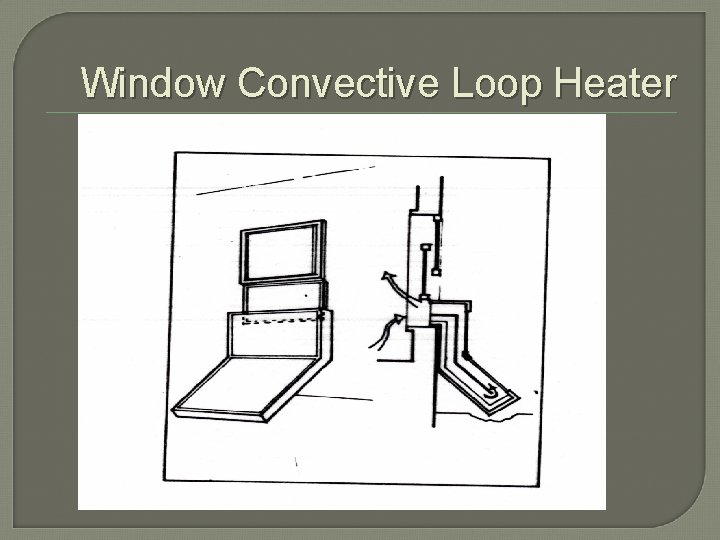
Convective Loop Heaters Advantages: Reduces glare and protects privacy Inexpensive and easy to incorporate into existing homes Can be isolated from the living space at night No thermal mass needed if area < 10% of floor area Precautions: Not a normal part of the façade of houses Good design and construction needed to ensure proper airflow and thermal isolation at night Warm air is difficult to store in thermal mass than direct sunlight
Details of Thermosyphoning Collector
Window Convective Loop Heater
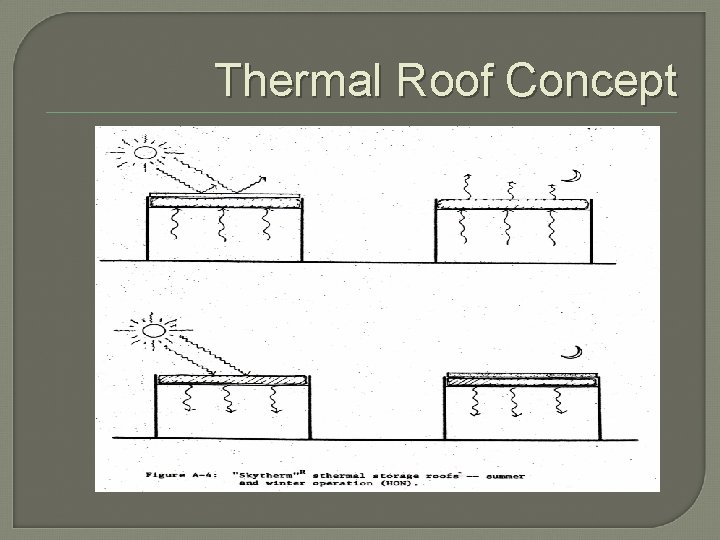
Thermal Storage Roofs Advantages: Precautions: Provides both heating and cooling Provides low temperature swing in the building Can provide 100% of heating and cooling in milder climates Structural support for heavy mass expensive Most easily used in 1 story buildings Typically 50% size of floor area Least acceptable design in earthquake prone areas
Thermal Roof Concept
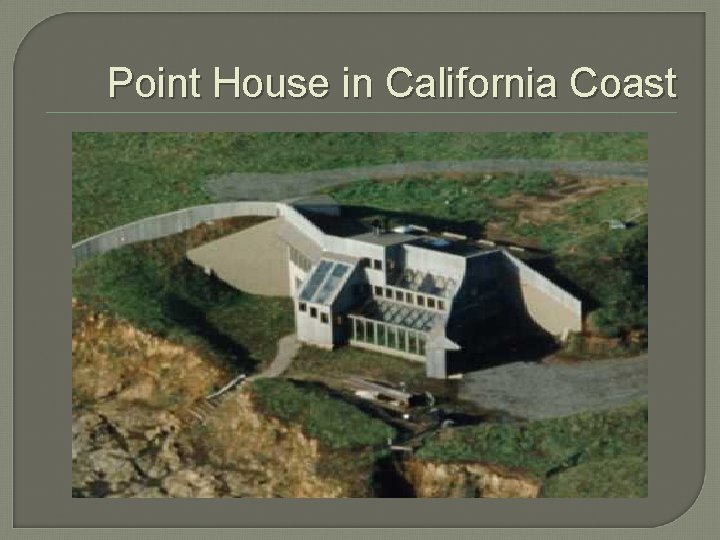
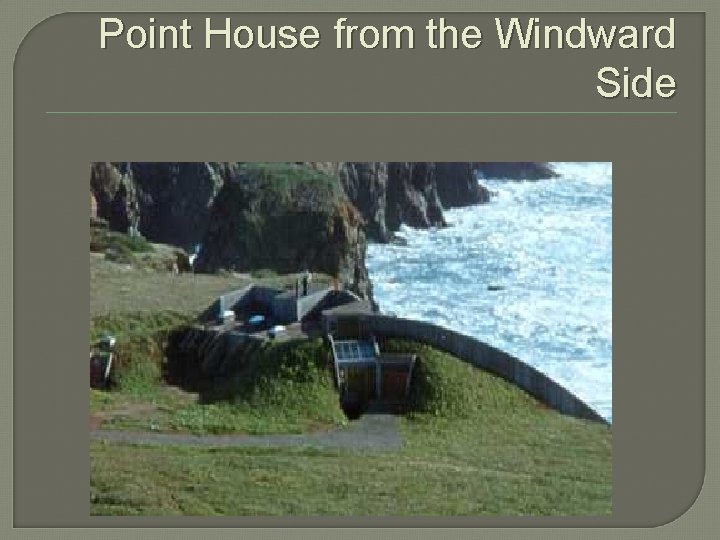
Passive Solar Design Style The effectiveness of solar heating does not depend on the style (Cape Cod, Colonial, modern, contemporary) of house that you design. Houses may be small and simple, or spectacular, the solar concept being applied is the same as is shown in the following examples. Of course, the smaller the house, the less resources and cost will be needed to build
High Mass Adobe House
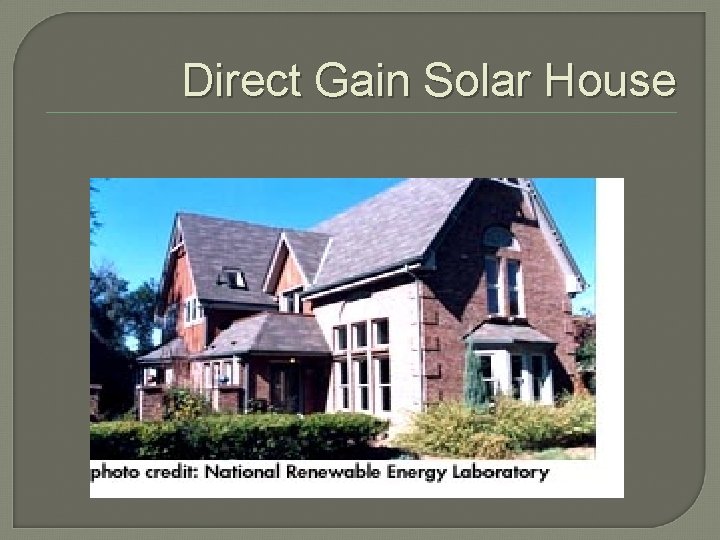
Direct Gain Solar House
High Mass Desert House
Adobe Sunspace High Mass House
Clerestory Direct Gain House
Point House in California Coast
Point House from the Windward Side
Direct Gain Solar House
North Facing Window Advantages The Clear Winner Provides views to North Provides good day lighting Provides high collection efficiency Long lifetime No maintenance (other than cleaning) No extra cost Automatic collection and distribution of energy No integration with backup system needed No thermal storage needed if window area < 10 -12% of floor area Movable insulation can provide privacy and reduce nighttime losses if needed