
Passiivin muodostaminen Passiivin muodostamisessa on trket osata beverbin

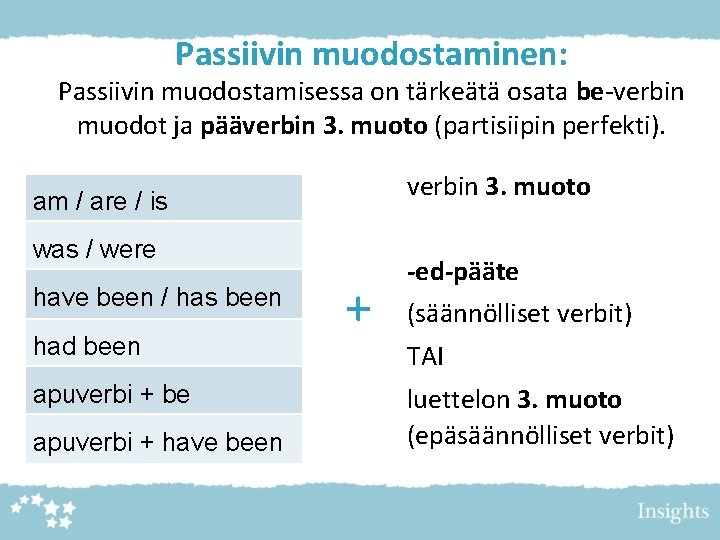
Passiivin muodostaminen: Passiivin muodostamisessa on tärkeätä osata be-verbin muodot ja pääverbin 3. muoto (partisiipin perfekti). verbin 3. muoto am / are / is was / were have been / has been had been apuverbi + be apuverbi + have been + -ed-pääte (säännölliset verbit) TAI luettelon 3. muoto (epäsäännölliset verbit)
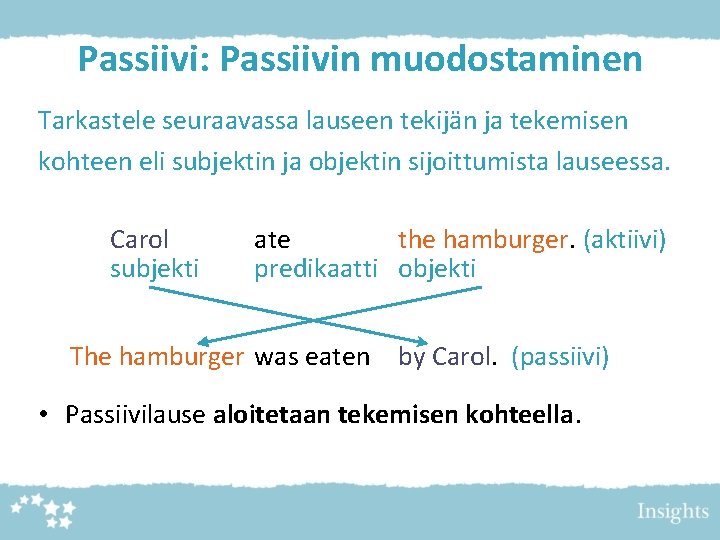
Passiivi: Passiivin muodostaminen Tarkastele seuraavassa lauseen tekijän ja tekemisen kohteen eli subjektin ja objektin sijoittumista lauseessa. Carol subjekti ate the hamburger. (aktiivi) predikaatti objekti The hamburger was eaten by Carol. (passiivi) • Passiivilause aloitetaan tekemisen kohteella.
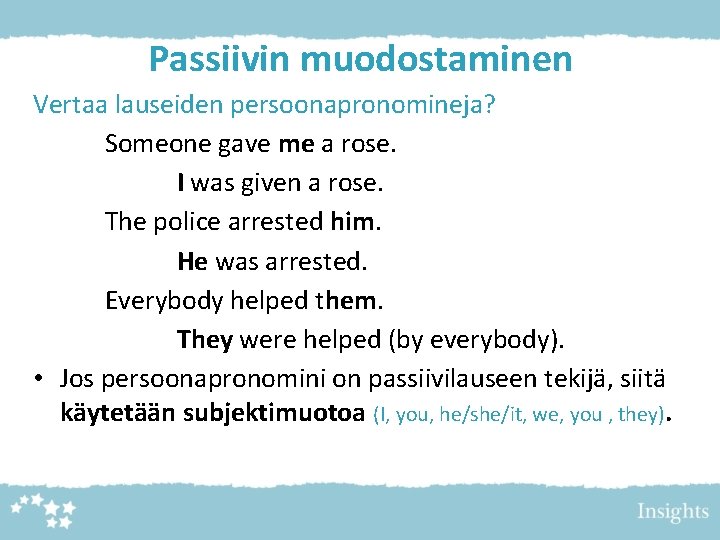
Passiivin muodostaminen Vertaa lauseiden persoonapronomineja? Someone gave me a rose. I was given a rose. The police arrested him. He was arrested. Everybody helped them. They were helped (by everybody). • Jos persoonapronomini on passiivilauseen tekijä, siitä käytetään subjektimuotoa (I, you, he/she/it, we, you , they).
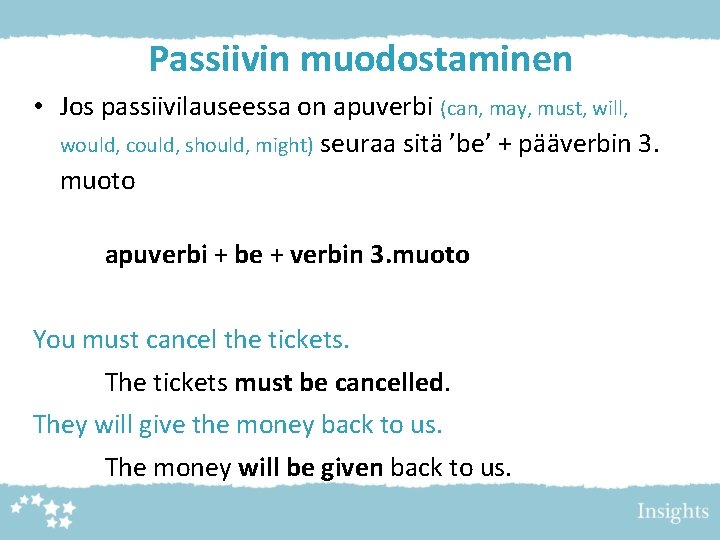
Passiivin muodostaminen • Jos passiivilauseessa on apuverbi (can, may, must, will, would, could, should, might) seuraa sitä ’be’ + pääverbin 3. muoto apuverbi + be + verbin 3. muoto You must cancel the tickets. The tickets must be cancelled. They will give the money back to us. The money will be given back to us.
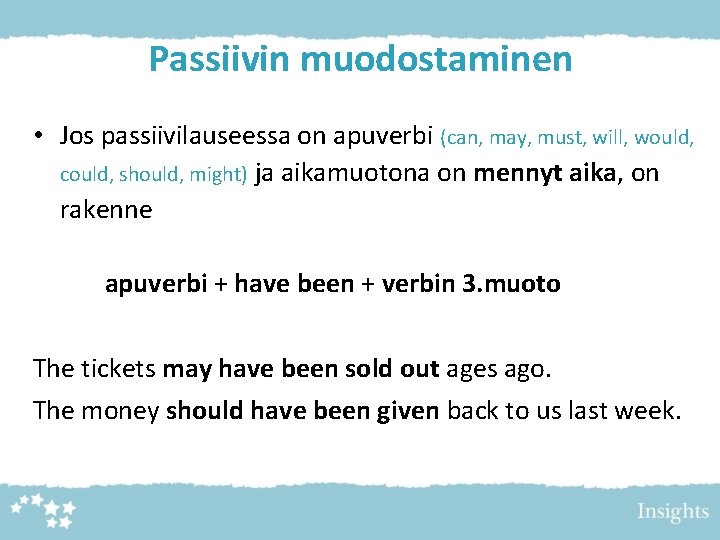
Passiivin muodostaminen • Jos passiivilauseessa on apuverbi (can, may, must, will, would, could, should, might) ja aikamuotona on mennyt aika, on rakenne apuverbi + have been + verbin 3. muoto The tickets may have been sold out ages ago. The money should have been given back to us last week.
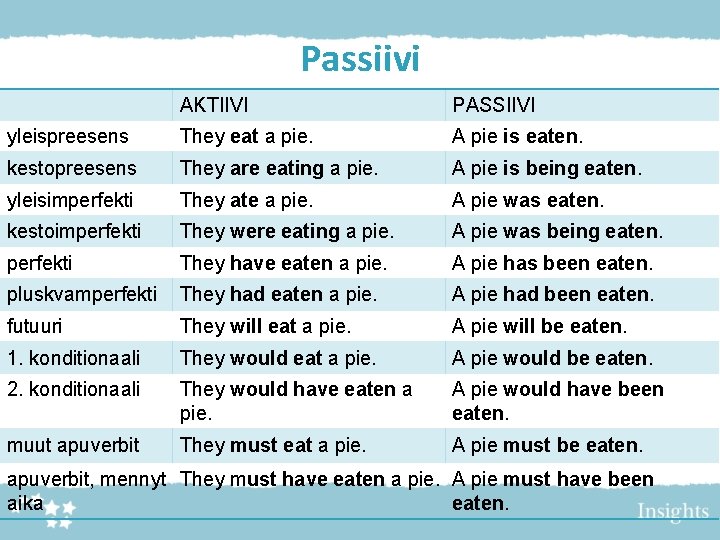
Passiivi AKTIIVI PASSIIVI yleispreesens They eat a pie. A pie is eaten. kestopreesens They are eating a pie. A pie is being eaten. yleisimperfekti They ate a pie. A pie was eaten. kestoimperfekti They were eating a pie. A pie was being eaten. perfekti They have eaten a pie. A pie has been eaten. pluskvamperfekti They had eaten a pie. A pie had been eaten. futuuri They will eat a pie. A pie will be eaten. 1. konditionaali They would eat a pie. A pie would be eaten. 2. konditionaali They would have eaten a pie. A pie would have been eaten. muut apuverbit They must eat a pie. A pie must be eaten. apuverbit, mennyt They must have eaten a pie. A pie must have been aika eaten.
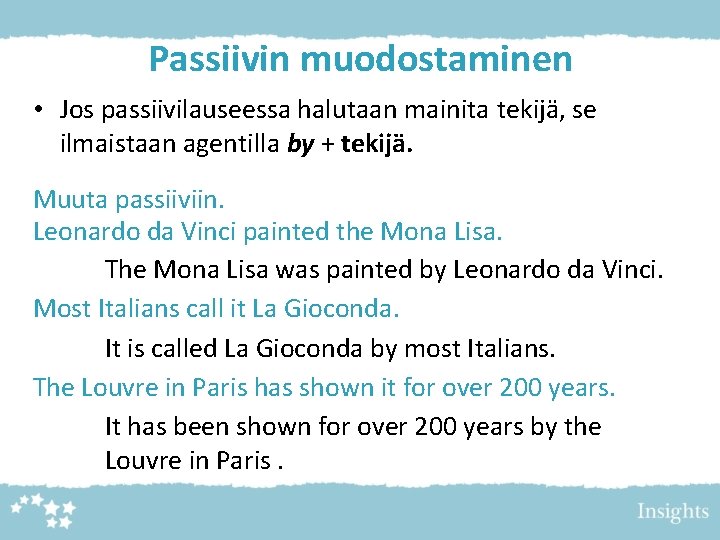
Passiivin muodostaminen • Jos passiivilauseessa halutaan mainita tekijä, se ilmaistaan agentilla by + tekijä. Muuta passiiviin. Leonardo da Vinci painted the Mona Lisa. The Mona Lisa was painted by Leonardo da Vinci. Most Italians call it La Gioconda. It is called La Gioconda by most Italians. The Louvre in Paris has shown it for over 200 years. It has been shown for over 200 years by the Louvre in Paris.
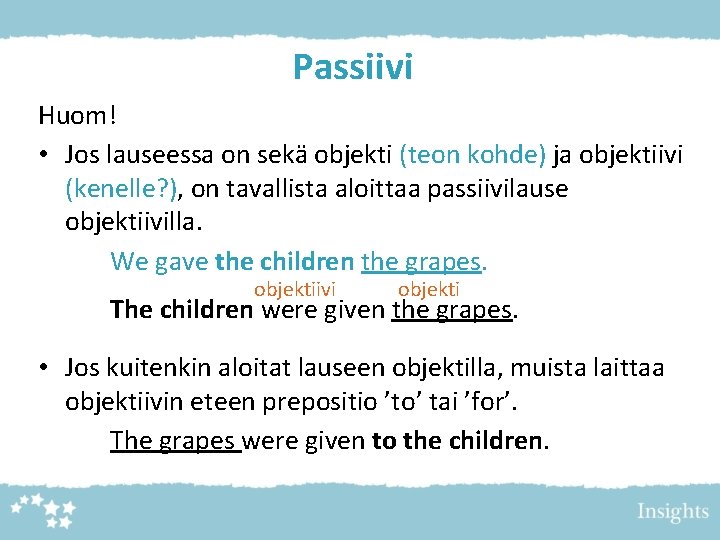
Passiivi Huom! • Jos lauseessa on sekä objekti (teon kohde) ja objektiivi (kenelle? ), on tavallista aloittaa passiivilause objektiivilla. We gave the children the grapes. objektiivi objekti The children were given the grapes. • Jos kuitenkin aloitat lauseen objektilla, muista laittaa objektiivin eteen prepositio ’to’ tai ’for’. The grapes were given to the children.
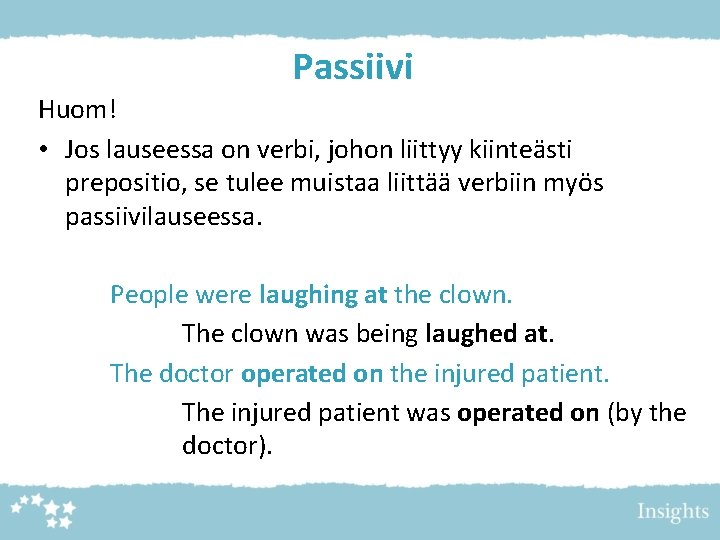
Passiivi Huom! • Jos lauseessa on verbi, johon liittyy kiinteästi prepositio, se tulee muistaa liittää verbiin myös passiivilauseessa. People were laughing at the clown. The clown was being laughed at. The doctor operated on the injured patient. The injured patient was operated on (by the doctor).
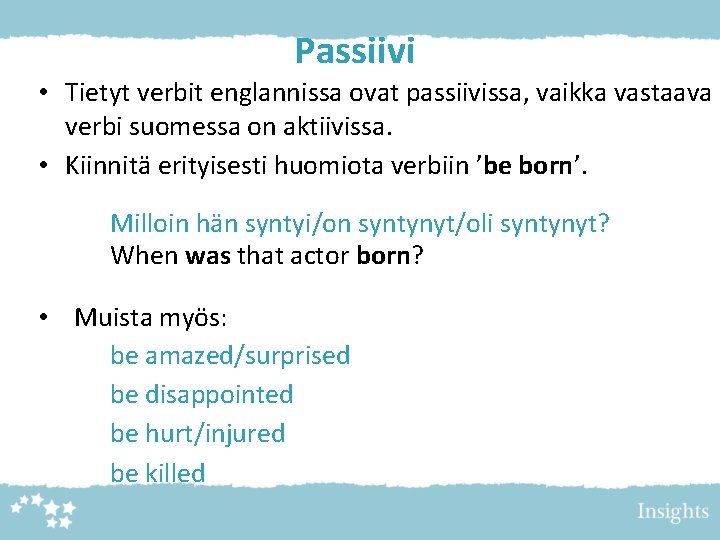
Passiivi • Tietyt verbit englannissa ovat passiivissa, vaikka vastaava verbi suomessa on aktiivissa. • Kiinnitä erityisesti huomiota verbiin ’be born’. Milloin hän syntyi/on syntynyt/oli syntynyt? When was that actor born? • Muista myös: be amazed/surprised be disappointed be hurt/injured be killed
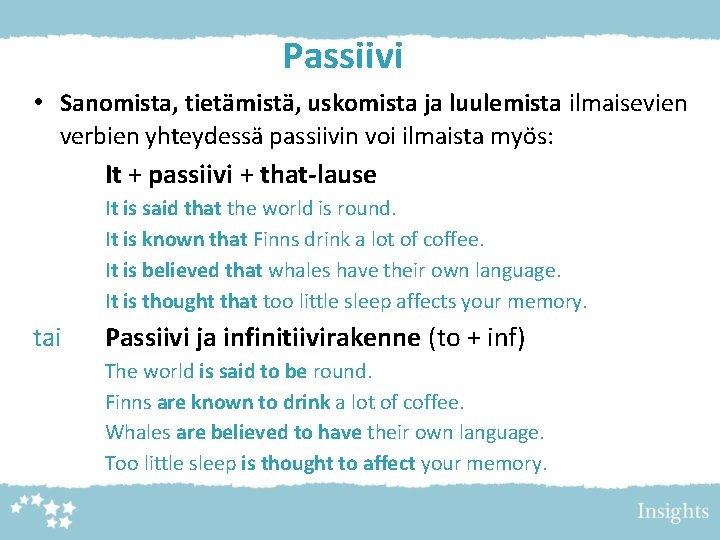
Passiivi • Sanomista, tietämistä, uskomista ja luulemista ilmaisevien verbien yhteydessä passiivin voi ilmaista myös: It + passiivi + that-lause It is said that the world is round. It is known that Finns drink a lot of coffee. It is believed that whales have their own language. It is thought that too little sleep affects your memory. tai Passiivi ja infinitiivirakenne (to + inf) The world is said to be round. Finns are known to drink a lot of coffee. Whales are believed to have their own language. Too little sleep is thought to affect your memory.
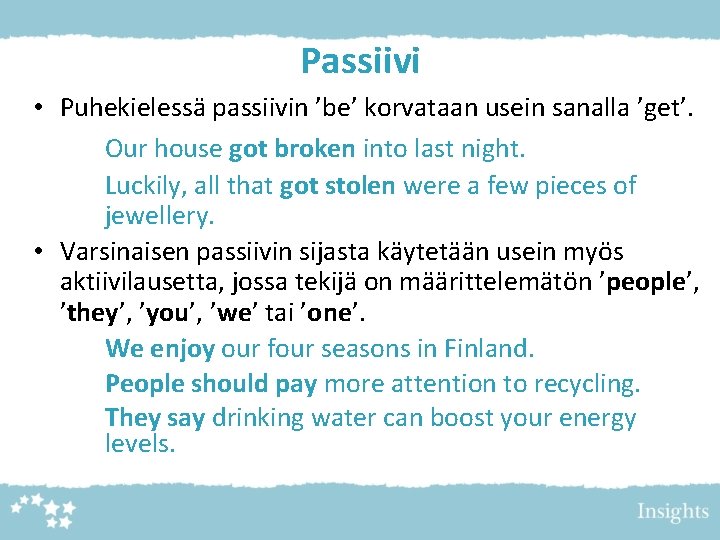
Passiivi • Puhekielessä passiivin ’be’ korvataan usein sanalla ’get’. Our house got broken into last night. Luckily, all that got stolen were a few pieces of jewellery. • Varsinaisen passiivin sijasta käytetään usein myös aktiivilausetta, jossa tekijä on määrittelemätön ’people’, ’they’, ’you’, ’we’ tai ’one’. We enjoy our four seasons in Finland. People should pay more attention to recycling. They say drinking water can boost your energy levels.
- Slides: 13