
Pass and Discharge Assessment QPRT Pass Procedures for
- Slides: 10
Pass and Discharge Assessment
QPRT Pass Procedures for Residential MH Serving Children & Adolescents Pass - scheduled time off campus without Devereux staff or treatment professionals (including case managers and other agency workers) present Includes day and overnight passes Excludes off-campus employment or education For all clients regardless of their level of suicide risk
QPRT Pass Procedures – cont. Upon admission, parent(s)/guardian(s)/ caregiver(s) receive pass guidelines. On the day of the client’s pass – Staff notifies clinician of behaviors, incidents or events that may affect level of suicide risk. – Clinician completes QPRT if indicated. – Clinician determines appropriateness of pass and notifies staff of appropriate action. – If pass is revoked, clinician offers parents alternatives for planned visitation.
QPRT Pass Procedures – cont. If pass is mandated by court, funder, or is insisted upon by a parent/guardian but AMA, the Center contacts Corporate Legal Department to determine appropriate action. Staff follows center’s pass procedures: – provides parents/guardians with copy of pass guidelines – hands client off to parents/guardians directly – receives client from parents/guardians directly upon return – debriefs with client upon return
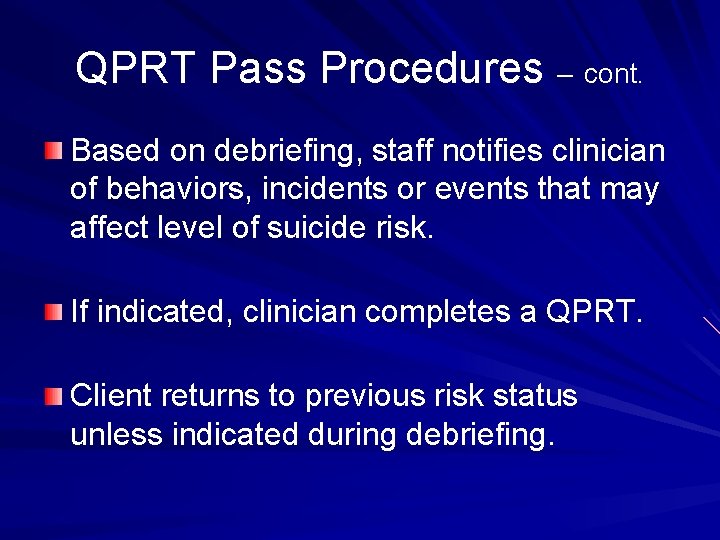
QPRT Pass Procedures – cont. Based on debriefing, staff notifies clinician of behaviors, incidents or events that may affect level of suicide risk. If indicated, clinician completes a QPRT. Client returns to previous risk status unless indicated during debriefing.
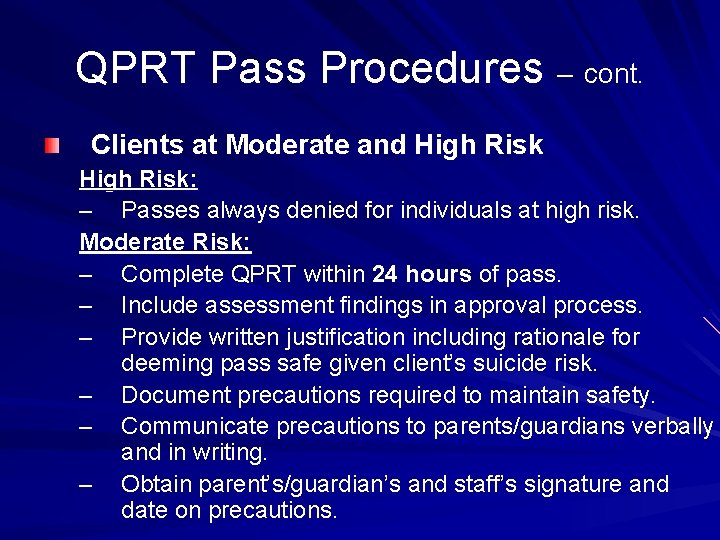
QPRT Pass Procedures – cont. Clients at Moderate and High Risk: – Passes always denied for individuals at high risk. Moderate Risk: – Complete QPRT within 24 hours of pass. – Include assessment findings in approval process. – Provide written justification including rationale for deeming pass safe given client’s suicide risk. – Document precautions required to maintain safety. – Communicate precautions to parents/guardians verbally and in writing. – Obtain parent’s/guardian’s and staff’s signature and date on precautions.
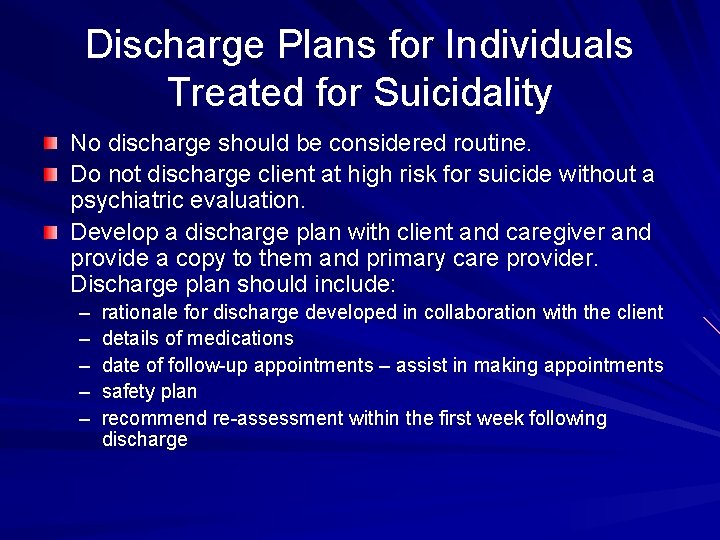
Discharge Plans for Individuals Treated for Suicidality No discharge should be considered routine. Do not discharge client at high risk for suicide without a psychiatric evaluation. Develop a discharge plan with client and caregiver and provide a copy to them and primary care provider. Discharge plan should include: – – – rationale for discharge developed in collaboration with the client details of medications date of follow-up appointments – assist in making appointments safety plan recommend re-assessment within the first week following discharge
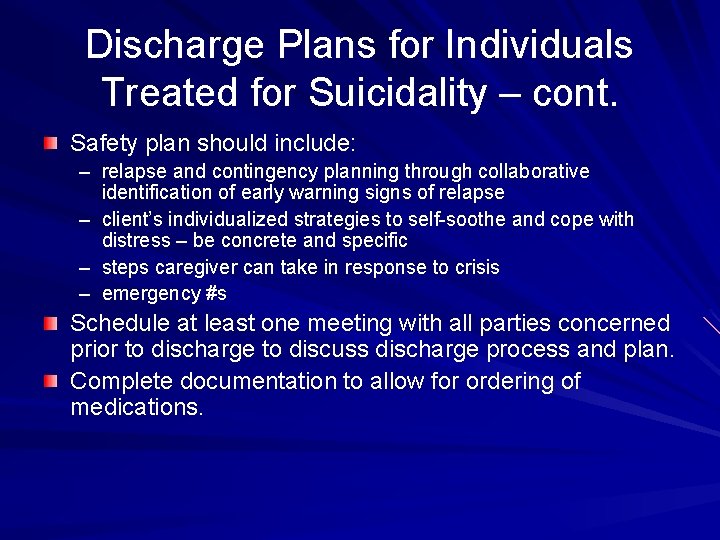
Discharge Plans for Individuals Treated for Suicidality – cont. Safety plan should include: – relapse and contingency planning through collaborative identification of early warning signs of relapse – client’s individualized strategies to self-soothe and cope with distress – be concrete and specific – steps caregiver can take in response to crisis – emergency #s Schedule at least one meeting with all parties concerned prior to discharge to discuss discharge process and plan. Complete documentation to allow for ordering of medications.
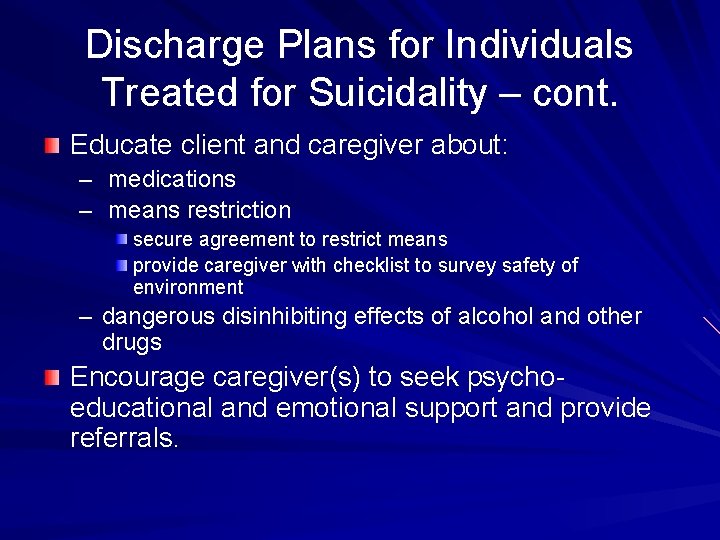
Discharge Plans for Individuals Treated for Suicidality – cont. Educate client and caregiver about: – medications – means restriction secure agreement to restrict means provide caregiver with checklist to survey safety of environment – dangerous disinhibiting effects of alcohol and other drugs Encourage caregiver(s) to seek psychoeducational and emotional support and provide referrals.
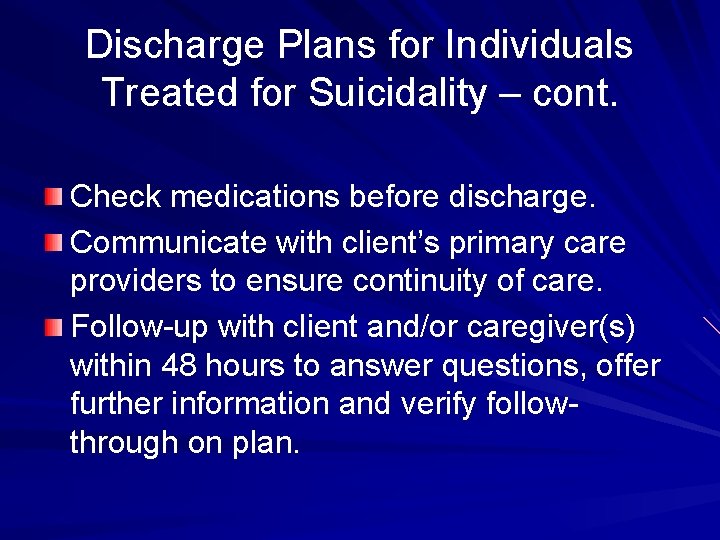
Discharge Plans for Individuals Treated for Suicidality – cont. Check medications before discharge. Communicate with client’s primary care providers to ensure continuity of care. Follow-up with client and/or caregiver(s) within 48 hours to answer questions, offer further information and verify followthrough on plan.