
PASRR TRAINING 2020 Behavioral Consulting Services Inc Preadmission
PASRR TRAINING 2020 Behavioral Consulting Services, Inc

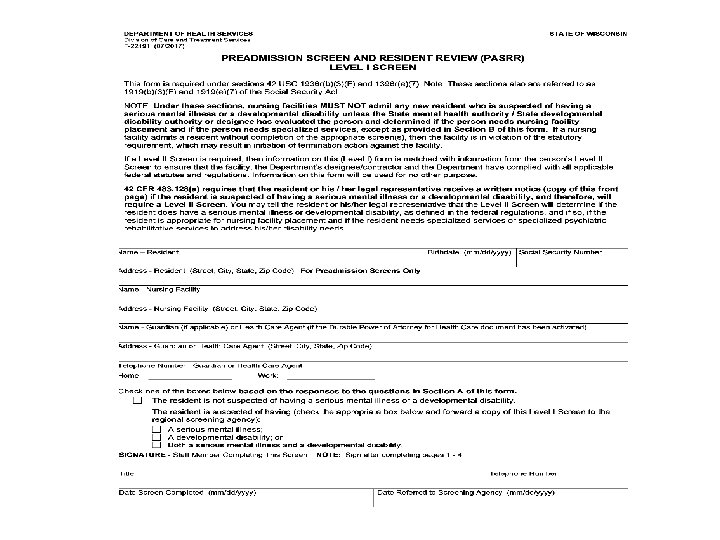
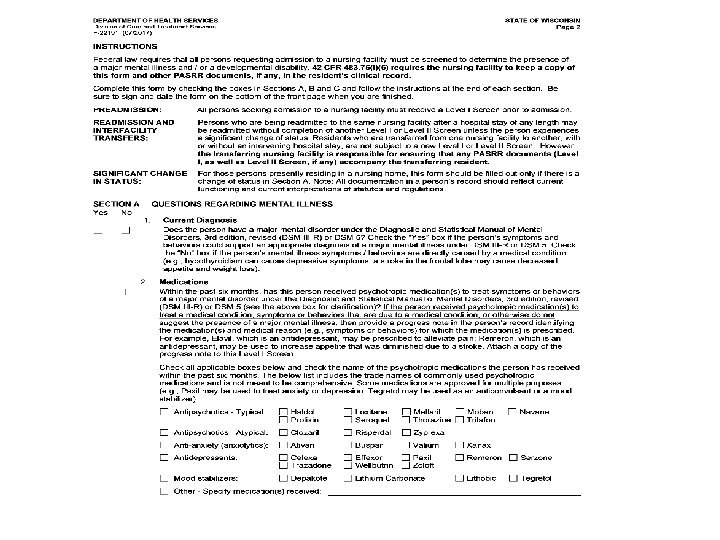
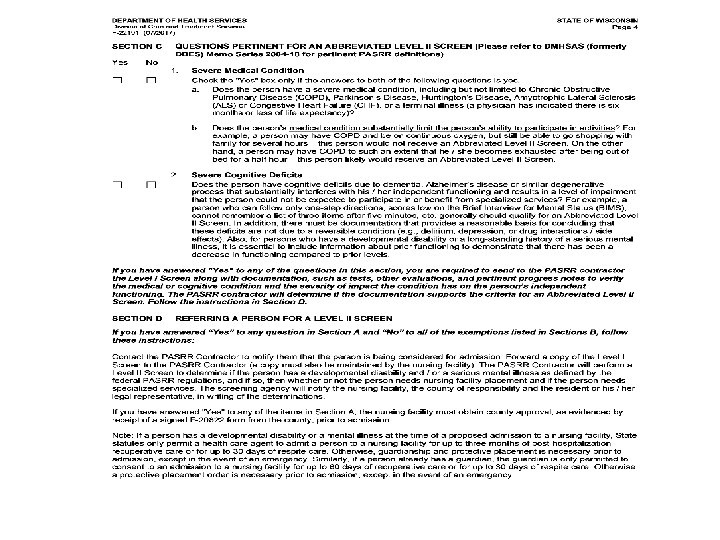
Preadmission Screening and Resident Review (PASARR) is a federally mandated process to help ensure that individuals are not inappropriately placed in nursing homes for long term care. PASARR requires that all applicants to Medicaid-certified nursing facilities must be 1) evaluated for a mental illness and/or development disability; 2) offered the most appropriate setting for their needs; and 3) receive the services they need in that setting. All applicants to Medicaid-certified nursing facilities must be given a preliminary assessment to determine whether they might have a mental illness or development disability. This screening is called a "Level 1" screen. Individuals who test positive at level one then require a more in-depth screening called a "Level 2" PASARR. The results of the Level 2 evaluation determine need, appropriate setting, and need for specialized treatment for the individual's mental illness or intellectual disability.
CONTACT INFORMATION Behavioral Consulting Services 1240 13 th Ave Grafton, WI 53024 BCS website: www. behavioralcs. com Phone: 262 -376 -1223 Fax: 262 -376 -0920 Website to download Wisconsin Level I screens: dhs. wisconsin. gov/forms Search form number: F-22191 For PASRR definitions and resources go to dhs. wisconsin. gov and search PASRR.
PASRR Requirements • • Per State of Wisconsin DHS website: PASRR REQUIREMENTS Purpose: To ensure that individuals who have a mental illness or who have an intellectual/developmental disability (mental retardation): Are placed in a nursing facility only when their needs: a) Cannot be met in an appropriate community placement (note: there are many persons who may qualify for a Title 19 care level whose needs can be met in an appropriate community placement --- PASRR prohibits the admission or retention of such individuals in a nursing facility under circumstances described later); and b) Do not require the specialized care and treatment of an inpatient psychiatric hospital or ICF/IID placement. 2) Receive appropriate treatment (specialized services) for their mental illness or developmental disability if their independent functioning is limited due to their disability. Applicability: The federal PASRR statutes and regulations apply to all individuals who are seeking admission to a nursing facility and all residents of a nursing facility, irrespective of source of payment. The PASRR process only applies to Medicaid certified (Title 19) nursing facilities. PASRR does not apply to hospitals, Medicare certified only nursing facilities, DHS 132 licensed only nursing homes, ICFs/IID, or group homes (CBRFs and adult family homes). PASRR will apply to individuals who are seeking admission to a nursing facility, but currently reside in a group home, ICF/IID, etc.
OUTLINE FOR TODAY • Why are Level I screens necessary? • Who is responsible for the completion of Level I screens? • When should a Level I referral be made for a Level II? (diagnoses and time -frames) • Discuss encrypted emails (how is this going? ) • Should situational depression (also known as adjustment disorder or reactive depression)be referred for a Level II? • When should anxiety with a PRN medication be referred? • Should dementia with depression (anxiety/psychosis) be referred for a Level II? • What are Specialized Services/Specialized Psychiatric Rehabilitative Services. Where to finds resources for these determinations on the state website. • What documentation is needed for a Level II? (Level I, dx list, med list, psych eval/notes, nursing notes, social history, face-sheet, H&P, parts of MDS)
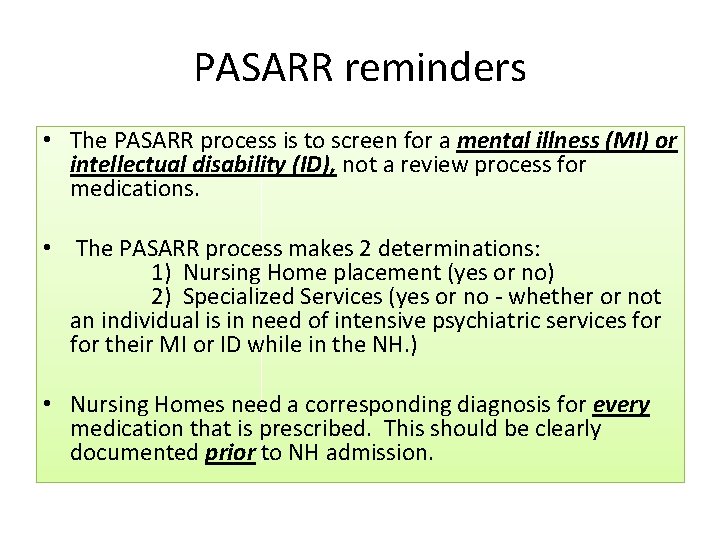
PASARR reminders • The PASARR process is to screen for a mental illness (MI) or intellectual disability (ID), not a review process for medications. • The PASARR process makes 2 determinations: 1) Nursing Home placement (yes or no) 2) Specialized Services (yes or no - whether or not an individual is in need of intensive psychiatric services for their MI or ID while in the NH. ) • Nursing Homes need a corresponding diagnosis for every medication that is prescribed. This should be clearly documented prior to NH admission.

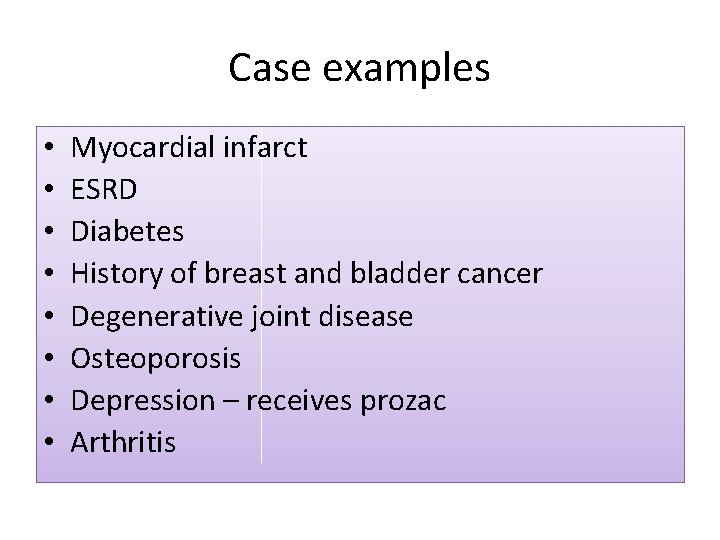
Case examples • • Myocardial infarct ESRD Diabetes History of breast and bladder cancer Degenerative joint disease Osteoporosis Depression – receives prozac Arthritis
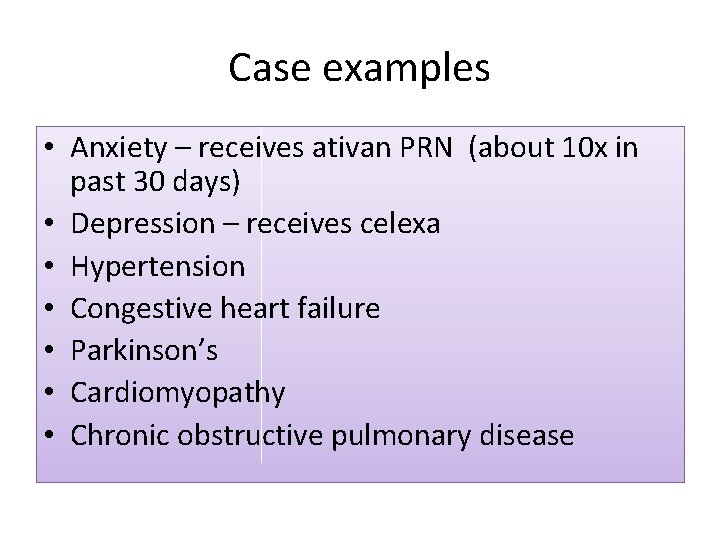
Case examples • Anxiety – receives ativan PRN (about 10 x in past 30 days) • Depression – receives celexa • Hypertension • Congestive heart failure • Parkinson’s • Cardiomyopathy • Chronic obstructive pulmonary disease
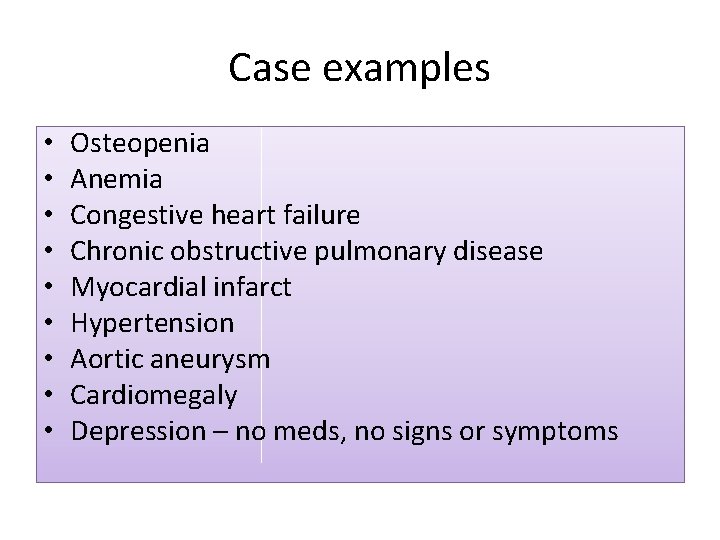
Case examples • • • Osteopenia Anemia Congestive heart failure Chronic obstructive pulmonary disease Myocardial infarct Hypertension Aortic aneurysm Cardiomegaly Depression – no meds, no signs or symptoms
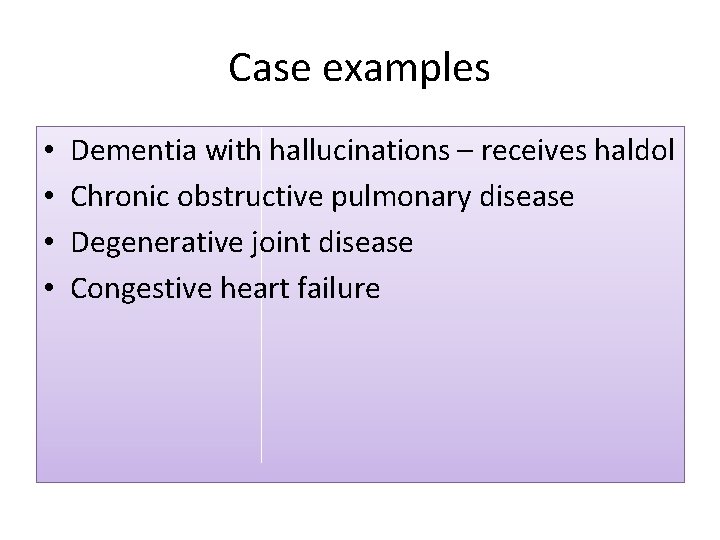
Case examples • • Dementia with hallucinations – receives haldol Chronic obstructive pulmonary disease Degenerative joint disease Congestive heart failure
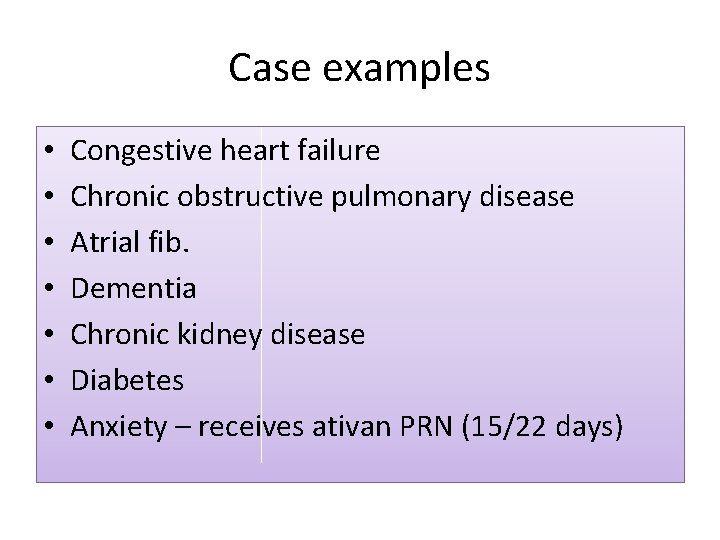
Case examples • • Congestive heart failure Chronic obstructive pulmonary disease Atrial fib. Dementia Chronic kidney disease Diabetes Anxiety – receives ativan PRN (15/22 days)
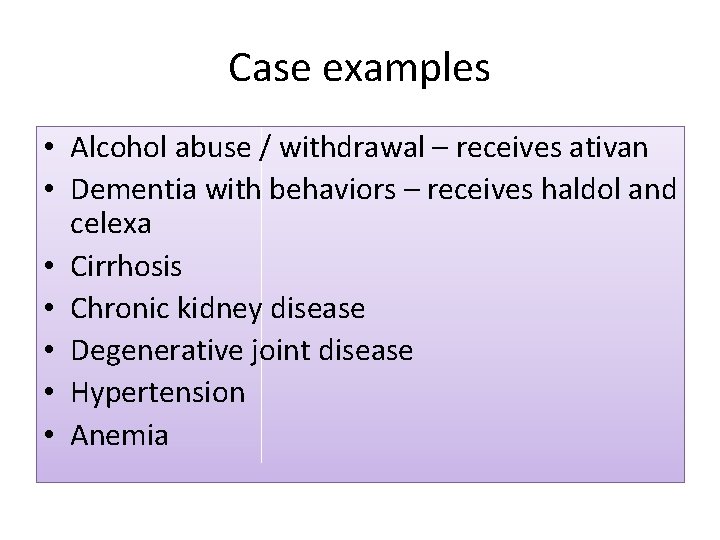
Case examples • Alcohol abuse / withdrawal – receives ativan • Dementia with behaviors – receives haldol and celexa • Cirrhosis • Chronic kidney disease • Degenerative joint disease • Hypertension • Anemia
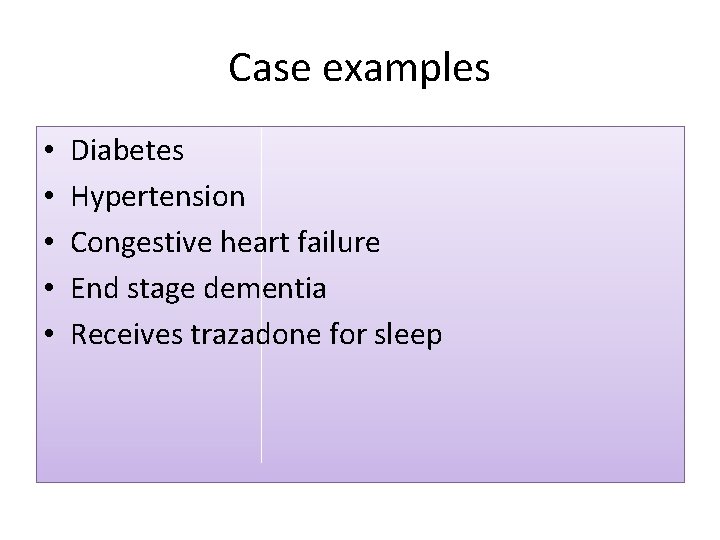
Case examples • • • Diabetes Hypertension Congestive heart failure End stage dementia Receives trazadone for sleep
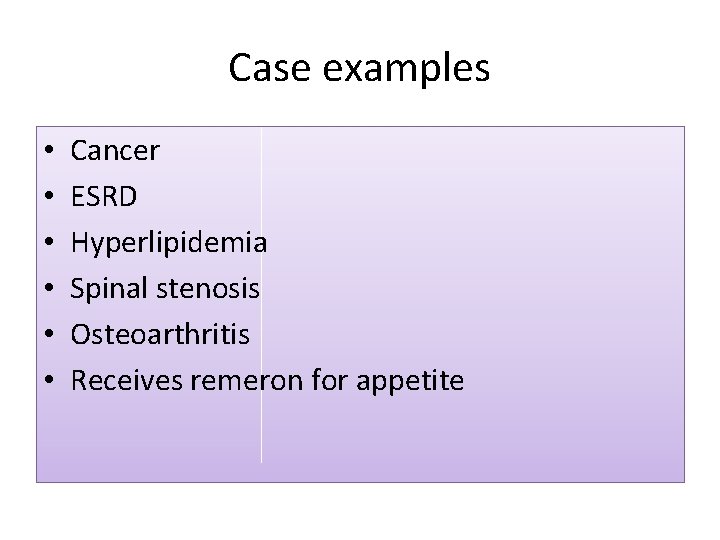
Case examples • • • Cancer ESRD Hyperlipidemia Spinal stenosis Osteoarthritis Receives remeron for appetite
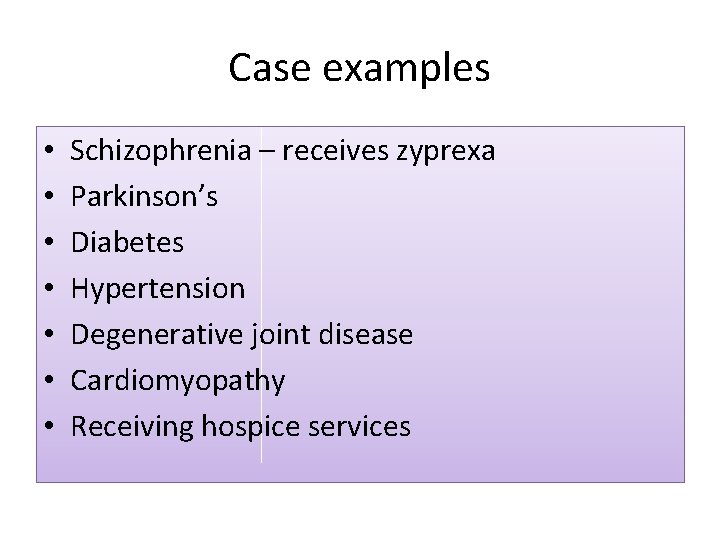
Case examples • • Schizophrenia – receives zyprexa Parkinson’s Diabetes Hypertension Degenerative joint disease Cardiomyopathy Receiving hospice services
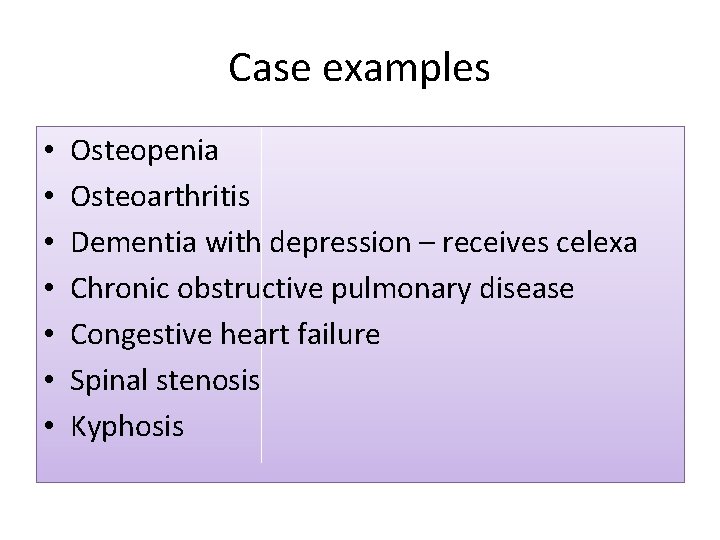
Case examples • • Osteopenia Osteoarthritis Dementia with depression – receives celexa Chronic obstructive pulmonary disease Congestive heart failure Spinal stenosis Kyphosis
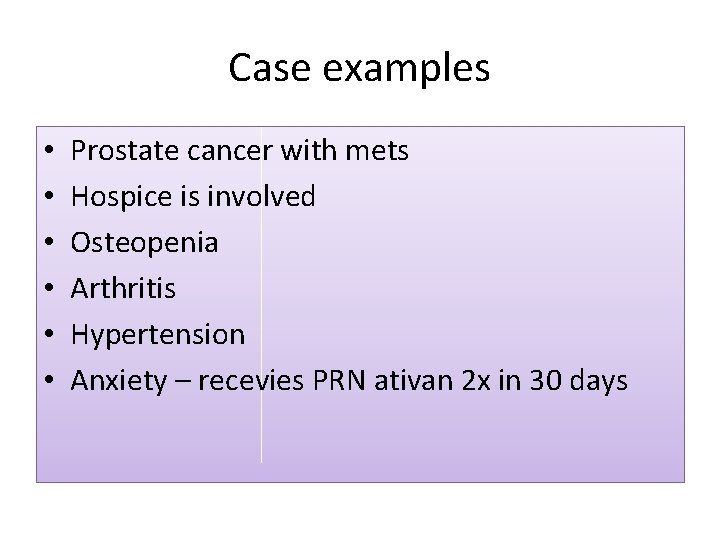
Case examples • • • Prostate cancer with mets Hospice is involved Osteopenia Arthritis Hypertension Anxiety – recevies PRN ativan 2 x in 30 days
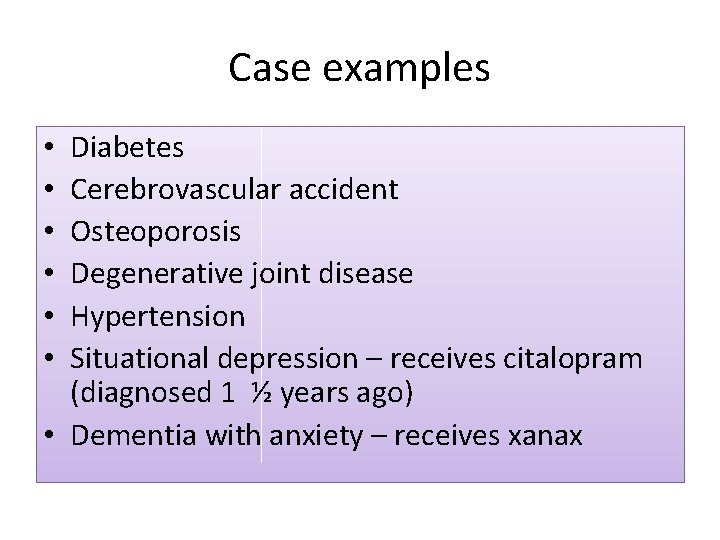
Case examples Diabetes Cerebrovascular accident Osteoporosis Degenerative joint disease Hypertension Situational depression – receives citalopram (diagnosed 1 ½ years ago) • Dementia with anxiety – receives xanax • • •
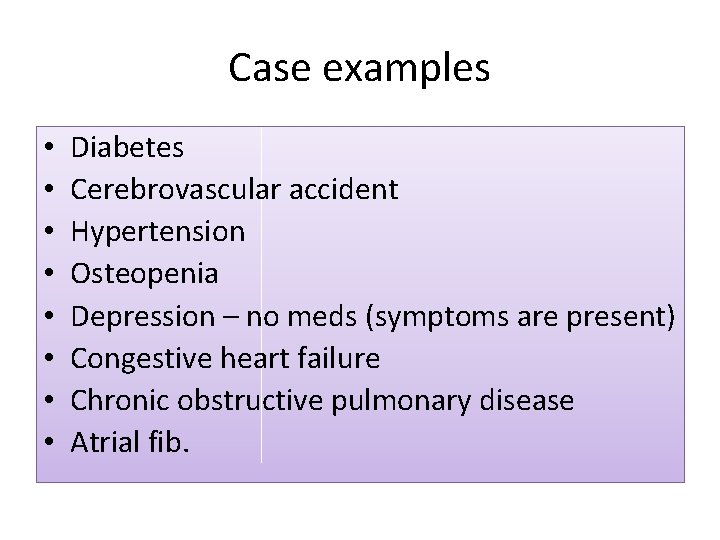
Case examples • • Diabetes Cerebrovascular accident Hypertension Osteopenia Depression – no meds (symptoms are present) Congestive heart failure Chronic obstructive pulmonary disease Atrial fib.
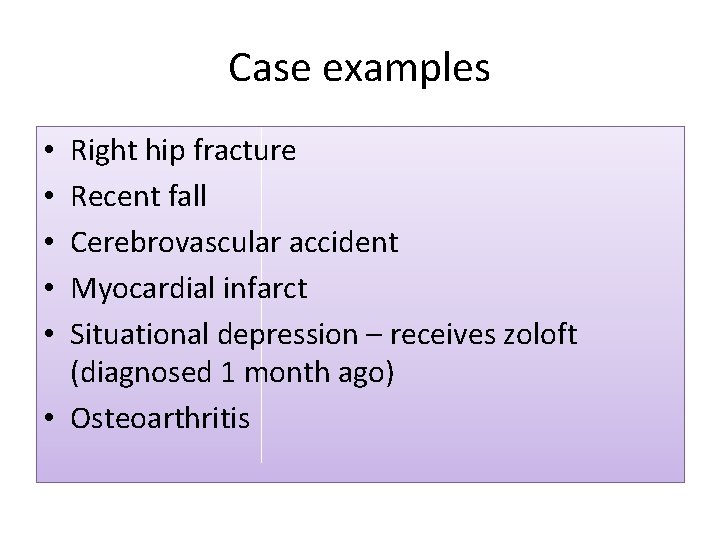
Case examples Right hip fracture Recent fall Cerebrovascular accident Myocardial infarct Situational depression – receives zoloft (diagnosed 1 month ago) • Osteoarthritis • • •
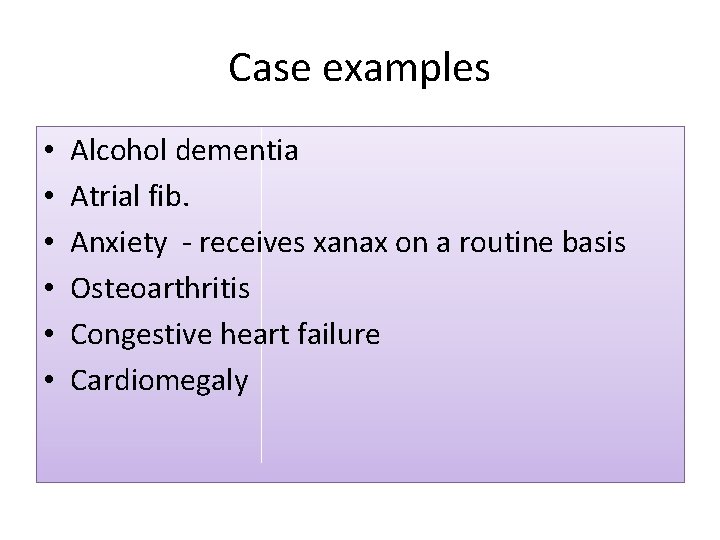
Case examples • • • Alcohol dementia Atrial fib. Anxiety - receives xanax on a routine basis Osteoarthritis Congestive heart failure Cardiomegaly
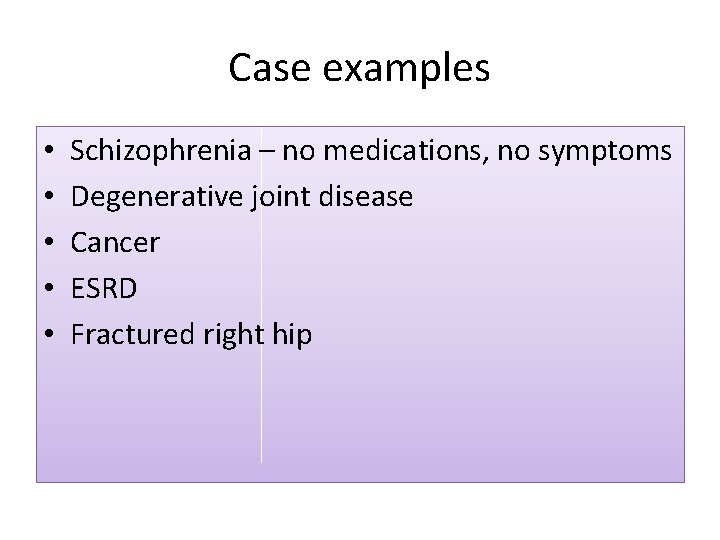
Case examples • • • Schizophrenia – no medications, no symptoms Degenerative joint disease Cancer ESRD Fractured right hip
- Slides: 26