
Pascals Triangle The Stepping Stone Game How many
- Slides: 15
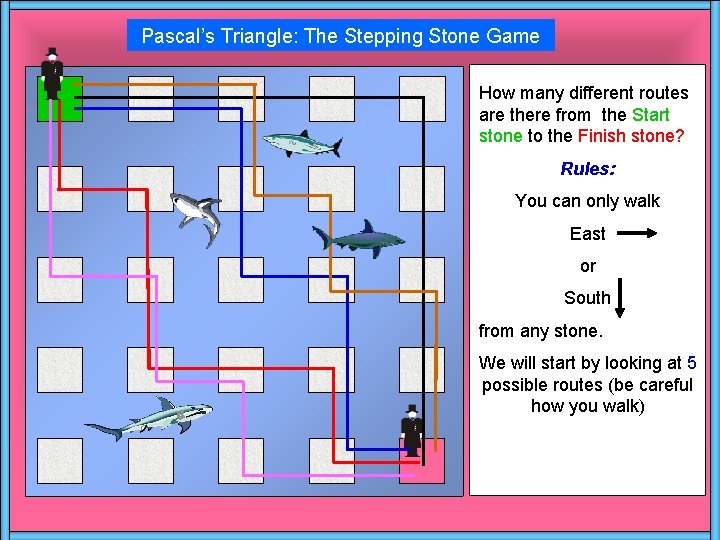
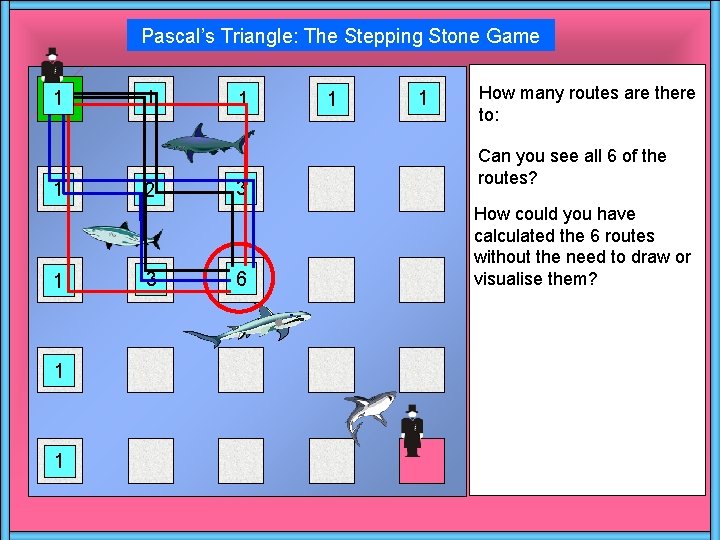
Pascal’s Triangle: The Stepping Stone Game How many different routes are there from the Start stone to the Finish stone? Stepping Stone Game Rules: You can only walk East or South from any stone. We will start by looking at 5 possible routes (be careful how you walk)
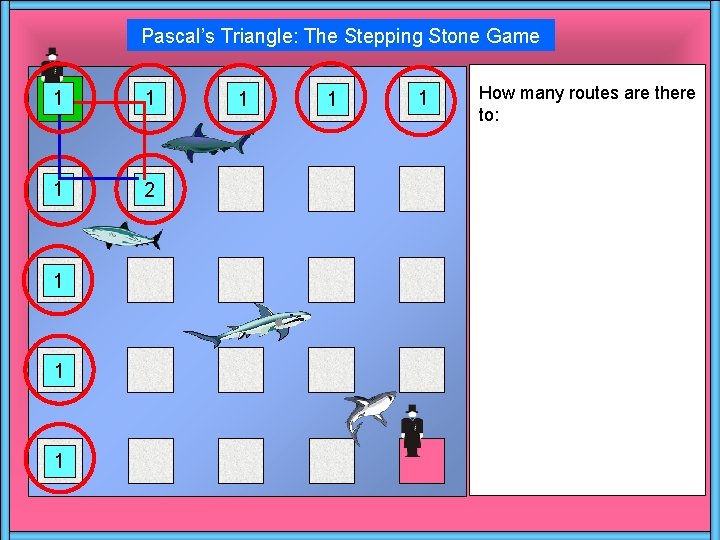
Pascal’s Triangle: The Stepping Stone Game 1 1 1 2 1 1 1 How many routes are there to:
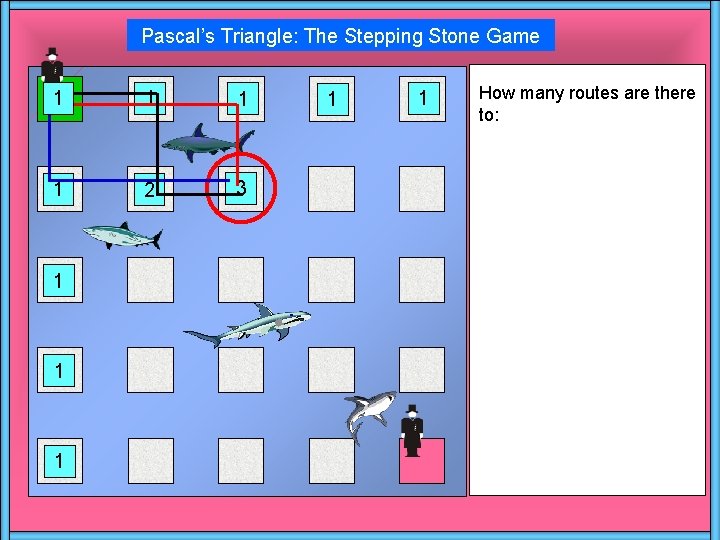
Pascal’s Triangle: The Stepping Stone Game 1 1 2 3 1 1 1 How many routes are there to:
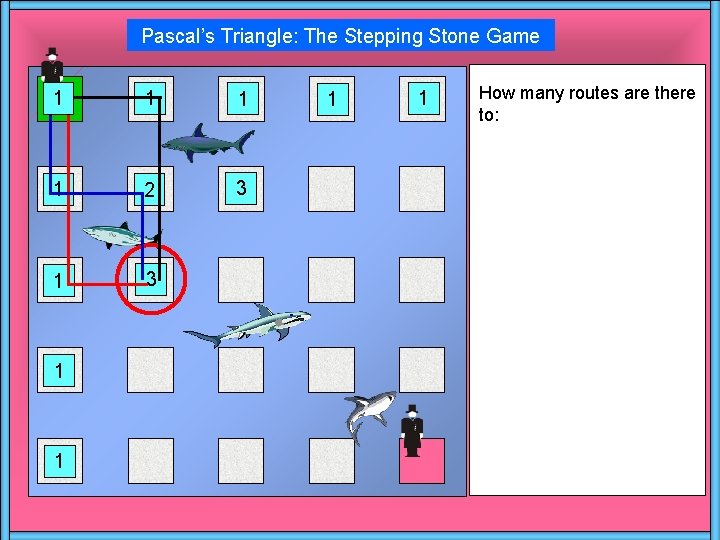
Pascal’s Triangle: The Stepping Stone Game 1 1 2 3 1 1 1 1 How many routes are there to:
Pascal’s Triangle: The Stepping Stone Game 1 1 1 2 3 1 3 6 1 1 How many routes are there to: Can you see all 6 of the routes? How could you have calculated the 6 routes without the need to draw or visualise them?
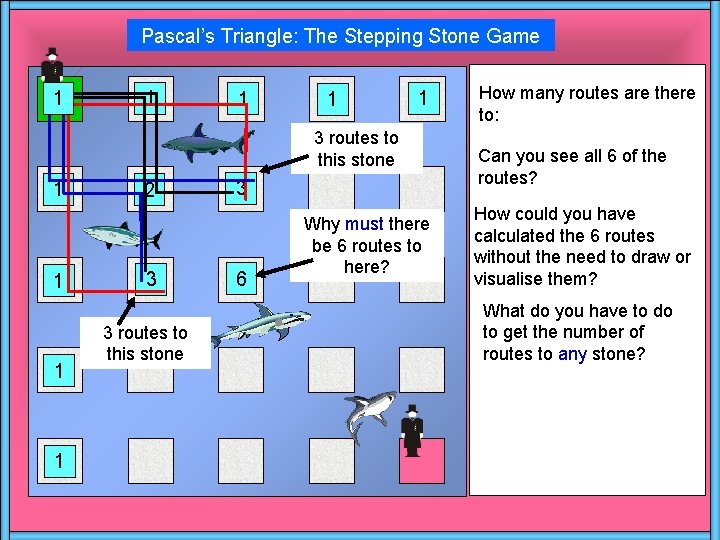
Pascal’s Triangle: The Stepping Stone Game 1 1 1 3 routes to this stone 1 1 2 3 3 routes to this stone 3 6 Why must there be 6 routes to here? How many routes are there to: Can you see all 6 of the routes? How could you have calculated the 6 routes without the need to draw or visualise them? What do you have to do to get the number of routes to any stone?
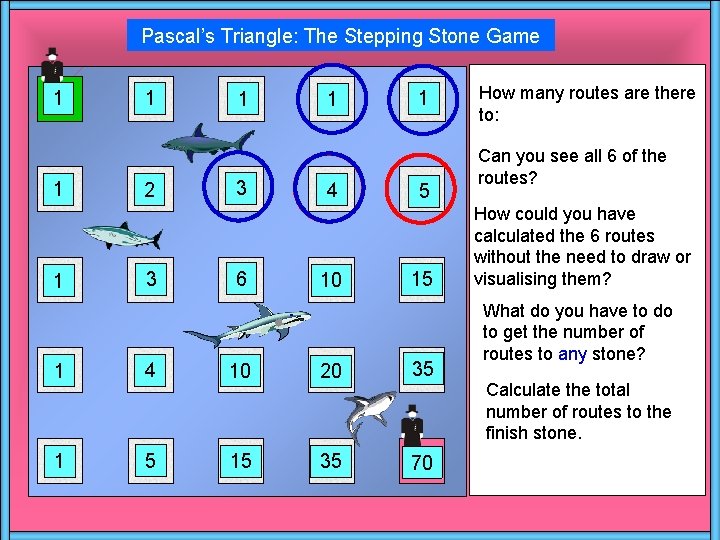
Pascal’s Triangle: The Stepping Stone Game 1 1 2 3 1 3 6 1 4 10 1 5 15 1 4 10 20 35 1 5 15 35 70 How many routes are there to: Can you see all 6 of the routes? How could you have calculated the 6 routes without the need to draw or visualising them? What do you have to do to get the number of routes to any stone? Calculate the total number of routes to the finish stone.
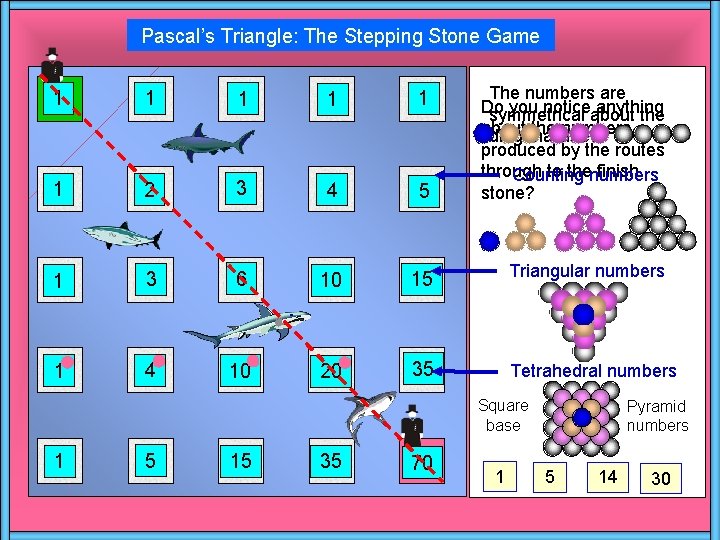
Pascal’s Triangle: The Stepping Stone Game The numbers are Do you noticeabout anything symmetrical the about the numbers diagonal line. produced by the routes through to thenumbers finish Counting stone? 1 1 1 2 3 4 5 1 3 6 10 15 Triangular numbers 1 4 10 20 35 Tetrahedral numbers Square base 1 5 15 35 70 1 Pyramid numbers 5 14 30
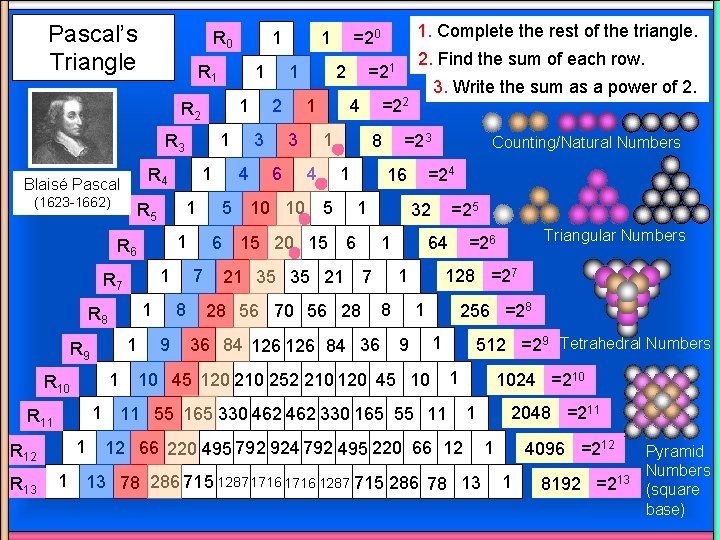
Pascal’s Triangle 1 R 1 1 R 3 (1623 -1662) 1 R 5 1 R 6 1 R 7 1 R 8 1 R 9 1 R 10 1 R 12 R 13 1 9 6 7 8 5 1 3 4 1 R 4 1 2 1 R 2 Blaisé Pascal 1 R 0 2 6 10 10 8 1 5 15 20 15 3. Write the sum as a power of 2. =22 1 4 2. Find the sum of each row. =21 4 1 3 1. Complete the rest of the triangle. =20 =23 16 1 6 21 35 35 21 =24 32 1 36 84 126 84 36 =25 64 1 7 28 56 70 56 28 Counting/Natural Numbers 128 =27 1 8 9 256 =28 1 10 45 120 210 252 210 120 45 10 512 =29 Tetrahedral Numbers 1 Pascal’s 1 66 220 495 Triangle 792 924 792 495 220 66 12 1 11 55 165 330 462 330 165 55 11 12 Triangular Numbers =26 1 13 78 286 715 1287 1716 1287 715 286 78 13 1024 =210 2048 =211 4096 =212 1 8192 =213 Pyramid Numbers (square base)
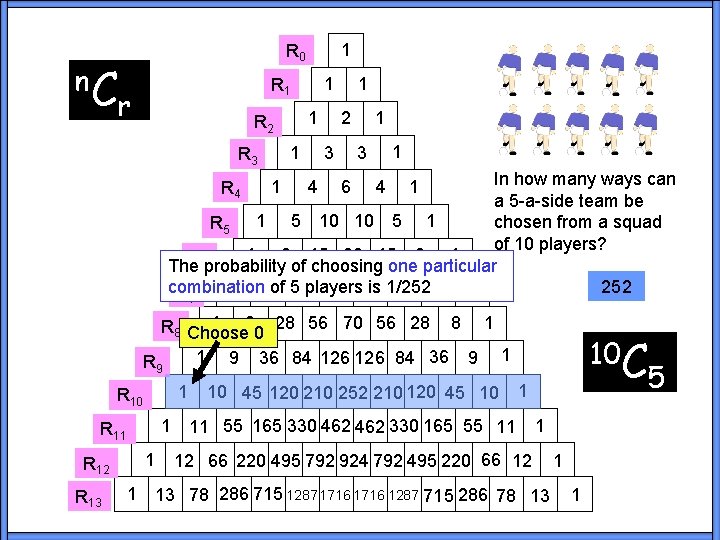
n. C 1 R 0 1 R 1 r 1 R 2 1 R 3 1 2 3 1 1 3 In how many ways can a 5 -a-side team be chosen from a squad R 5 10 10 5 1 of 10 players? 1 6 15 20 15 6 1 The. R 6 probability of choosing one particular 252 combination is 1/252 1 7 of 521 players 35 35 21 7 1 R R 4 1 4 6 4 1 7 1 8 28 56 70 56 28 8 1 R 8 Choose 0 1 9 36 84 126 84 36 9 1 R 10 1 R 12 R 13 1 10 45 120 210 252 210 120 45 10 1 11 55 165 330 462 330 165 55 11 5 -a-side 10 C 1 12 66 220 495 792 924 792 495 220 66 12 1 13 78 286 715 1287 1716 1287 715 286 78 13 1 1 5
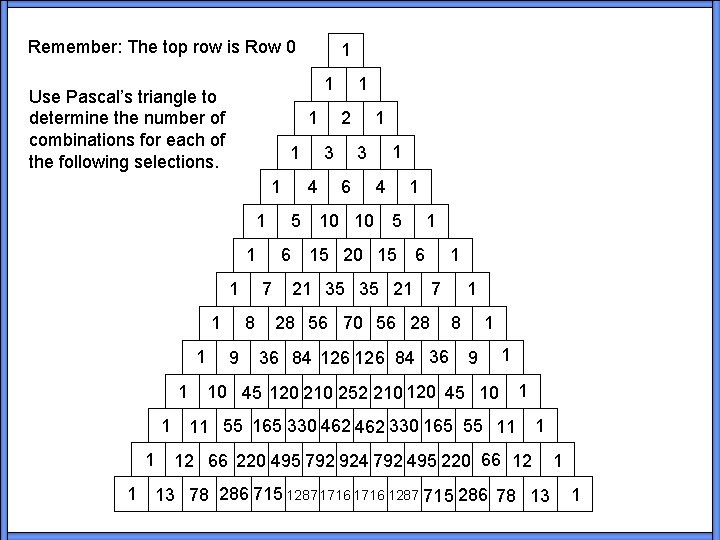
Remember: The top row is Row 0 1 Use Pascal’s triangle to determine the number of combinations for each of the following selections. 1 1 1 7 8 9 6 2 3 4 5 1 1 1 3 6 10 10 4 1 5 15 20 15 1 6 21 35 35 21 1 1 7 28 56 70 56 28 36 84 126 84 36 1 8 9 1 10 45 120 210 252 210 120 45 10 1 11 55 165 330 462 330 165 55 11 1 12 66 220 495 792 924 792 495 220 66 12 1 13 78 286 715 1287 1716 1287 715 286 78 13 1 1
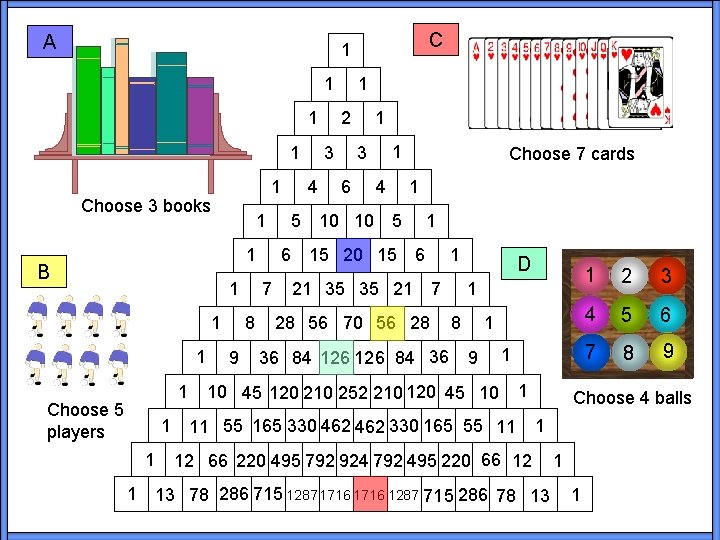
A C 1 1 1 Choose 3 books 1 1 B 1 1 Choose 5 players 1 1 7 8 9 6 2 3 4 5 1 1 1 3 6 10 10 4 Choose 7 cards 1 5 15 20 15 1 6 21 35 35 21 1 1 7 28 56 70 56 28 36 84 126 84 36 D 1 8 9 1 10 45 120 210 252 210 120 45 10 Mix 1 11 55 165 330 462 330 165 55 11 1 2 3 4 5 6 7 8 9 Choose 4 balls 1 12 66 220 495 792 924 792 495 220 66 12 1 13 78 286 715 1287 1716 1287 715 286 78 13 1 1
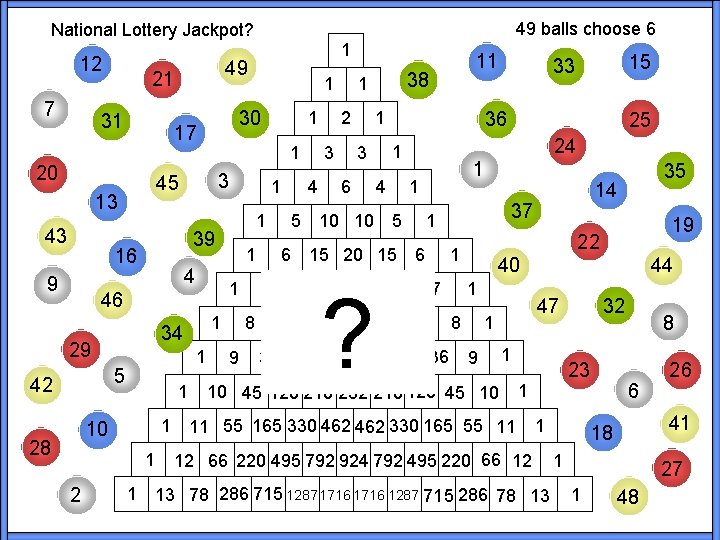
49 balls choose 6 National Lottery Jackpot? 12 7 9 3 4 1 10 28 1 2 1 34 5 42 1 1 46 29 1 1 39 16 1 1 45 13 1 30 17 20 43 49 21 31 1 7 8 9 5 6 3 4 38 1 2 11 36 1 6 10 10 4 25 24 1 3 15 33 1 1 5 15 20 15 6 21 35 35 21 ? 36 84 126 84 36 1 8 9 32 47 1 10 45 120 210 252 210 120 45 10 23 1 11 55 165 330 462 330 165 55 11 Lottery 44 40 1 7 19 22 1 28 56 70 56 28 14 37 1 35 1 12 66 220 495 792 924 792 495 220 66 12 1 13 78 286 715 1287 1716 1287 715 286 78 13 8 6 26 41 18 1 27 1 48
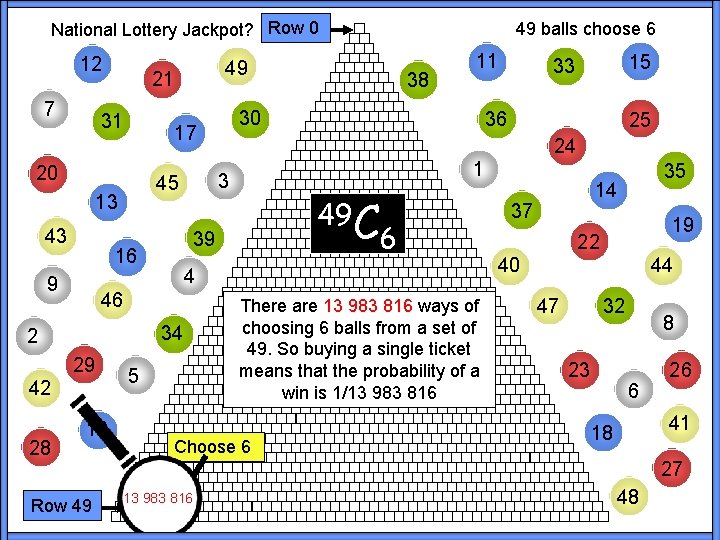
National Lottery Jackpot? Row 0 12 7 13 9 34 29 42 28 10 Row 49 49 C 6 4 46 2 36 5 25 1 39 16 15 33 24 3 45 38 11 30 17 20 43 49 21 31 49 balls choose 6 There are 13 983 816 ways of choosing 6 balls from a set of 49. So buying a single ticket means that the probability of a win is 1/13 983 816 Choose 6 35 14 37 19 22 44 40 32 47 23 8 6 26 41 18 27 13 983 816 48
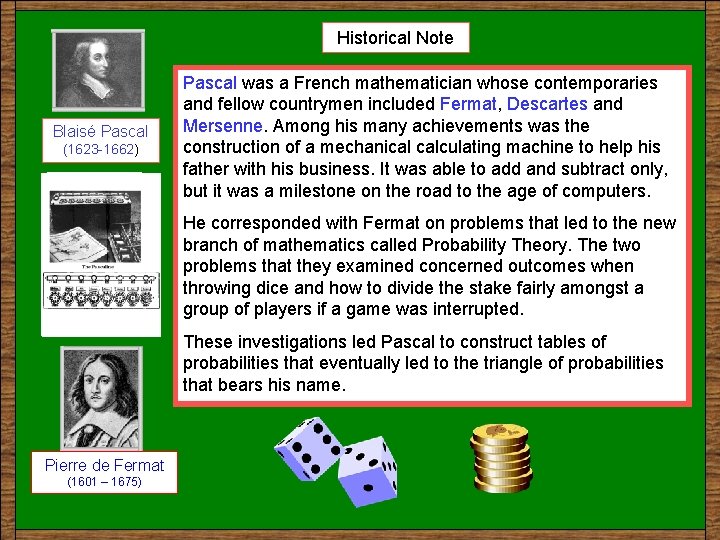
Historical Note Blaisé Pascal (1623 -1662) Pascal was a French mathematician whose contemporaries and fellow countrymen included Fermat, Descartes and Mersenne. Among his many achievements was the construction of a mechanical calculating machine to help his father with his business. It was able to add and subtract only, but it was a milestone on the road to the age of computers. He corresponded with Fermat on problems that led to the new branch of mathematics called Probability Theory. The two problems that they examined concerned outcomes when throwing dice and how to divide the stake fairly amongst a group of players if a game was interrupted. Historical Note These investigations led Pascal to construct tables of probabilities that eventually led to the triangle of probabilities that bears his name. Pierre de Fermat (1601 – 1675)