
Pascals Laws Pascals laws Pressure acts uniformly in
- Slides: 18
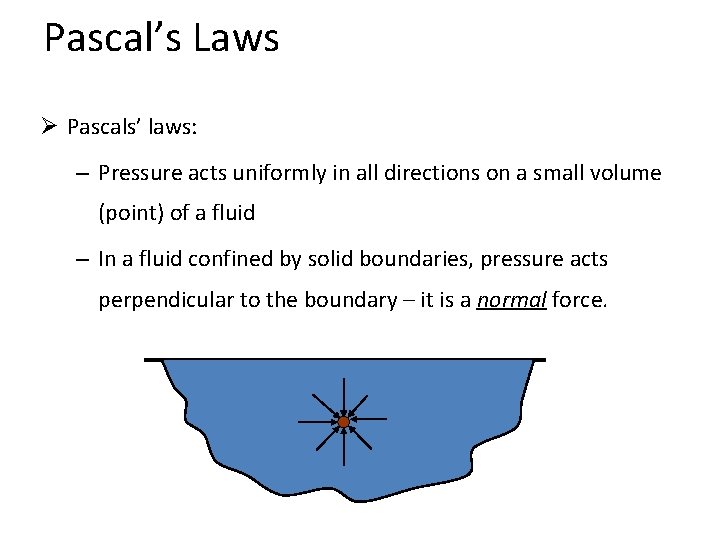
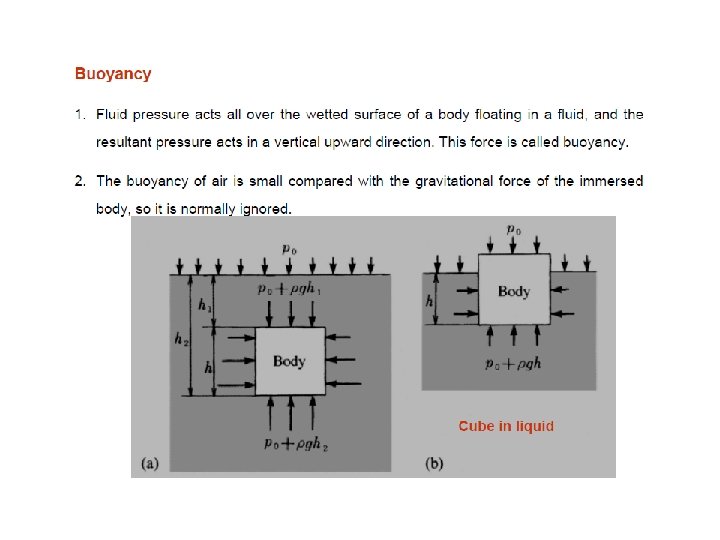
Pascal’s Laws Ø Pascals’ laws: – Pressure acts uniformly in all directions on a small volume (point) of a fluid – In a fluid confined by solid boundaries, pressure acts perpendicular to the boundary – it is a normal force.
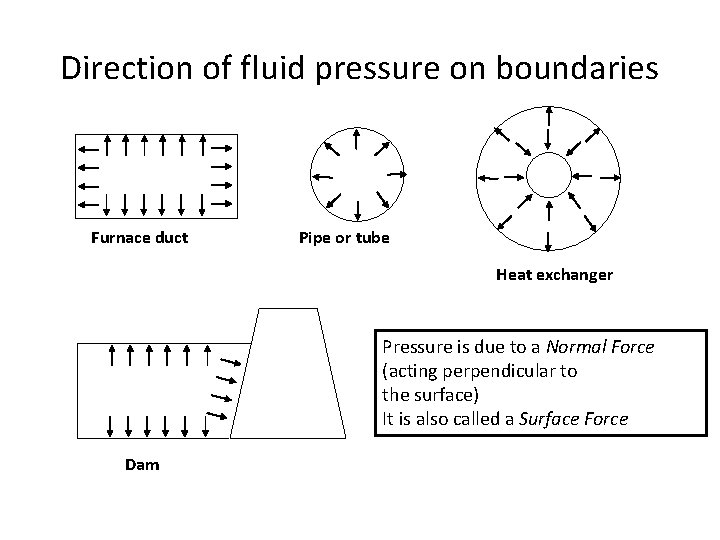
Direction of fluid pressure on boundaries Furnace duct Pipe or tube Heat exchanger Pressure is due to a Normal Force (acting perpendicular to the surface) It is also called a Surface Force Dam
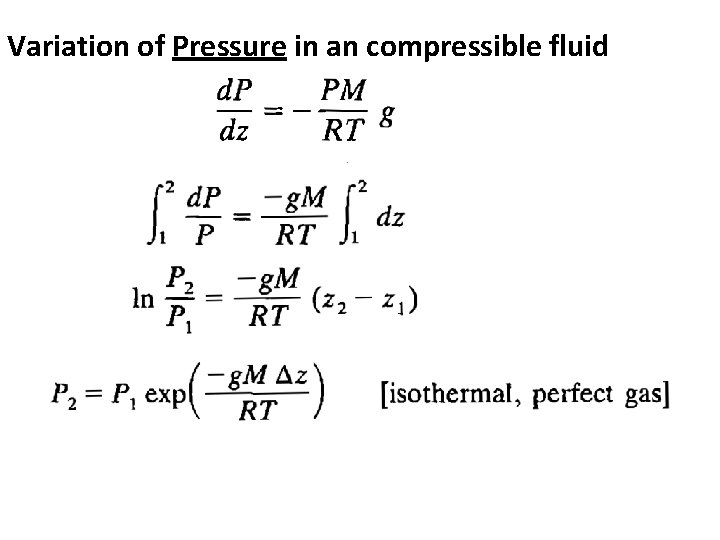
Variation of Pressure in an compressible fluid
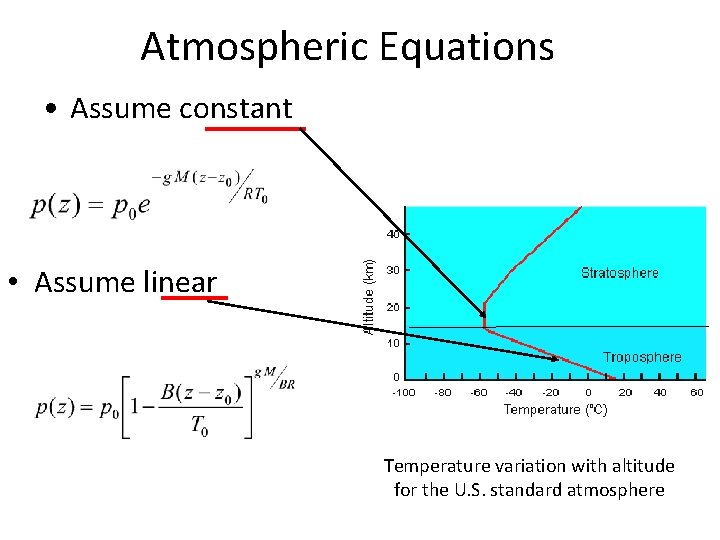
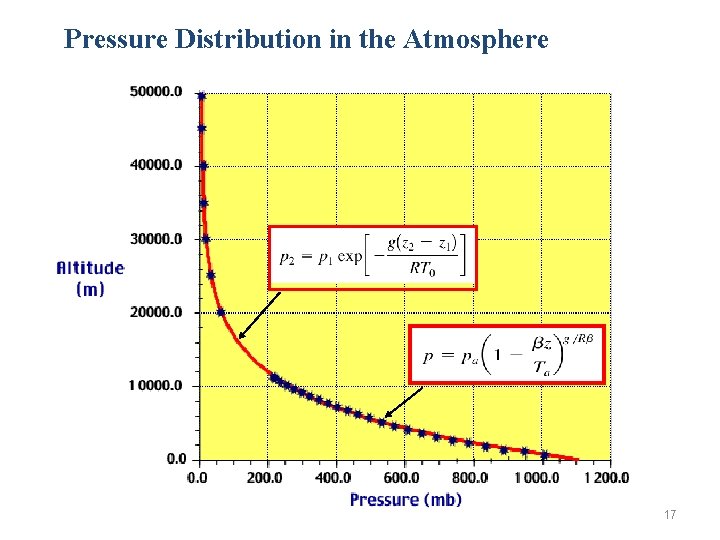
Atmospheric Equations • Assume constant • Assume linear Temperature variation with altitude for the U. S. standard atmosphere
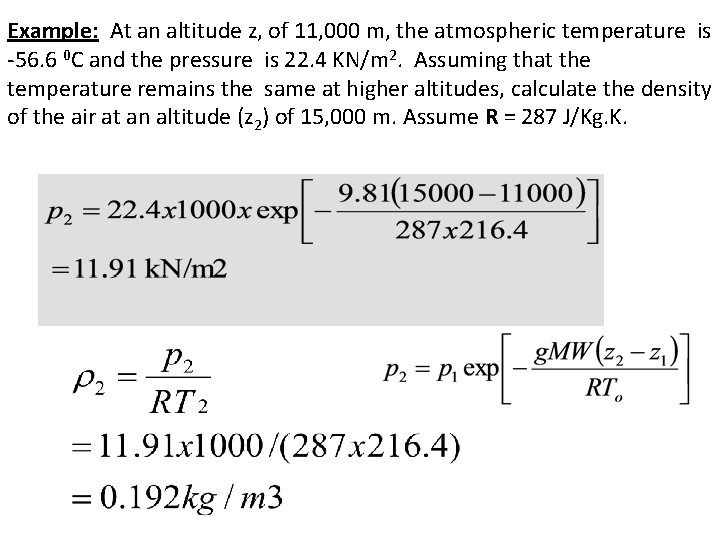
Example: At an altitude z, of 11, 000 m, the atmospheric temperature is -56. 6 0 C and the pressure is 22. 4 KN/m 2. Assuming that the temperature remains the same at higher altitudes, calculate the density of the air at an altitude (z 2) of 15, 000 m. Assume R = 287 J/Kg. K.
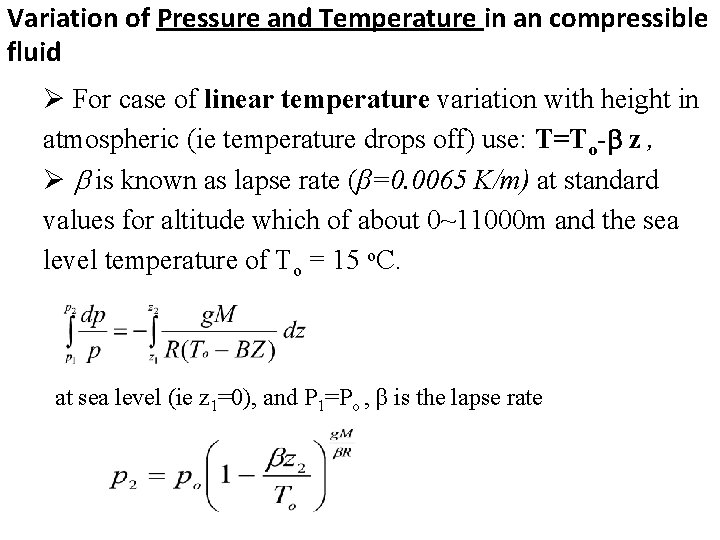
Variation of Pressure and Temperature in an compressible fluid Ø For case of linear temperature variation with height in atmospheric (ie temperature drops off) use: T=To-b z , Ø b is known as lapse rate (β=0. 0065 K/m) at standard values for altitude which of about 0~11000 m and the sea level temperature of To = 15 o. C. at sea level (ie z 1=0), and P 1=Po , β is the lapse rate
Pressure Distribution in the Atmosphere 17
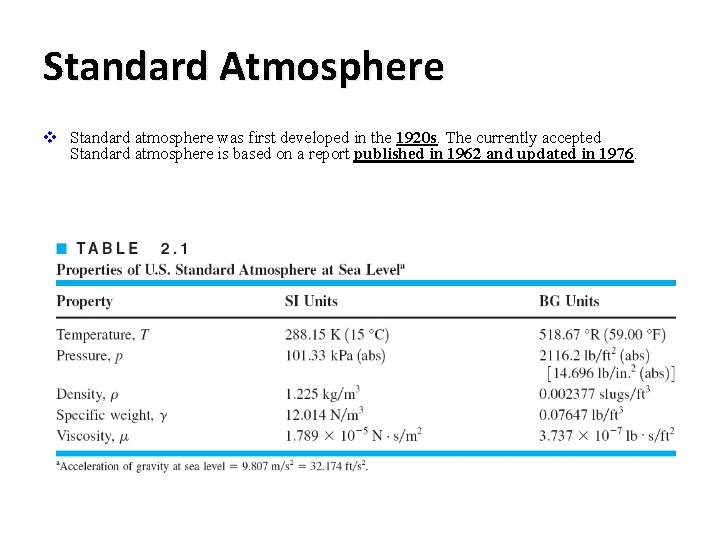
Standard Atmosphere v Standard atmosphere was first developed in the 1920 s. The currently accepted Standard atmosphere is based on a report published in 1962 and updated in 1976.