
Parvovirs B 19 Prof Dr Fikret ahin Parvoviruses
Parvovirüs (B 19) Prof. Dr. Fikret Şahin
• Parvoviruses are the smallest of the DNA viruses belonging to the family Parvoviridae. • • Human parvovirus B 19 (B 19) is the only known parvovirus that is pathogenic for humans, and it shows tropism for erythroid progenitor cells. • 50% of the people encounter this virus throughout life. • It was first described in 1970. • The name parvovirus is derived from the Latin word “parvum” which means small.
Virus Structure • Virus belonging to the Parvoviridae family and the genus Erythrovirus • These are usually found in association with an adenovirus, hence are known as adeno-associated viruses. • Viruses belonging to the genus Erythrovirus are so named because of their affinity for erythroid precursor cells.
Parvoviridae family
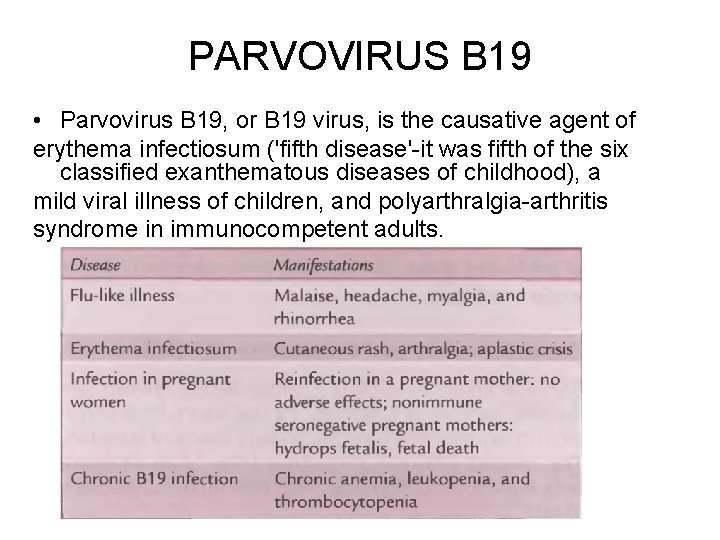
PARVOVIRUS B 19 • Parvovirus B 19, or B 19 virus, is the causative agent of erythema infectiosum ('fifth disease'-it was fifth of the six classified exanthematous diseases of childhood), a mild viral illness of children, and polyarthralgia-arthritis syndrome in immunocompetent adults.
Parvovirus B 19, or B 19 virus, • is the causative agent of Erythema Infectiosum ('fifth disease'-it was fifth of the six classified exanthematous diseases of childhood), – a mild viral illness of children, – and polyarthralgia-arthritis syndrome in immunocompetent adults.
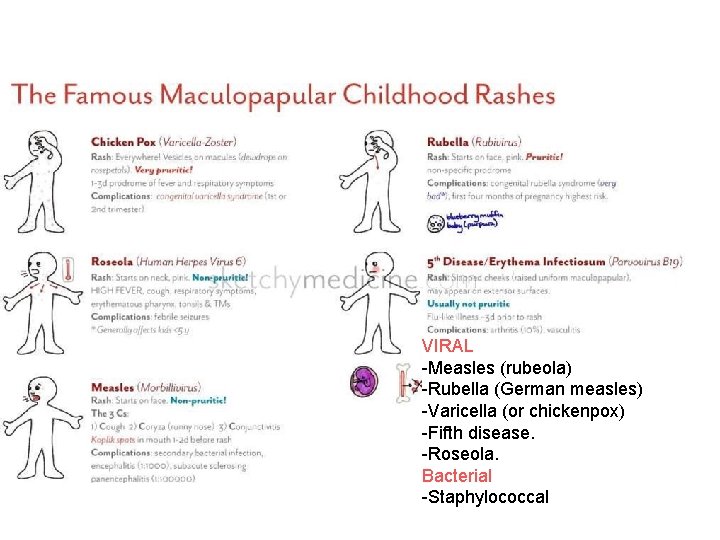
VIRAL -Measles (rubeola) -Rubella (German measles) -Varicella (or chickenpox) -Fifth disease. -Roseola. Bacterial -Staphylococcal
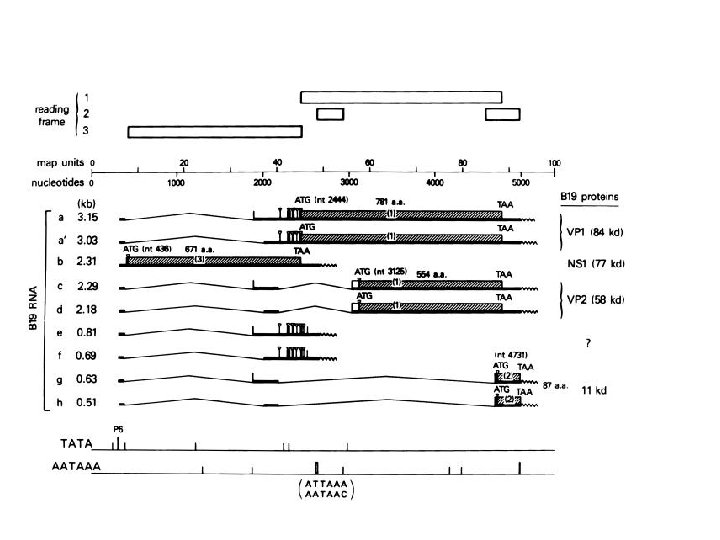
Morphology- genetics • B 19 viruses are extremely small viruses, measuring 18 -26 nm in diameter. • They possess a non-enveloped, icosahedral capsid. • The viral genome contains a single stranded DNA, measuring 5, 596 bases in length. • The genome is negative-strand DNA. • Transcription generates at least 9 m. RNAs that share the same regions. • The genome encodes for many proteins which include three structural, one major nonstructural (NS 1), and VP 1 and VP 2 capsid proteins
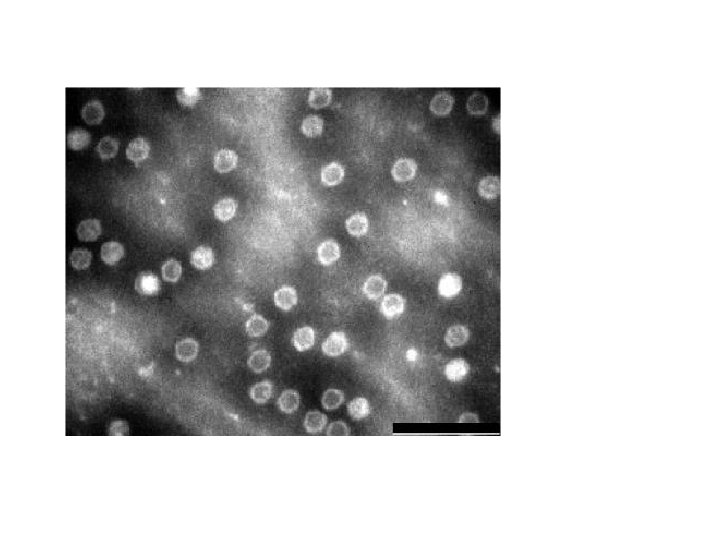
• Capsids consist of 60 VP 1 and VP 2 capsomers • These surround the single helix DNA and form the virus. • VP 2 protein makes up 95% of capsid structure • The VP 1 protein is located on the outer surface of the virion and is the main target of neutralizing antibodies.
Viral capsid proteins • VP 1 shows sequence change. • These changes cause the immune system to escape. • This causes permanent infection. • VP 1 plays a role in infection by keeping phospholipase A 2. • VP 1 is thought to play a role in autoimmunity
Unstructured protein NS 1 – – – It has different functions Specific DNA binding DNA-refraction (nick) formation Helicase function Regulation of transcriptions • Many of the clinical symptoms associated with B 19 V are due to cytolytic and apoptotic effects in the Erythroid precursor cells of NS 1.
Antigenic properties • Only one serotype of B 19 virus is known to occur. Other properties • B 19 virus is highly resistant to inactivation but can be inactivated by formalin, beta propiolactone, and oxidizing agents. • The viruses withstand heating at 56°C for 30 minutes and are stable between p. H 3 and 9.
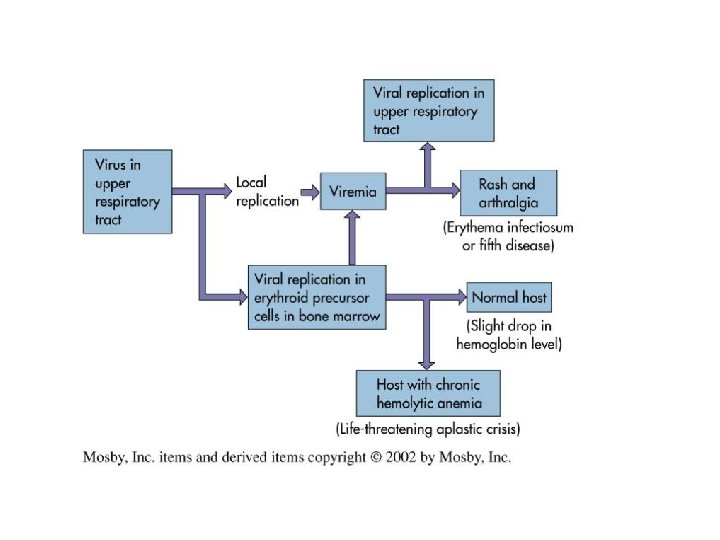
Pathogenesis and Immunity • B 19 virus shows a tropism for two types of cells: (a) red blood cell (RBC) precursors and (b) endothelial cells in the blood vessels. • The virus infects rapidly dividing erythrocyte precursors such as bone marrow cells, erythroid cells from fetal liver, and erythroid leukemia cells and destroys these cells after infection, thereby causing aplastic anemia. • Infection of the endothelial cells in the blood vessels leads to erythema infectiosum. • It has been demonstrated that the B 19 virus first enters through the nasopharynx or upper respiratory tract and then spreads to the blood, causing viremia. • The virus then infects mitotically active erythroid precursor cells in bone marrow and establishes the infection.
PATOGENESIS AND INFECTION • The life cycle of B 19 is like other nonenveloped DNA viruses. – Binding to the Host Cell receptor – Transition into the cell – Transition to the host core – DNA replication – RNA transcription – Synthesis of capsid and other proteins – Virus formation – Release by cell lysis
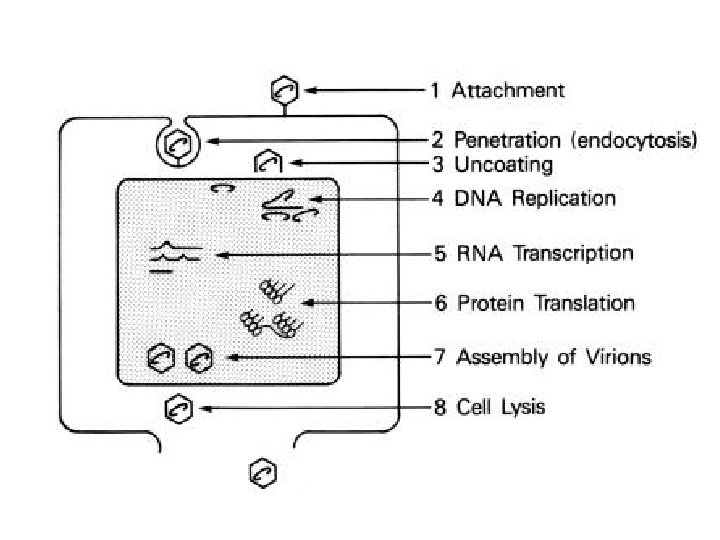
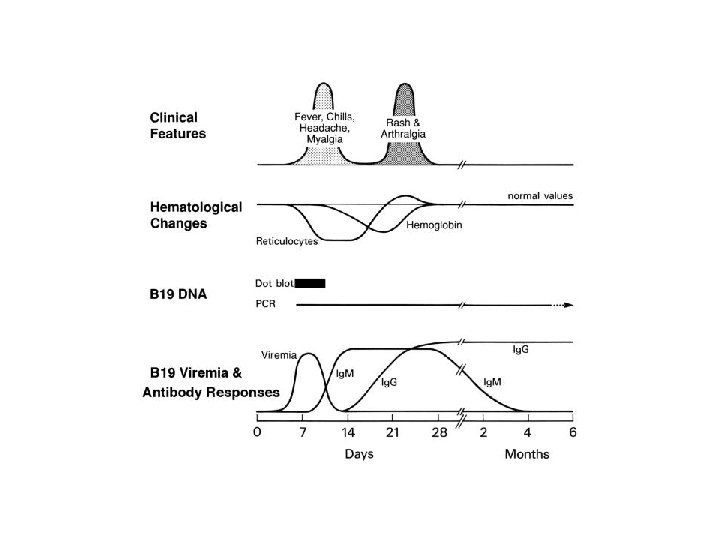
Pathogenesis and Immunity • The virus enters susceptible cells through the P blood antigen receptors on the erythrocyte precursors. • Inside the red cells the virus enters the nucleus, starts replicating, followed by killing of the red cells. • The production of RBCs is stopped for approximately 1 week due to killing of the erythroid precursor cells by the viruses. • The initial stage is associated with flu-like illness caused by large viremia. • The viruses are shed in the oral and respiratory secretions and even cross the placenta. • Subsequently, viremia is controlled by the production of specific antibodies against B 19 virus.
• The molecule that provides hemagglutination has been identified as glycolipid globoside (blood group P antigen) • However, it does not bind to other cells that contain the P antigen. • This shows that need of the other receptor presence. • On the other hand, there is no infection in cells without P antigen.

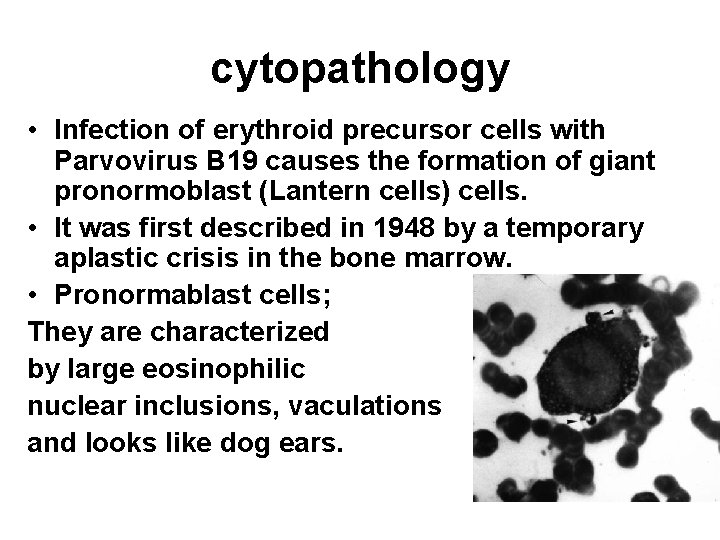
cytopathology • Infection of erythroid precursor cells with Parvovirus B 19 causes the formation of giant pronormoblast (Lantern cells) cells. • It was first described in 1948 by a temporary aplastic crisis in the bone marrow. • Pronormablast cells; They are characterized by large eosinophilic nuclear inclusions, vaculations and looks like dog ears.
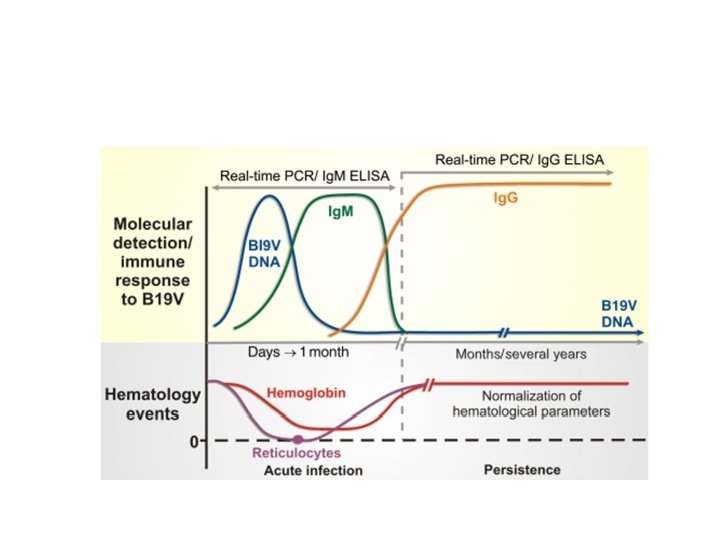
• The rash and arthralgia present the second stage of the disease, and is believed to be immunologically mediated. • This stage coincides with the disappearance of B 19 virus from the circulation, appearance of B 19 virus-specific Ig. M and Ig. G antibodies, and finally the formation of immune complexes.
Host immunity • “The disease exhibits two stages: initial stage is flu-like illness and second stage is appearance of rash and arthralgia. • Host immunity to B 19 virus infection is primarily antibody mediated. • The circulating antibodies stop the viremia and are important for resolution of the disease. • The role of cell-mediated immunity in conferring immunity to B 19 virus is unknown.
Clinical Syndromes B 19 virus causes following clinical syndromes: (a) Flu like illness, (b) Erythema infectiosum or fifth disease, (c) infection in pregnant women, and (d) chronic B 19 infection.
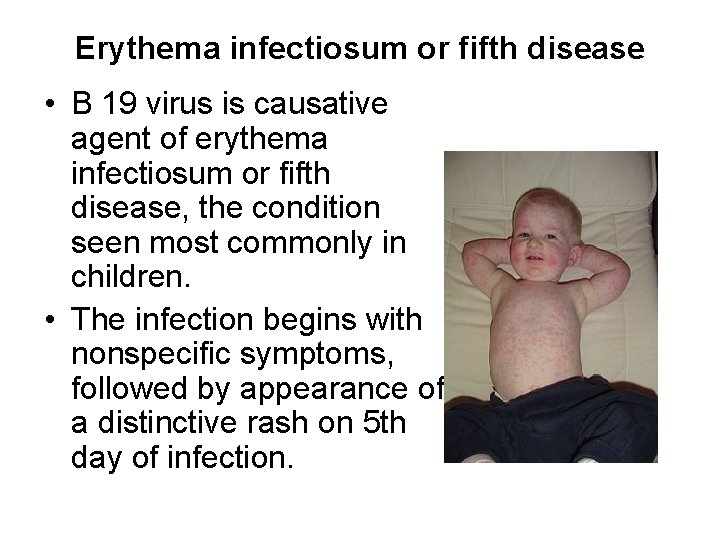
Erythema infectiosum or fifth disease • B 19 virus is causative agent of erythema infectiosum or fifth disease, the condition seen most commonly in children. • The infection begins with nonspecific symptoms, followed by appearance of a distinctive rash on 5 th day of infection.
Infection in pregnant women • If the B 19 virus causes reinfection in a pregnant mother who is infected earlier by the same virus, and is already immune to the virus (showing positive B 19 antibodies), then no adverse effects are seen in the fetus. • In non immune seronegative pregnant mothers, B 19 virus infection is increasingly associated with risk for fetal death. • The infection may cause severe anemia in the fetus, and subsequently, the fetus may develop signs of high-output cardiac failure (hydrops fetalis). • B 19 virus, however, does not cause any congenital anomalies in the fetus.
Chronic B 19 infection • This infection occurs in immunocompromised patients such as patients with HIV, those receiving immunosuppressive therapy, and transplant patients. • Chronic anemia, leukopenia, and thrombocytopenia are the common manifestations.
Aplastic anemia • Transient but severe aplastic anemia can occur in children with chronic anemia such as sickle cell anemia, thalassemia, and spherocytosis (aplastic crisis) after infection with B 19 virus. • Gloves and sock syndrome is another serious complication caused by B 19 virus. • In this syndrome, erythematous exanthema appears on the hands and feet, with a welldefined margin of the wrist and ankle joints.
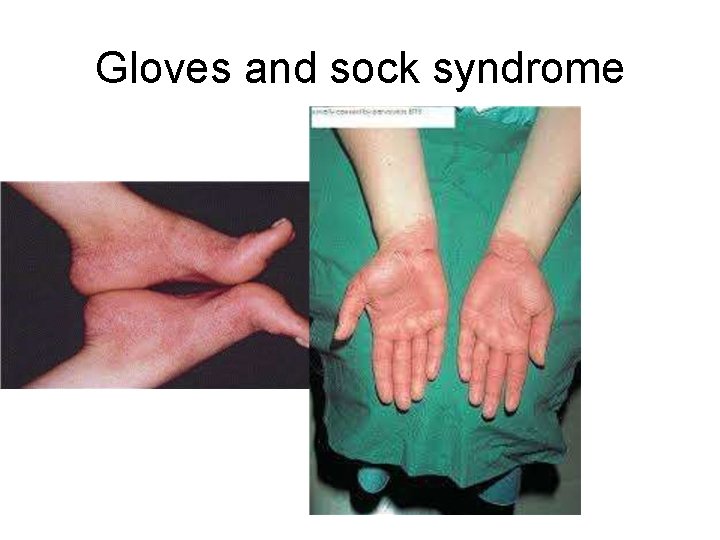
Gloves and sock syndrome
Epidemiology Geographical distribution B 19 virus is distributed worldwide. Approximately, 90% of adults older than 60 years are seropositive in the United States. Reservoir, source, and transmission of infection B 19 virus infection is strictly a human disease. Humans are the only reservoir of infections. Viruses are excreted in respiratory samples which are the primary source of infection.
Epidemiology • Respiratory • Vertically from mother to fetus • parenteral and genital transmission • Organ transplantations – Bone marrow – Blood • It is widely available all over the world – Preschool 15% – Young adult 50% – 90% aged seropozitif • Creates lifelong immunity in healthy people • Although it is seropositive, viremia or virus DNA is not detected. • It is less than 1% in volunteer blood donors.
Laboratory Diagnosis • Demonstration of specific Ig. G and Ig. M antibodies in the serum is useful for diagnosis of erythema infectiosum caused by B 19 virus. • ELISA (enzyme-linked immunosorbent assay), RIA (radioimmunoassay), and IFA (indirect fluorescent antibody) for demonstration of Ig. G and Ig. M antibodies are available. • In pregnant women, the serum positive for Ig. G and Ig. M antibodies indicates B 19 virus infection within 7 days to 4 months, and a possible risk to fetus. • Positive Ig. G but negative Ig. M result indicates only pastinfection, hence no risk to fetus. • Furthermore, polymerase chain reation (PCR) is available to demonstrate B 19 virus genome in the blood. • The positive result suggests viremia or infection.
Treatment • No specific antiviral therapy is available for treatment of B 19 virus infection. Prevention and Control No specific measures are available for prevention of the infection. Development of a vaccine against B 19 virus is undergoing phase I clinical trial.
Erythema infectious • • Slapped face It is also called as 5. disease • Although the symptoms were known long ago, its connection with Parvovirus B 19 was made in 1983. Prodromal symptoms: • – – • Fire Headache Cold Nausea Moderate erythema on the cheeks (occurs 18 days after infection) Although the findings are often noticed, they often progress with fever, malaise, headache, and nausea. • In the 2 nd phase of infection – Redness shows spread to the trunk and limbs – Redness is temporary, permanent or varies.
- Slides: 37