
Party Polarization The more polarized the parties get
![Political Party • “Team of men [and women] seeking to control the governing apparatus](https://slidetodoc.com/presentation_image/eae0e3f62cae6b78fd4fdb82190c9286/image-4.jpg "Political Party • “Team of men [and women] seeking to control the governing apparatus")
- Slides: 61
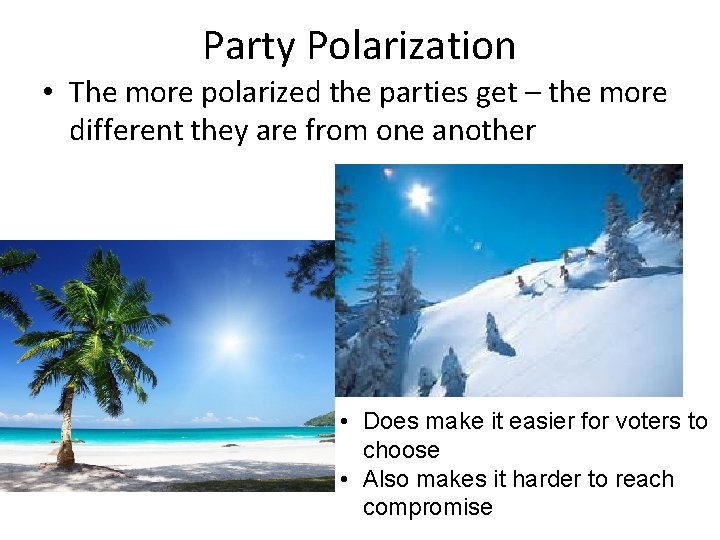
Party Polarization • The more polarized the parties get – the more different they are from one another • Does make it easier for voters to choose • Also makes it harder to reach compromise
Learning Target 8. 1 • Identify the functions of political parties • Students can list and explain the things that parties do.
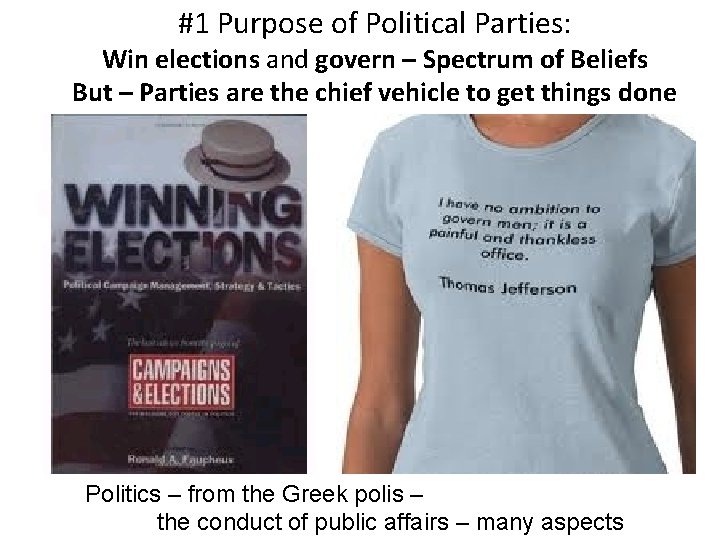
#1 Purpose of Political Parties: Win elections and govern – Spectrum of Beliefs But – Parties are the chief vehicle to get things done Politics – from the Greek polis – the conduct of public affairs – many aspects
Political Party • “Team of men [and women] seeking to control the governing apparatus by gaining office in a duly constituted election” • Are they really a team? More like a three headed giant: – The party in the electorate – The party as an organization – The party in government
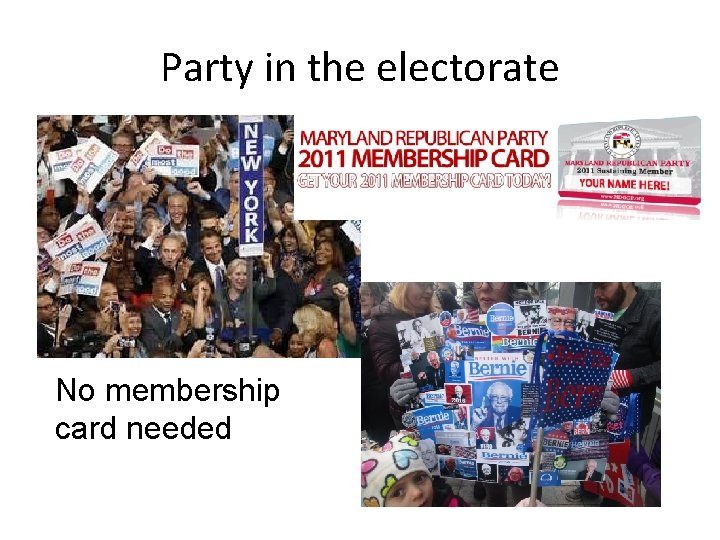
Party in the electorate No membership card needed
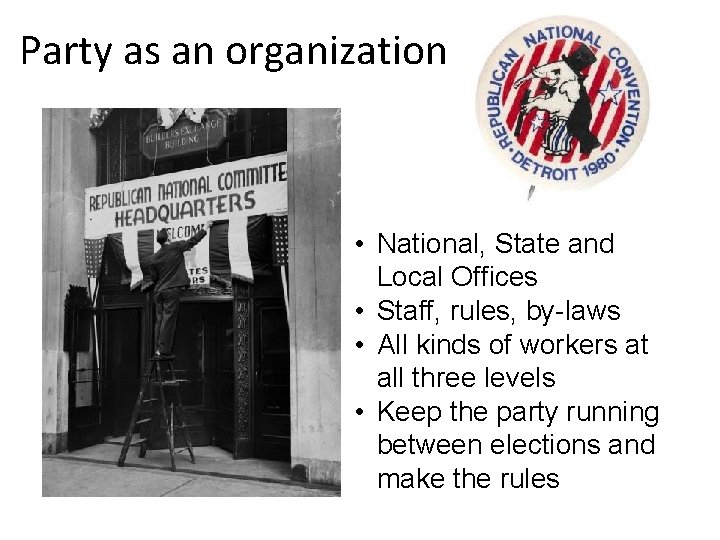
Party as an organization • National, State and Local Offices • Staff, rules, by-laws • All kinds of workers at all three levels • Keep the party running between elections and make the rules
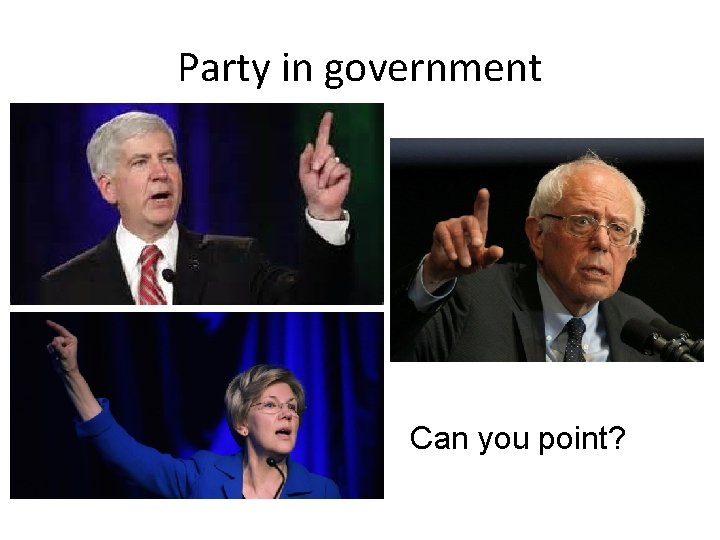
Party in government Can you point?
Parties are Linkage Institutions • A channel through which the people’s concerns make it onto the government’s policy agenda. Input from the public is transformed into output from policy makers – The media – Political parties – Interest groups – Elections
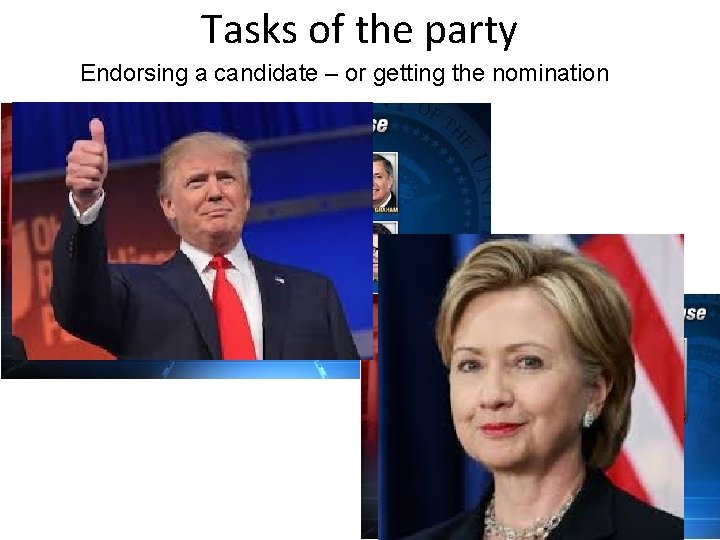
Tasks of the party Endorsing a candidate – or getting the nomination
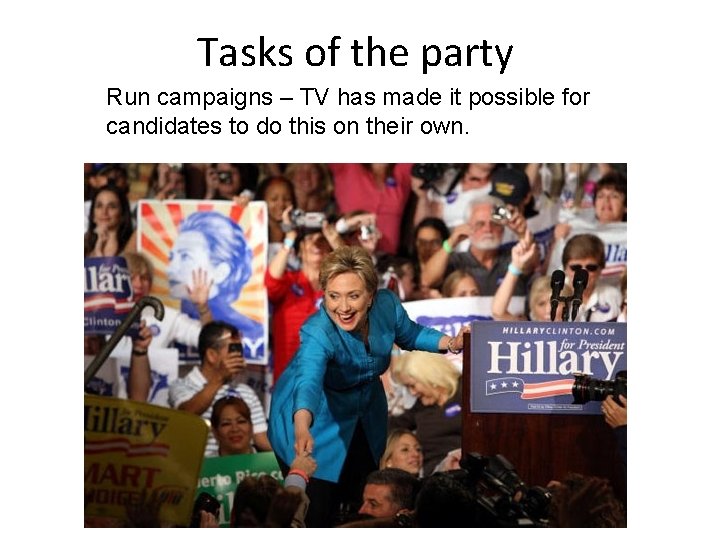
Tasks of the party Run campaigns – TV has made it possible for candidates to do this on their own.
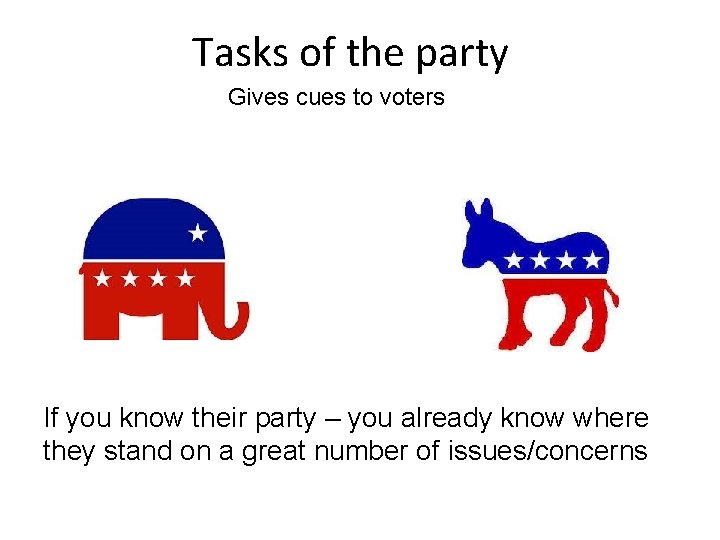
Tasks of the party Gives cues to voters If you know their party – you already know where they stand on a great number of issues/concerns
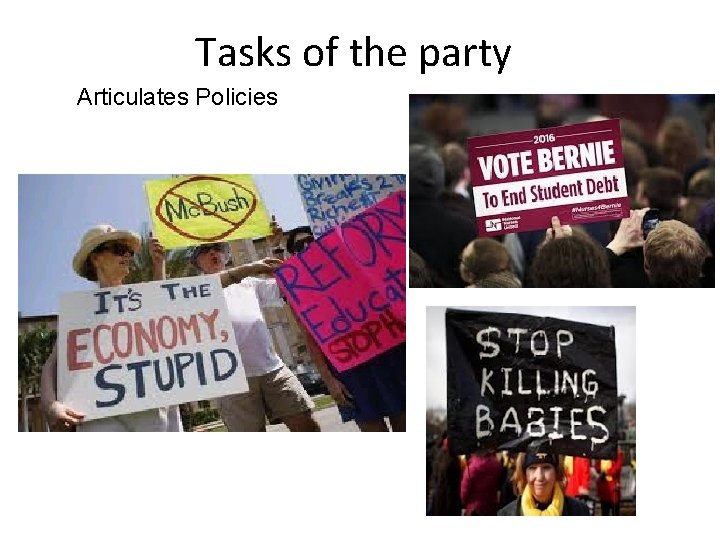
Tasks of the party Articulates Policies
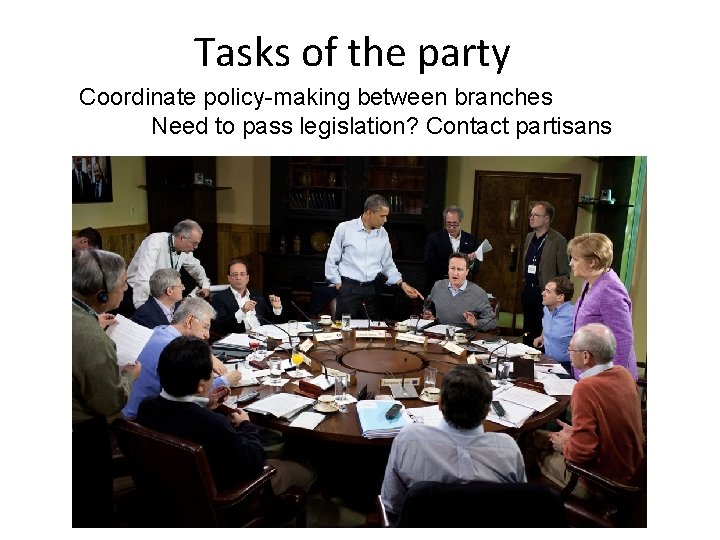
Tasks of the party Coordinate policy-making between branches Need to pass legislation? Contact partisans
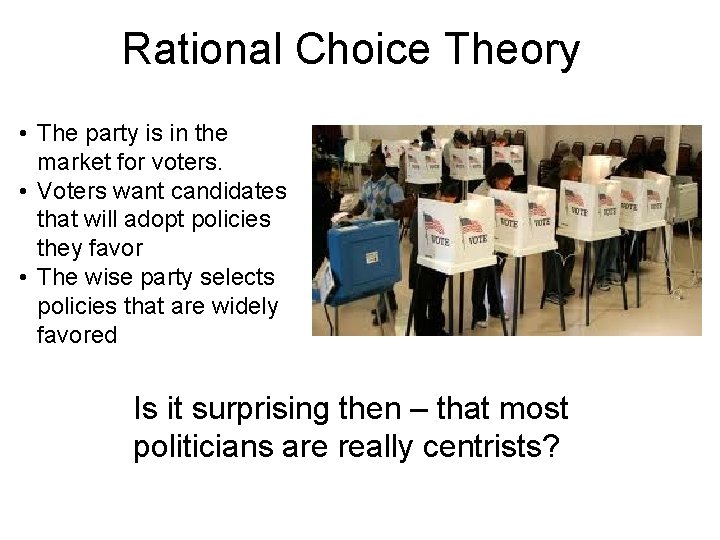
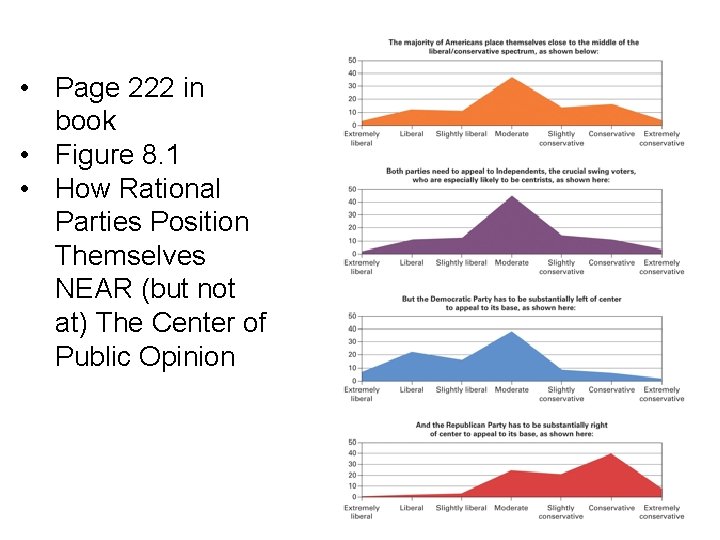
Rational Choice Theory • The party is in the market for voters. • Voters want candidates that will adopt policies they favor • The wise party selects policies that are widely favored Is it surprising then – that most politicians are really centrists?
• Page 222 in book • Figure 8. 1 • How Rational Parties Position Themselves NEAR (but not at) The Center of Public Opinion
Learning Target 8. 2 • Determine the significance of party identification in America today • Students can explain why people do not have to join a party in order to be a member of that party.
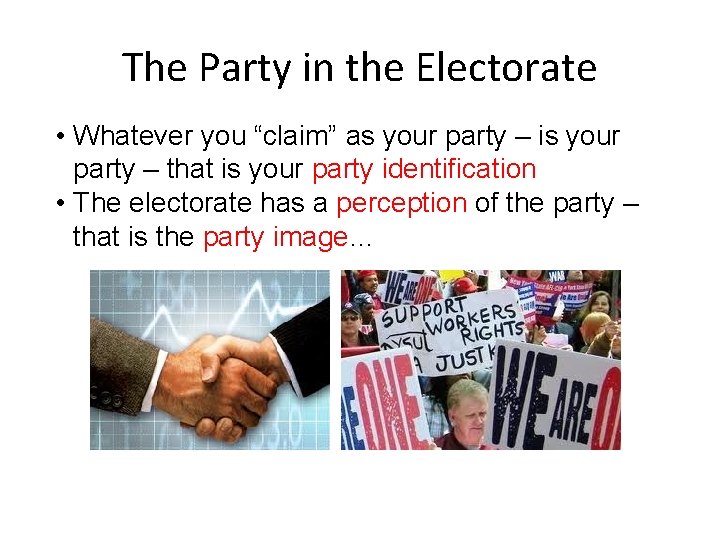
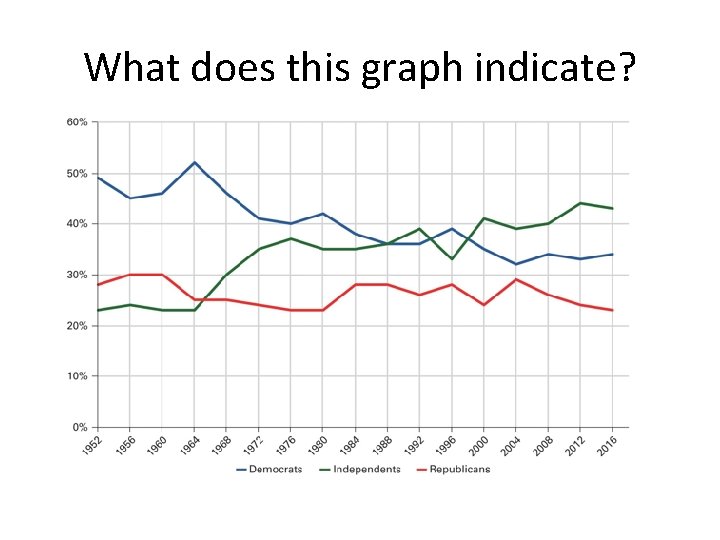
The Party in the Electorate • Whatever you “claim” as your party – is your party – that is your party identification • The electorate has a perception of the party – that is the party image…
What does this graph indicate?
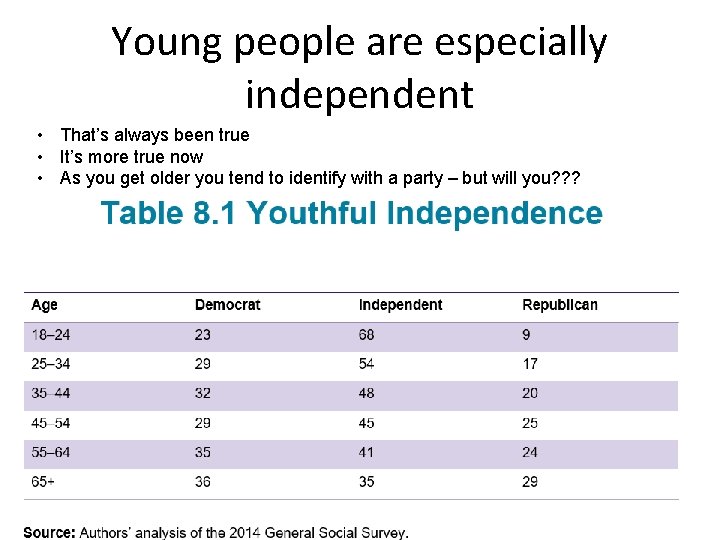
Young people are especially independent • That’s always been true • It’s more true now • As you get older you tend to identify with a party – but will you? ? ?
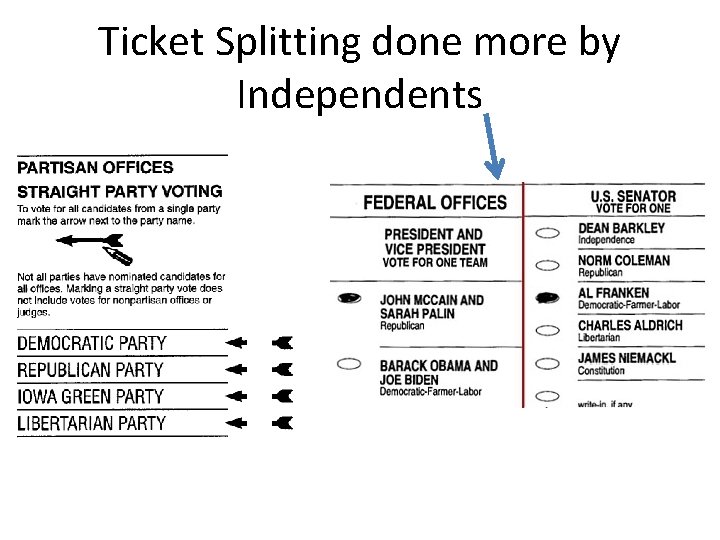
Ticket Splitting done more by Independents
Learning Target 8. 3 • Describe the structure of political parties at the national, state, and local level • Students can explain the role of the party at each level of government using examples
The Party as an Organization • Parties are NOT organized like a pyramid with the national party chair at the apex and the state organizations below followed by the local organizations at the bottom. There are three levels but it is NOT hierarchical. • American political parties are decentralized and fragmented • Formal party organizations have little power • Candidates in the US can get elected on their own • They do not need the help of the party MOST of the time • Parties have a very limited role
County Organizations have replaced urban machines • Important in local elections for mayor, school board, county commissioner, drain commission, judges – etc. • Recruit people to run • Decide who gets party support • Gets the people running assistance from community and interest groups
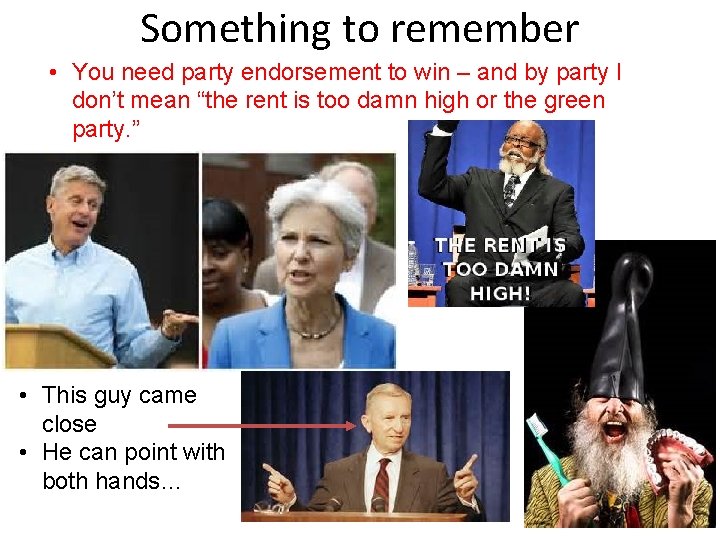
Something to remember • You need party endorsement to win – and by party I don’t mean “the rent is too damn high or the green party. ” • This guy came close • He can point with both hands…
Parties Organization in the past • Party Machines – Used to run party politics in urban areas. Rewards members for loyalty. Chicago still has remnants of this today. Jobs are classified as “temporary” when they really aren’t – don’t have to use merit system. • Patronage – sold jobs to the highest bidder to raise money for the party • Merit system supposed to eliminate political machines. Civil service tests determine who gets jobs.
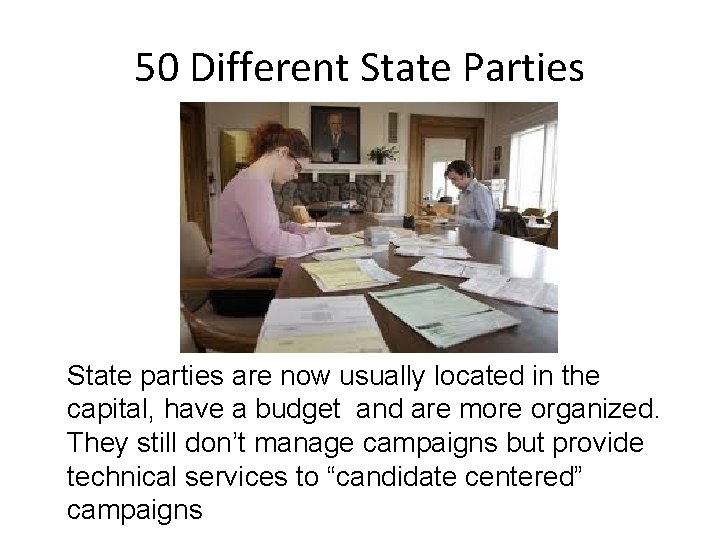
50 Different State Parties State parties are now usually located in the capital, have a budget and are more organized. They still don’t manage campaigns but provide technical services to “candidate centered” campaigns
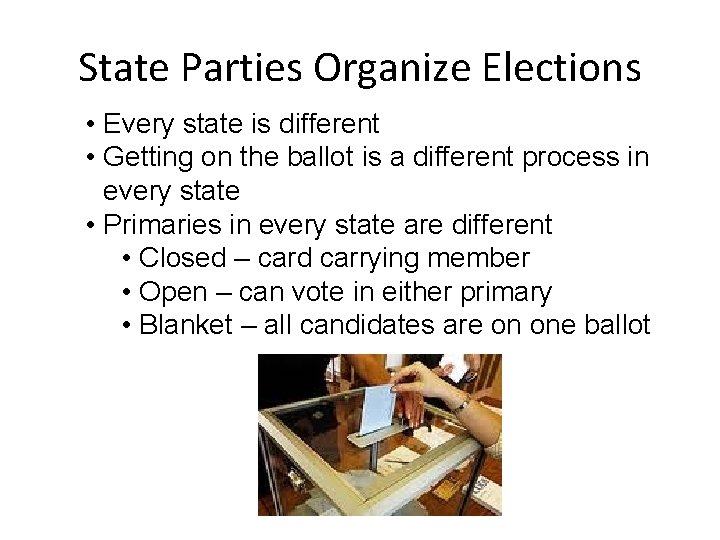
State Parties Organize Elections • Every state is different • Getting on the ballot is a different process in every state • Primaries in every state are different • Closed – card carrying member • Open – can vote in either primary • Blanket – all candidates are on one ballot
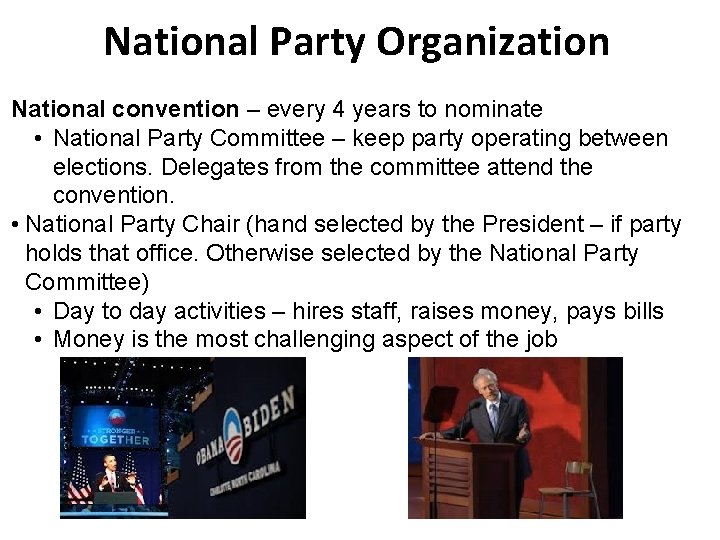
National Party Organization National convention – every 4 years to nominate • National Party Committee – keep party operating between elections. Delegates from the committee attend the convention. • National Party Chair (hand selected by the President – if party holds that office. Otherwise selected by the National Party Committee) • Day to day activities – hires staff, raises money, pays bills • Money is the most challenging aspect of the job
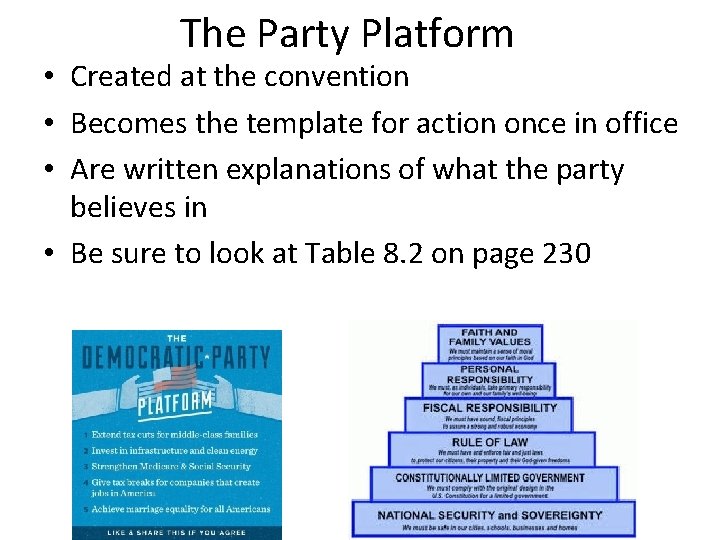
The Party Platform • Created at the convention • Becomes the template for action once in office • Are written explanations of what the party believes in • Be sure to look at Table 8. 2 on page 230
Learning Target 8. 4 • Evaluate how well political parties generally do in carrying out their promises • Students can give examples of promises made and kept, made and modified, and made and broken. They can also explain why the promises were kept, modified or broken.
The Party in Government Platforms to Policy – Campaign Promises Do Come True • The party platform is a good way to predict what the government will accomplish • More promises are kept than broken • Groups of individuals with common interests support the candidate or party that promises to support them and their needs. This is called what? Coalition
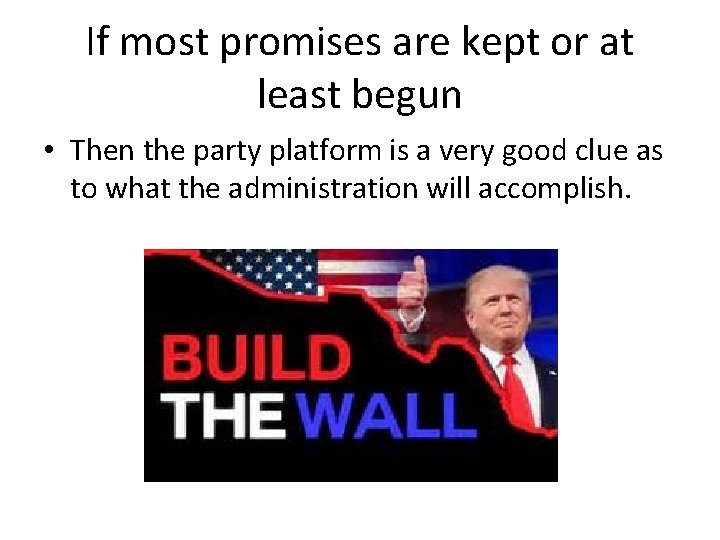
If most promises are kept or at least begun • Then the party platform is a very good clue as to what the administration will accomplish.
Why do we have a 2 -party system? • Historic basis – Federalist v Anti-federalist • Tradition – It’s always been so…therefore it must be good. • Electoral system – single member districts – only one winner by a plurality of votes (winner take all) • America’s ideological consensus
Party Era • An historical period when a majority of voters stick with the party in power and that party tends to win the majority of elections. • There have been 4 party era’s • The fifth is what we are in now – no party has dominated – we are divided.
Critical election • Fissures appear in each parties coalition – party begins to fracture • New issues appear and both parties form new coalitions • Coalitions shift – the south shifting to the Republican party after for example • Only history can determine if an election is a critical one. It may take more than one election for the change to appear
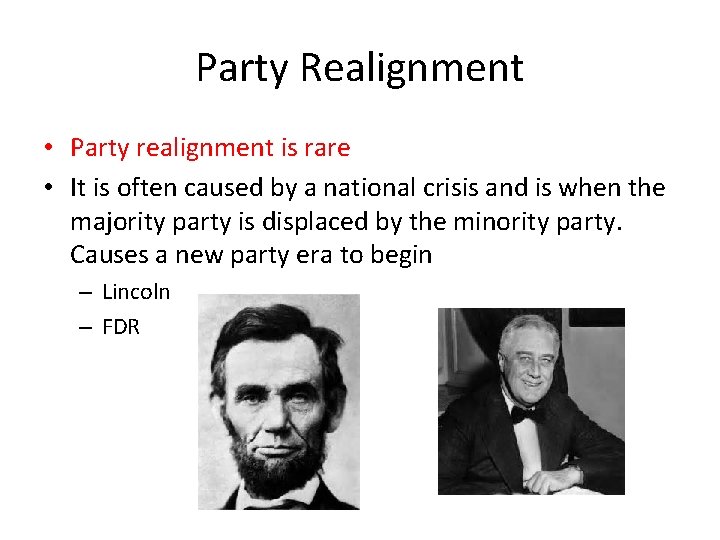
Party Realignment • Party realignment is rare • It is often caused by a national crisis and is when the majority party is displaced by the minority party. Causes a new party era to begin – Lincoln – FDR
Learning Target 8. 5 • Trace the evolution of political parties in America • Students can list and explain the 5 party eras in US government history. They can explain the reasons why each era ended.
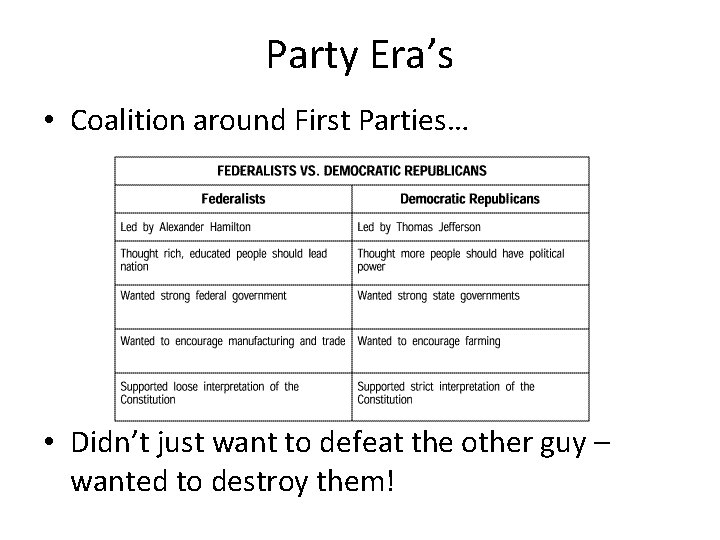
Party Era’s • Coalition around First Parties… • Didn’t just want to defeat the other guy – wanted to destroy them!
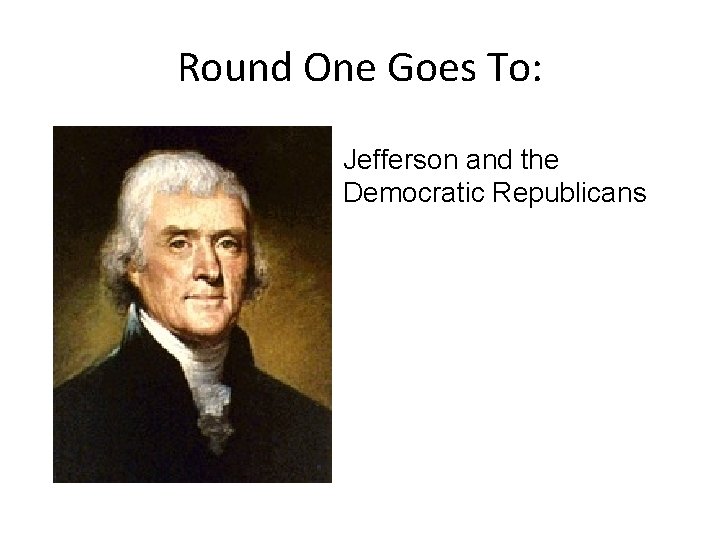
Round One Goes To: Jefferson and the Democratic Republicans
2 nd Party Era • Coalitions around Democratic Republicans – Becomes Democratic Party – Saw they had to recognize (and not try to eliminate) the opposing party – Party of the masses • Coalitions around The Whigs – Northern industrialists – Southern planters – These groups didn’t agree on much – just that they both hated the Democrats
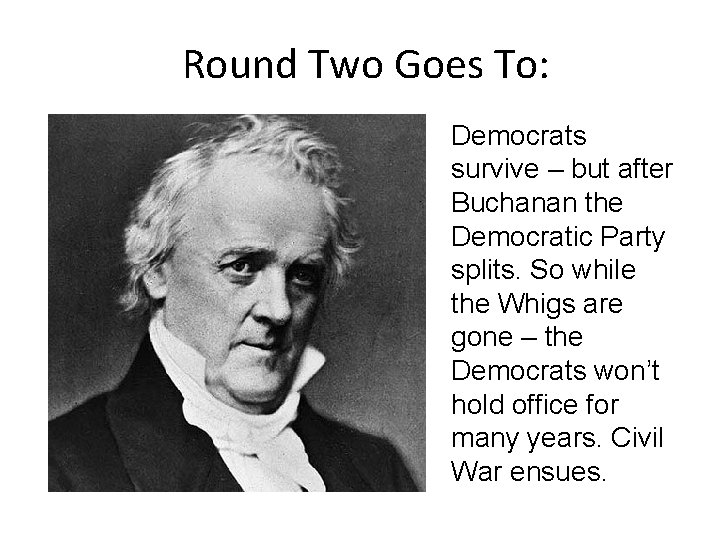
Round Two Goes To: Democrats survive – but after Buchanan the Democratic Party splits. So while the Whigs are gone – the Democrats won’t hold office for many years. Civil War ensues.
3 rd Party Era • Coalitions around Republicans – The anti-slavery party – Elect Abraham Lincoln – South cedes from the nation – Civil War – The Gold Standard • Coalitions around Democrats – Southern planters – Free Silver – use silver instead of gold – more of it
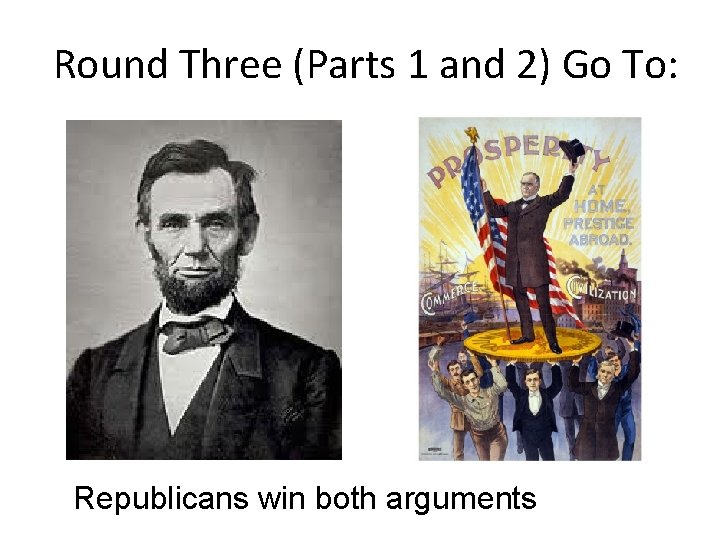
Round Three (Parts 1 and 2) Go To: Republicans win both arguments
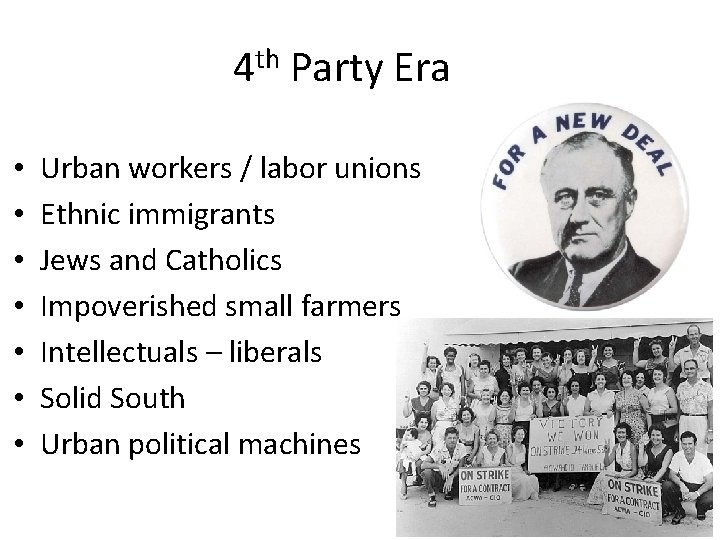
th 4 • • Party Era Urban workers / labor unions Ethnic immigrants Jews and Catholics Impoverished small farmers Intellectuals – liberals Solid South Urban political machines
Round 4 – Goes To… New Deal Coalition – FDR Democrats Held together from 1932 -1968 • FDR • Truman • Eisenhower • Kennedy • Johnson
Current Era… • The Era of Divided Government – Executive Branch and Legislative Branch are not of the same party – May be one or both chambers of Congress that is different from the executive branch – Slows down – even stops legislation – Creates gridlock • Everybody loses….
Learning Target 8. 6 • Evaluate the role of minor parties in the U. S. electoral system • Students can explain the two roles minor parties play using examples from actual elections
3 rd Parties Ross Perot – most recent 3 rd party candidate that makes it to debates • https: //www. youtube. com/watch? v=Rkgx 1 C_S 6 ls • http: //www. politics 1. com/parties. htm
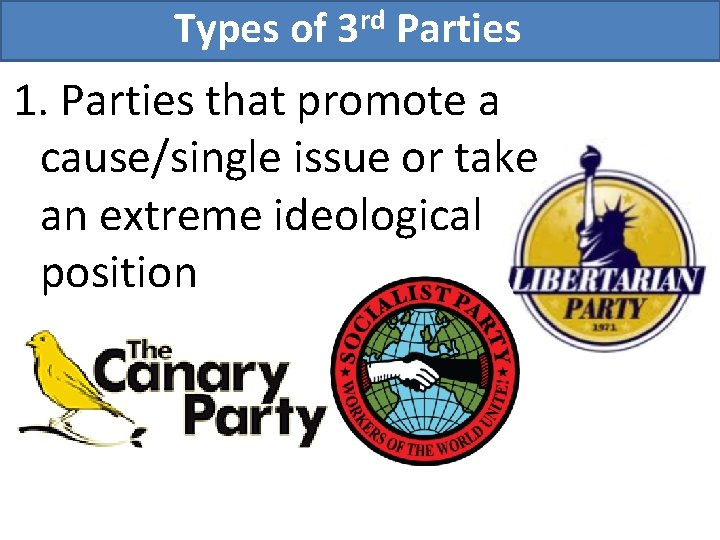
Types of 3 rd Parties 1. Parties that promote a cause/single issue or take an extreme ideological position
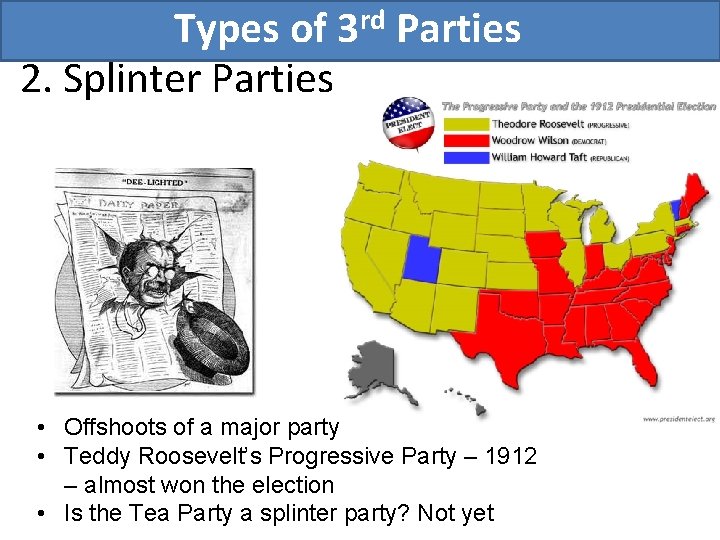
Types of 3 rd Parties 2. Splinter Parties • Offshoots of a major party • Teddy Roosevelt’s Progressive Party – 1912 – almost won the election • Is the Tea Party a splinter party? Not yet
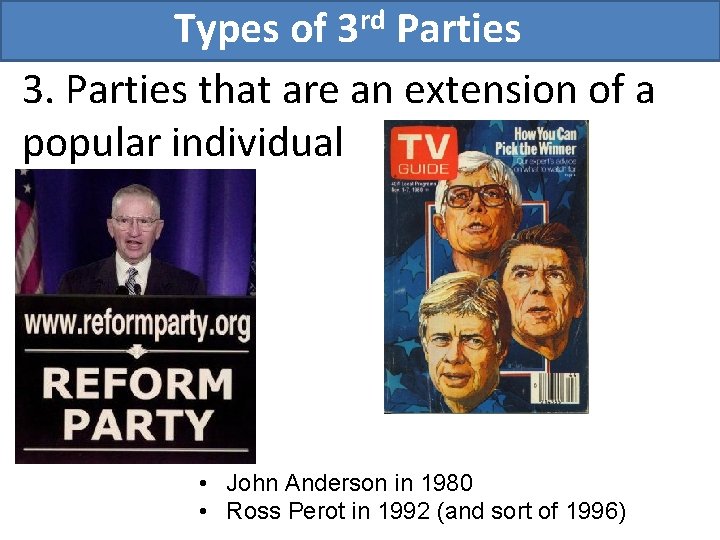
Types of 3 rd Parties 3. Parties that are an extension of a popular individual • John Anderson in 1980 • Ross Perot in 1992 (and sort of 1996)
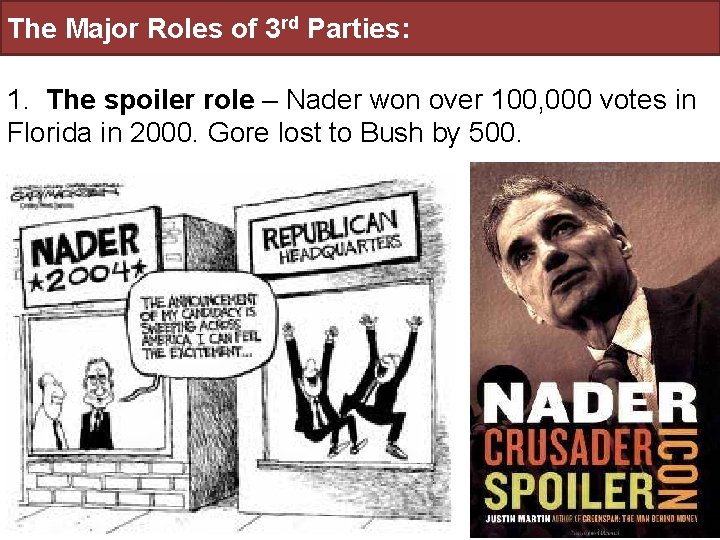
The Major Roles of 3 rd Parties: 1. The spoiler role – Nader won over 100, 000 votes in Florida in 2000. Gore lost to Bush by 500.
The Major Roles of 3 rd Parties: 2. The innovator role Ideas that started with 3 rd Parties: • • • Direct election of senators Ending slavery Presidential primaries Referendums and recalls Social Security Balancing the federal budget and lowering the deficit
Why only two? – Structural – Winner take all • All you need is the plurality to win (45%, 40%, 15%) • No second place ribbon, no credit, discourages 3 rd parties – better to merge (tea party) – Proportional representation • European way – 15% of the vote = 15% of the seats – Coalition government • No one wins majority so small parties merge to form a coalition government (bigger party gets to pick prime minister)
Learning Target 8. 7 • Evaluate the advantages and disadvantages of responsible party government • Students can explain the reforms the responsible party model calls for
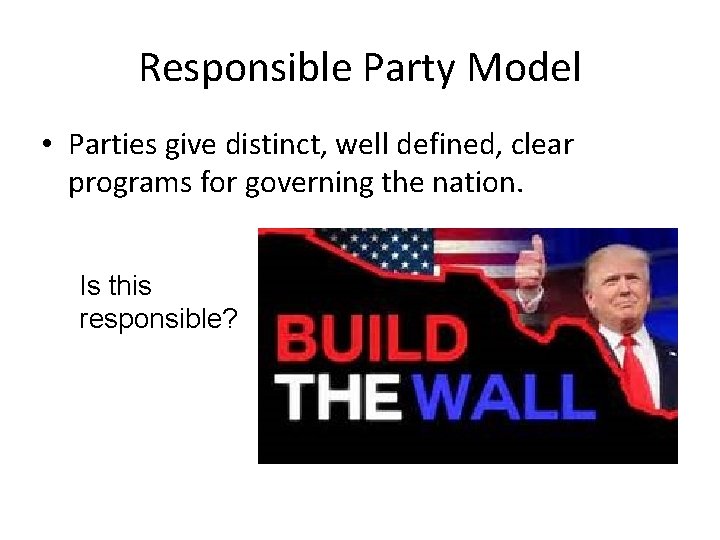
Responsible Party Model • Parties give distinct, well defined, clear programs for governing the nation. Is this responsible?
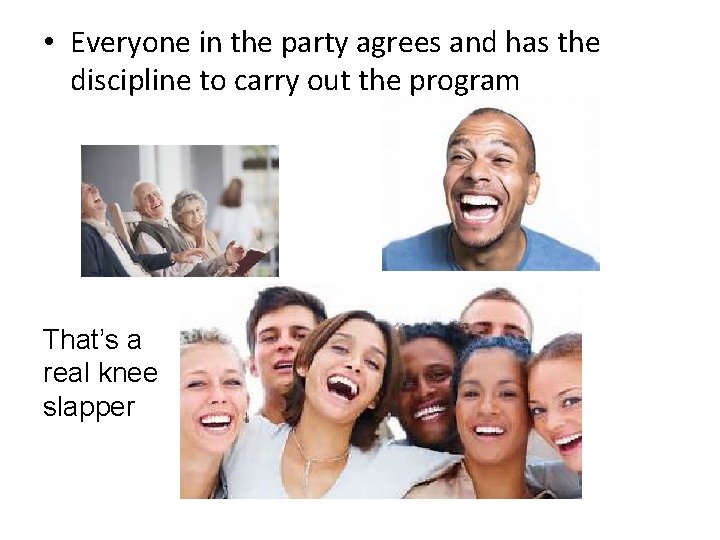
• Everyone in the party agrees and has the discipline to carry out the program That’s a real knee slapper
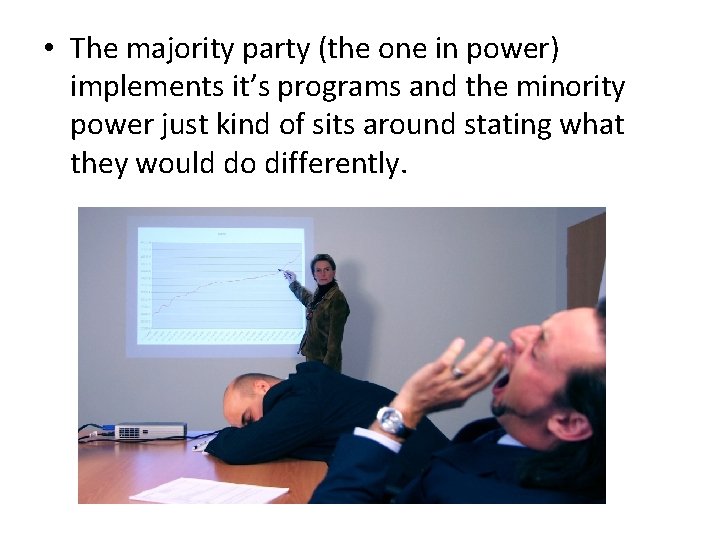
• The majority party (the one in power) implements it’s programs and the minority power just kind of sits around stating what they would do differently.
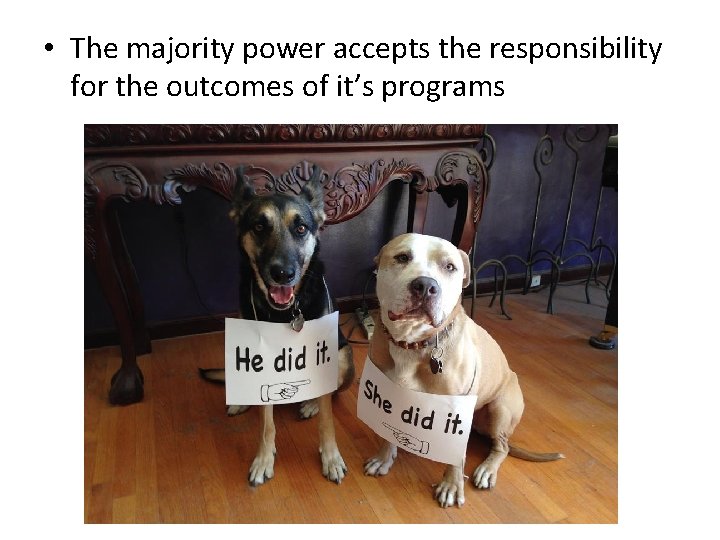
• The majority power accepts the responsibility for the outcomes of it’s programs
Not everyone agrees that the RPM is the way to go • New Yorkers are not like Californians – expecting them to agree all the time is crazy talk. • Remember Fed Papers – Fed 10 • More factions is ok because nobody always wins • If you force party members to agree – aren’t you creating the factions they worried about?
Plus/Minus • Even when all 3 parts are controlled by the same party – they struggle and often fail to get legislation passed – so even the majority doesn’t necessarily get to do whatever they want • Hard choices (saying no to increased spending) rarely happens because everyone is out for themselves (their constituents)