
Parturition Birth Expel fetus from uterus LABOR Last
Parturition (Birth) � Expel fetus from uterus = LABOR � Last few weeks of pregnancy, estrogen levels peak: �myometrium forms oxytocin receptors �Interrupts progesterone, allows small uterine contractions (false labor, Braxton Hicks) � Oxytocin production causes placenta to release prostaglandins = more powerful contractions
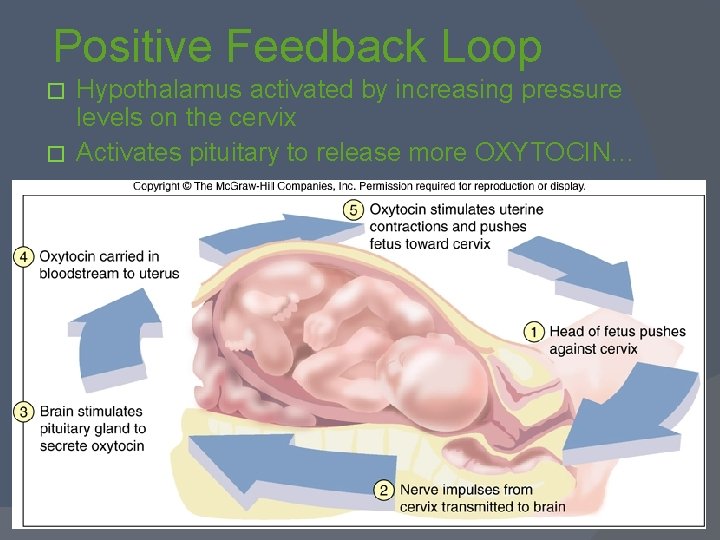
Positive Feedback Loop Hypothalamus activated by increasing pressure levels on the cervix � Activates pituitary to release more OXYTOCIN… �

Three Stages of Labor: DIALATION � True contractions dilates cervix 1 to 10 cm � Contractions �Increase from weak to vigorous �Regular �Upper uterus downwards to birth canal �Soften cervix: effaces � 6 -12 hours
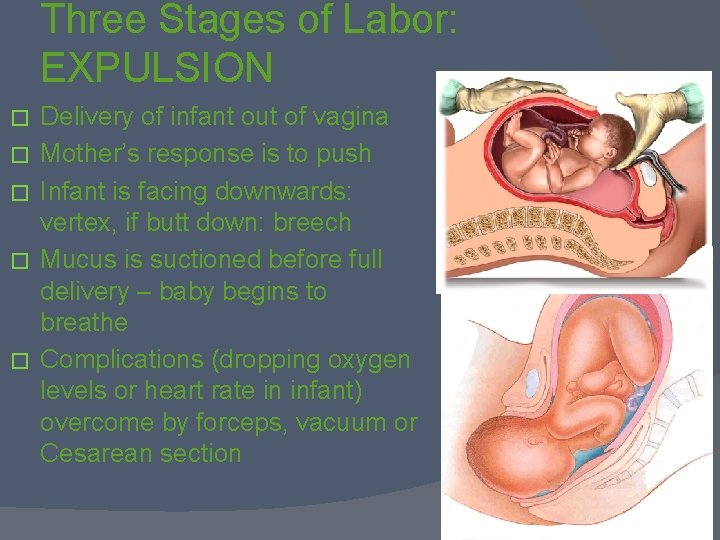
Three Stages of Labor: EXPULSION � � � Delivery of infant out of vagina Mother’s response is to push Infant is facing downwards: vertex, if butt down: breech Mucus is suctioned before full delivery – baby begins to breathe Complications (dropping oxygen levels or heart rate in infant) overcome by forceps, vacuum or Cesarean section
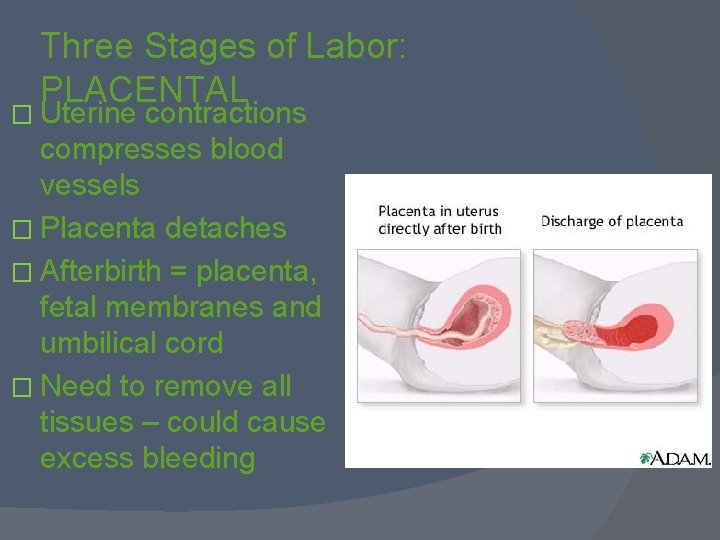
Three Stages of Labor: PLACENTAL � Uterine contractions compresses blood vessels � Placenta detaches � Afterbirth = placenta, fetal membranes and umbilical cord � Need to remove all tissues – could cause excess bleeding
Anatomical Changes � Uterus stretches to occupy most abdominal cavity � Ribs flare (shortness of breath, but vital capacity increases) � Lordosis � Relaxin – lumbar curvature (back aches) causes pelvic ligaments and pubis to widen/relax (duck walk)
Physiological Changes � Estrogen/progesterone surge (morning sickness) � Organ displacement = pressure on esophagus, stomach, and intestines (heartburn, small meals, constipation) � Excess waste from fetus and limited room (frequent urination…uncontrollable) � Blood volume increases up to 40% , blood pressure and pulse rate increases (swelling = edema)
Mammary Glands � Developmentally they are modified sweat glands � Present in both sexes, but only functional in females � Increase in size during puberty due to increased hormone levels (mostly estrogen) � Contain lobes (sections) which contain lobules (smaller chambers) which house clusters of alveolar glands. � Prolactin along with other hormones trigger milk production
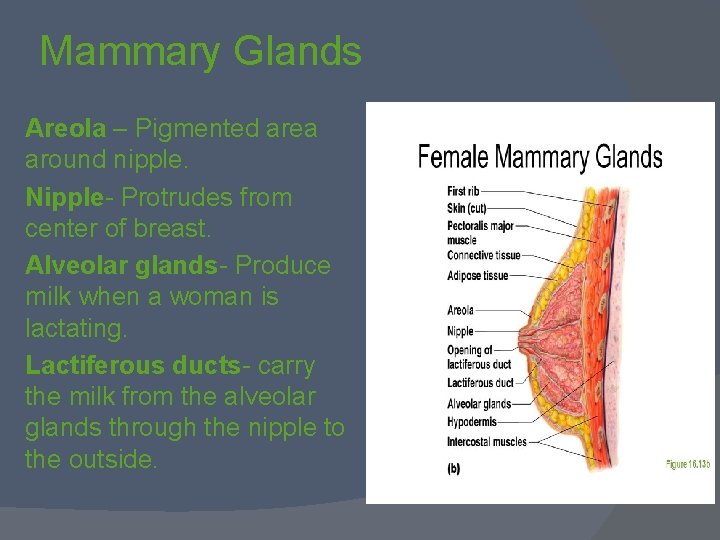
Mammary Glands Areola – Pigmented area around nipple. Nipple- Protrudes from center of breast. Alveolar glands- Produce milk when a woman is lactating. Lactiferous ducts- carry the milk from the alveolar glands through the nipple to the outside.
- Slides: 9