
PARTS TYPES AND RULES OF DEBATE NUR FITRIANI
PARTS, TYPES AND RULES OF DEBATE NUR FITRIANI 125110100111006 DELLA MAHARANI 125110100111001 SELVI RISMA ANDANI 125110100111002 AFIFAH MUDAWWAMAH 125110100111020 ARESKA WIDYA AUDINA 125110100111005 ADINDA PRASTY A. 125110100111021 RATNA WAHYUNING S. 125110100111004 ANIS CAHYA MAGRIDA 125110100111018
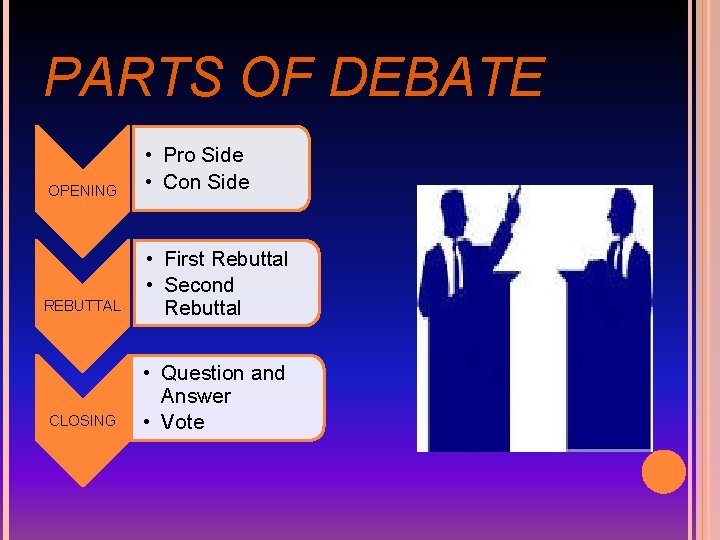
PARTS OF DEBATE OPENING • Pro Side • Con Side REBUTTAL • First Rebuttal • Second Rebuttal CLOSING • Question and Answer • Vote
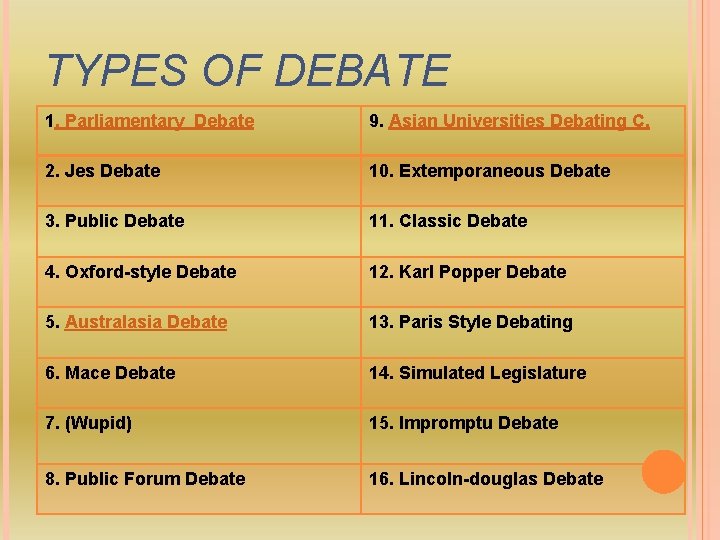
TYPES OF DEBATE 1. Parliamentary Debate 9. Asian Universities Debating C. 2. Jes Debate 10. Extemporaneous Debate 3. Public Debate 11. Classic Debate 4. Oxford-style Debate 12. Karl Popper Debate 5. Australasia Debate 13. Paris Style Debating 6. Mace Debate 14. Simulated Legislature 7. (Wupid) 15. Impromptu Debate 8. Public Forum Debate 16. Lincoln-douglas Debate
• Usually known as British Parliamentary Debate • Consist of government and opposition side • Usually it is used for the national universities championship

AUSTRALASIA DEBATE Consist of two teams Each team has three members The statement beginning with “That” or “This”

ASIAN UNIVERSITIES DEBATING CHAMPIONSHIP It is the biggest debating tournament in Asia It is an adaptation of the Australasian format. The difference is that each speaker is given 7 minutes and there will be POI
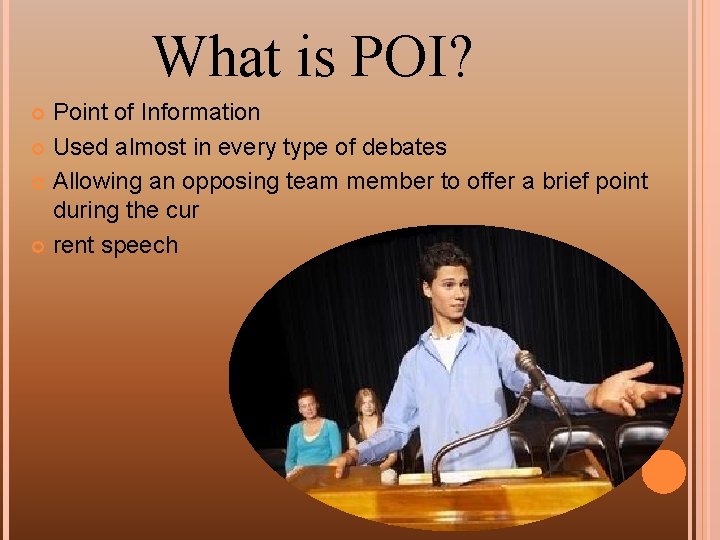
What is POI? Point of Information Used almost in every type of debates Allowing an opposing team member to offer a brief point during the cur rent speech
TYPES OF POI Ø Ø Points of Information Points of Misrepresentation
RULES OF DEBATE 1. 2. 3. 4. There are two teams Each team has two or three constructive speeches, and two to three rebuttal speeches the affirmative support some specified action by some particular individual or group The affirmative must advocate everything required by the topic itself
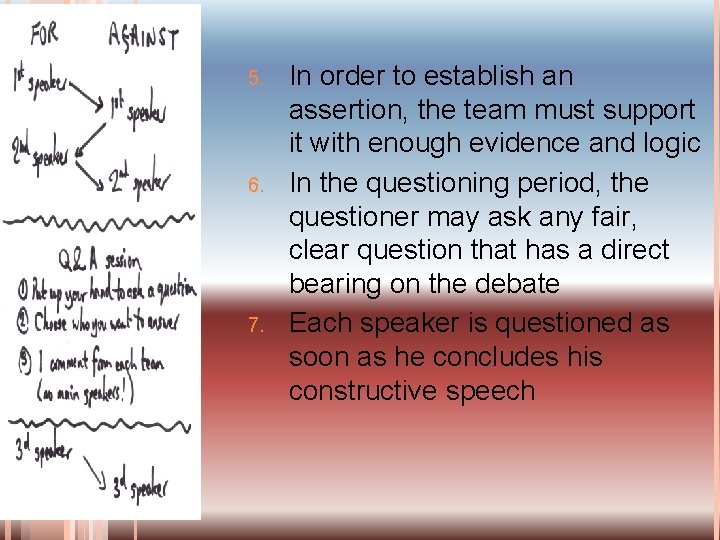
5. 6. 7. In order to establish an assertion, the team must support it with enough evidence and logic In the questioning period, the questioner may ask any fair, clear question that has a direct bearing on the debate Each speaker is questioned as soon as he concludes his constructive speech
8. 9. 10. No new constructive arguments may be introduced in the rebuttal period The judge must base his decision entirely on the material presented Any gains made outside of the established procedure are disallowed.
Thank you… Any questions?
- Slides: 12