
Parts of Speech Overview Nouns n n Concrete
- Slides: 25
Parts of Speech Overview
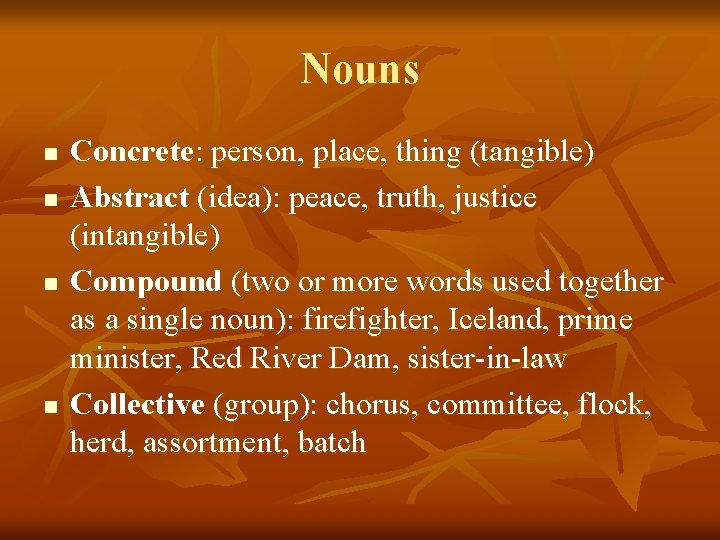
Nouns n n Concrete: person, place, thing (tangible) Abstract (idea): peace, truth, justice (intangible) Compound (two or more words used together as a single noun): firefighter, Iceland, prime minister, Red River Dam, sister-in-law Collective (group): chorus, committee, flock, herd, assortment, batch
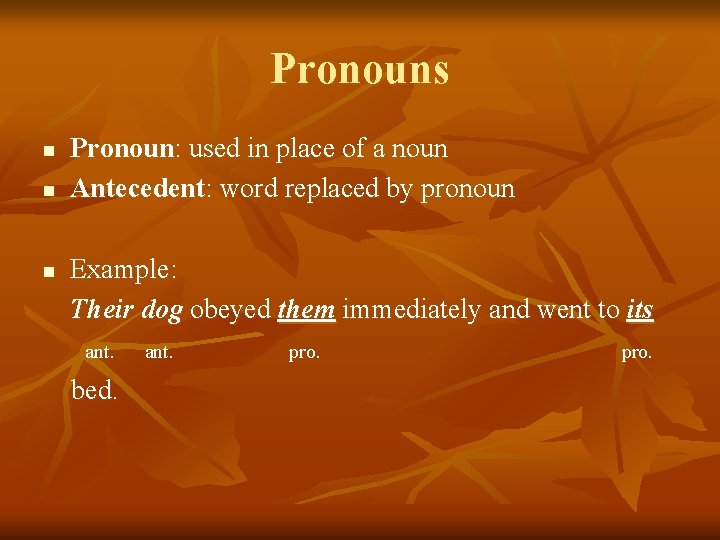
Pronouns n n n Pronoun: used in place of a noun Antecedent: word replaced by pronoun Example: Their dog obeyed them immediately and went to its ant. bed. ant. pro.
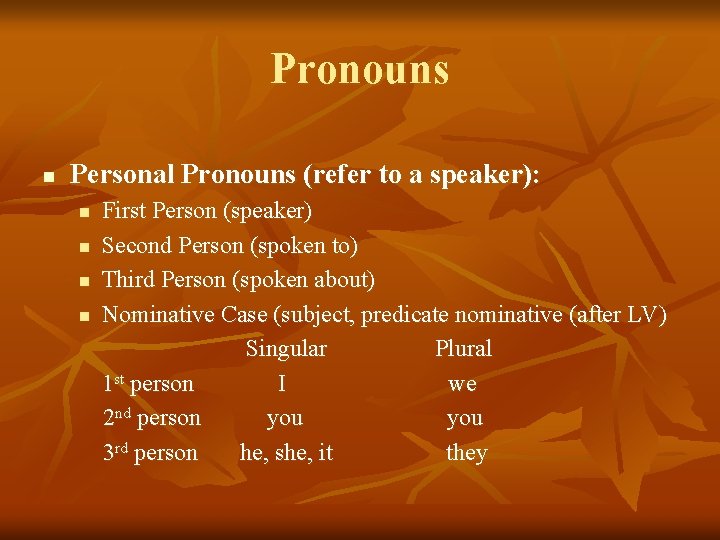
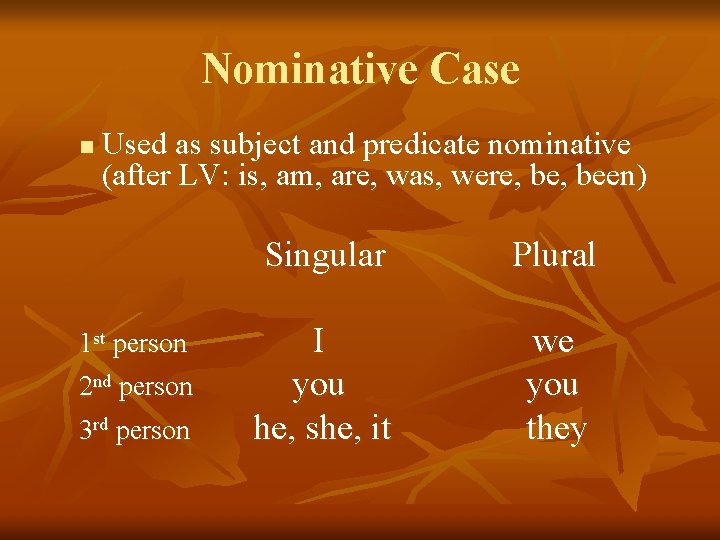
Pronouns n Personal Pronouns (refer to a speaker): n n First Person (speaker) Second Person (spoken to) Third Person (spoken about) Nominative Case (subject, predicate nominative (after LV) Singular Plural 1 st person I we 2 nd person you 3 rd person he, she, it they
Nominative Case n Used as subject and predicate nominative (after LV: is, am, are, was, were, been) 1 st person 2 nd person 3 rd person Singular Plural I you he, she, it we you they
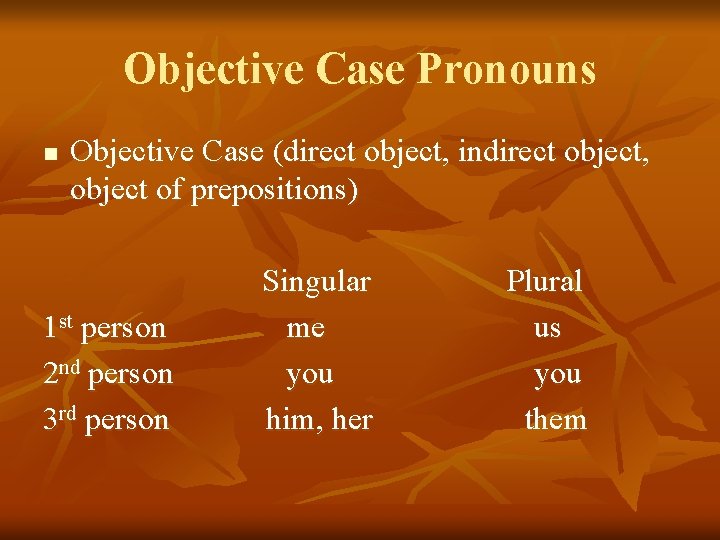
Objective Case Pronouns n Objective Case (direct object, indirect object, object of prepositions) 1 st person 2 nd person 3 rd person Singular me you him, her Plural us you them
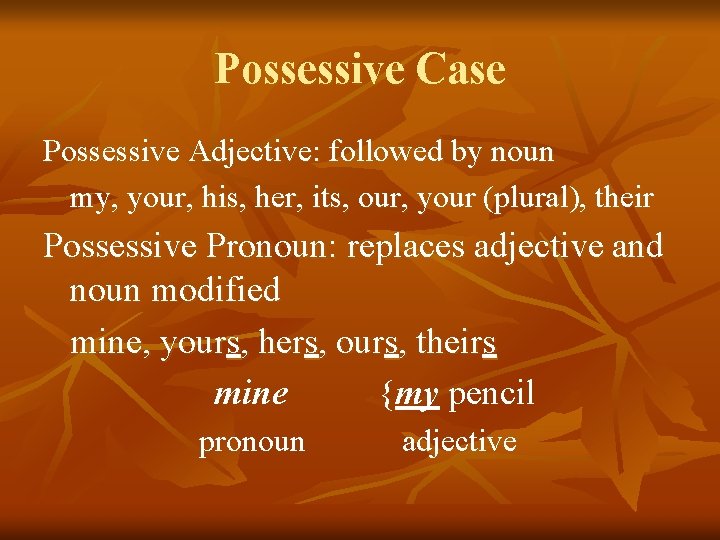
Possessive Case Possessive Adjective: followed by noun my, your, his, her, its, our, your (plural), their Possessive Pronoun: replaces adjective and noun modified mine, yours, hers, ours, theirs mine {my pencil pronoun adjective
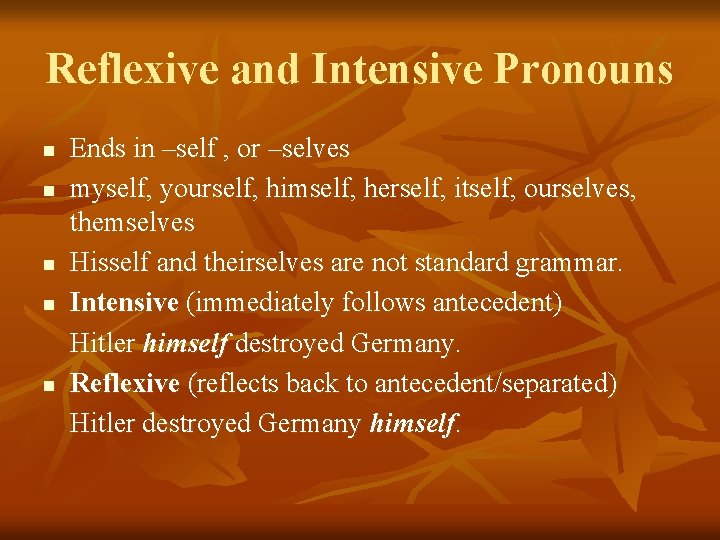
Reflexive and Intensive Pronouns n n n Ends in –self , or –selves myself, yourself, himself, herself, itself, ourselves, themselves Hisself and theirselves are not standard grammar. Intensive (immediately follows antecedent) Hitler himself destroyed Germany. Reflexive (reflects back to antecedent/separated) Hitler destroyed Germany himself.
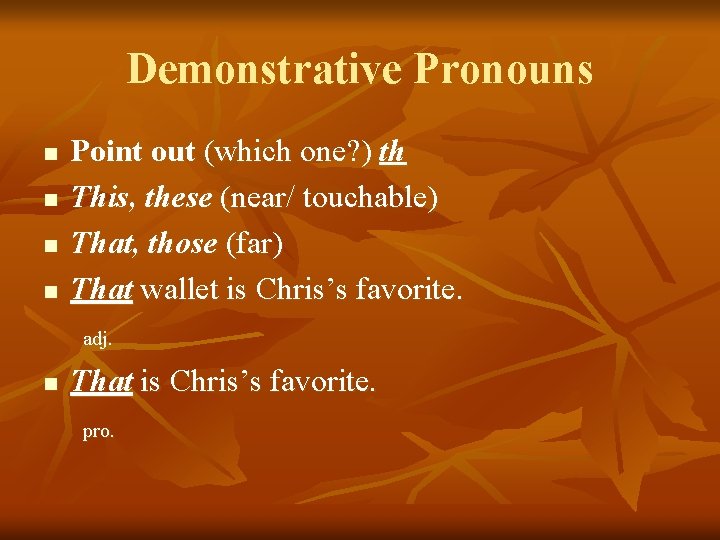
Demonstrative Pronouns n n Point out (which one? ) th This, these (near/ touchable) That, those (far) That wallet is Chris’s favorite. adj. n That is Chris’s favorite. pro.
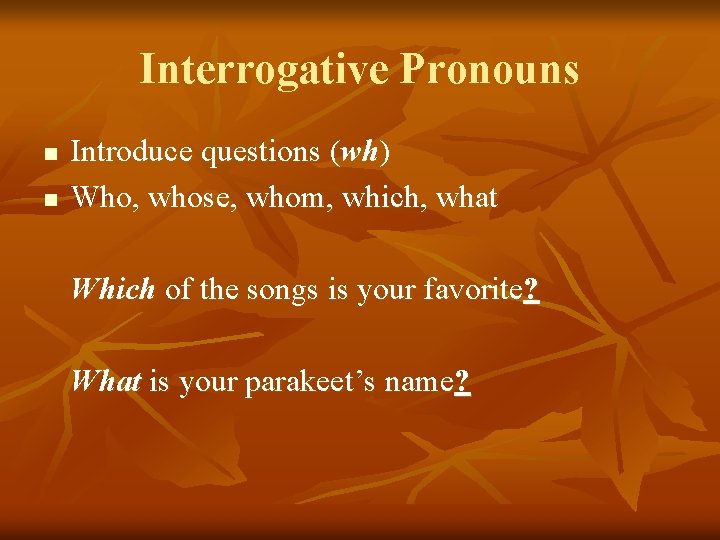
Interrogative Pronouns n n Introduce questions (wh) Who, whose, whom, which, what Which of the songs is your favorite? What is your parakeet’s name?
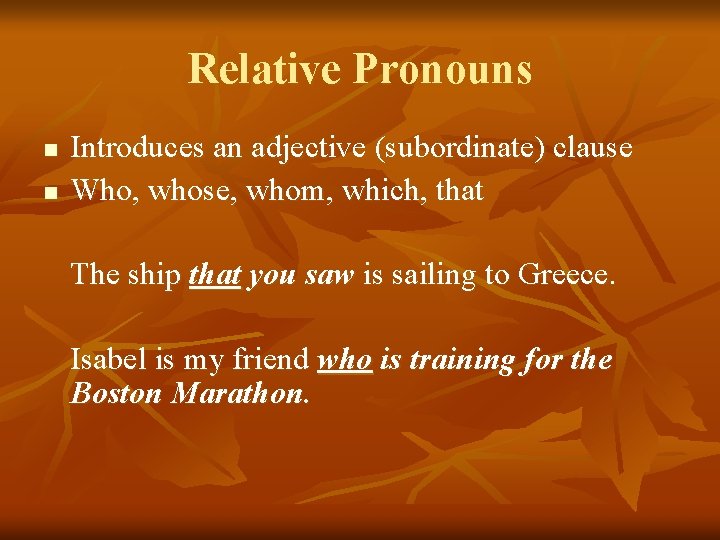
Relative Pronouns n n Introduces an adjective (subordinate) clause Who, whose, whom, which, that The ship that you saw is sailing to Greece. Isabel is my friend who is training for the Boston Marathon.
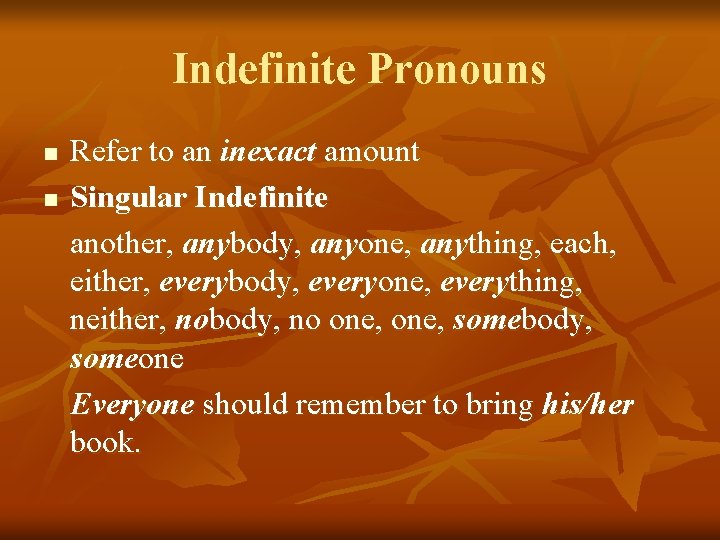
Indefinite Pronouns n n Refer to an inexact amount Singular Indefinite another, anybody, anyone, anything, each, either, everybody, everyone, everything, neither, nobody, no one, somebody, someone Everyone should remember to bring his/her book.
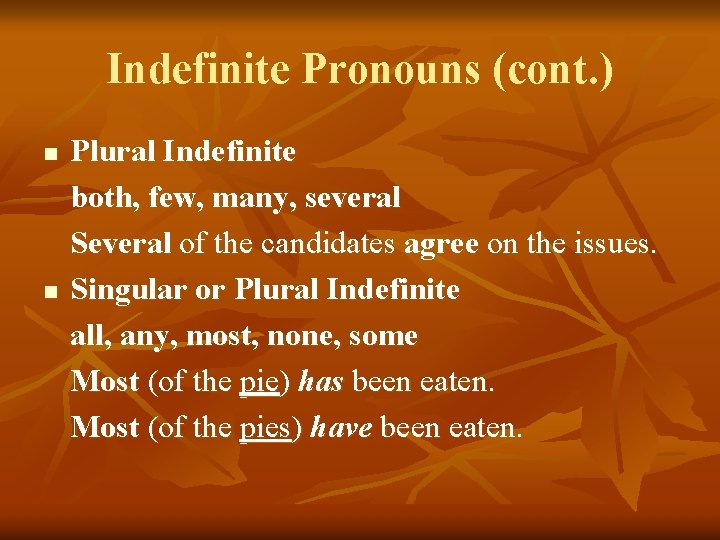
Indefinite Pronouns (cont. ) n n Plural Indefinite both, few, many, several Several of the candidates agree on the issues. Singular or Plural Indefinite all, any, most, none, some Most (of the pie) has been eaten. Most (of the pies) have been eaten.
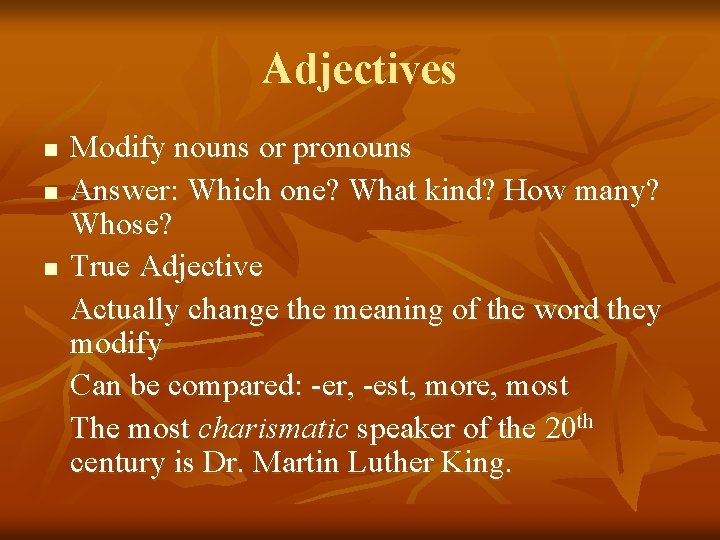
Adjectives n n n Modify nouns or pronouns Answer: Which one? What kind? How many? Whose? True Adjective Actually change the meaning of the word they modify Can be compared: -er, -est, more, most The most charismatic speaker of the 20 th century is Dr. Martin Luther King.
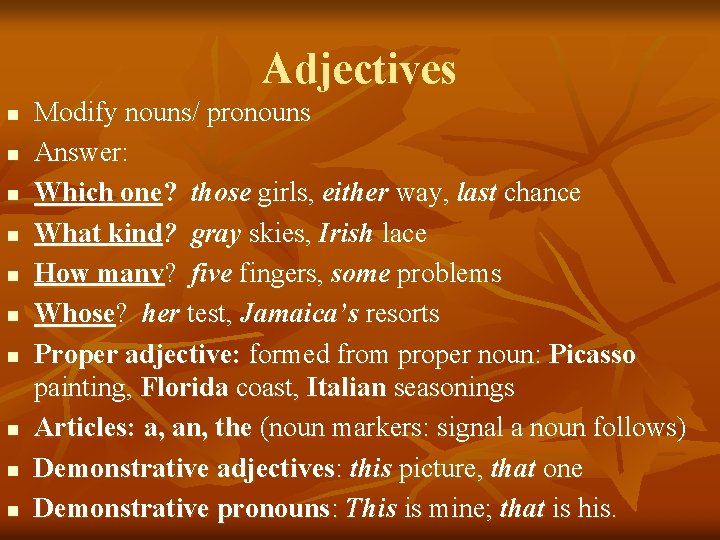
Adjectives n n n n n Modify nouns/ pronouns Answer: Which one? those girls, either way, last chance What kind? gray skies, Irish lace How many? five fingers, some problems Whose? her test, Jamaica’s resorts Proper adjective: formed from proper noun: Picasso painting, Florida coast, Italian seasonings Articles: a, an, the (noun markers: signal a noun follows) Demonstrative adjectives: this picture, that one Demonstrative pronouns: This is mine; that is his.
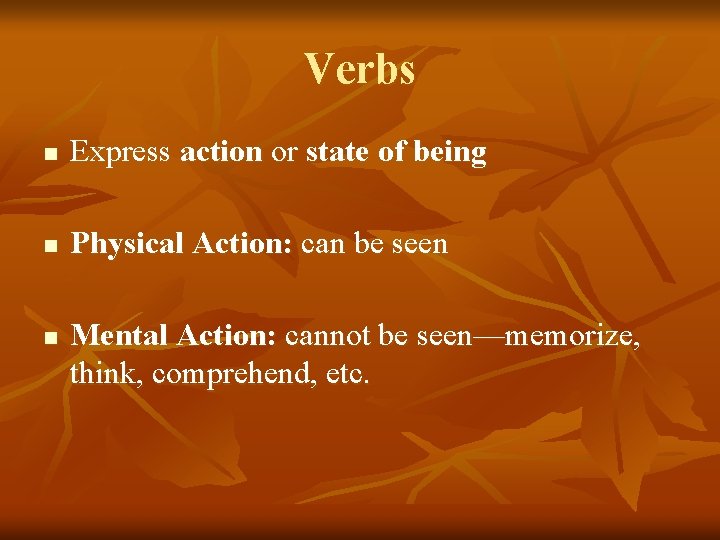
Verbs n Express action or state of being n Physical Action: can be seen n Mental Action: cannot be seen—memorize, think, comprehend, etc.
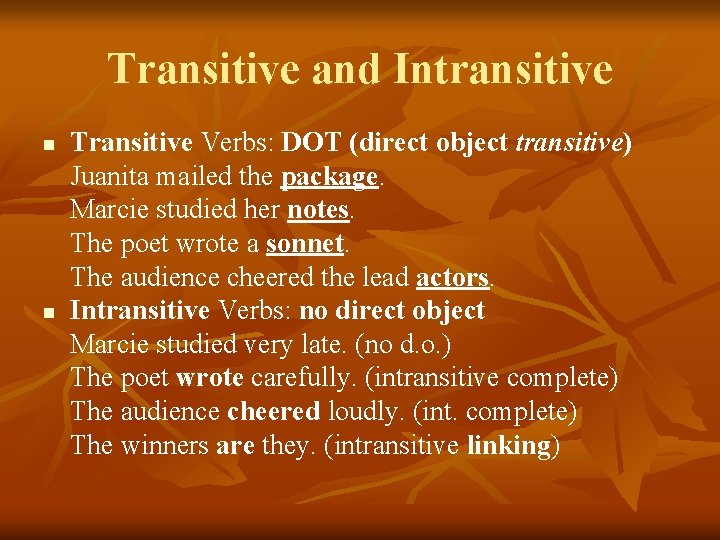
Transitive and Intransitive n n Transitive Verbs: DOT (direct object transitive) Juanita mailed the package. Marcie studied her notes. The poet wrote a sonnet. The audience cheered the lead actors. Intransitive Verbs: no direct object Marcie studied very late. (no d. o. ) The poet wrote carefully. (intransitive complete) The audience cheered loudly. (int. complete) The winners are they. (intransitive linking)
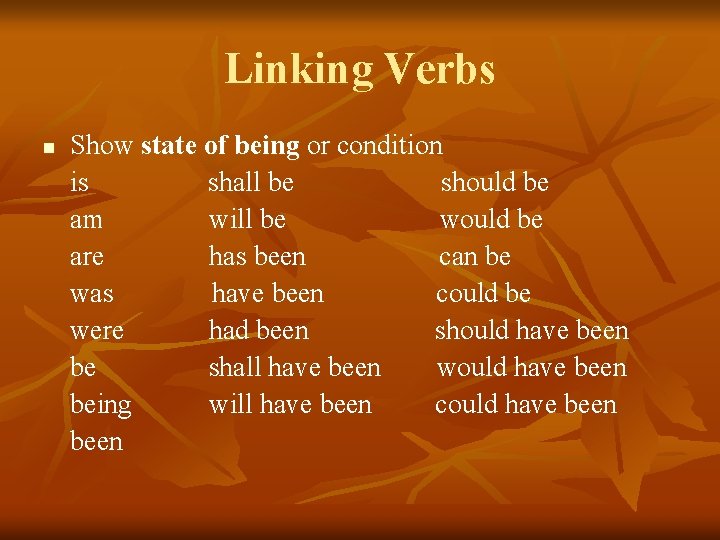
Linking Verbs n Show state of being or condition is shall be should be am will be would be are has been can be was have been could be were had been should have been be shall have been would have been being will have been could have been
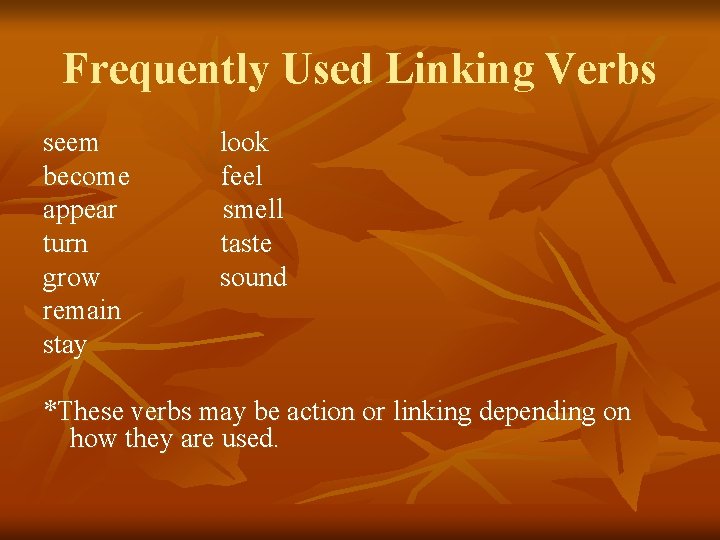
Frequently Used Linking Verbs seem become appear turn grow remain stay look feel smell taste sound *These verbs may be action or linking depending on how they are used.
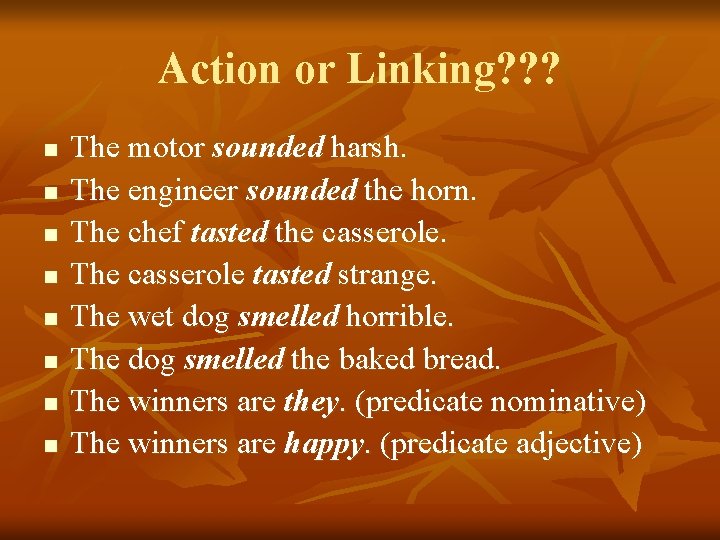
Action or Linking? ? ? n n n n The motor sounded harsh. The engineer sounded the horn. The chef tasted the casserole. The casserole tasted strange. The wet dog smelled horrible. The dog smelled the baked bread. The winners are they. (predicate nominative) The winners are happy. (predicate adjective)
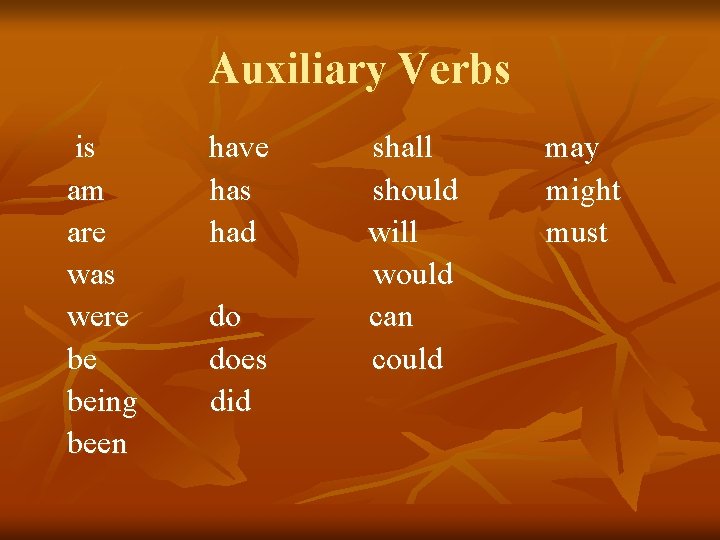
Auxiliary Verbs is am are was were be being been have has had do does did shall should will would can could may might must
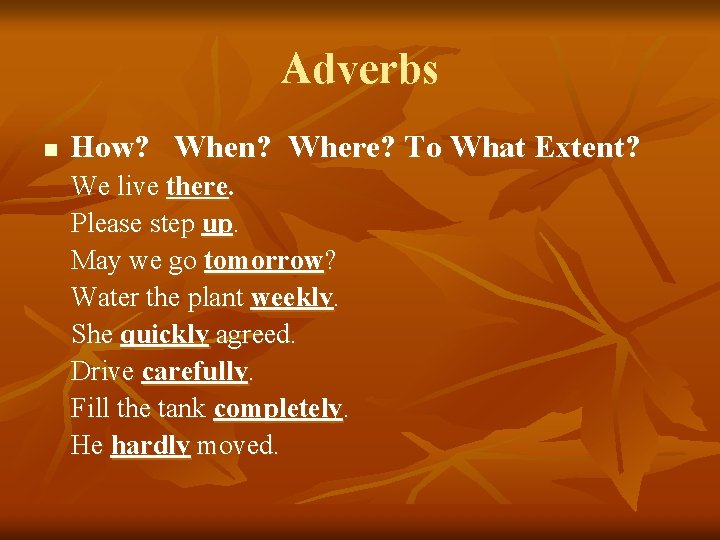
Adverbs n How? When? Where? To What Extent? We live there. Please step up. May we go tomorrow? Water the plant weekly. She quickly agreed. Drive carefully. Fill the tank completely. He hardly moved.
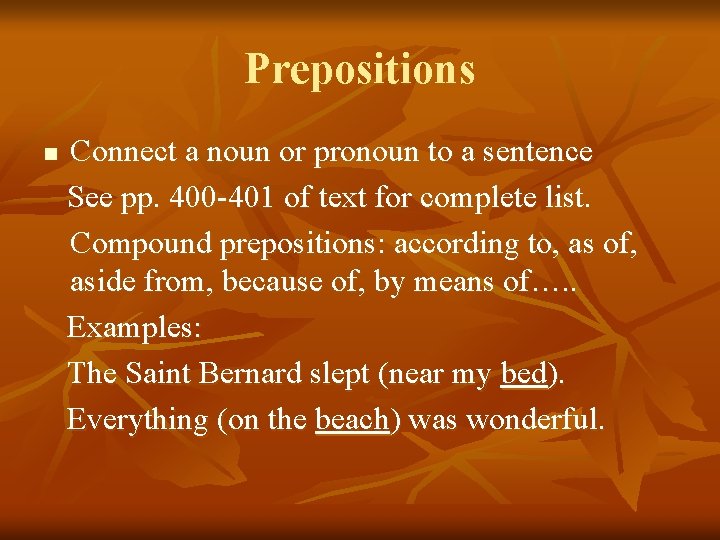
Prepositions n Connect a noun or pronoun to a sentence See pp. 400 -401 of text for complete list. Compound prepositions: according to, as of, aside from, because of, by means of…. . Examples: The Saint Bernard slept (near my bed). Everything (on the beach) was wonderful.
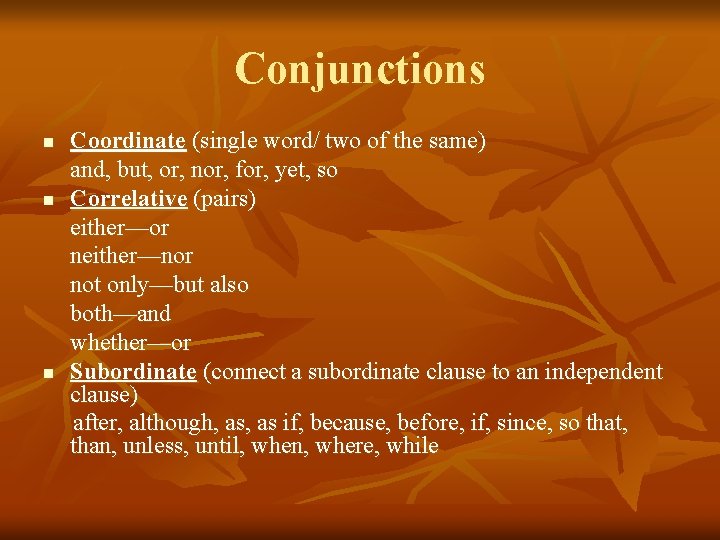
Conjunctions n n n Coordinate (single word/ two of the same) and, but, or, nor, for, yet, so Correlative (pairs) either—or neither—nor not only—but also both—and whether—or Subordinate (connect a subordinate clause to an independent clause) after, although, as if, because, before, if, since, so that, than, unless, until, when, where, while
Interjection n a word that expresses emotion but has no grammatical connection to the rest of the sentence Oops! The sidewalks are slippery. Well, I guess that’s that!