
Parts of Speech and Parts of the Sentence
- Slides: 32
Parts of Speech and Parts of the Sentence They ARE different!
What is the difference between a “part of speech” and a “part of the sentence”?
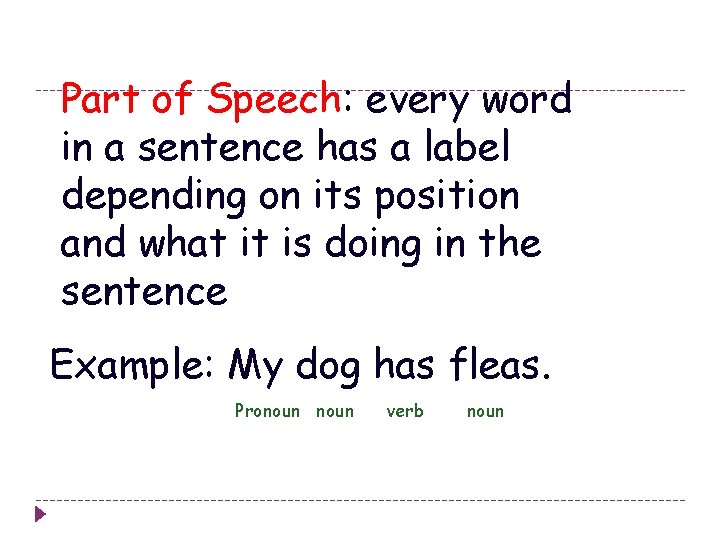
Part of Speech: every word in a sentence has a label depending on its position and what it is doing in the sentence Example: My dog has fleas. Pronoun verb noun
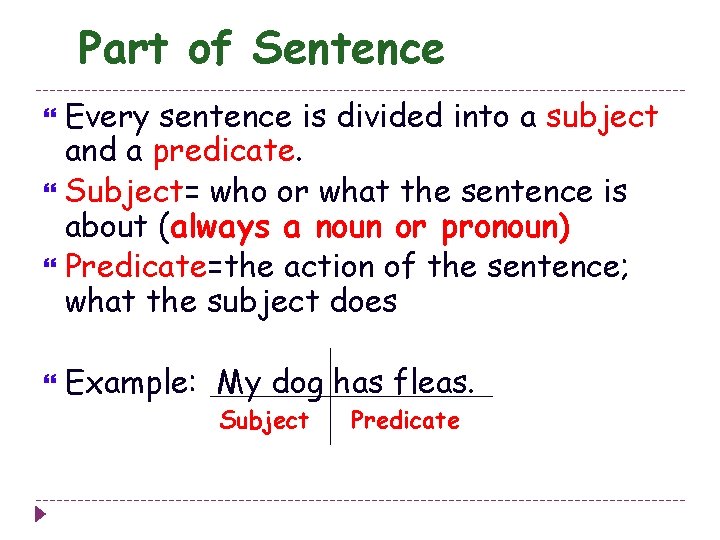
Part of Sentence Every sentence is divided into a subject and a predicate. Subject= who or what the sentence is about (always a noun or pronoun) Predicate=the action of the sentence; what the subject does Example: My dog has fleas. Subject Predicate
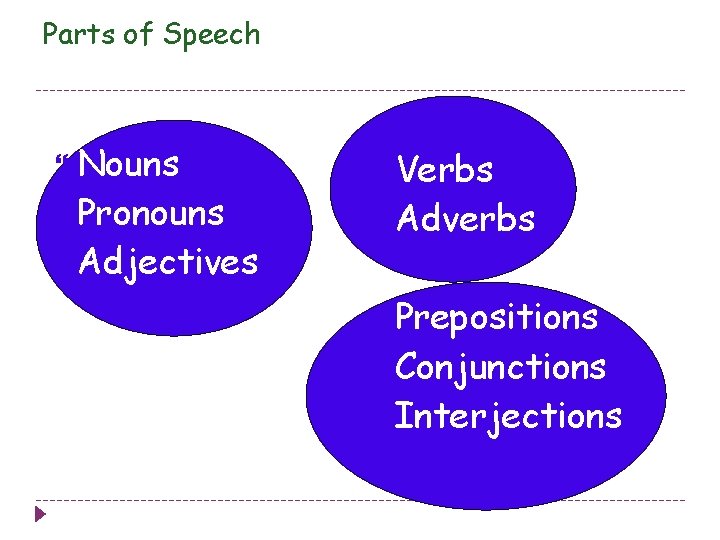
Parts of Speech Nouns Pronouns Adjectives Verbs Adverbs Prepositions Conjunctions Interjections
Nouns Naming Person, words Place, Thing, or Idea Anything that you can see, feel, touch, smell, hear!
Persons Mrs. Chalkley--- teacher Sarah—girl Tom—boy Grandmother Grandfather
Places Hagerstown—city Antietam Battle Field—park Maryland--state
Things Car, boat, train, plane dog, cat, cow bracelet, beads dish, pan
Ideas Difficult to pin down Democracy, You freedom, happiness know they exist, but you can’t touch them! You can see the outward signs (flag, smile)
Pronouns Not just nouns that went professional!
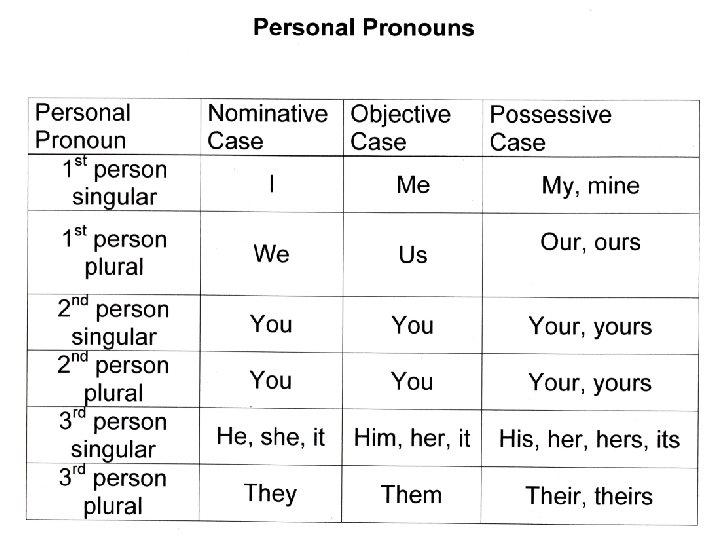
Pronoun A word that takes the place of a noun Think of it as a “stunt double” for the noun Without pronouns, your sentences would sound awkward: Marcia told John that Marcia liked John’s story better than Marcia liked Marcia’s story. Better: Marcia told John that she liked his story better than she liked hers.
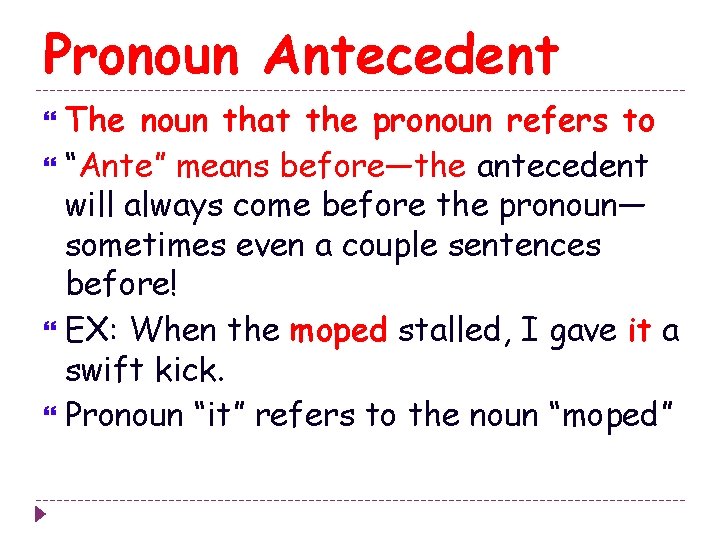
Pronoun Antecedent The noun that the pronoun refers to “Ante” means before—the antecedent will always come before the pronoun— sometimes even a couple sentences before! EX: When the moped stalled, I gave it a swift kick. Pronoun “it” refers to the noun “moped”
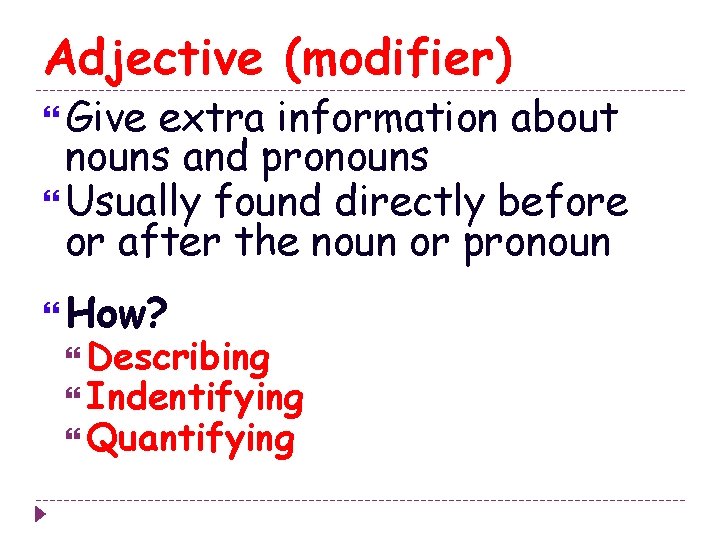
Adjective (modifier) Give extra information about nouns and pronouns Usually found directly before or after the noun or pronoun How? Describing Indentifying Quantifying
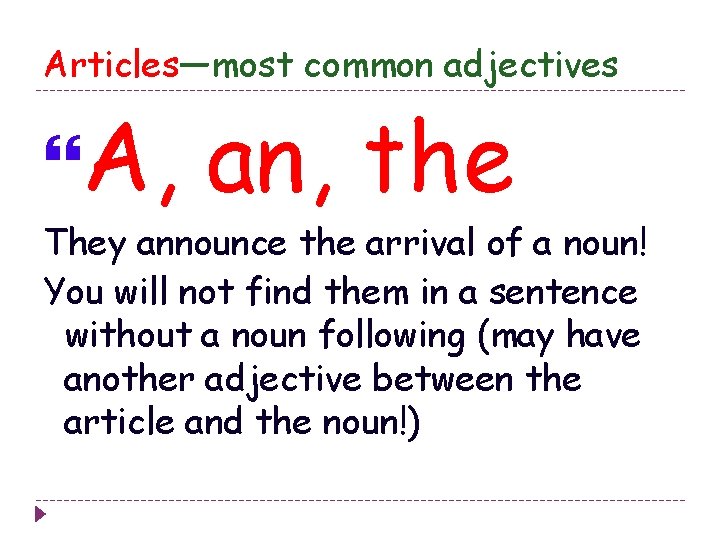
Articles—most common adjectives A, an, the They announce the arrival of a noun! You will not find them in a sentence without a noun following (may have another adjective between the article and the noun!)
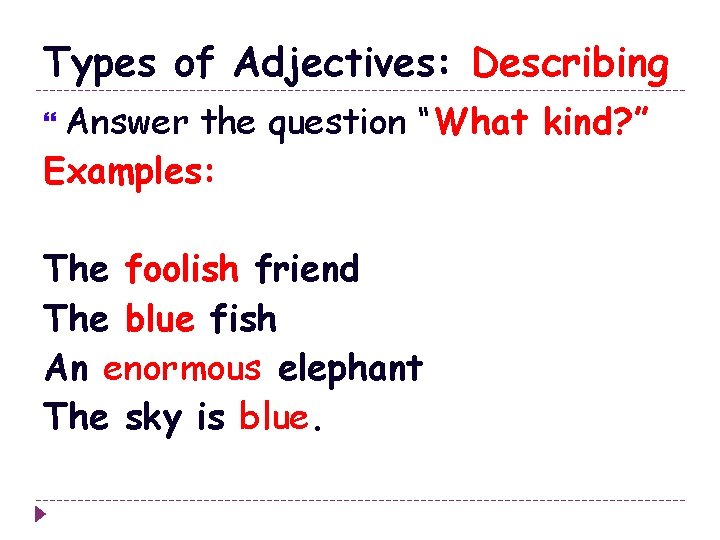
Types of Adjectives: Describing Answer the question “What kind? ” Examples: The foolish friend The blue fish An enormous elephant The sky is blue.
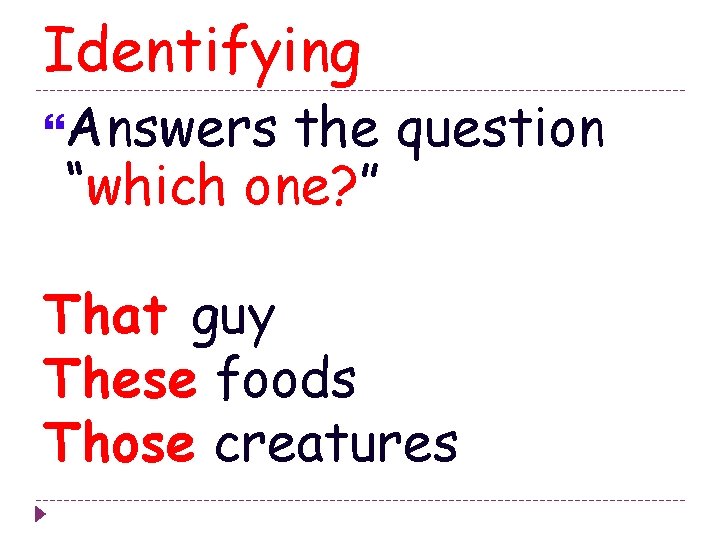
Identifying Answers the question “which one? ” That guy These foods Those creatures
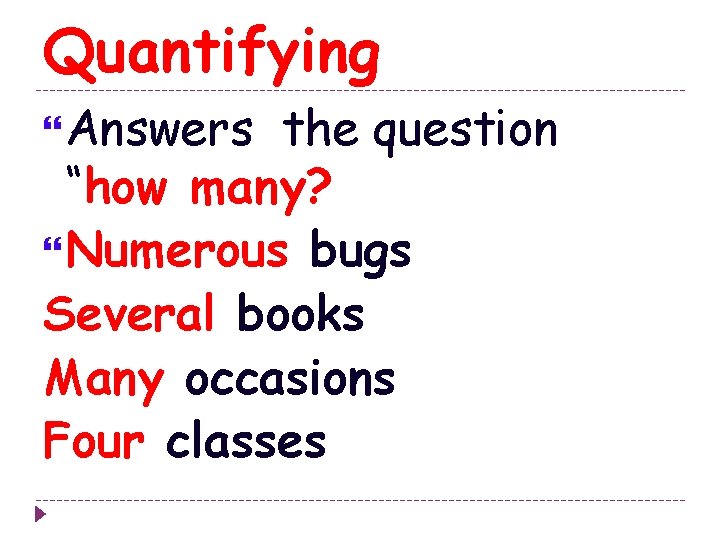
Quantifying Answers the question “how many? Numerous bugs Several books Many occasions Four classes
Verbs What’s happening in the sentence.
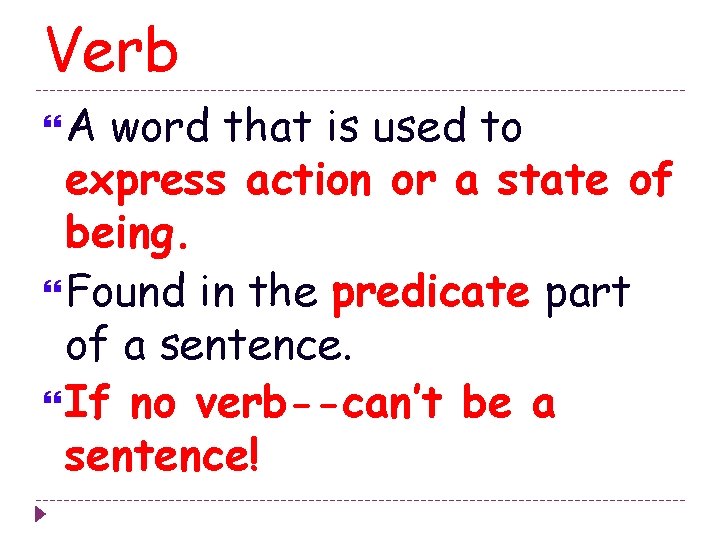
Verb A word that is used to express action or a state of being. Found in the predicate part of a sentence. If no verb--can’t be a sentence!
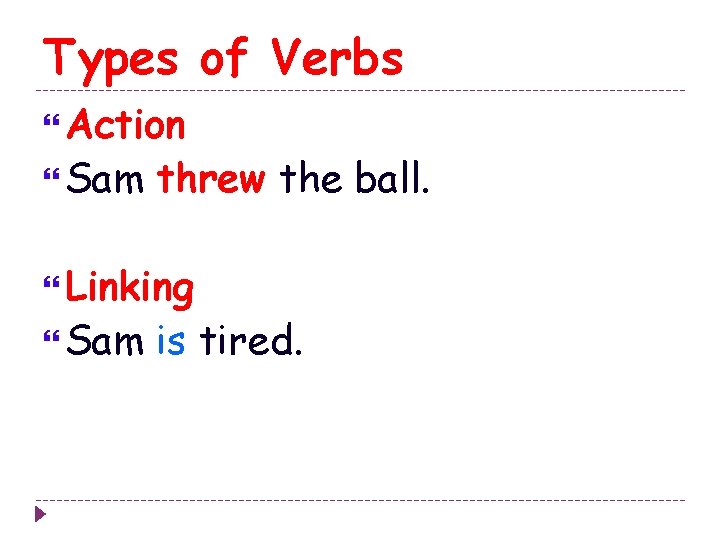
Types of Verbs Action Sam threw the ball. Linking Sam is tired.
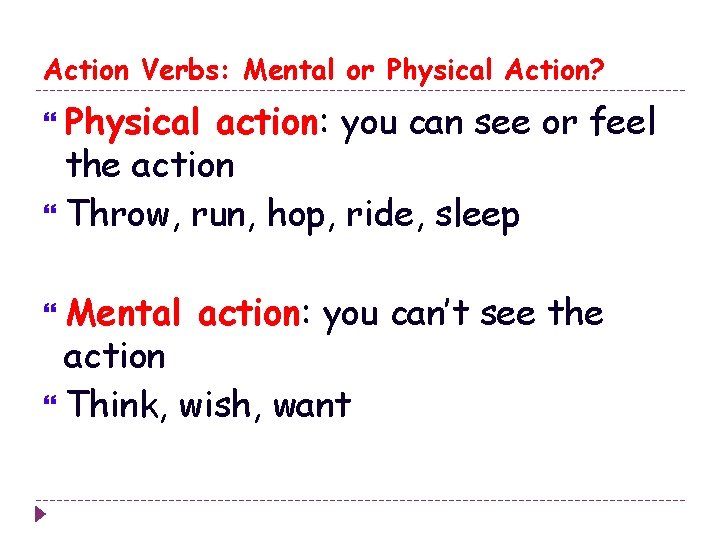
Action Verbs: Mental or Physical Action? Physical action: you can see or feel the action Throw, run, hop, ride, sleep Mental action: you can’t see the action Think, wish, want
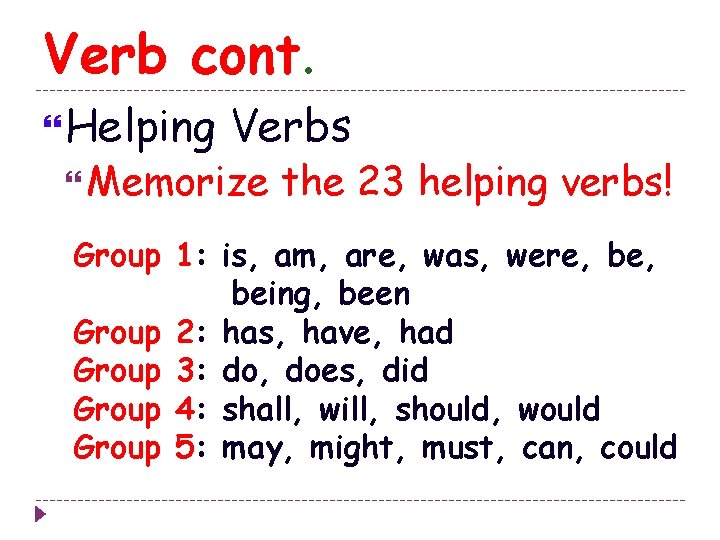
Verb cont. Helping Verbs Memorize the 23 helping verbs! Group 1: is, am, are, was, were, being, been Group 2: has, have, had Group 3: do, does, did Group 4: shall, will, should, would Group 5: may, might, must, can, could
Why “helping” verb? Tells the reader when the action happens: Present Past Future
Example of Helping Verb use I will fly to Texas. I flew to Texas last week. I am flying to Texas.
Common Linking Verbs Is, am, are, was, were, being, been (the verb “to be” appear, become, feel, seem, smell, taste, and sound.
Linking Verbs They express states of being—what is, will be, or was Think of them as a giant equal ( = ) sign in your sentence. Example: I am tired. I = tired.
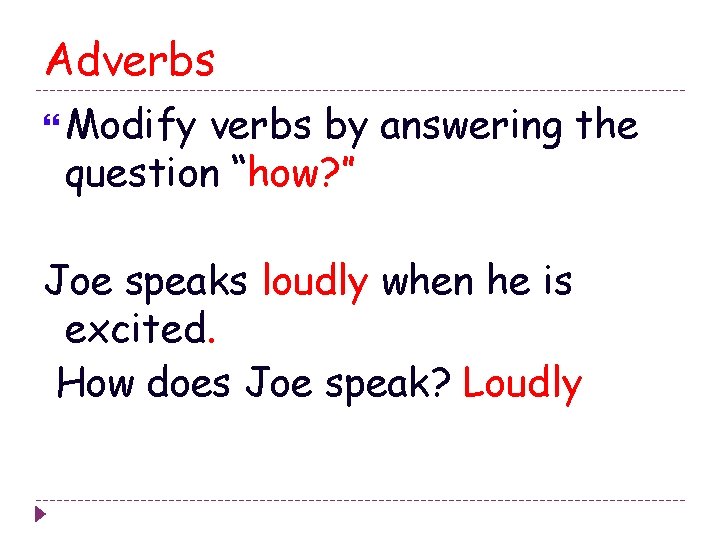
Adverbs Modify verbs by answering the question “how? ” Joe speaks loudly when he is excited. How does Joe speak? Loudly
Adverbs continued… Adverbs can also modify: Adjectives Adverbs And entire phrases
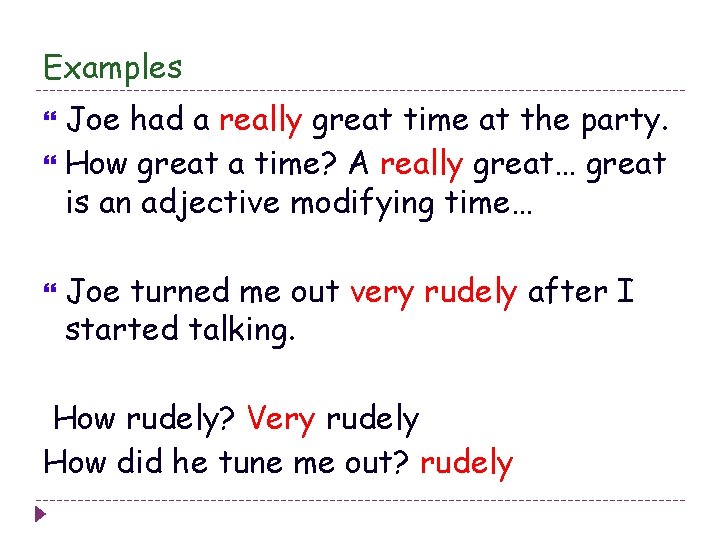
Examples Joe had a really great time at the party. How great a time? A really great… great is an adjective modifying time… Joe turned me out very rudely after I started talking. How rudely? Very rudely How did he tune me out? rudely
Important! If a word ends in ‘ly, ” it probably is an adverb!!!