
Parts of Speech All About Nouns Nouns A
Parts of Speech All About Nouns
Nouns • A noun is a person, place, thing, or idea • There are many different kinds of nouns: – Common – Proper – Abstract – Concrete – Compound – Collective – Count – Non count
Common Nouns • A common noun can be ANY person, place, or thing. • Do not capitalize common nouns. • Examples: – firefighter (person) – town (place) – book (thing)
Proper Nouns • A proper noun names a person, place, or thing. • Proper nouns are ALWAYS capitalized. • Examples: – Chief Wilson (firefighter) (person) – Kansas City (town) (place) – Where the Red Fern Grows (book) (thing)
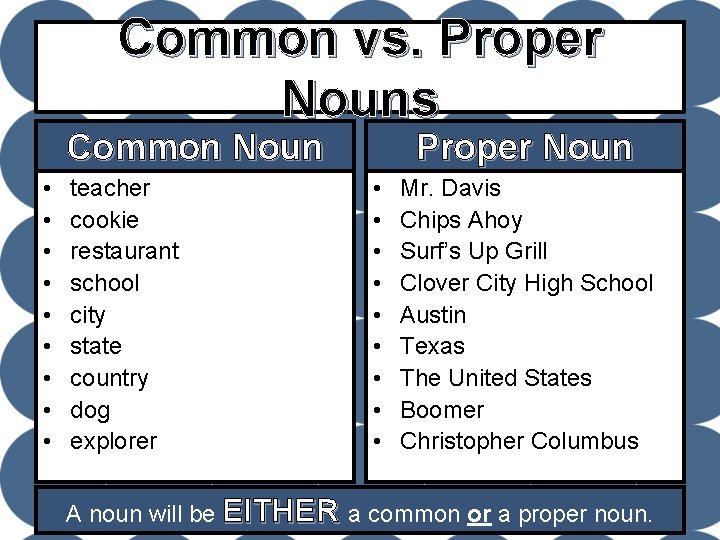
Common vs. Proper Nouns Common Noun • • • teacher cookie restaurant school city state country dog explorer Proper Noun • • • Mr. Davis Chips Ahoy Surf’s Up Grill Clover City High School Austin Texas The United States Boomer Christopher Columbus A noun will be EITHER a common or a proper noun.
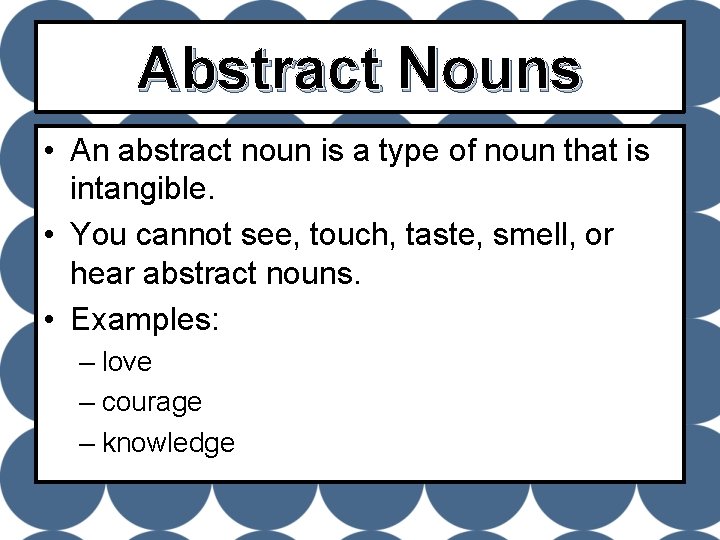
Abstract Nouns • An abstract noun is a type of noun that is intangible. • You cannot see, touch, taste, smell, or hear abstract nouns. • Examples: – love – courage – knowledge
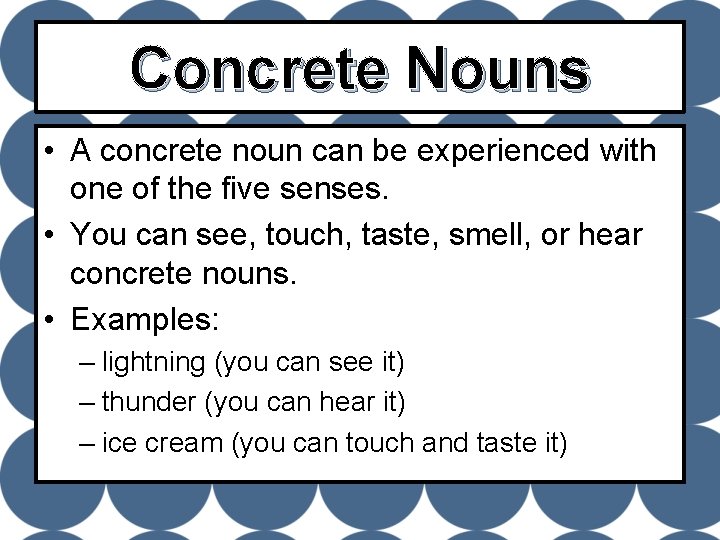
Concrete Nouns • A concrete noun can be experienced with one of the five senses. • You can see, touch, taste, smell, or hear concrete nouns. • Examples: – lightning (you can see it) – thunder (you can hear it) – ice cream (you can touch and taste it)
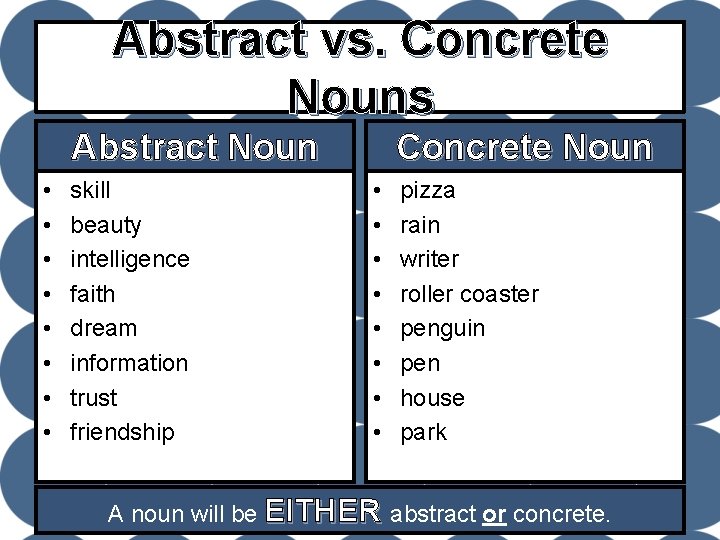
Abstract vs. Concrete Nouns Abstract Noun • • skill beauty intelligence faith dream information trust friendship Concrete Noun • • pizza rain writer roller coaster penguin pen house park A noun will be EITHER abstract or concrete.
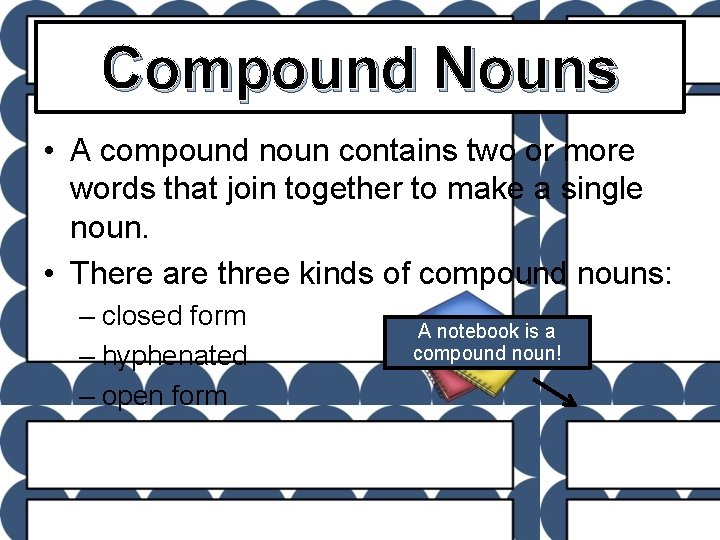
Compound Nouns • A compound noun contains two or more words that join together to make a single noun. • There are three kinds of compound nouns: – closed form – hyphenated – open form A notebook is a compound noun!
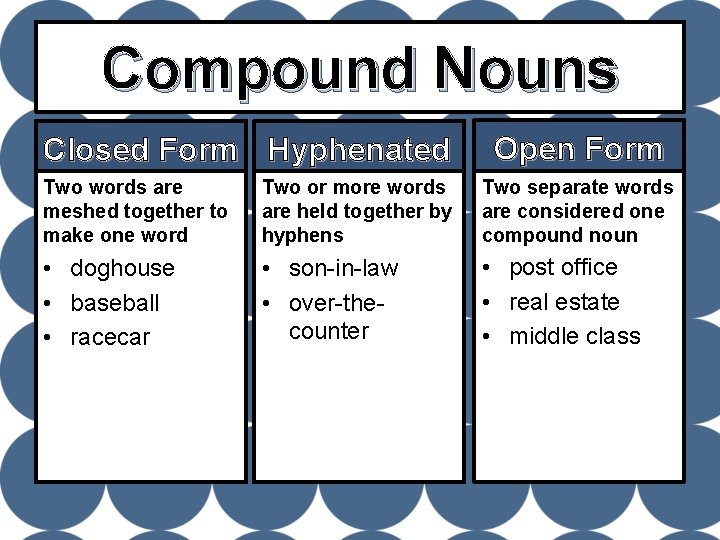
Compound Nouns Closed Form Hyphenated Open Form Two words are meshed together to make one word Two or more words are held together by hyphens Two separate words are considered one compound noun • doghouse • baseball • racecar • son-in-law • over-thecounter • post office • real estate • middle class
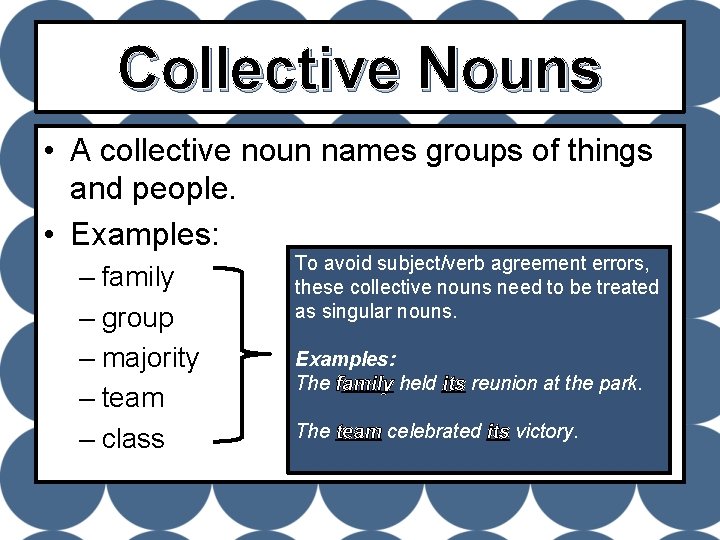
Collective Nouns • A collective noun names groups of things and people. • Examples: – family – group – majority – team – class To avoid subject/verb agreement errors, these collective nouns need to be treated as singular nouns. Examples: The family held its reunion at the park. The team celebrated its victory.
Plural Nouns A plural noun is a word that indicates that there is more than one person, animal place, thing, or idea.

Plural Nouns Rule #1 Most nouns are made plural by simply adding an “s” to the singular noun
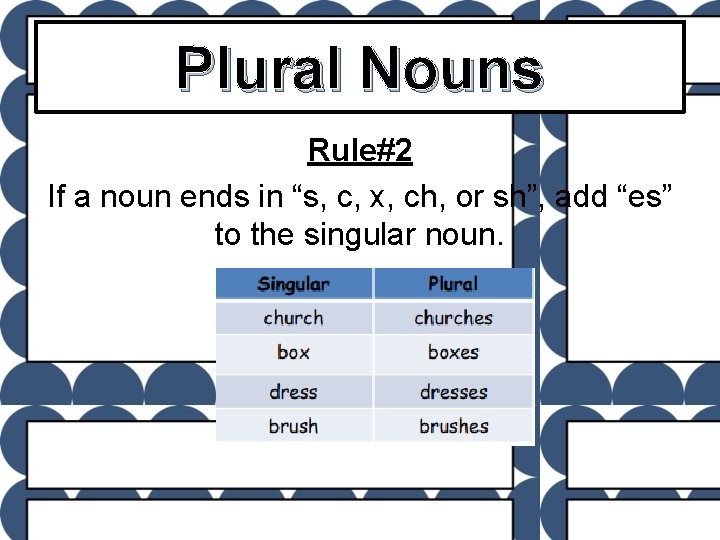
Plural Nouns Rule#2 If a noun ends in “s, c, x, ch, or sh”, add “es” to the singular noun.
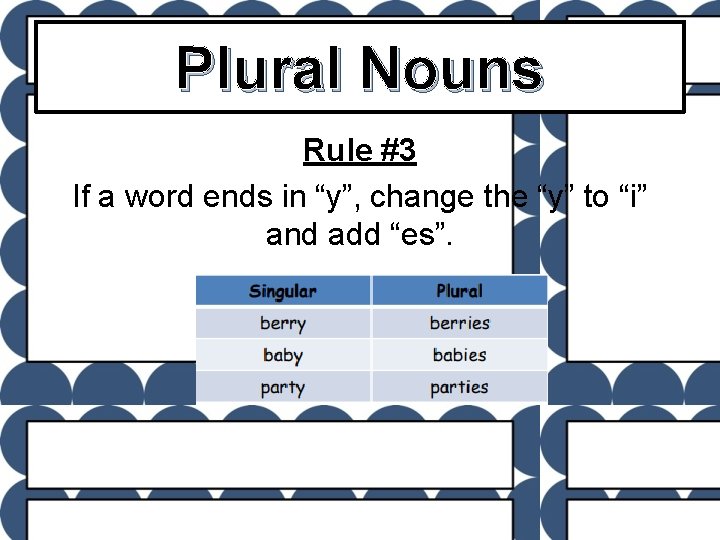
Plural Nouns Rule #3 If a word ends in “y”, change the “y” to “i” and add “es”.
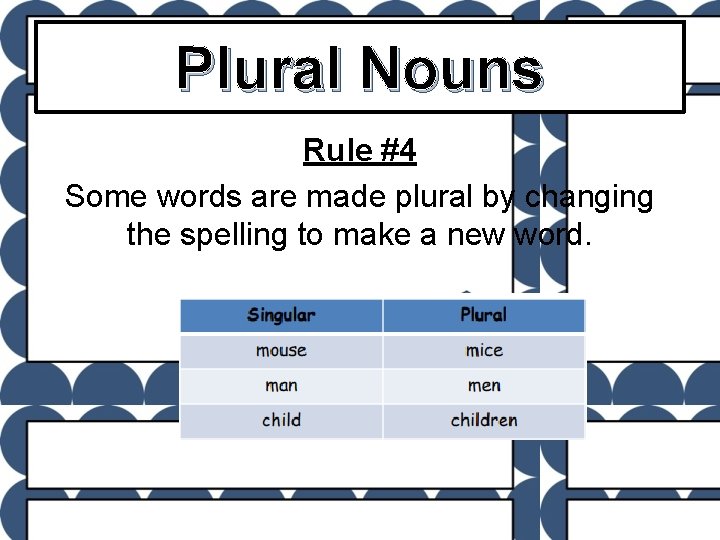
Plural Nouns Rule #4 Some words are made plural by changing the spelling to make a new word.
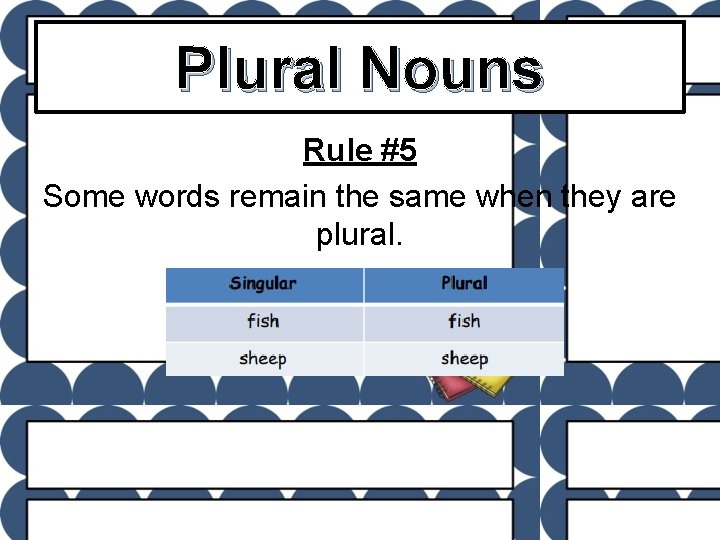
Plural Nouns Rule #5 Some words remain the same when they are plural.
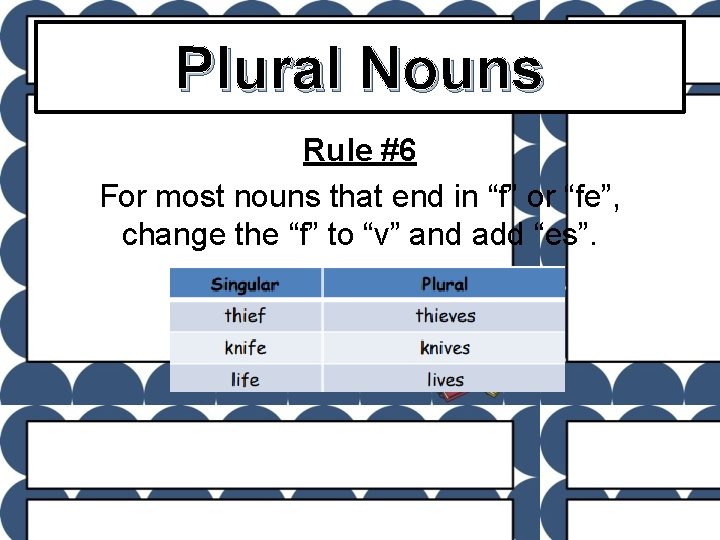
Plural Nouns Rule #6 For most nouns that end in “f” or “fe”, change the “f” to “v” and add “es”.
Possessive Nouns A possessive noun shows ownership of something. To show possession using ‘s or s’
Possessive Nouns A singular possessive noun shows that one person, animal, place, or thing has or owns something. To make a singular noun show possession, add an apostrophe and “s”. (example: a bird’s song)
Possessive Nouns A plural possessive noun shows that more than one person, animal, place, or thing has or owns something. • To make a plural noun that ends in “s” show possession, just add an apostrophe. (example: several weeks’ work) • To make a plural noun that does not end in “s” possessive, add an apostrophe and “s”. (example: the women’s papers)
- Slides: 21