
Parts of an Atom Nucleus Small dense positively
- Slides: 6
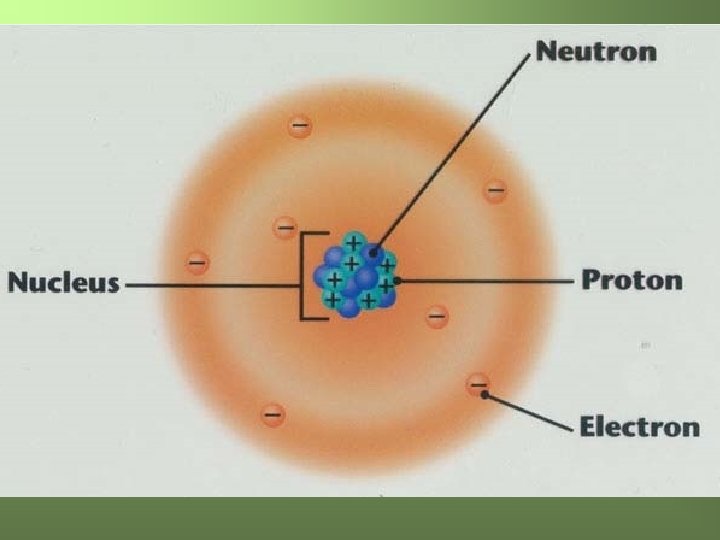
Parts of an Atom • Nucleus – Small dense positively charged center, contains most of the mass • Protons – Positively charged particles. All are identical regardless of type of element. • Neutrons – No charge. All are identical regardless of type of element. • Electrons – Negatively charged particles found in clouds outside nucleus. Size of cloud determines size of atom
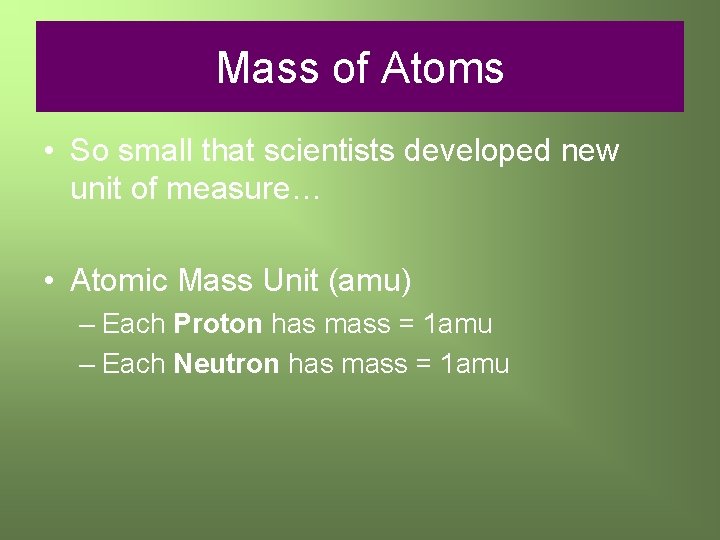
Mass of Atoms • So small that scientists developed new unit of measure… • Atomic Mass Unit (amu) – Each Proton has mass = 1 amu – Each Neutron has mass = 1 amu
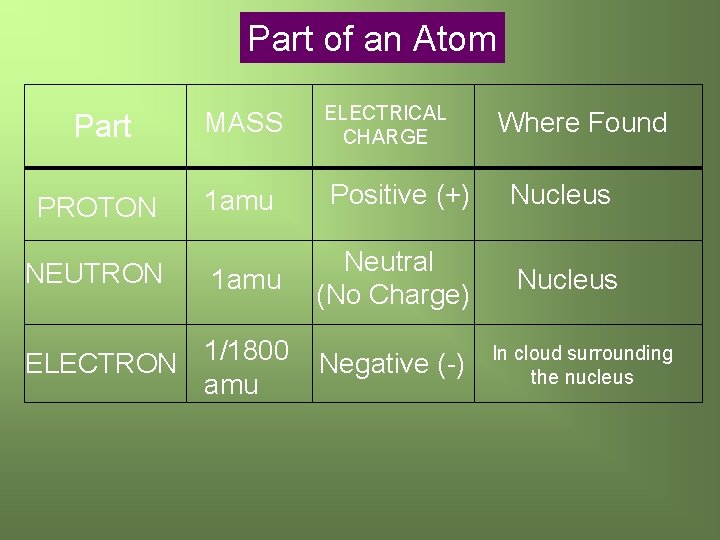
Part of an Atom Part MASS ELECTRICAL CHARGE PROTON 1 amu Positive (+) Nucleus 1 amu Neutral (No Charge) Nucleus NEUTRON 1/1800 ELECTRON amu Negative (-) Where Found In cloud surrounding the nucleus
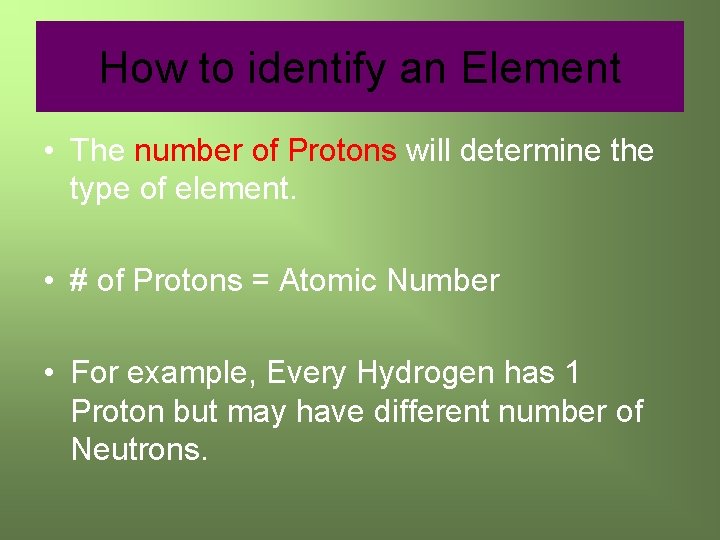
How to identify an Element • The number of Protons will determine the type of element. • # of Protons = Atomic Number • For example, Every Hydrogen has 1 Proton but may have different number of Neutrons.
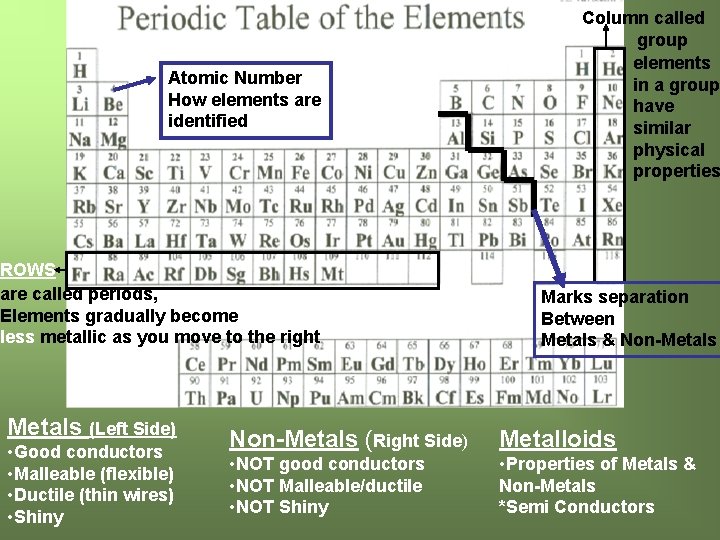
Atomic Number How elements are identified ROWS are called periods, Elements gradually become less metallic as you move to the right Metals (Left Side) • Good conductors • Malleable (flexible) • Ductile (thin wires) • Shiny Column called group elements in a group have similar physical properties Marks separation Between Metals & Non-Metals (Right Side) Metalloids • NOT good conductors • NOT Malleable/ductile • NOT Shiny • Properties of Metals & Non-Metals *Semi Conductors