
Parts of a speech Parts of a speech
- Slides: 20
Parts of a speech
Parts of a speech • Introduction • Body • Conclusion • Transitions
Body of speech • Utilize strategic organization • Develop main points • Main points should be created specifically and thoughtfully • 3 -5 main points, 3 will be sufficient for speeches in this class
Organization of main points • Chronological Order- main points follow time pattern • Topical Order- main points are divided into logical subtopics • Problem-Solution Order- main point one focuses on problem, main point two presents solution
Less common organization • Spatial Order-main points follow a directional pattern • ex: explaining the structure of a hurricane • Causal Order- main points show a cause/effect relationship
tips for preparing Main points • Keep main points separate • Use same pattern of wording for main points • Karate improves; Karate increases; Karate teaches • Keep amount of time balanced based on topic and complexity
Introduction • Greeting • Attention Getter (interest catcher, hook) • Credibility statement • Preview statement
Greeting • Introduce yourself • Say hello, hi, welcome, something • Tell the audience your name
Attention getter • Gets audience’s attention • Needs to be relevant to topic • Quote • Statistic • Story • Question • Startling statement
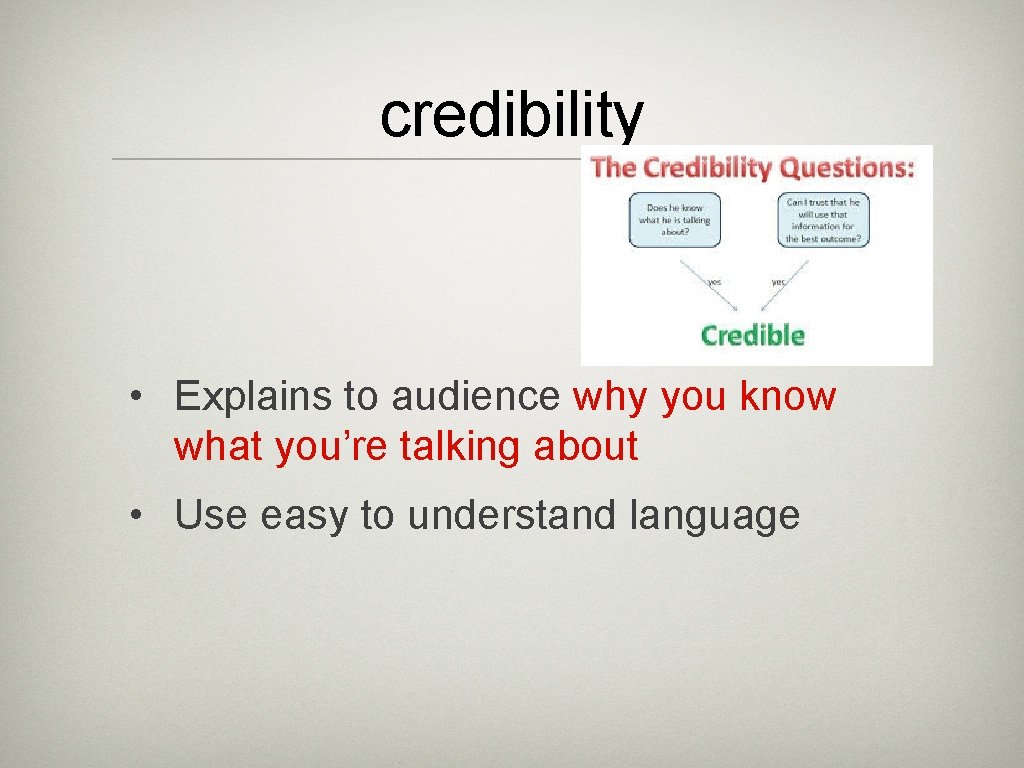
credibility • Explains to audience why you know what you’re talking about • Use easy to understand language
Previewing • Statement that tells the audience what main points will be discussed • Considerations/Types of Previewing • Exactly what your main points are • Tell audience what you will talk about--reveal more later • Can give specialized information
Introduction tips • Keep intro brief • Consider introduction needs in research • Be creative • Worry about exact wording/order after completing body • Work out introduction in detail • Start after audience is quiet and focused
Conclusion • Lets audience know you are ending the speech • Reinforce audience’s understanding of, or commitment to, the central idea
Signal the end of the speech • Language • “In conclusion, My purpose has been, Let me end by saying” • Delivery • Crescendo ending- build speech up to powerful point • Dissolve ending- creates emotional appeal by fading step by step to dramatic final statement
Reinforce the Central idea • Summarize your speech • End with a quote • Make a dramatic statement • Refer to the introduction
Tips for the Conclusion • Consider concluding materials while researching • Conclude with bang, not a whisper • Keep it powerful, but brief • Don’t leave it to chance--practice and write it out
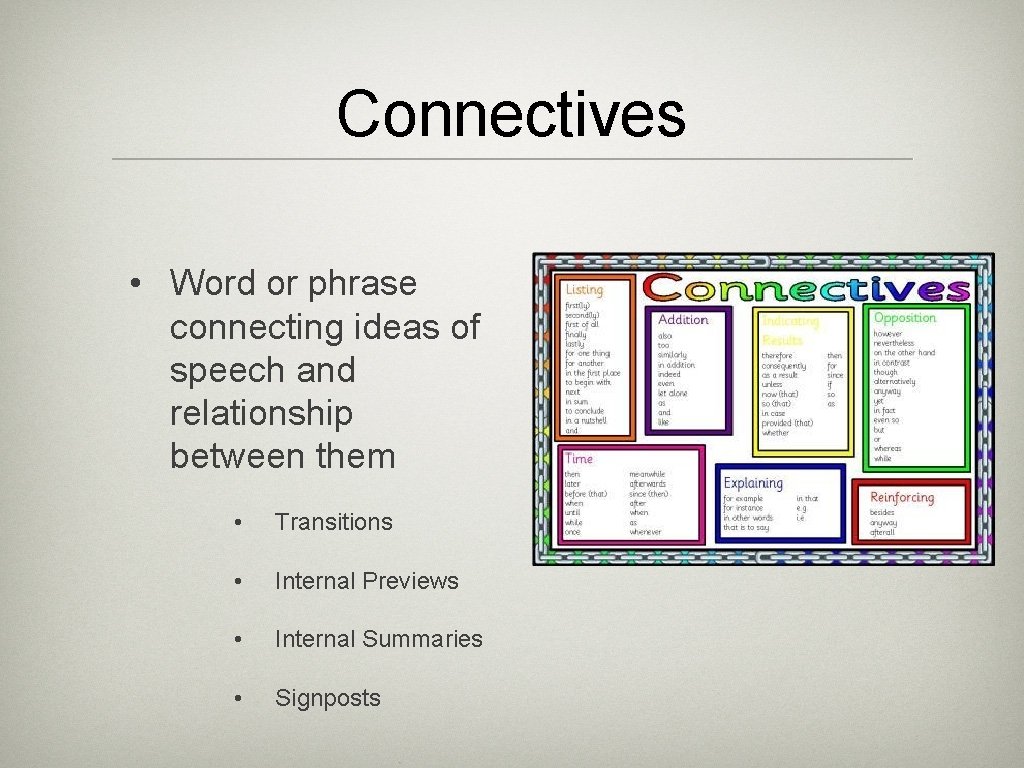
Connectives • Word or phrase connecting ideas of speech and relationship between them • Transitions • Internal Previews • Internal Summaries • Signposts
Transition • Word or phrase that indicates when a speaker finished one thought and moves to another • “Now that we have. . . ” • “I have spoken so far. . . ” • “Keeping these points in mind. . . ”
Internal Previews & Summaries • Internal Preview • Statement within the speech that let’s audience know what speaker will discuss next • Internal Summary • Statement within the speech that summarizes previous points
Signposts • Brief statement that indicates where a speaker is in the speech or that focuses attention on key ideas • “The first cause” • “The second cause” • “The final cause”