
Parts of a Sentence The Subject l the
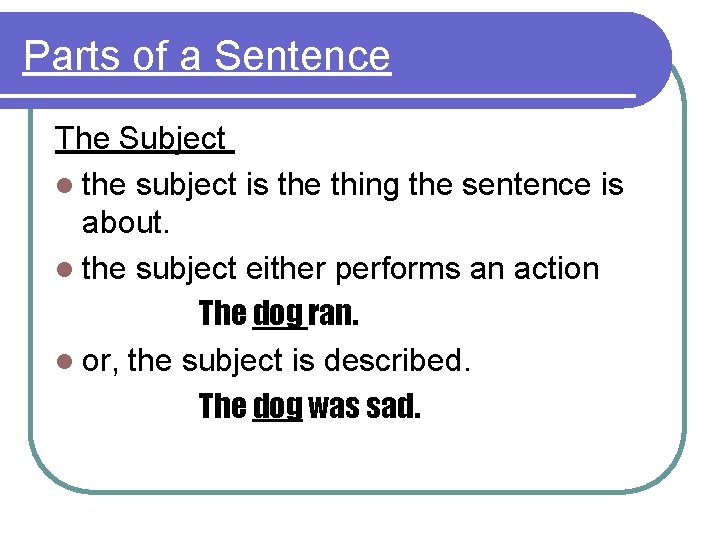
Parts of a Sentence The Subject l the subject is the thing the sentence is about. l the subject either performs an action The dog ran. l or, the subject is described. The dog was sad.
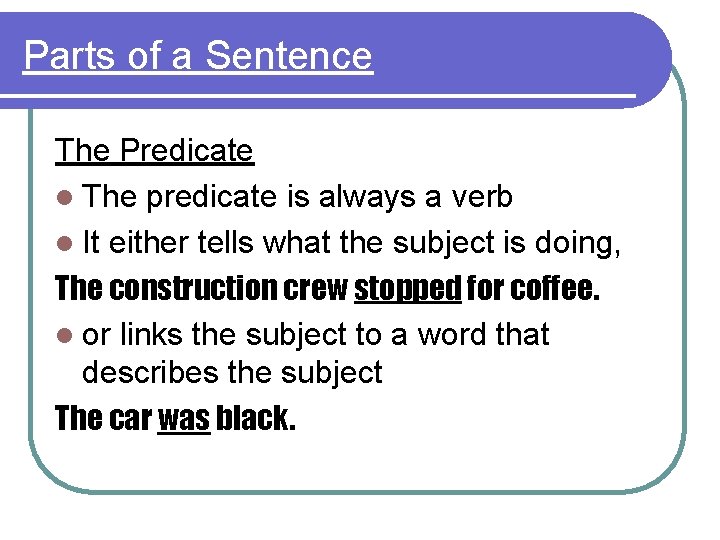
Parts of a Sentence The Predicate l The predicate is always a verb l It either tells what the subject is doing, The construction crew stopped for coffee. l or links the subject to a word that describes the subject The car was black.
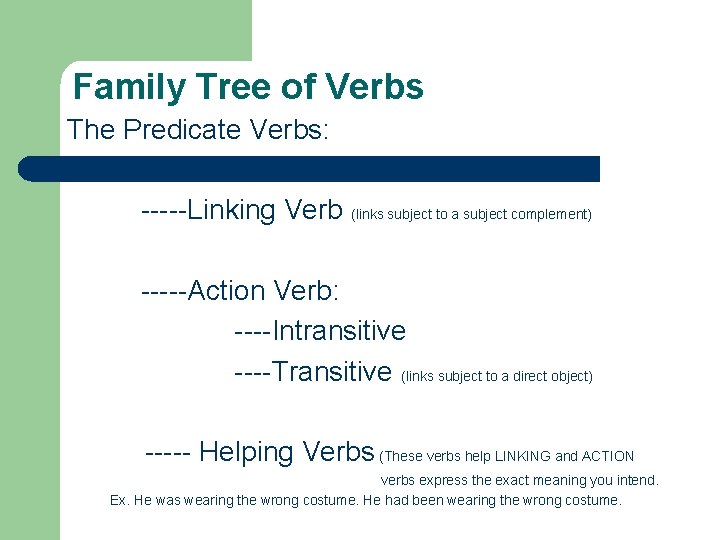
Family Tree of Verbs The Predicate Verbs: -----Linking Verb (links subject to a subject complement) -----Action Verb: ----Intransitive ----Transitive (links subject to a direct object) ----- Helping Verbs (These verbs help LINKING and ACTION verbs express the exact meaning you intend. Ex. He was wearing the wrong costume. He had been wearing the wrong costume.
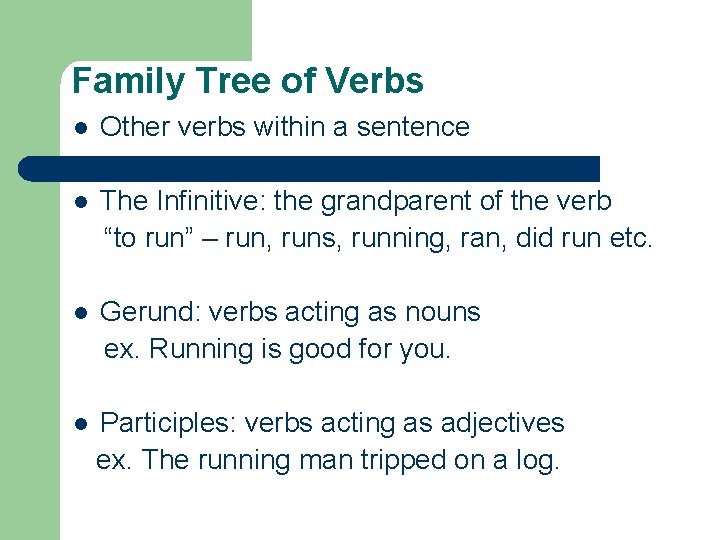
Family Tree of Verbs l Other verbs within a sentence l The Infinitive: the grandparent of the verb “to run” – run, runs, running, ran, did run etc. l Gerund: verbs acting as nouns ex. Running is good for you. l Participles: verbs acting as adjectives ex. The running man tripped on a log.
Parts of a Sentence Linking Verbs l These verbs link a SUBJECT to another word which describes the subject. l The describing word is called a SUBJECT COMPLEMENT.
Parts of a Sentence Linking Verbs - is, was, are, were, am - be, become Linking Verbs often pertain to the 5 senses - look, seem, appear, smell, taste, sound, feel
Parts of a Sentence Action Verbs – Transitive action verbs show an action the SUBJECT is performing and identifies a “thing” that is on the receiving end of the action. Molly rented a car. “Car” receives the action of “rented”. “Car” is called a DIRECT OBJECT.
Parts of a Sentence Action Verbs - Intransitive verbs show an action that a subject is performing. The rain was falling harder. A sentence with an intransitive verb could end after the verb. In the case above, “harder” is simply an ADVERB.
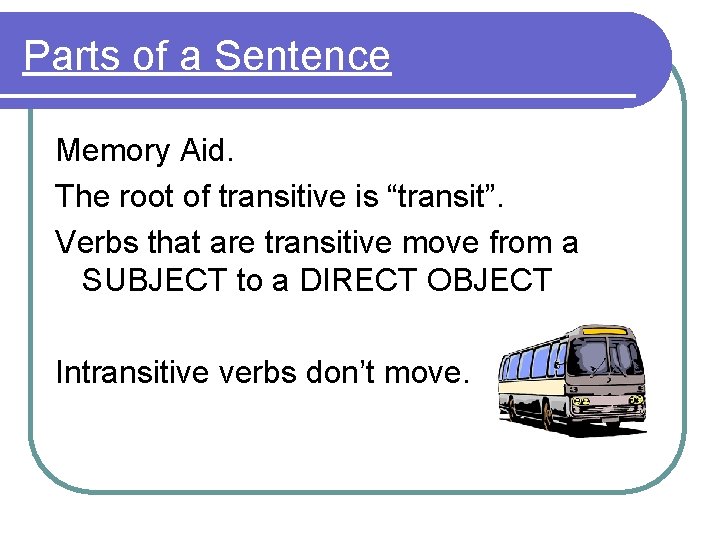
Parts of a Sentence Memory Aid. The root of transitive is “transit”. Verbs that are transitive move from a SUBJECT to a DIRECT OBJECT Intransitive verbs don’t move.
Summary If there is a direct object the verb is transitive. If there is no direct object the verb is intransitive
Helping Verbs They help change the verb tense l l l am is are was were be being been have has had do does did can could may might must will should would ought to used to
Subjects in Unusual Order -questions l In a question part of the predicate always comes before the subject. Do you have my money? (Normal order: You do have my money.
Subjects in Unusual Order -inverted sentences l The predicate can come before the subject. Inverted order: Out with the bath water went the baby. Normal order: The baby went out with the bath water.
Subjects in Unusual Order -“here” and “there” are never subjects. l They are adverbs. A linking verb links them to the subject. l Inverted sentence: Here is the answer. Normal sentence: The answer is here. Inverted: There goes the ice-cream truck Normal: The ice-cream truck goes there.
Subjects in Unusual Order -commands l In commands, the subject is always “You” but it is never said; it is implied. Pick up those shoes. (Normal order: You pick up those shoes. )
Subjects difficult to spot -adverbs and phrases l Occasionally, adverbs or prepositional phrases are between the Subject and Predicate, or between the verbs of the predicate. We are not going to the zoo! l “not” is an adverb One of the criminals was from a different province. l “of the criminals” is a prepositional phrase
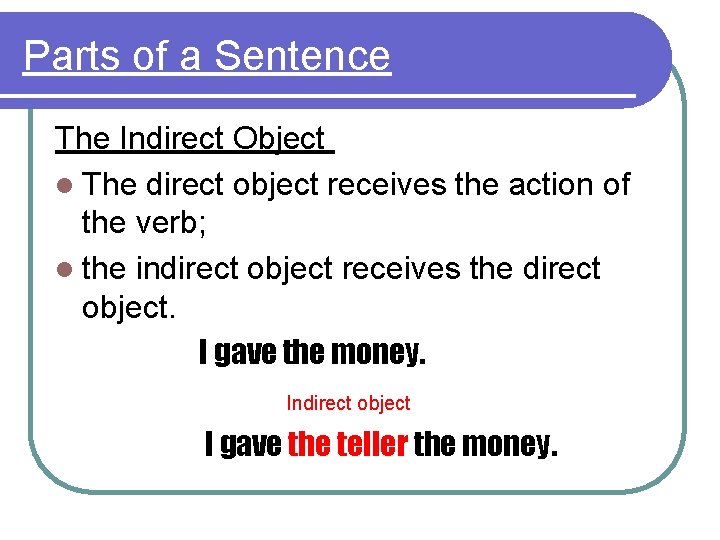
Parts of a Sentence The Indirect Object l The direct object receives the action of the verb; l the indirect object receives the direct object. I gave the money. Indirect object I gave the teller the money.
The Indirect Object’s Position l The indirect object always comes between the predicate and the direct object.
- Slides: 18