
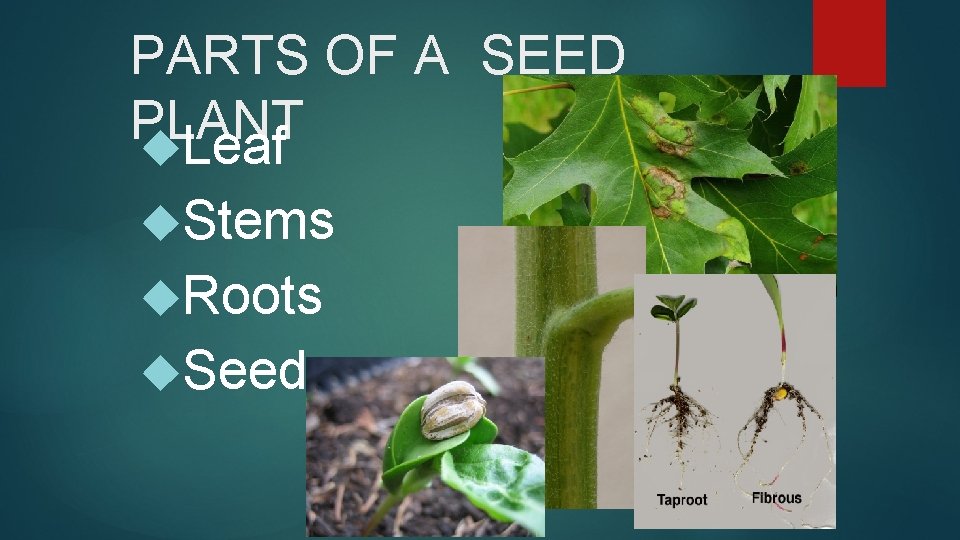
PARTS OF A SEED PLANT Leaf Stems Roots
- Slides: 26
PARTS OF A SEED PLANT Leaf Stems Roots Seeds
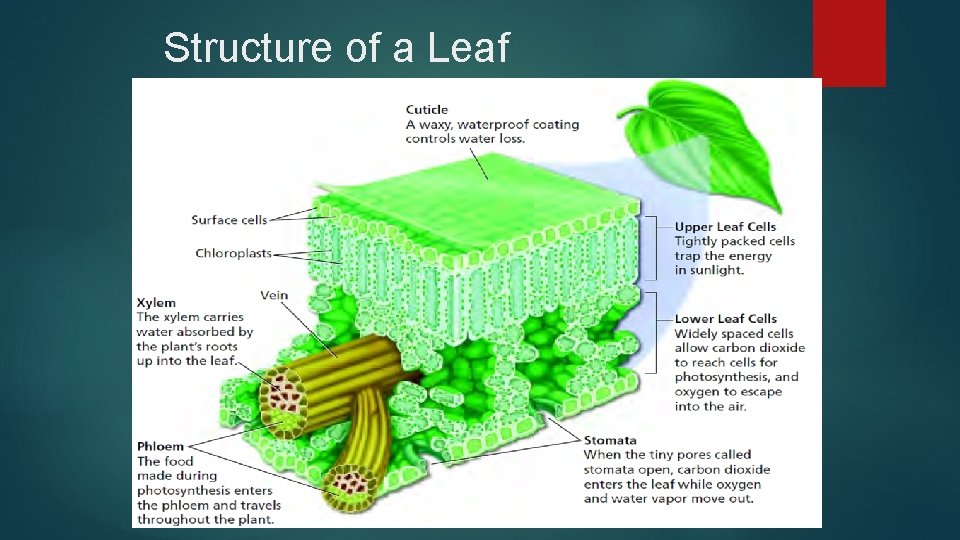
Structure of a Leaf
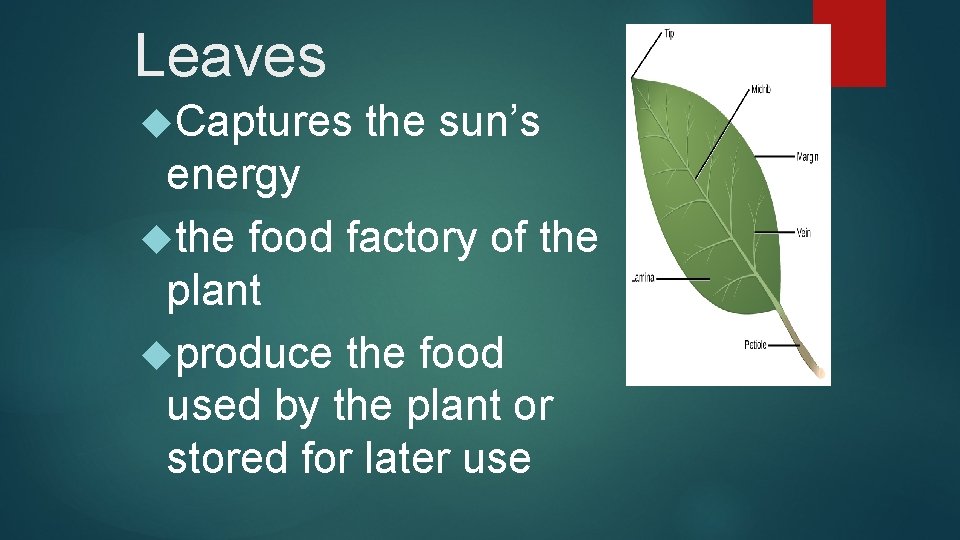
Leaves Captures the sun’s energy the food factory of the plant produce the food used by the plant or stored for later use
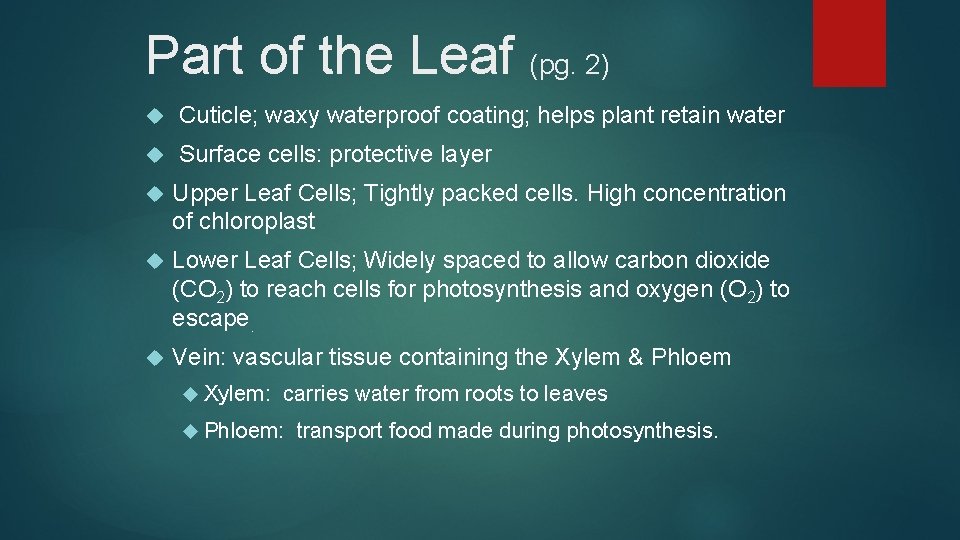
Part of the Leaf (pg. 2) Cuticle; waxy waterproof coating; helps plant retain water Surface cells: protective layer Upper Leaf Cells; Tightly packed cells. High concentration of chloroplast Lower Leaf Cells; Widely spaced to allow carbon dioxide (CO 2) to reach cells for photosynthesis and oxygen (O 2) to escape. Vein: vascular tissue containing the Xylem & Phloem Xylem: carries water from roots to leaves Phloem: transport food made during photosynthesis.
Chloroplasts Organelles which contain chlorophyll located inside the food making cells
Stomates allow the plant to breathe and transpire give off moisture
Guard Cells open and close the small pore on the underside of the leaf
food manufactured in the leaves moves downward through the stem to the roots used by the plant stored in stem or root and leaf in the form of sugar, starch or protein.
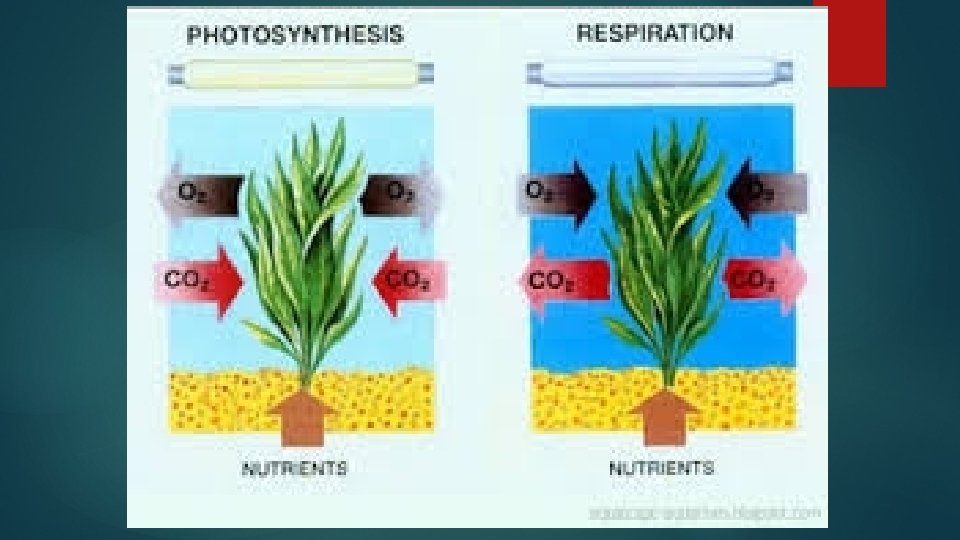
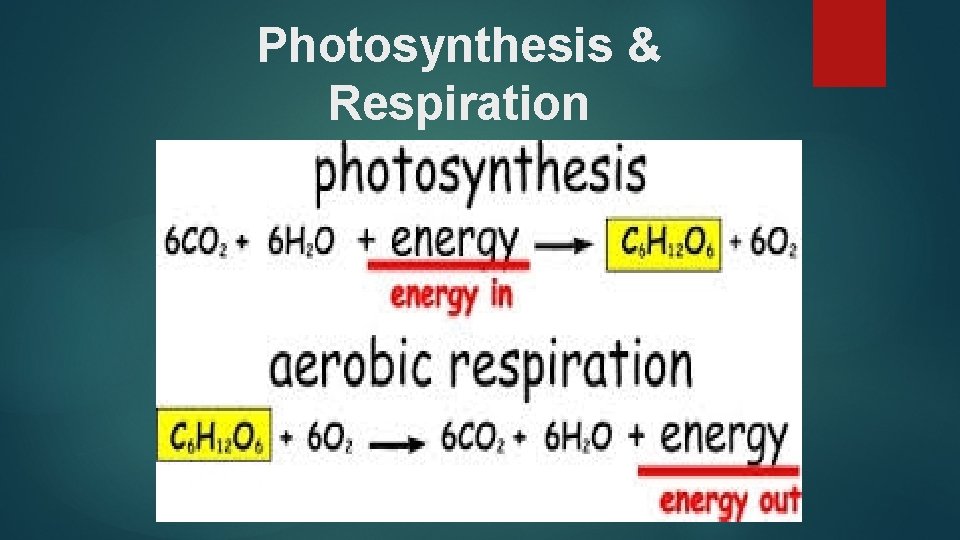
Respiration plants respire 24 hours a day consume O 2 and give off CO 2 plants produce more O 2 through ps. Than they consume during respiration and growth.
Photosynthesis & Respiration
Stems two main functions 1. movement of water & minerals from the roots & movement of manufactured food down for storage. 2. support of leaves and reproductive structures
Stems also used for food storage and reproduction of plants involving cuttings Green stems manufacture food just as leaves do
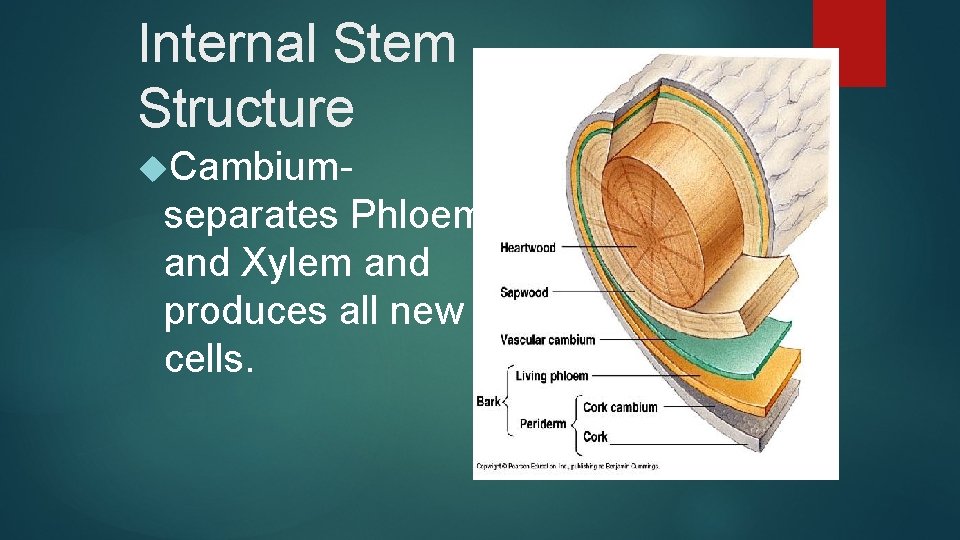
Internal Stem Structure Cambium- separates Phloem and Xylem and produces all new cells.
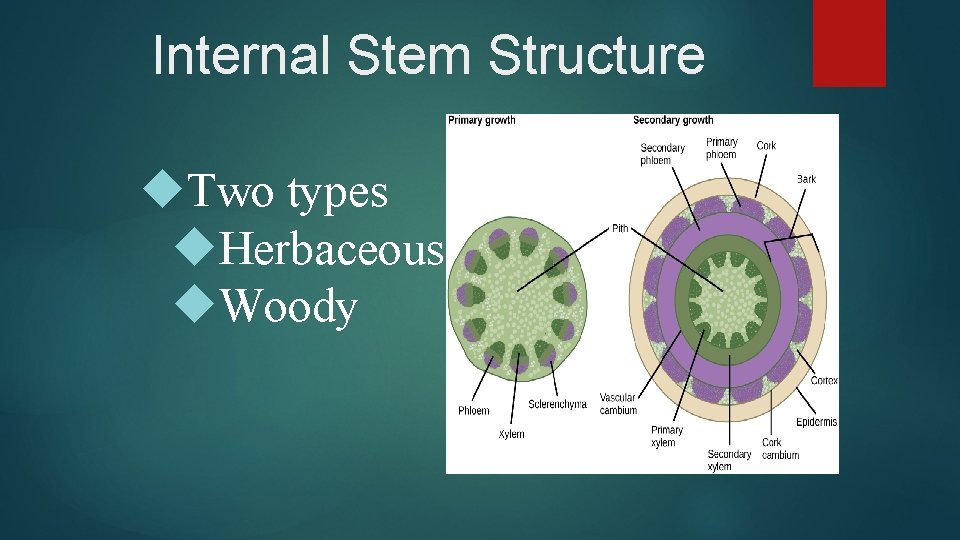
Internal Stem Structure Two types Herbaceous Woody
Herbaceous Stem No soft wood and are often Woody Stem Durable; made up of many layers
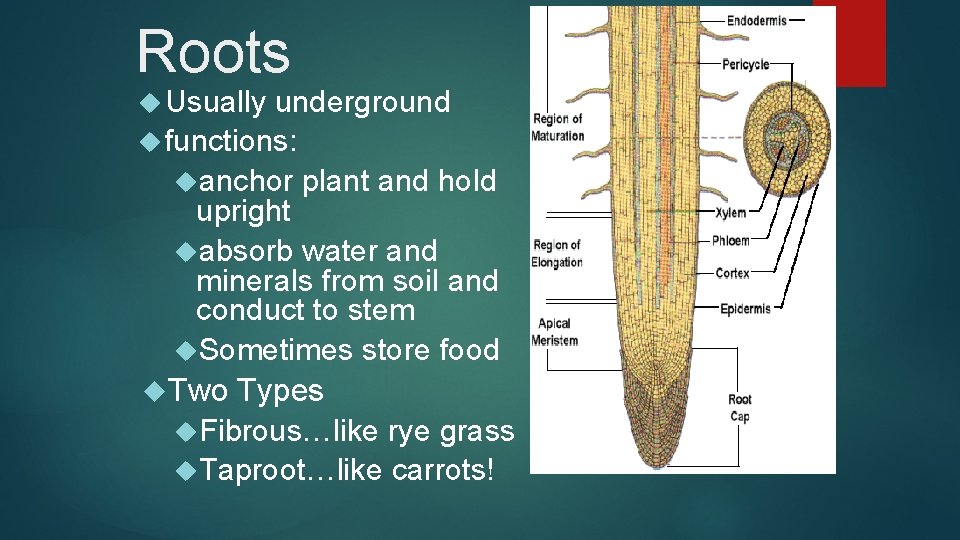
Roots Usually underground functions: anchor plant and hold upright absorb water and minerals from soil and conduct to stem Sometimes store food Two Types Fibrous…like rye grass Taproot…like carrots!
Root Structure internal similar to stems older roots have xylem, phloem and cambium
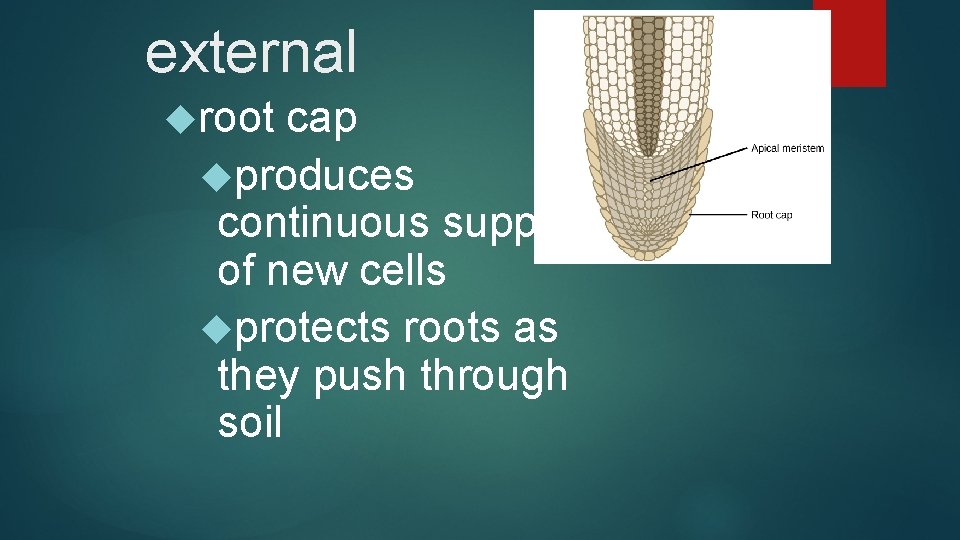
external root cap produces continuous supply of new cells protects roots as they push through soil
Structure root hairs absorb moisture and minerals small roots
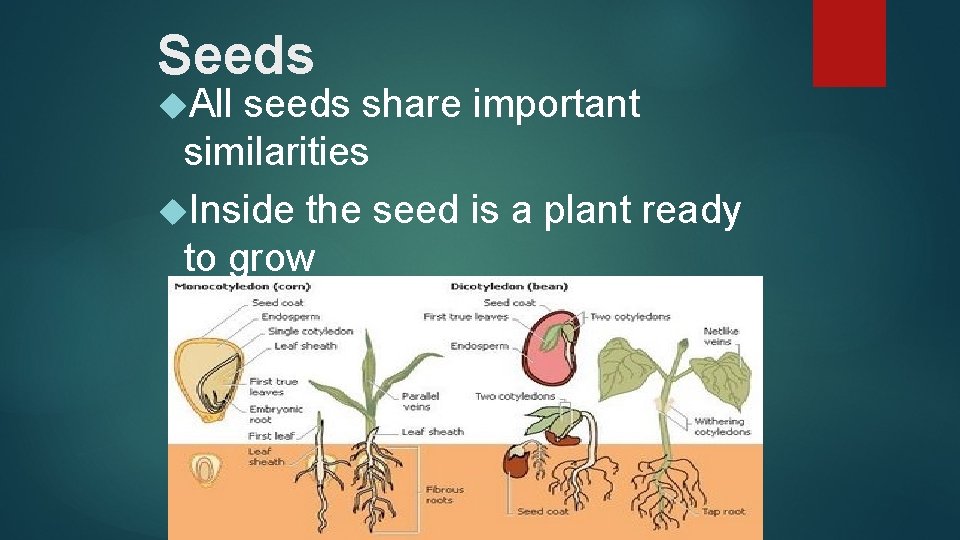
Seeds All seeds share important similarities Inside the seed is a plant ready to grow
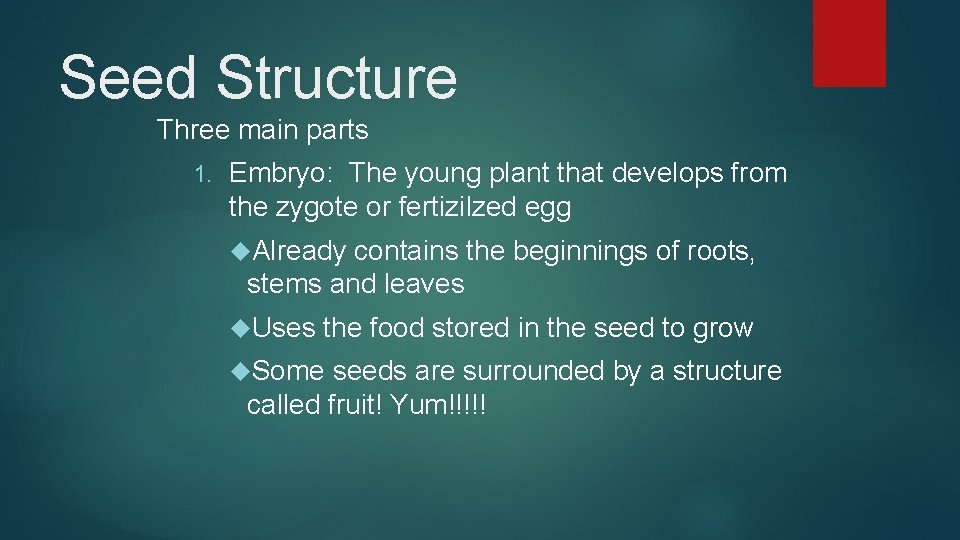
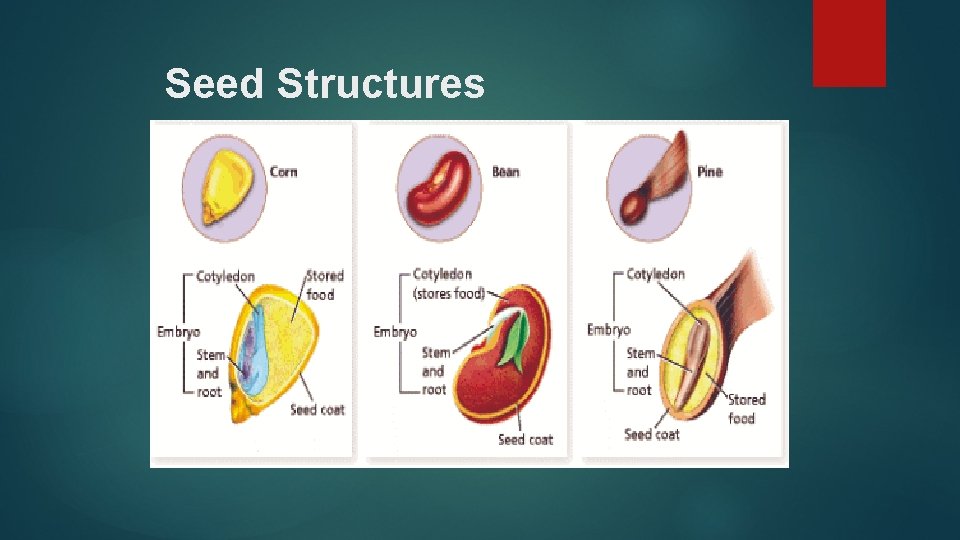
Seed Structure Three main parts 1. Embryo: The young plant that develops from the zygote or fertizilzed egg Already contains the beginnings of roots, stems and leaves Uses the food stored in the seed to grow Some seeds are surrounded by a structure called fruit! Yum!!!!!
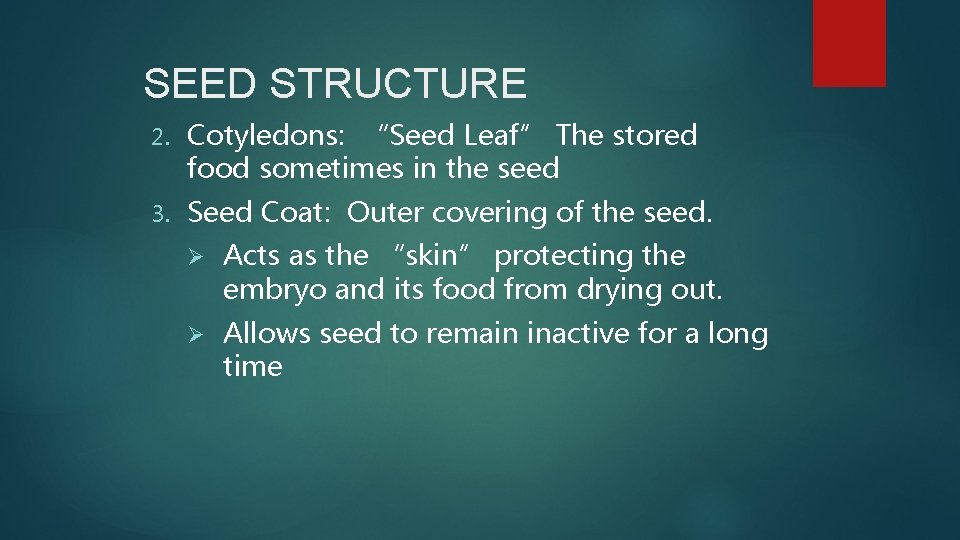
SEED STRUCTURE 2. Cotyledons: “Seed Leaf” The stored food sometimes in the seed 3. Seed Coat: Outer covering of the seed. Ø Acts as the “skin” protecting the embryo and its food from drying out. Ø Allows seed to remain inactive for a long time
Seed Structures
Seed Dissection of the Lima Bean Seed Dissection Page 11 of Packet Looking Each Dry inside a seed team of two will get 2 SEEDS seed vs Soaked seed Draw In and observe the dry seed the mouth or cup of warm water
Seed Dispersal (pg. 139) Dispersed by organisms; an animal eats a fruit and their droppings spread the seeds Seeds enclosed on barblike structures that hook on fur Dispersed by water Dispersed by wind