
Parts of a flower Structure and Function of
- Slides: 16
Parts of a flower. Structure and Function of the Flower
Section A: Flower Structure Objectives: Students should be able to • Recognize specified floral parts on most flowers • Relate each part to its function • Distinguish between staminate, pistillate/carpellate and hermaphrodite flowers Core Skills Objectives: • Co-operation/Group work • Drawing Practical Skills • Drawing
What is a Flower? • Plant organ for sexual reproduction • Flowers produce gametes (sex cells) • Flowers are necessary for fertilisation to occur Andromeda Botanic Gardens Educational Series: #2
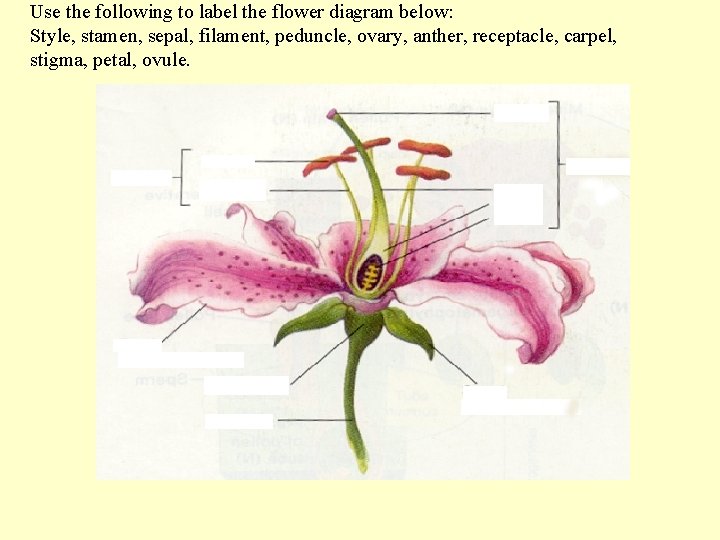
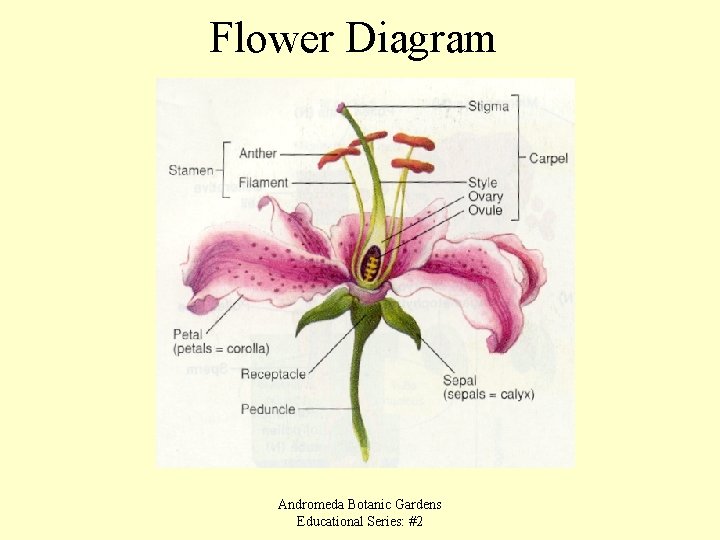
Use the following to label the flower diagram below: Style, stamen, sepal, filament, peduncle, ovary, anther, receptacle, carpel, stigma, petal, ovule.
Flower Diagram Andromeda Botanic Gardens Educational Series: #2
Andromeda Botanic Gardens Educational Series: #2
Andromeda Botanic Gardens Educational Series: #2
Andromeda Botanic Gardens Educational Series: #2
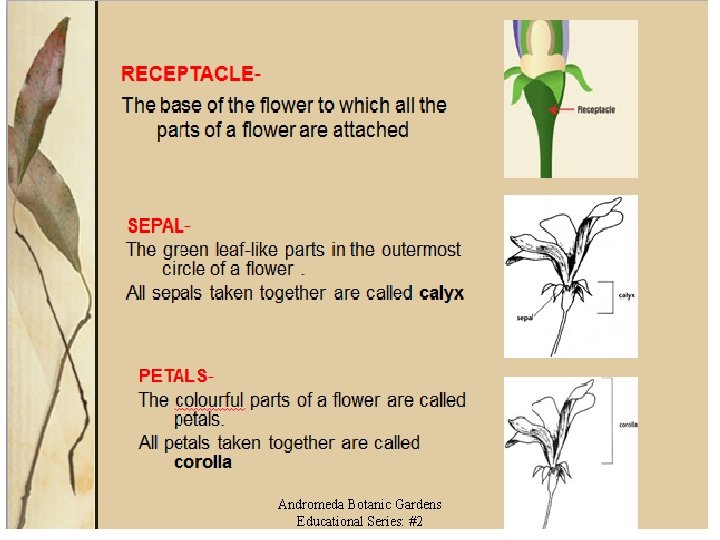
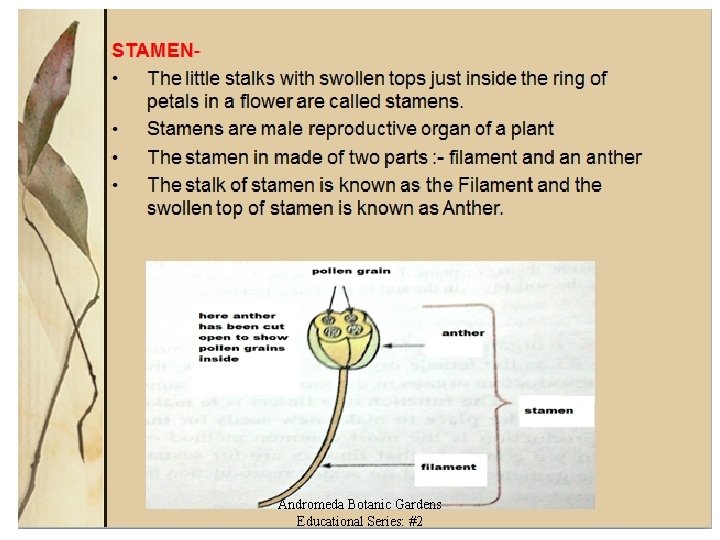
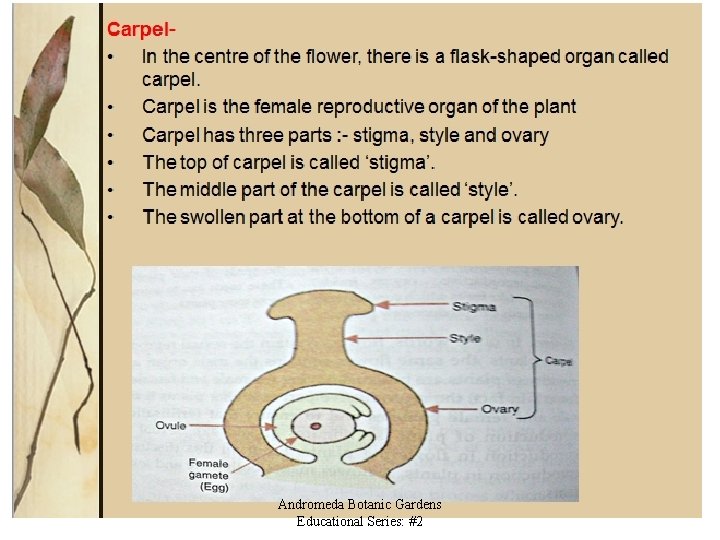
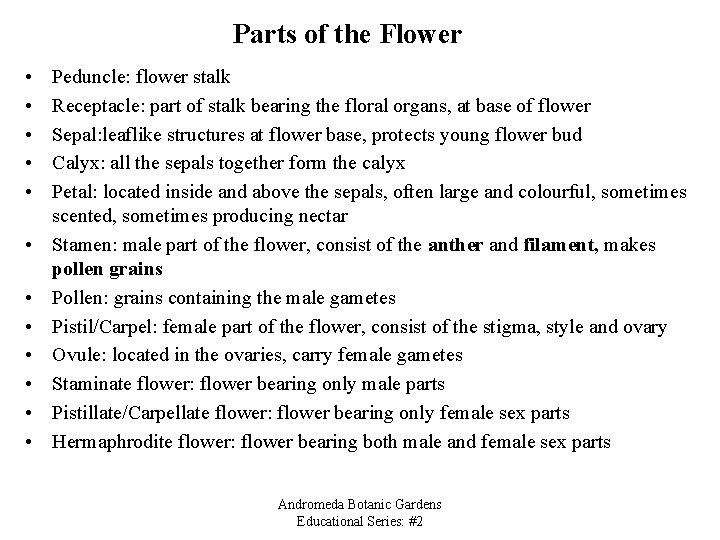
Parts of the Flower • • • Peduncle: flower stalk Receptacle: part of stalk bearing the floral organs, at base of flower Sepal: leaflike structures at flower base, protects young flower bud Calyx: all the sepals together form the calyx Petal: located inside and above the sepals, often large and colourful, sometimes scented, sometimes producing nectar Stamen: male part of the flower, consist of the anther and filament, makes pollen grains Pollen: grains containing the male gametes Pistil/Carpel: female part of the flower, consist of the stigma, style and ovary Ovule: located in the ovaries, carry female gametes Staminate flower: flower bearing only male parts Pistillate/Carpellate flower: flower bearing only female sex parts Hermaphrodite flower: flower bearing both male and female sex parts Andromeda Botanic Gardens Educational Series: #2
Structure and Function of the Flower Quiz #1 1. What is the male part of the flower called? --------------------------------------------2. What is the main function of a flower? --------------------------------------------3. What is the function of the carpel? --------------------------------------------4. Give one example of a hermaphrodite flower --------------------------------------------5. Name the flower structures which protect the young flower bud. ---------------------------------------------
Section B Pollination Objectives: Students should be able to: • Define pollination • State the main ways in which plants achieve pollination • Recognize flower adaptations associated with each mode of pollination Core Skills targeted • Drawing • Information Technology Practical Skills • Analysis and Interpretation • Drawing Andromeda Botanic Gardens Educational Series: #2
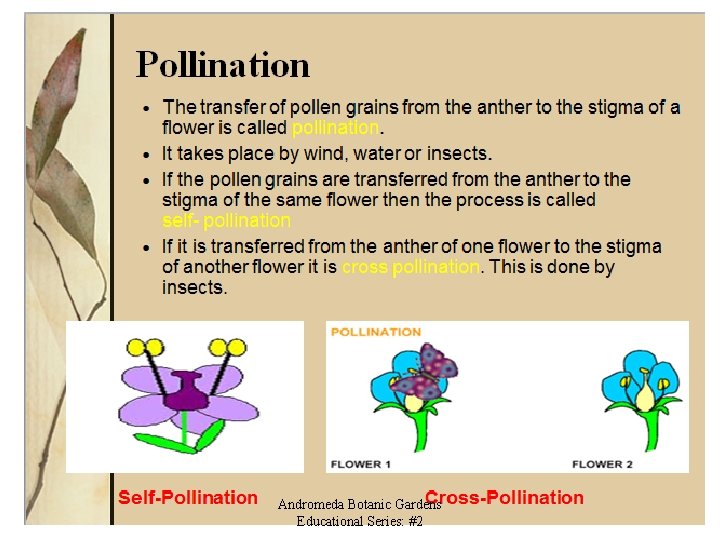
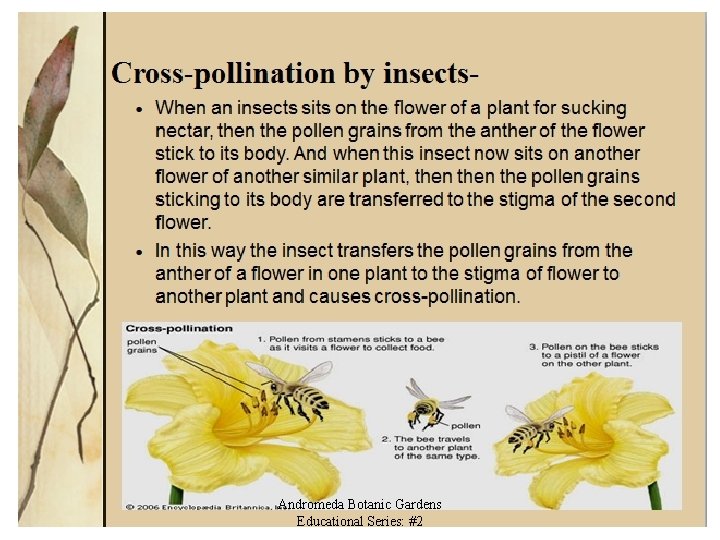
Andromeda Botanic Gardens Educational Series: #2
Andromeda Botanic Gardens Educational Series: #2
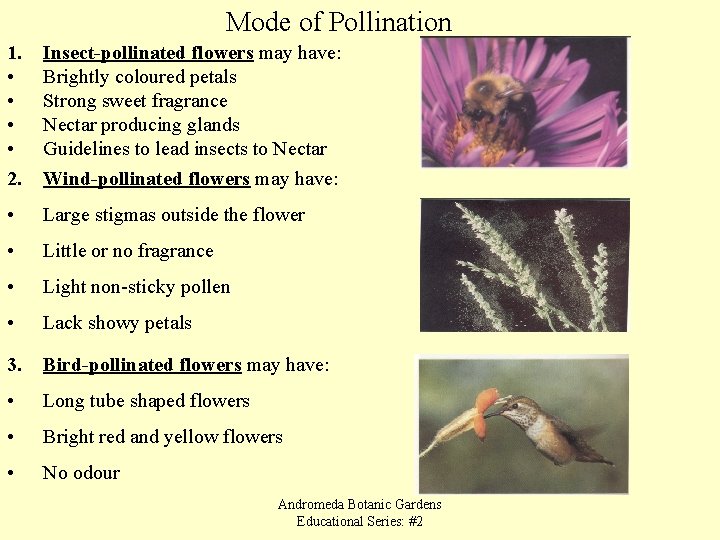
Mode of Pollination 1. • • 2. Insect-pollinated flowers may have: Brightly coloured petals Strong sweet fragrance Nectar producing glands Guidelines to lead insects to Nectar • Large stigmas outside the flower • Little or no fragrance • Light non-sticky pollen • Lack showy petals 3. Bird-pollinated flowers may have: • Long tube shaped flowers • Bright red and yellow flowers • No odour Wind-pollinated flowers may have: Andromeda Botanic Gardens Educational Series: #2
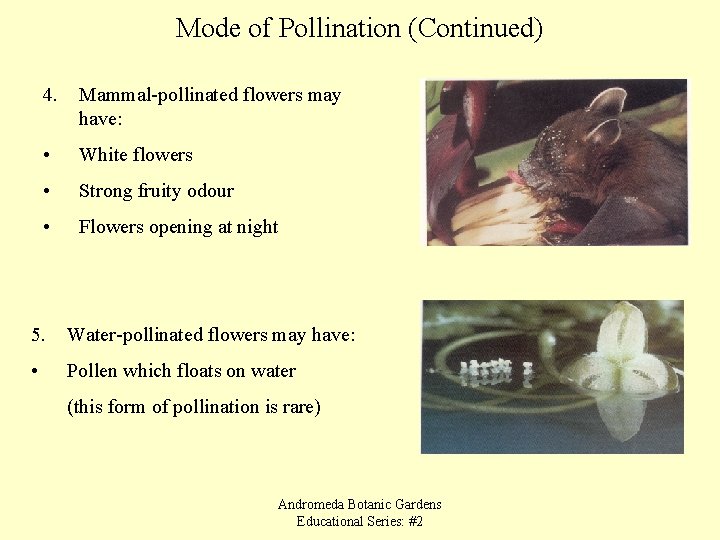
Mode of Pollination (Continued) 4. Mammal-pollinated flowers may have: • White flowers • Strong fruity odour • Flowers opening at night 5. Water-pollinated flowers may have: • Pollen which floats on water (this form of pollination is rare) Andromeda Botanic Gardens Educational Series: #2
Structure and Function of the Flower Quiz #2 Pollination 1. Write a short definition for the word pollination. 2. Why is pollination important to plants? 3. State three ways in which pollination can be achieved. 4. State a plant adaptation associated with each mode of pollination above Andromeda Botanic Gardens Educational Series: #2