
Parts of a flower Journeyman Prep Course Buncombe
Parts of a flower Journeyman Prep Course Buncombe County Beekeepers
FOUR FLORAL ORGAN STRUCTURES Sepal Petal Stamen Pistil
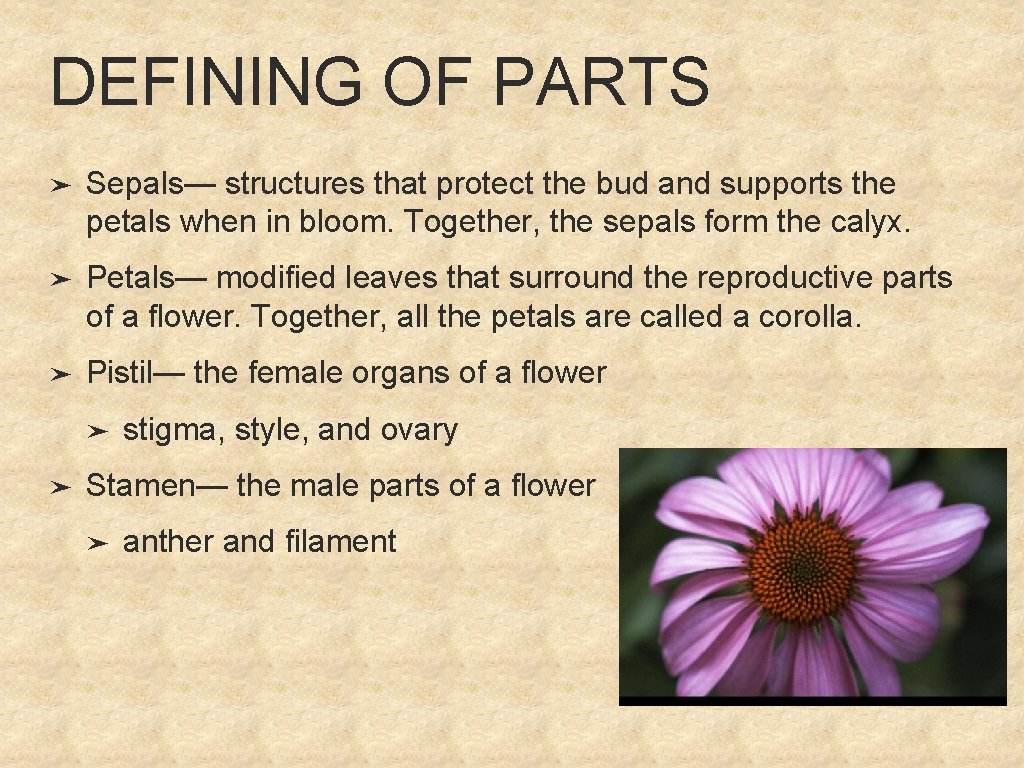
DEFINING OF PARTS ➤ Sepals— structures that protect the bud and supports the petals when in bloom. Together, the sepals form the calyx. ➤ Petals— modified leaves that surround the reproductive parts of a flower. Together, all the petals are called a corolla. ➤ Pistil— the female organs of a flower ➤ ➤ stigma, style, and ovary Stamen— the male parts of a flower ➤ anther and filament

ALL COMPLETE FLOWERS ARE PERFECT NOT ALL INCOMPLETE FLOWERS ARE IMPERFECT ALL IMPERFECT FLOWERS ARE INCOMPLETE NOT ALL PERFECT FLOWERS ARE COMPLETE FLOWER INCOMPLETE FLOWER ➤ all four organ structures are present ➤ lacks one or more of the four organ structures ➤ is always perfect ➤ may be perfect PERFECT FLOWER IMPERFECT FLOWER ➤ hermaphroditic ➤ staminate OR pistillate ➤ may be incomplete ➤ cannot be complete
PISTIL AND STAMEN MANDATORY SEPAL OR PETAL NOT REQUIRED
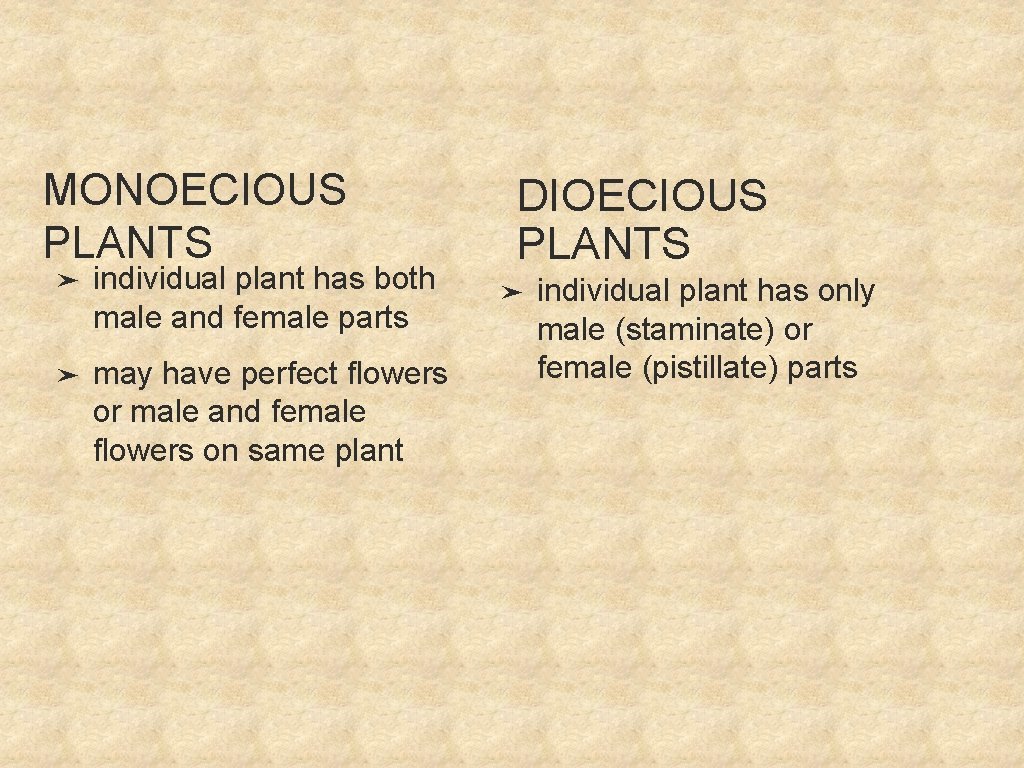
MONOECIOUS PLANTS ➤ individual plant has both male and female parts ➤ may have perfect flowers or male and female flowers on same plant DIOECIOUS PLANTS ➤ individual plant has only male (staminate) or female (pistillate) parts
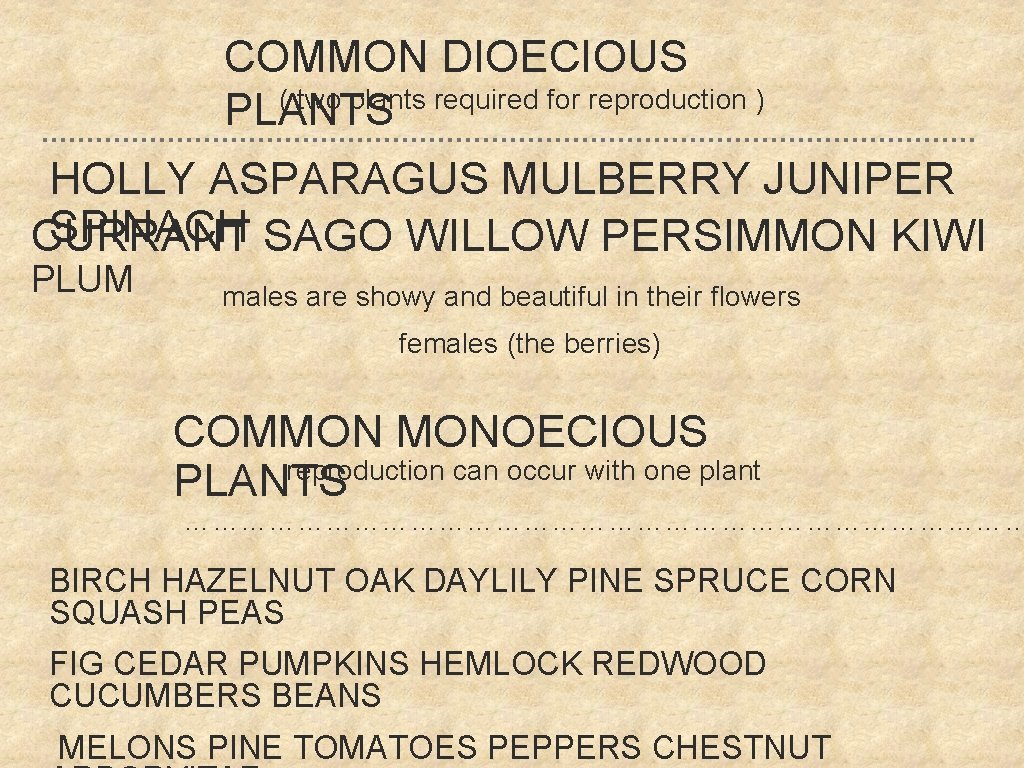
COMMON DIOECIOUS ( two plants required for reproduction ) PLANTS HOLLY ASPARAGUS MULBERRY JUNIPER SPINACH SAGO WILLOW PERSIMMON KIWI CURRANT PLUM males are showy and beautiful in their flowers females (the berries) COMMON MONOECIOUS reproduction can occur with one plant PLANTS ……………………………………… BIRCH HAZELNUT OAK DAYLILY PINE SPRUCE CORN SQUASH PEAS FIG CEDAR PUMPKINS HEMLOCK REDWOOD CUCUMBERS BEANS MELONS PINE TOMATOES PEPPERS CHESTNUT
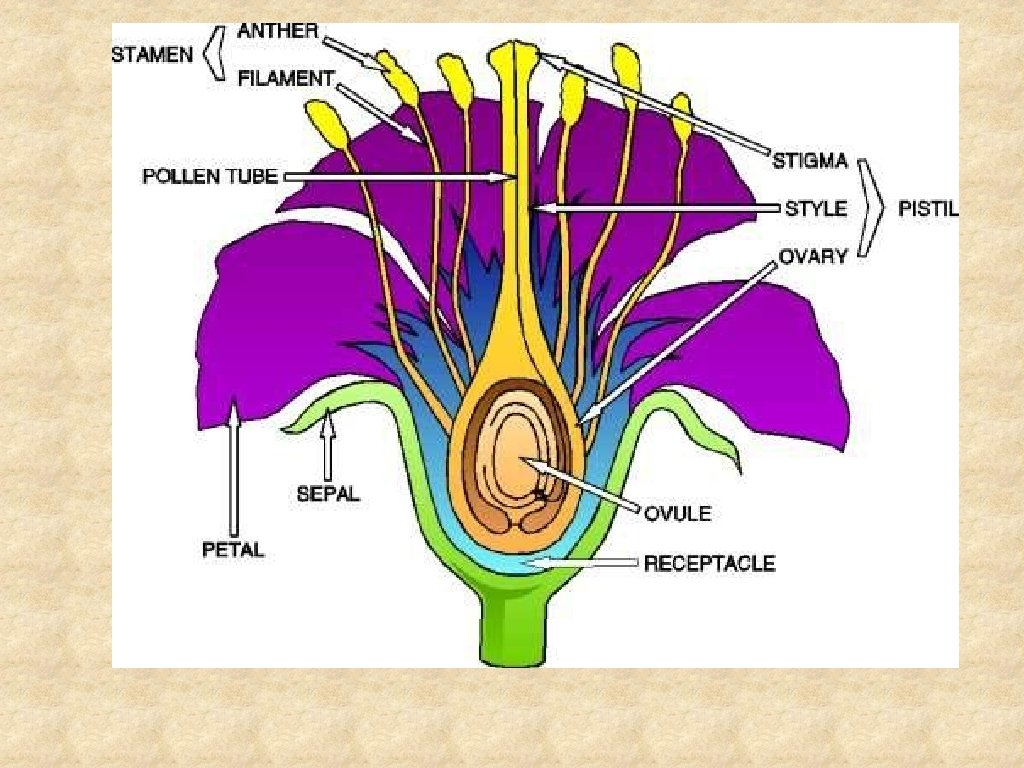
Parts list
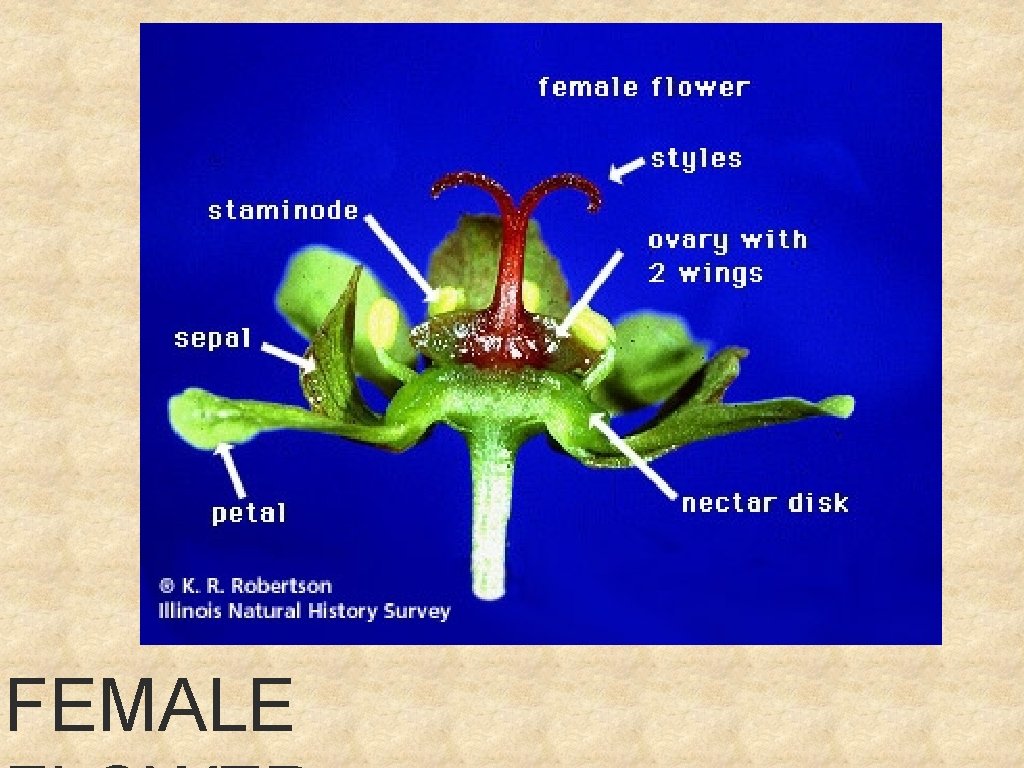
FEMALE
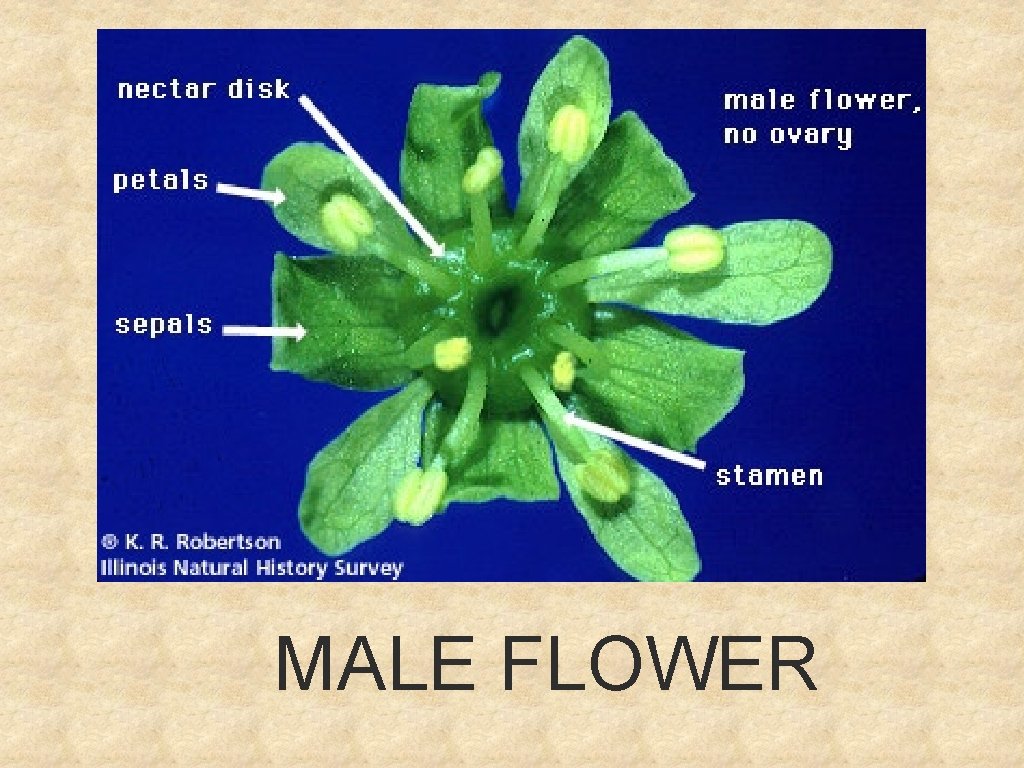
MALE FLOWER
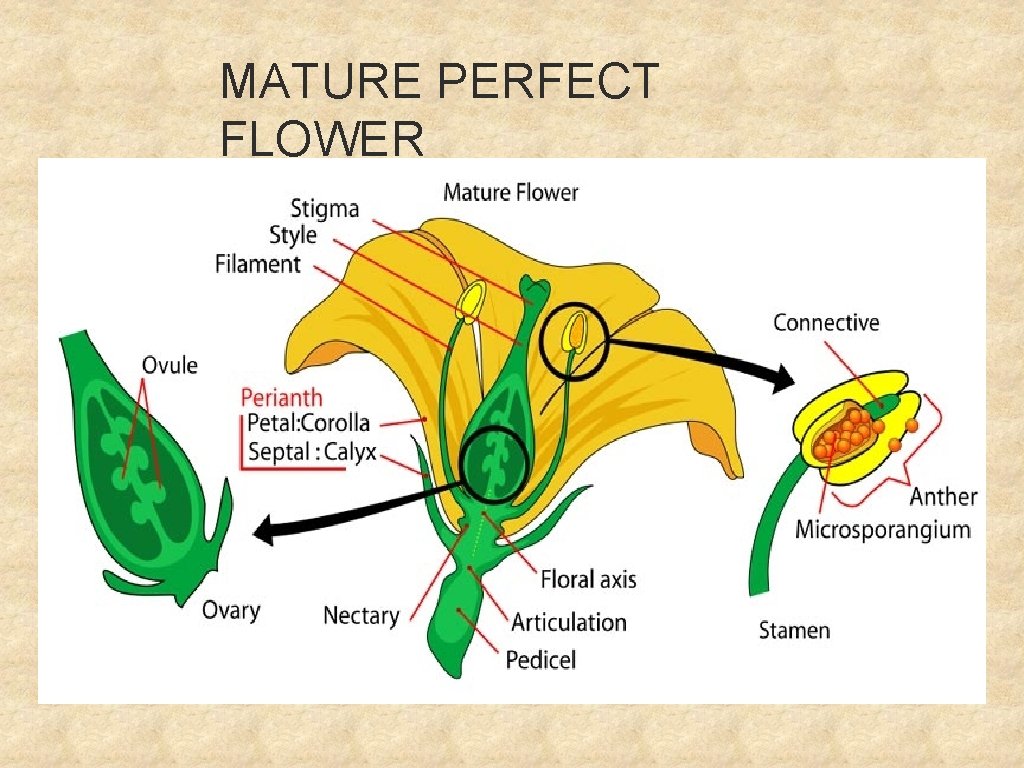
MATURE PERFECT FLOWER
- Slides: 11