
PARTNERS IN INNOVATION CREATIVE AND SPATIAL ABILITIES Steve
PARTNERS IN INNOVATION: CREATIVE AND SPATIAL ABILITIES Steve Coxon, Ph. D. Assistant professor of gifted education Maryville University scoxon@maryville. edu http: //stevecoxon. com
THE NATIONAL NEED � Artistic and STEM innovations both improve our quality of life, and STEM innovations are responsible for the majority of economic growth in the U. S. (National Academy of Sciences, 2005). � What could be a national talent development pipeline from our preschools through our colleges is bleeding potential.
WHAT IS CREATIVITY? � “production of something original and useful” (Bronson & Merryman, 2010) �a relatively new concept (1950 s) still not in many dictionaries by the early 1970 s (Piirto, 2004) � not well correlated with general intelligence (g) after a threshold level (IQ of 120 has been suggested) (Piirto, 2004) � improvable with experiences, especially when specific processes are taught within domains (Davis & Rimm, 1998; Erez, 2004; Sternberg, 1990; Treffinger, Isaksen, & Dorval, 2006)
ASPECTS OF CREATIVE THINKING � Fluency (produce a number of ideas) � Flexibility (extend ideas into a variety of categories) � Originality (unique ideas) � Elaboration (focus on detail and characteristics) � (Torrance, 1966)
WHAT IS SPATIAL ABILITY? � “the ability to generate, retain, retrieve, and transform well-structured visual images” (Lohman, 1993) �a relatively old concept (Galton, 1880) � highly related to general intelligence (g), but less well correlated to math abilities than math is to verbal (symbol system vs. visual system of thinking) (Wai, Lubinski, & Benbow, 2009) � improvable with challenging spatial experiences (Coxon, 2009; Coxon, 2011; Lim, 2005; Liu, Uttal, Marulis, & Newcombe, 2008; Lohman, 1993; Onyancha, Derov, & Kinsey, 2009; Potter, Van der Merwe, Fridjhon, Kaufman, Delacour, & Mokone, 2009; Sorby, 2005; Urhahne, Nick, & Schanze, 2009; Verner, 2004)
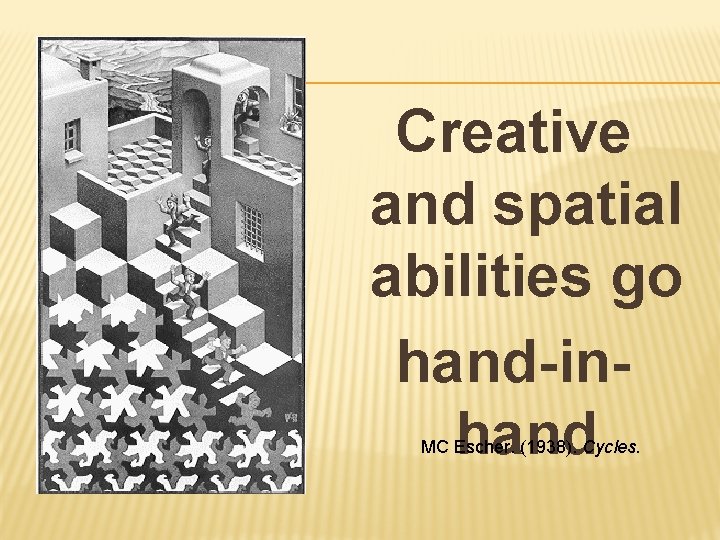
Creative and spatial abilities go hand-inhand MC Escher. (1938). Cycles.
I SAW THE ANGEL IN THE MARBEL AND CARVED UNTIL I SET HIM FREE � Michaelangelo
CREATIVE AND SPATIAL KIDS: � Both abilities are likely to coincide at high levels (Liben, 2009), although gifted kids can have a relative strength and weakness � More likely to be introverts (Lohman, 1993) � Much, much more likely to have hobbies (Humphreys, Lubinski, & Yao, 1993) � Spatially-able kids are possibly more likely to have reading problems (Mann, 2006) � Spatially-able kids are more likely to be undereducated and underemployed as adults in comparison to symbol-system leaning students of similar IQ (Mann, 2006)
CREATIVE AND SPATIAL KIDS: � are our future engineers, artists, and scientists (Bronson & Merryman, 2010; Flannagan, 1979; Snow, 1999; Super & Bachrach, 1957; Wai, et al. , 2009) � are unlikely to have their needs for daily challenge in their areas of strength met by schools (Coxon, 2010) � creativity has been in decline in the US since 1990 (Kim, 2010) � What can you do?
“School more than any other institution, is responsible for the downgrading of visual thinking. Most educators are not only disinterested in visualization, they are hostile toward it. They regard it as childish, primitive, and prelogical. Classes in mechanical drawing, shop and the arts, in which spatial thinking still plays a role, are considered second-rate intellectual activities. ” (Sommer, 1978, p. 54)
IN YOUR CLASSROOM: � Computer programming, especially with LEGO robotics � Puppet shows, theater, including script writing and set design � Academic competitions such as Odyssey of the Mind and FIRST LEGO League � Building challenges (blocks, K’Nex, LEGO, Tinkertoy, toothpicks, craft sticks, note cards)
IN YOUR CLASSROOM � Art projects, especially when focused on innovating to solve a problem or satisfy a need � Mimicking the styles of such artists as MC Escher and Rube Goldberg � Geometry, especially when hands-on � Building 3 D structures with drinking straws and twist ties � Physics with toys � Making molecules with toothpicks and gumdrops � Making circuits with wire, batteries, lights, buzzers, etc.
IN YOUR CLASSROOM: � Geographic Information Systems (GIS), geocacheing, Google Earth (virtual field trips), Google Maps � Toothpick bridges, note card bridges, newspaper structures � Note card architecture � Paper rockets (see NASA education) � Problem-based learning that includes opportunities for designing, building, making
�Take ___ minutes to build the tallest freestanding tower that you can. �You have 30 sticks and 15 small binder clips. You may not use any other items. �You may not break sticks or dismantle clips. �Two to three feet is a good start.
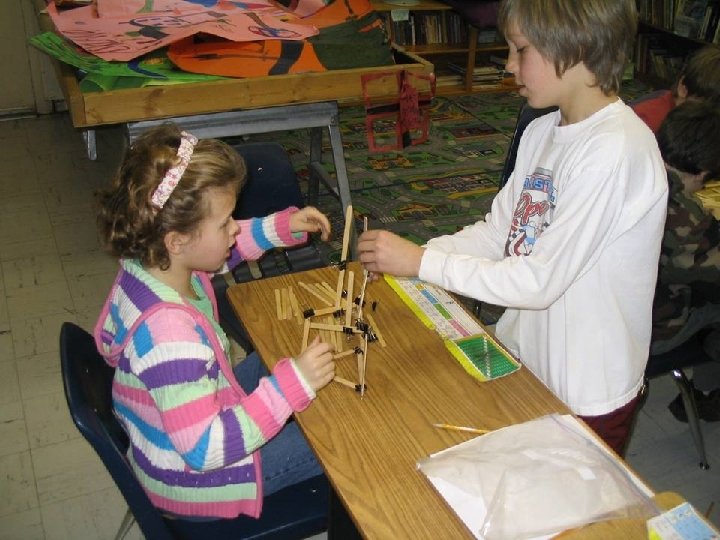
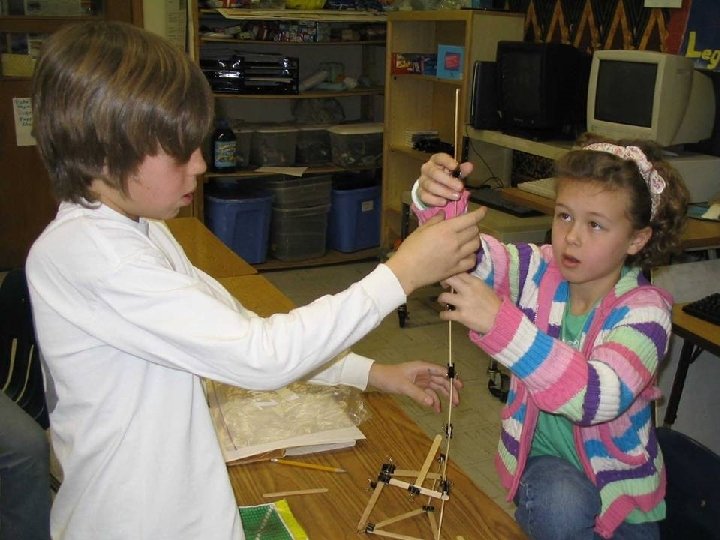
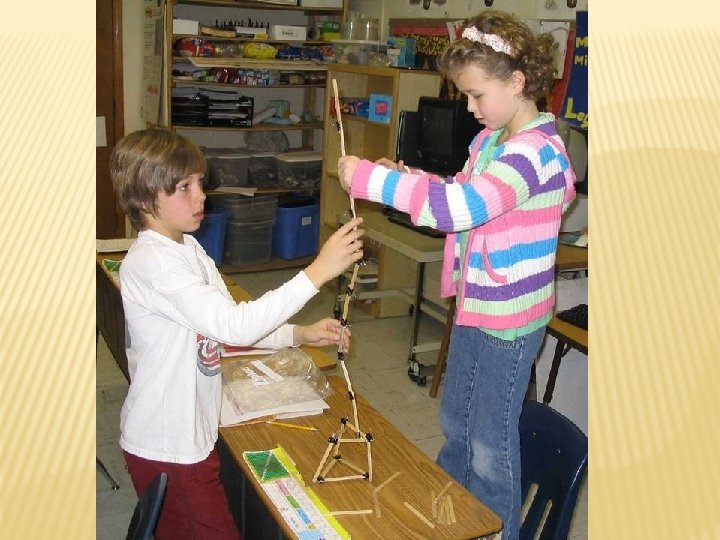
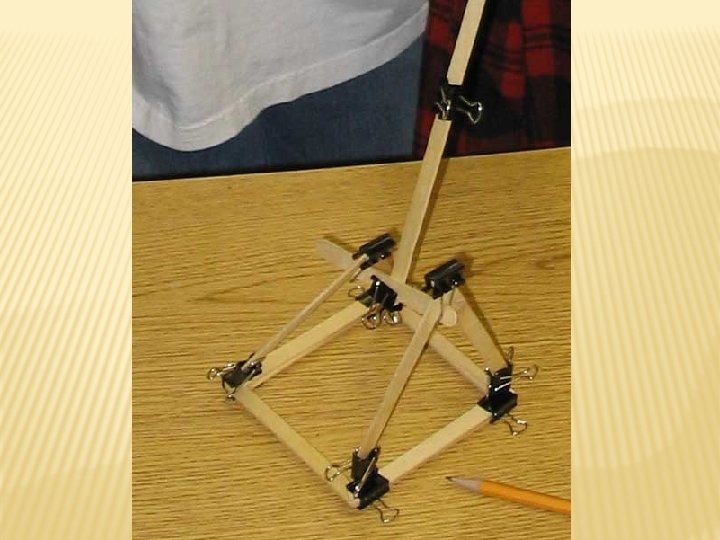
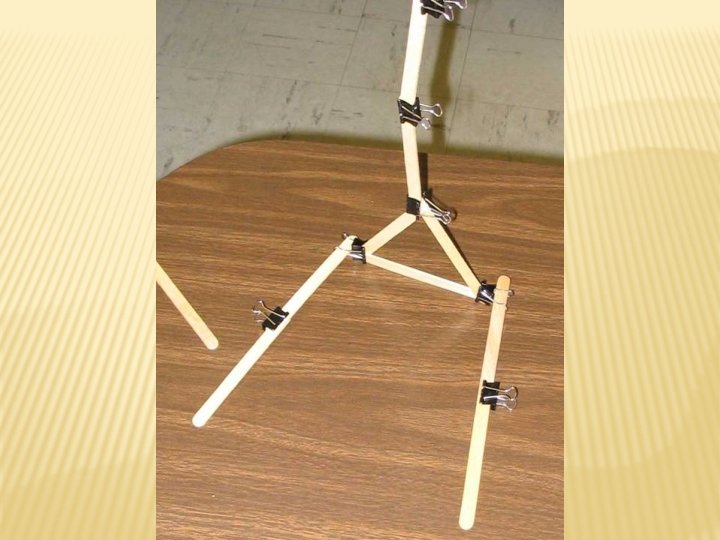
What processes did this building activity require?
SIX THINKING HATS (DE BONO, 1999) Simple, but effective: Taught in preschools and major corporations (including Siemens, NASA, and Fed. Ex) � Intended to replace argument � Focus on ‘what can be’ rather than just ‘what is’ � Everyone uses every hat, not one hat assigned to one person � ‘Parallel thinking’ means that everyone ‘wears’ the same hat at a given time � The teacher may help refocus students � The steps may be repeated � Except for blue which begins and ends, the hats may be used in any order, but only one at a time. �
THE BLUE HAT � Control of thinking/Metacognition � Used at the beginning and end (the other hats may be used in any order to suit the situation) � At the beginning it indicates: � Why we are here � Definition of the situation � What we want to achieve � A plan for the sequence of other hats to use
THE WHITE HAT � Facts and figures � Neutral and objective � What information is known? � What additional information is needed? � How are we going to get missing information?
THE RED HAT � Emotions and feelings � Feelings can be useful, but aren’t always correct � All involved individuals must share their feelings—there is no ‘pass, ’ but you may say ‘neutral’ or ‘undecided’ � No need to justify
THE BLACK HAT � Cautious and careful � Point out possible dangers, difficulties, potential problems � Critical thinking/questions evidence � Prevents mistakes and excesses � A neutral way to point out potential difficulties without being seen as negative
THE YELLOW HAT � Optimistic thinking � Constructive � Make things happen � Consider the ideal conclusion
THE GREEN HAT � Creative thinking and new ideas � Put forward possibilities � Alternative � Change � New approaches
THE BLUE HAT � Control of thinking/Metacognition � Used at the beginning and end (the other hats may be used in any order to suit the situation) � At the end it indicates: � What has been achieved � Conclusion/solution � Next steps
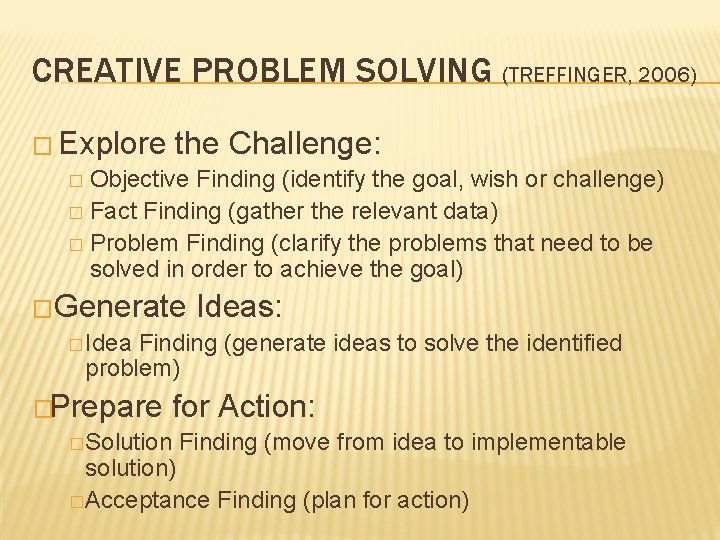
CREATIVE PROBLEM SOLVING (TREFFINGER, 2006) � Explore the Challenge: � Objective Finding (identify the goal, wish or challenge) � Fact Finding (gather the relevant data) � Problem Finding (clarify the problems that need to be solved in order to achieve the goal) �Generate Ideas: � Idea Finding (generate ideas to solve the identified problem) �Prepare for Action: �Solution Finding (move from idea to implementable solution) �Acceptance Finding (plan for action)
FREE ONLINE INFORMATIVE RESOURCES � Ken Robinson’s TED talk: Do schools kill creativity? (online video): � http: //www. ted. com/talks/ken_robinson_says_school s_kill_creativity. html � Lifelong Kindergarten: Design, Play, Share, Learn (search You. Tube—hour+) � Anna Cassalia’s CPS Embedded in the Curriculum (free article): http: //www. nagc. org/uploaded. Files/THP_Article s/THP_Fall_2010_Creative. Problem. Solving. pdf
FREE ONLINE CLASSROOM RESOURCES � NASA Education: http: //www. nasa. gov/audience/foreducators/inde x. html � GIS for schools: http: //www. esri. com/industries/k -12/index. html � Academic Earth: http: //www. academicearth. org/ (free, online video classes from leading universities)
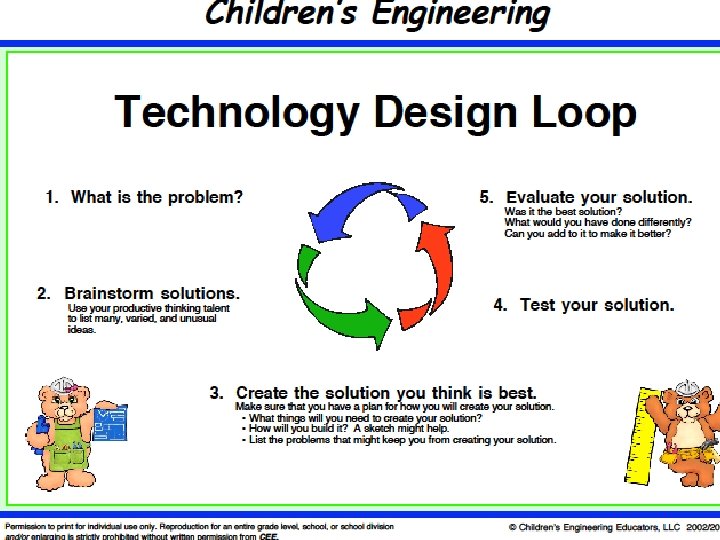
SOME FREE/SOME PAY ONLINE RESOURCES � Makezine and Instructables: http: //makezine. com/ and http: //www. instructables. com/ (two great sites for building just about anything) � Children’s Engineering Convention: http: //www. childrensengineering. com/ (based in Richmond, VA: has a publication, some online resources, and hosts an annual conference in February) � LEGO We. Do: http: //www. legoeducation. us/sharedimages/resources /We. Do%20 User's%20 Guide. pdf (a free, 41 page teacher’s guide to LEGO We. Do—robotics for K-3)
PROBLEM-SOLVING METHOD TEXT RESOURCES � de Bono, E. (1999). Six thinking hats. Suffolk, England: First Back Bay. � De Brux, E. , & Stambaugh, T. (2010). Invitation to Invent. Waco, TX: Prufrock. (physical science unit for grades 3 -4) � Treffinger, D. J. , Isaksen, S. G. , & Dorval, K. B. (2006). Creative problem solving: An introduction (4 th ed. ). Waco, TX: Prufrock.
STEVE’S RESOURCES Coxon, S. V. (expected 2012). Serving spatiallyable learners. Waco, TX: Prufrock. Coxon, S. V. (2011). Steve Coxon’s Web: Build it! Activities. Retrieved from http: //stevecoxon. com/ Coxon, S. V. (2010). FIRST LEGO League, the sport of the mind. Teaching for High Potential, Winter, 6)8. Coxon, S. V. (2008). STEMbotics: Using Edward de. Bono’s Six Thinking Hats and LEGO NXT robotics to understand STEM careers. Williamsburg, VA: Center for Gifted Education. Available for download at http: //stevecoxon. com/STEMbotics unit Coxon. doc
- Slides: 35