
Partner Up and Discuss What are your expectations


- Slides: 33
Partner Up and Discuss What are your expectations for academic advising? What is the students’ responsibility? What is the advisors’ responsibility?
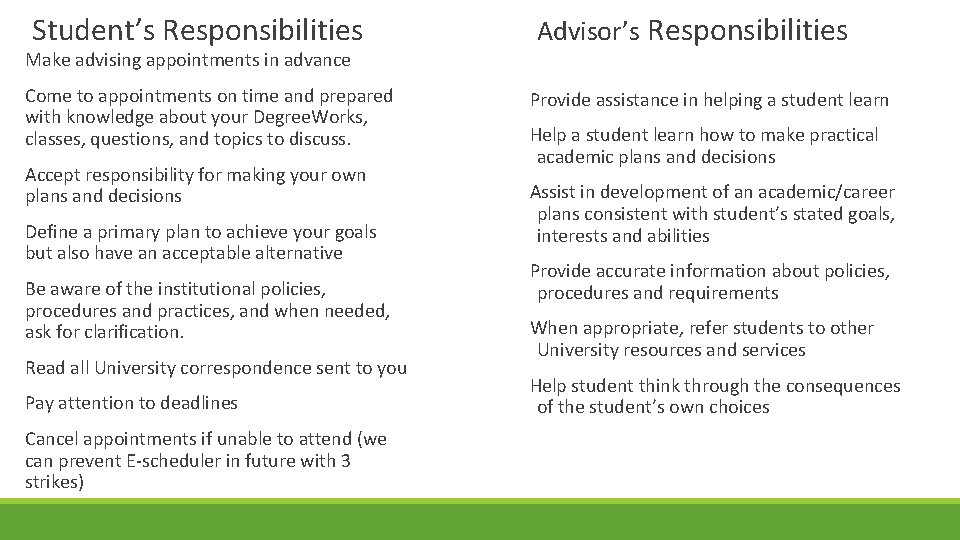
Student’s Responsibilities Make advising appointments in advance Come to appointments on time and prepared with knowledge about your Degree. Works, classes, questions, and topics to discuss. Accept responsibility for making your own plans and decisions Define a primary plan to achieve your goals but also have an acceptable alternative Be aware of the institutional policies, procedures and practices, and when needed, ask for clarification. Read all University correspondence sent to you Pay attention to deadlines Cancel appointments if unable to attend (we can prevent E-scheduler in future with 3 strikes) Advisor’s Responsibilities Provide assistance in helping a student learn Help a student learn how to make practical academic plans and decisions Assist in development of an academic/career plans consistent with student’s stated goals, interests and abilities Provide accurate information about policies, procedures and requirements When appropriate, refer students to other University resources and services Help student think through the consequences of the student’s own choices
REASONS TO SEE ADVISOR • To better understand their choices of major, curriculum, and graduation requirements • To receive clarification regarding all university policies and procedures (e. g. , grade • forgiveness, incompletes, academic probation, etc. ) • To get the most out of their college experience • To learn about specific resources on campus to remediate or prevent an academic or • personal crisis • To develop small, incremental educational goals • To realize options and understand the pros and cons of every option to make the best decision
Insider Tips • All major advisors are busy mid semester and finals week, you may not be able to get appointment • Affects assignments for this class, so use this lesson to look ahead • In future, you may not get classes, major your want, or even jeopardize graduation • When you meet with any major advisor, you will want to ask questions like this; what are the admissions requirements, am I on track to be accepted, what classes can I take to stay on track, what is the declaration process, does this major allow for a dual degree or minor, what minors pair well with this major, how do I develop a career path in this major, does the major have the ability to cultivate a variety of career paths, and could you connect me with an old student or alumni from this major? • Check in with your advisor multiple times during the semester • Notify your advisor of any discrepancies in your degree audit (missing AP/IB/AICE/Dual Enrollment credits, etc) • Inform your advisor of any special needs or circumstances you are experiencing so that thay can assist you or connect you to resources • Find out how to access forms you’ll need for your program
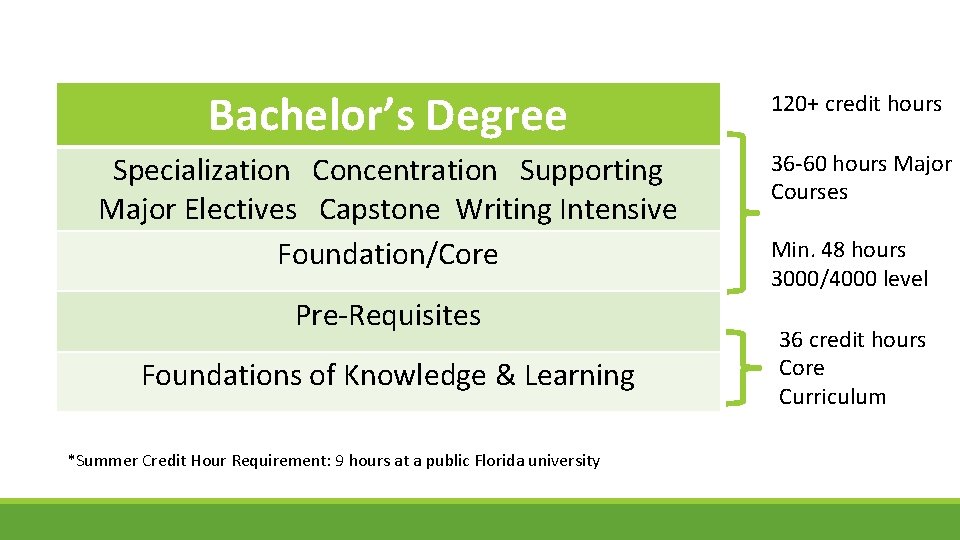
Bachelor’s Degree 120+ credit hours Specialization Concentration Supporting Major Electives Capstone Writing Intensive Foundation/Core 36 -60 hours Major Courses Pre-Requisites Foundations of Knowledge & Learning *Summer Credit Hour Requirement: 9 hours at a public Florida university Min. 48 hours 3000/4000 level 36 credit hours Core Curriculum
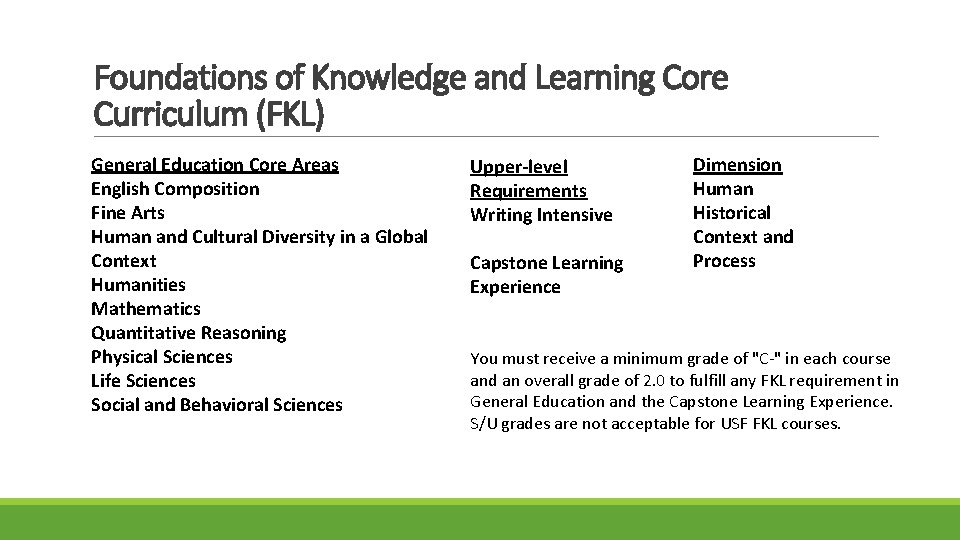
Foundations of Knowledge and Learning Core Curriculum (FKL) General Education Core Areas English Composition Fine Arts Human and Cultural Diversity in a Global Context Humanities Mathematics Quantitative Reasoning Physical Sciences Life Sciences Social and Behavioral Sciences Upper-level Requirements Writing Intensive Capstone Learning Experience Dimension Human Historical Context and Process You must receive a minimum grade of "C-" in each course and an overall grade of 2. 0 to fulfill any FKL requirement in General Education and the Capstone Learning Experience. S/U grades are not acceptable for USF FKL courses.
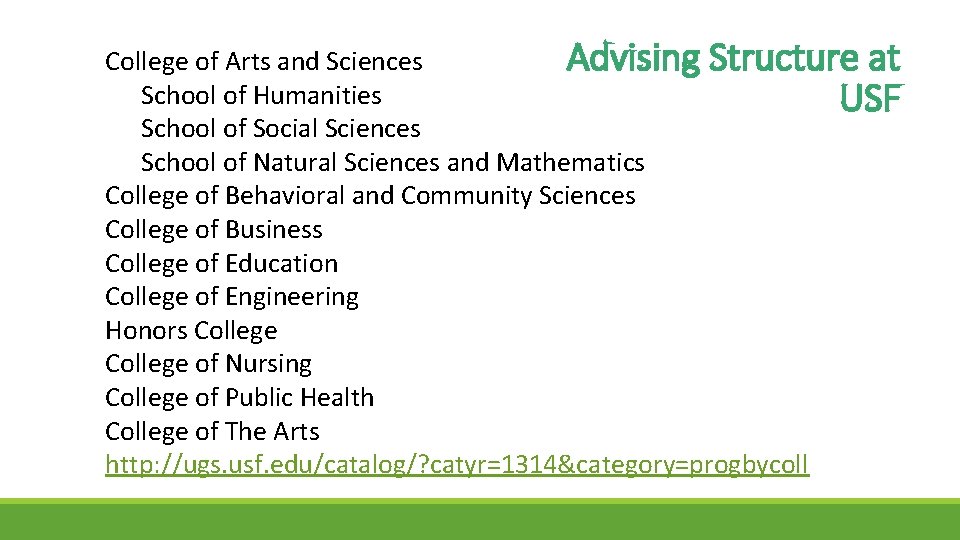
Advising Structure at College of Arts and Sciences School of Humanities USF School of Social Sciences School of Natural Sciences and Mathematics College of Behavioral and Community Sciences College of Business College of Education College of Engineering Honors College of Nursing College of Public Health College of The Arts http: //ugs. usf. edu/catalog/? catyr=1314&category=progbycoll
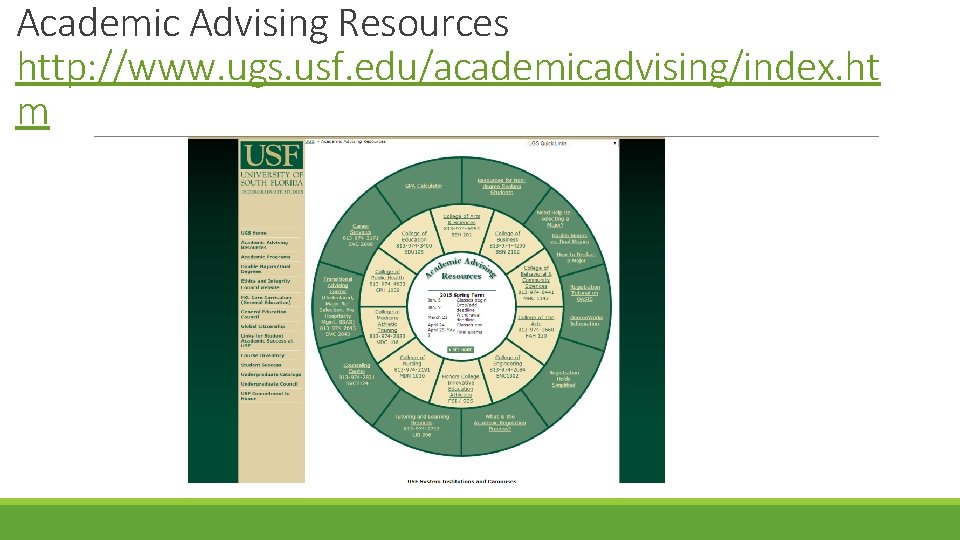
Academic Advising Resources http: //www. ugs. usf. edu/academicadvising/index. ht m
Undergraduate Catalog http: //www. ugs. usf. edu/catalogs. htm
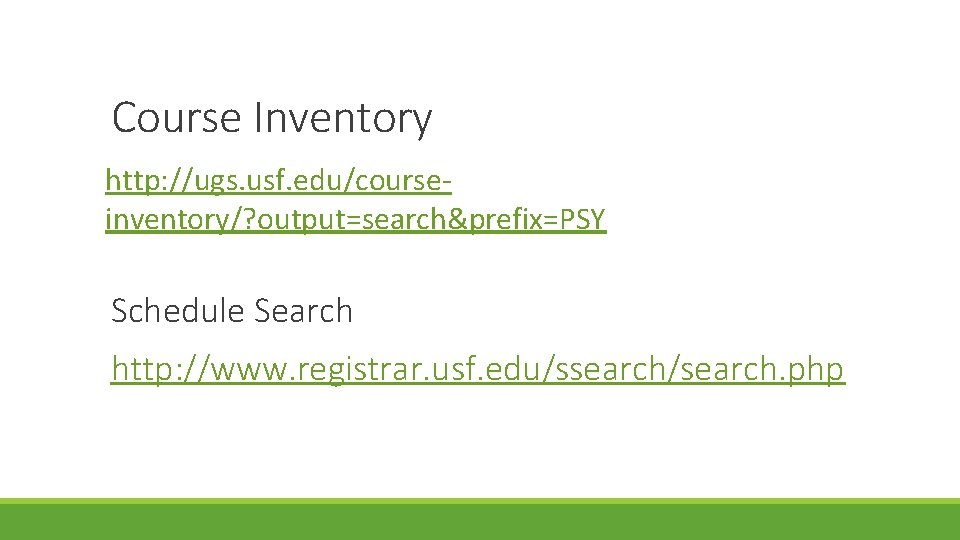
Course Inventory http: //ugs. usf. edu/courseinventory/? output=search&prefix=PSY Schedule Search http: //www. registrar. usf. edu/ssearch/search. php
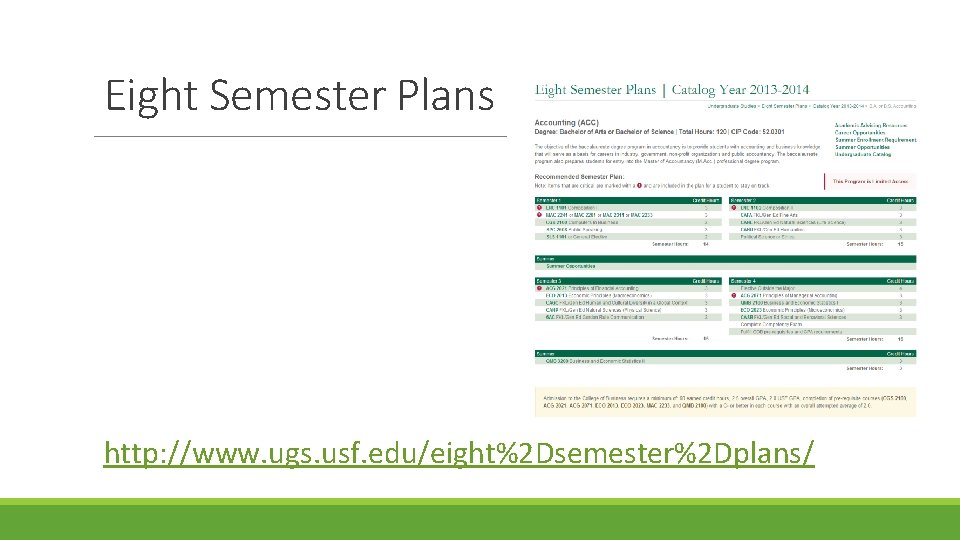
Eight Semester Plans http: //www. ugs. usf. edu/eight%2 Dsemester%2 Dplans/
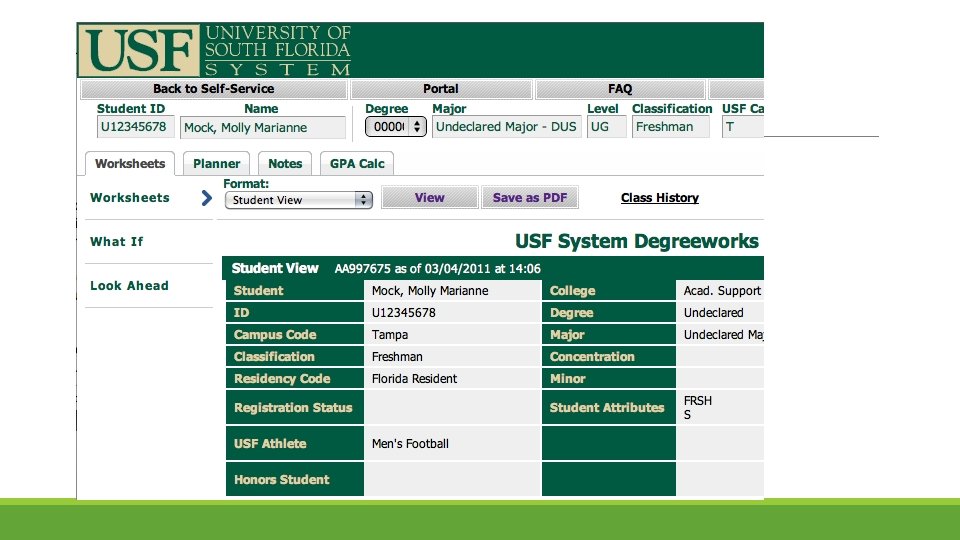
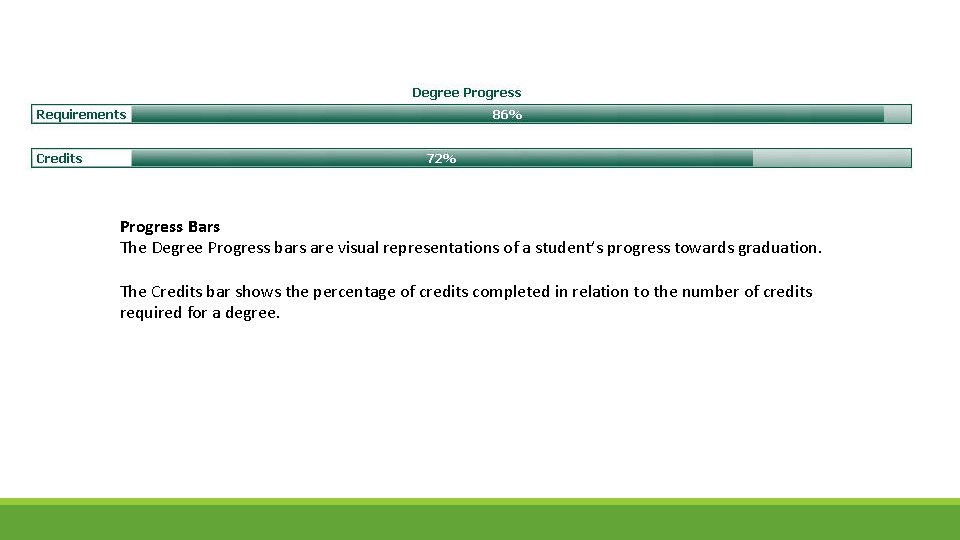
Progress Bars The Degree Progress bars are visual representations of a student’s progress towards graduation. The Credits bar shows the percentage of credits completed in relation to the number of credits required for a degree.
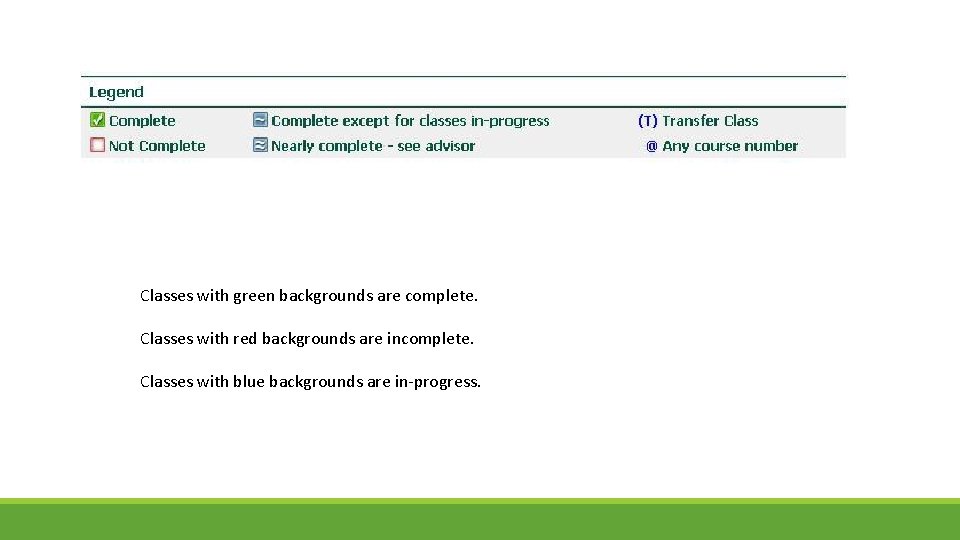
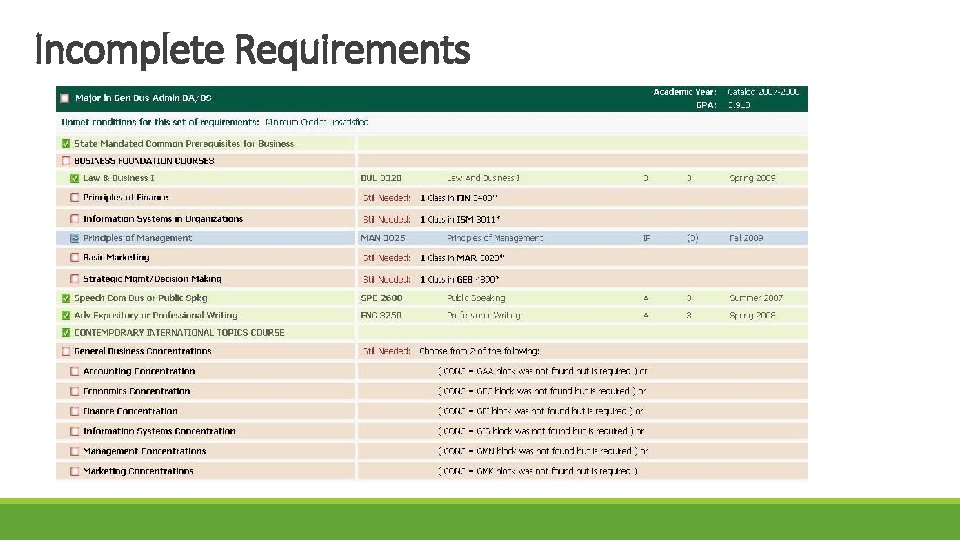
Classes with green backgrounds are complete. Classes with red backgrounds are incomplete. Classes with blue backgrounds are in-progress.
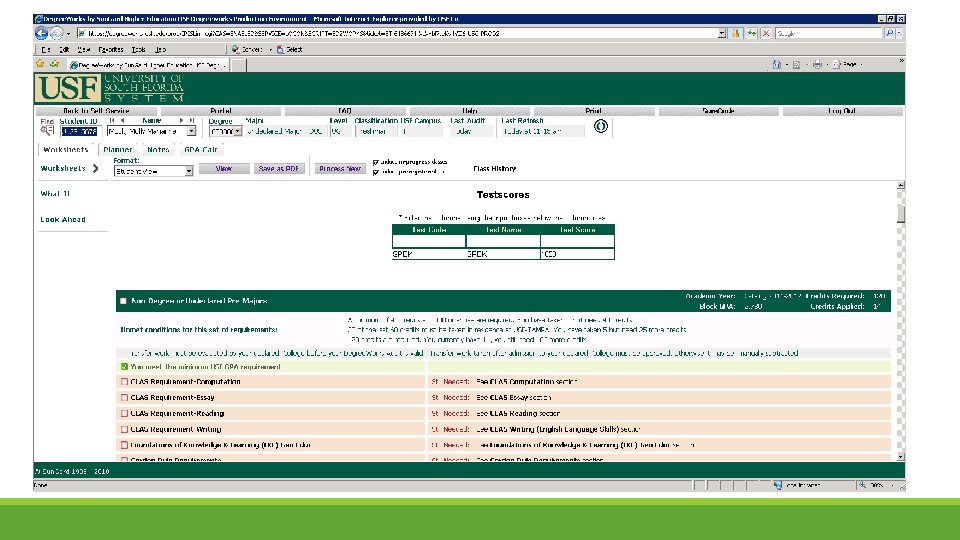
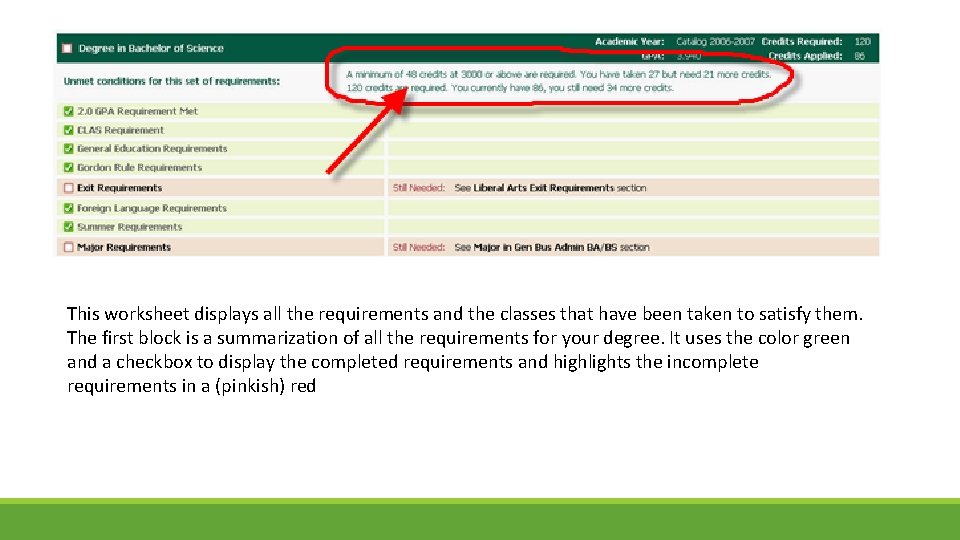
This worksheet displays all the requirements and the classes that have been taken to satisfy them. The first block is a summarization of all the requirements for your degree. It uses the color green and a checkbox to display the completed requirements and highlights the incomplete requirements in a (pinkish) red
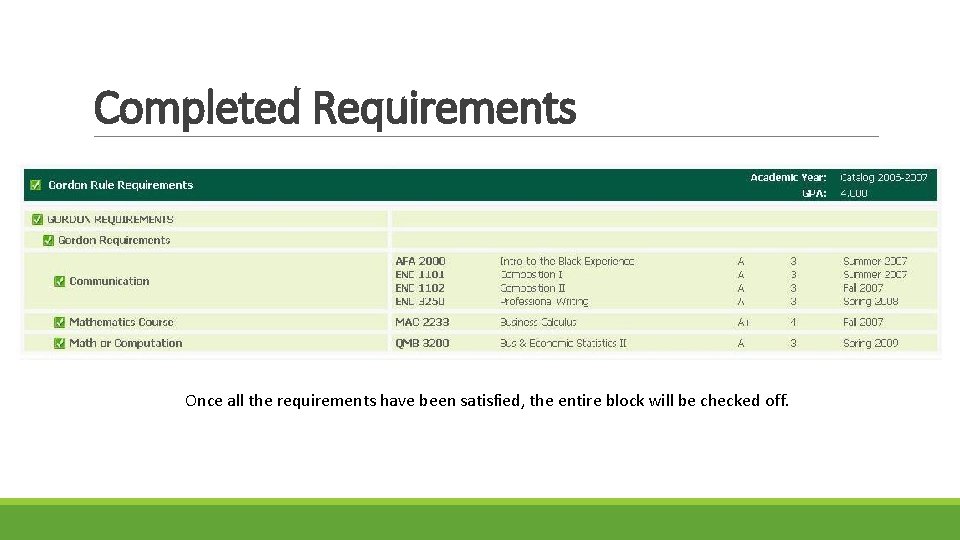
Completed Requirements Once all the requirements have been satisfied, the entire block will be checked off.
Incomplete Requirements
Still-Needed Courses
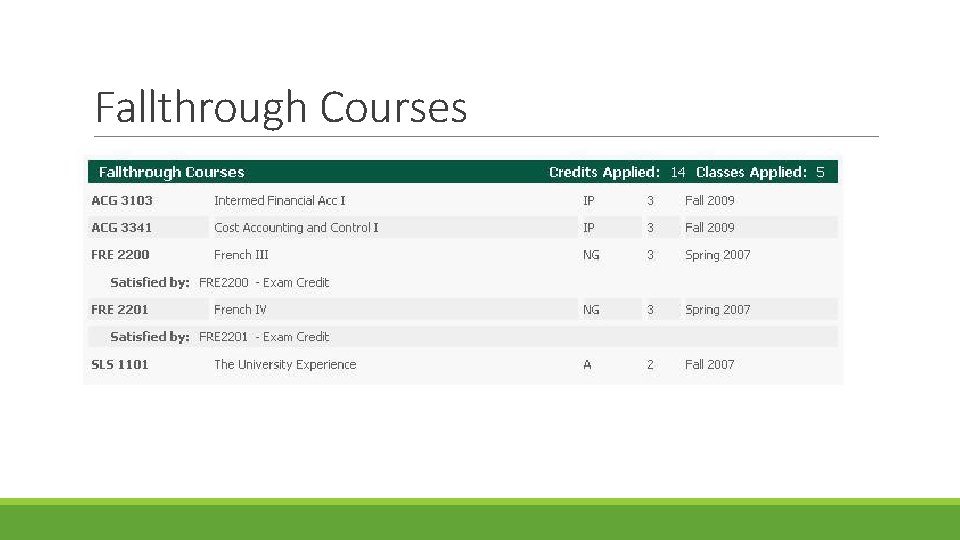
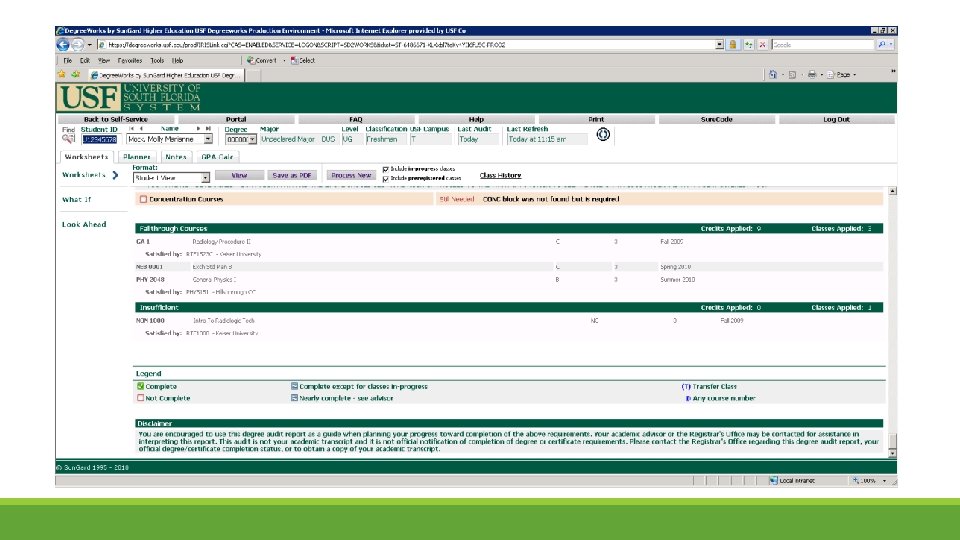
Fallthrough Courses
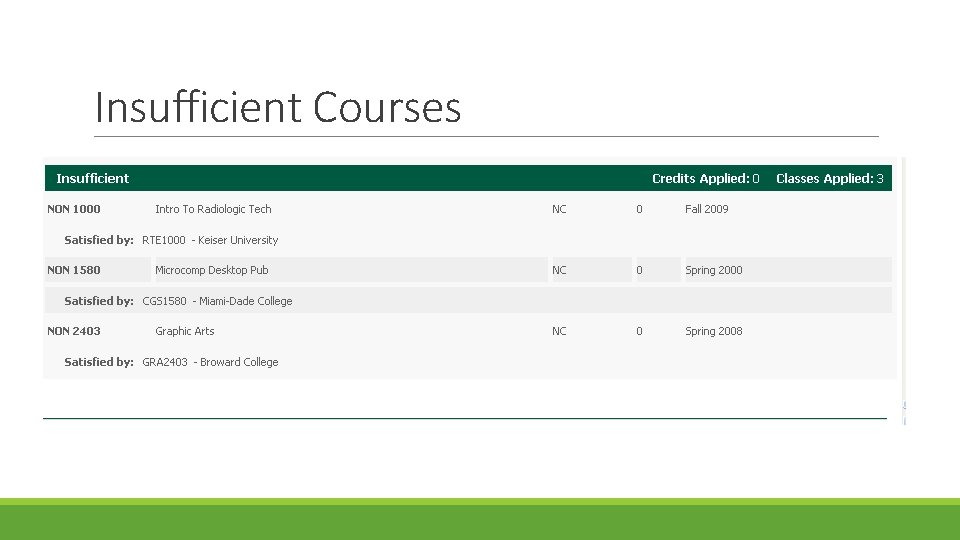
Insufficient Courses
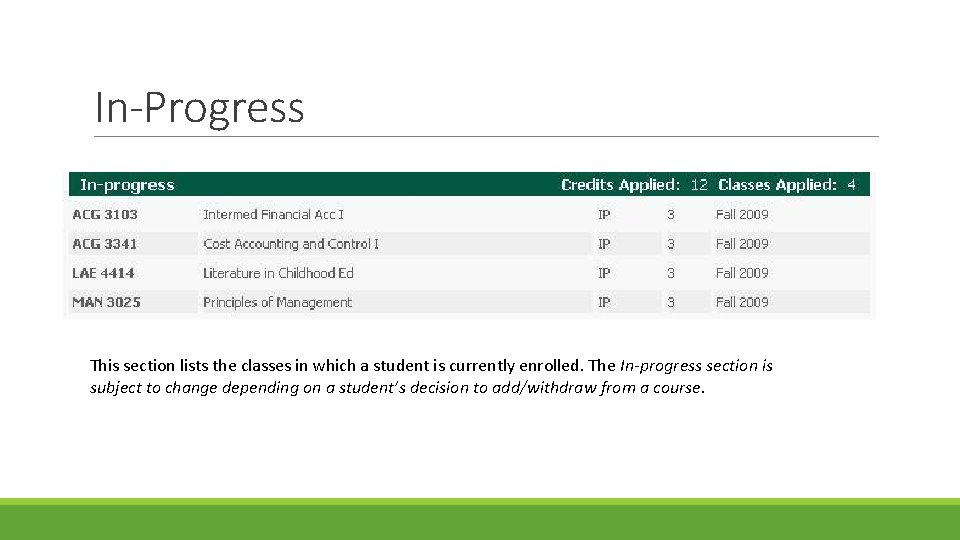
In-Progress This section lists the classes in which a student is currently enrolled. The In-progress section is subject to change depending on a student’s decision to add/withdraw from a course.
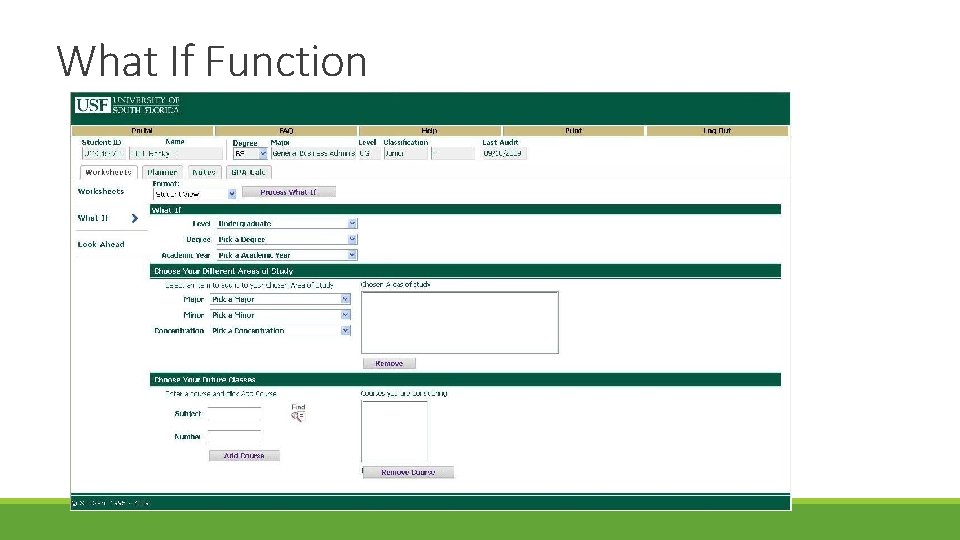
What If Function
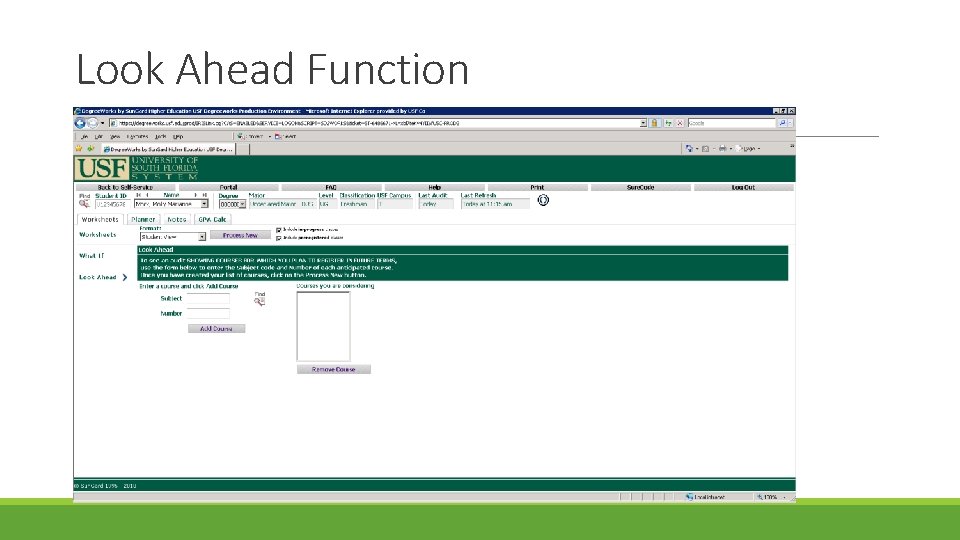
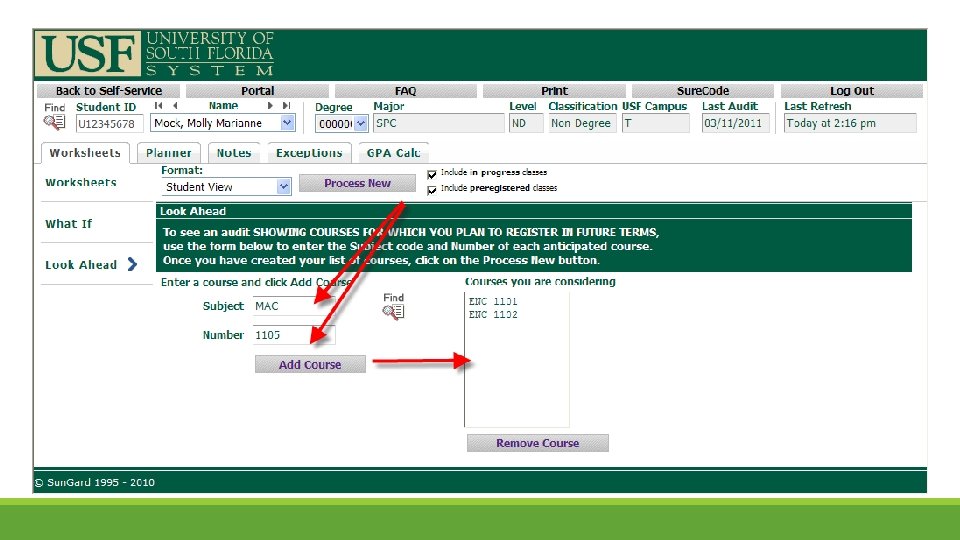
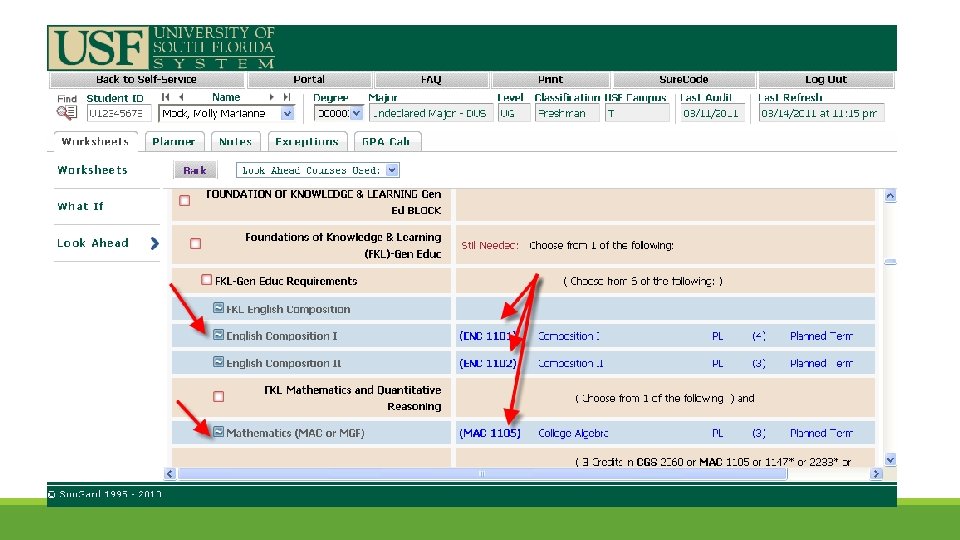
Look Ahead Function
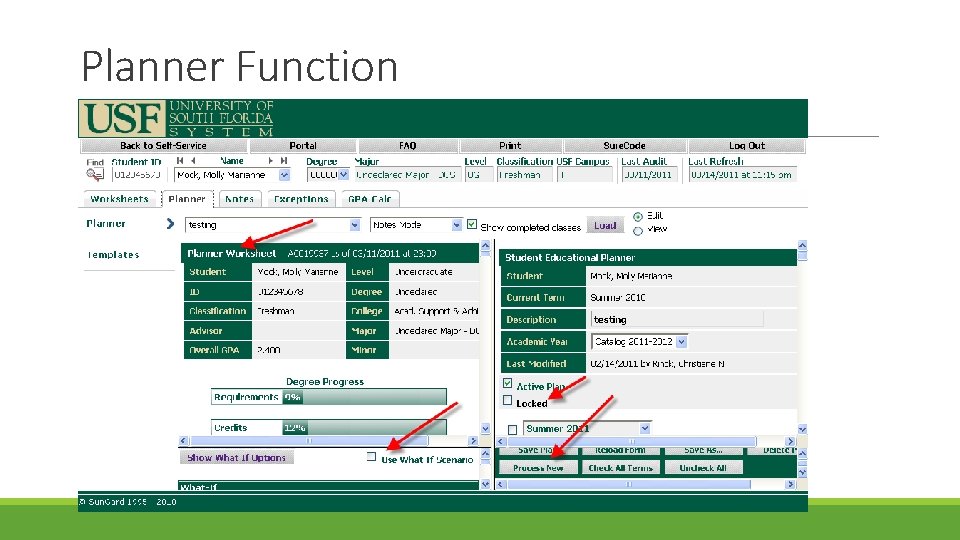
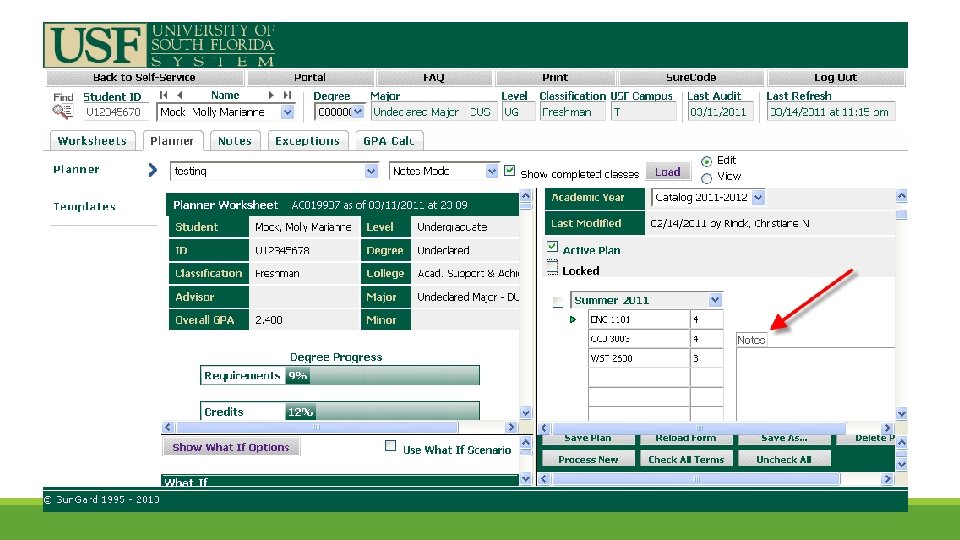
Planner Function
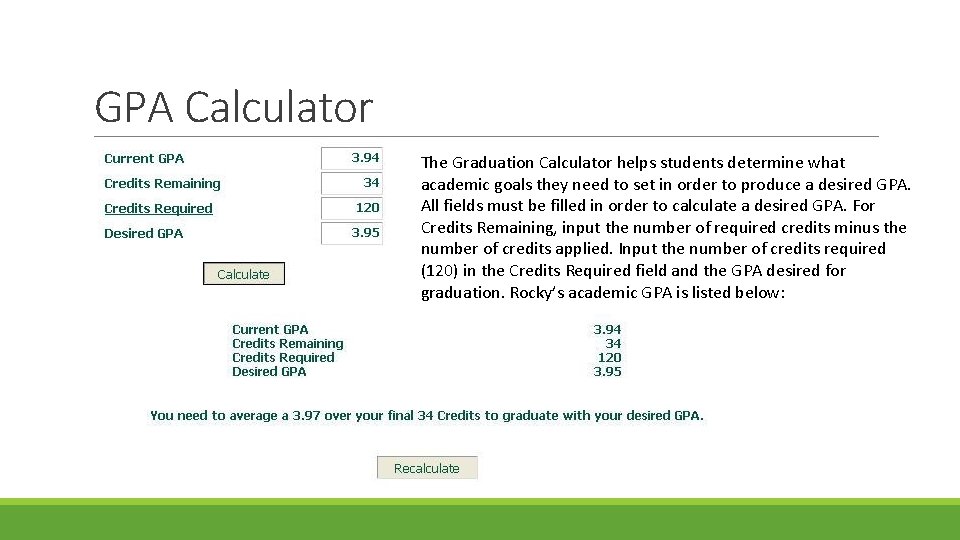
GPA Calculator The Graduation Calculator helps students determine what academic goals they need to set in order to produce a desired GPA. All fields must be filled in order to calculate a desired GPA. For Credits Remaining, input the number of required credits minus the number of credits applied. Input the number of credits required (120) in the Credits Required field and the GPA desired for graduation. Rocky’s academic GPA is listed below:
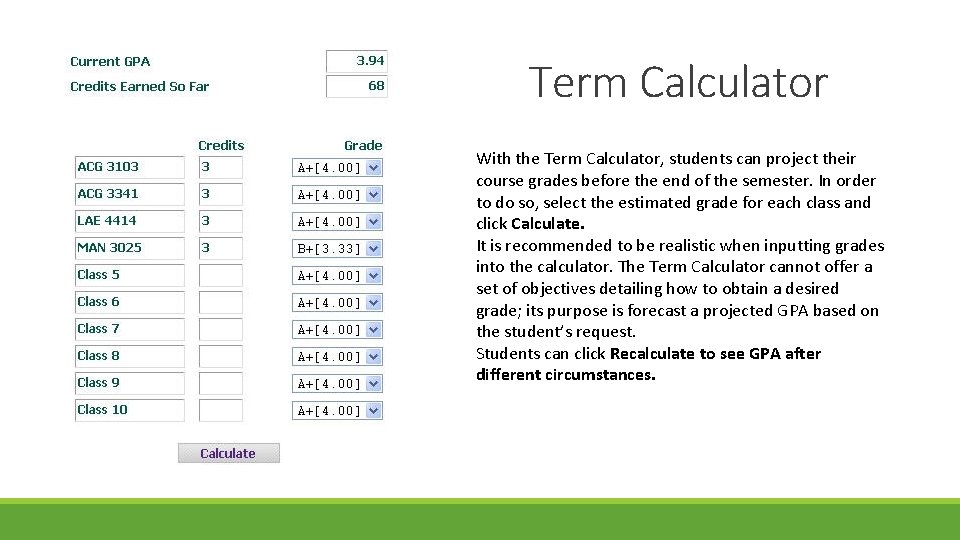
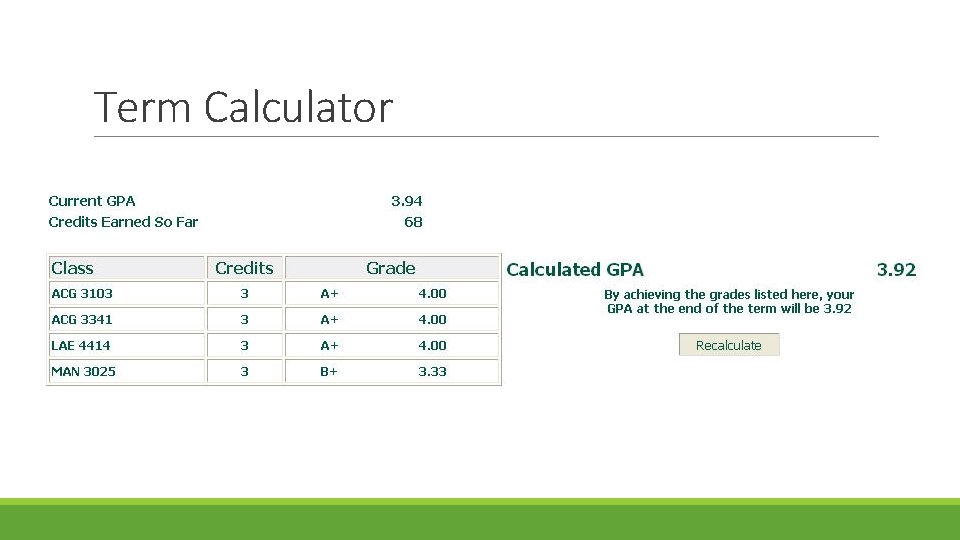
Term Calculator With the Term Calculator, students can project their course grades before the end of the semester. In order to do so, select the estimated grade for each class and click Calculate. It is recommended to be realistic when inputting grades into the calculator. The Term Calculator cannot offer a set of objectives detailing how to obtain a desired grade; its purpose is forecast a projected GPA based on the student’s request. Students can click Recalculate to see GPA after different circumstances.
Term Calculator
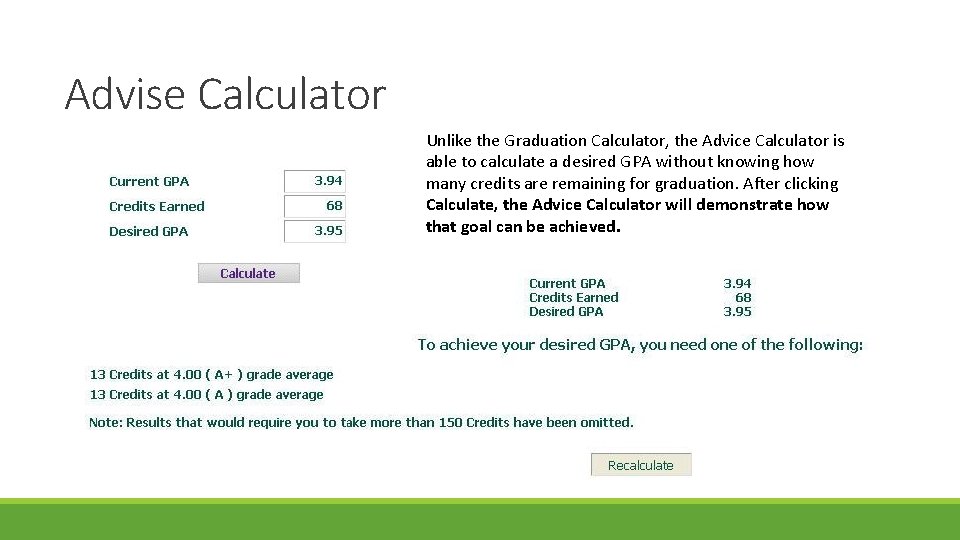
Advise Calculator Unlike the Graduation Calculator, the Advice Calculator is able to calculate a desired GPA without knowing how many credits are remaining for graduation. After clicking Calculate, the Advice Calculator will demonstrate how that goal can be achieved.