
Partner Notification for the National Chlamydia Screening Programme
![Learning PN • “ It was with [colleagues’] support really…. when they listened they’d](https://slidetodoc.com/presentation_image/91ac2ef5d5952aec0f8ce35e6afc01da/image-20.jpg "Learning PN • “ It was with [colleagues’] support really…. when they listened they’d")
- Slides: 28
Partner Notification for the National Chlamydia Screening Programme: a Service Evaluation Gill Bell Nurse Consultant Sexual Health Adviser SSHA Conference 2008
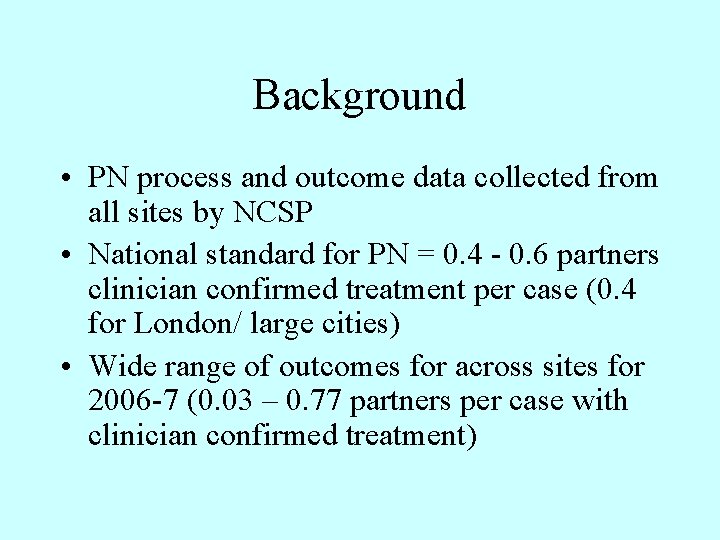
Background • PN process and outcome data collected from all sites by NCSP • National standard for PN = 0. 4 - 0. 6 partners clinician confirmed treatment per case (0. 4 for London/ large cities) • Wide range of outcomes for across sites for 2006 -7 (0. 03 – 0. 77 partners per case with clinician confirmed treatment)
Study Aims • To explore reasons for disparity in PN outcomes between sites • To identify interventions which may improve PN outcomes
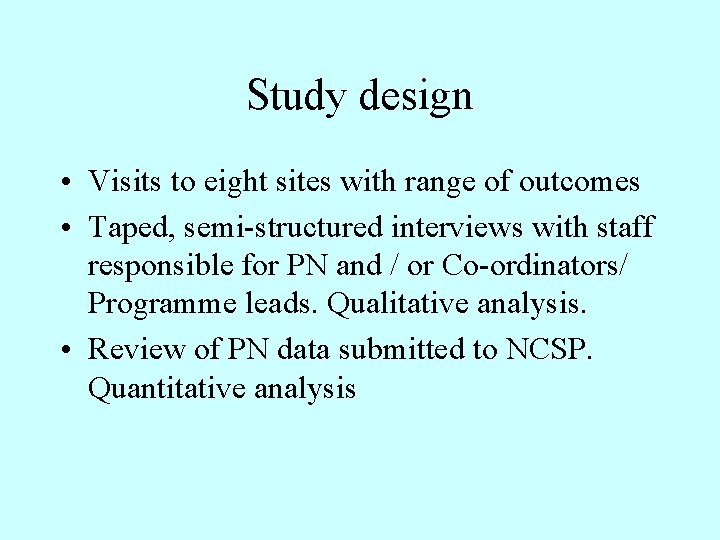
Study design • Visits to eight sites with range of outcomes • Taped, semi-structured interviews with staff responsible for PN and / or Co-ordinators/ Programme leads. Qualitative analysis. • Review of PN data submitted to NCSP. Quantitative analysis
Study sites in rank order of partner notification outcomes: clinician confirmed partners treated per case 2006/7
Percentage partners treated
Factors affecting PN outcomes Findings • PN process – data recorded; provider referral; follow-up; verification • Staff resources – time, skills, attitudes • Service structure – centralised management • Patient / population characteristics mobility, relationship patterns, attitudes, values
Recording names / PN outcomes
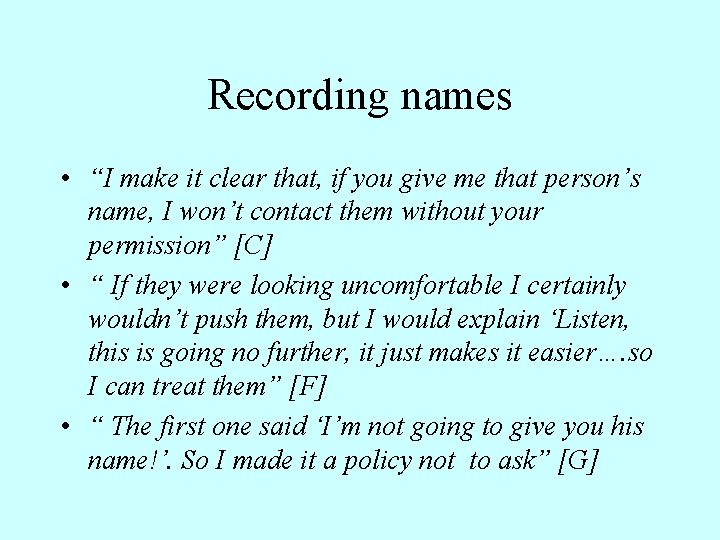
Recording names • “I make it clear that, if you give me that person’s name, I won’t contact them without your permission” [C] • “ If they were looking uncomfortable I certainly wouldn’t push them, but I would explain ‘Listen, this is going no further, it just makes it easier…. so I can treat them” [F] • “ The first one said ‘I’m not going to give you his name!’. So I made it a policy not to ask” [G]
Provider referrals per case
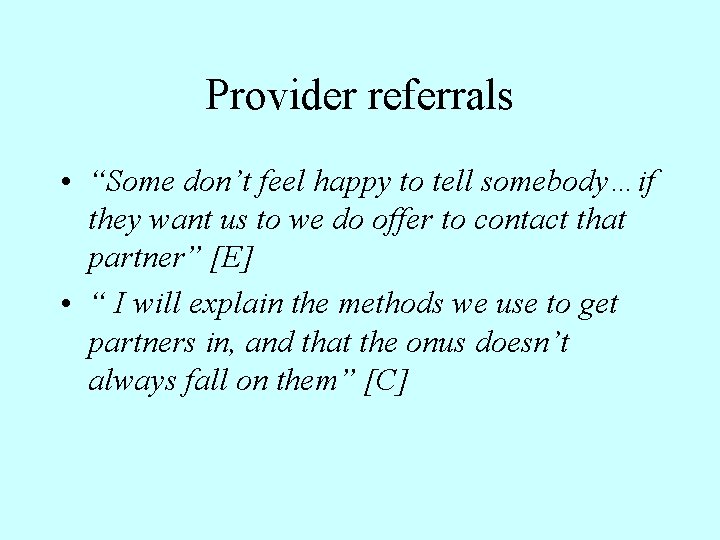
Provider referrals • “Some don’t feel happy to tell somebody…if they want us to we do offer to contact that partner” [E] • “ I will explain the methods we use to get partners in, and that the onus doesn’t always fall on them” [C]
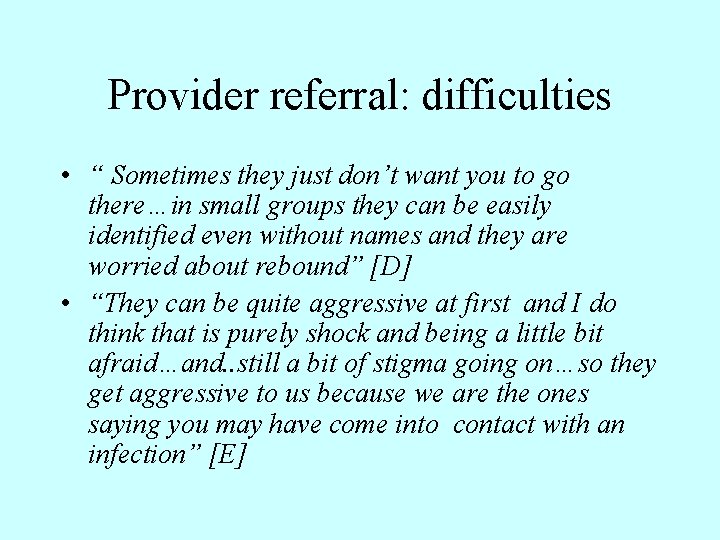
Provider referral: difficulties • “ Sometimes they just don’t want you to go there…in small groups they can be easily identified even without names and they are worried about rebound” [D] • “They can be quite aggressive at first and I do think that is purely shock and being a little bit afraid…and. . still a bit of stigma going on…so they get aggressive to us because we are the ones saying you may have come into contact with an infection” [E]
Provider referral: rewards • “ He had eight contacts and we got six of them and I was really chuffed with that!” [A] • “ I love it! I do get a lot of satisfaction…especially when you get somebody you’ve been chasing!” [E]
Patient follow -up /PN outcomes
Follow-up comments • “ I say ‘I haven’t had any contact yet, is it alright if I give them a call? ’…. . they are fine with that because it takes the burden off them” [C] • “ I don’t know how much badgering you can do of a person” [F] • “I’ve got a load there of follow-ups since six weeks ago!” [G]
Verification of partner treatment
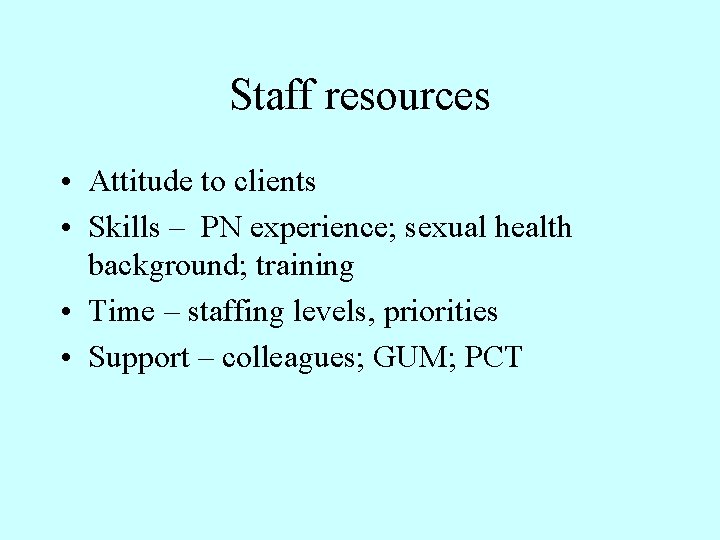
Staff resources • Attitude to clients • Skills – PN experience; sexual health background; training • Time – staffing levels, priorities • Support – colleagues; GUM; PCT
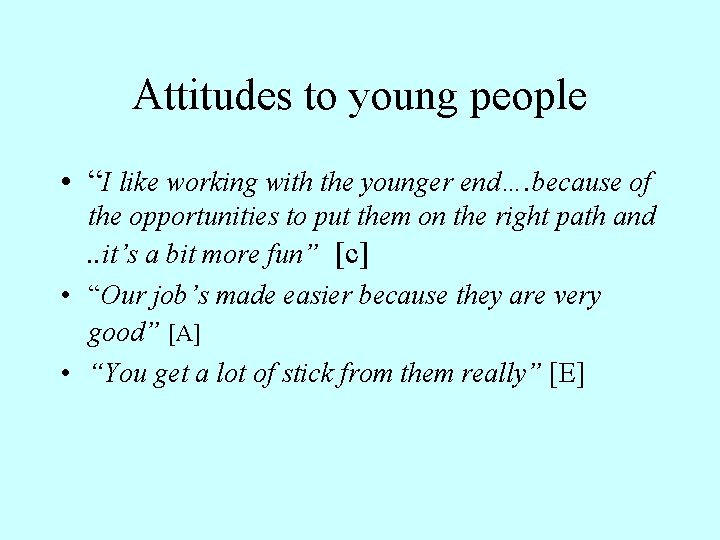
Attitudes to young people • “I like working with the younger end…. because of the opportunities to put them on the right path and. . it’s a bit more fun” [c] • “Our job’s made easier because they are very good” [A] • “You get a lot of stick from them really” [E]
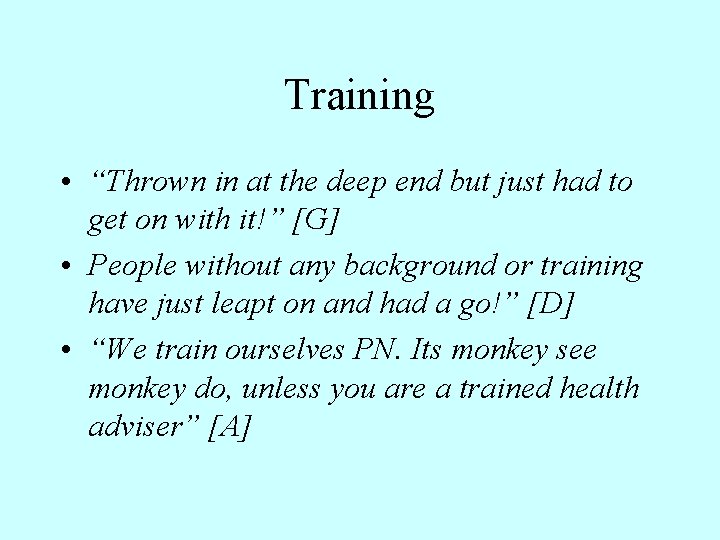
Training • “Thrown in at the deep end but just had to get on with it!” [G] • People without any background or training have just leapt on and had a go!” [D] • “We train ourselves PN. Its monkey see monkey do, unless you are a trained health adviser” [A]
Learning PN • “ It was with [colleagues’] support really…. when they listened they’d say ‘maybe you’d have got a bit more. . if you put it like this…” [E] • “ We had the personal links…so…we’d ring GU and say ‘what would you do? ’” [D]
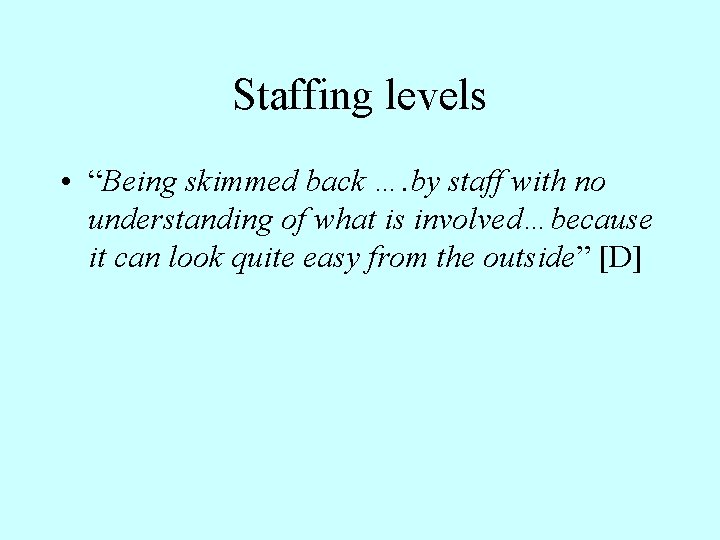
Staffing levels • “Being skimmed back …. by staff with no understanding of what is involved…because it can look quite easy from the outside” [D]
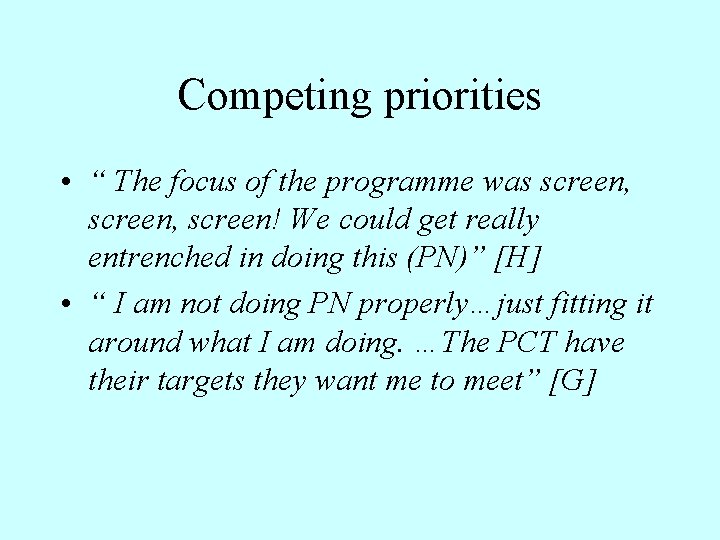
Competing priorities • “ The focus of the programme was screen, screen! We could get really entrenched in doing this (PN)” [H] • “ I am not doing PN properly…just fitting it around what I am doing. …The PCT have their targets they want me to meet” [G]
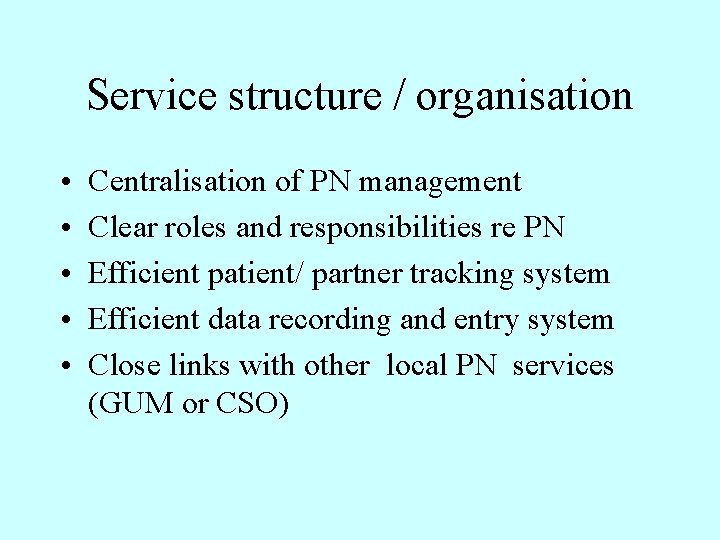
Service structure / organisation • • • Centralisation of PN management Clear roles and responsibilities re PN Efficient patient/ partner tracking system Efficient data recording and entry system Close links with other local PN services (GUM or CSO)
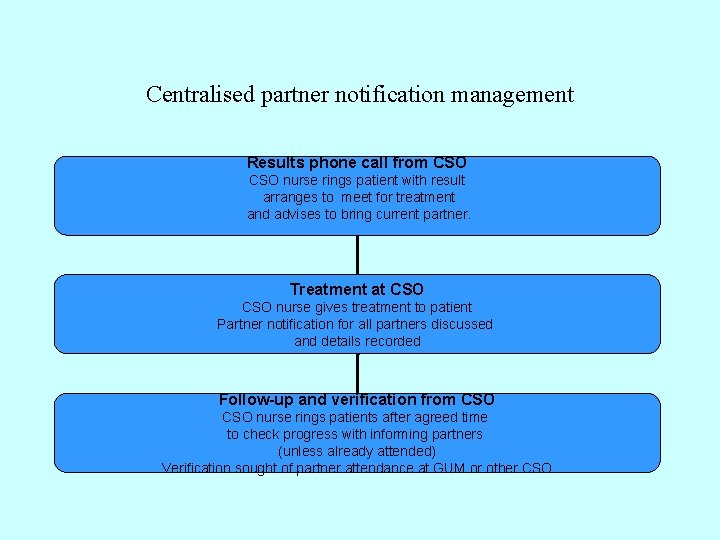
Centralised partner notification management Results phone call from CSO nurse rings patient with result arranges to meet for treatment and advises to bring current partner. Treatment at CSO nurse gives treatment to patient Partner notification for all partners discussed and details recorded Follow-up and verification from CSO nurse rings patients after agreed time to check progress with informing partners (unless already attended) Verification sought of partner attendance at GUM or other CSO
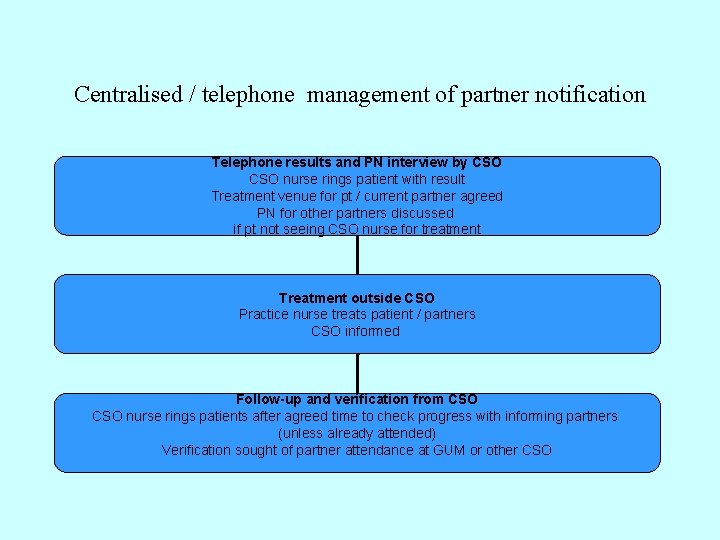
Centralised / telephone management of partner notification Telephone results and PN interview by CSO nurse rings patient with result Treatment venue for pt / current partner agreed PN for other partners discussed if pt not seeing CSO nurse for treatment Treatment outside CSO Practice nurse treats patient / partners CSO informed Follow-up and verification from CSO nurse rings patients after agreed time to check progress with informing partners (unless already attended) Verification sought of partner attendance at GUM or other CSO
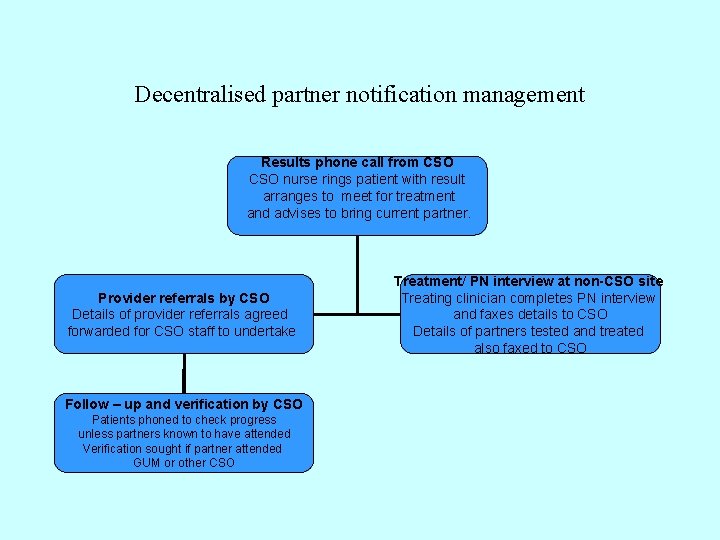
Decentralised partner notification management Results phone call from CSO nurse rings patient with result arranges to meet for treatment and advises to bring current partner. Provider referrals by CSO Details of provider referrals agreed forwarded for CSO staff to undertake Follow – up and verification by CSO Patients phoned to check progress unless partners known to have attended Verification sought if partner attended GUM or other CSO Treatment/ PN interview at non-CSO site Treating clinician completes PN interview and faxes details to CSO Details of partners tested and treated also faxed to CSO
Centralised management of PN
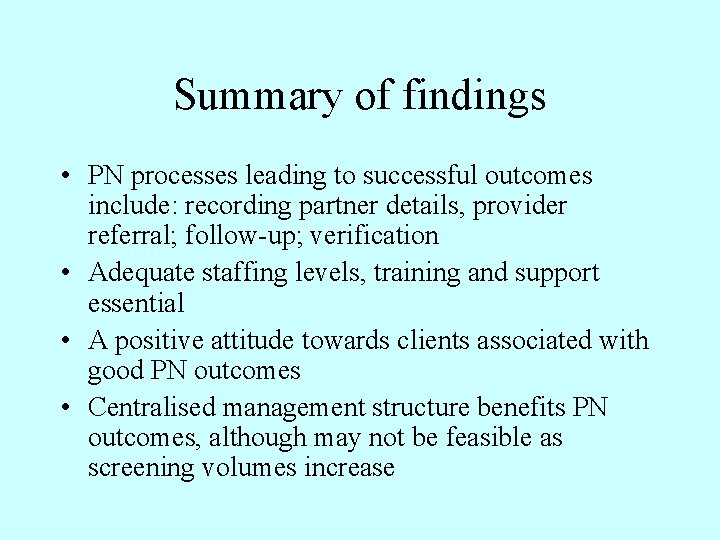
Summary of findings • PN processes leading to successful outcomes include: recording partner details, provider referral; follow-up; verification • Adequate staffing levels, training and support essential • A positive attitude towards clients associated with good PN outcomes • Centralised management structure benefits PN outcomes, although may not be feasible as screening volumes increase