
Partitioning Numbers WALT Partition numbers into tens and
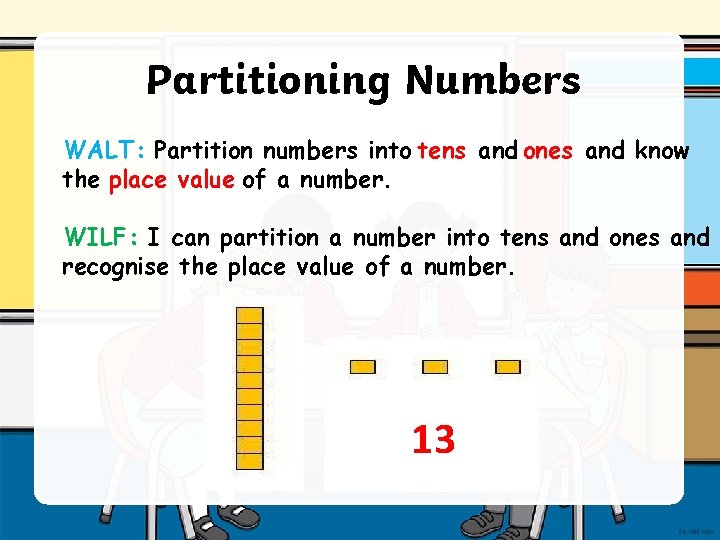
Partitioning Numbers WALT: Partition numbers into tens and ones and know the place value of a number. WILF: I can partition a number into tens and ones and recognise the place value of a number. 13
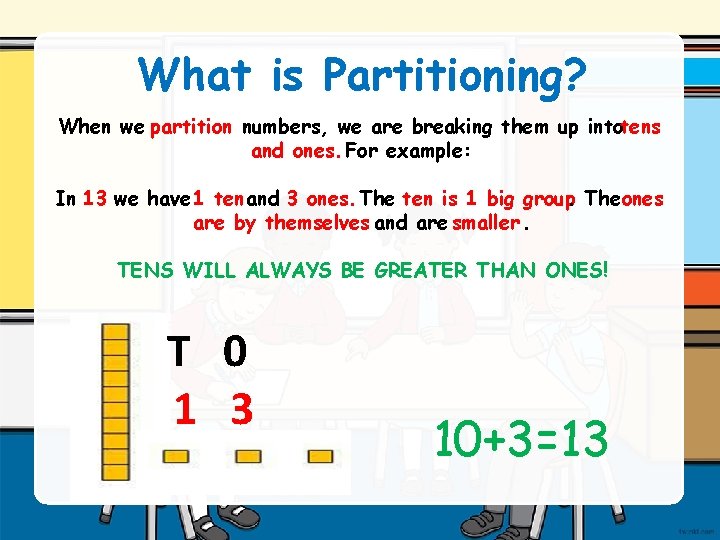
What is Partitioning? When we partition numbers, we are breaking them up intotens and ones. For example: In 13 we have 1 ten and 3 ones. The ten is 1 big group. The ones are by themselves and are smaller. TENS WILL ALWAYS BE GREATER THAN ONES! T 0 1 3 10+3=13
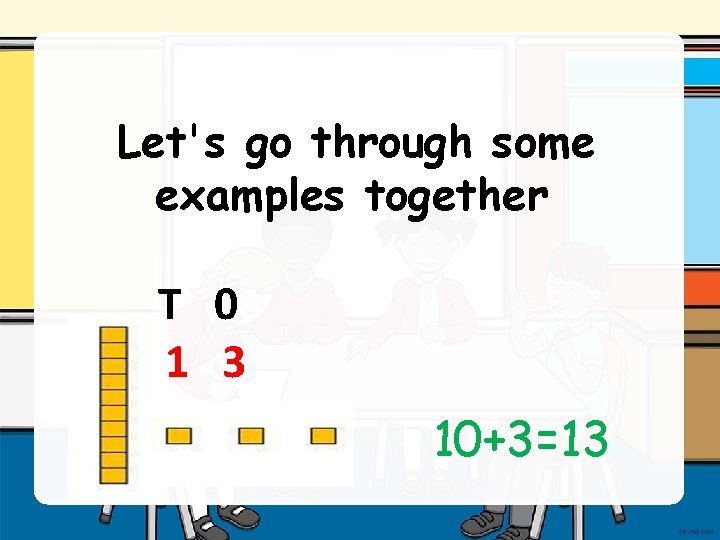
Let's go through some examples together T 0 1 3 10+3=13
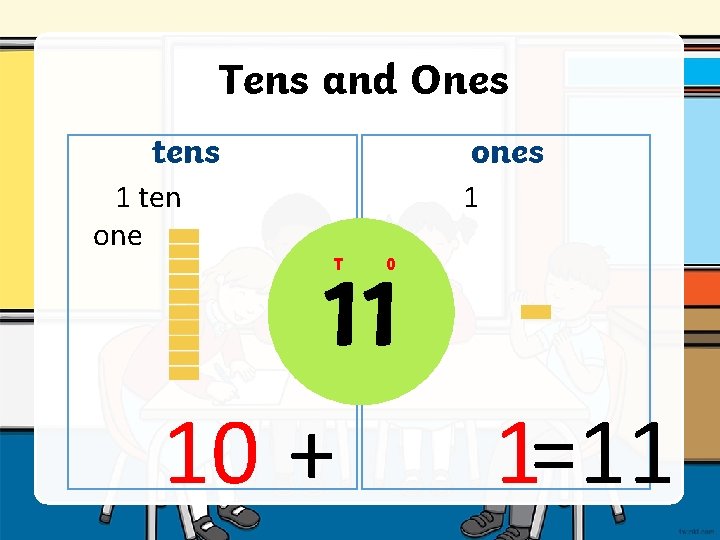
Tens and Ones tens 1 ten ones 1 T 0 11 10 + 1=11
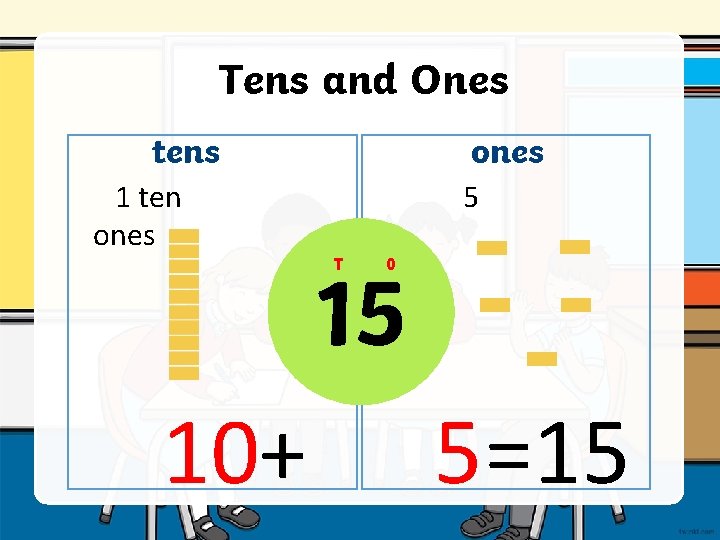
Tens and Ones tens 1 ten ones 5 T 0 15 10+ 5=15
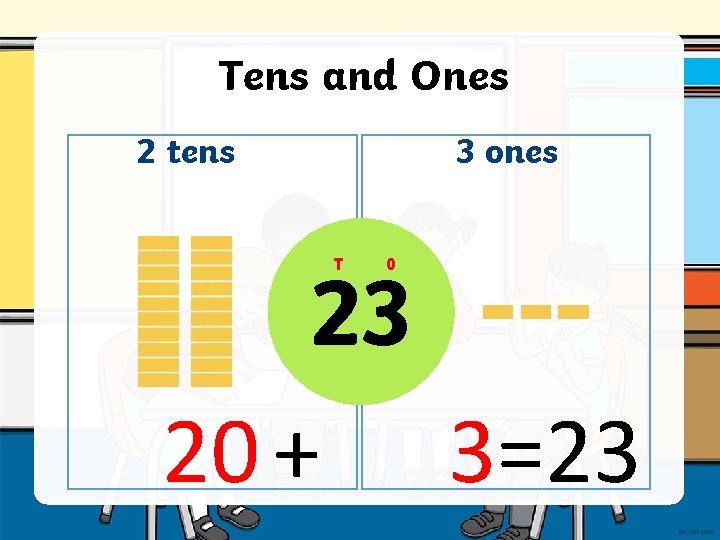
Tens and Ones 2 tens 3 ones T 0 23 20 + 3=23
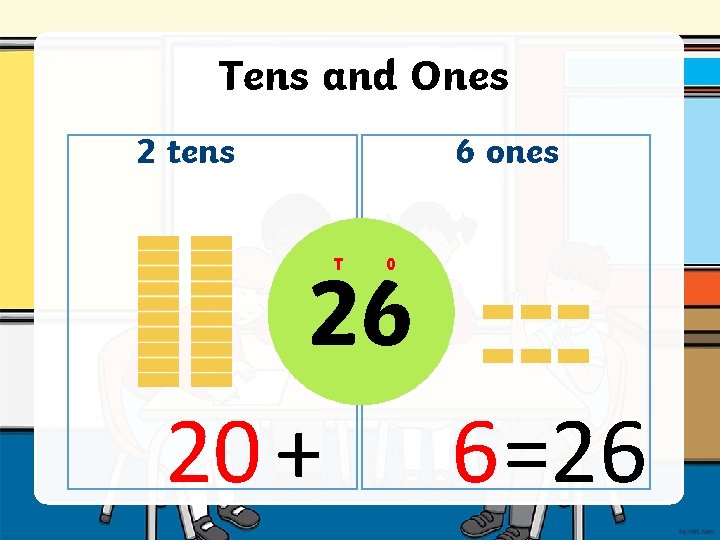
Tens and Ones 2 tens 6 ones T 0 26 20 + 6=26
Now it’s your turn to practice! Partition these numbers into tens and ones
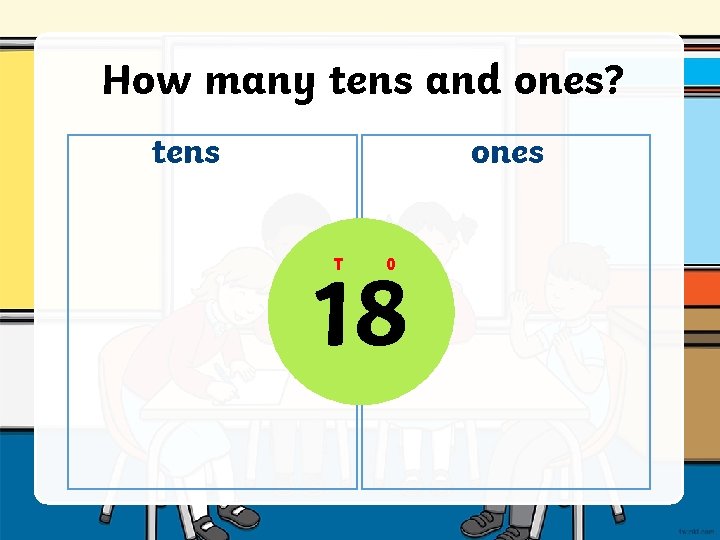
How many tens and ones? tens ones T 0 18
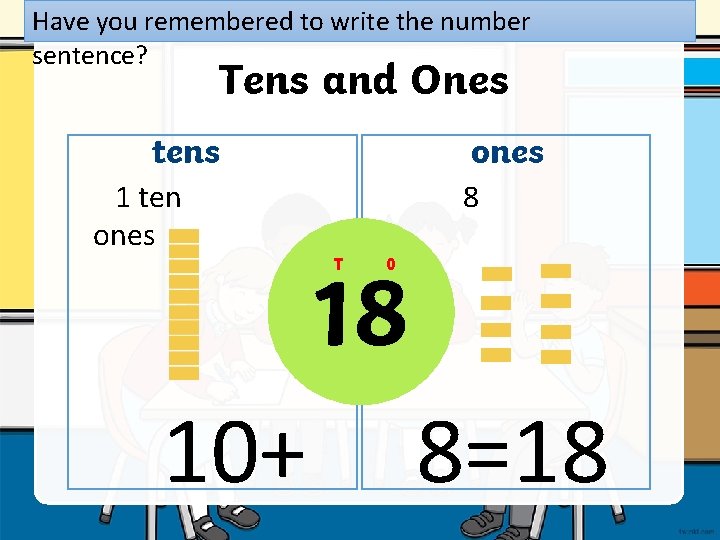
Have you remembered to write the number sentence? Tens and Ones tens 1 ten ones 8 T 0 18 10+ 8=18
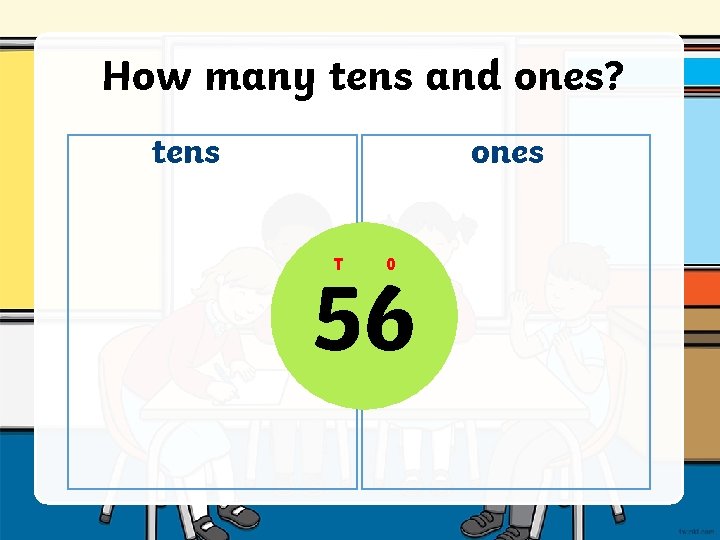
How many tens and ones? tens ones T 0 56
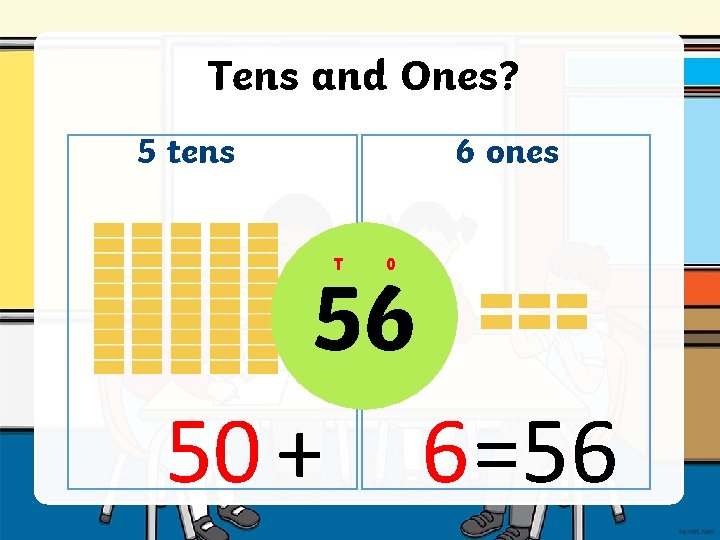
Tens and Ones? 5 tens 6 ones T 0 56 50 + 6=56
How many tens and ones? ones tens T 0 84
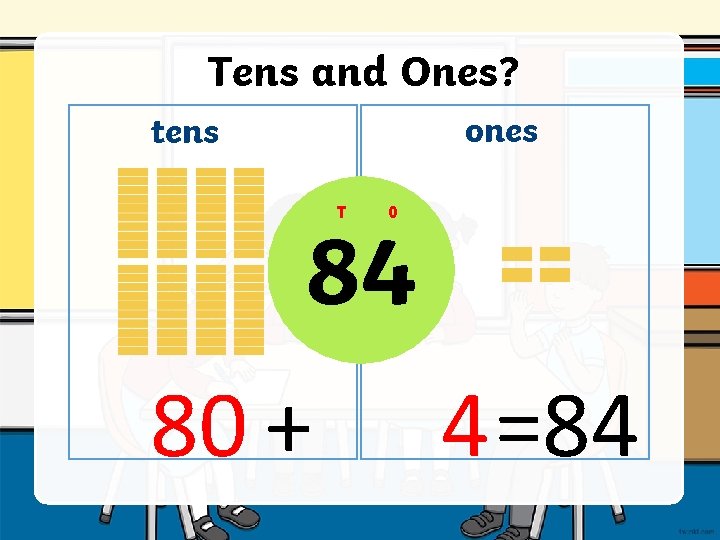
Tens and Ones? ones tens T 0 84 80 + 4=84
Your Activity
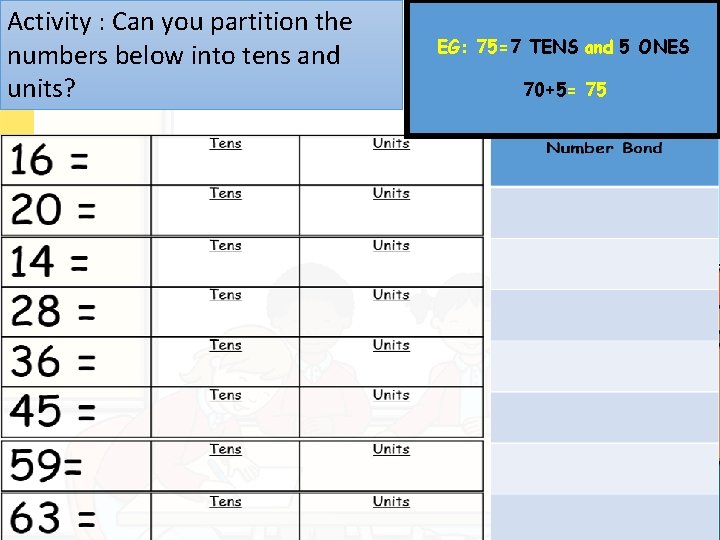
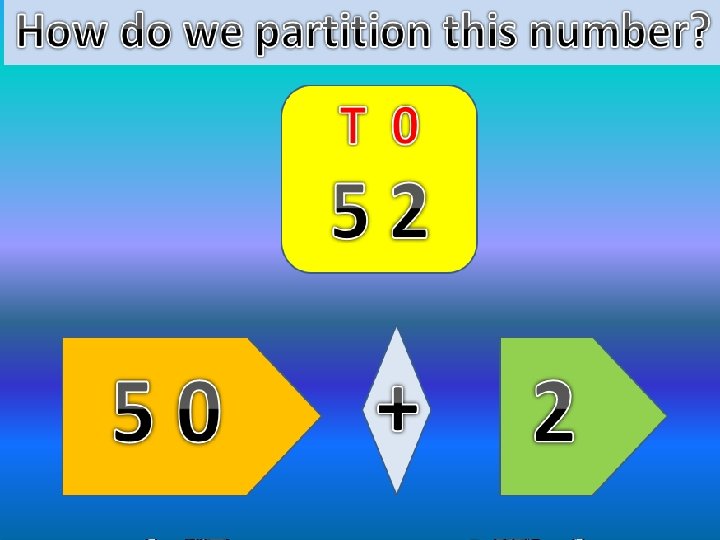
Activity : Can you partition the numbers below into tens and units? EG: 75= 7 TENS and 5 ONES 70+5= 75
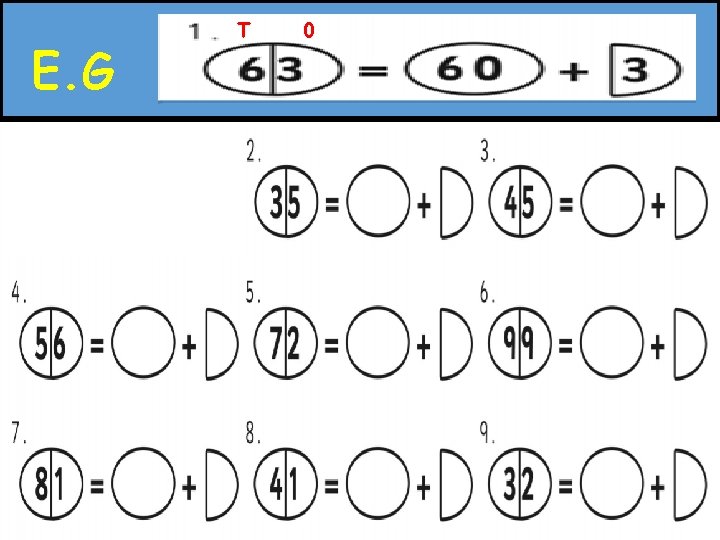
E. G T 0
Now… What is the value of these partitioned numbers? What are the number bonds for these numbers?
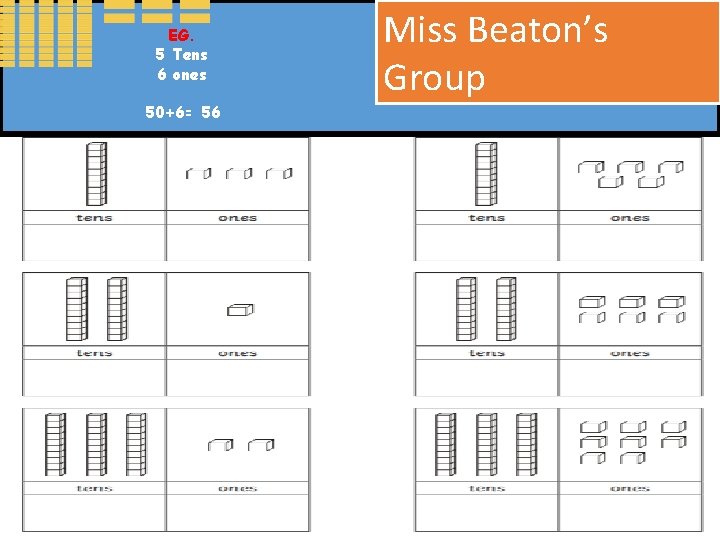
EG. 5 Tens 6 ones 50+6= 56 Miss Beaton’s Group
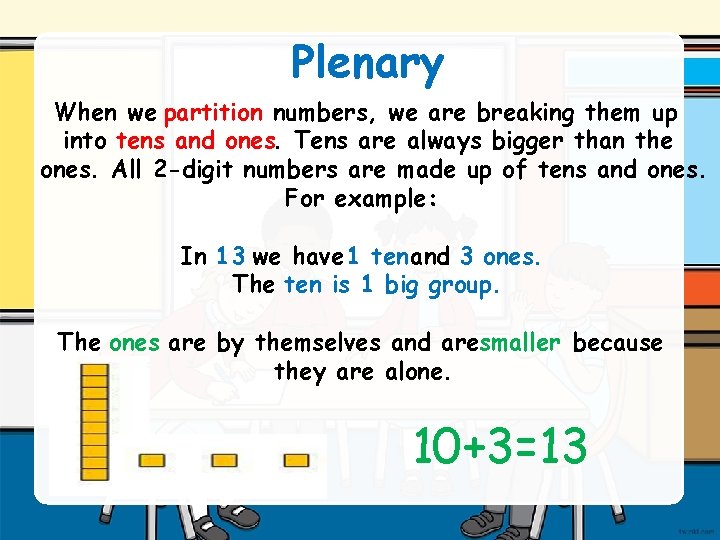
Plenary When we partition numbers, we are breaking them up into tens and ones. Tens are always bigger than the ones. All 2 -digit numbers are made up of tens and ones. For example: In 13 we have 1 ten and 3 ones. The ten is 1 big group. The ones are by themselves and aresmaller because they are alone. 10+3=13
- Slides: 21