
PARTIONING across AFRICA Presentation Graphic Organizers Activities Partitioning

- Slides: 51
PARTIONING across AFRICA Presentation, Graphic Organizers, & Activities
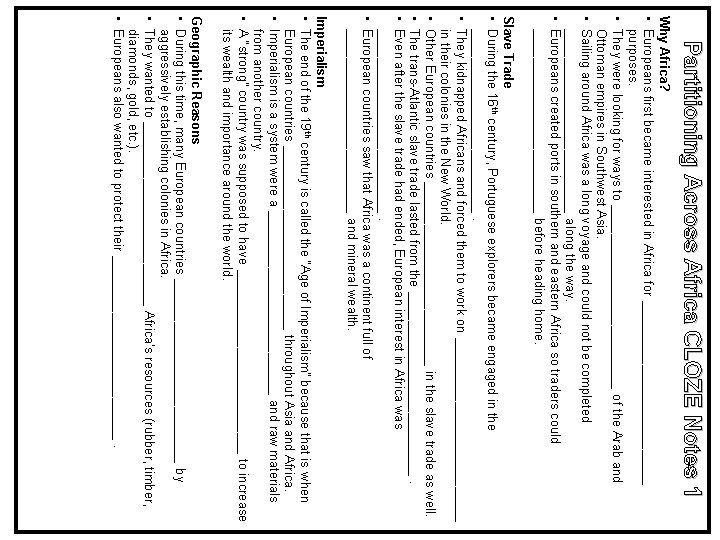
Partitioning Across Africa CLOZE Notes 1 Why Africa? • Europeans first became interested in Africa for _____________ purposes. • They were looking for ways to _____________ of the Arab and Ottoman empires in Southwest Asia. • Sailing around Africa was a long voyage and could not be completed _____________ along the way. • Europeans created ports in southern and eastern Africa so traders could _____________ before heading home. Slave Trade • During the 16 th century, Portuguese explorers became engaged in the _____________. • They kidnapped Africans and forced them to work on _____________ in their colonies in the New World. • Other European countries _____________ in the slave trade as well. • The trans-Atlantic slave trade lasted from the _____________. • Even after the slave trade had ended, European interest in Africa was _____________. • European countries saw that Africa was a continent full of _____________ and mineral wealth. Imperialism • The end of the 19 th century is called the “Age of Imperialism” because that is when European countries _____________ throughout Asia and Africa. • Imperialism is a system were a _____________ and raw materials from another country. • A “strong” country was supposed to have _____________ to increase its wealth and importance around the world. Geographic Reasons • During this time, many European countries _____________ by aggressively establishing colonies in Africa. • They wanted to _____________ Africa’s resources (rubber, timber, diamonds, gold, etc. ). • Europeans also wanted to protect their _____________.
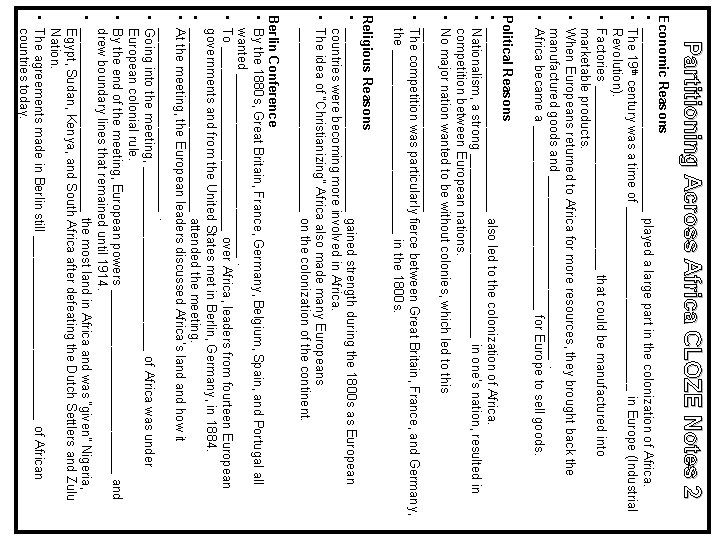
Partitioning Across Africa CLOZE Notes 2 Economic Reasons • _____________ played a large part in the colonization of Africa. • The 19 th century was a time of _____________ in Europe (Industrial Revolution). • Factories _____________ that could be manufactured into marketable products. • When Europeans returned to Africa for more resources, they brought back the manufactured goods and _____________. • Africa became a _____________ for Europe to sell goods. Political Reasons • _____________ also led to the colonization of Africa. • Nationalism, a strong _____________ in one's nation, resulted in competition between European nations. • No major nation wanted to be without colonies, which led to this _____________ • The competition was particularly fierce between Great Britain, France, and Germany, the _____________ in the 1800 s. Religious Reasons • _____________ gained strength during the 1800 s as European countries were becoming more involved in Africa. • The idea of “Christianizing” Africa also made many Europeans _____________ on the colonization of the continent. Berlin Conference • By the 1880 s, Great Britain, France, Germany, Belgium, Spain, and Portugal all wanted _____________. • To _____________ over Africa, leaders from fourteen European governments and from the United States met in Berlin, Germany, in 1884. • _____________ attended the meeting. • At the meeting, the European leaders discussed Africa’s land how it _____________. • Going into the meeting, _____________ of Africa was under European colonial rule. • By the end of the meeting, European powers _____________ and drew boundary lines that remained until 1914. • _____________ the most land in Africa and was “given” Nigeria, Egypt, Sudan, Kenya, and South Africa after defeating the Dutch Settlers and Zulu Nation. • The agreements made in Berlin still _____________ of African countries today.
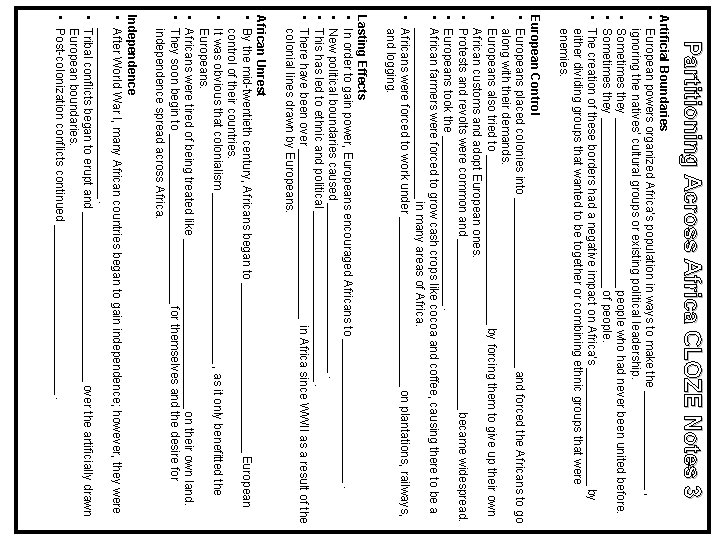
Partitioning Across Africa CLOZE Notes 3 Artificial Boundaries • European powers organized Africa’s population in ways to make the ________ , ignoring the natives’ cultural groups or existing political leadership. • Sometimes they _____________ people who had never been united before. • Sometimes they _____________ of people. • The creation of these borders had a negative impact on Africa’s _________ by either dividing groups that wanted to be together or combining ethnic groups that were enemies. European Control • Europeans placed colonies into _____________ and forced the Africans to go along with their demands. • Europeans also tried to _____________ by forcing them to give up their own African customs and adopt European ones. • Protests and revolts were common and _____________ became widespread. • Europeans took the _____________. • African farmers were forced to grow cash crops like cocoa and coffee, causing there to be a _____________ in many areas of Africa. • Africans were forced to work under _____________ on plantations, railways, and logging. Lasting Effects • In order to gain power, Europeans encouraged Africans to ___________. • New political boundaries caused _____________. • This has led to ethnic and political _____________. • There have been over _____________ in Africa since WWII as a result of the colonial lines drawn by Europeans. African Unrest • By the mid-twentieth century, Africans began to _____________ European control of their countries. • It was obvious that colonialism _____________ , as it only benefitted the Europeans. • Africans were tired of being treated like _____________ on their own land. • They soon begin to _____________ for themselves and the desire for independence spread across Africa. Independence • After World War I, many African countries began to gain independence; however, they were _____________. • Tribal conflicts began to erupt and _____________ over the artificially drawn European boundaries. • Post-colonization conflicts continued _____________.
Partitioning Across Africa CLOZE Notes 1 Why Africa? • Europeans first became interested in Africa for trade route purposes. • They were looking for ways to avoid the taxes of the Arab and Ottoman empires in Southwest Asia. • Sailing around Africa was a long voyage and could not be completed without “pit stops” along the way. • Europeans created ports in southern and eastern Africa so traders could restock supplies before heading home. Slave Trade • During the 16 th century, Portuguese explorers became engaged in the African slave trade. • They kidnapped Africans and forced them to work on plantations and mines in their colonies in the New World. • Other European countries soon participated in the slave trade as well. • The trans-Atlantic slave trade lasted from the 1500 s to the mid-1800 s. • Even after the slave trade had ended, European interest in Africa was still going strong. • European countries saw that Africa was a continent full of vast natural resources and mineral wealth. Imperialism • The end of the 19 th century is called the “Age of Imperialism” because that is when European countries competed for land power throughout Asia and Africa. • Imperialism is a system were a strong country takes wealth and raw materials from another country. • A “strong” country was supposed to have many colonies to increase its wealth and importance around the world. Geographic Reasons • During this time, many European countries expanded their empires by aggressively establishing colonies in Africa. • They wanted to exploit and export Africa’s resources (rubber, timber, diamonds, gold, etc. ). • Europeans also wanted to protect their trade routes.
Partitioning Across Africa CLOZE Notes 2 Economic Reasons • Economic motivation played a large part in the colonization of Africa. • The 19 th century was a time of great industrialization in Europe (Industrial Revolution). • Factories required raw materials that could be manufactured into marketable products. • When Europeans returned to Africa for more resources, they brought back the manufactured goods and sold them to Africans. • Africa became a new market for Europe to sell goods. Political Reasons • Politics in Europe also led to the colonization of Africa. • Nationalism, a strong sense of pride in one's nation, resulted in competition between European nations. • No major nation wanted to be without colonies, which led to this “Scramble for Africa”. • The competition was particularly fierce between Great Britain, France, and Germany, the strongest European nations in the 1800 s. Religious Reasons • Christian missionary work gained strength during the 1800 s as European countries were becoming more involved in Africa. • The idea of “Christianizing” Africa also made many Europeans look favorably on the colonization of the continent. Berlin Conference • By the 1880 s, Great Britain, France, Germany, Belgium, Spain, and Portugal all wanted part of Africa. • To prevent a European war over Africa, leaders from fourteen European governments and from the United States met in Berlin, Germany, in 1884. • No Africans attended the meeting. • At the meeting, the European leaders discussed Africa’s land how it should be divided. • Going into the meeting, roughly 10% of Africa was under European colonial rule. • By the end of the meeting, European powers “owned” most of Africa and drew boundary lines that remained until 1914. • Great Britain won the most land in Africa and was “given” Nigeria, Egypt, Sudan, Kenya, and South Africa after defeating the Dutch Settlers and Zulu Nation. • The agreements made in Berlin still affect the boundaries of African countries today.
Partitioning Across Africa CLOZE Notes 3 Artificial Boundaries • European powers organized Africa’s population in ways to make the most efficient workforce, ignoring the natives’ cultural groups or existing political leadership. • Sometimes they grouped together people who had never been united before. • Sometimes they divided existing groups of people. • The creation of these borders had a negative impact on Africa’s political and social structures by either dividing groups that wanted to be together or combining ethnic groups that were enemies. European Control • Europeans placed colonies into administrative districts and forced the Africans to go along with their demands. • Europeans also tried to assimilate Africans by forcing them to give up their own African customs and adopt European ones. • Protests and revolts were common and starvation and disease became widespread. • Europeans took the best land by force. • African farmers were forced to grow cash crops like cocoa and coffee, causing there to be a shortage of food in many areas of Africa. • Africans were forced to work under terrible conditions on plantations, railways, and logging. Lasting Effects • In order to gain power, Europeans encouraged Africans to fight against each other. • New political boundaries caused ethnic groups to clash. • This has led to ethnic and political unrest in Africa today. • There have been over 50 ethnic conflicts in Africa since WWII as a result of the colonial lines drawn by Europeans. African Unrest • By the mid-twentieth century, Africans began to openly oppose European control of their countries. • It was obvious that colonialism was not fair, as it only benefitted the Europeans. • Africans were tired of being treated like second-class citizens on their own land. • They soon begin to demand freedom for themselves and the desire for independence spread across Africa. Independence • After World War I, many African countries began to gain independence; however, they were not prepared for self-rule. • Tribal conflicts began to erupt and civil wars started over the artificially drawn European boundaries. • Post-colonization conflicts continued until almost 2000.
European Partitioning across AFRICA
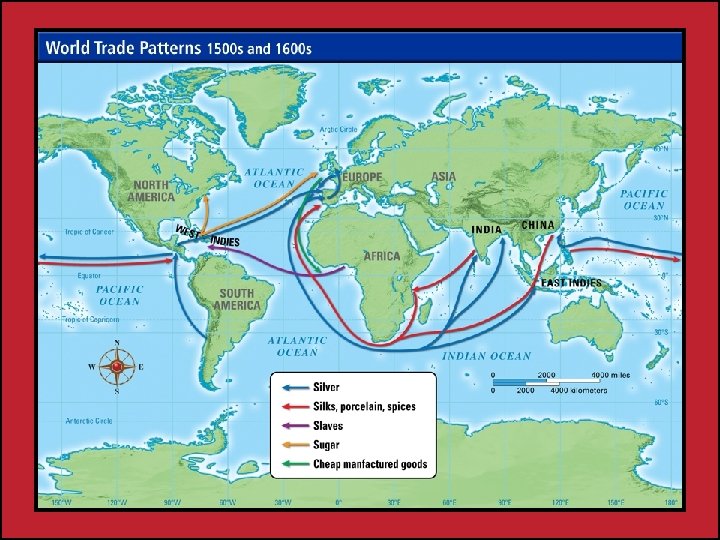
Why Africa? • Europeans first became interested in Africa for trade route purposes. • They were looking for ways to avoid the taxes of the Arab and Ottoman empires in Southwest Asia. • Sailing around Africa was a long voyage and could not be completed without “pit stops” along the way. • Europeans created ports in southern and eastern Africa so traders could restock supplies before heading home.
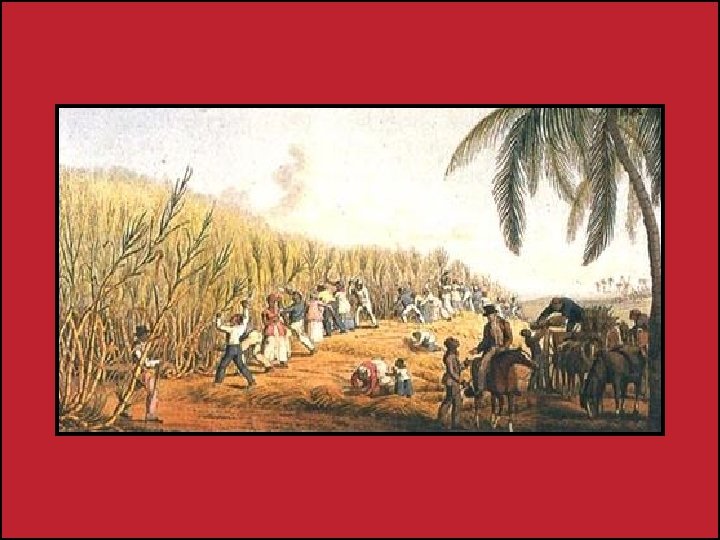
Slave Trade • During the 16 th century, Portuguese explorers became engaged in the African slave trade. • They kidnapped Africans and forced them to work on plantations and mines in their colonies in the New World. • Other European countries soon participated in the slave trade as well.
Slave Trade • The trans-Atlantic slave trade lasted from the 1500 s to the mid-1800 s. • Even after the slave trade had ended, European interest in Africa was still going strong. • European countries saw that Africa was a continent full of vast natural resources and mineral wealth.
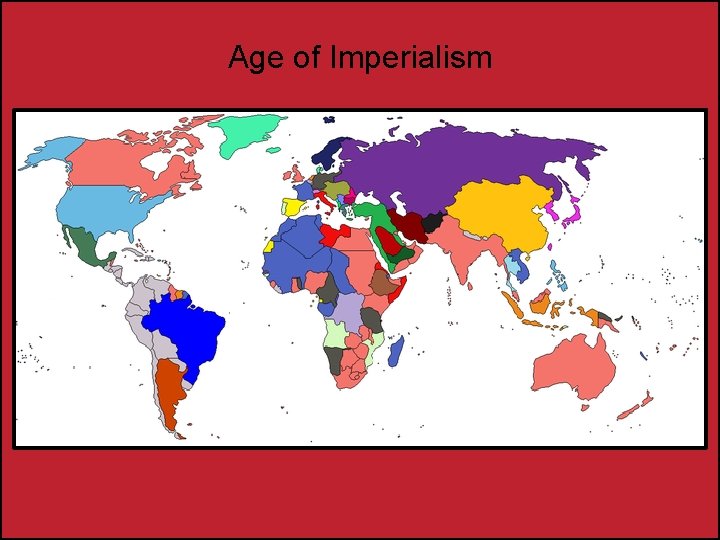
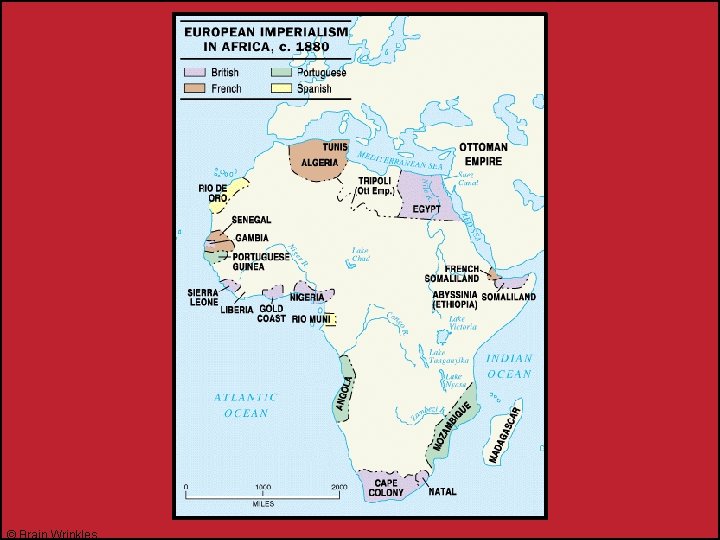
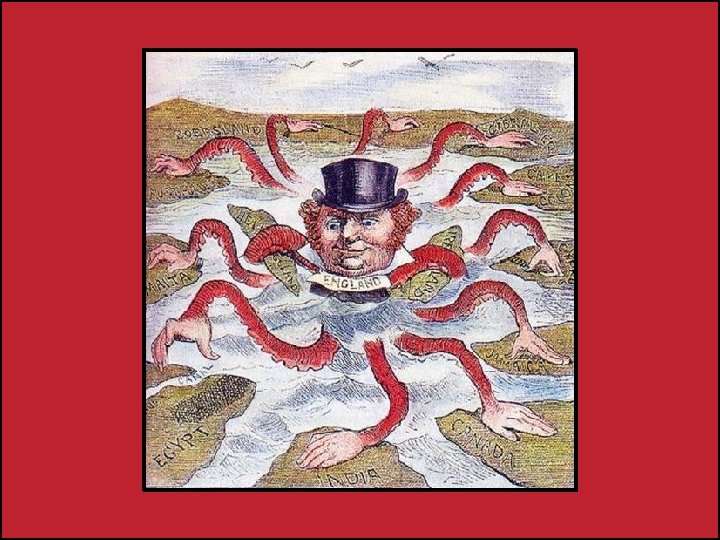
Imperialism • The end of the 19 th century is called the “Age of Imperialism” because that is when European countries competed for land power throughout Asia and Africa. • Imperialism is a system were a strong country takes wealth and raw materials from another country. • A “strong” country was supposed to have many colonies to increase its wealth and importance around the world.
Age of Imperialism
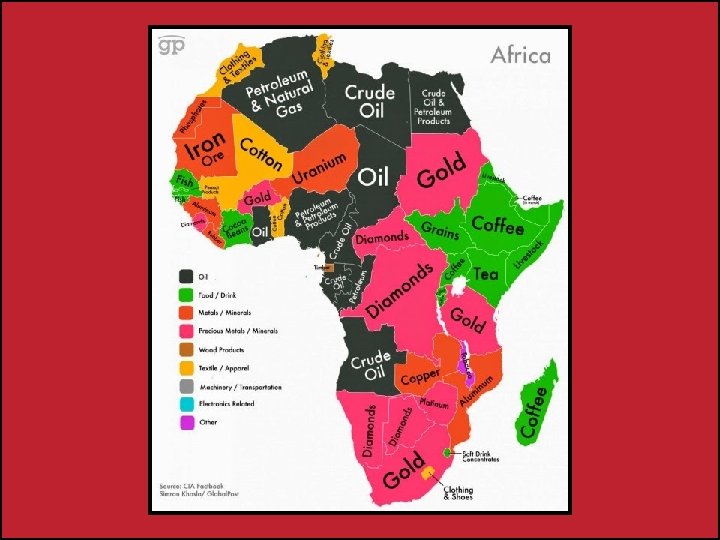
Geographic Reasons • During this time, many European countries expanded their empires by aggressively establishing colonies in Africa. • They wanted to exploit and export Africa’s resources (rubber, timber, diamonds, gold, etc. ). • Europeans also wanted to protect their trade routes.
© Brain Wrinkles
Economic Reasons • Economic motivation played a large part in the colonization of Africa. • The 19 th century was a time of great industrialization in Europe (Industrial Revolution). • Factories required raw materials that could be manufactured into marketable products.
Economic Reasons • When Europeans returned to Africa for more resources, they brought back the manufactured goods and sold them to Africans. • Africa became a new market for Europe to sell goods.
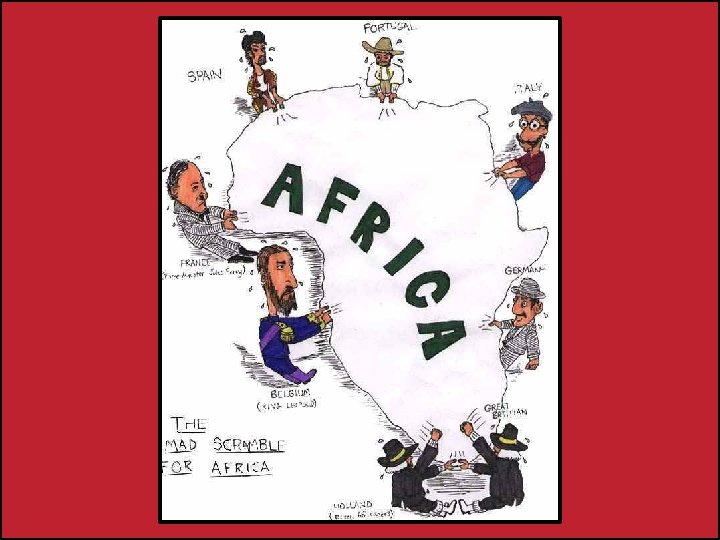
Political Reasons • Politics in Europe also led to the colonization of Africa. • Nationalism, a strong sense of pride in one's nation, resulted in competition between European nations. • No major nation wanted to be without colonies, which led to this “Scramble for Africa”. • The competition was particularly fierce between Great Britain, France, and Germany, the strongest European nations in the 1800 s.
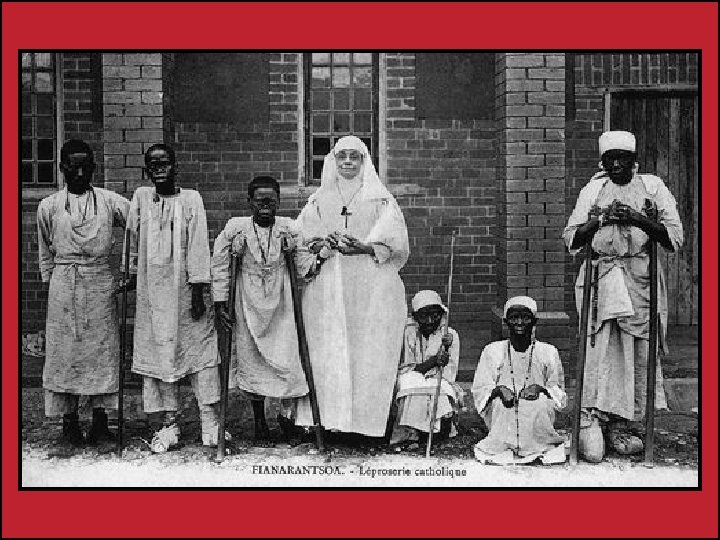
Religious Reasons • Christian missionary work gained strength during the 1800 s as European countries were becoming more involved in Africa. • The idea of “Christianizing” Africa also made many Europeans look favorably on the colonization of the continent.
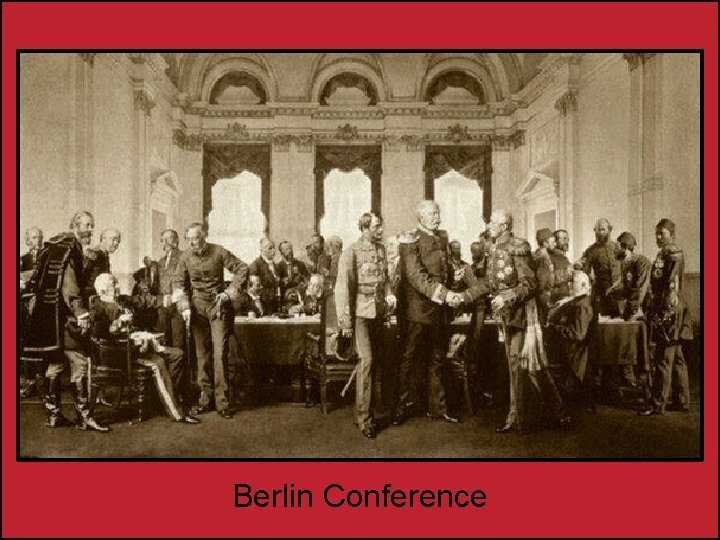
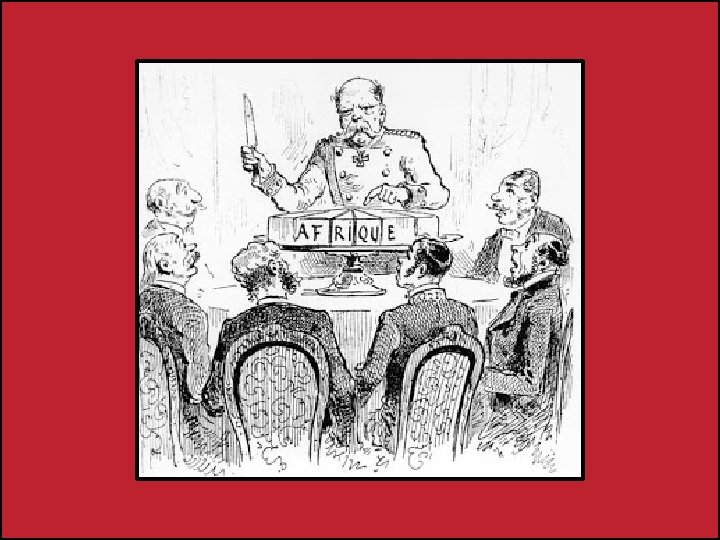
Berlin Conference • By the 1880 s, Great Britain, France, Germany, Belgium, Spain, and Portugal all wanted part of Africa. • To prevent a European war over Africa, leaders from fourteen European governments and from the United States met in Berlin, Germany, in 1884. • No Africans attended the meeting. • At the meeting, the European leaders discussed Africa’s land how it should be
Berlin Conference
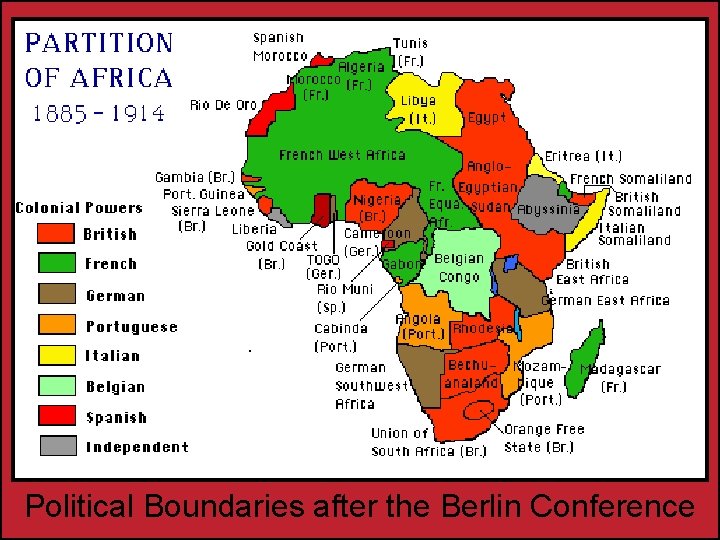
Berlin Conference • Going into the meeting, roughly 10% of Africa was under European colonial rule. • By the end of the meeting, European powers “owned” most of Africa and drew boundary lines that remained until 1914. • Great Britain won the most land in Africa and was “given” Nigeria, Egypt, Sudan, Kenya, and South Africa after defeating the Dutch Settlers and Zulu Nation. • The agreements made in Berlin still affect the boundaries of African countries today.
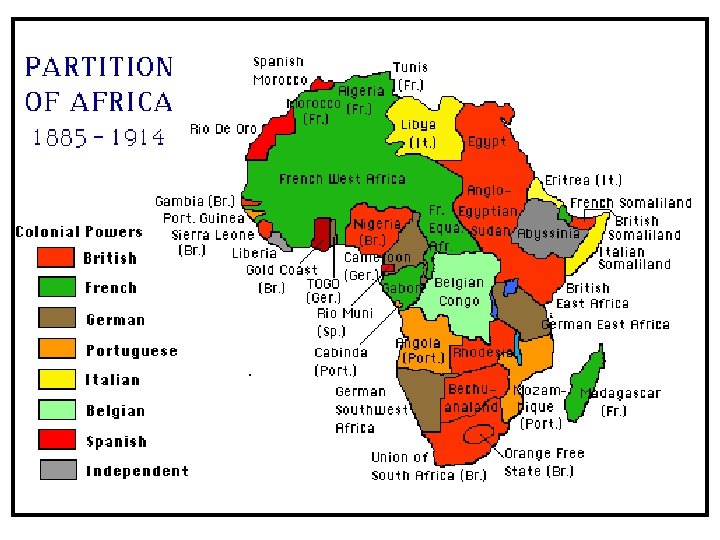
Political Boundaries after the Berlin Conference
Artificial Boundaries • European powers organized Africa’s population in ways to make the most efficient workforce, ignoring the natives’ cultural groups or existing political leadership. • Sometimes they grouped together people who had never been united before. • Sometimes they divided existing groups of people. • The creation of these borders had a negative impact on Africa’s political and social structures by either dividing groups that wanted to be together or combining ethnic groups that were enemies.
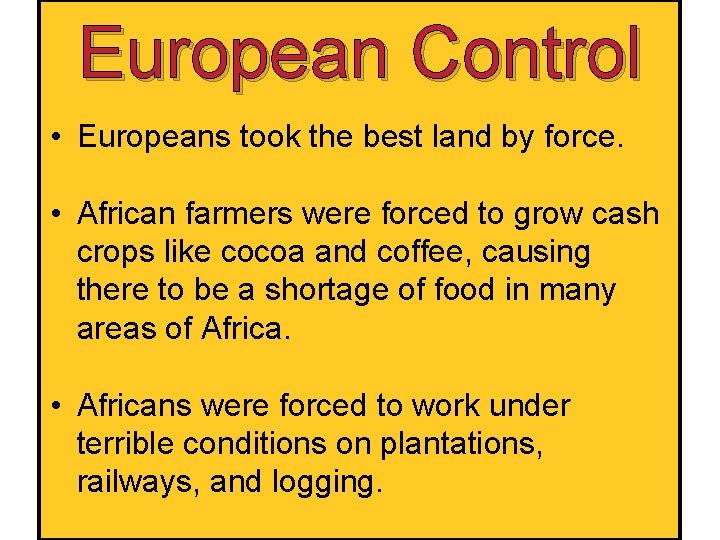
European Control • Europeans placed colonies into administrative districts and forced the Africans to go along with their demands. • Europeans also tried to assimilate Africans by forcing them to give up their own African customs and adopt European ones. • Protests and revolts were common and starvation and disease became
European Control • Europeans took the best land by force. • African farmers were forced to grow cash crops like cocoa and coffee, causing there to be a shortage of food in many areas of Africa. • Africans were forced to work under terrible conditions on plantations, railways, and logging.
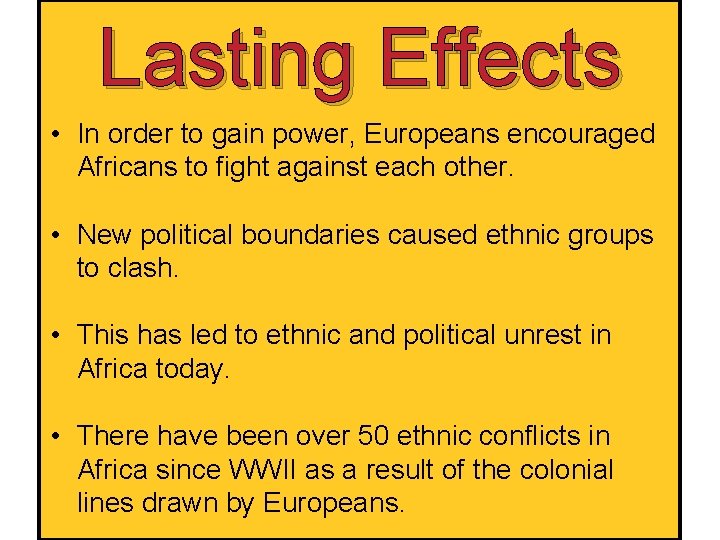
Lasting Effects • In order to gain power, Europeans encouraged Africans to fight against each other. • New political boundaries caused ethnic groups to clash. • This has led to ethnic and political unrest in Africa today. • There have been over 50 ethnic conflicts in Africa since WWII as a result of the colonial lines drawn by Europeans.
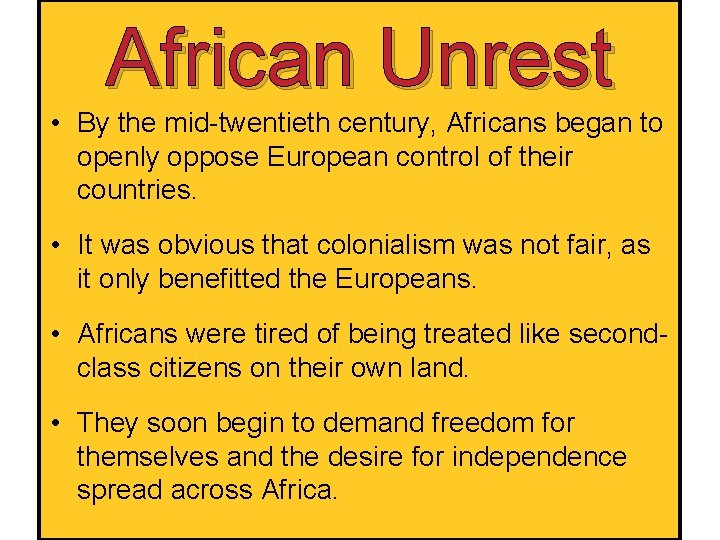
African Unrest • By the mid-twentieth century, Africans began to openly oppose European control of their countries. • It was obvious that colonialism was not fair, as it only benefitted the Europeans. • Africans were tired of being treated like secondclass citizens on their own land. • They soon begin to demand freedom for themselves and the desire for independence spread across Africa.
Independence • After World War I, many African countries began to gain independence; however, they were not prepared for self-rule. • Tribal conflicts began to erupt and civil wars started over the artificially drawn European boundaries. • Post-colonization conflicts continued until almost 2000.
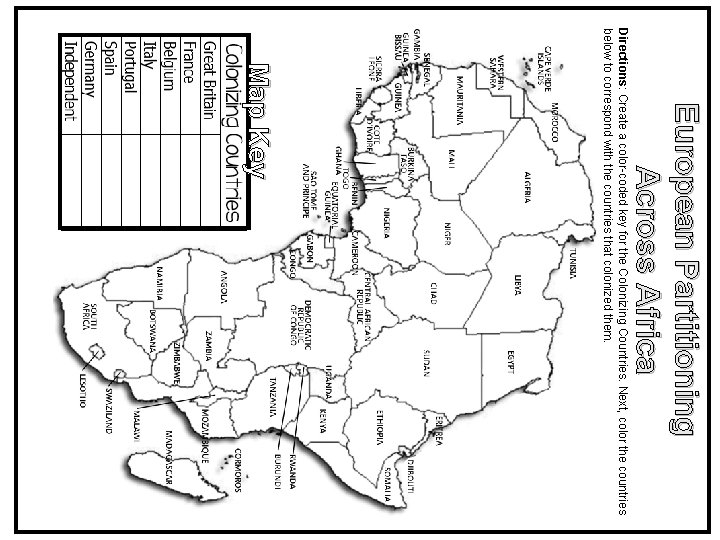
European Partitioning Across Africa Directions: Create a color-coded key for the Colonizing Countries. Next, color the countries below to correspond with the countries that colonized them. Map Key
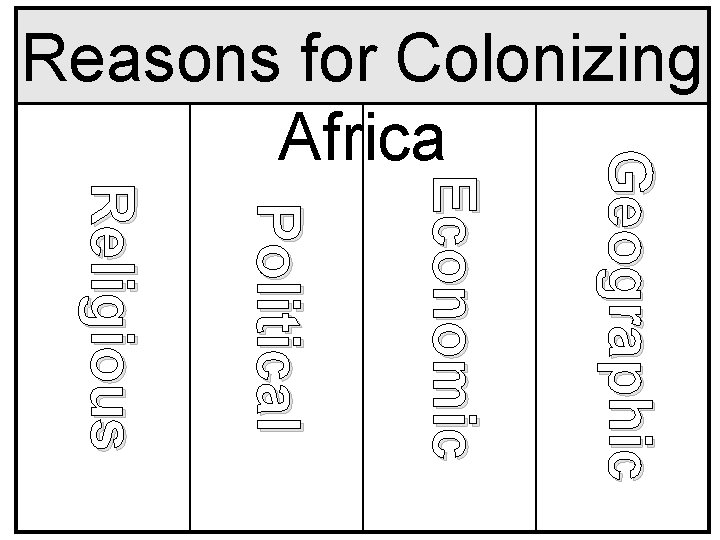
TEACHER INFO: Why Colonize? Foldable • • • © Brain Wrinkles Print off the Colonization foldable for each student. The students will cut the template out along the thick, outside lines. Next, they will cut along the thin lines that divide each word, stopping at the gray rectangle. They should attach the side of the template (gray rectangle) to their notebooks. They will now be able to open up each flap and write information about each cause of colonization underneath.
Religious Political Economic Geographic Reasons for Colonizing Africa
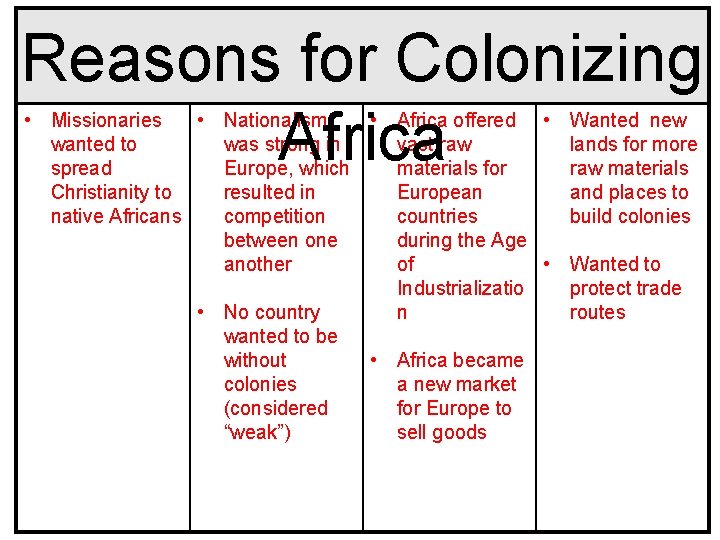
Reasons for Colonizing Africa • Missionaries • Nationalism • Africa offered • Wanted new wanted to was strong in vast raw lands for more spread Europe, which materials for raw materials Christianity to resulted in European and places to native Africans competition countries build colonies between one during the Age another of • Wanted to Industrializatio protect trade • No country n routes wanted to be without • Africa became colonies a new market (considered for Europe to “weak”) sell goods
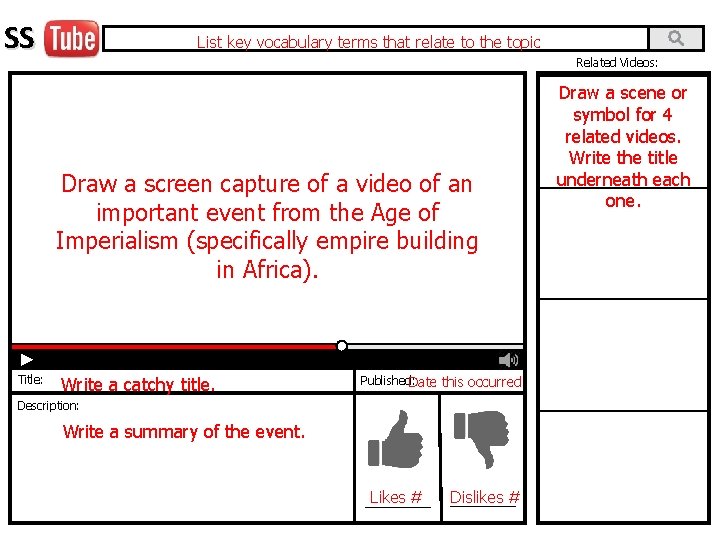
SS List key vocabulary terms that relate to the topic Related Videos: Draw a screen capture of a video of an important event from the Age of Imperialism (specifically empire building in Africa). Title: Write a catchy title. Published: Date this occurred Description: Write a summary of the event. Likes # _____ Dislikes # _____ Draw a scene or symbol for 4 related videos. Write the title underneath each one.
SS Title: Related Videos: Published: Description: __________
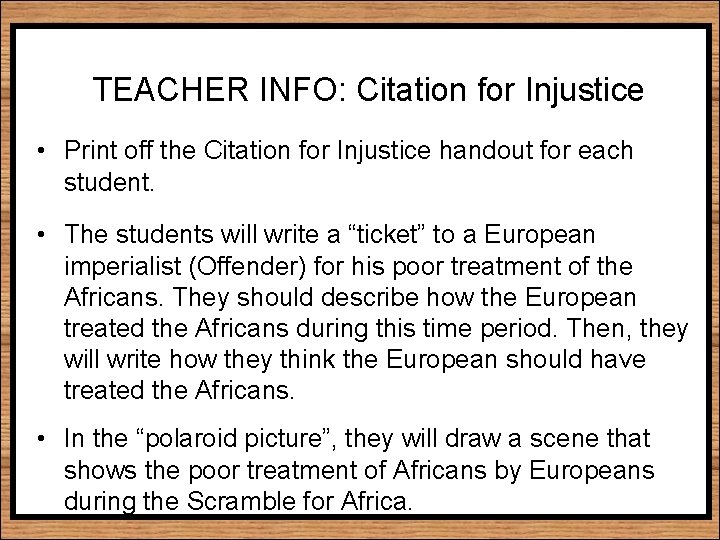
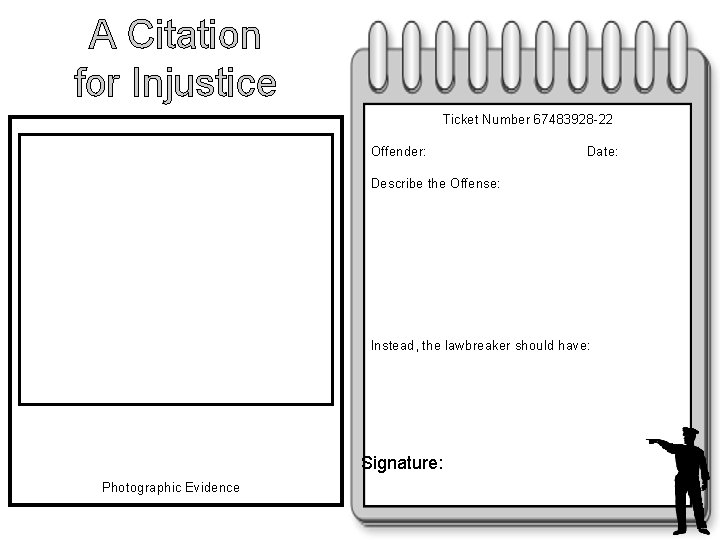
TEACHER INFO: Citation for Injustice • Print off the Citation for Injustice handout for each student. • The students will write a “ticket” to a European imperialist (Offender) for his poor treatment of the Africans. They should describe how the European treated the Africans during this time period. Then, they will write how they think the European should have treated the Africans. • In the “polaroid picture”, they will draw a scene that shows the poor treatment of Africans by Europeans during the Scramble for Africa.
A Citation for Injustice Ticket Number 67483928 -22 Offender: Date: Describe the Offense: Instead, the lawbreaker should have: Signature: Photographic Evidence
TEACHER INFO: Comprehension Check • Print off the Comprehension Check for each student. • After the lesson, have the students answer the questions. *This could also be used as a quiz.
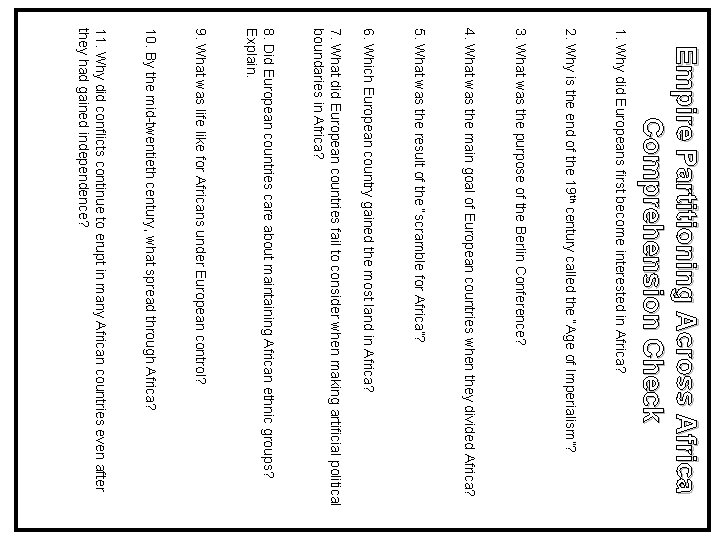
Empire Partitioning Across Africa Comprehension Check 1. Why did Europeans first become interested in Africa? 2. Why is the end of the 19 th century called the “Age of Imperialism”? 3. What was the purpose of the Berlin Conference? 4. What was the main goal of European countries when they divided Africa? 5. What was the result of the “scramble for Africa”? 6. Which European country gained the most land in Africa? 7. What did European countries fail to consider when making artificial political boundaries in Africa? 8. Did European countries care about maintaining African ethnic groups? Explain. 9. What was life like for Africans under European control? 10. By the mid-twentieth century, what spread through Africa? 11. Why did conflicts continue to erupt in many African countries even after they had gained independence?
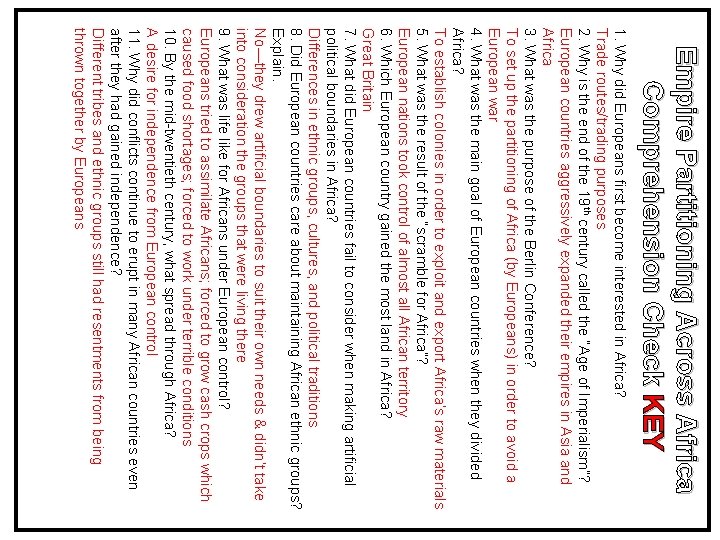
Empire Partitioning Across Africa Comprehension Check KEY 1. Why did Europeans first become interested in Africa? Trade routes/trading purposes 2. Why is the end of the 19 th century called the “Age of Imperialism”? European countries aggressively expanded their empires in Asia and Africa 3. What was the purpose of the Berlin Conference? To set up the partitioning of Africa (by Europeans) in order to avoid a European war 4. What was the main goal of European countries when they divided Africa? To establish colonies in order to exploit and export Africa’s raw materials 5. What was the result of the “scramble for Africa”? European nations took control of almost all African territory 6. Which European country gained the most land in Africa? Great Britain 7. What did European countries fail to consider when making artificial political boundaries in Africa? Differences in ethnic groups, cultures, and political traditions 8. Did European countries care about maintaining African ethnic groups? Explain. No—they drew artificial boundaries to suit their own needs & didn’t take into consideration the groups that were living there 9. What was life like for Africans under European control? Europeans tried to assimilate Africans; forced to grow cash crops which caused food shortages; forced to work under terrible conditions 10. By the mid-twentieth century, what spread through Africa? A desire for independence from European control 11. Why did conflicts continue to erupt in many African countries even after they had gained independence? Different tribes and ethnic groups still had resentments from being thrown together by Europeans
TEACHER INFO: Ticket Out the Door • Print off the Save It Ticket Out the Door for each student (two-per-page). • Have the students write down the most important thing that they want to remember (save) about European partitioning across Africa.
Name: Save It Why was European partitioning across Africa so significant? What is the most important thing that you want to remember about it? “Save it” on the disk below.