
Particles Waves The Standard Model Orders of Magnitude
- Slides: 26
Particles & Waves The Standard Model
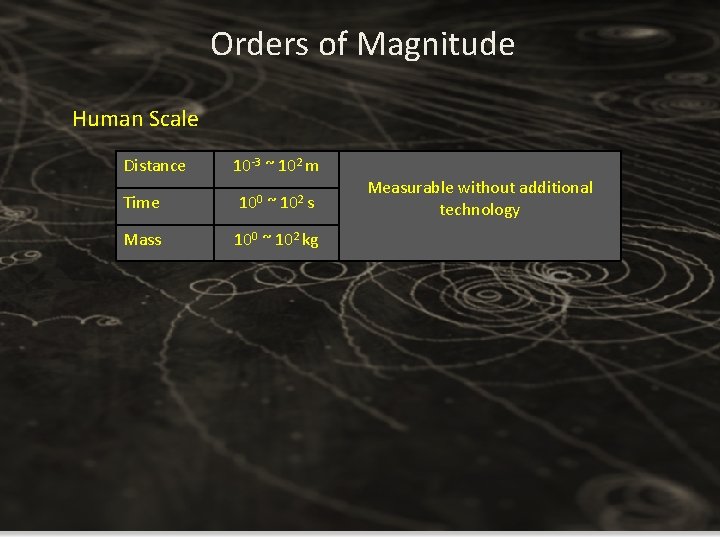
Orders of Magnitude Human Scale Distance 10 -3 ~ 102 m Time 100 ~ 102 s Mass 100 ~ 102 kg Measurable without additional technology
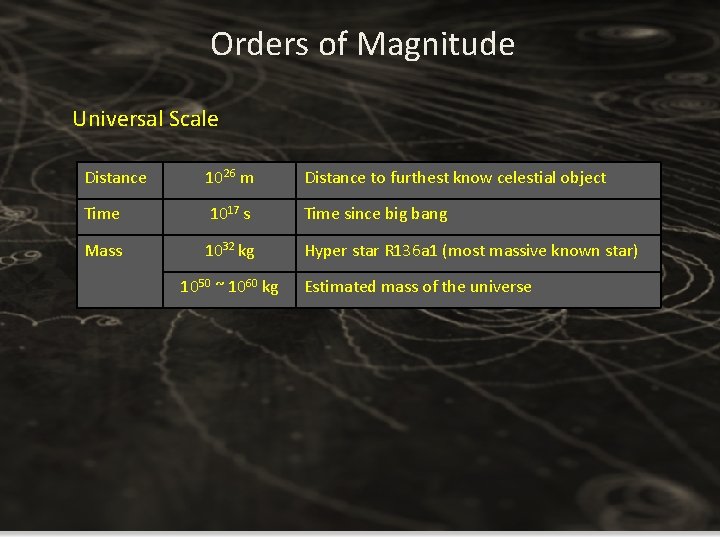
Orders of Magnitude Universal Scale Distance 1026 m Distance to furthest know celestial object Time 1017 s Time since big bang Mass 1032 kg Hyper star R 136 a 1 (most massive known star) 1050 ~ 1060 kg Estimated mass of the universe
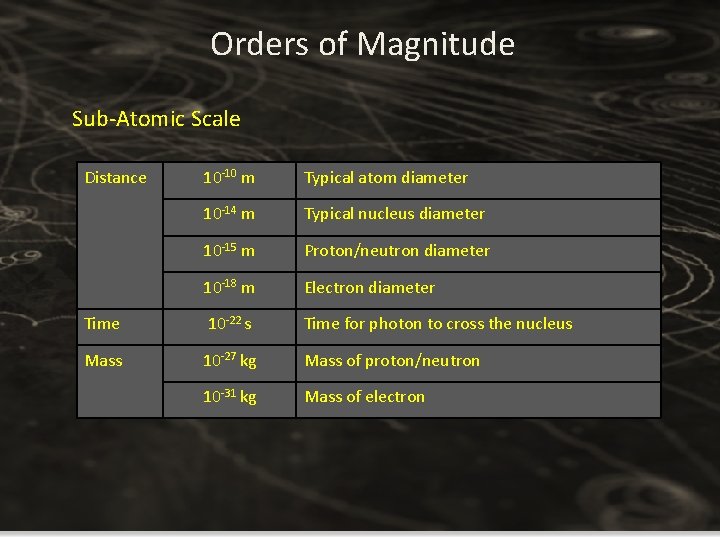
Orders of Magnitude Sub-Atomic Scale Distance 10 -10 m Typical atom diameter 10 -14 m Typical nucleus diameter 10 -15 m Proton/neutron diameter 10 -18 m Electron diameter Time 10 -22 s Time for photon to cross the nucleus Mass 10 -27 kg Mass of proton/neutron 10 -31 kg Mass of electron
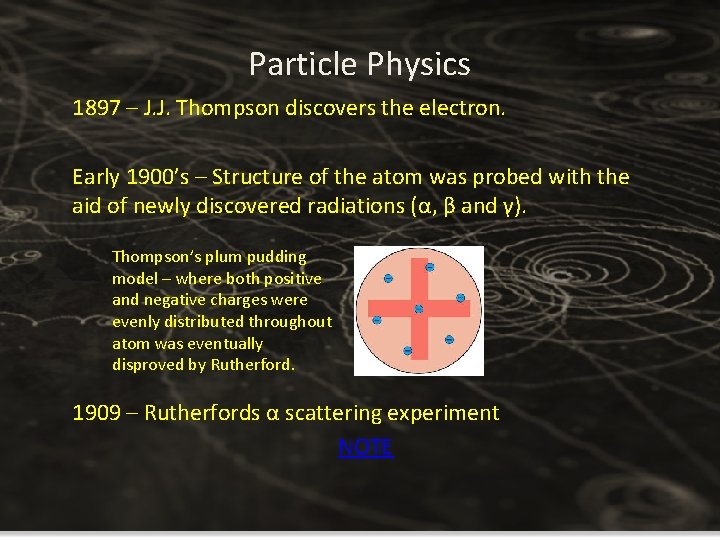
Particle Physics 1897 – J. J. Thompson discovers the electron. Early 1900’s – Structure of the atom was probed with the aid of newly discovered radiations (α, β and γ). Thompson’s plum pudding model – where both positive and negative charges were evenly distributed throughout atom was eventually disproved by Rutherford. 1909 – Rutherfords α scattering experiment NOTE
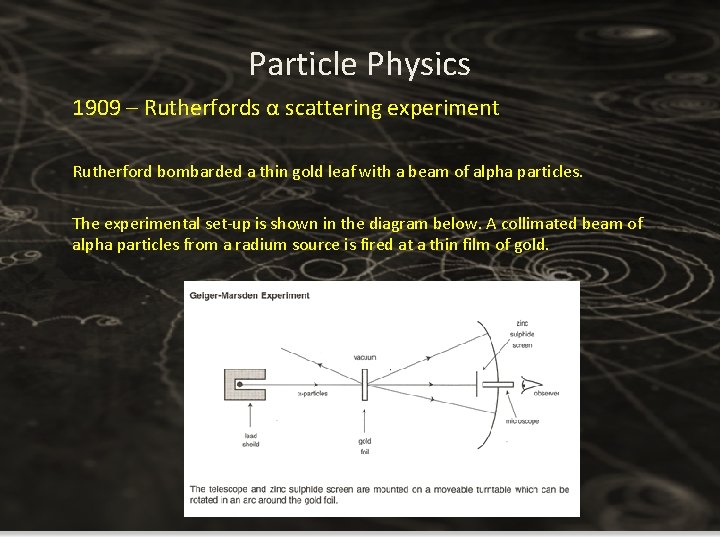
Particle Physics 1909 – Rutherfords α scattering experiment Rutherford bombarded a thin gold leaf with a beam of alpha particles. The experimental set-up is shown in the diagram below. A collimated beam of alpha particles from a radium source is fired at a thin film of gold.
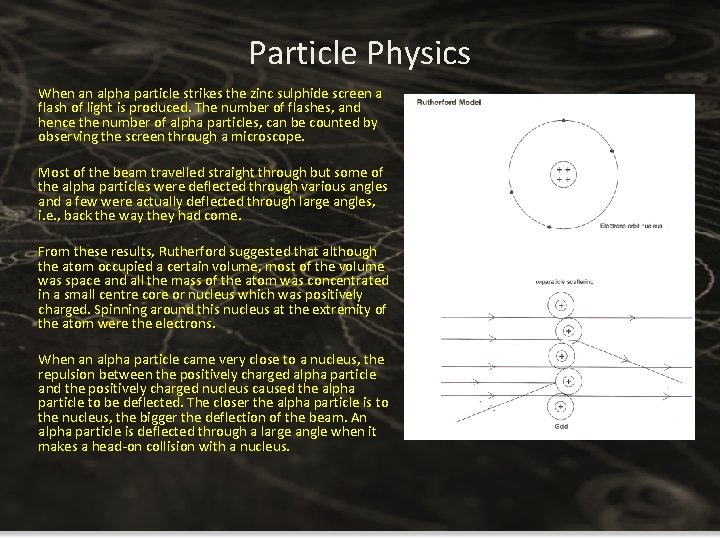
Particle Physics When an alpha particle strikes the zinc sulphide screen a flash of light is produced. The number of flashes, and hence the number of alpha particles, can be counted by observing the screen through a microscope. Most of the beam travelled straight through but some of the alpha particles were deflected through various angles and a few were actually deflected through large angles, i. e. , back the way they had come. From these results, Rutherford suggested that although the atom occupied a certain volume, most of the volume was space and all the mass of the atom was concentrated in a small centre core or nucleus which was positively charged. Spinning around this nucleus at the extremity of the atom were the electrons. When an alpha particle came very close to a nucleus, the repulsion between the positively charged alpha particle and the positively charged nucleus caused the alpha particle to be deflected. The closer the alpha particle is to the nucleus, the bigger the deflection of the beam. An alpha particle is deflected through a large angle when it makes a head-on collision with a nucleus.
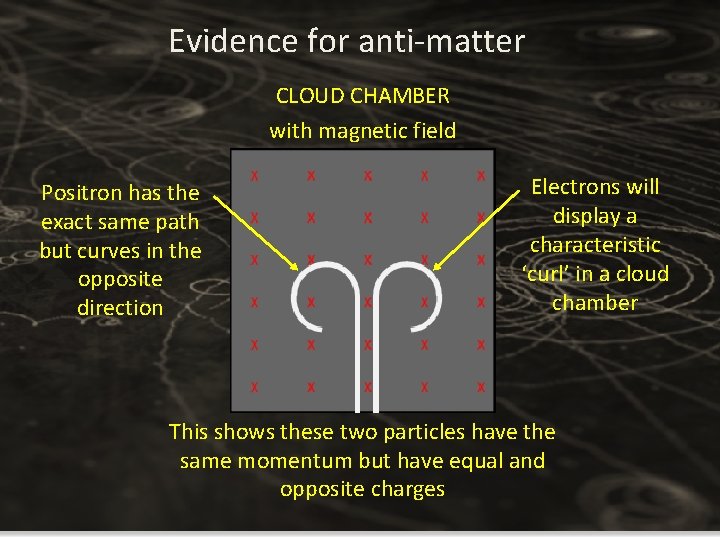
Particle Physics 1928 - 1932 – Discovery of Anti-matter (Paul Dirac) Positron discovered which is identical to electron but with opposite charge.
Evidence for anti-matter CLOUD CHAMBER with magnetic field Positron has the exact same path but curves in the opposite direction Electrons will display a characteristic ‘curl’ in a cloud chamber This shows these two particles have the same momentum but have equal and opposite charges
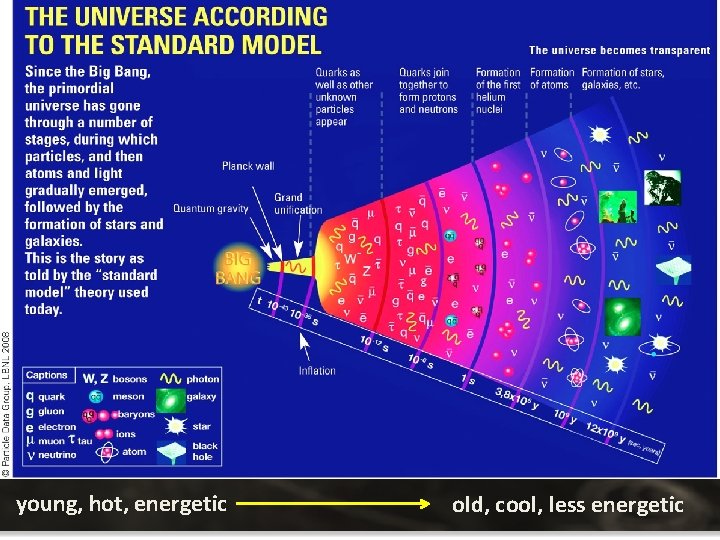
young, hot, energetic old, cool, less energetic
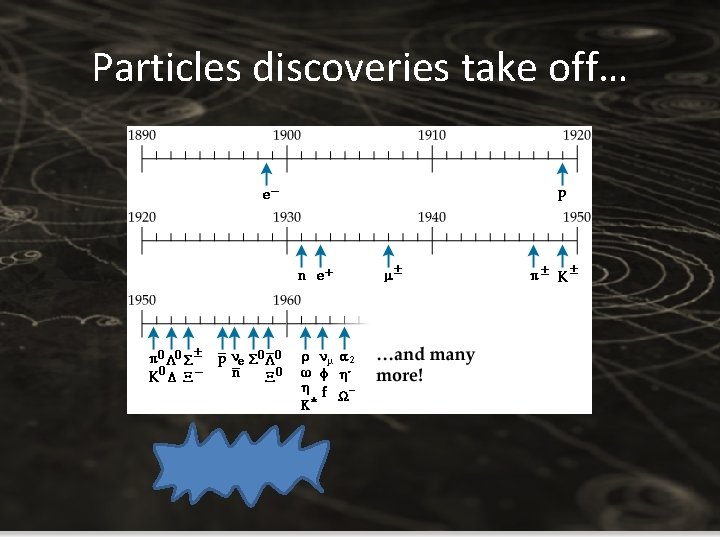
Particles discoveries take off…
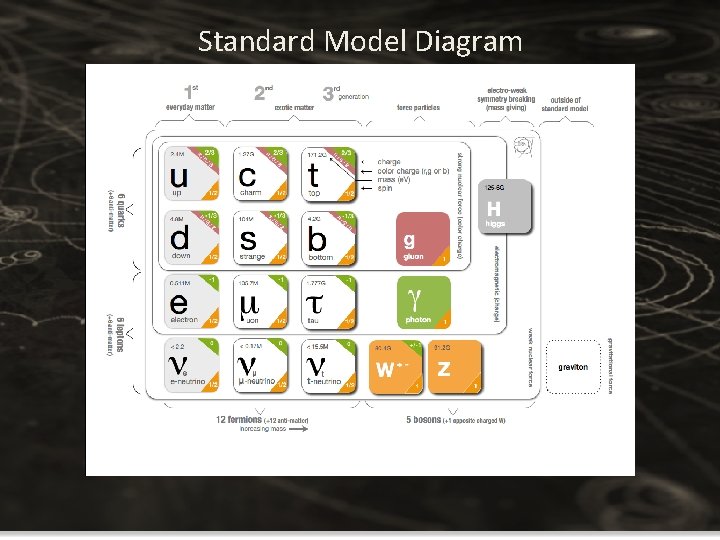
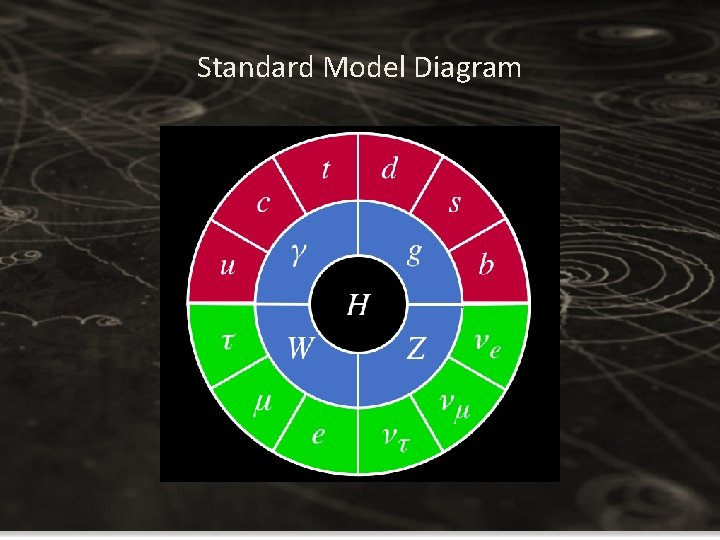
Standard Model The standard model is the extent of our current understanding of the nature of matter.
Standard Model Diagram
Standard Model Diagram
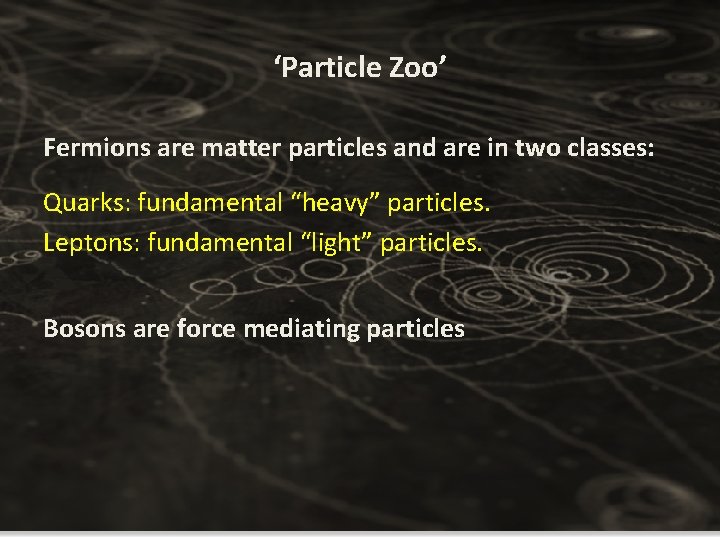
‘Particle Zoo’ Fermions are matter particles and are in two classes: Quarks: fundamental “heavy” particles. Leptons: fundamental “light” particles. Bosons are force mediating particles
Matter Particles These are what protons and neutrons are made of 16
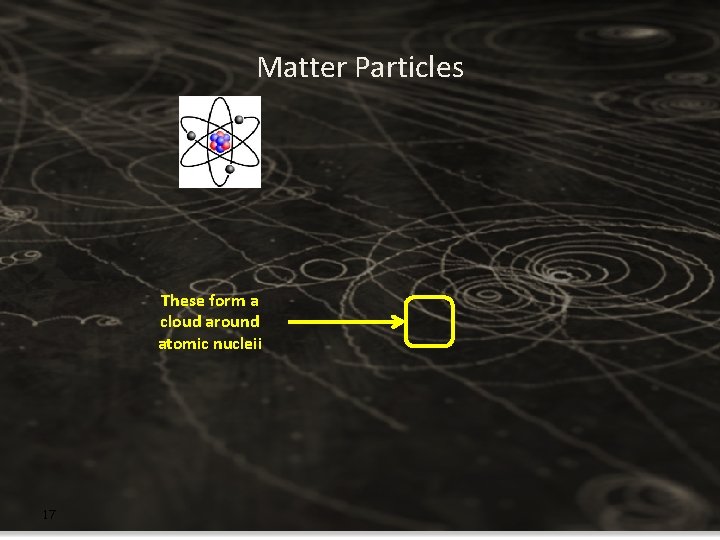
Matter Particles These form a cloud around atomic nucleii 17
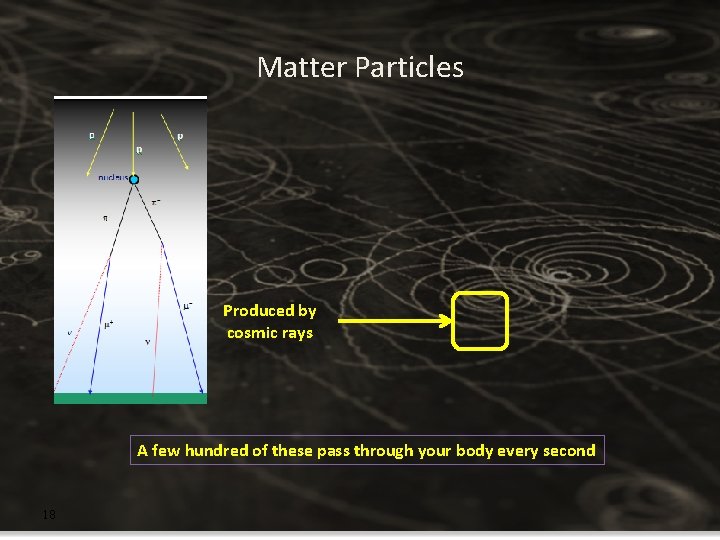
Matter Particles Produced by cosmic rays A few hundred of these pass through your body every second 18
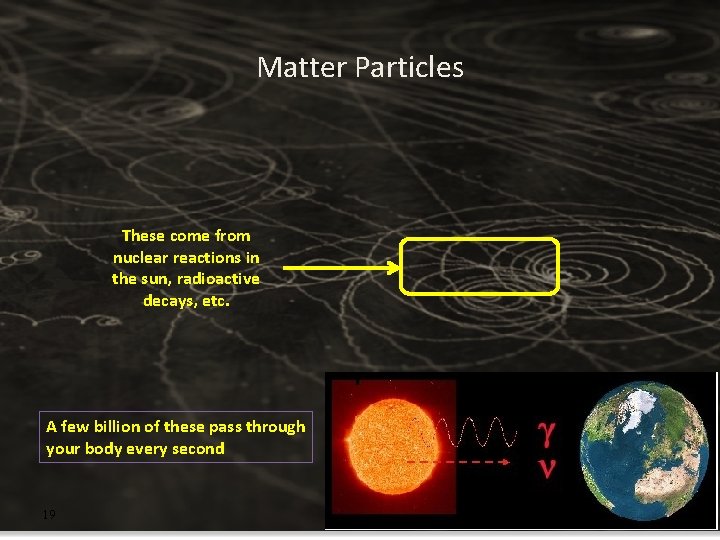
Matter Particles These come from nuclear reactions in the sun, radioactive decays, etc. A few billion of these pass through your body every second 19
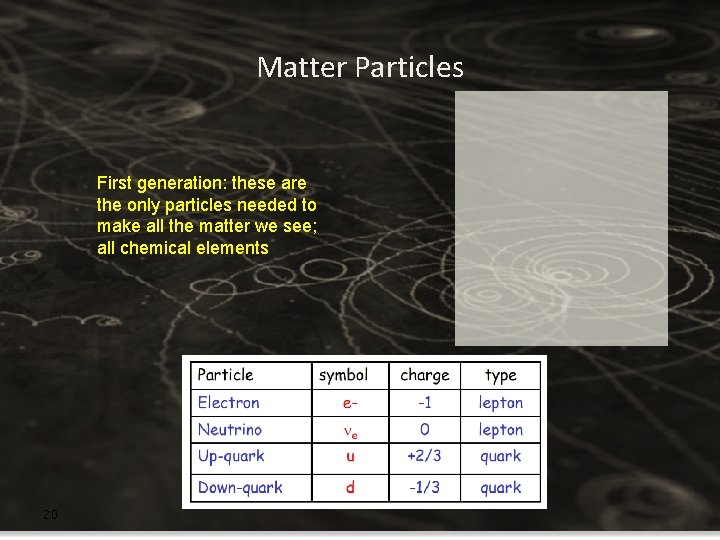
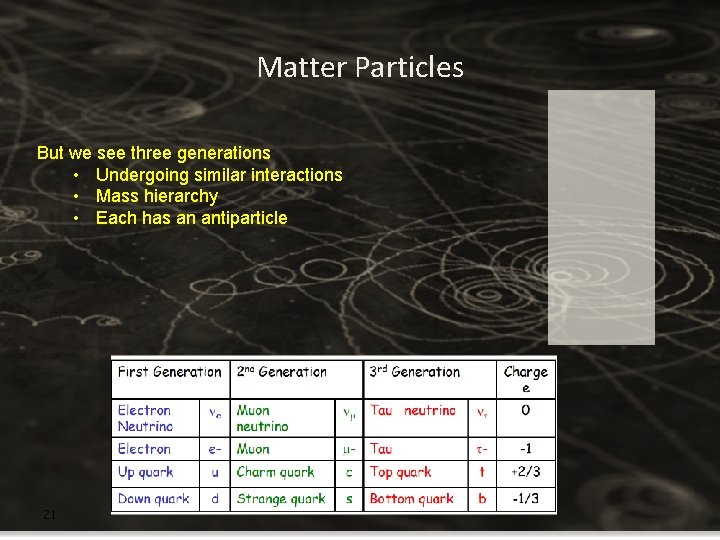
Matter Particles First generation: these are the only particles needed to make all the matter we see; all chemical elements 20
Matter Particles But we see three generations • Undergoing similar interactions • Mass hierarchy • Each has an antiparticle 21
Matter Particles • Are there only three generations? • And if so why? 22
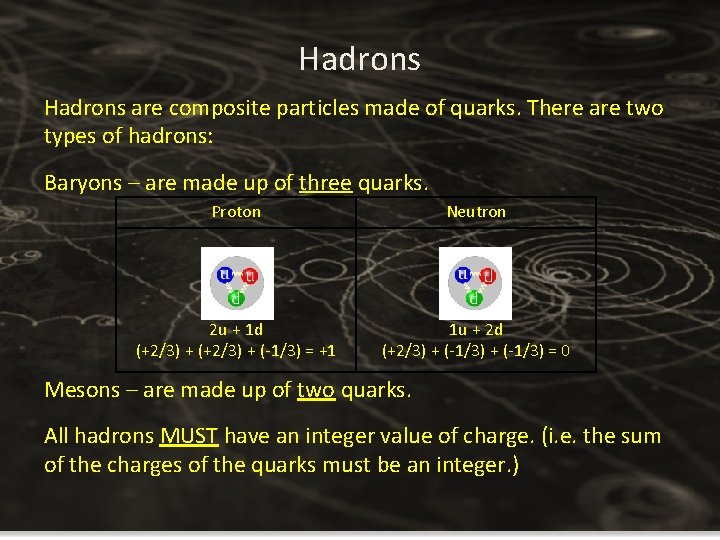
Hadrons are composite particles made of quarks. There are two types of hadrons: Baryons – are made up of three quarks. Proton Neutron 2 u + 1 d (+2/3) + (-1/3) = +1 1 u + 2 d (+2/3) + (-1/3) = 0 Mesons – are made up of two quarks. All hadrons MUST have an integer value of charge. (i. e. the sum of the charges of the quarks must be an integer. )
Forces In the Standard Model, we depict (and calculate) forces as the exchange of a force-carrier boson, between particles 24
Forces In the Standard Model, we depict (and calculate) forces as the exchange of a force-carrier boson, between particles 25
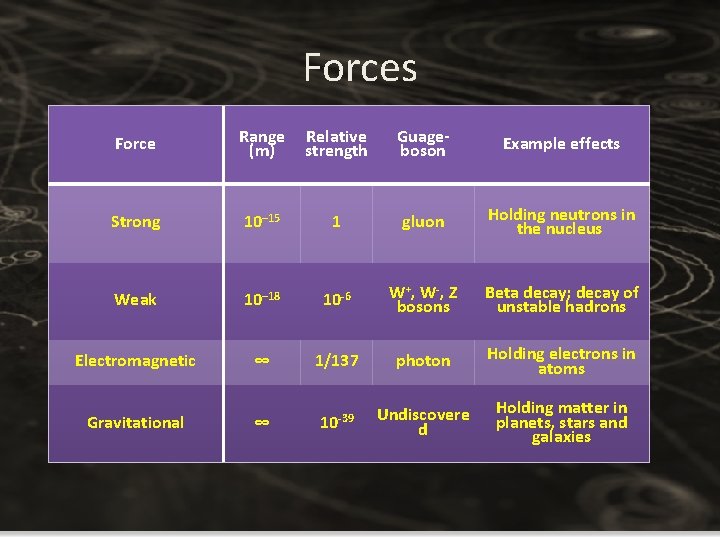
Forces Force Range (m) Relative strength Guageboson Example effects Strong 10– 15 1 gluon Holding neutrons in the nucleus Weak 10– 18 10 -6 W+, W-, Z bosons Beta decay; decay of unstable hadrons Electromagnetic ∞ 1/137 photon Holding electrons in atoms Gravitational ∞ 10 -39 Undiscovere d Holding matter in planets, stars and galaxies