
Particles in Motion Phases of Matter Particles in
- Slides: 14
Particles in Motion Phases of Matter
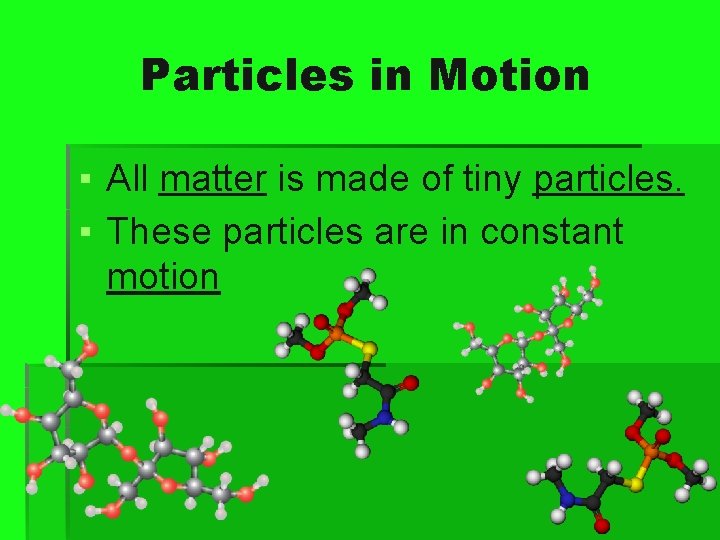
Particles in Motion ▪ All matter is made of tiny particles. ▪ These particles are in constant motion
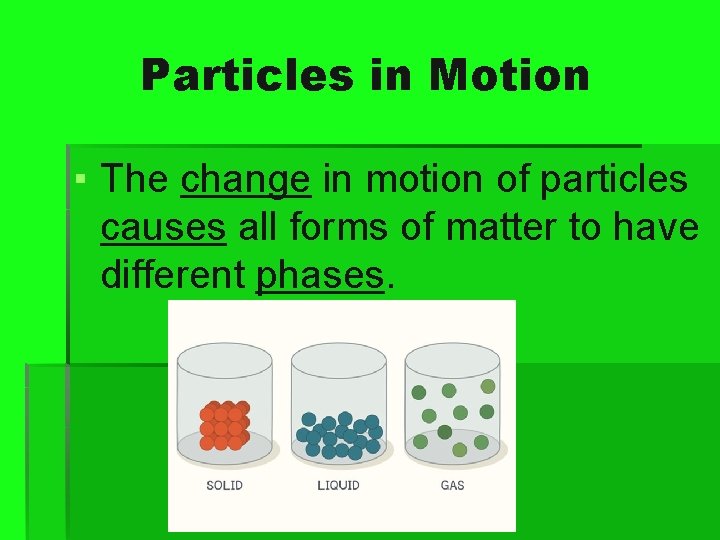
Particles in Motion ▪ The change in motion of particles causes all forms of matter to have different phases.
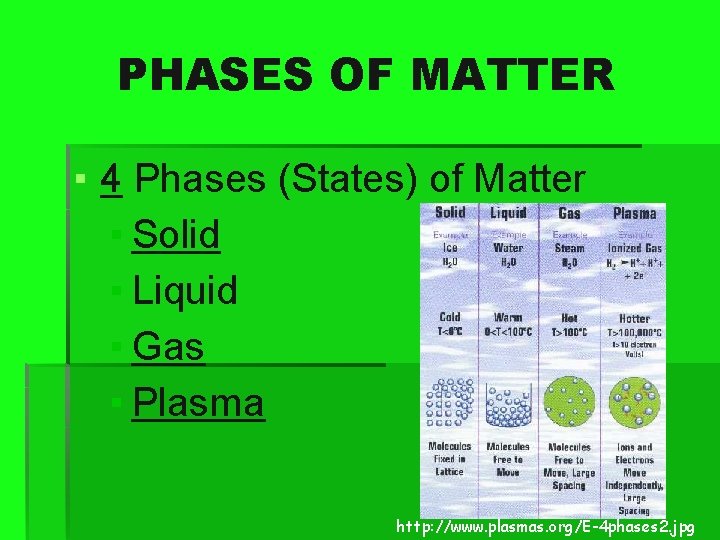
PHASES OF MATTER ▪ 4 Phases (States) of Matter ▪ Solid ▪ Liquid ▪ Gas ▪ Plasma http: //www. plasmas. org/E-4 phases 2. jpg
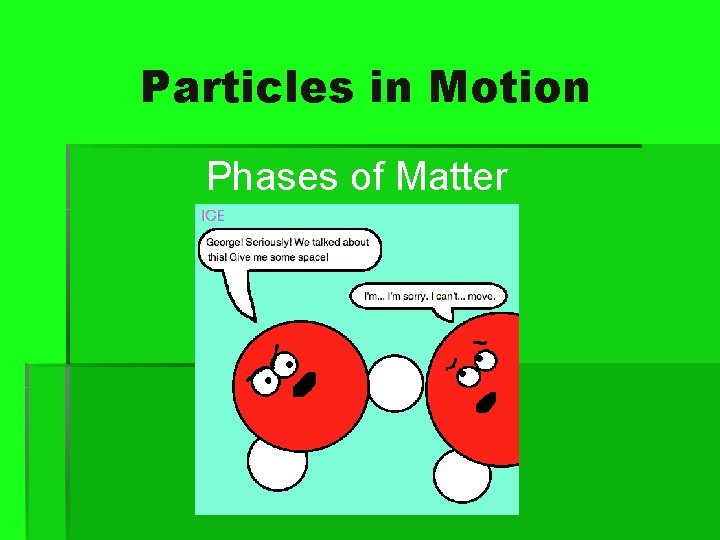
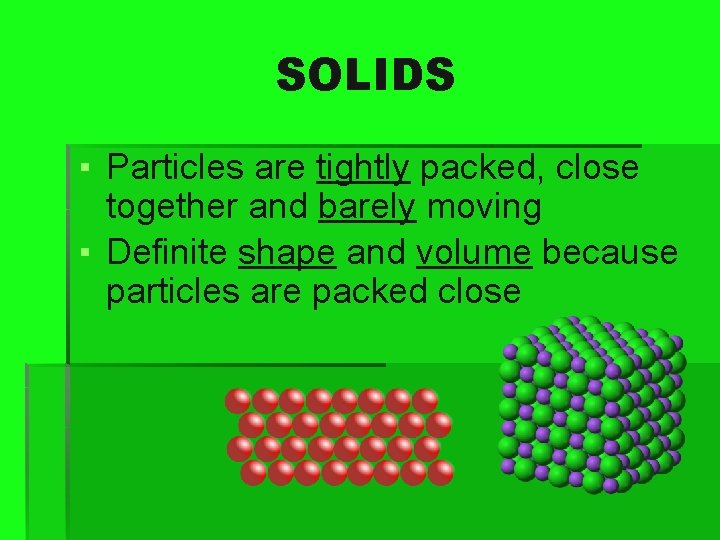
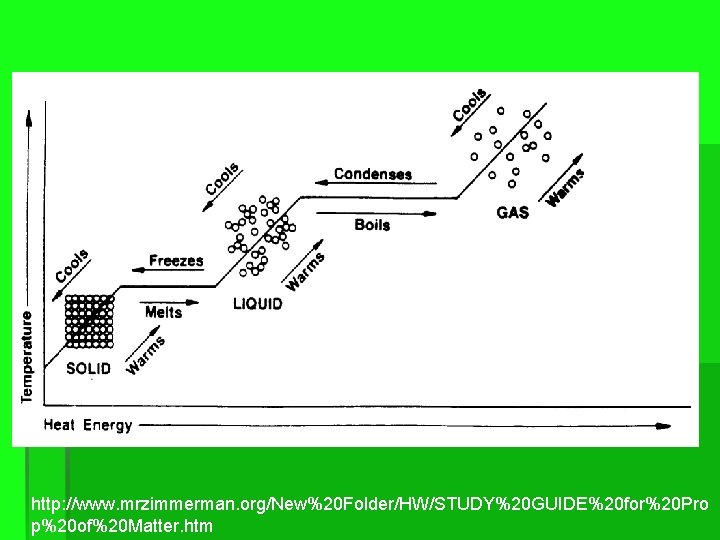
SOLIDS ▪ Particles are tightly packed, close together and barely moving ▪ Definite shape and volume because particles are packed close
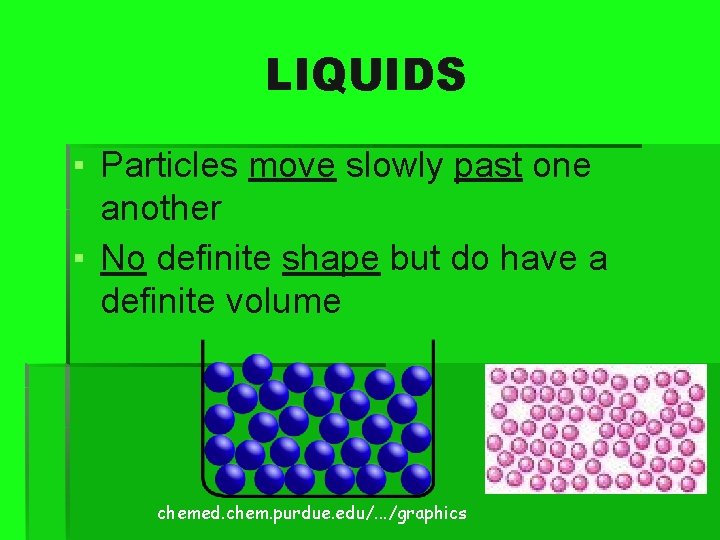
LIQUIDS ▪ Particles move slowly past one another ▪ No definite shape but do have a definite volume chemed. chem. purdue. edu/. . . /graphics
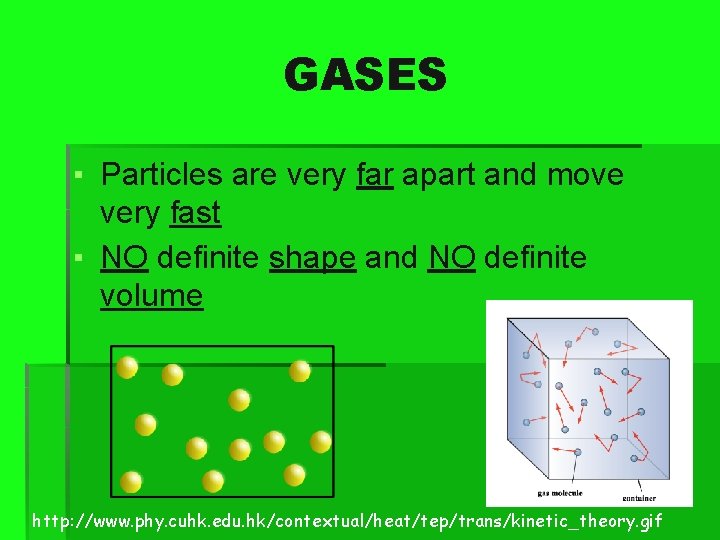
GASES ▪ Particles are very far apart and move very fast ▪ NO definite shape and NO definite volume http: //www. phy. cuhk. edu. hk/contextual/heat/tep/trans/kinetic_theory. gif
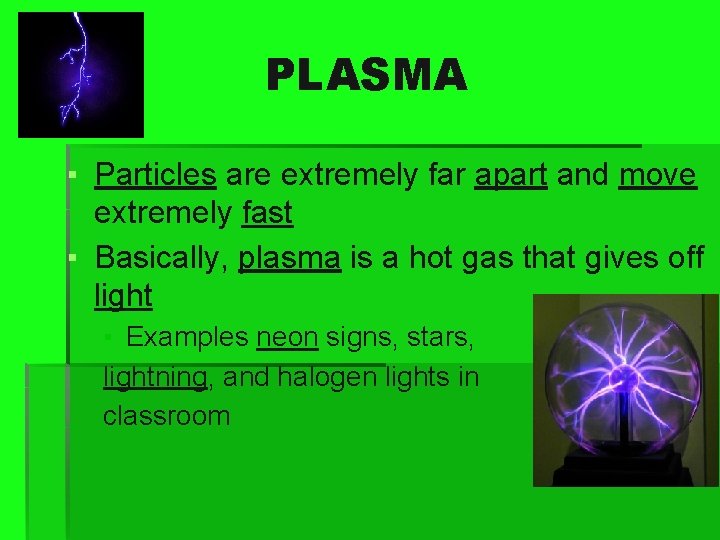
PLASMA ▪ Particles are extremely far apart and move extremely fast ▪ Basically, plasma is a hot gas that gives off light ▪ Examples neon signs, stars, lightning, and halogen lights in classroom
http: //www. mrzimmerman. org/New%20 Folder/HW/STUDY%20 GUIDE%20 for%20 Pro p%20 of%20 Matter. htm
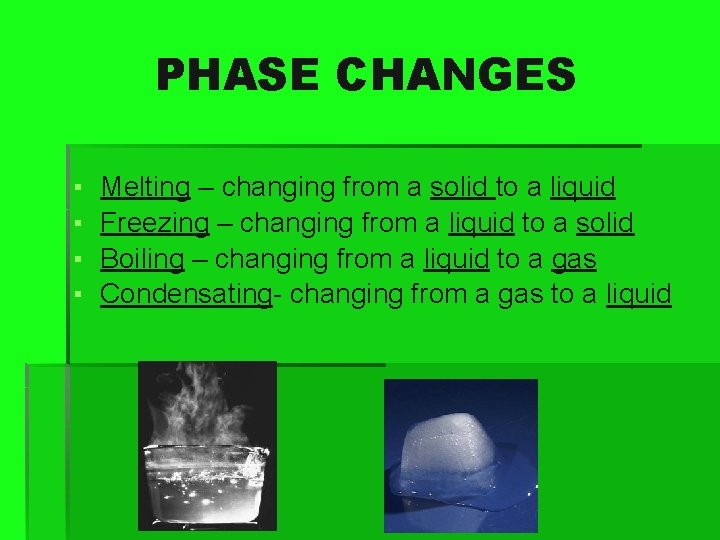
PHASE CHANGES ▪ ▪ Melting – changing from a solid to a liquid Freezing – changing from a liquid to a solid Boiling – changing from a liquid to a gas Condensating- changing from a gas to a liquid
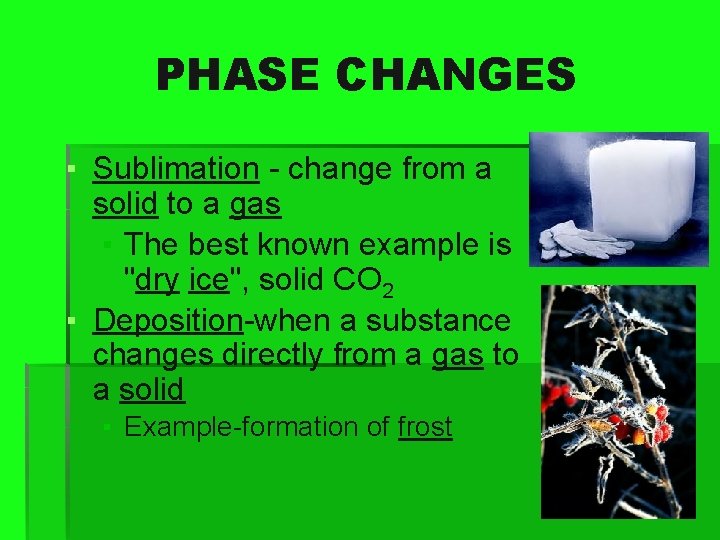
PHASE CHANGES ▪ Sublimation - change from a solid to a gas ▪ The best known example is "dry ice", solid CO 2 ▪ Deposition-when a substance changes directly from a gas to a solid ▪ Example-formation of frost
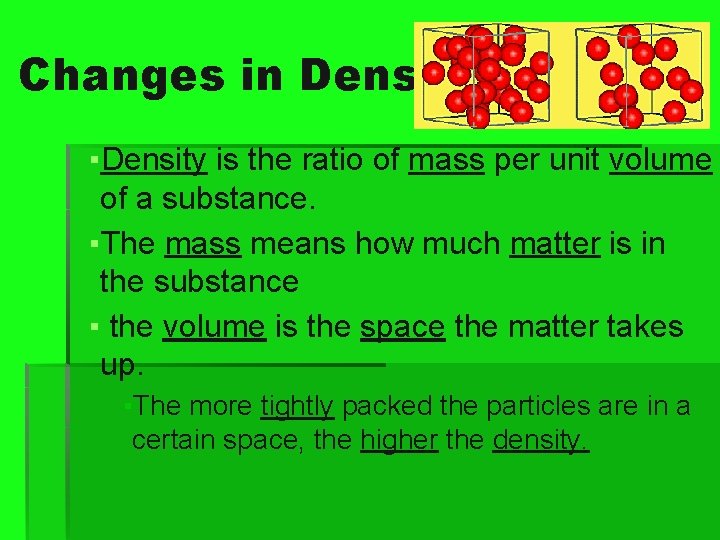
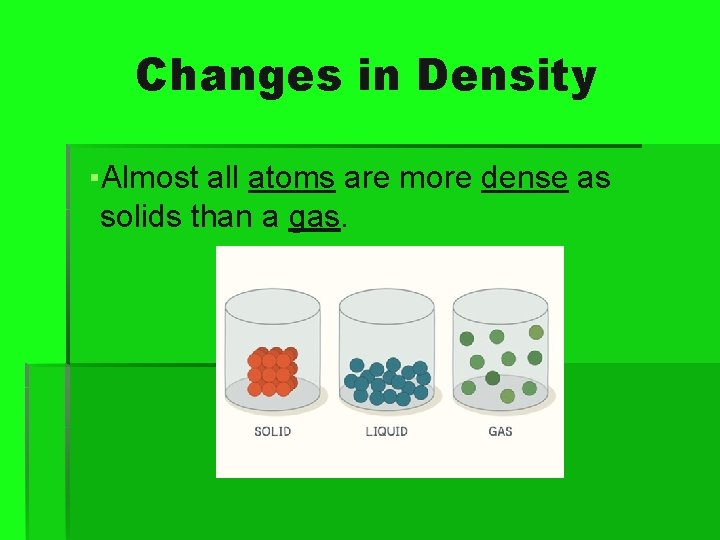
Changes in Density ▪Density is the ratio of mass per unit volume of a substance. ▪The mass means how much matter is in the substance ▪ the volume is the space the matter takes up. ▪The more tightly packed the particles are in a certain space, the higher the density.
Changes in Density ▪Almost all atoms are more dense as solids than a gas.
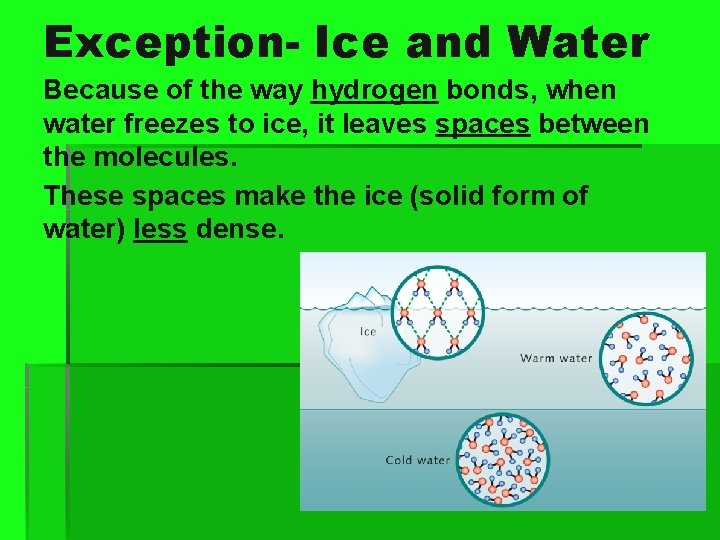
Exception- Ice and Water Because of the way hydrogen bonds, when water freezes to ice, it leaves spaces between the molecules. These spaces make the ice (solid form of water) less dense.