
Particle Swarm optimisation These slides adapted from a

![Pseudocode http: //www. swarmintelligence. org/tutorials. php Equation (a) v[] = c 0 *v[] +](https://slidetodoc.com/presentation_image/3ffaa4dc3dea305e16fc29946b772d49/image-12.jpg "Pseudocode http: //www. swarmintelligence. org/tutorials. php Equation (a) v[] = c 0 *v[] +")
- Slides: 25
Particle Swarm optimisation
These slides adapted from a presentation by Maurice. Clerc@Write. Me. com - one of the main researchers in PSO invented by Russ Eberhart (engineering Prof) and James Kennedy (social scientist) in USA
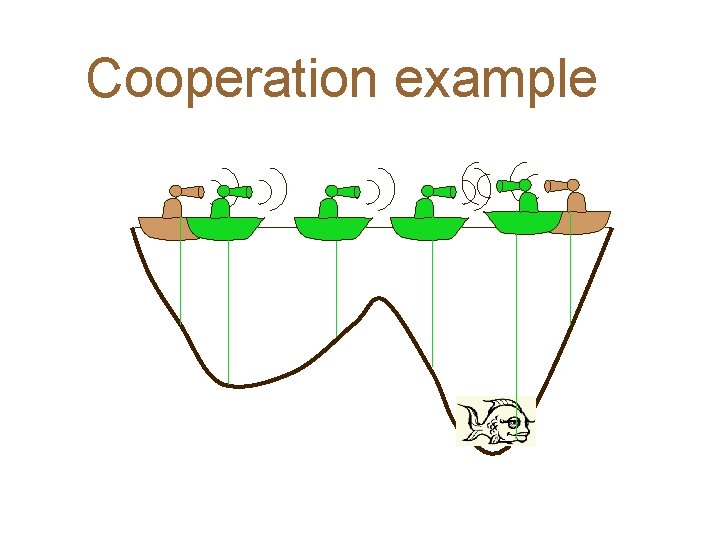
Cooperation example
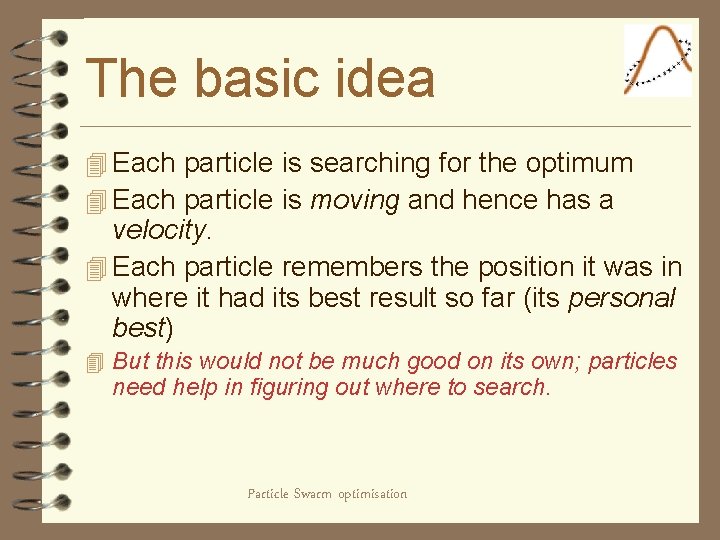
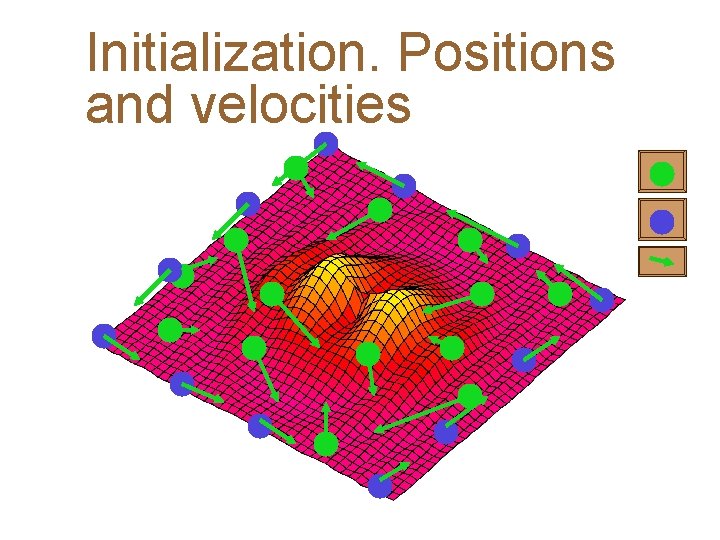
The basic idea 4 Each particle is searching for the optimum 4 Each particle is moving and hence has a velocity. 4 Each particle remembers the position it was in where it had its best result so far (its personal best) 4 But this would not be much good on its own; particles need help in figuring out where to search. Particle Swarm optimisation
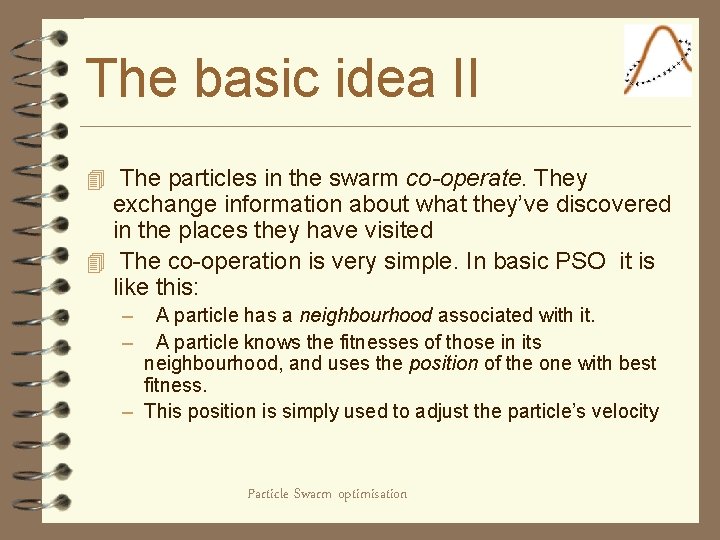
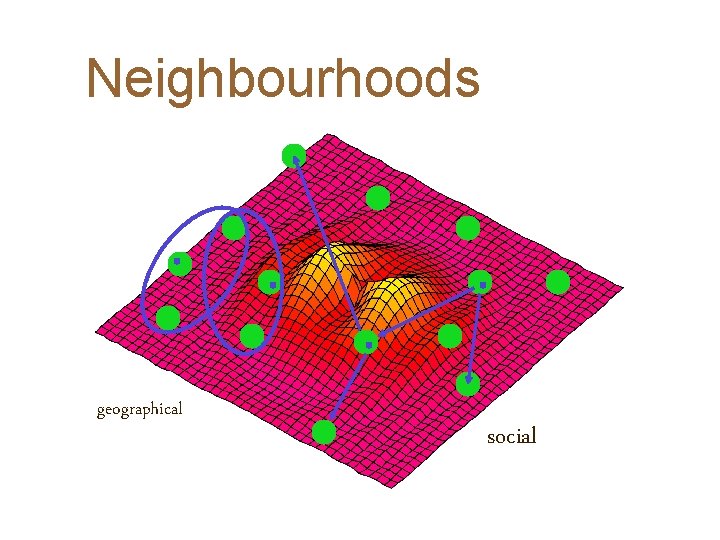
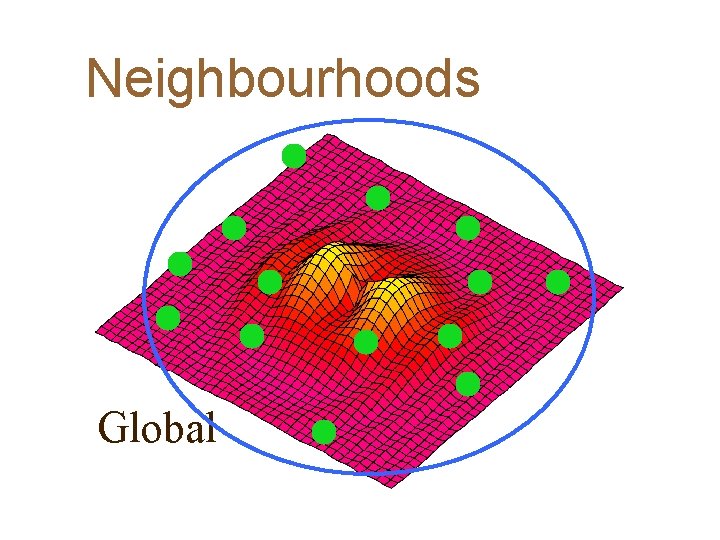
The basic idea II 4 The particles in the swarm co-operate. They exchange information about what they’ve discovered in the places they have visited 4 The co-operation is very simple. In basic PSO it is like this: – – A particle has a neighbourhood associated with it. A particle knows the fitnesses of those in its neighbourhood, and uses the position of the one with best fitness. – This position is simply used to adjust the particle’s velocity Particle Swarm optimisation
Initialization. Positions and velocities
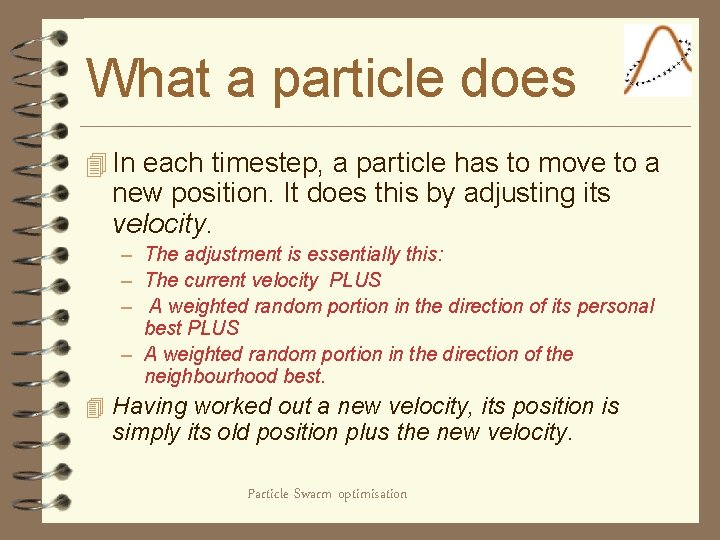
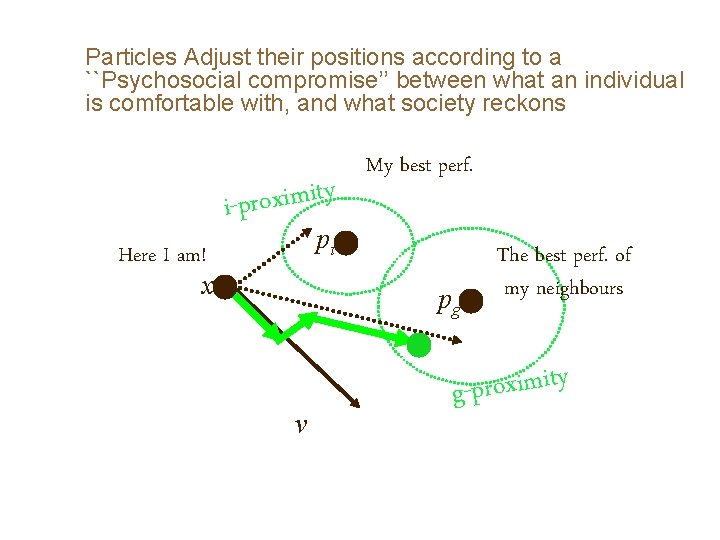
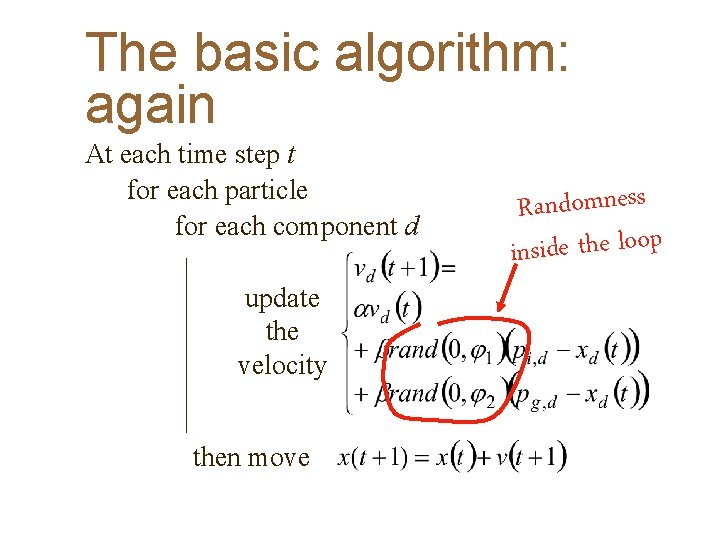
What a particle does 4 In each timestep, a particle has to move to a new position. It does this by adjusting its velocity. – The adjustment is essentially this: – The current velocity PLUS – A weighted random portion in the direction of its personal best PLUS – A weighted random portion in the direction of the neighbourhood best. 4 Having worked out a new velocity, its position is simply its old position plus the new velocity. Particle Swarm optimisation
Neighbourhoods geographical social
Neighbourhoods Global
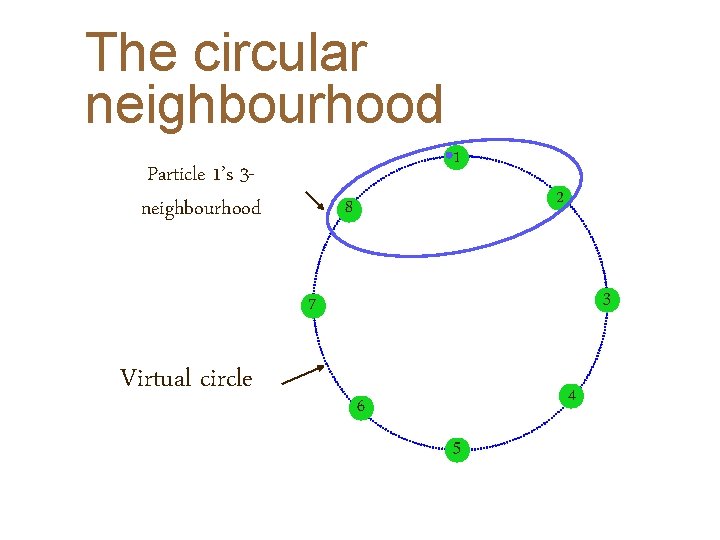
The circular neighbourhood 1 Particle 1’s 3 neighbourhood 2 8 3 7 Virtual circle 4 6 5
Particles Adjust their positions according to a ``Psychosocial compromise’’ between what an individual is comfortable with, and what society reckons y t i m i x o r i-p My best perf. pi Here I am! x pg v The best perf. of my neighbours y t i m i x o r p g
Pseudocode http: //www. swarmintelligence. org/tutorials. php Equation (a) v[] = c 0 *v[] + c 1 * rand() * (pbest[] - present[]) + c 2 * rand() * (gbest[] - present[]) (in the original method, c 0=1, but many researchers now play with this parameter) Equation (b) present[] = present[] + v[] Particle Swarm optimisation
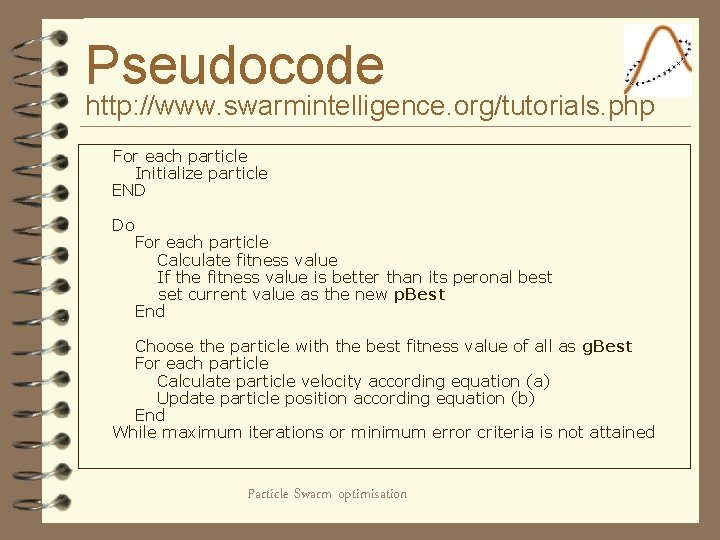
Pseudocode http: //www. swarmintelligence. org/tutorials. php For each particle Initialize particle END Do For each particle Calculate fitness value If the fitness value is better than its peronal best set current value as the new p. Best End Choose the particle with the best fitness value of all as g. Best For each particle Calculate particle velocity according equation (a) Update particle position according equation (b) End While maximum iterations or minimum error criteria is not attained Particle Swarm optimisation
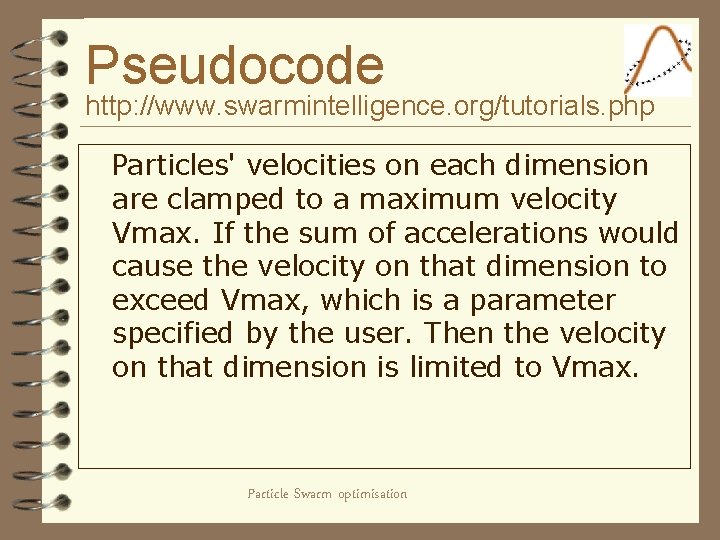
Pseudocode http: //www. swarmintelligence. org/tutorials. php Particles' velocities on each dimension are clamped to a maximum velocity Vmax. If the sum of accelerations would cause the velocity on that dimension to exceed Vmax, which is a parameter specified by the user. Then the velocity on that dimension is limited to Vmax. Particle Swarm optimisation
The basic algorithm: again At each time step t for each particle for each component d update the velocity then move s s e n m o d n a R p o o l e h t e d i s n i
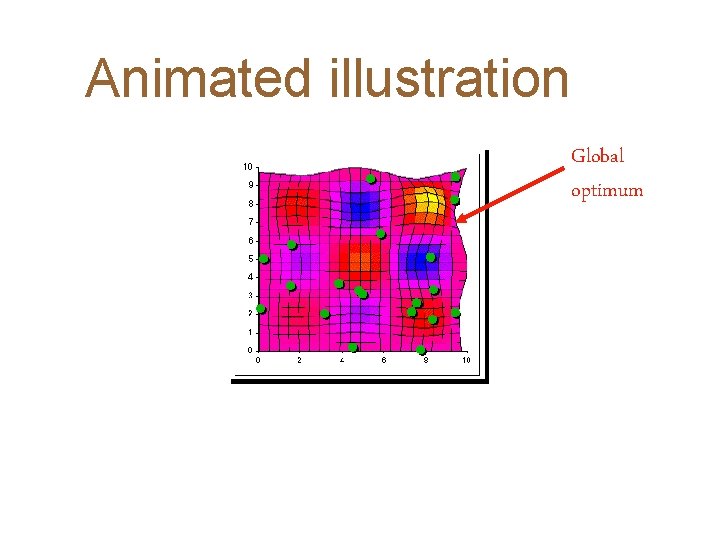
Animated illustration Global optimum
Parameters 4 Number of particles 4 C 1 (importance of personal best) 4 C 2 (importance of neighbourhood best) 2002 -0424 Particle Swarm optimisation Maurice. Clerc@Write. M e. com
How to choose parameters The right way This way Or this way 2002 -0424 Maurice. Clerc@Write. M e. com
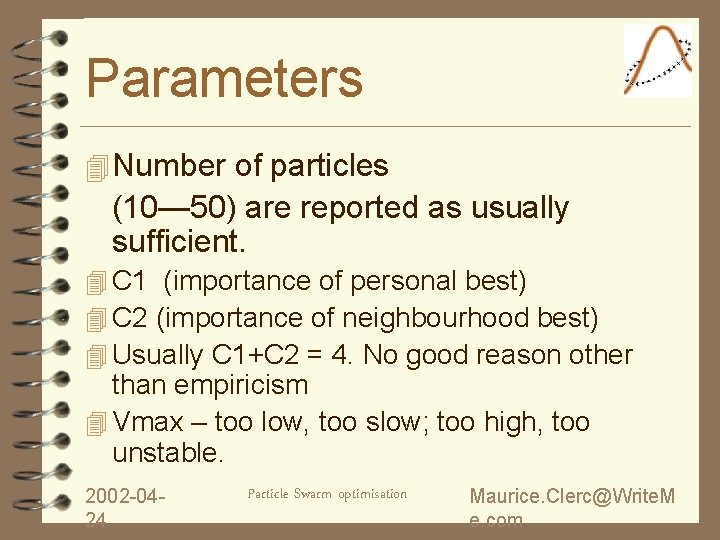
Parameters 4 Number of particles (10— 50) are reported as usually sufficient. 4 C 1 (importance of personal best) 4 C 2 (importance of neighbourhood best) 4 Usually C 1+C 2 = 4. No good reason other than empiricism 4 Vmax – too low, too slow; too high, too unstable. 2002 -0424 Particle Swarm optimisation Maurice. Clerc@Write. M e. com
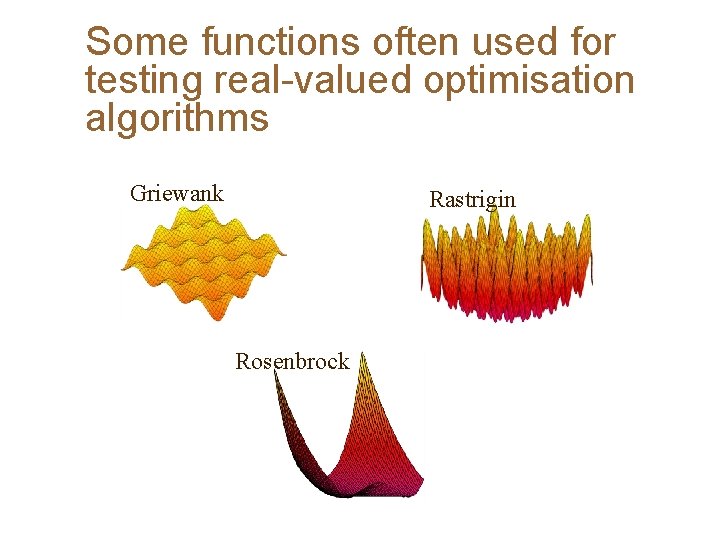
Some functions often used for testing real-valued optimisation algorithms Griewank Rastrigin Rosenbrock
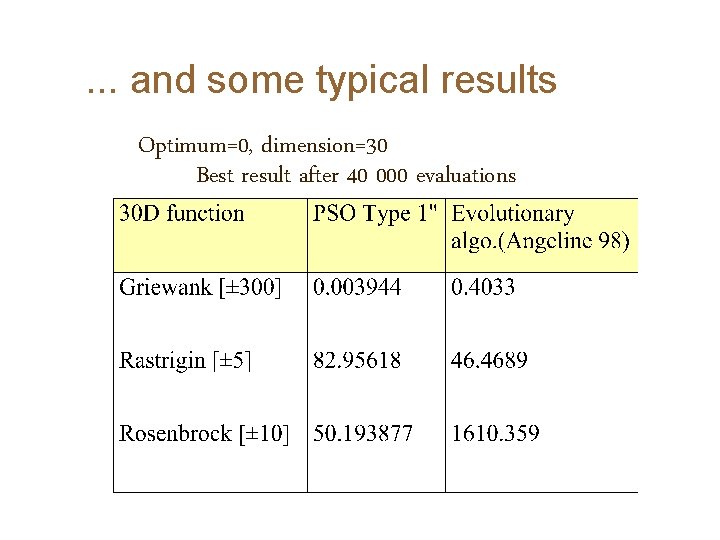
. . . and some typical results Optimum=0, dimension=30 Best result after 40 000 evaluations
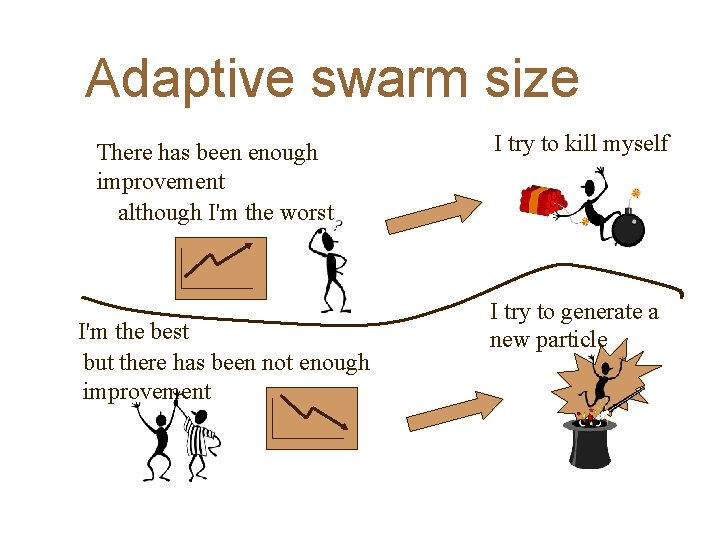
Adaptive swarm size There has been enough improvement although I'm the worst I'm the best but there has been not enough improvement I try to kill myself I try to generate a new particle
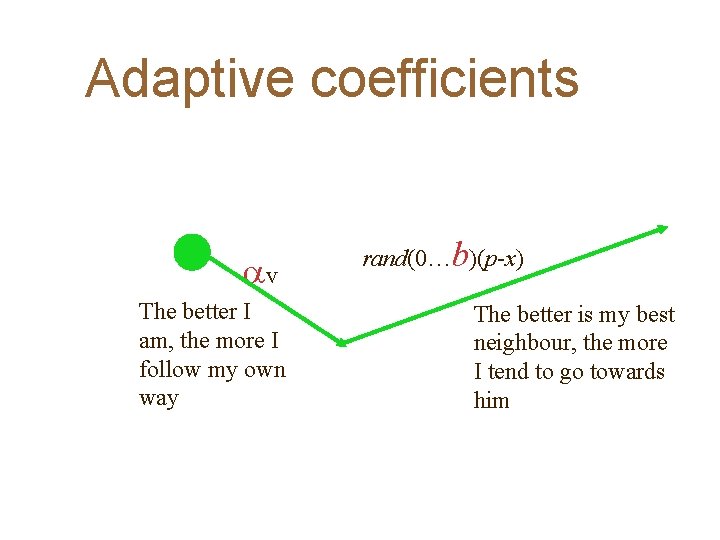
Adaptive coefficients av The better I am, the more I follow my own way rand(0…b)(p-x) The better is my best neighbour, the more I tend to go towards him
How and when should an excellent algorithm terminate?
How and when should an excellent algorithm terminate? Like this