
Particle Size Introduction and Definitions Kausar Ahmad Kulliyyah
- Slides: 27
Particle Size Introduction and Definitions Kausar Ahmad Kulliyyah of Pharmacy, IIUM Physical Pharmacy 2 1
Contents l Effect of particle size, shape l Sampling l The significance of sampling l How to take a sample l Definitions l Particle size distribution l Average l Polydispersity l Monomodal, bimodal, skewed Physical Pharmacy 2 2
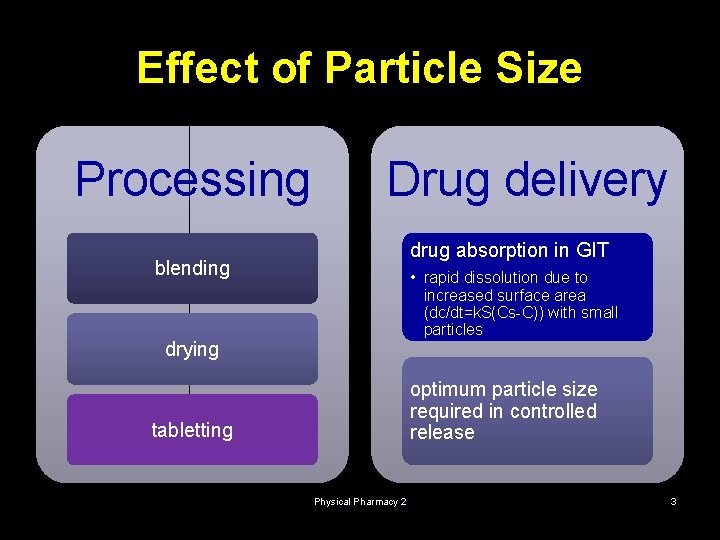
Effect of Particle Size Processing Drug delivery drug absorption in GIT blending • rapid dissolution due to increased surface area (dc/dt=k. S(Cs-C)) with small particles drying optimum particle size required in controlled release tabletting Physical Pharmacy 2 3
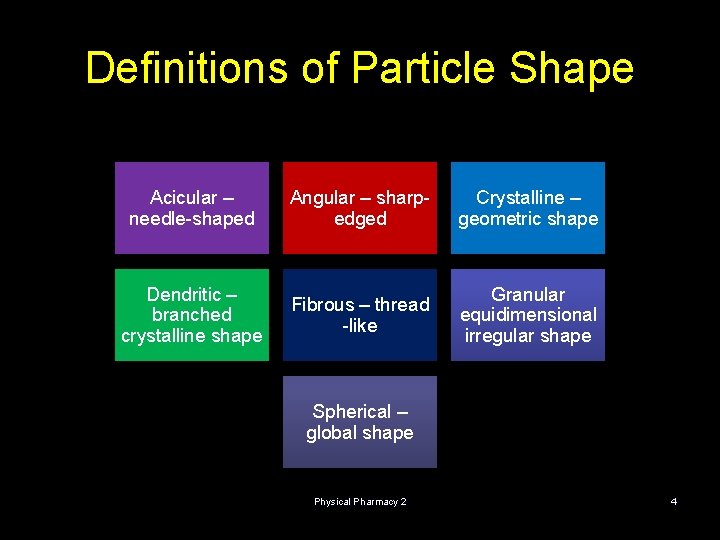
Definitions of Particle Shape Acicular – needle-shaped Angular – sharpedged Crystalline – geometric shape Dendritic – branched crystalline shape Fibrous – thread -like Granular equidimensional irregular shape Spherical – global shape Physical Pharmacy 2 4
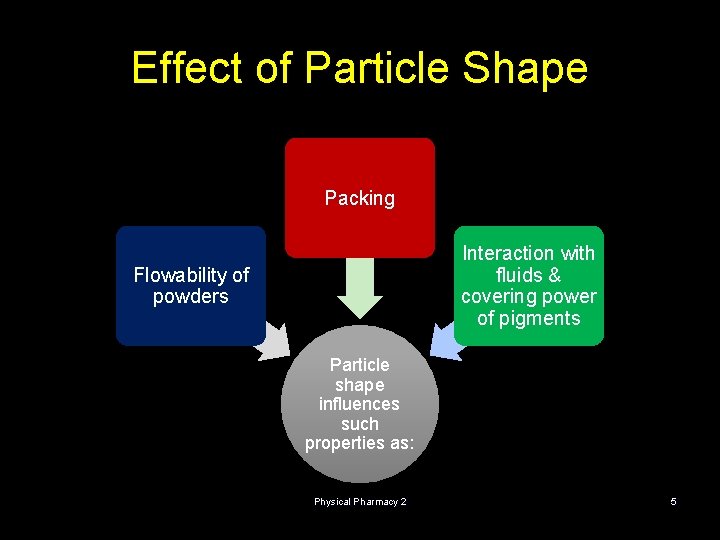
Effect of Particle Shape Packing Interaction with fluids & covering power of pigments Flowability of powders Particle shape influences such properties as: Physical Pharmacy 2 5
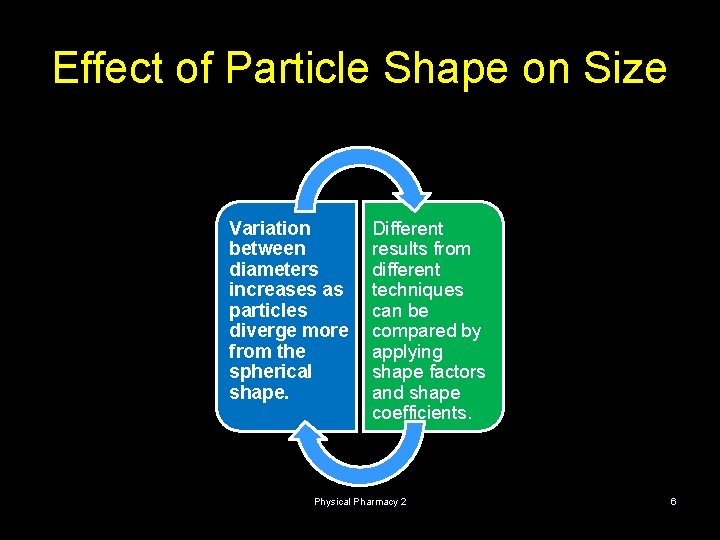
Effect of Particle Shape on Size Variation between diameters increases as particles diverge more from the spherical shape. Different results from different techniques can be compared by applying shape factors and shape coefficients. Physical Pharmacy 2 6
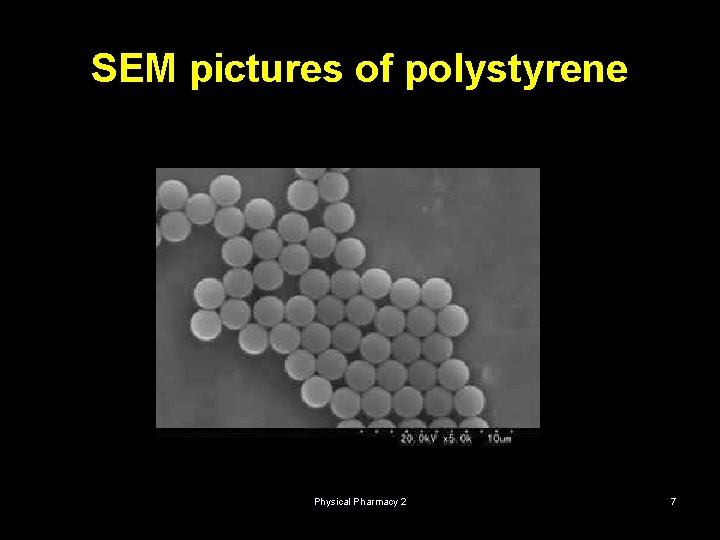
SEM pictures of polystyrene Physical Pharmacy 2 7
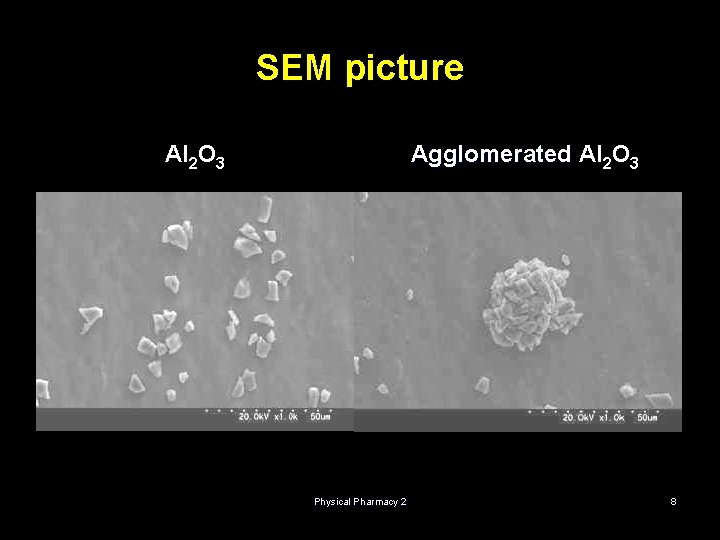
SEM picture Al 2 O 3 Agglomerated Al 2 O 3 Physical Pharmacy 2 8
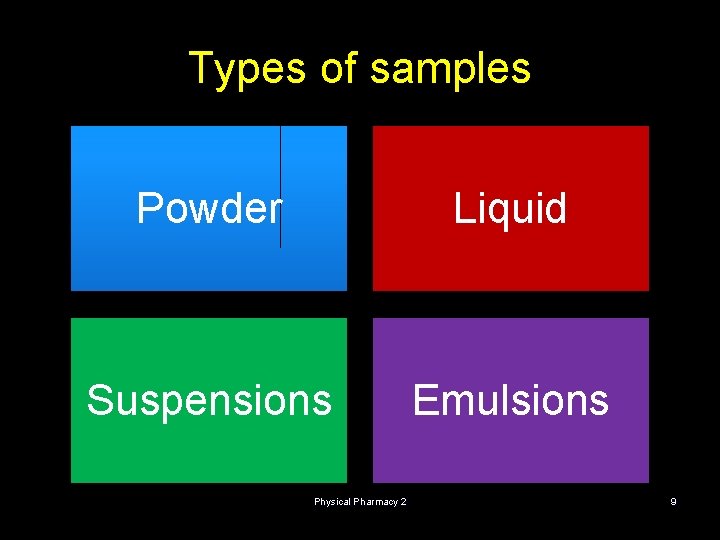
Types of samples Powder Liquid Suspensions Emulsions Physical Pharmacy 2 9
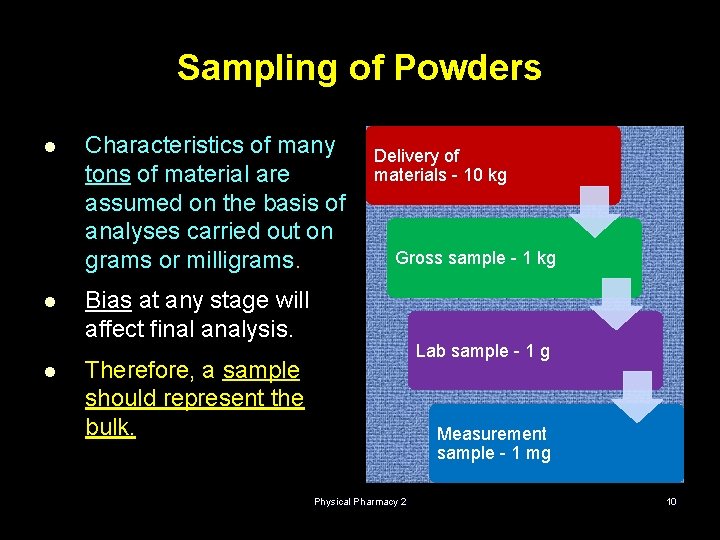
Sampling of Powders l l l Characteristics of many tons of material are assumed on the basis of analyses carried out on grams or milligrams. Delivery of materials - 10 kg Gross sample - 1 kg Bias at any stage will affect final analysis. Lab sample - 1 g Therefore, a sample should represent the bulk. Measurement sample - 1 mg Physical Pharmacy 2 10
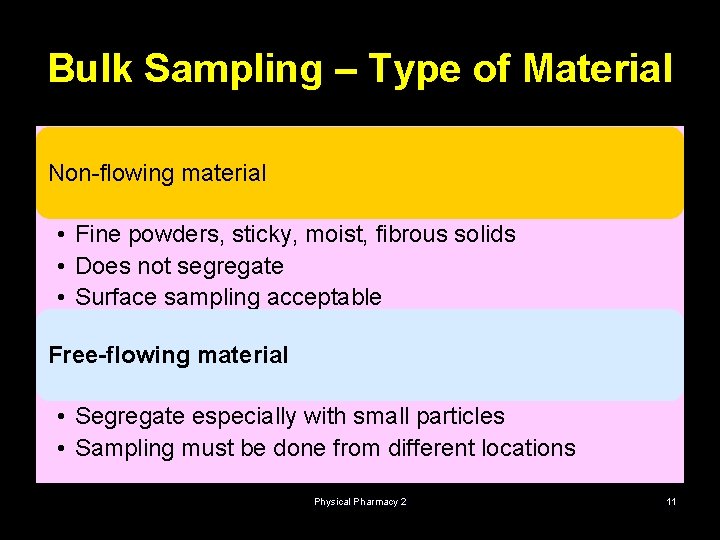
Bulk Sampling – Type of Material Non-flowing material • Fine powders, sticky, moist, fibrous solids • Does not segregate • Surface sampling acceptable Free-flowing material • Segregate especially with small particles • Sampling must be done from different locations Physical Pharmacy 2 11
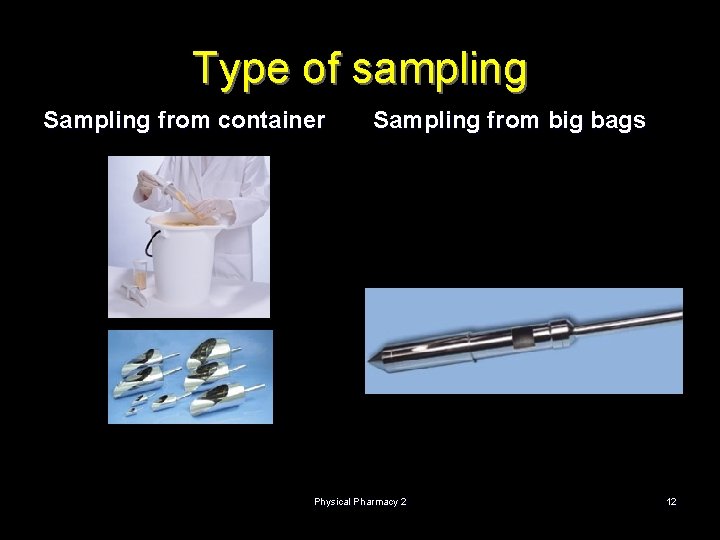
Type of sampling Sampling from container Sampling from big bags Physical Pharmacy 2 12
Sampling from bag/sack/drum l l l Inspect condition of bags Select bags at random Scoop sampling is widely used method due to its simplicity. It is supposed that the powder, at the point at which the scoop is inserted, represents the bulk Increase accuracy by having more than one sample (CHECK how this is done @ pilot plant) See http: //www. kerstingind. de/uploads/media/Pharma__UDS_engl. pdf Physical Pharmacy 2 13
On-line Sampling l Normally taken during the process l For quality control purpose/IPQC, samples should be taken only when the process has stabilised l Samples taken from different sampling point e. g. on a conveying belt or screw Physical Pharmacy 2 14
Sampling from Emulsion & Suspension l Samples must be stirred before samples are taken l Accuracy increases with more than one sample Physical Pharmacy 2 15
Definitions of Particle Size Volume diameter • diameter of a sphere having the same volume as the particle Surface diameter • diameter of a sphere having the same surface as the particle Stoke’s diameter • the free falling diameter of a particle in the laminar flow region (Re < 0. 2) Sieve diameter • the width of the minimum square aperture through which the particle will pass Physical Pharmacy 2 16
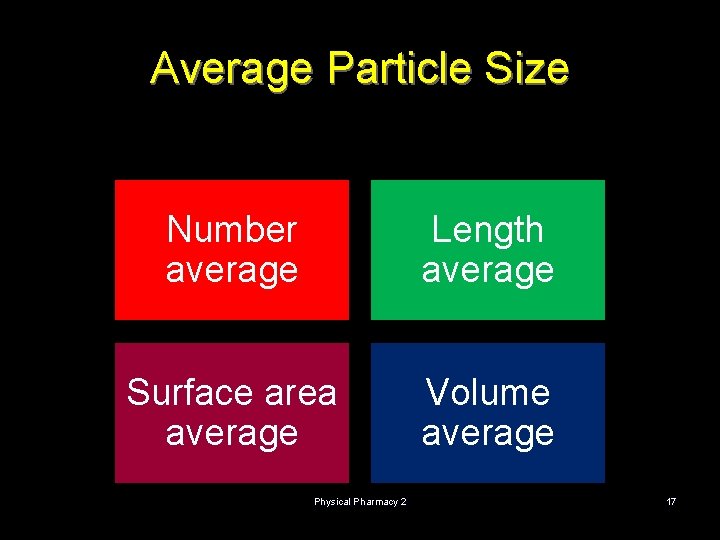
Average Particle Size Number average Length average Surface area average Volume average Physical Pharmacy 2 17
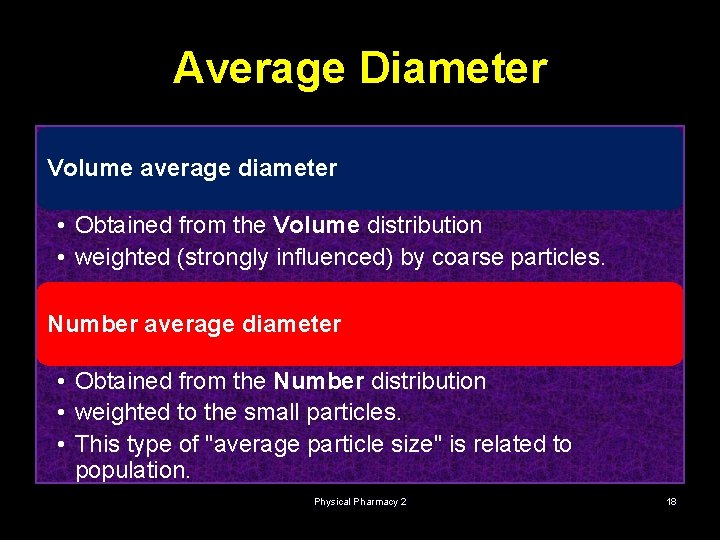
Average Diameter Volume average diameter • Obtained from the Volume distribution • weighted (strongly influenced) by coarse particles. Number average diameter • Obtained from the Number distribution • weighted to the small particles. • This type of "average particle size" is related to population. Physical Pharmacy 2 18
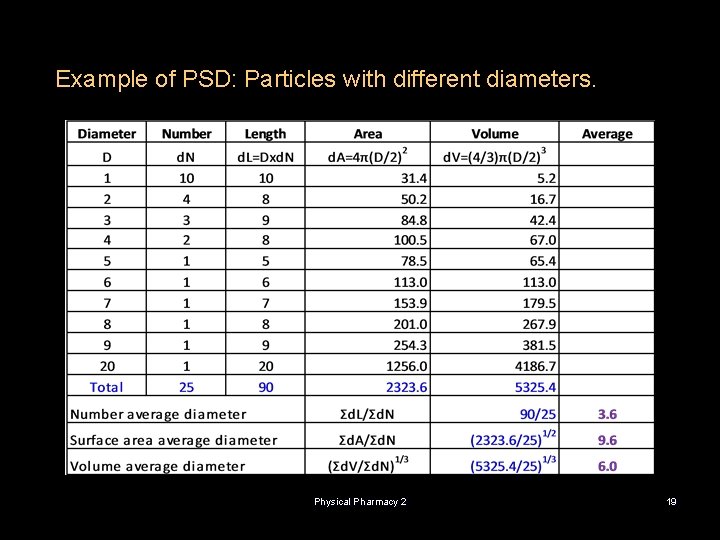
Example of PSD: Particles with different diameters. Physical Pharmacy 2 19
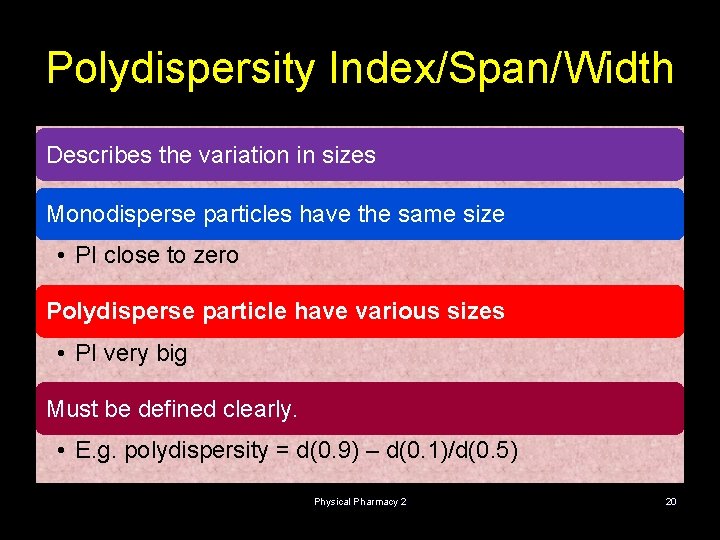
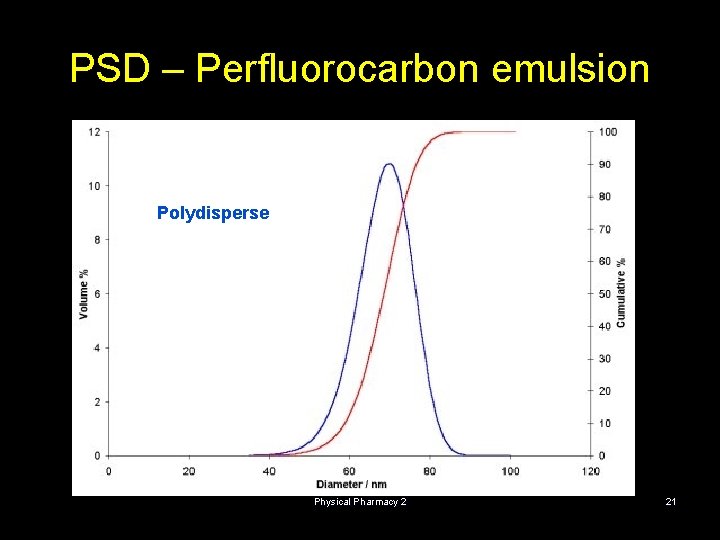
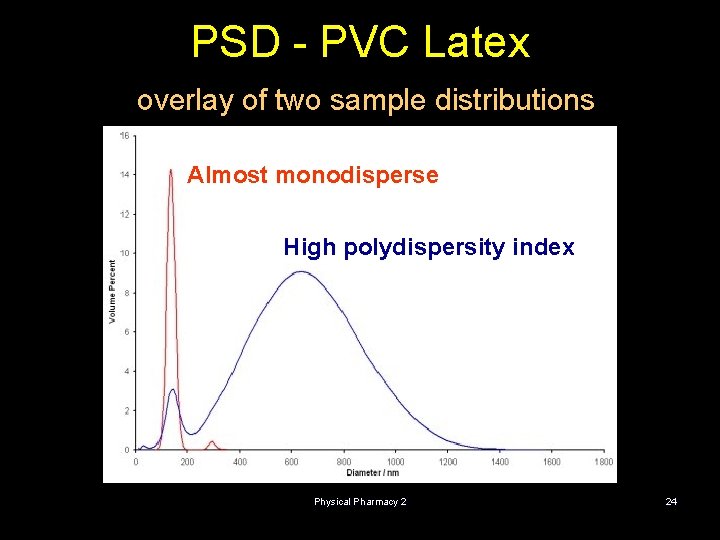
Polydispersity Index/Span/Width Describes the variation in sizes Monodisperse particles have the same size • PI close to zero Polydisperse particle have various sizes • PI very big Must be defined clearly. • E. g. polydispersity = d(0. 9) – d(0. 1)/d(0. 5) Physical Pharmacy 2 20
PSD – Perfluorocarbon emulsion Polydisperse Physical Pharmacy 2 21
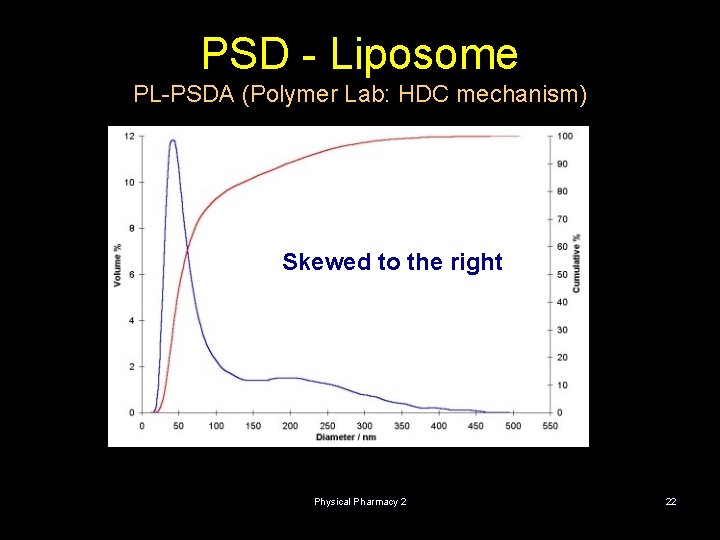
PSD - Liposome PL-PSDA (Polymer Lab: HDC mechanism) Skewed to the right Physical Pharmacy 2 22
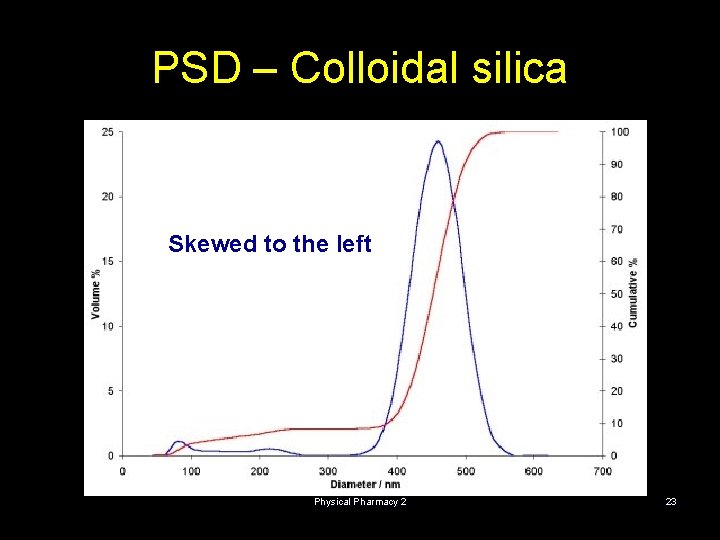
PSD – Colloidal silica Skewed to the left Physical Pharmacy 2 23
PSD - PVC Latex overlay of two sample distributions Almost monodisperse High polydispersity index Physical Pharmacy 2 24
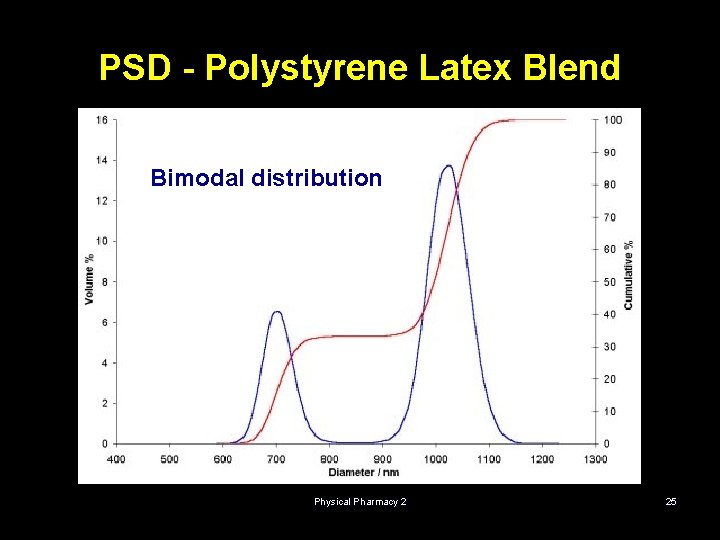
PSD - Polystyrene Latex Blend Bimodal distribution Physical Pharmacy 2 25
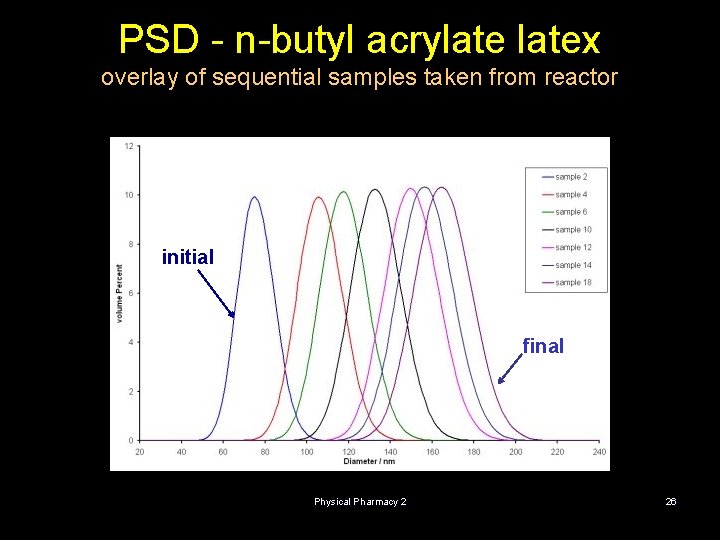
PSD - n-butyl acrylatex overlay of sequential samples taken from reactor initial final Physical Pharmacy 2 26
References Keishi Gotoh et al, Powder Technology Handbook 2 nd Ed. , Marcel Dekker, New York (1997) Muhammad E Fayed & Lambert Otten, Handbook of Powder Science & Technology 2 nd Ed. , Chapman & Hall, New York (1997) ME Aulton, Pharmaceutics: The Science of dosage form design, Churchill Livingstone, London (1988). Chap 33, p 564, p 581 http: //www. polymerlabs. com/partsize/psdaapps. htm Physical Pharmacy 2 27