
Particle Flow in CMS and ATLAS Colin Bernet
Particle Flow in CMS (and ATLAS) Colin Bernet (IPNL) For the CMS and ATLAS Collaborations J. L. Agram, F. Beaudette, M. Della Negra, M. Gouzevitch, P. Janot, M. Nguyen, M. Ridel, A. Zabi Top LHC France, LPNHE, Paris 24 th of May, 2018 1
Outline The CMS particle flow algorithm: charged hadrons, photons, neutral hadrons, electrons, (muons) Performance: Jets, Taus, (MET, Leptons) The ATLAS algorithm: Principles, Jet performance, Comparison with CMS arxiv: 1706. 04965 2
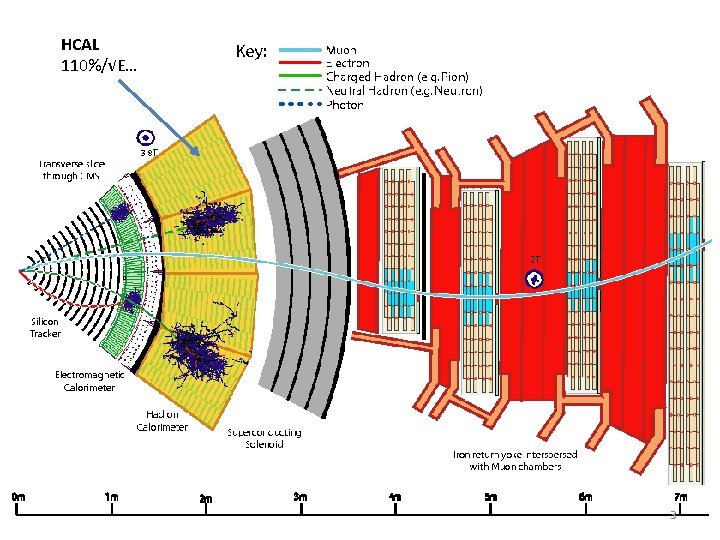
HCAL 110%/√E… 3
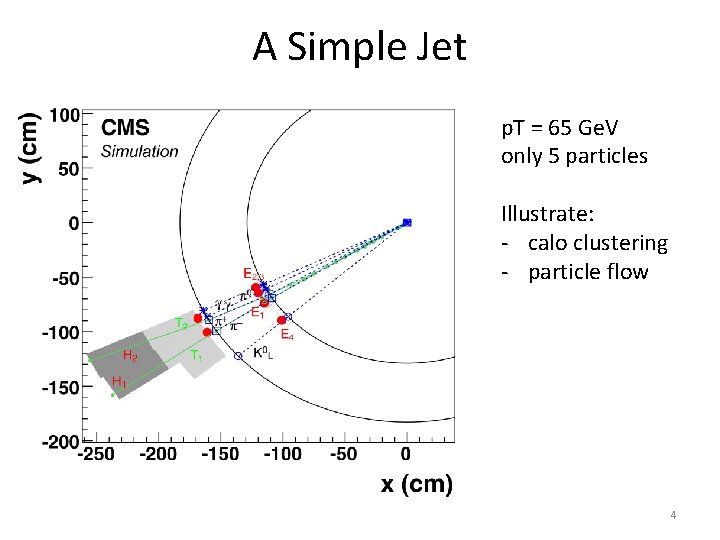
A Simple Jet p. T = 65 Ge. V only 5 particles Illustrate: - calo clustering - particle flow 4
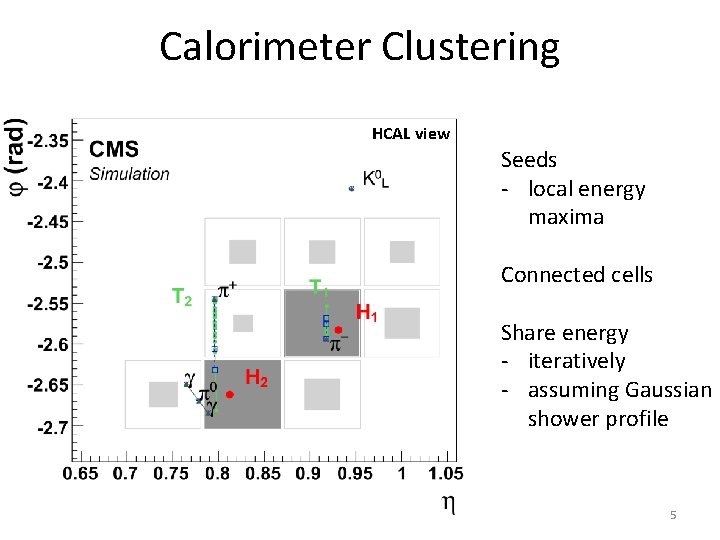
Calorimeter Clustering HCAL view Seeds - local energy maxima Connected cells Share energy - iteratively - assuming Gaussian shower profile 5
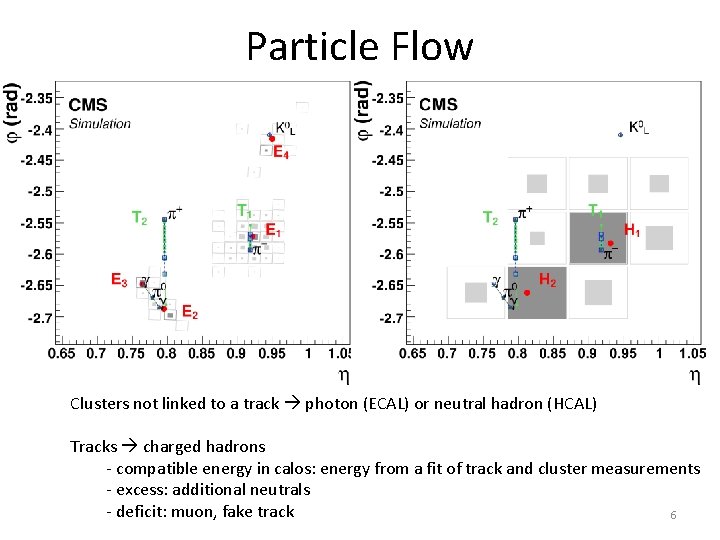
Particle Flow Clusters not linked to a track photon (ECAL) or neutral hadron (HCAL) Tracks charged hadrons - compatible energy in calos: energy from a fit of track and cluster measurements - excess: additional neutrals - deficit: muon, fake track 6
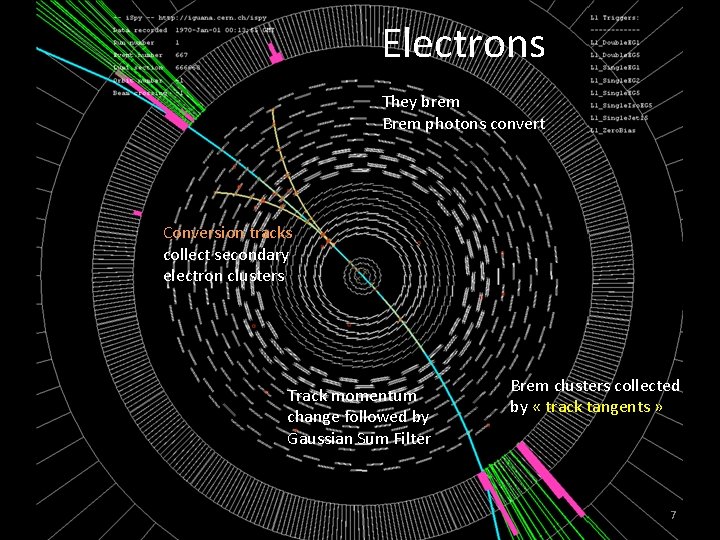
Electrons They brem Brem photons convert Conversion tracks collect secondary electron clusters Track momentum change followed by Gaussian Sum Filter Brem clusters collected by « track tangents » 7
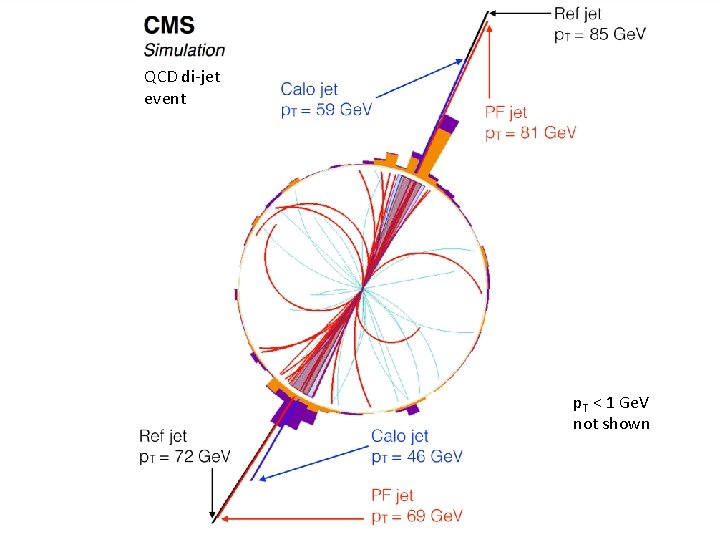
QCD di-jet event p. T < 1 Ge. V not shown 8
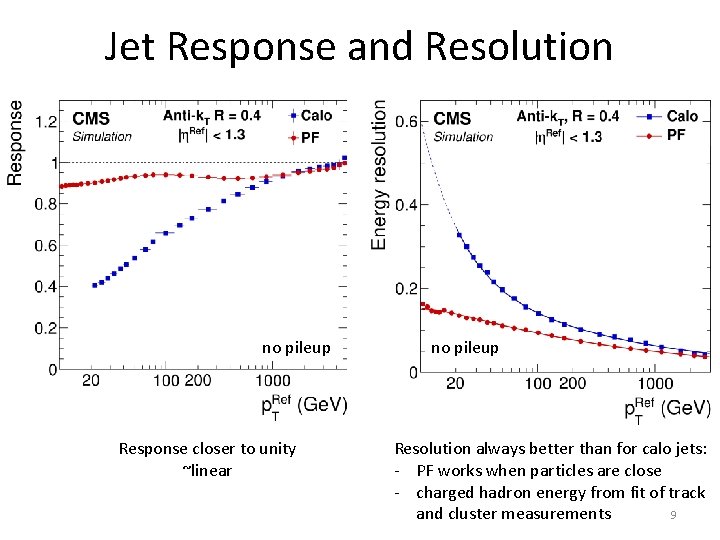
Jet Response and Resolution no pileup Response closer to unity ~linear no pileup Resolution always better than for calo jets: - PF works when particles are close - charged hadron energy from fit of track 9 and cluster measurements
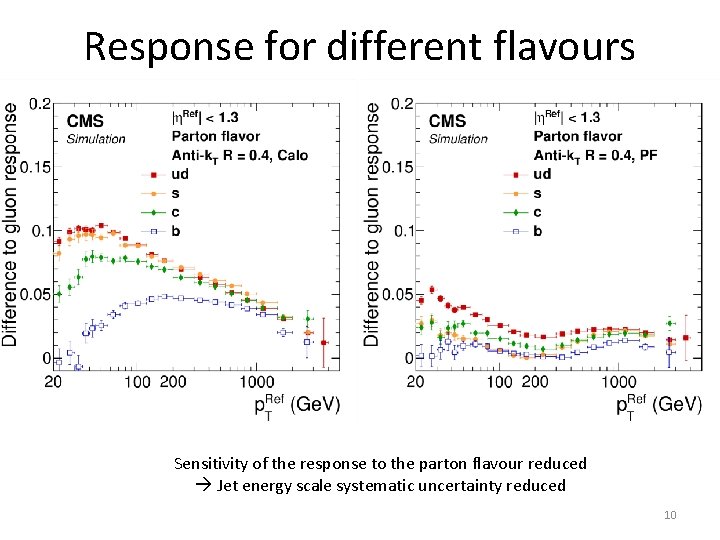
Response for different flavours Sensitivity of the response to the parton flavour reduced Jet energy scale systematic uncertainty reduced 10
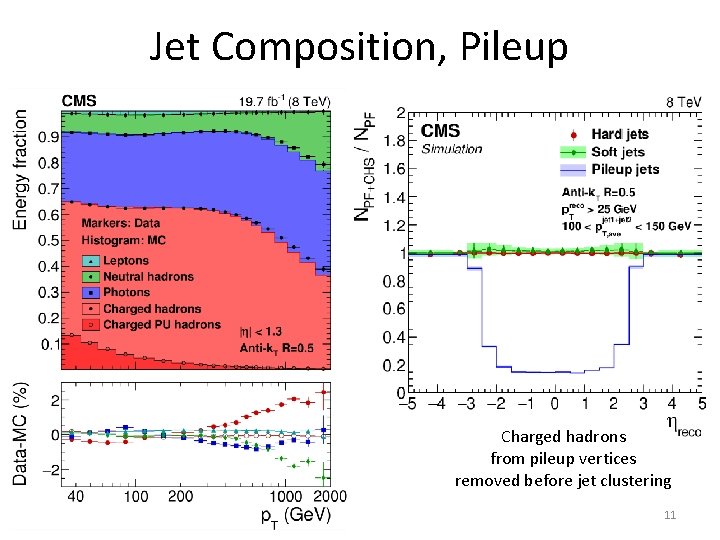
Jet Composition, Pileup Charged hadrons from pileup vertices removed before jet clustering 11
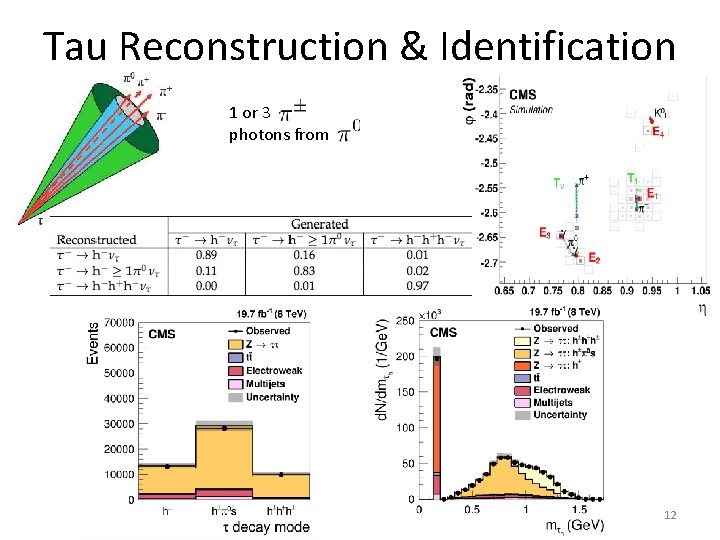
Tau Reconstruction & Identification 1 or 3 photons from 12
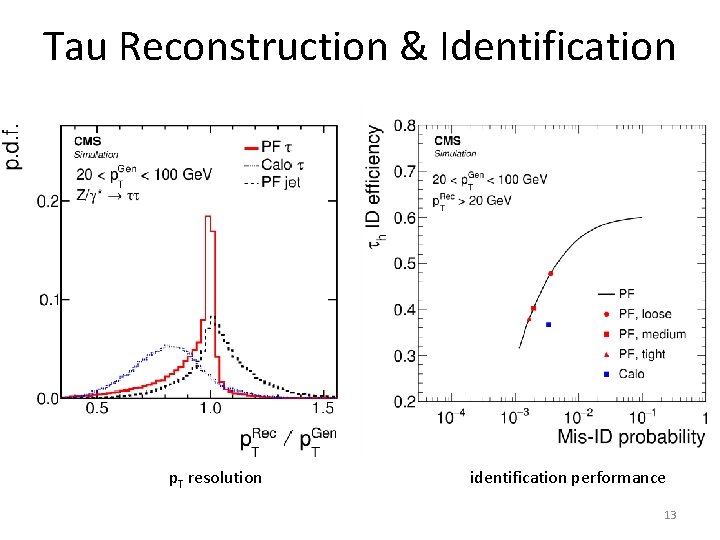
Tau Reconstruction & Identification p. T resolution identification performance 13
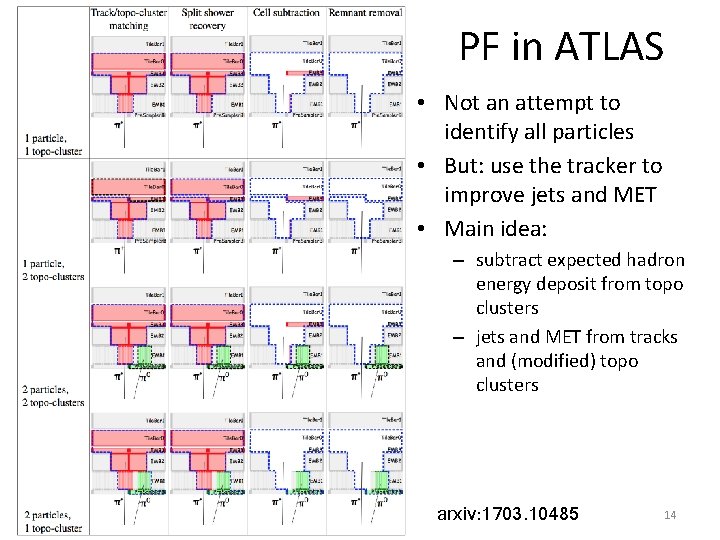
PF in ATLAS • Not an attempt to identify all particles • But: use the tracker to improve jets and MET • Main idea: – subtract expected hadron energy deposit from topo clusters – jets and MET from tracks and (modified) topo clusters arxiv: 1703. 10485 14
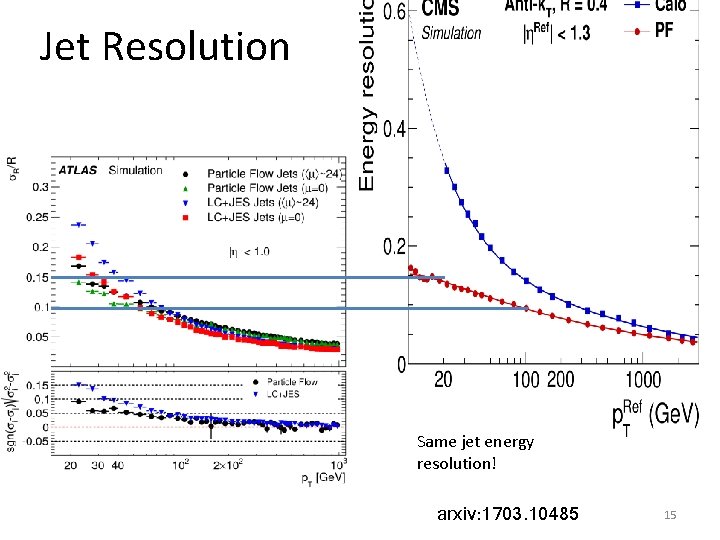
Jet Resolution Same jet energy resolution! arxiv: 1703. 10485 15
Conclusion • PF is the foundation of >99% of CMS analyses – all physics objects come from PF – global, high-res view of the final state particles (e. g. control underlying event – colour reconnection) • > 50 000 lines of code – to deal with the gory « details » : • fake tracks, muons, e/γ, secondary interactions, noise, … • Algorithm unchanged since 2009 – 0 45 pileup collisions • What now? – PF in ATLAS! Jet resolution now the same as in CMS – HL-LHC data: big challenge. PF is needed to deal with PU – Trending: deep learning on PF particles • e. g. tau ID, MET reconstruction, boosted top tagging, . . 16
Backup 17
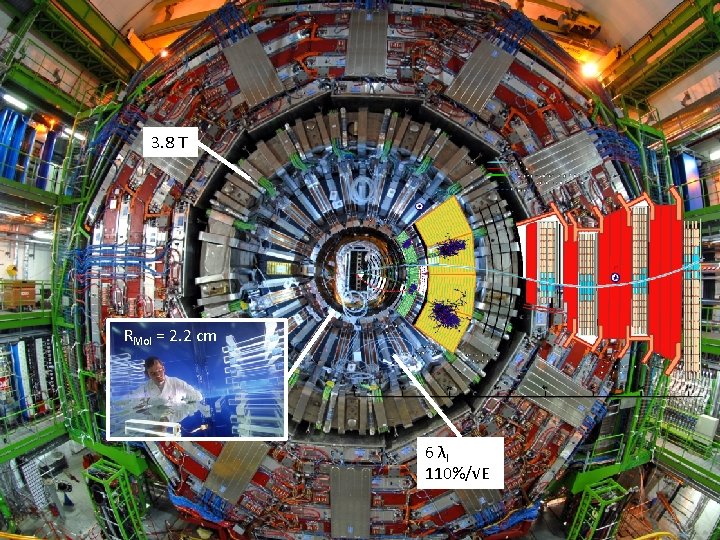
3. 8 T RMol = 2. 2 cm 6 λI 110%/√E 18
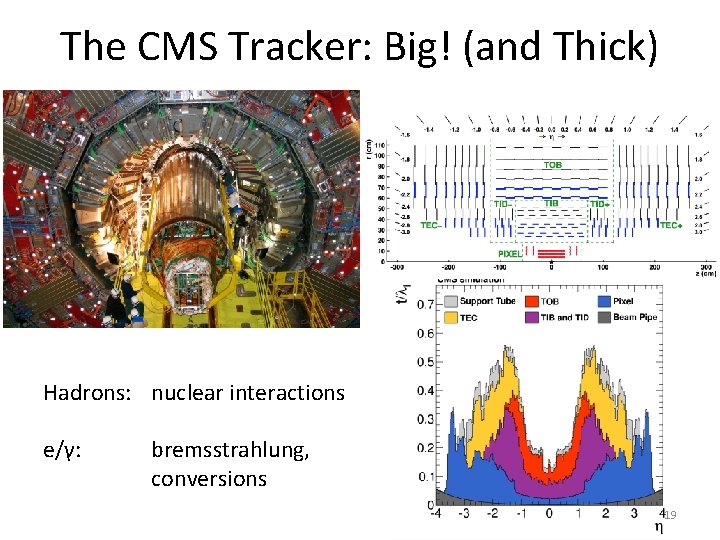
The CMS Tracker: Big! (and Thick) Hadrons: nuclear interactions e/γ: bremsstrahlung, conversions 19
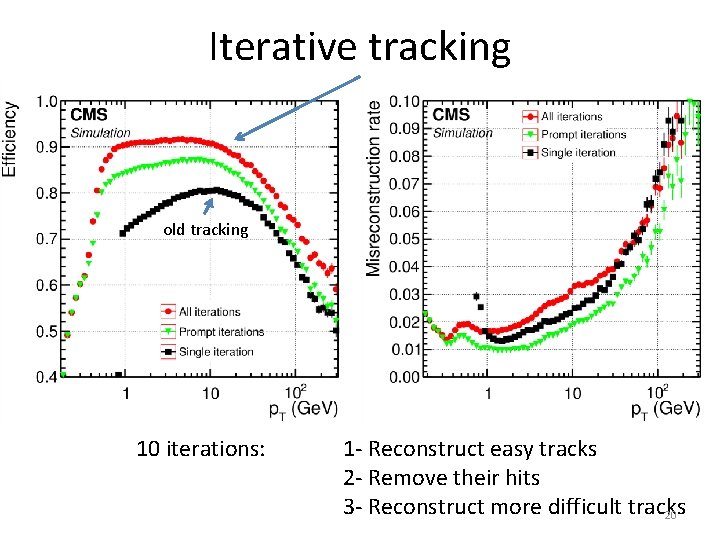
Iterative tracking old tracking 10 iterations: 1 - Reconstruct easy tracks 2 - Remove their hits 3 - Reconstruct more difficult tracks 20
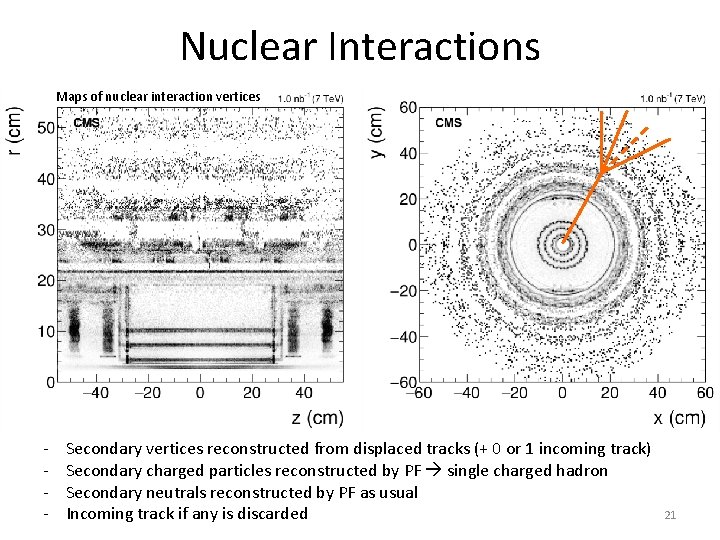
Nuclear Interactions Maps of nuclear interaction vertices - Secondary vertices reconstructed from displaced tracks (+ 0 or 1 incoming track) Secondary charged particles reconstructed by PF single charged hadron Secondary neutrals reconstructed by PF as usual Incoming track if any is discarded 21
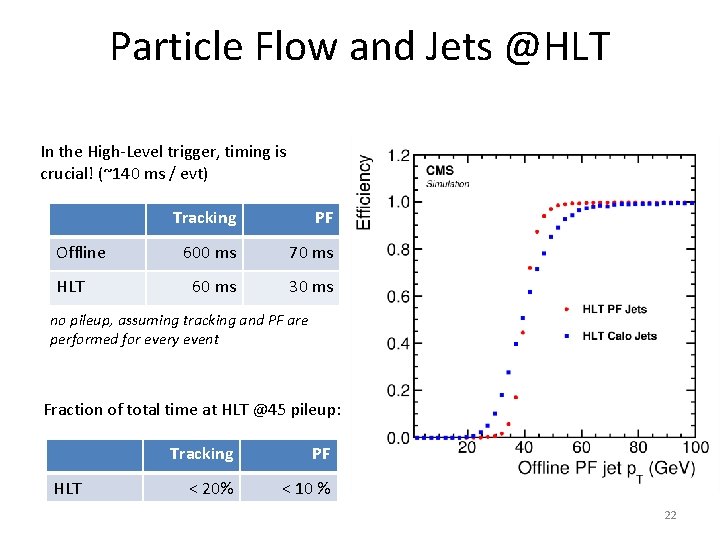
Particle Flow and Jets @HLT In the High-Level trigger, timing is crucial! (~140 ms / evt) Tracking PF Offline 600 ms 70 ms HLT 60 ms 30 ms no pileup, assuming tracking and PF are performed for every event Fraction of total time at HLT @45 pileup: HLT Tracking PF < 20% < 10 % 22
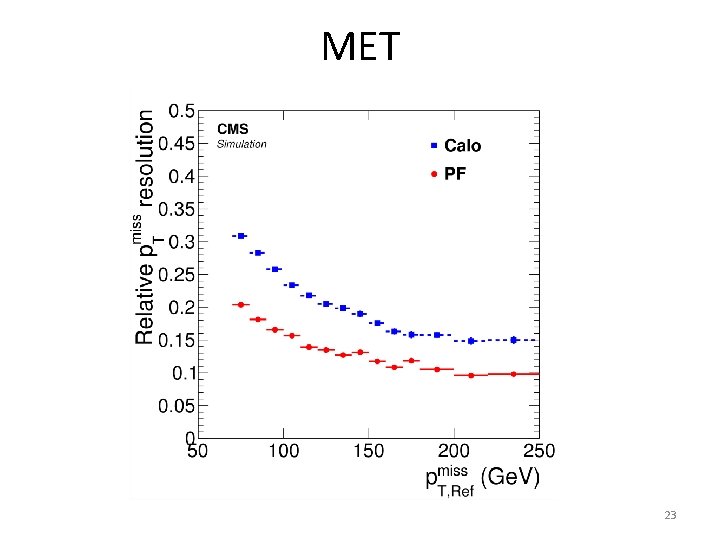
MET 23
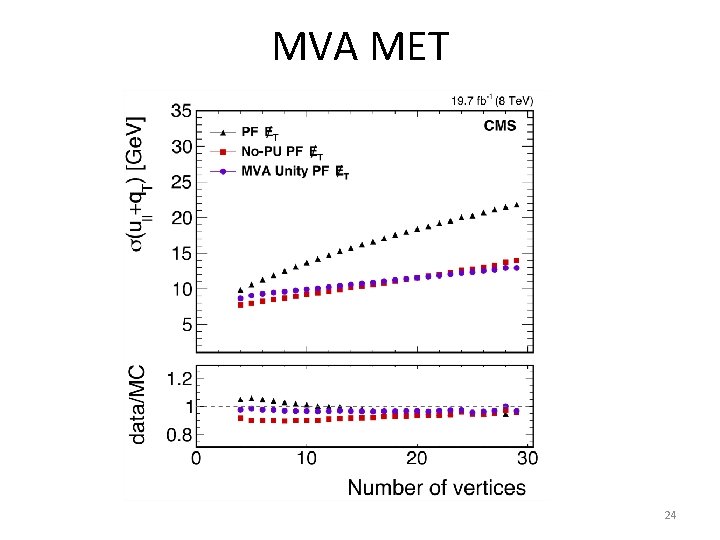
MVA MET 24
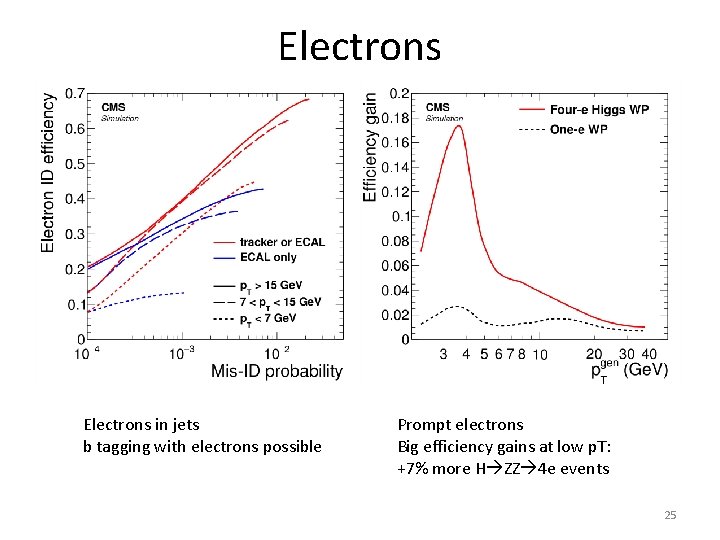
Electrons in jets b tagging with electrons possible Prompt electrons Big efficiency gains at low p. T: +7% more H ZZ 4 e events 25
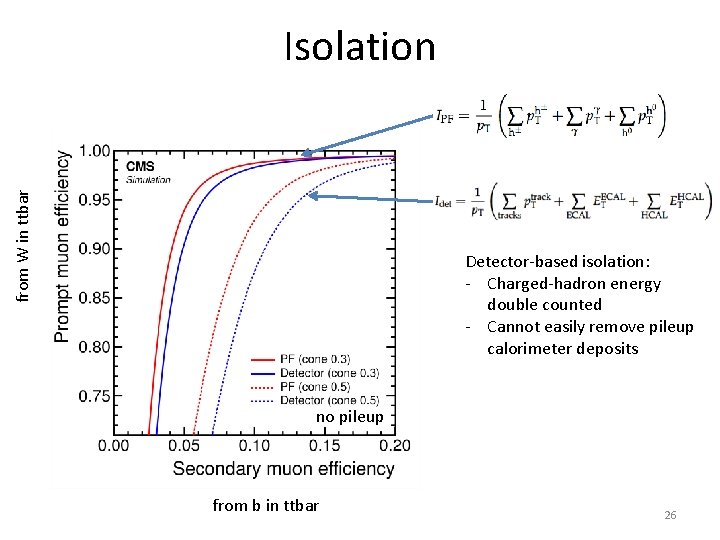
from W in ttbar Isolation Detector-based isolation: - Charged-hadron energy double counted - Cannot easily remove pileup calorimeter deposits no pileup from b in ttbar 26
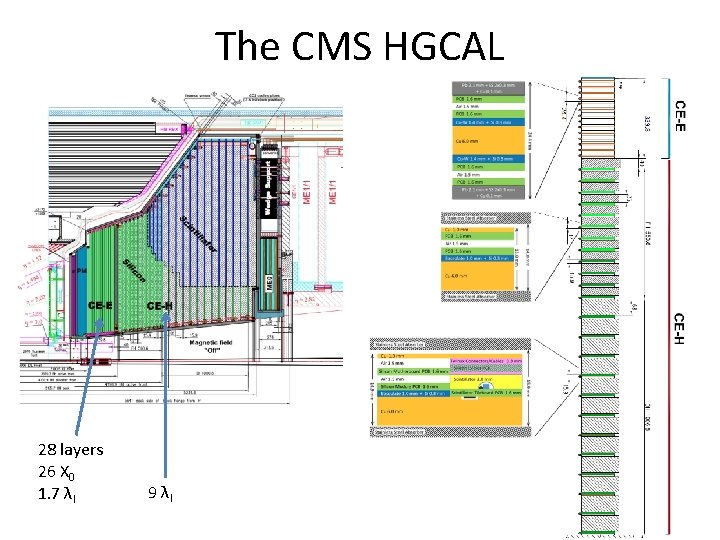
The CMS HGCAL 28 layers 26 X 0 1. 7 λI 9 λI 27
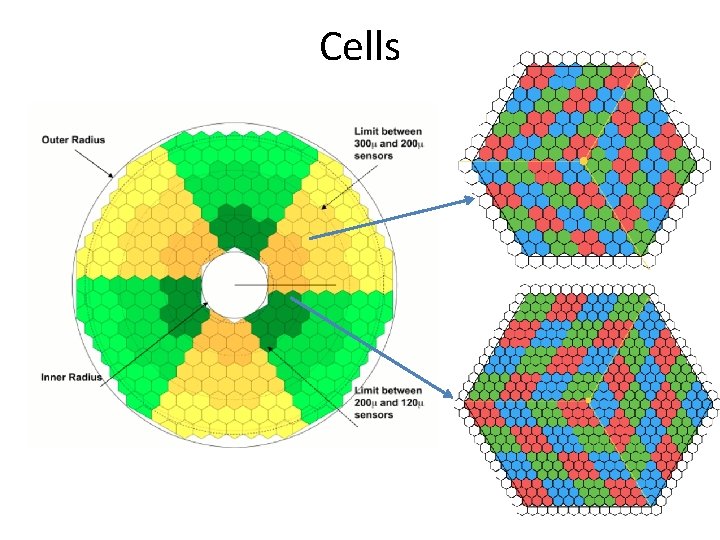
Cells 28
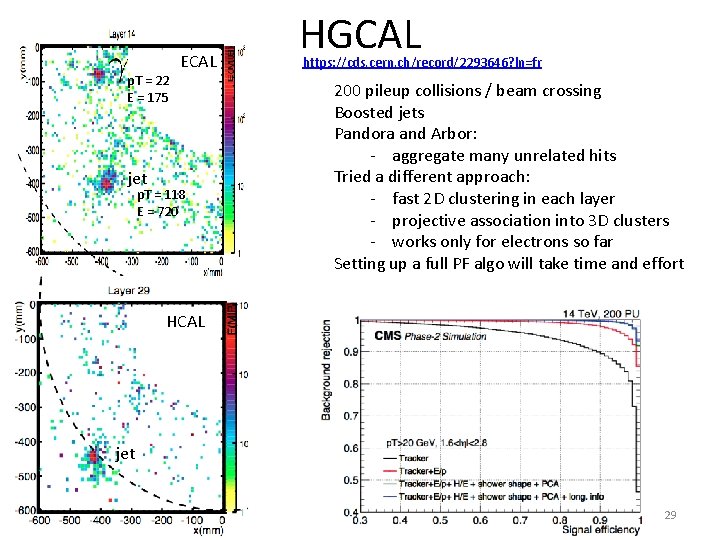
ECAL p. T = 22 E = 175 jet p. T = 118 E = 720 HGCAL https: //cds. cern. ch/record/2293646? ln=fr 200 pileup collisions / beam crossing Boosted jets Pandora and Arbor: - aggregate many unrelated hits Tried a different approach: - fast 2 D clustering in each layer - projective association into 3 D clusters - works only for electrons so far Setting up a full PF algo will take time and effort HCAL jet 29
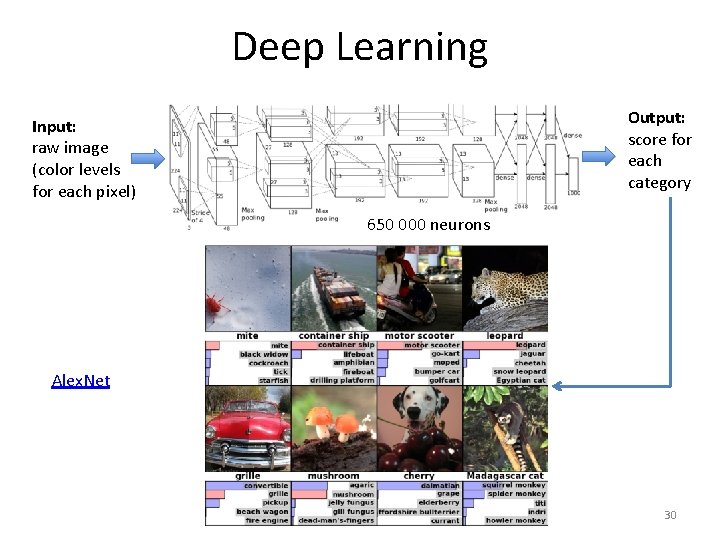
Deep Learning Output: score for each category Input: raw image (color levels for each pixel) 650 000 neurons Alex. Net 30
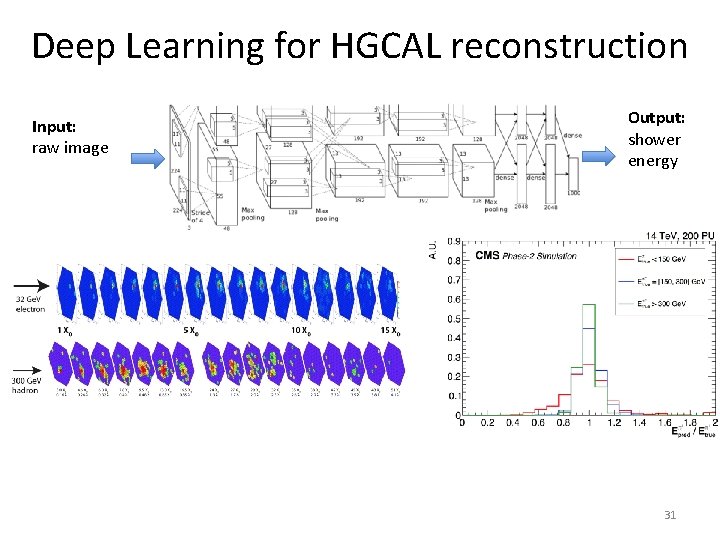
Deep Learning for HGCAL reconstruction Input: raw image Output: shower energy 31
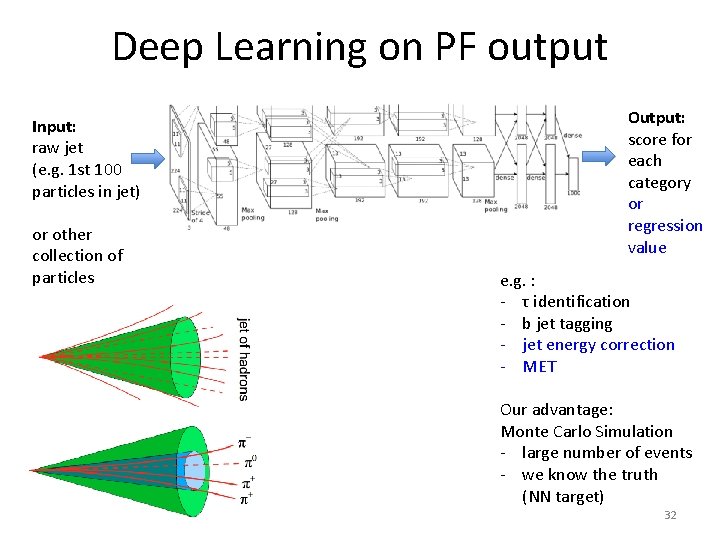
Deep Learning on PF output Input: raw jet (e. g. 1 st 100 particles in jet) or other collection of particles Output: score for each category or regression value e. g. : - τ identification - b jet tagging - jet energy correction - MET Our advantage: Monte Carlo Simulation - large number of events - we know the truth (NN target) 32
- Slides: 32