
Participles what we know verbs adjectives and Participles
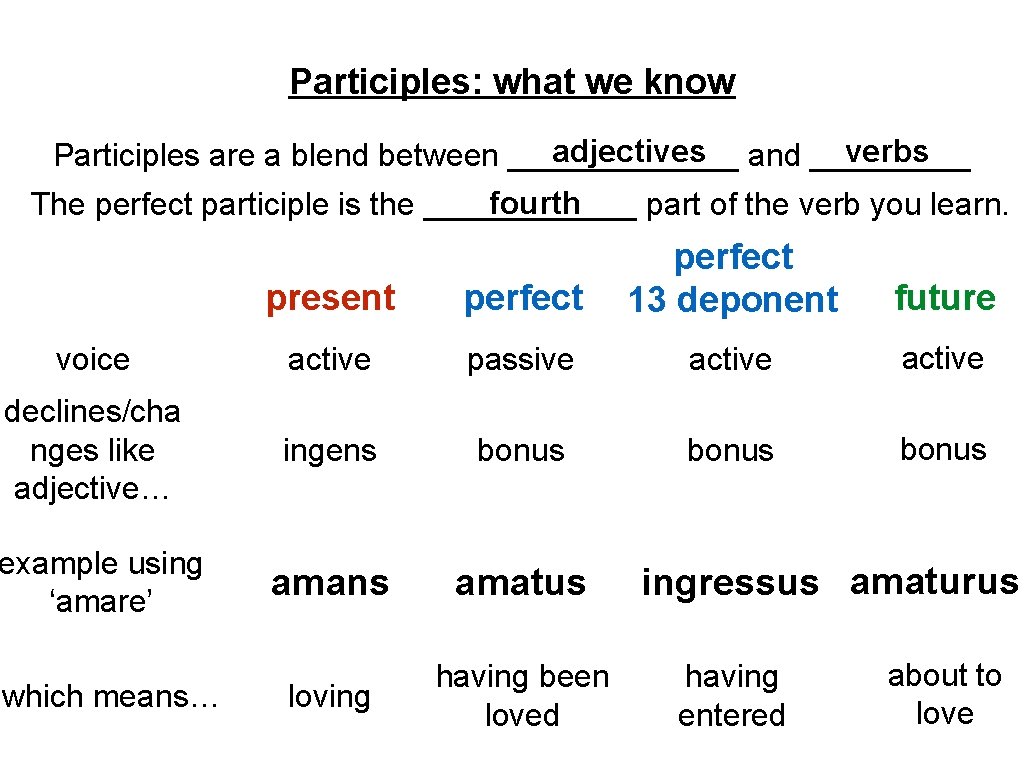
Participles: what we know verbs adjectives and _____ Participles are a blend between _______ fourth The perfect participle is the ______ part of the verb you learn. present perfect 13 deponent voice active passive active declines/cha nges like adjective… ingens bonus example using ‘amare’ amans amatus loving having been loved which means… future ingressus amaturus having entered about to love
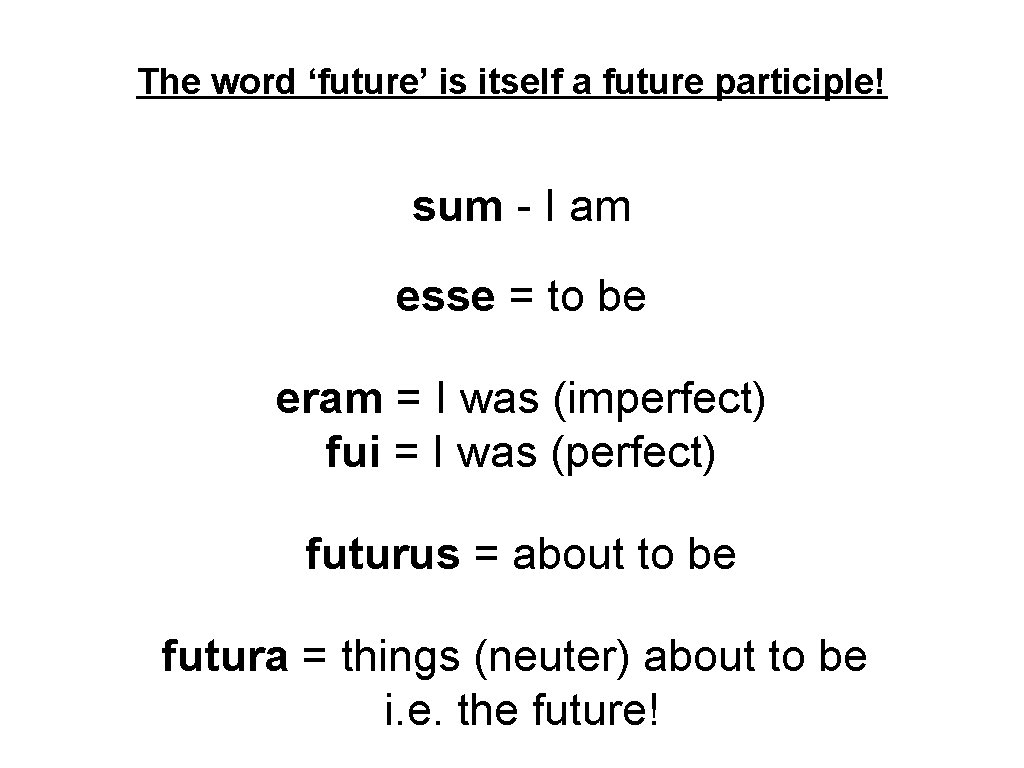
The word ‘future’ is itself a future participle! sum - I am esse = to be eram = I was (imperfect) fui = I was (perfect) futurus = about to be futura = things (neuter) about to be i. e. the future!
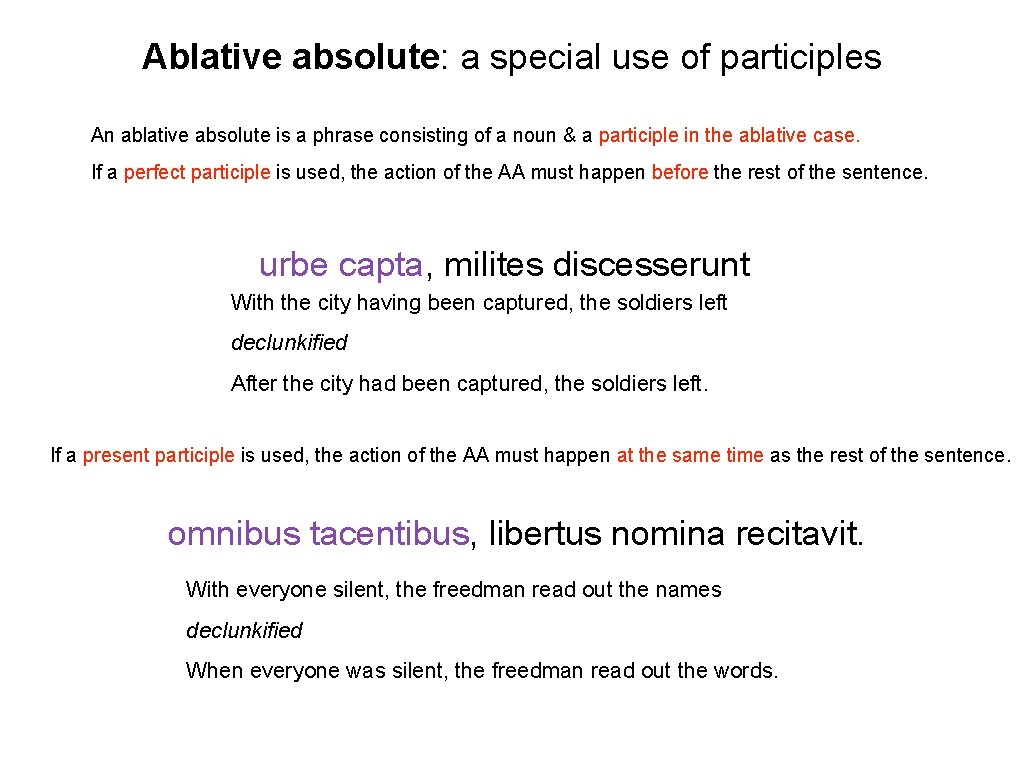
Ablative absolute: a special use of participles An ablative absolute is a phrase consisting of a noun & a participle in the ablative case. If a perfect participle is used, the action of the AA must happen before the rest of the sentence. urbe capta, milites discesserunt With the city having been captured, the soldiers left declunkified After the city had been captured, the soldiers left. If a present participle is used, the action of the AA must happen at the same time as the rest of the sentence. omnibus tacentibus, libertus nomina recitavit. With everyone silent, the freedman read out the names declunkified When everyone was silent, the freedman read out the words.
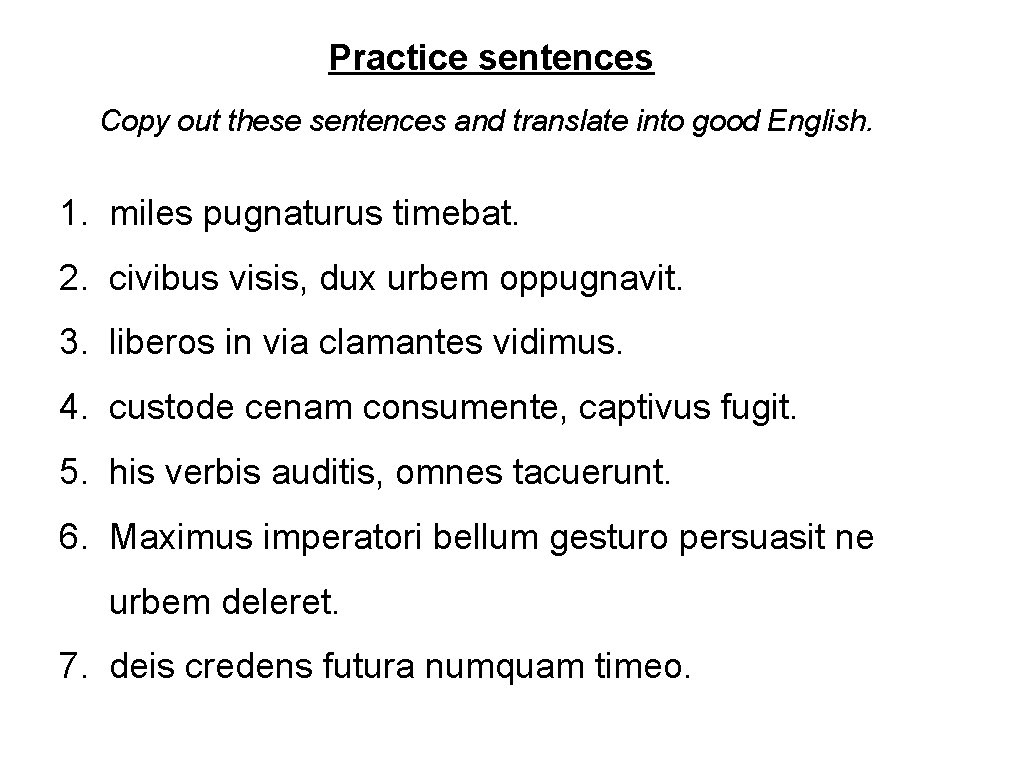
Practice sentences Copy out these sentences and translate into good English. 1. miles pugnaturus timebat. 2. civibus visis, dux urbem oppugnavit. 3. liberos in via clamantes vidimus. 4. custode cenam consumente, captivus fugit. 5. his verbis auditis, omnes tacuerunt. 6. Maximus imperatori bellum gesturo persuasit ne urbem deleret. 7. deis credens futura numquam timeo.
- Slides: 4