
Participles Verbs that work as adjectives See if
Participles Verbs that work as adjectives
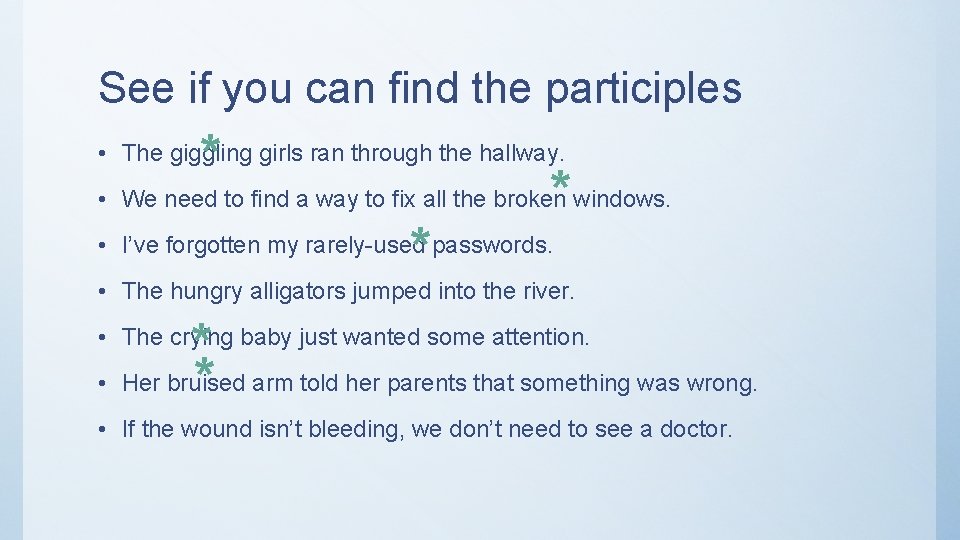
See if you can find the participles * • The giggling girls ran through the hallway. * • We need to find a way to fix all the broken windows. * • I’ve forgotten my rarely-used passwords. • The hungry alligators jumped into the river. * • Her bruised * arm told her parents that something was wrong. • The crying baby just wanted some attention. • If the wound isn’t bleeding, we don’t need to see a doctor.
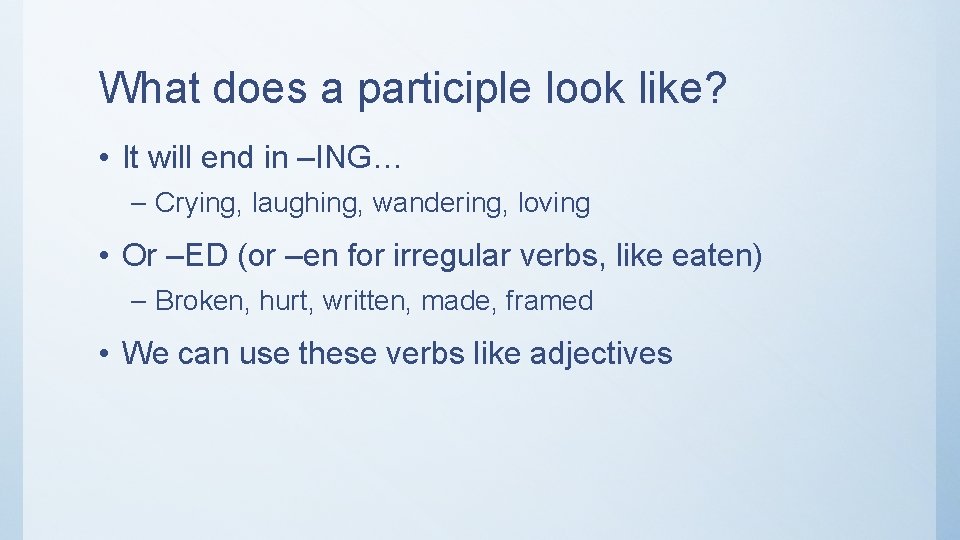
What does a participle look like? • It will end in –ING… – Crying, laughing, wandering, loving • Or –ED (or –en for irregular verbs, like eaten) – Broken, hurt, written, made, framed • We can use these verbs like adjectives
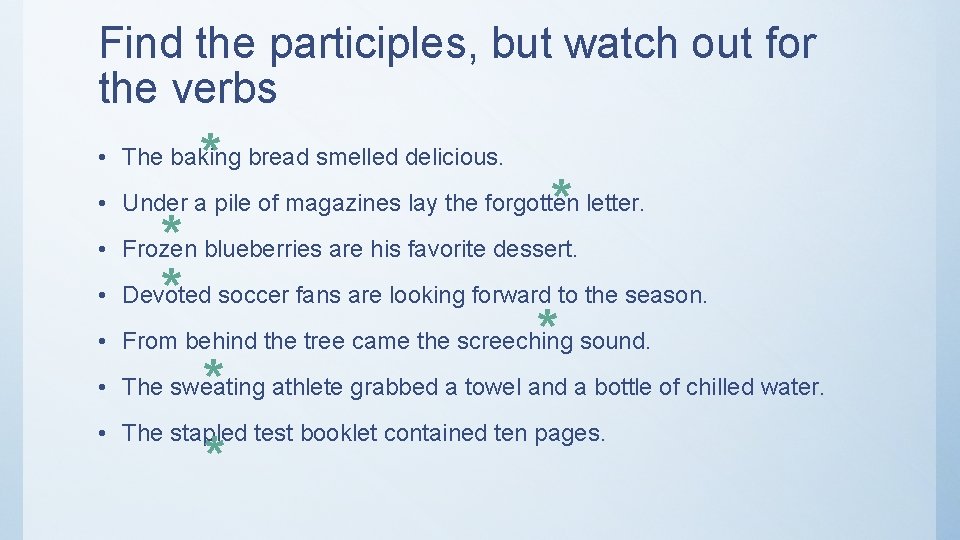
Find the participles, but watch out for the verbs * • The baking bread smelled delicious. * • Under a pile of magazines lay the forgotten letter. * • Devoted * soccer fans are looking forward to the season. * sound. • From behind the tree came the screeching • The sweating * athlete grabbed a towel and a bottle of chilled water. • The stapled test booklet contained ten pages. * • Frozen blueberries are his favorite dessert.
How can I use participles on my own? • Use the ING participles when you are describing what something is doing – These always tell you “which one? ” or “what kind? ” – The crying baby. Which baby? The crying one. • Use the ED participles when you are describing what has already been done TO something – These also tell which one or what kind – The broken glasses. Which glasses? The ones that somebody broke.

Bored vs. Boring • What’s the difference between bored and boring? • Annoyed annoying? • Excited and exciting?
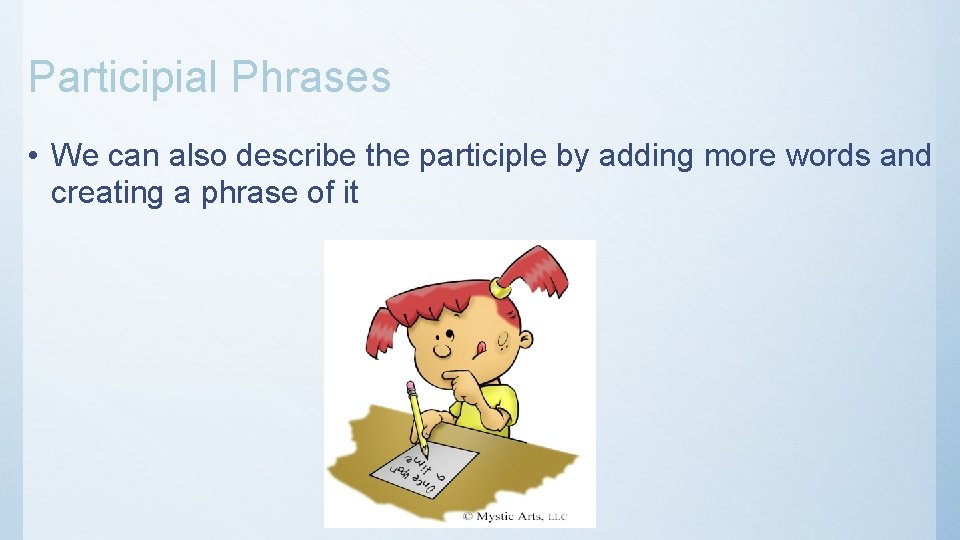
Participial Phrases • We can also describe the participle by adding more words and creating a phrase of it
What a participial phrase looks like – The baking bread smelled delicious. – The bread baking in the oven smelled delicious. • Under a pile of magazines lay the forgotten letter. • Under a pile of magazines lay the letter forgotten for a hundred years. – The sweating athlete grabbed a towel and a bottle of chilled water. – The heavily sweating athlete grabbed a towel and a bottle of water chilled in the fridge. • The stapled test booklet contained ten pages. • The test booklet stapled by the teacher contained ten pages.
How is a participial phrase like an adjective clause? • It is, excluding the “that is” or “who is” or “which is” – The bread (that is) baking in the oven smelled delicious. – Under a pile of magazines lay the letter (which was) forgotten for a hundred years. – The heavily sweating athlete grabbed a towel and a bottle of water (that was) chilled in the fridge. – The test booklet (which was) stapled by the teacher contained ten pages.
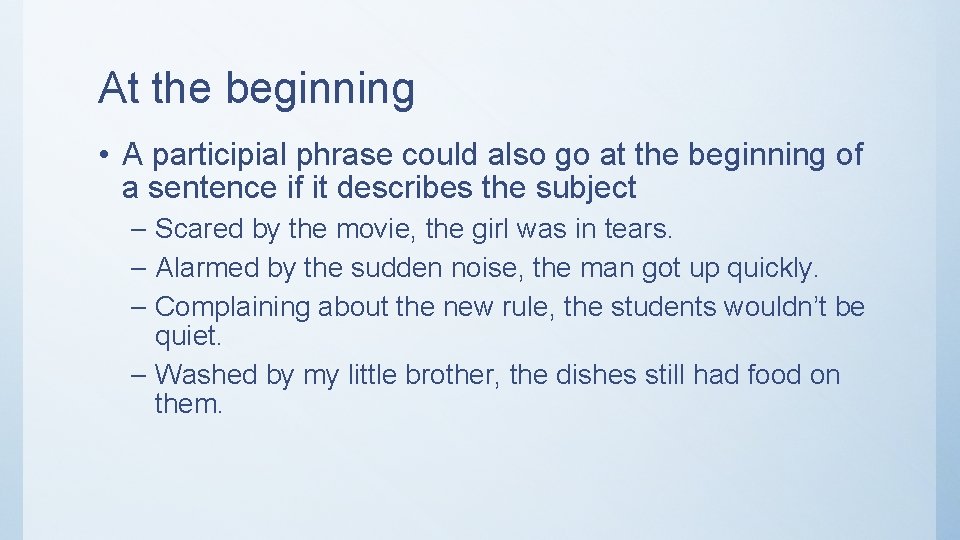
At the beginning • A participial phrase could also go at the beginning of a sentence if it describes the subject – Scared by the movie, the girl was in tears. – Alarmed by the sudden noise, the man got up quickly. – Complaining about the new rule, the students wouldn’t be quiet. – Washed by my little brother, the dishes still had food on them.
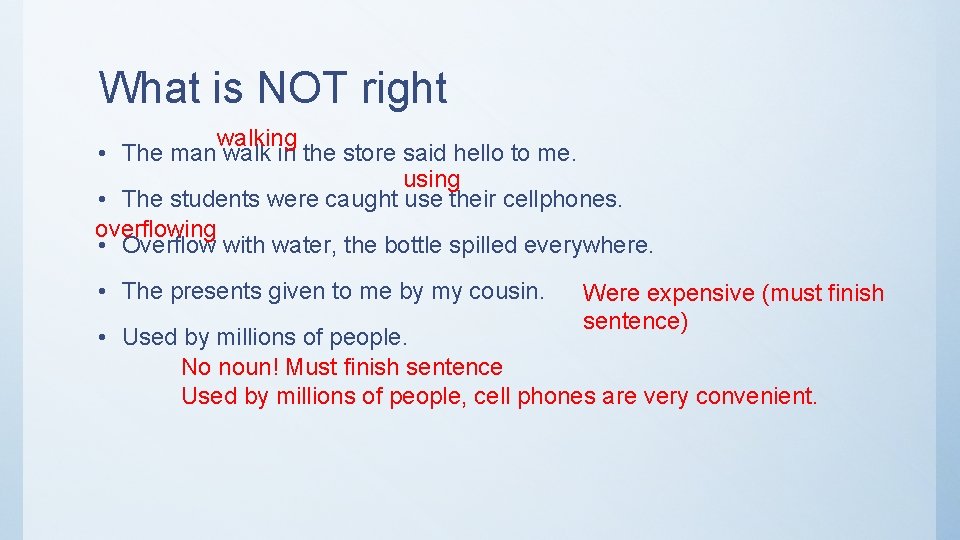
What is NOT right walking • The man walk in the store said hello to me. using • The students were caught use their cellphones. overflowing • Overflow with water, the bottle spilled everywhere. • The presents given to me by my cousin. Were expensive (must finish sentence) • Used by millions of people. No noun! Must finish sentence Used by millions of people, cell phones are very convenient.
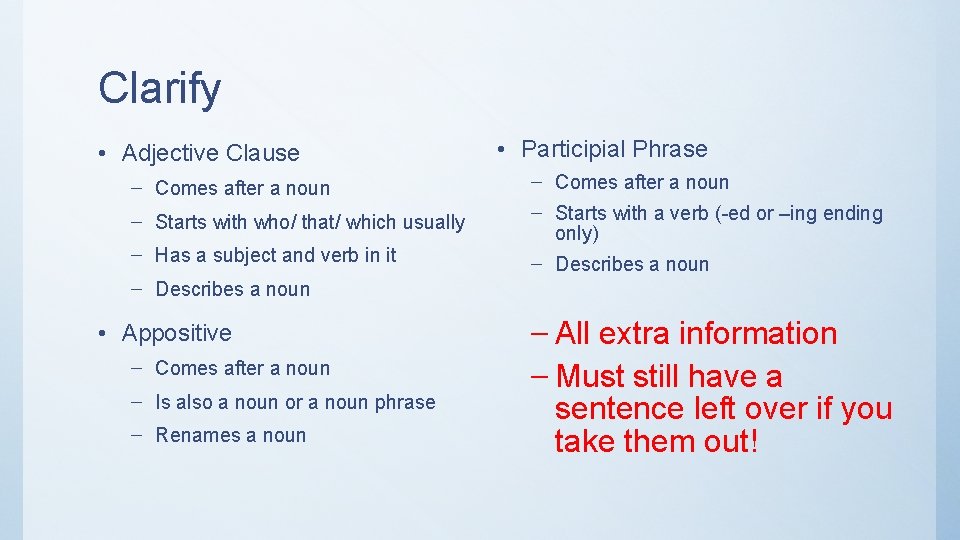
Clarify • Adjective Clause – Comes after a noun – Starts with who/ that/ which usually – Has a subject and verb in it – Describes a noun • Appositive – Comes after a noun – Is also a noun or a noun phrase – Renames a noun • Participial Phrase – Comes after a noun – Starts with a verb (-ed or –ing ending only) – Describes a noun – All extra information – Must still have a sentence left over if you take them out!
- Slides: 12